
Mind the Graph Review 2026: Pricing, Free Plan, Alternatives
Mind the Graph review: Researcher is $15/month or $99/year (USD). Free plan limits, publication license rules, pros and cons, and 4 alternatives compared.
Mind the Graph is a browser-based scientific illustration and infographic tool owned by Cactus Communications, the company behind Editage. It gives you a library of more than 75,000 science illustrations, 300+ templates, and a drag-and-drop canvas for graphical abstracts, infographics, posters, and slides. On the US pricing page we checked in October 2026, the Researcher plan costs $15 per month, or $99 per year billed annually (USD). A free Starter plan exists and never expires, but everything you export from it carries a Mind the Graph watermark and requires a citation.
Below: what each plan costs, what the free plan does not allow, the license rules that matter at submission, and how Mind the Graph compares with BioRender, Servier Medical Art, Bioicons, and ConceptViz. Every Mind the Graph price and term comes from its own pricing page, help center, and terms of use.

AI Scientific Image Generator
Describe a mechanism, structure, or experiment in plain text and get a full scientific illustration draft, useful when no library icon matches what you need.
Try it free →Mind the Graph at a glance
| Question | Answer |
|---|---|
| What is it? | Online editor plus a library of scientific illustrations and templates |
| Who runs it? | Cactus Communications (Editage, Paperpal, R Discovery) |
| Library size | 75,000+ illustrations across 80+ fields, 300+ templates |
| Output types | Graphical abstracts, infographics, posters, slide presentations |
| Free plan | Yes, Starter, no credit card, no time limit, watermark required |
| Paid entry point (US) | Researcher $15/month or $99/year |
| Custom illustrations | Included with paid plans (up to 5 requests per month on Researcher) |
| Publication rights | Paid plans only for watermark-free use; free users must keep the watermark and cite |
In short: it is one of the cheaper ways to get a curated, human-drawn science library with a publication license. The weak spots are the free-tier watermark, coverage that is strongest in biomedicine, and what happens to your files if you stop paying.
Mind the Graph pricing in 2026
Checked on October 9, 2026 at mindthegraph.com/pricing, viewed from the US. Prices are in US dollars (USD). Mind the Graph localizes prices by country (euros, pounds, rupees, yen and others), and those amounts are not simple conversions, so outside the US read the number your own browser shows.
| Plan | Monthly billing | Annual billing | What it is for |
|---|---|---|---|
| Starter | Free | Free | Trying the editor; up to 4 scientific illustrations, watermark required |
| Researcher | $15 per month (list price $25) | $99 per year (list price $165), shown as $9 per month | Individual researchers who need watermark-free figures |
| Researcher + 3 AI tools (Prime) | $25 per month | $144 per year, shown as $12 per month | Researcher plan bundled with Paperpal (academic writing), R Discovery (literature search) and Journal Finder; labeled "Most Popular" |
| Teams and Institutions | n/a | $10 per user per month, billed yearly (list $12), for a 5-user team | Labs and departments; price changes with the team size you pick, and the button goes to Contact Sales |
A few things the table does not show on its own:
- Researcher prices are discounted. $15 is shown against a struck-through $25, and $99 against $165 (a 40% markdown). Treat these as today's prices, not permanent ones.
- No student or quarterly plan is shown. The US pricing page we viewed lists only Starter, Researcher, the Researcher + 3 AI tools bundle, and Teams. Student pricing, if offered, is not publicly listed there.
- Annual billing saves 45%. Twelve months at $15 is $180 versus $99 per year, matching the help article on annual vs monthly payments ("up to 45% discount").
- Subscriptions renew automatically. You can cancel any time without a fee and keep access until the paid period ends.
- Not publicly listed: a free trial for Researcher, and Teams pricing for sizes other than the one you select (the page recalculates the per-user price for each team size; the FAQ caps Teams & Labs at 11 users).
What the free Starter plan includes (and what it does not)
The pricing page lists unlimited creations, use of up to 4 scientific illustrations, restricted access to the 75,000+ illustration library, limited AI image generation, and the graphical abstract, infographic, and poster formats.
The real limit is the license. The help article Can I use Mind The Graph for free? says Starter is for getting to know the platform and for informal or educational use. As a free user you must:
- Keep the Mind the Graph watermark in all cases.
- Cite the platform in formal communication, publications, lectures, and presentations. The suggested places are the figure legend and the acknowledgments.
Technically a free figure can go in a paper if the watermark stays and you cite it. In practice few journals or PIs want a watermarked graphical abstract, so Starter suits lab meetings, teaching slides, and drafts.
Licensing and usage rights for publication
This is the part that matters at submission time. The help article Can I use Mind the Graph in my publications? and its terms of use describe two tiers:
Free users: Creative Commons Attribution-ShareAlike 4.0 (CC BY-SA 4.0). Free users can present their work publicly, but the watermark is mandatory and Mind the Graph must be credited. Under share-alike, other users may build on your illustrations under the same terms. The suggested credit line is "Figure created in the Mind the Graph Platform, available at www.mindthegraph.com."
Paid subscribers: full rights to their creations. Paid users are recognized as the authors, keep full rights, and can transfer authorial rights to third-party publishers without consulting Mind the Graph first. Attribution is optional for paid users ("we'll be happy if you do").
Three practical consequences:
- Copyright transfer forms are straightforward on a paid plan, because the paid-plan wording explicitly allows transfer to publishers.
- A separate commercial license tier is not publicly listed. The FAQ lists papers, books, lectures, blogs, and social media as allowed uses. For product marketing, ask Mind the Graph in writing.
- Cancelling locks your old files. The pricing FAQ says that after a paid plan expires you are downgraded to Starter, new creations must follow the free license, and your prior creations are blocked until you subscribe again (they are kept, not deleted). PayPal subscriptions cancel immediately rather than at the end of the period. Download final files before you cancel.
The terms of use (the help center link redirects to the parent company's terms page) also say fees are non-refundable unless otherwise indicated, and billing problems must be reported within seven days.
What paid plans add
Paid plans remove the watermark and add the features that make the library usable for real manuscripts:
- Custom illustration requests. Researcher includes up to 5 custom illustration requests per month, per Mind the Graph's plan description on Editage's Mind the Graph page. The terms of use say individual-plan requests are delivered in up to 7 days, and unused monthly requests do not roll over.
- Exports. Mind the Graph's FAQ on the same Editage page lists unlimited high-resolution exports in PNG, PDF, and TIFF on paid plans, and the Researcher plan lists unlimited vector downloads.
- AI image generation. Researcher lists unlimited AI image generation; Starter has a restricted allowance.
- Collaboration. Researcher lists unlimited collaborators; Teams & Labs adds team management, shared creations, and custom templates.
- Restoring deleted files is included on all paid plans according to the terms of use, and the Researcher plan lists priority customer support.
If you write posters as well as papers, the poster templates and the poster maker are a real plus. For layout rules, sizes, and free downloadable layouts that do not depend on any one tool, see our scientific poster templates guide, or draft a full layout with the scientific poster generator.
Pros and cons
Pros
- Low entry price for an individual: $99 per year on the annual Researcher plan (US).
- Large, human-drawn library aimed at life science and medicine, plus 300+ templates.
- Custom illustration requests are included, which is unusual at this price.
- Clear written license: CC BY-SA 4.0 for free users, full rights and publisher transfer for paid users.
- One tool covers graphical abstracts, infographics, posters, and slides.
Cons
- Free exports always carry a watermark, so the free tier is a demo for most journal work.
- Prior creations are blocked after you cancel, which makes it awkward to subscribe only when a paper is due.
- Discounted prices sit next to higher list prices, so future renewals may cost more.
- Coverage is thinner outside biomedicine; for niche apparatus or unusual anatomy you depend on the custom request queue.
- No publicly listed commercial-use tier, which leaves industry users needing written confirmation.
Who Mind the Graph is for
Good fit: graduate students and postdocs in biology or medicine who make a few graphical abstracts and posters a year; teachers who can accept the watermark on classroom slides; anyone already paying for Paperpal or R Discovery, for whom the Prime bundle may beat separate subscriptions.
Poor fit: people who want to subscribe for one month per paper (the file lock makes that painful), physics or engineering setups the library covers thinly, industry users who need an explicit commercial license, and labs already standardized on BioRender.
Mind the Graph alternatives compared
All prices are in USD and were checked on each vendor's official page on October 9, 2026, except where noted.
| Tool | Price | What you get | Publication license | Best for |
|---|---|---|---|---|
| Mind the Graph | Free (watermark); Researcher $15/mo or $99/yr | 75,000+ illustrations, 300+ templates, custom requests | Free: CC BY-SA 4.0 with watermark and citation; paid: full rights | Low-cost icon-based graphical abstracts and posters |
| BioRender | Free (3 figures); Academic Individual $35/mo billed annually or $39 monthly | Large life-science icon library, slide decks, editable PPT export | Free plan cannot be used for publication or commercial use; paid academic plans include publishing rights | Labs that build many standardized biology figures |
| Servier Medical Art | Free | 3,000+ medical illustrations, PowerPoint kits | CC BY 4.0, commercial use allowed with credit | Free medical and anatomy figures with a simple license |
| Bioicons (with Inkscape) | Free | Open science icons downloadable as SVG | Per icon: CC0, CC BY, CC BY-SA, MIT, or BSD | Full vector control if you have time to assemble |
| ConceptViz | 2 free image credits at sign-up; image packs from $9.90 (15 credits); Standard plan $29.90/mo | AI-generated illustrations and graphical abstract drafts from a text brief | Paid users get an AI Use & Commercial License Statement; you still follow your journal's AI image policy | Custom one-off figures that no icon library contains |
BioRender
BioRender is the closest like-for-like competitor. Its pricing page lists Academic Individual at $35 per month billed annually, or $39 month to month, and the free plan is capped at 3 figures with no publication or commercial use. Mind the Graph's annual Researcher plan costs well under a third of BioRender's annual academic seat. BioRender's advantages are a larger, very consistent icon style, real-time co-editing on Lab plans, and editable PowerPoint export. Our BioRender pricing breakdown covers its lab, industry, and add-on costs in detail.
Servier Medical Art
If your figures are mostly anatomy and physiology, Servier Medical Art may be enough on its own. It offers more than 3,000 free medical illustrations under CC BY 4.0, so you can edit and even use them commercially as long as you credit Servier. It is far smaller and has no editor, but there is no watermark or subscription. Our Servier Medical Art guide shows how to download the PowerPoint kits and write the credit line.
Bioicons plus Inkscape
Bioicons is a free, community-built library of science icons that download as SVG. Each icon carries its own license (CC0, CC BY, CC BY-SA, MIT, or BSD), so check the label before you publish. Paired with a free editor such as Inkscape, you get full control at zero cost, but you do all the layout yourself. More free options are in our list of free BioRender alternatives.
ConceptViz
ConceptViz works differently: you describe the figure in text and get a complete illustration draft. That helps in exactly the cases where Mind the Graph sends you to the custom request queue, such as a specific device, an unusual surgical view, or a concept with no ready-made icon. It is weaker when you need to nudge one element a few pixels; you regenerate or edit the exported image instead.
The pricing page gives new accounts 2 free image credits, valid for 7 days. After that you can buy one-time image packs (Starter is $9.90 for 15 image credits, Standard $19.90 for 45) or subscribe: the Standard plan is $29.90 per month or $249.90 per year with 45 image credits a month, and adds the Agent for revising figures through conversation. Paid users can download an AI Use & Commercial License Statement, a record of how the figure was made, not a guarantee of journal acceptance. Review every label yourself and disclose AI use where your journal requires it.
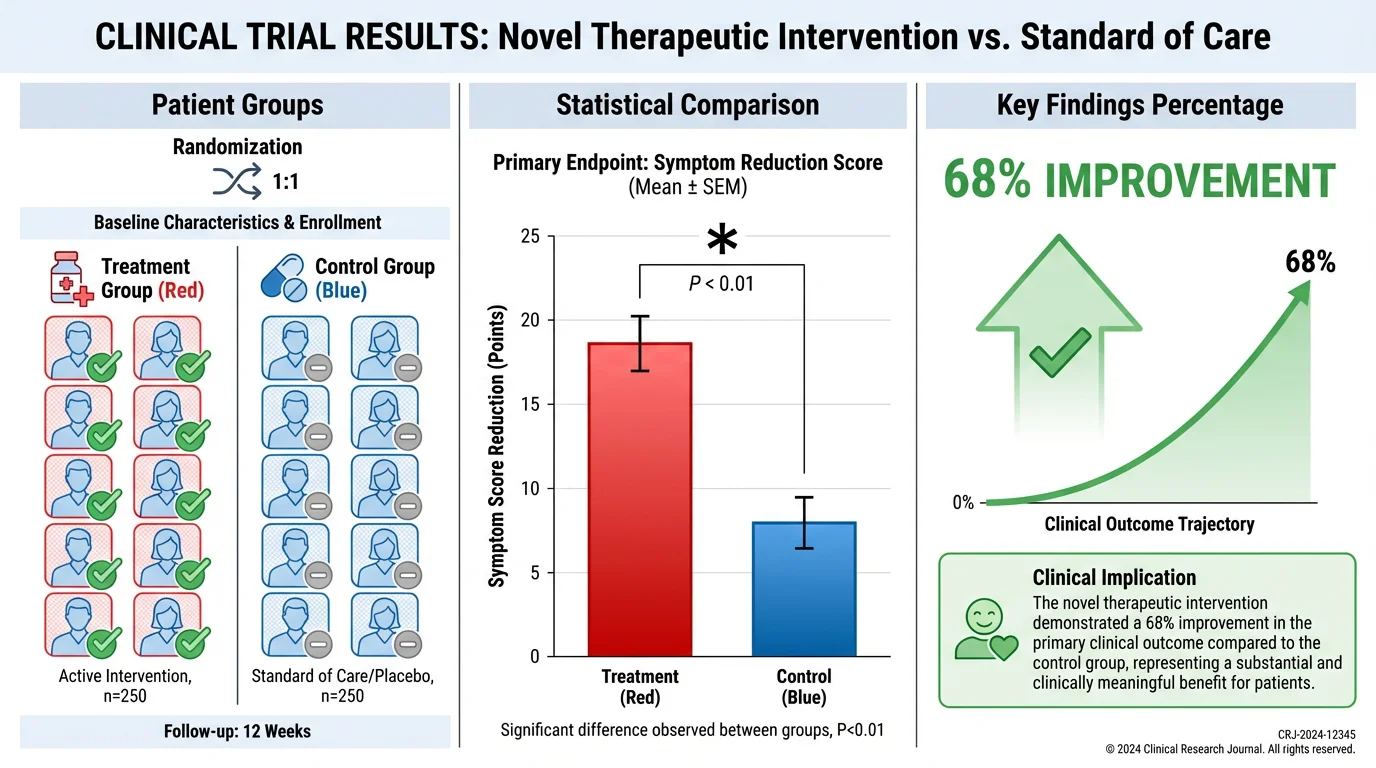
A single-panel graphical abstract drafted from a text brief. Whatever tool you use, check your journal's size rules and its policy on AI-generated images before submission.
How to choose: a quick decision guide
Match the tool to the job, not the brand:
- Watermark-free biomedical graphical abstract, low budget: Mind the Graph Researcher annual ($99). Download final files before any cancellation.
- A lab making figures every week: BioRender Lab or Mind the Graph Teams & Labs; price only the people who actually make figures.
- Anatomy slides, no budget: Servier Medical Art with the CC BY 4.0 credit line.
- Total vector control, plenty of time: Bioicons plus Inkscape.
- A figure that exists in no library: an AI draft from a tool such as ConceptViz, or Mind the Graph's custom request if you can wait up to 7 days.
For design rules that apply no matter which tool you pick, read How to Make a Graphical Abstract.
Worked cost example: one PhD student, one year
| Option | Year-one cost (USD) | What you can publish |
|---|---|---|
| Mind the Graph Starter | $0 | Watermarked figures with citation only |
| Mind the Graph Researcher, annual | $99 | Watermark-free figures with full rights |
| BioRender Academic Individual, annual | $420 ($35 x 12) | Paid academic publishing rights |
| Servier Medical Art or Bioicons | $0 | Free licenses with credit where required |
| ConceptViz Starter image pack, bought twice | $19.80 ($9.90 x 2) | About 30 AI figure drafts; you review accuracy and journal policy |
Graphical Abstract Maker
Turn your paper's main finding into a single-panel visual abstract draft. Check your journal's dimensions and AI policy before you export.
Draft a graphical abstract →Frequently Asked Questions
How much does Mind the Graph cost?
On the US pricing page checked in October 2026, the Researcher plan is $15 per month or $99 per year billed annually, shown as discounts from list prices of $25 and $165. The Researcher + 3 AI tools bundle (Paperpal, R Discovery and Journal Finder) is $25 monthly or $144 yearly, and Teams pricing starts around $10 per user per month billed yearly. Prices are in USD and differ by country.
Is Mind the Graph free?
Yes. The Starter plan is free with no time limit and no credit card. You get unlimited creations but can use only up to 4 scientific illustrations, with limited AI image generation, and every export must keep the Mind the Graph watermark. Free users must also cite Mind the Graph in publications, lectures and presentations.
Can I use Mind the Graph figures in a journal publication?
Yes. Free users may publish under CC BY-SA 4.0 only if the watermark stays and Mind the Graph is cited, usually in the figure legend or acknowledgments. Paid subscribers have full rights to their creations, are recognized as authors, and can transfer rights to publishers without asking Mind the Graph.
What happens to my figures if I cancel Mind the Graph?
You keep paid access until the end of the period you paid for. After that your account drops to Starter, new work follows the free license, and your earlier creations are blocked until you subscribe again. Mind the Graph keeps them stored rather than deleting them. PayPal subscriptions cancel immediately. Download final files before cancelling.
Does Mind the Graph include custom illustrations?
Paid plans include custom illustration requests. The Researcher plan lists up to 5 requests per month, individual-plan requests are delivered in up to 7 days according to the terms of use, and unused requests do not carry over to the next month.
Is Mind the Graph cheaper than BioRender?
For one academic user, yes. Mind the Graph Researcher is $99 per year on annual billing in the US, while BioRender Academic Individual is $35 per month billed annually ($420 per year) or $39 month to month. BioRender offers a larger, more uniform icon set and real-time co-editing on team plans.
What is the best free alternative to Mind the Graph?
For medical and anatomy figures, Servier Medical Art offers 3,000+ free illustrations under CC BY 4.0 with no watermark. For vector icons, Bioicons offers free SVG icons under per-icon licenses such as CC0 and CC BY. For custom figures that do not exist as icons, an AI generator such as ConceptViz can produce a draft from a text description.
Bottom line
Mind the Graph is a fair deal for individual life-science researchers: $99 per year on the annual Researcher plan (US, October 2026) buys a large human-drawn library, abstract and poster templates, custom illustration requests, and a clear publication license. The free plan is fine for learning and teaching, but the watermark rules it out for most journal figures. Stay subscribed as long as you need to edit your files, because cancelling blocks past creations.
If the figure you need is not in any library, start with a text-to-figure draft on the AI scientific image generator or the graphical abstract maker, then decide whether you still need an icon-library subscription for the rest of the manuscript. For more layout ideas by field, browse our graphical abstract examples by discipline.
Categories
More Posts
Free Printable Cell Diagram Worksheets: Unlabeled & Labeled (2026)
Download free printable cell diagram worksheets. Includes unlabeled plant cell, animal cell, and comparison diagrams for classroom quizzes and study guides.
Scientific Poster Templates: 7 Free PowerPoint Layouts
7 free research poster templates in PowerPoint: 48x36 in, 36x48 in, A0 and A1 layouts by discipline, each with a true-size preview and an AI generator prompt.
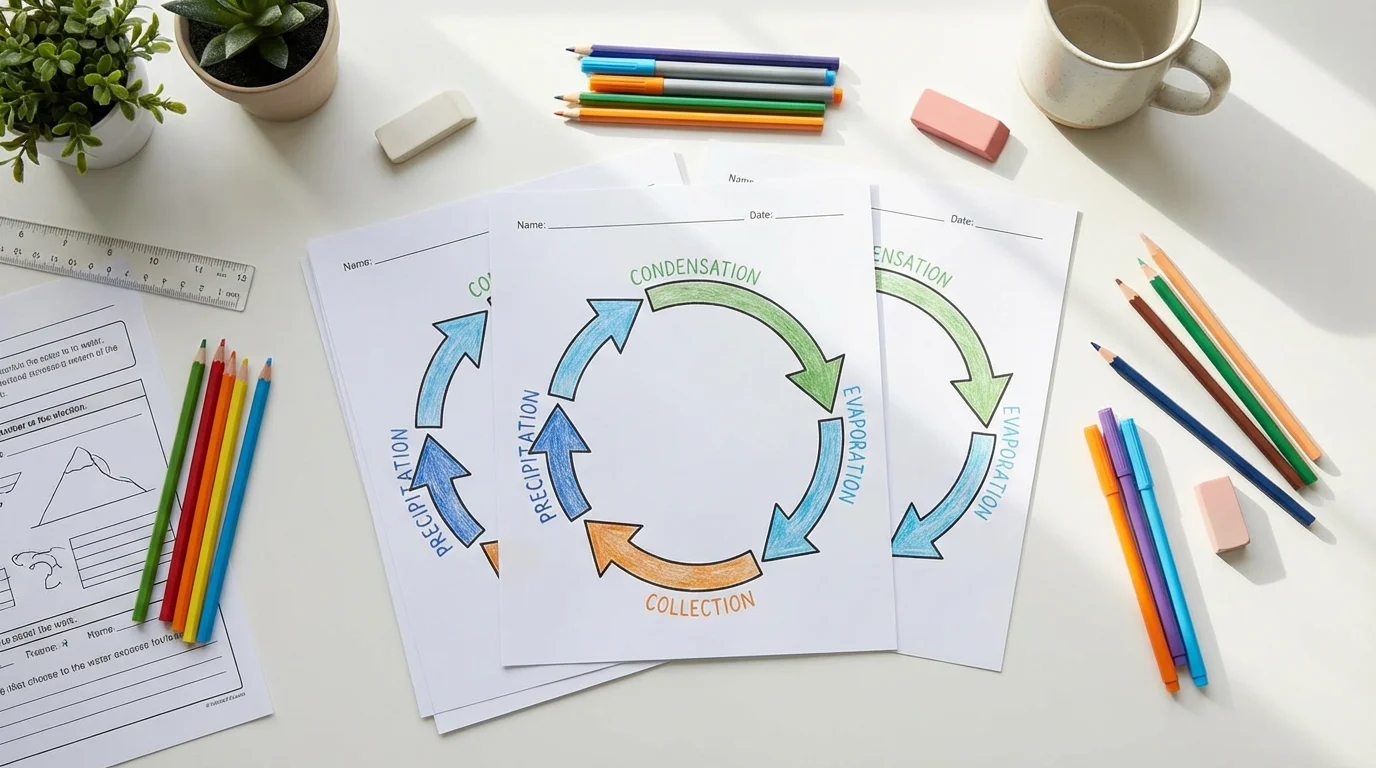
Free Printable Water Cycle Worksheets for Teachers (2026)
Free printable water cycle worksheets for elementary, middle, and high school, with labeled diagrams, blank quiz worksheets, and NGSS-aligned activities.