AI-Generated Figures in Papers: Journal Policies 2026
Can you use AI-generated figures in a research paper? Policies of Nature, Science, Elsevier, Wiley, PLOS, IEEE, ACS, T&F, Frontiers, MDPI (checked 2026-11-21).
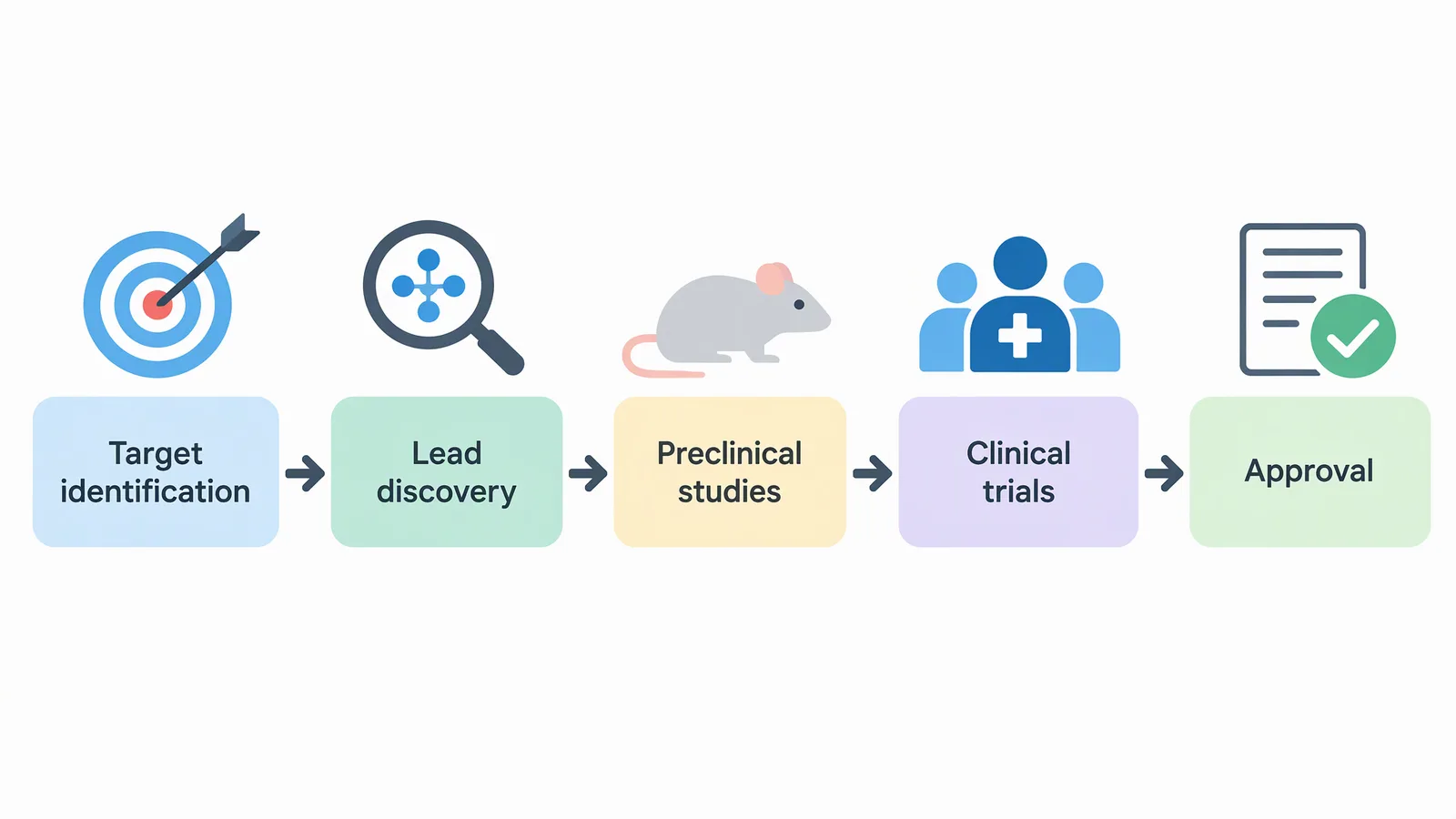
Single-panel visual abstract. Ask the editorial office about AI policy before you submit, and check the journal's size table.
Open the toolShort answer: it depends on the journal and on the kind of figure. Almost every major publisher bans AI-generated or AI-altered images that present research data (microscopy, blots, photographs, patient images). Beyond that, the rules split: some publishers allow AI-assisted explanatory schematics with disclosure, some allow them only with editor permission, and some forbid generative AI in graphical abstracts or table-of-contents graphics. This page summarises ten publishers' policies with a link to each original text.
Check before you submit. Policies change, and this page is not legal advice. The summaries below were checked against publisher pages on 2026-11-21. Always follow the journal's current Instructions for Authors, which can be stricter than the publisher-wide policy. When in doubt, ask the editorial office before you submit.
Policy summary table
| Publisher | Generative-AI figures / images | Disclosure | Original text |
|---|---|---|---|
| Springer Nature (Nature journals) | Generally not permitted, and the ban covers illustrations including scientific diagrams (tables, flow charts and simple graphs without images are outside it); narrow exceptions, for example images in articles about AI, which must be labelled | Non-generative ML edits of images disclosed in the caption | AI guidance, Nature Portfolio AI policy |
| Science (AAAS) | Not permitted without explicit editor permission; exceptions case by case, e.g. manuscripts about AI | Disclose AI use (cover letter / acknowledgments, per secondary sources); images need editor permission | Editorial policies |
| Elsevier | Conditional: explanatory images allowed; none for primary or experimental data; no general-purpose generative tools for graphical abstracts | Yes, in the image caption with the tool name, plus the AI declaration | Generative AI policies for journals |
| Cell Press (Elsevier) | Follows the Elsevier policy; check the Cell Press figure guidelines for graphical abstract and cover rules | See Elsevier | Cell Press figure guidelines |
| Wiley | Conditional: figures and illustrations allowed; factual and evidential images, and AI-edited photographs, not permitted | Yes, in the figure caption | Wiley AI guidelines |
| PLOS | Conditional: allowed for illustrative purposes or to summarise results; no fabrication of data | Yes, in the figure legend | Ethical publishing practice |
| IEEE | Allowed with disclosure | Yes, in the acknowledgments: name the system and the sections affected | IEEE Author Center policies |
| ACS | Conditional: no AI alteration of images that represent research results; AI images not allowed in ToC graphics | Yes, a statement in the figure caption | ACS AI policy |
| Taylor & Francis | Conditional: AI may assist research data visualisations, conceptual illustrations of processes, flow diagrams and teaching illustrations; not creation or manipulation of research or clinical outputs (research results, clinical samples, diagnostic images) | Yes, name the tool and version, and how it was used | T&F AI policy |
| Frontiers | Conditional: allowed if checked for accuracy and plagiarism | Yes: acknowledgments (and methods if applicable) with tool name, version, model and source | Frontiers policies |
| MDPI | No AI-created or altered research data or images that could misrepresent the research; other AI images at the journal editorial board's discretion | Declare AI use at submission; if AI is used to create a graphical abstract, describe the tools and prompts in the manuscript (per MDPI's ethics page, via search summary) | MDPI ethics |
Three rows rest on weaker evidence. We could not open the Science, Cell Press and MDPI pages directly in our automated check (they blocked it), so those rows rely on search summaries of the publishers' own pages. Read the linked page yourself before you rely on them.
Publisher notes
Nature and Springer Nature
Springer Nature's guidance states that, as publishers, they follow existing copyright law and publication-ethics practice, so generative-AI images are generally not accepted. The ban covers illustrations including scientific diagrams, while tables, flow charts and simple graphs without images are outside its scope. Narrow exceptions exist, for example images in articles about AI, and these must be labelled. The Nature Portfolio policy page lists creating photorealistic images (deepfakes) as not permitted. If you are preparing a Nature-family submission, also see How to Make Figures for Nature and Science Journals.
Science
Science's editorial policies say AI-generated images and other multimedia are not permitted without explicit permission from the editors, with exceptions evaluated case by case. For a Science submission, treat generative AI figures as off by default and ask first.
Elsevier and Cell Press
Elsevier's page (marked updated June 2026) says AI tools must not be used to create or alter images that represent primary observed or experimental data, and that general-purpose generative AI image tools must not be used to create graphical abstracts. It asks authors to disclose AI-generated images in the caption, naming the tool. AI-generated cover art needs prior permission from the editor and publisher. In practice: no general-purpose generative AI for an Elsevier graphical abstract. For graphical abstract sizes, see TOC Graphic Requirements by Journal. Cell Press publishes its own figure guidelines, so check them for graphical abstract and cover rules.
Wiley
Wiley's guidelines say it supports the use of AI for creating research figures and illustrations, and ask for disclosure in the figure caption when AI generates or edits visual content; factual and evidential images and AI-edited photographs are not permitted. Authors should also check the AI tool's terms of use for usage restrictions.
PLOS
PLOS ONE says authors can use AI-generated figures for illustrative purposes or to summarise results, with the use clearly disclosed in the figure legend, and with accuracy checked by the author.
IEEE
IEEE requires AI-generated content, including figures and images, to be disclosed in the acknowledgments section, naming the system, the sections that use AI content, and a brief explanation of how much the AI generated.
ACS
ACS requires a caption statement describing how AI-generated content was created, does not allow generative AI to alter images that represent research results, and says AI-generated images cannot be used in ToC graphics because there is no accompanying caption or disclosure mechanism.
Taylor & Francis
Taylor & Francis permits generative AI tools to assist research data visualisations, conceptual illustrations of processes, flow diagrams and teaching illustrations. It does not permit generative AI in the creation or manipulation of outputs of research or clinical testing, for example research results, clinical samples and diagnostic images. It asks authors to acknowledge the tool with its version, how it was used, and why.
Frontiers
Frontiers requires figures produced or edited with generative AI to be checked for accuracy and plagiarism, and the use acknowledged with the tool's name, version, model and source. It encourages uploading input prompts and outputs as supplementary files.
MDPI
MDPI asks authors to declare generative AI use at submission, bars using it to create or alter research data or images in ways that could misrepresent the research, and leaves other AI images to the editorial board's discretion.
How to use AI for figures without breaking the rules
These are common-sense working practices, not a guarantee of acceptance by any journal.
Uses that several publishers allow with disclosure (for example Elsevier, Wiley, PLOS, IEEE, T&F, Frontiers; not Springer Nature, and not Science without editor permission):
- A conceptual schematic or mechanism cartoon where no measured data is depicted, drafted with AI and then redrawn or edited by you.
- A vector or PPTX export that you modify, check label by label against your sources, and own the final composition of.
- An illustration for teaching, posters or slides that is not a submitted research figure.
Uses to avoid:
- Any image that looks like microscopy, gels, blots, imaging or patient data, whether created or "enhanced" by AI.
- Graphical abstracts or ToC graphics at journals that restrict them (Elsevier for general-purpose tools; ACS for ToC graphics).
- Anything you cannot explain in your methods if an editor asks how it was made.
Practical steps:
- Read the journal's Instructions for Authors and the publisher AI policy before you generate anything.
- Keep the prompts, the tool name and version, the date, and each version of the file.
- Edit the output yourself. Check every label, arrow and structure against the literature.
- Disclose in the place the journal specifies (caption, legend, acknowledgments or methods).
- If the policy is unclear, email the editorial office and keep the reply.
Sample disclosure statement
Adapt this to the journal's required placement and wording:
Figure 2 is a conceptual schematic. An initial draft was generated with [tool name, version] on [date] from the author's written description, and was then edited by the authors in [editing software]. The authors verified all labels and structures and take full responsibility for the figure. No data are depicted.
ConceptViz exports SVG (shapes scale; text is outlined) and editable PPTX with live text, which makes it easier to revise a draft and to describe accurately how it was made. It does not change what a journal allows: you remain responsible for checking the policy, the figure's accuracy, and the disclosure. An AI-use statement to keep with your submission records is available with paid purchases; see /pricing for which ones include it.
Elsevier and Cell Press do not accept general-purpose generative-AI graphical abstracts, and ACS does not accept AI images in ToC graphics. Ask the editorial office before using any AI draft as a submitted graphical abstract.
If your journal does not allow AI figures
Use a human-made route: a free icon library with attribution (Servier Medical Art or Bioicons), a licensed library tool such as BioRender, or a medical illustrator. Compare options in SciDraw Alternatives and FigDraw Alternatives, or see BioRender vs ConceptViz.
Frequently Asked Questions
Can you use AI-generated figures in a research paper?
Sometimes. Most publishers ban AI-created or AI-altered images that represent research data. Several allow explanatory schematics with disclosure (for example Elsevier, Wiley, PLOS, IEEE), while Springer Nature and Science are far more restrictive. Check your journal's current author guidelines.
Does Elsevier allow generative AI for graphical abstracts?
Elsevier's generative AI policy for journals says general-purpose generative AI image tools must not be used to create graphical abstracts. Confirm on the live policy page and the journal's Guide for Authors.
Do I have to disclose AI-generated figures?
Most publishers that allow them require disclosure, in the caption, legend, acknowledgments or methods depending on the publisher. See the table above for where each one asks.
Is an AI draft that I redraw by hand still AI-generated?
Policies are written around the tool use, so assume disclosure rules still apply if AI produced the starting point. If unsure, ask the editorial office.
Is this page legal advice?
No. It summarises publisher policies as of 2026-11-21. Policies change, and the journal's current Instructions for Authors decide.
Bottom line
Treat AI figures as acceptable, at best, for explanatory schematics that you edit yourself, with disclosure where the publisher asks, and never for primary data images. Verify the journal's current wording, keep a record of how the figure was made, and use a human-made route when the policy says no.
Categories
More Posts
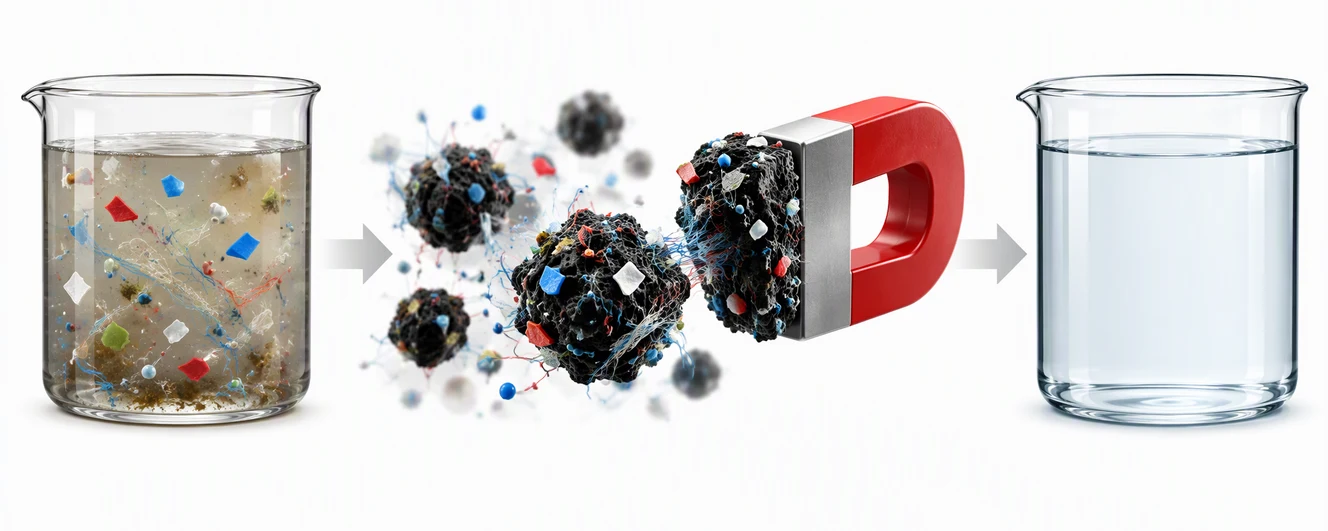
Graphical Abstract Template: Free PPT, Elsevier & Cell Sizes
Free graphical abstract template for PowerPoint: Elsevier 1328 x 531 px and Cell 1200 x 1200 px canvases, with layout rules and a checklist before you submit.
PhD Poster Design Guide: How to Create a Winning Conference Poster (2026)
Complete guide to designing PhD conference posters that stand out. Learn layout, typography, and color schemes, and use free AI tools to build research posters.
Science Journal Cover Design: Complete Guide to Getting Your Research Featured
Learn to design journal cover art that gets your research noticed. Includes technical specs for Nature, Cell, and ACS journals, design principles, and steps.