Glycolysis Diagram Generator 10-step pathway
Free glycolysis diagram generator. Draw the exact 10-step pathway from glucose to two pyruvate and download SVG.
Exact 10-step Embden–Meyerhof–Parnas pathway as SVG — free, no account
Pathway options
The map is fixed: 10 cytosolic steps, net 2 ATP and 2 NADH per glucose. Switching options only changes labels, not the chemistry.
Glycolysis Diagram Generator
Free to try ·
Your AI glycolysis illustration will appear here
For a textbook-accurate 10-step map, use the Precise Diagram tab instead
Glycolysis Diagram Examples
The first four are exact engine renders. The last two are AI illustrations of Illustration mode.
Complete labeled pathway
Exact engine render — 10 steps, net 2 ATP and 2 NADH, cytosol.
Simplified overview
Exact engine render — investment versus payoff without every intermediate.
Irreversible enzymes
Exact engine render — the three committed steps that gluconeogenesis bypasses.
Blank worksheet
Exact engine render — same layout, labels removed for revision.
AI illustration — cytosolic map
AI illustration of Illustration mode — visual mockup, not the precise engine.
AI illustration — respiration context
AI illustration of Illustration mode — context figure, not plotted from a pathway engine.
What is glycolysis?
Glycolysis (the Embden–Meyerhof–Parnas pathway) is the ten-enzyme sequence that splits one glucose into two molecules of pyruvate in the cytosol. It does not require oxygen. The first five steps spend 2 ATP (energy investment); the last five run twice and return 4 ATP plus 2 NADH (energy payoff). Net yield per glucose is therefore 2 ATP, 2 NADH, and 2 pyruvate. This generator draws that map as an exact SVG — not a guessed illustration.
The ten steps
- 1 Hexokinase: glucose + ATP → glucose-6-phosphate + ADP (irreversible).
- 2 Phosphoglucose isomerase: G6P ⇌ fructose-6-phosphate.
- 3 Phosphofructokinase-1: F6P + ATP → fructose-1,6-bisphosphate + ADP (main committed step).
- 4 Aldolase: F1,6BP ⇌ DHAP + glyceraldehyde-3-phosphate.
- 5 Triose phosphate isomerase: DHAP ⇌ G3P. From here every step happens twice.
- 6 GAPDH: G3P → 1,3-bisphosphoglycerate, NAD⁺ → NADH.
- 7 Phosphoglycerate kinase: 1,3-BPG + ADP → 3-PG + ATP (substrate-level phosphorylation).
- 8 Phosphoglycerate mutase: 3-PG ⇌ 2-PG.
- 9 Enolase: 2-PG ⇌ phosphoenolpyruvate + H₂O.
- 10 Pyruvate kinase: PEP + ADP → pyruvate + ATP (irreversible).
Where it sits in cellular respiration
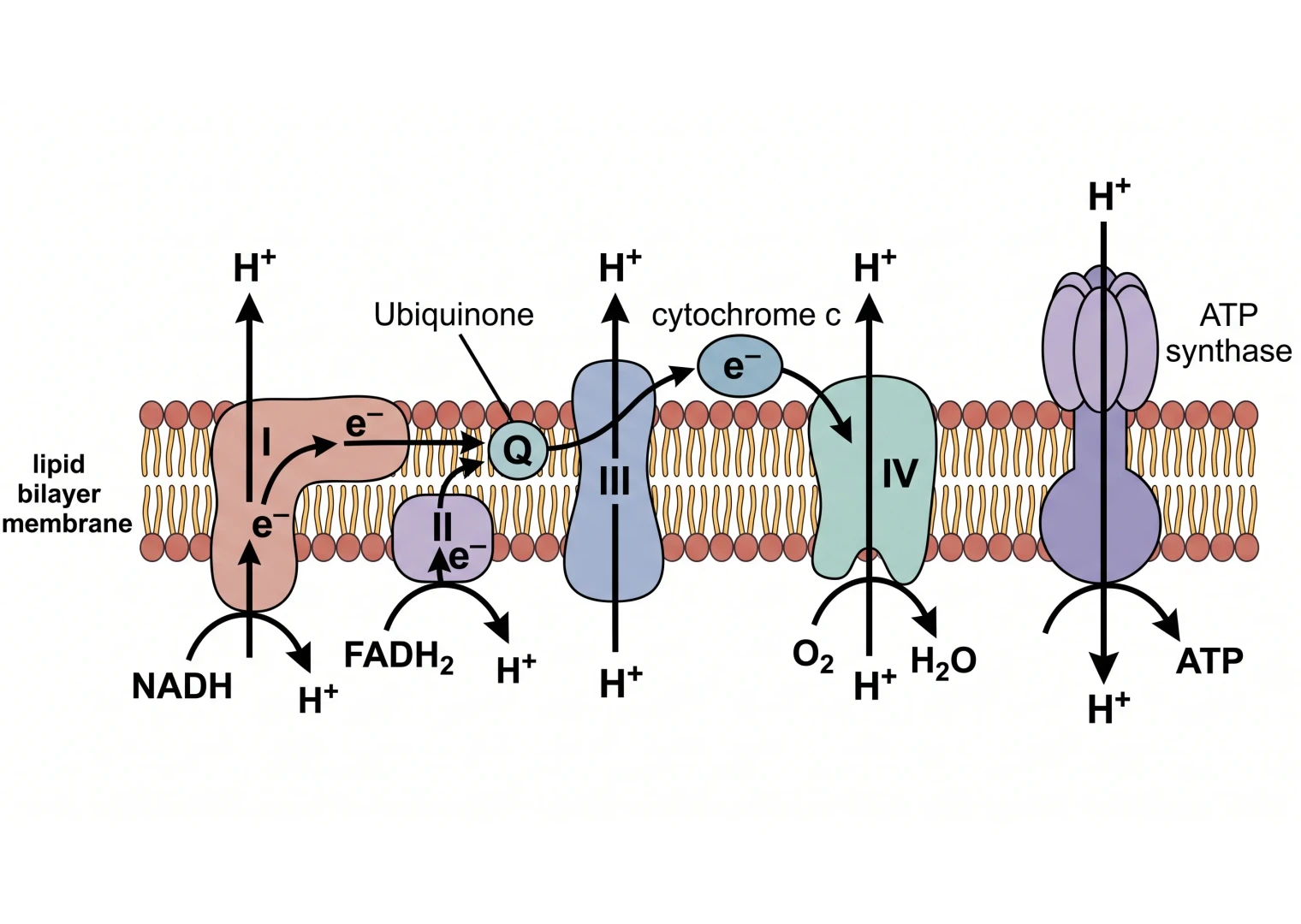
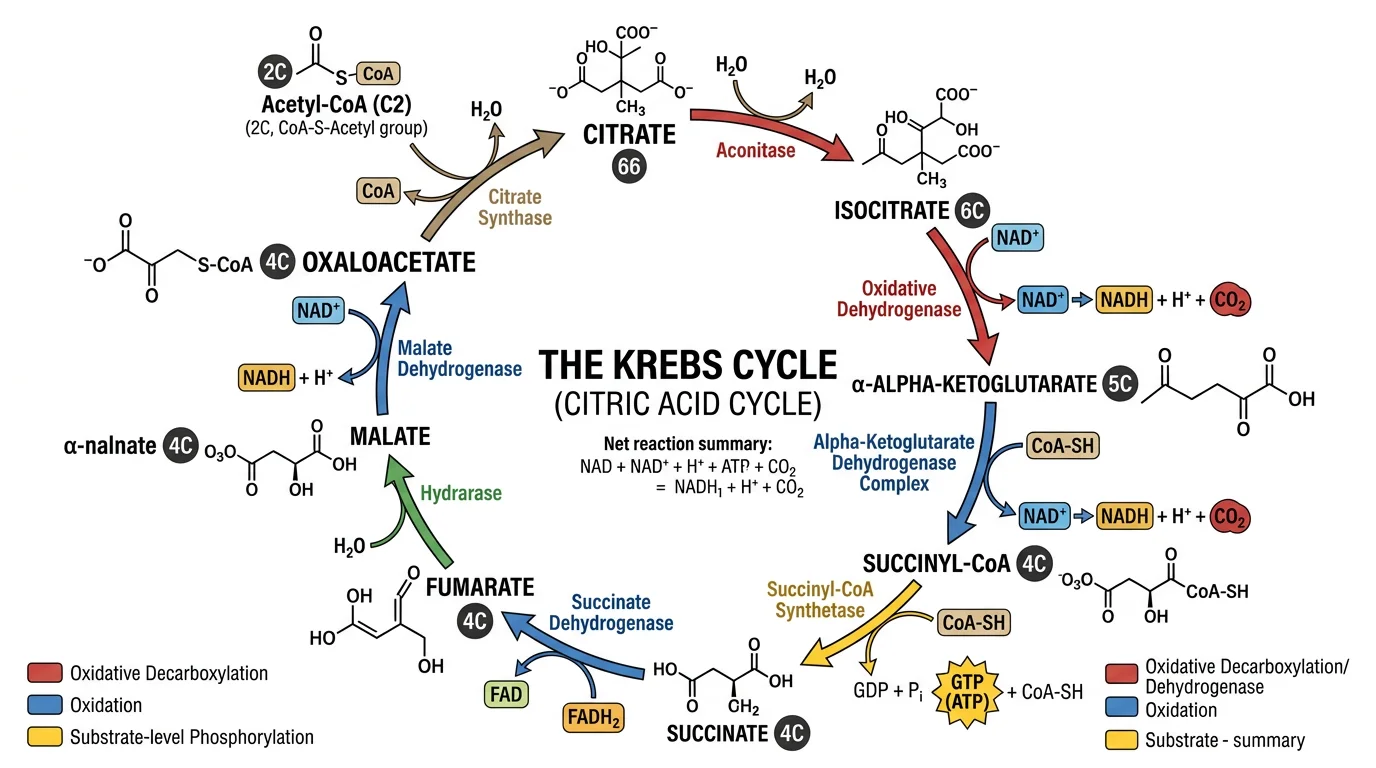
Glycolysis is the first stage of cellular respiration and happens in the cytosol, not in mitochondria. If oxygen is available, pyruvate enters the mitochondrion, is converted to acetyl-CoA, and feeds the Krebs cycle; NADH then drives the electron transport chain. If oxygen is not available, lactate dehydrogenase reduces pyruvate to lactate and regenerates NAD⁺ so glycolysis can continue. Use the Krebs cycle and mitochondria tools for the later stages.
Labeled vs blank vs AI
The Precise Diagram tab is the version for class and papers: the intermediates, enzymes, and net counts are fixed in code. The blank option is the same layout with labels removed. The AI Illustration tab is only for slide mockups or mitochondrial-context art — check every molecule against the precise map before you use it.
Frequently Asked Questions
Related Biology Tools
 Biology
Electron Transport Chain Diagram Generator
Where NADH from glycolysis and the Krebs cycle is oxidized on the inner membrane.
 Biology
Krebs Cycle Diagram Generator
Next stage after pyruvate oxidation — the eight-step citric acid cycle in the matrix.
 Biology
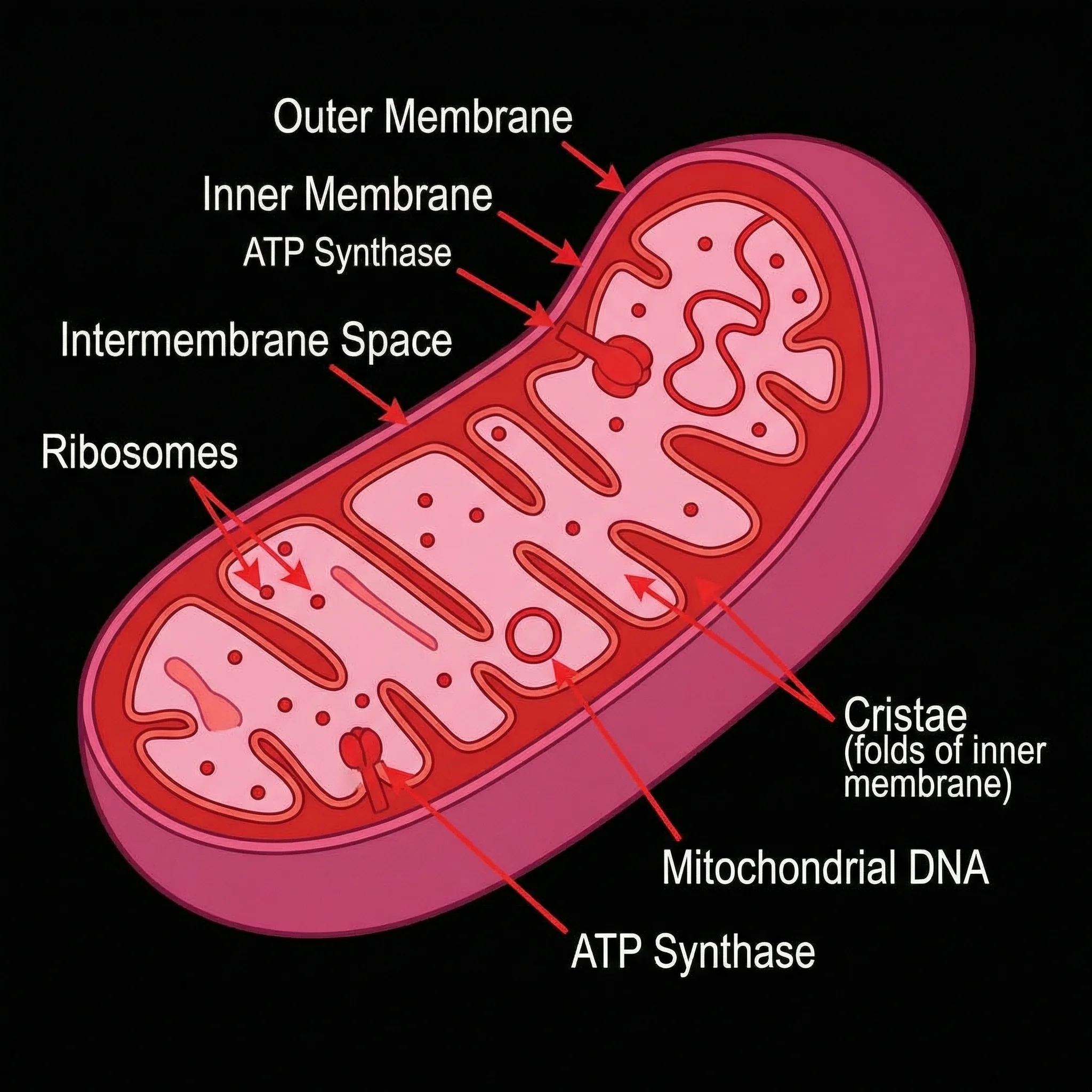
Mitochondria Diagram Generator
Label the matrix and inner membrane where later respiration stages run.
 Biology
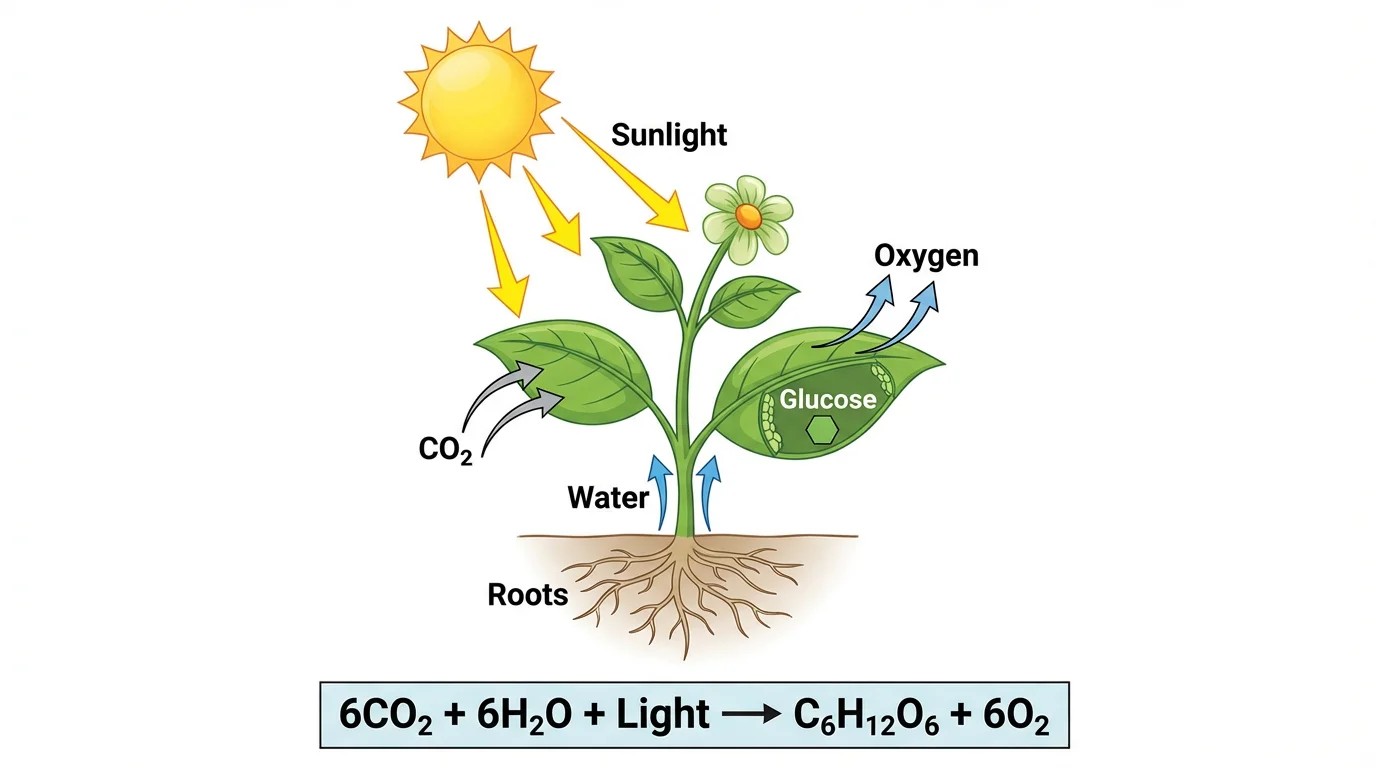
Photosynthesis Diagram Generator
The chloroplast counterpart — light reactions and the Calvin cycle.