Photosynthesis Diagram Generator for Labeled & Unlabeled Diagrams
Make a clearly labeled photosynthesis diagram in seconds. Show the inputs and outputs, the equation 6CO2 + 6H2O + light → C6H12O6 + 6O2, the light-dependent reactions in the thylakoid, and the Calvin cycle in the stroma — or generate a blank, unlabeled version for worksheets.
Photosynthesis Diagram Generator
Free to try ·
Your photosynthesis diagram will appear here
Describe what you need and click Generate
Photosynthesis Diagram Examples
Labeled, unlabeled, and detailed diagrams for every grade level
Labeled Photosynthesis Diagram
The full process with every part labeled — inputs, outputs, and the balanced photosynthesis equation.
Unlabeled / Blank Worksheet
A blank, unlabeled version with empty callout lines — ready to print as a fill-in-the-blank quiz.
Simple Elementary Version
A friendly, formula-free version for K-5 — just sunlight, air, and water in; food and oxygen out.
Light Reactions & Calvin Cycle
The two stages inside the chloroplast — light reactions in the thylakoid, Calvin cycle in the stroma.
What is photosynthesis?
Photosynthesis is the process plants, algae, and some bacteria use to turn light energy into chemical energy stored in sugar. Using sunlight, carbon dioxide from the air, and water from the soil, a plant builds glucose and releases oxygen as a by-product. It is the foundation of almost every food chain on Earth and the source of the oxygen we breathe. This generator draws that process as a clear, labeled diagram so students can see exactly what goes in, what comes out, and where each step happens.
The photosynthesis equation, inputs, and outputs
- The balanced equation is 6CO2 + 6H2O + light energy → C6H12O6 + 6O2.
- Inputs (reactants): carbon dioxide (CO2) taken in through the leaf, water (H2O) absorbed by the roots, and light energy captured by chlorophyll.
- Outputs (products): glucose (C6H12O6), the sugar the plant uses for energy and growth, and oxygen (O2), released back into the air.
- A labeled diagram makes these inputs and outputs obvious with arrows — light and CO2 and water going in, glucose and oxygen coming out.
Where photosynthesis happens: the leaf and chloroplast
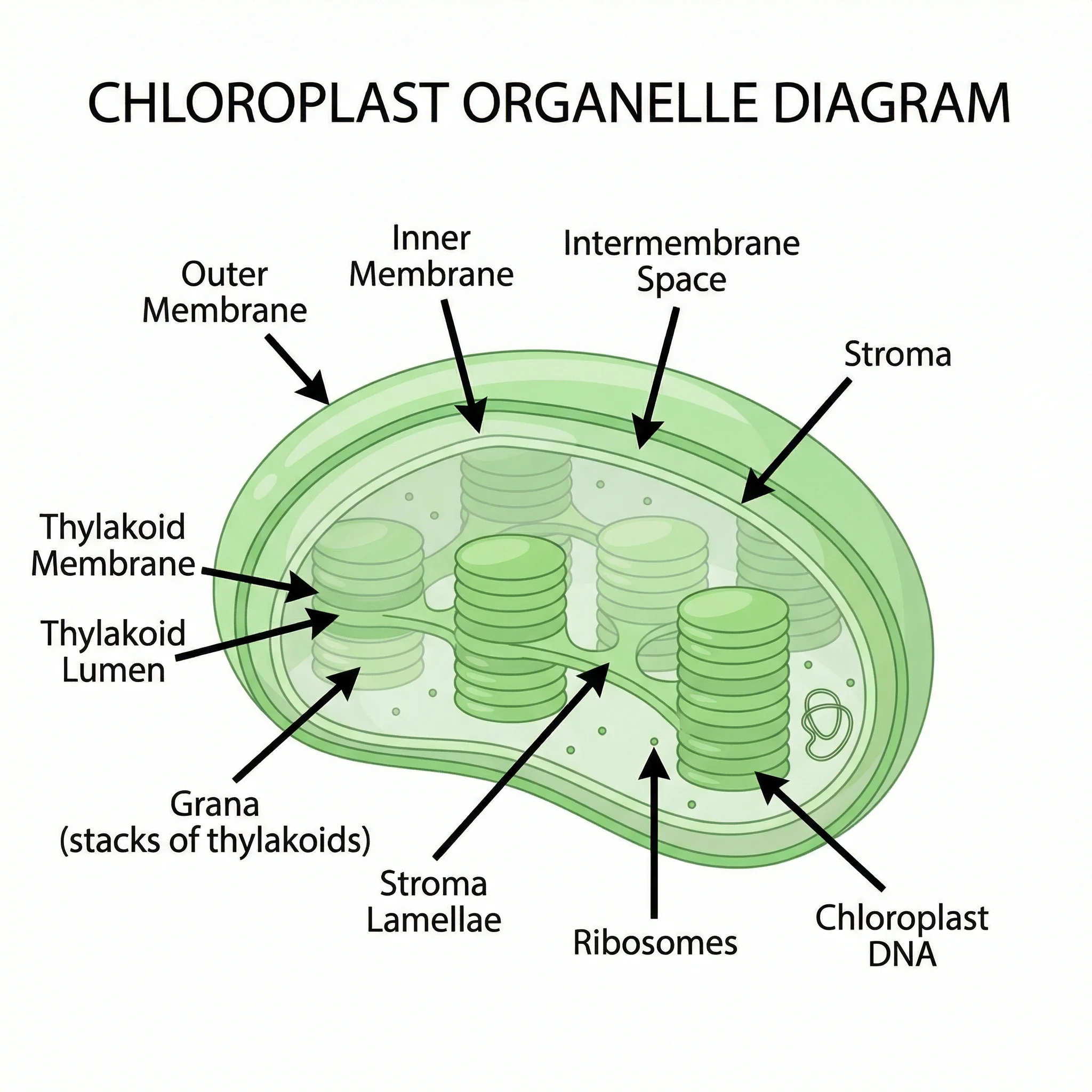
Photosynthesis takes place mainly in the leaves, inside tiny organelles called chloroplasts that are packed with the green pigment chlorophyll. Carbon dioxide enters through small pores called stomata, water travels up from the roots, and the chloroplasts capture sunlight to power the reactions. Inside each chloroplast are two key regions: the thylakoids (stacked membrane discs) and the stroma (the fluid around them). Each region hosts one of the two stages of photosynthesis, which is why a good diagram shows a chloroplast cross-section, not just a whole plant.
The two stages: light-dependent reactions and the Calvin cycle
- Light-dependent reactions: these happen in the thylakoid membranes. Light energy splits water, releasing oxygen, and produces the energy carriers ATP and NADPH.
- Calvin cycle (light-independent reactions): these happen in the stroma. Using the ATP and NADPH from stage one, the cycle fixes carbon dioxide and builds glucose — no light is needed directly.
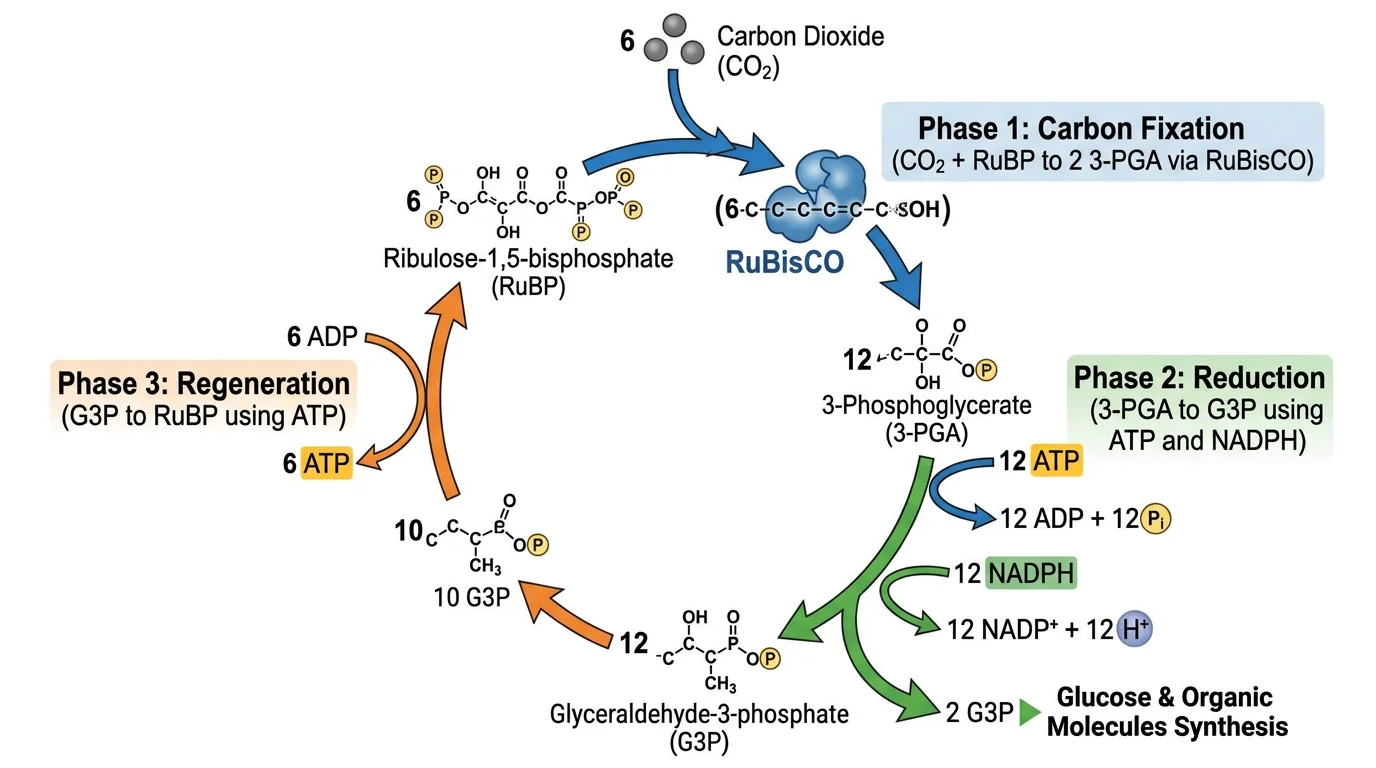
- The Calvin cycle is often the part students most need to see drawn out, with CO2 fixation, reduction, and regeneration of RuBP. You can generate a labeled or blank version of either stage on its own, or the whole process together.
Labeled vs unlabeled diagrams for worksheets
A labeled diagram shows every part named — sunlight, CO2, water, glucose, oxygen, chloroplast, thylakoid, and stroma — and is ideal for teaching, notes, and revision. An unlabeled or blank version keeps the same artwork but replaces the labels with empty callout lines, turning it into a fill-in-the-blank worksheet or quiz. The same applies to the Calvin cycle: generate a labeled cycle to teach the steps, then a blank one to test recall. This tool can produce both, so you can hand out a worksheet and keep the answer key from the same diagram.
How to generate a photosynthesis diagram
- Describe what you need in plain English — for example, "labeled photosynthesis diagram for 7th grade showing inputs, outputs, and the equation."
- Say whether you want it labeled or unlabeled, and pick the level: simple for elementary, detailed chloroplast cross-section for high school or AP Biology.
- Choose an aspect ratio (16:9 works well for slides and worksheets) and generate. Refine the prompt and regenerate until it matches your lesson.
- Because the image is AI-generated, always review it for scientific accuracy before using it with students — check that the inputs, outputs, equation, and stage locations are correct.
Frequently Asked Questions
Related Biology Tools
 Biology
Calvin Cycle Diagram Generator
Draw the Calvin cycle in the stroma with labeled CO2 fixation, reduction, and RuBP regeneration.
 Biology
Chloroplast Diagram Generator
Create labeled chloroplast diagrams showing the thylakoids, stroma, and grana where photosynthesis happens.
 Biology
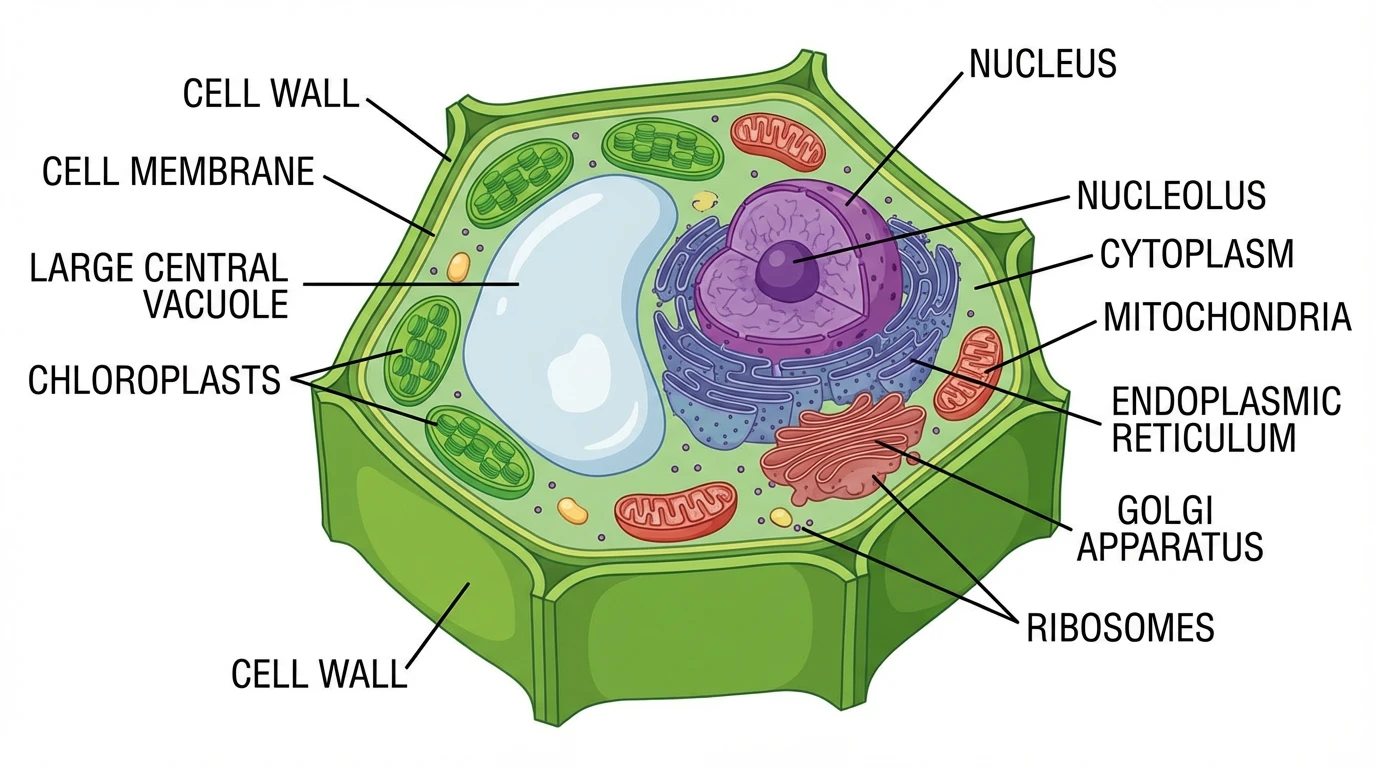
Plant Cell Diagram Generator
Make labeled plant cell diagrams with the cell wall, vacuole, and chloroplasts.