Mechanism of Action Diagram Generator target to effect
Generate drug mechanism of action diagrams from text: target, binding, downstream effect, inhibition and activation arrows. For papers, grants and pitch decks.
Create Your Mechanism of Action Diagram
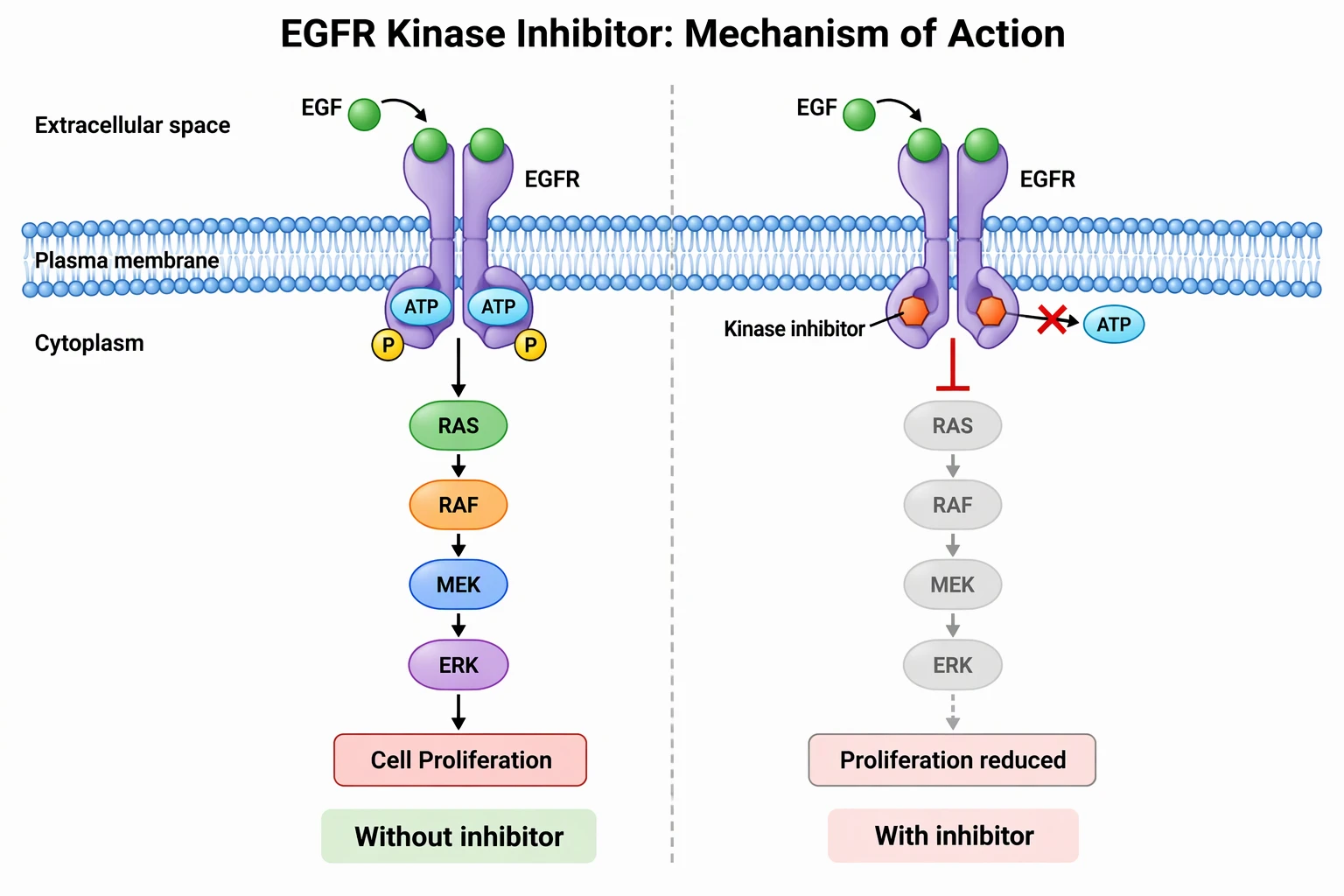 Example: Kinase inhibitorView full size
Free to try ·
Mechanism of Action Diagram Examples
Five AI drafts covering common drug mechanisms, each with the simplifications noted. Review before you publish.
Kinase inhibitor: with and without the drug
AI-generated. Left and right panels compare normal EGFR signaling with ATP-pocket occupancy by the inhibitor. The order EGF, EGFR, RAS, RAF, MEK, ERK is right. Simplified: the adaptors GRB2 and SOS between the receptor and RAS are left out, and the drug is a generic icon, not a specific compound.
Checkpoint antibody blocking PD-1 and PD-L1
AI-generated. Without the antibody, PD-L1 on the tumor cell engages PD-1 and suppresses the T cell; with it, the interaction is blocked and the T cell can act. Simplified: one receptor pair, no co-stimulatory signals or antigen presentation.
Enzyme inhibitor: statin and HMG-CoA reductase
AI-generated. Shows the rate-limiting step (HMG-CoA to mevalonate) and the downstream LDL receptor effect. The statin is the only inhibition symbol (T-bar, on the enzyme); the dashed HMG-CoA to mevalonate arrow shows reduced flux. Simplified: the many steps between mevalonate and cholesterol are collapsed into one arrow, and the LDL receptor is a schematic shape.
Antibody-drug conjugate: five steps
AI-generated. Numbered steps run from antigen binding through endosome and lysosome to payload release and cell death. Simplified: the payload class is generic (DNA damage or microtubule disruption), and the endosome-to-lysosome maturation is drawn as a single fusion.
Targeted protein degrader (PROTAC)
AI-generated. Ternary complex, polyubiquitination, proteasome recognition, degradation, and catalytic recycling of the degrader. Simplified: the PROTAC is shown as a small bridge molecule, and its release before proteasome docking is not drawn separately.
Need the pathway the drug acts on? Start with the signaling pathway diagram generator, or see a worked example of a drug target pathway in the cGAS-STING pathway diagram generator.
What a mechanism of action diagram has to show
A mechanism of action (MoA) diagram shows how a drug produces its effect: which molecular target it engages, how it binds or modifies that target, and what changes downstream. Reviewers read it in a fixed order. They look for the target, the type of interaction (inhibition, activation, blockade, degradation), the cellular location, and the resulting cellular or tissue effect. A clear MoA figure separates molecular action from clinical outcome, so a binding event is never presented as an efficacy result.
Common drug mechanism archetypes
- Enzyme or kinase inhibitor: the drug occupies an active site or ATP pocket and blocks catalysis, so the downstream cascade is reduced.
- Receptor antagonist or agonist: the drug sits in the ligand pocket or an allosteric site and blocks, mimics, or modulates the natural ligand.
- Blocking antibody: the antibody binds a receptor or ligand on the cell surface and prevents a pair interaction, as with PD-1 and PD-L1.
- Antibody-drug conjugate: antigen binding, internalization, linker cleavage, payload release, cell death.
- Targeted protein degrader: a bifunctional molecule brings an E3 ligase to the target, which is ubiquitinated and sent to the proteasome.
- Prodrug: an inactive compound is converted to the active drug by a specific enzyme or condition before it acts.
How to write the prompt for a drug mechanism figure
- Name the target and the drug class, for example "ATP-competitive EGFR tyrosine kinase inhibitor".
- State the compartment: extracellular space, plasma membrane, cytoplasm, lysosome, nucleus.
- Write the order of events as numbered steps, and say for each arrow whether it means binding, activation, inhibition, or translocation.
- Ask for a before-and-after or with-and-without-drug layout when the point is what the drug changes.
- Keep dose, efficacy numbers, and clinical claims out of the figure unless you add them yourself from a cited source.
Review every figure before you publish it
- The generator gives a clean first draft with a sensible layout and legible labels. It does not guarantee pharmacology: it can swap an inhibition T-bar for an activation arrow, skip an intermediate step, or draw a protein in the wrong compartment.
- Check the target name, the arrow meanings, and the order of steps against a primary source such as the original paper, a drug label, or a review before the figure goes into a manuscript, grant, or investor deck.
- The gallery notes above list what each draft simplifies, so you can see what to fix.
Frequently Asked Questions
Related Biology Tools
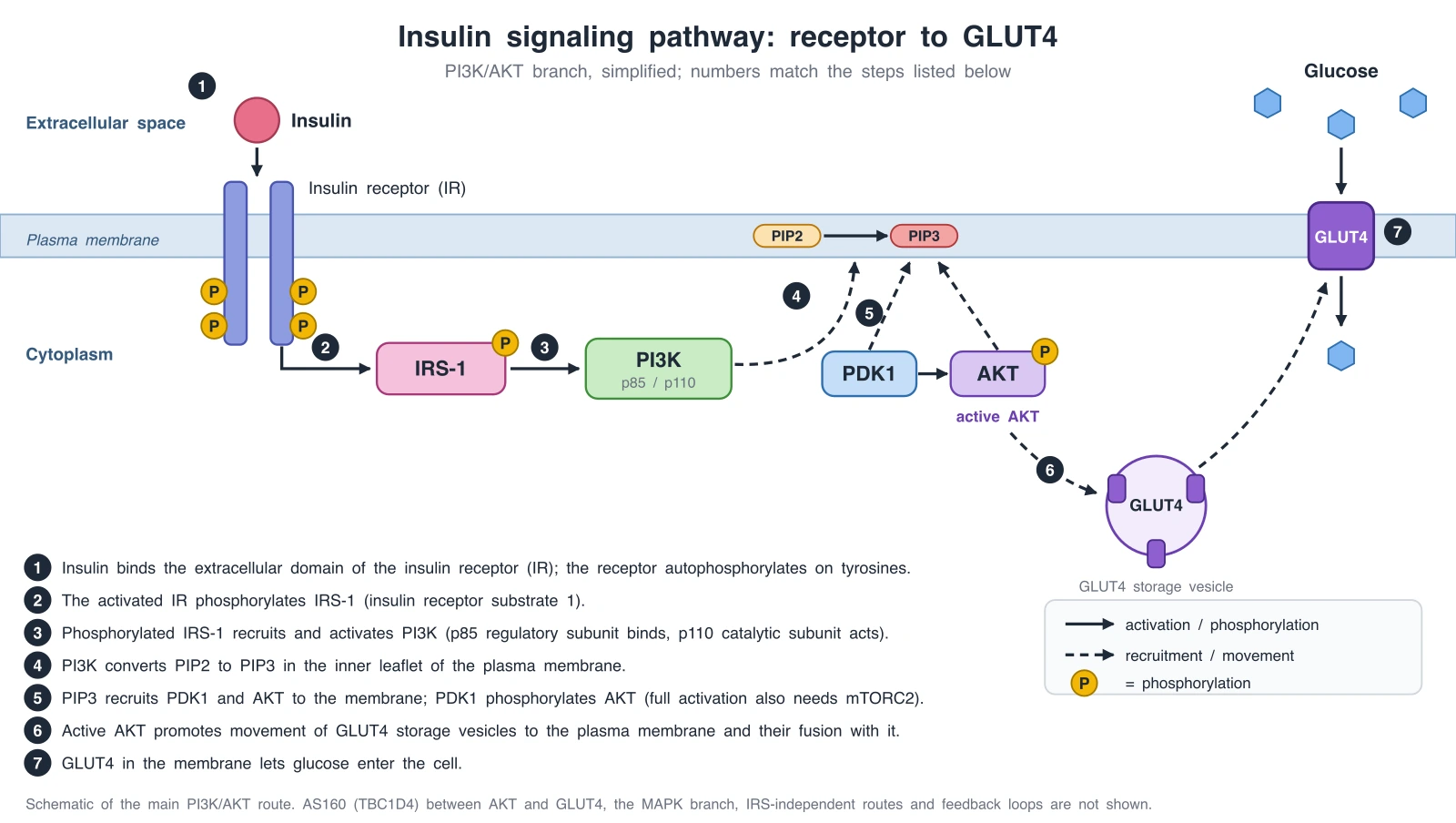
Signaling Pathway Diagram Generator
Draw the pathway a drug acts on: insulin, TGF-β/SMAD, and MAPK/ERK with membrane and nucleus layers.
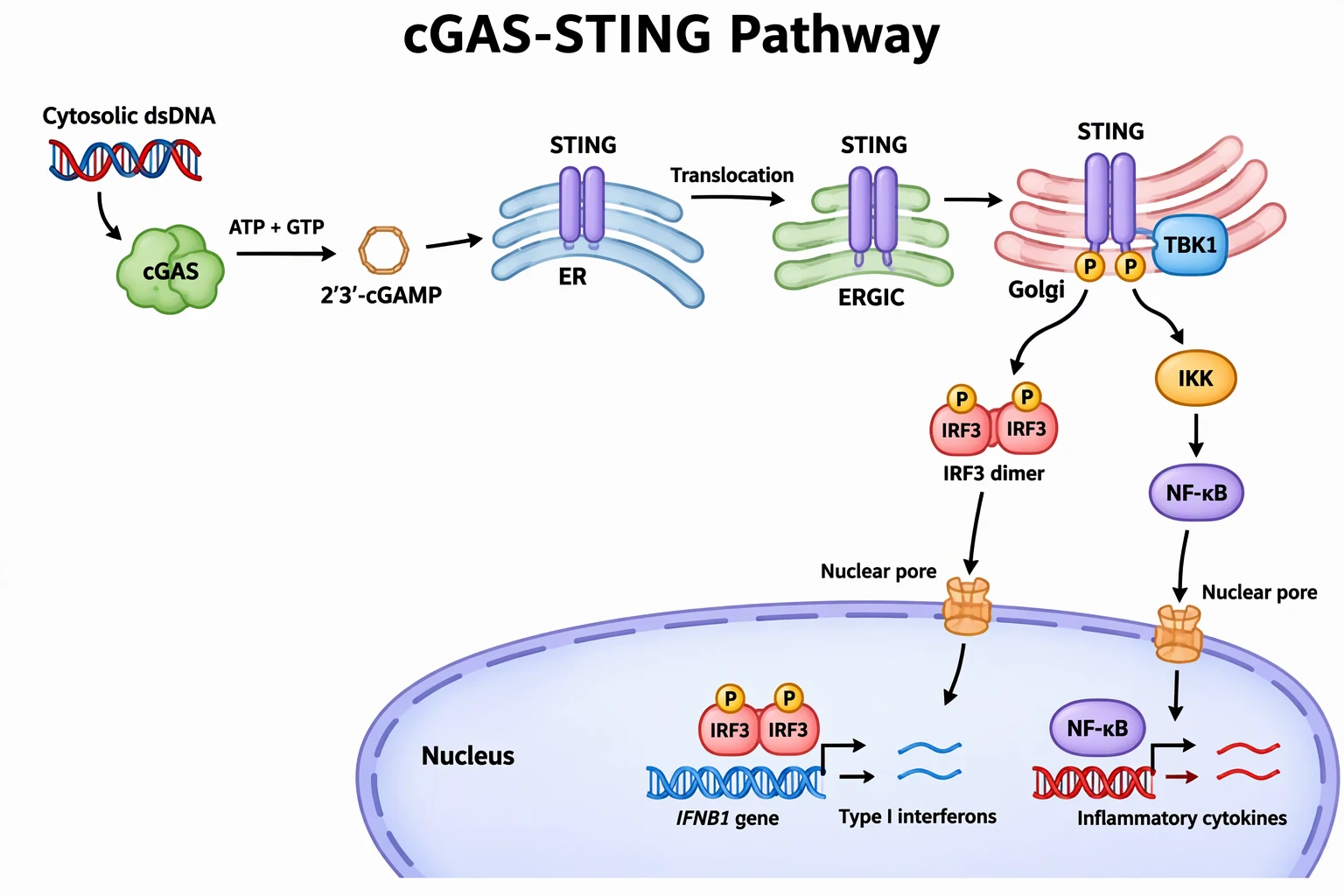
cGAS-STING Pathway Diagram Generator
Innate immune sensing from cytosolic DNA to type I interferon, a common target for agonists and inhibitors.
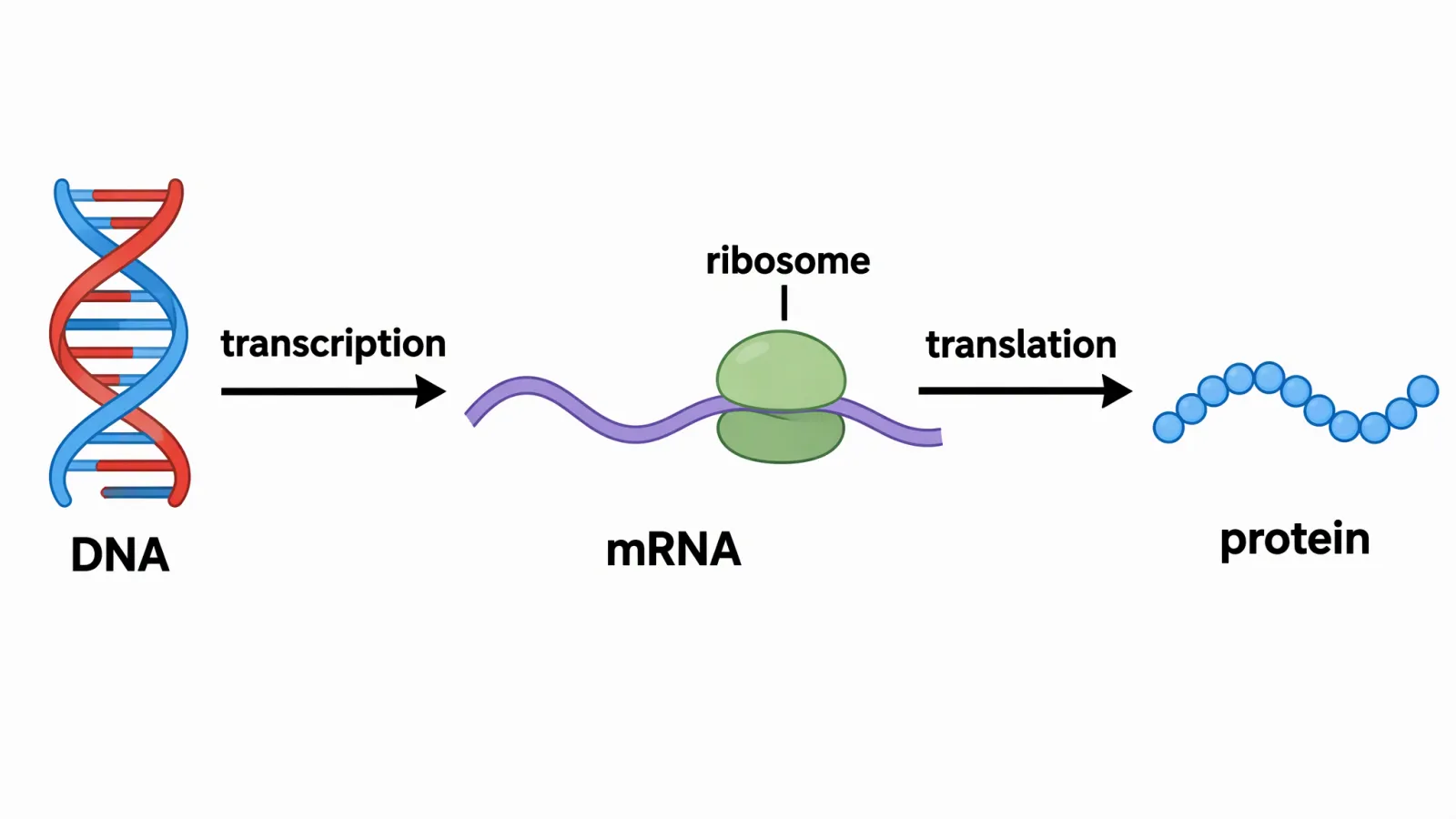
AI Scientific Image Generator
Describe any lab or biology figure and generate a clean illustration.