Pacemaker Diagram Generator
Make a pacemaker diagram for patient handouts: generator, leads, heart chambers, single vs dual chamber and leadless. Based on NHLBI. Clinician review needed.
Looking for a picture to understand a pacemaker? The examples below show the generator, the leads, and where the lead tips end. Not for diagnosis or personal medical advice. Ask your cardiologist how your own device differs.
Create Your Pacemaker Diagram
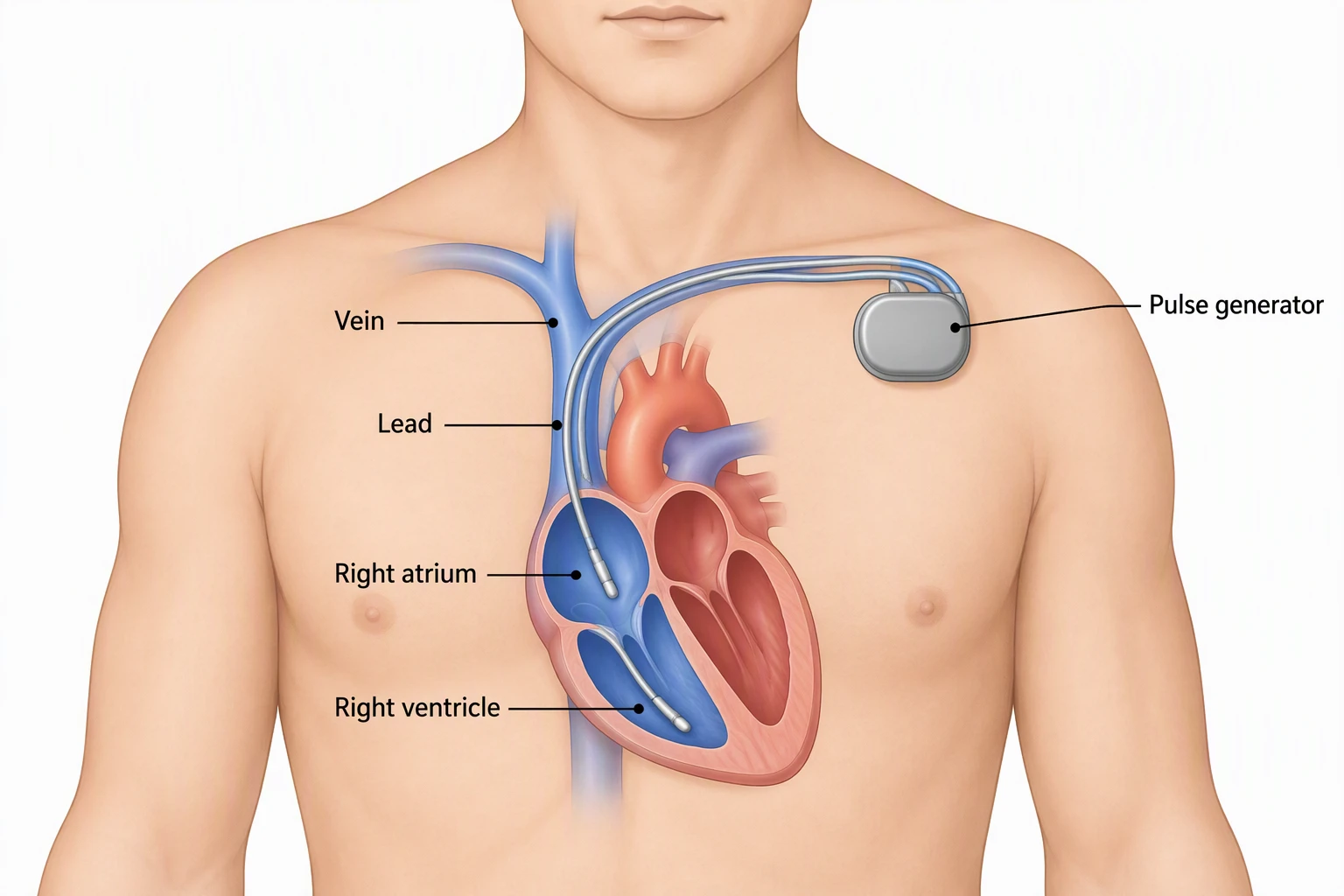 Example: Pacemaker in the chest, with leadsView full size
Free preview on this page · Clean file download needs a
Your pacemaker diagram will appear here
AI diagrams are drafts. Check that every lead runs inside a vein into the right side of the heart and every label is correct, and have a clinician review before use with patients. No real patient data.
Pacemaker Diagram Examples
Four AI diagrams, each compared with NHLBI and with known flaws noted. No real patients. A clinician should review every picture before patient use.
Pacemaker diagram: generator, leads and right heart (AI illustration)
AI-generated from the prompt shown, on the first try, and all five labels came out spelled as written. We compared it with the NHLBI page on how pacemakers work (checked October 2026): the pulse generator sits outside the heart in the chest, the leads run inside a vein, and the electrodes end in the right side of the heart. Here the generator is below the left collarbone (the viewer's right), one lead tip is in the right atrium and one in the right ventricle, and neither lead enters the left side of the heart. Known flaws: between the generator and the large vein the leads are drawn running over the chest instead of inside a vein, so the vein route (for example the subclavian vein) is not shown; the generator is drawn fairly high and far out toward the shoulder; the atrial lead tip floats in the middle of the chamber, while real atrial leads are usually fixed to the atrial wall or appendage; the lead to the right ventricle runs through the right atrium without the tricuspid valve drawn; the leads are shown as smooth straight tubes with no slack loop; the torso is a plain male outline with no ribs, lungs or collarbone drawn; and the heart is a simplified cutaway with unlabeled vessels. It shows one generic dual-lead layout, not any brand.
Pacemaker parts close-up (AI illustration)
AI-generated from the prompt shown, on the first try, and all six labels came out spelled as written. NHLBI names the pulse generator, the leads and the electrodes as the main parts of a traditional pacemaker; the battery, circuitry and header are standard device parts that NHLBI does not itemize, so check them against your device maker's patient material (checked October 2026). Known flaws: the inside of the case is invented and does not match any real device layout; the lead looks like bare braided metal, while real leads have insulation over a coil; the header is a generic plug with no ports or set screws; the lead is far shorter than a real one, so do not use it for scale; the tip shows small tines, which is one fixation style, and some leads use a screw instead. Use it to name the parts, not to show a specific device.
Single-chamber vs dual-chamber pacemaker (AI illustration)
AI-generated from the prompt shown, which is our third wording. The first try showed a single lead with a loose piece in a second chamber, so we reworded the prompt to ask for one unbroken line per lead. NHLBI describes a single-chamber pacemaker as one lead and a dual-chamber pacemaker as two leads, both to the right side of the heart (checked October 2026). This version matches: one lead ending in the right ventricle on the left, two leads ending in the right atrium and right ventricle on the right. Known flaws: in the left panel a blue vein-like tube is drawn all the way from the generator over the chest, which is not real anatomy, and in the right panel two bare leads cross the chest the same way; the generator is small next to the heart; the two leads run side by side and the ventricular lead passes close to the atrial label; the panel titles are extra words beyond the label list we gave; the same heart is repeated in both panels; and a biventricular device (CRT, with a third lead for the left ventricle) is not shown.
Leadless pacemaker in the right ventricle (AI illustration)
AI-generated from the prompt shown, on the first of two tries (an earlier version had a vessel leaving the apex of the right ventricle and the capsule lying flat on the wall, so we reworded the prompt and replaced it), and all five labels came out spelled as written. NHLBI says a leadless pacemaker is about the size of a large pill capsule, combines the pulse generator and electrodes in one device placed inside a heart chamber through a vein, and sends pulses to the right ventricle (checked October 2026). The picture matches that: a small capsule anchored at the apex of the right ventricle with its tined end against the muscle, no wire and no pocket under the skin. Known flaws: the capsule is drawn tiny in the heart and large only in the magnified inset, so its size against the heart is a rough guess; the superior and inferior vena cava are drawn as cut tubes beside the heart that do not clearly join the right atrium, and there is a small round gap in the aortic arch; the great vessels are simplified; the catheter that delivers the capsule, and the vein it travels through, are not shown; the capsule is drawn with small tines at one end, which is one fixation style, and it does not show how a leadless device that senses the right atrium differs. It is a generic capsule, not any brand.
Need the heart first? Use the Heart Diagram Generator. For implant handouts in other body parts try the Knee Replacement Diagram Generator, for other organs the Medical Illustration Generator, and for charts and posters the Medical Infographic Maker. Sources, checked October 2026: NHLBI: How a pacemaker works, NHLBI: Pacemaker procedure and MedlinePlus: Pacemakers and ICDs.
What this page is for
This page is for cardiology and cardiac device clinic nurses, patient educators, technologists, and students who need a pacemaker picture for a handout, a pre-procedure class, a clinic poster, or a lecture slide. You describe the picture and the exact wording, and the generator drafts it: where the device sits, how the leads run, the parts of a pacemaker, single chamber versus dual chamber, or a leadless device. It is a drafting tool, not a library of approved patient materials. Nothing here is a diagnosis or medical advice, and a clinician should review every picture before it reaches a patient.
The parts of a pacemaker
- NHLBI describes a traditional pacemaker as a pulse generator and leads. The pulse generator makes the low-energy electrical pulses and sits outside the heart, in the chest or abdomen. The leads are wires placed inside veins that carry the pulses to electrodes in one to three heart chambers. The electrodes sense the natural heartbeat and, when it is slower than normal, send pulses to make the heart beat normally. Checked October 2026.
- Inside the generator case there is a battery and a small circuit; the plastic block where the lead plugs in is often called the header. NHLBI does not itemize these, so use the names from your device maker's patient guide if you need them on a handout. The close-up example on this page uses these labels: Case, Battery, Circuitry, Header, Lead, Electrode tip.
Where it sits and how the leads run
- NHLBI says a permanent pacemaker is placed in the chest or abdomen, just under the skin, and that for a wired device the doctor guides the leads through a vein in the neck, chest, or thigh to the heart, using ultrasound or X-ray. Many pictures place the generator below the collarbone on one side of the chest; NHLBI says only "chest or abdomen", so ask your device team how your clinic describes it. Checked October 2026.
- A good pacemaker diagram shows the generator outside the heart, a lead that runs inside a vein (not across open chest), and lead tips in the right atrium and right ventricle for a dual-chamber device. Leads for a standard pacemaker do not go into the left side of the heart. If a picture shows that, discard it.
Single-chamber, dual-chamber, biventricular and leadless
- NHLBI lists these types. A single-chamber pacemaker has one lead to the right side of the heart. A dual-chamber pacemaker has two leads to the right side of the heart. A biventricular pacemaker, also called a cardiac resynchronization therapy (CRT) device, sends pulses to both ventricles and an atrium so the two ventricles pump together. A leadless pacemaker is about the size of a large pill capsule, holds the pulse generator and electrodes in one device placed inside a heart chamber through a vein, and sends pulses to the right ventricle. Checked October 2026.
- Our examples cover single chamber, dual chamber and leadless. We did not test a biventricular picture. The extra lead for the left ventricle runs through a vein on the heart surface, so check that path carefully if you draw one.
Pacemaker or ICD?
MedlinePlus explains that a pacemaker uses electrical pulses to keep the heart beating at a normal rate, while an implantable cardioverter defibrillator (ICD) watches the rhythm and delivers a shock when it senses a dangerous one, mainly to help prevent sudden cardiac arrest, and that most newer ICDs can also work as a pacemaker. If your handout covers both, make two pictures with clear titles, and do not label a defibrillator as a pacemaker. Checked October 2026.
How to make a pacemaker handout you can defend
- Pick one message and one audience, such as "adults before implant, where the device goes" or "nursing students, the parts of a pacemaker".
- Take the facts from a named source such as NHLBI or your device clinic protocol, and write each label into the prompt as exact words.
- State the view and the orientation: a front view with the patient's left on the viewer's right is easy to read, and AI sometimes puts the device or leads on the wrong side.
- Ask for a simplified drawing with no incision, blood, surgical tools or extra words, in a calm style.
- Add the source, the date you checked it, and "For education only" as footer text.
- Generate, then check every label and follow each lead from the generator to its tip: inside a vein, into the right side of the heart, tip touching the wall. If one thing is wrong, generate again.
- Have your cardiologist or device nurse review the picture and wording before it goes to a patient.
Accuracy and what AI gets wrong
We made four test pictures and checked each one; the first single-versus-dual attempt was wrong and is not shown. In the kept pictures the words came out right, and each caption lists the flaws we found. Check these in your own results: a lead that enters the left atrium or left ventricle; a lead drawn across the chest surface instead of inside a vein; a generator inside the chest cavity or over the heart; a lead with a loose end or two tips on one lead; a dual-chamber device with only one lead, or the other way round; atrial and ventricular lead tips swapped; left and right of the heart or the patient mixed up; misspelled labels; and drawings that copy a specific brand. Treat each picture as a draft. It does not diagnose, it does not give medical advice, and it must be reviewed by a qualified clinician before use with patients.
Keep it calm
Many patients are anxious before a heart procedure. Prefer soft colors, a simplified outline, and plain words such as "pulse generator" and "lead". The examples here leave out the incision, surgical tools and blood on purpose.
Privacy and use with patients
Do not enter patient names, dates of birth, record numbers, device serial numbers, x-rays, or real patient results. Describe the device in general terms. Check your organization's policy on AI tools and on what may go into patient materials, and follow its review and sign-off rules.
Free trial and downloads
Start free with 2 image credits, valid for 7 days, no card required. Free accounts download PNG or JPG.
Frequently Asked Questions
Related Medical Tools
 Medical
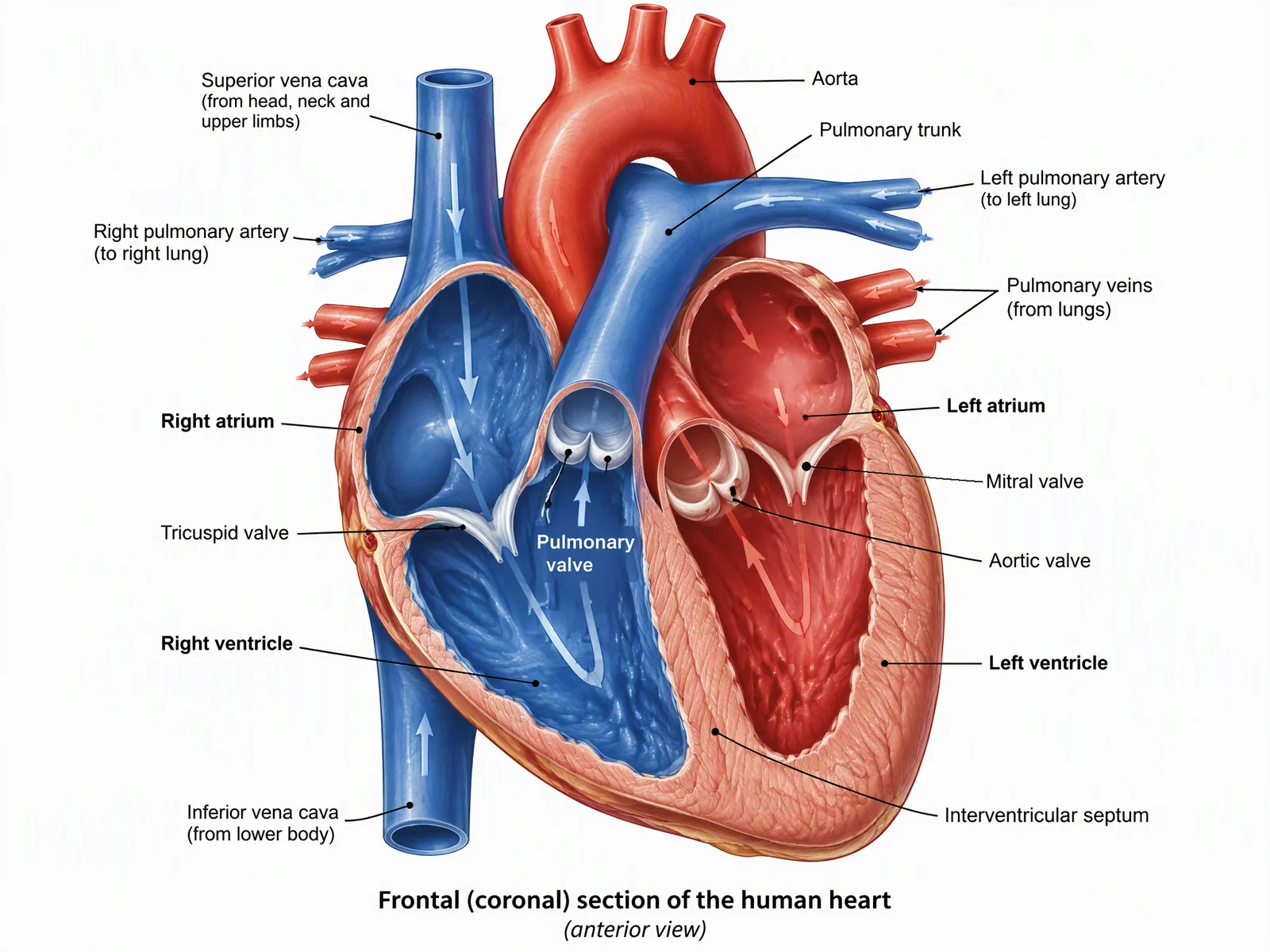
Heart Diagram Generator
Labeled heart diagrams: four chambers, valves, vessels, and blood flow.
 Medical
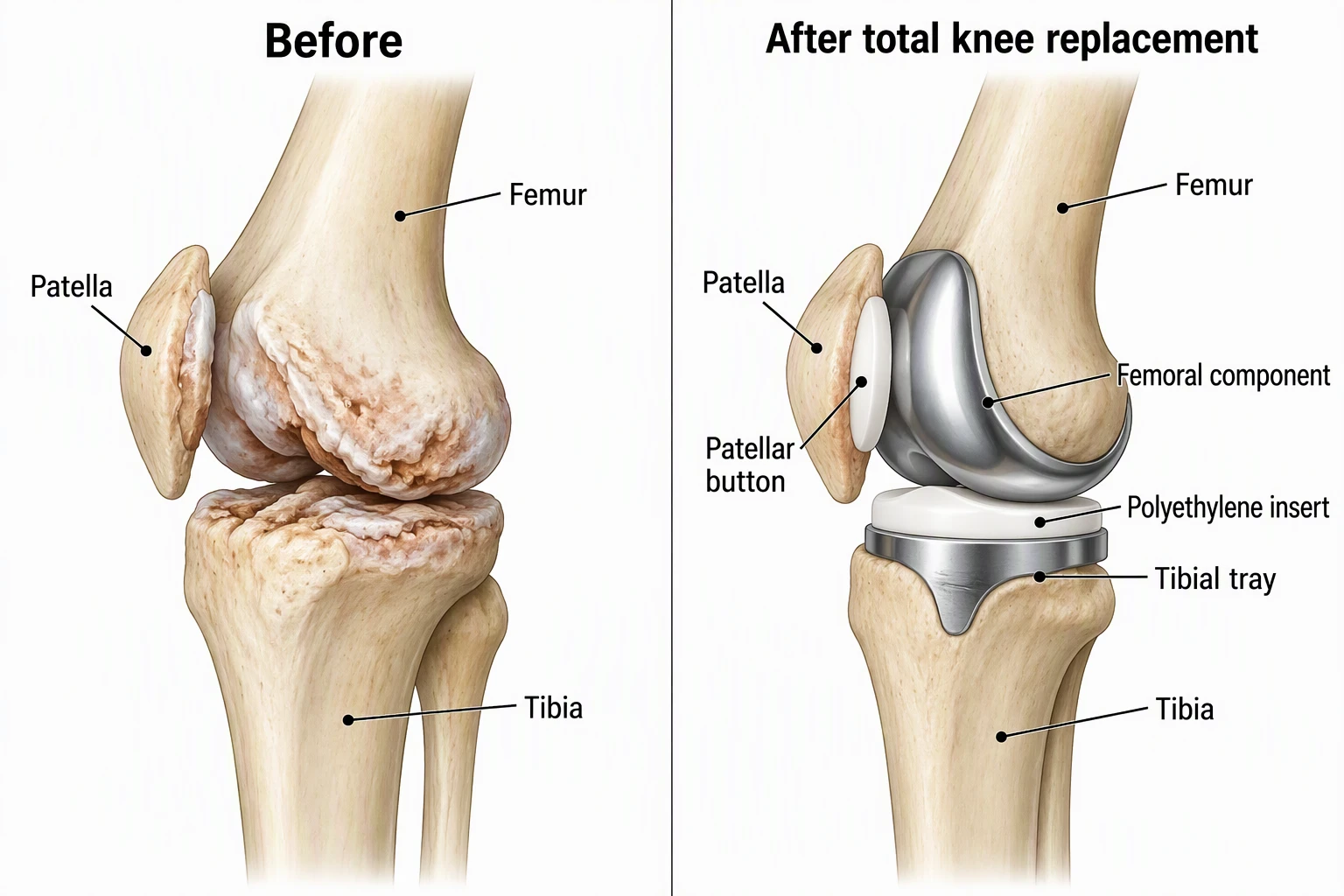
Knee Replacement Diagram Generator
Patient-friendly implant pictures: before and after, implant parts, and surgery steps.
MedicalMedical Illustration Generator
Create labeled medical and anatomy illustrations for teaching and patient education.
 Medical
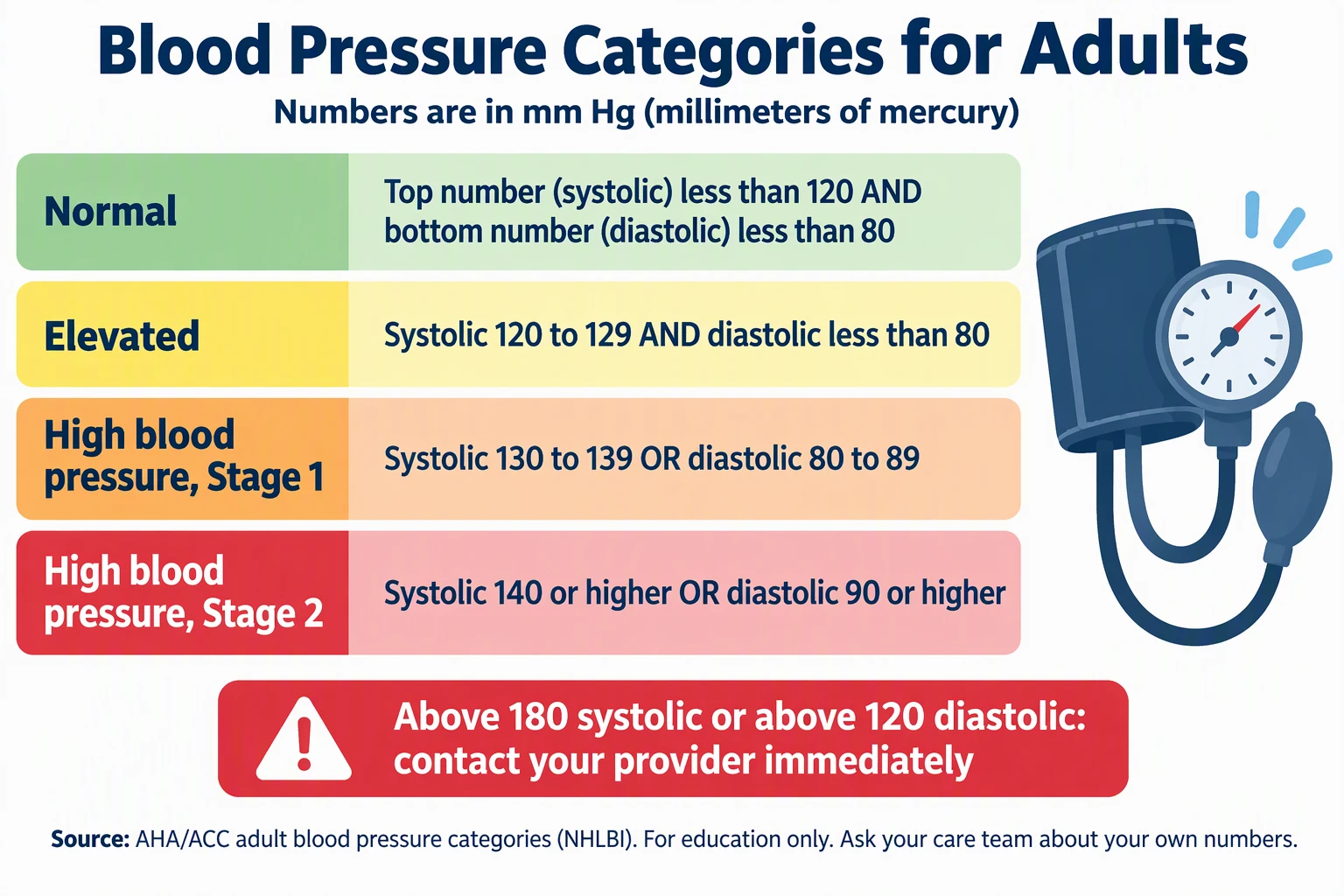
 Infographic Maker
Make medical and patient education infographics from facts you cite. Clinician review needed.