Significant Figures Calculator
Count significant figures digit by digit, round to N sig figs, add or multiply with steps, and convert scientific notation. Free, no sign-up.
3 significant figures
Green digits count, grey digits do not, amber digits are ambiguous and are not counted. The number under each digit is the rule that decided it.
- 1Every nonzero digit is significant.
- 3Leading zeros only place the decimal point and are never significant.
- 4Trailing zeros are significant when the number has a decimal point.
Same value in scientific notation, same figures
4.50 × 10⁻³
Conventions used here: trailing zeros in a number with no decimal point (100, 1200) are ambiguous and are counted as not significant; an exact 5 rounds up (half up) unless you switch to half to even; zero counts as one figure (textbooks differ on zero; this is the tool's convention). Numbers are read as typed text, so 1.200 keeps its zeros.
Significant figures rules at a glance
| Rule | What it says | Example | Figures |
|---|---|---|---|
| 1. Nonzero digit | Every nonzero digit is significant. | 4.56 | 3 |
| 2. Zero between digits | Zeros between nonzero digits are significant. | 1.007 | 4 |
| 3. Leading zero | Leading zeros only place the decimal point and are never significant. | 0.00450 | 3 |
| 4. Trailing zero with a point | Trailing zeros are significant when the number has a decimal point. | 1.200 | 4 |
| 5. Trailing zero, no point | Trailing zeros in a number with no decimal point are ambiguous. This tool counts them as not significant. | 1200 | 2 |
| 6. The number zero (convention) | Convention: textbooks differ on zero. This tool counts the last written digit of zero as 1 significant figure. | 0.00 | 1 |
Free Significant Figures Charts and Worksheets
Every sheet below is drawn from the same code as the calculator above. View, download and print them free, no sign-up.
Significant Figures Rules Chart
Six rules, each with an example whose digits are colored by the rule that decided them.
Reference charts
Study aids
Printer friendly
Significant figures practice: 10 questions
Work each one first, then open the answer. Every answer is computed by the same code as the calculator.
1. How many significant figures are in 0.00450?
3. The counted digits are 4, 5, 0.
2. How many significant figures are in 5002?
4. The counted digits are 5, 0, 0, 2.
3. How many significant figures are in 300?
1. Trailing zeros with no decimal point are ambiguous; this tool counts them as not significant.
4. How many significant figures are in 2.40 × 10³?
3. The counted digits are 2, 4, 0.
5. Round 3.14159 to 3 significant figures.
3.14. The discarded part starts with 1: it is less than half of the last kept place, so keep the digits as they are.
6. Round 98765 to 2 significant figures.
99000 (9.9 × 10⁴). The discarded part starts with 7: it is more than half of the last kept place, so round up.
7. Calculate 12.11 + 18.0 + 1.013 with the right number of decimal places.
31.1. The exact sum is 31.123; the least precise term limits the answer to the tenths place.
8. Calculate 4.56 × 1.4 with the right number of significant figures.
6.4. The exact result is 6.384; the fewest figures in the inputs limit it to 2 significant figures.
9. Calculate 6.38 ÷ 2.0 with the right number of significant figures.
3.2. The exact result is 3.19; the fewest figures in the inputs limit it to 2 significant figures.
10. Write 0.000602 in scientific notation without changing the significant figures.
6.02 × 10⁻⁴. 3 significant figures are kept in the mantissa.
What are significant figures?
Significant figures are the digits of a measurement that carry information: every digit you are sure of, plus the first digit you had to estimate. A balance that shows 12.35 g tells you the mass to the nearest hundredth of a gram, so the 5 is the estimated digit and all four digits count. The number of significant figures is how a lab report says how precise a value is, which is why 5.0 g and 5.00 g are different statements even though they are the same size.
The rules for counting significant figures
The calculator applies 6 rules and prints the rule number under every digit. Nonzero digits always count. Zeros between nonzero digits count, so 1.007 has 4. Leading zeros never count, so 0.00450 has 3, because they only place the decimal point. Trailing zeros count when the number has a decimal point, so 1.200 has 4. The last case is the awkward one: in a number written without a decimal point, such as 1200, trailing zeros are ambiguous.
Why 100 is ambiguous (and how this tool treats it)
Does 100 mean exactly one hundred, or one hundred give or take ten? The plain number cannot say. This calculator counts 100 as 1 significant figure and warns you. To state the precision you mean, write 100. with a trailing decimal point (3 figures) or use scientific notation: 1.00 × 10² has 3 figures and 1 × 10² has 1. Scientific notation is the cleanest way to remove doubt, and the Convert tab does it for you while keeping the figures you already have.
How to round to N significant figures
Find the first nonzero digit, keep N digits from there, and look at the first digit you drop. If the dropped part is more than half, round the last kept digit up; if it is less, leave it. Rounding 0.004651 to 2 figures keeps 4 and 6, drops 51 and gives 0.0047. Large numbers need scientific notation to stay honest: 6.022 × 10²³ rounded to 2 figures is 6.0 × 10²³. A dropped part of exactly 5 is a tie. This page rounds ties up (away from zero) by default and offers round half to even, which some textbooks use: 125 to 2 figures is 130 half up and 120 half to even.
Significant figures when you add, subtract, multiply or divide
Addition and subtraction follow decimal places: the answer keeps as many places as the least precise number. For 12.11 + 18.0 + 1.013 the exact sum is 31.123, and 18.0 is only precise to tenths, so the answer is 31.1. Multiplication and division follow significant figures: the answer keeps as many as the number with the fewest. 4.56 × 1.4 is exactly 6.384, and 1.4 has 2 figures, so the answer is 6.4. Do not round in the middle of a calculation; carry every digit and round once at the end. The Calculate tab shows each step and lets you mark counted or defined numbers as exact so they never limit the result.
Measurements, precision and uncertainty
Significant figures are a compact stand-in for uncertainty. A graduated cylinder marked every 1 mL is read to the nearest 0.1 mL by estimating between the lines, so a reading of 23.4 mL has 3 figures and an uncertainty of about ±0.1 mL. A balance that reads 12.350 g has 5 figures and is good to about ±0.001 g. Reporting 12.35012 g from either instrument would claim precision the instrument never had. When you need an explicit uncertainty, write it out (12.35 ± 0.01 g) and keep the value and the uncertainty at the same decimal place.
Frequently Asked Questions
Working with prefixes such as milli and micro? The metric prefixes chart converts them exactly. To fit a line to measured standards, use the calibration curve generator, and to build a class set of practice sheets, use the AI worksheet generator.
Related Science Tools
 Education
AI Worksheet Generator
Create printable worksheets from grade level, subject, topic, question type and difficulty, with answer keys.
 Education
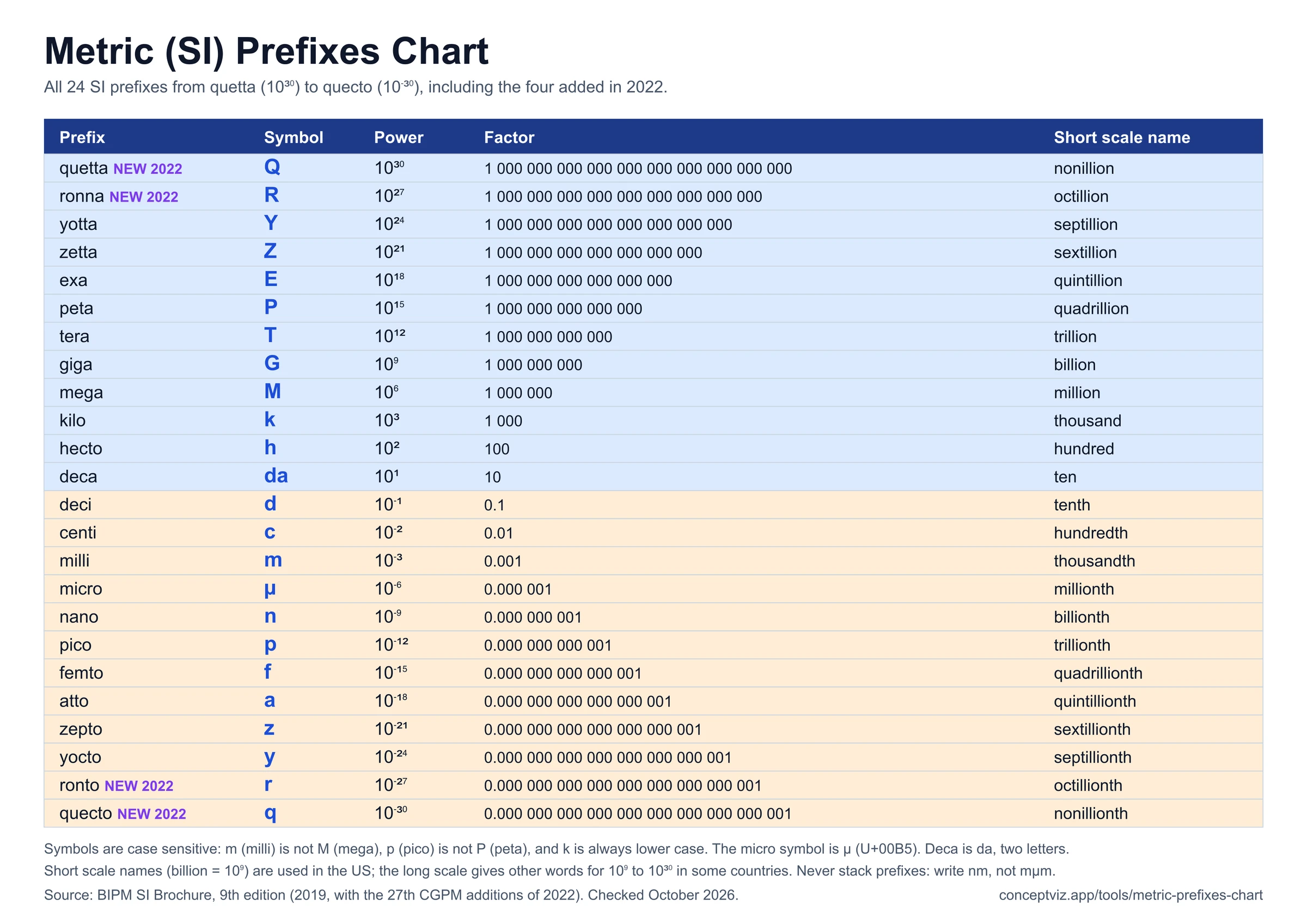
Metric Prefixes Chart
All 24 SI prefixes from quetta to quecto with an exact prefix converter and printable posters.
 Research
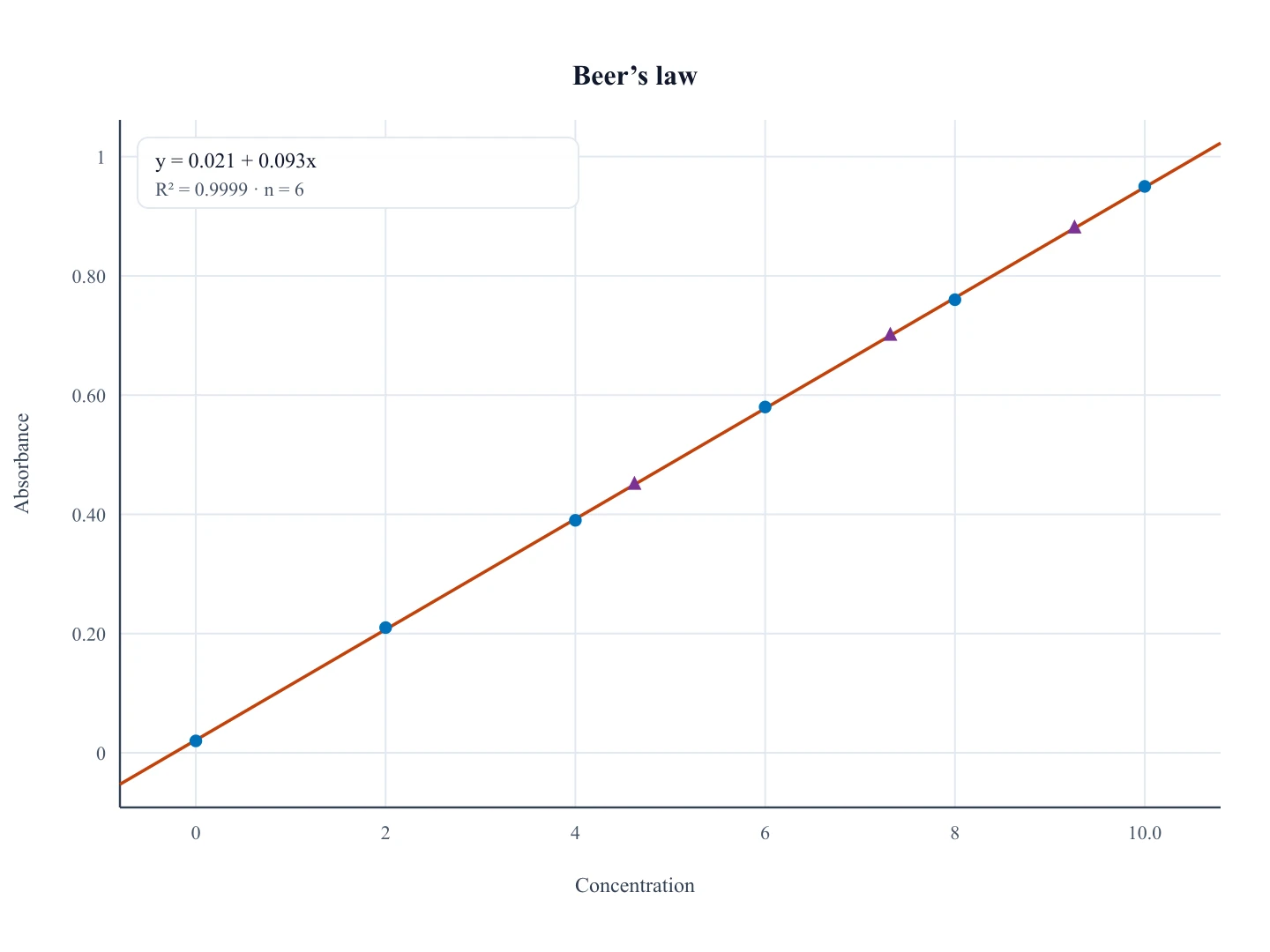
Calibration Curve Generator
Paste standard concentrations and signals to fit a line, read unknowns, and download SVG.
 Research
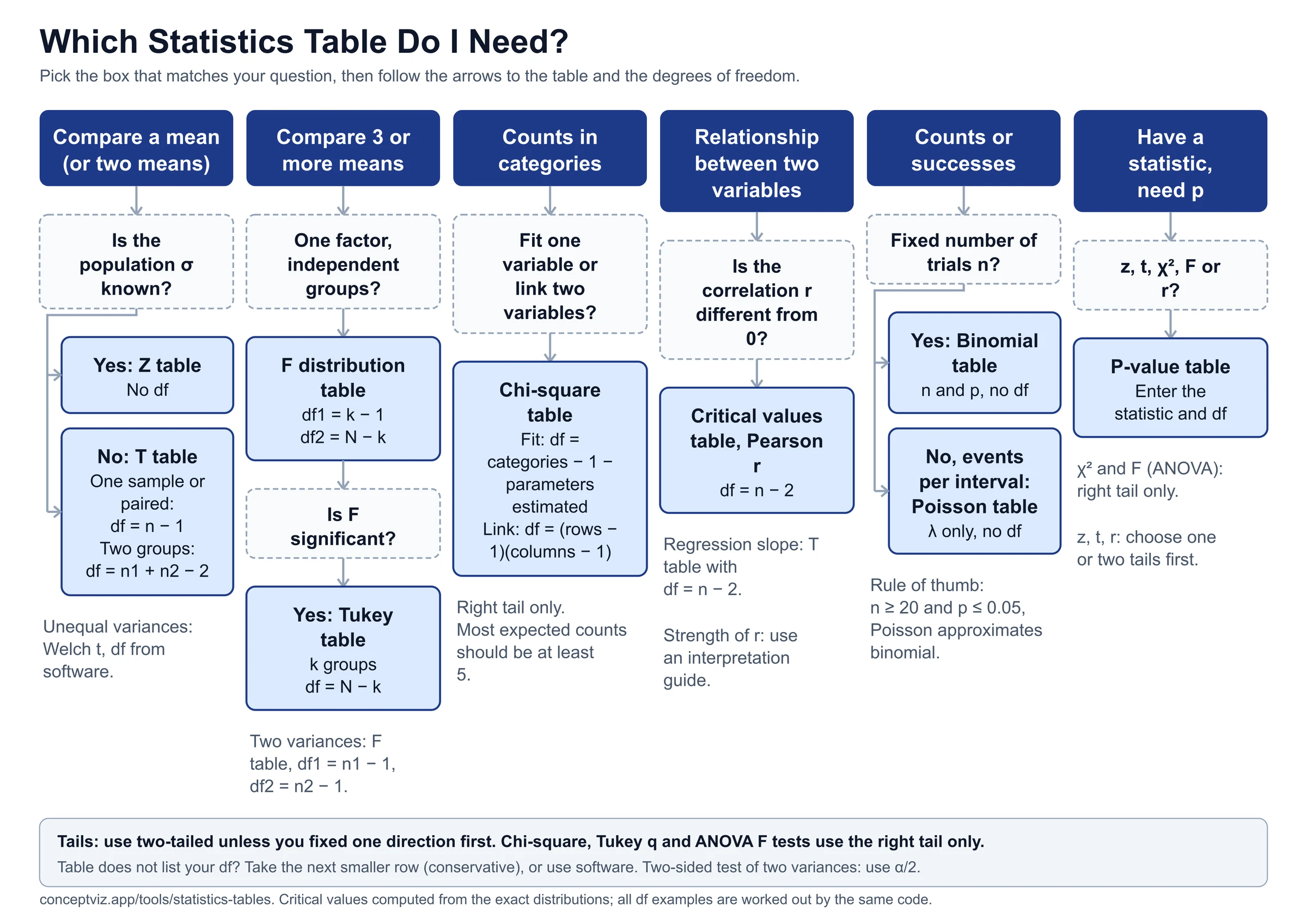
Statistics Tables
Pick the right statistics table in seconds: z, t, chi-square, F, Tukey, binomial and Poisson.