Metric (SI) Prefixes Chart with Exact Prefix Converter
Free metric prefixes chart with all 24 SI prefixes from quetta to quecto, an exact prefix converter and printable posters. Copy, PNG, SVG or print.
Show
| Prefix | Symbol | Power | Factor | Short scale | Copy |
|---|---|---|---|---|---|
| quetta2022 | Q | 10³⁰ | 1 000 000 000 000 000 000 000 000 000 000 | nonillion | |
| ronna2022 | R | 10²⁷ | 1 000 000 000 000 000 000 000 000 000 | octillion | |
| yotta | Y | 10²⁴ | 1 000 000 000 000 000 000 000 000 | septillion | |
| zetta | Z | 10²¹ | 1 000 000 000 000 000 000 000 | sextillion | |
| exa | E | 10¹⁸ | 1 000 000 000 000 000 000 | quintillion | |
| peta | P | 10¹⁵ | 1 000 000 000 000 000 | quadrillion | |
| tera | T | 10¹² | 1 000 000 000 000 | trillion | |
| giga | G | 10⁹ | 1 000 000 000 | billion | |
| mega | M | 10⁶ | 1 000 000 | million | |
| kilo | k | 10³ | 1 000 | thousand | |
| hecto | h | 10² | 100 | hundred | |
| deca | da | 10¹ | 10 | ten | |
| deci | d | 10⁻¹ | 0.1 | tenth | |
| centi | c | 10⁻² | 0.01 | hundredth | |
| milli | m | 10⁻³ | 0.001 | thousandth | |
| micro | µ | 10⁻⁶ | 0.000 001 | millionth | |
| nano | n | 10⁻⁹ | 0.000 000 001 | billionth | |
| pico | p | 10⁻¹² | 0.000 000 000 001 | trillionth | |
| femto | f | 10⁻¹⁵ | 0.000 000 000 000 001 | quadrillionth | |
| atto | a | 10⁻¹⁸ | 0.000 000 000 000 000 001 | quintillionth | |
| zepto | z | 10⁻²¹ | 0.000 000 000 000 000 000 001 | sextillionth | |
| yocto | y | 10⁻²⁴ | 0.000 000 000 000 000 000 000 001 | septillionth | |
| ronto2022 | r | 10⁻²⁷ | 0.000 000 000 000 000 000 000 000 001 | octillionth | |
| quecto2022 | q | 10⁻³⁰ | 0.000 000 000 000 000 000 000 000 000 001 | nonillionth |
Scroll sideways on small screens. Source: BIPM SI Brochure, 9th edition, with the four prefixes added in 2022 (marked 2022). Symbols are case sensitive and the micro symbol is µ (U+00B5). The button copies the symbol.
Free Metric Prefixes Charts and Worksheets
Every sheet below is drawn from the same checked data as the tool above. View, download and print them free, no sign-up.
Metric Prefixes Chart, All 24 SI Prefixes
Name, symbol, power of ten, full decimal factor and short scale name for every SI prefix.
Reference charts
Printer friendly
Study aids
Worksheets
What are metric prefixes?
A metric prefix is a short word or letter placed in front of a unit to multiply it by a power of ten. Kilo means 1000, so a kilometre is 1000 metres. Milli means one thousandth, so a millilitre is 0.001 litre. This chart lists all 24 prefixes of the International System of Units (SI), from quetta (10 to the power 30) down to quecto (10 to the power minus 30). Each row gives the name, the case-sensitive symbol, the power of ten, the written-out decimal factor and the English short scale name.
The four newest prefixes
In November 2022 the General Conference on Weights and Measures added four prefixes: ronna (R, 10 to the 27) and quetta (Q, 10 to the 30) for very large numbers, and ronto (r, 10 to the minus 27) and quecto (q, 10 to the minus 30) for very small ones. They are marked 2022 in the table. Older textbooks stop at yotta and yocto, so a table with only 20 prefixes is out of date. The reason for the change is data science, where quantities such as the mass of the Earth (about 6 ronnagrams) now need a prefix.
How to convert between prefixes
- Subtract the two powers of ten and move the decimal point by that many places. New value = old value times 10 to the power (old power minus new power).
- To convert 5 µg to mg: the powers are -6 and -3, the difference is -3, so 5 µg = 0.005 mg. To convert 2.5 GHz to kHz: 9 minus 3 is 6, so 2.5 GHz = 2 500 000 kHz.
- The converter above does the same thing with exact decimal arithmetic, so 1 Qm comes out as exactly 1 000 000 000 000 000 000 000 000 000 000 m instead of a rounded floating point number.
Common mistakes
- Case matters. Lower case m is milli and capital M is mega, a difference of 10 to the 9. Lower case p is pico and capital P is peta. Kilo is always lower case k, because capital K is the kelvin.
- The micro symbol is the Greek letter mu (µ). In plain text people write u, but the SI symbol is µ. Micro is 1000 times smaller than milli.
- The kilogram is the base unit of mass and already carries a prefix, so you never write a prefix in front of it. One millionth of a kilogram is 1 mg, not 1 µkg. And prefixes never stack: write nm, not mµm.
Decimal prefixes versus binary prefixes
SI prefixes are powers of 10, so 1 kB is exactly 1000 bytes and 1 GB is 1 000 000 000 bytes. Computer memory is built in powers of 2, which is why 1024 bytes was once also called a kilobyte. IEC 80000-13 settled the confusion with separate binary prefixes: kibi (Ki) is 2 to the 10 = 1024, mebi (Mi) is 2 to the 20, and gibi (Gi) is 2 to the 30. So 1 KiB is 1024 bytes and 1 kB is 1000 bytes. This page covers the decimal SI prefixes only.
Short scale and long scale names
The last column uses the short scale, where a billion is 10 to the 9 and a trillion is 10 to the 12. This is standard in the United States and in modern British English. Some countries use the long scale, where a billion is 10 to the 12. The SI names such as giga and tera never change, which is one reason scientists use them instead of the words. Values come from the BIPM SI Brochure, 9th edition, and agree with the NIST metric prefix list. Checked October 2026.
Frequently Asked Questions
Related Science Tools
 Research
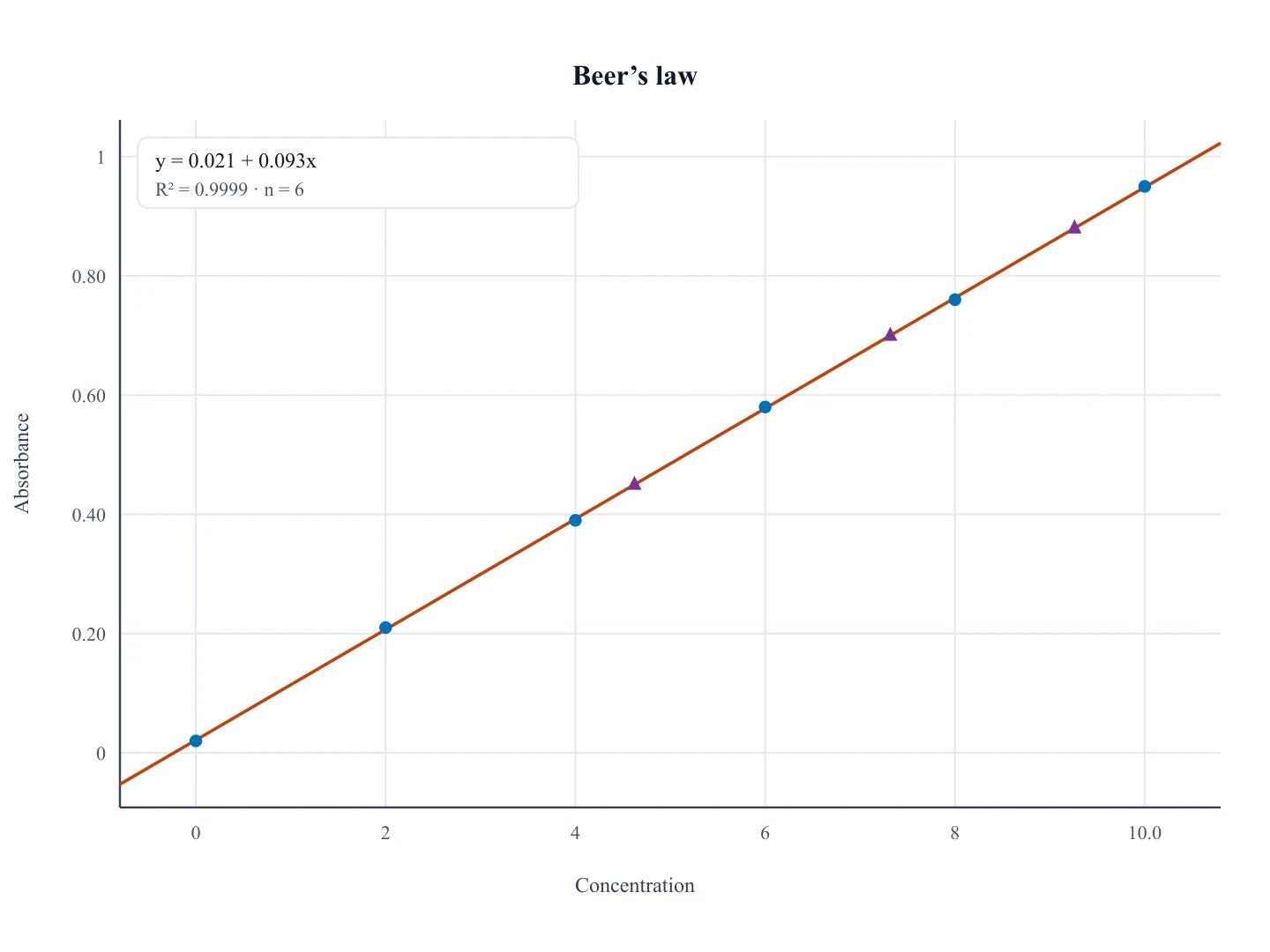
Calibration Curve Generator
Plot a standard curve from your lab readings, with trendline and R squared, in microgram or milligram units.
 Education
Graph Paper Generator
Printable square, dot and axes graph paper for plotting converted measurements by hand.
 Chemistry
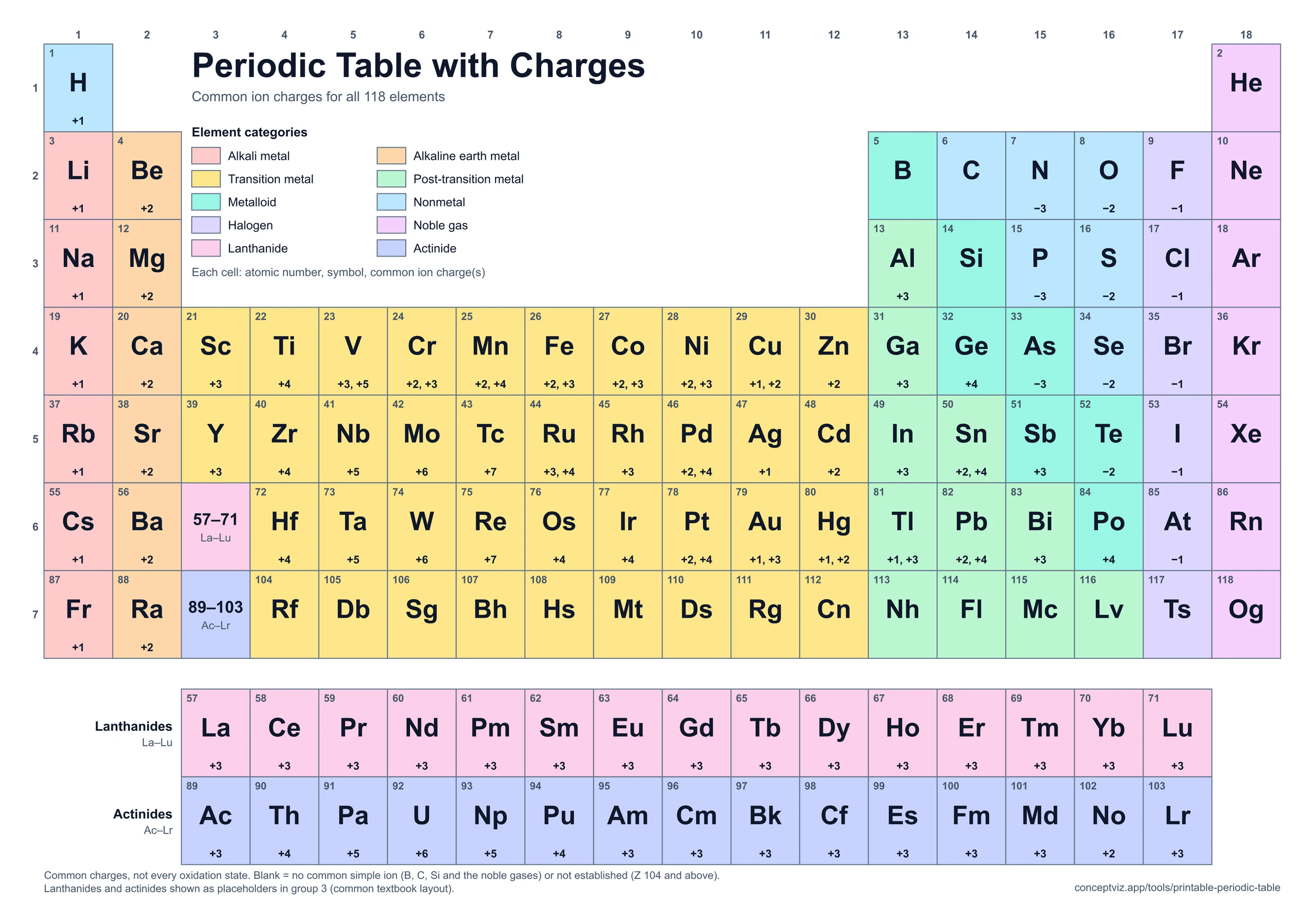
Printable Periodic Table
Periodic table with the common ion charge of every element, plus atomic mass and blank versions.