Place Value Disks Generator for Place Value
Build place value disks online — color-coded ones, tens, hundreds, and thousands. Exact counts, expanded form, free SVG and PNG export.
Place Value Disks Examples
Exact models and classroom-style layouts
Disks for 234
Exact engine render — 2 blue hundreds, 3 green tens, and 4 yellow ones.
Disks for 1,462
Exact engine render — includes the thousands place for a four-digit number.
Disks for 50
Exact engine render — five tens disks and zero ones.
Disks for 7
Exact engine render — seven ones disks only.
Disks for 3,050
Exact engine render — three thousands and five tens (zero hundreds and ones).
Disks for 999
Exact engine render — full ones/tens/hundreds columns for 999.
What are place value disks?
Place value disks (also called place-value chips or counters) are colored circles used to model multi-digit numbers. Unlike base-ten blocks, the disks are the same size for every place — color tells you whether a disk is worth 1, 10, 100, or 1,000. Students group disks by place, read the counts, and write the number or expanded form. This generator draws exact disk counts from any whole number 0–9,999 so classroom visuals stay mathematically correct.
Disks vs base-ten blocks vs place-value charts
- Base-ten blocks are proportional: a ten rod is ten times longer than a unit. Disks are non-proportional: size is fixed, color encodes place — faster for larger numbers and mental regrouping.
- A place-value chart is a table of columns. Disks are a manipulative that sits on (or next to) a chart. Use all three as a kit: chart for writing, blocks for volume, disks for quick regrouping.
- Link to our Base Ten Blocks Generator and Place Value Chart Generator when you want the matching tools.
How to teach with disks
- Build a number from digits: “2 hundreds, 3 tens, 4 ones” → 234. Then reverse: give a number and ask students to draw or place disks.
- Regroup aloud: ten ones disks become one tens disk. The equal physical size of disks makes the trade about place value, not length.
- Compare numbers by lining up place columns — more hundreds disks means a larger number even if ones differ.
Frequently Asked Questions
Related Math Tools
 Education
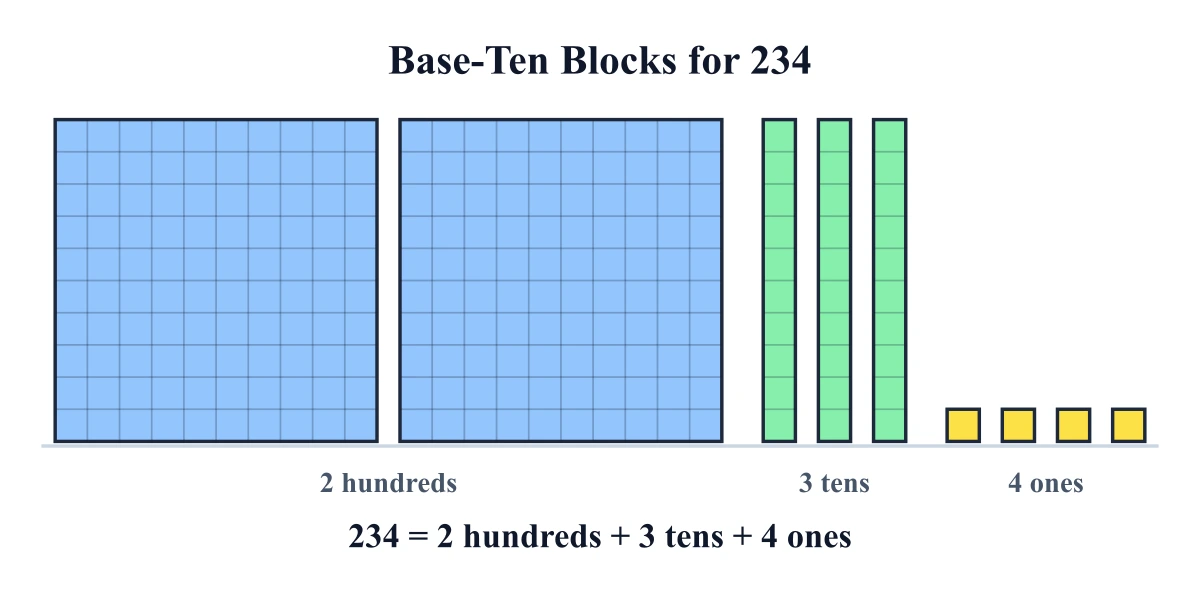
Base Ten Blocks Generator
Proportional base-ten blocks — thousands cubes, hundreds flats, tens rods, and ones.
 Education
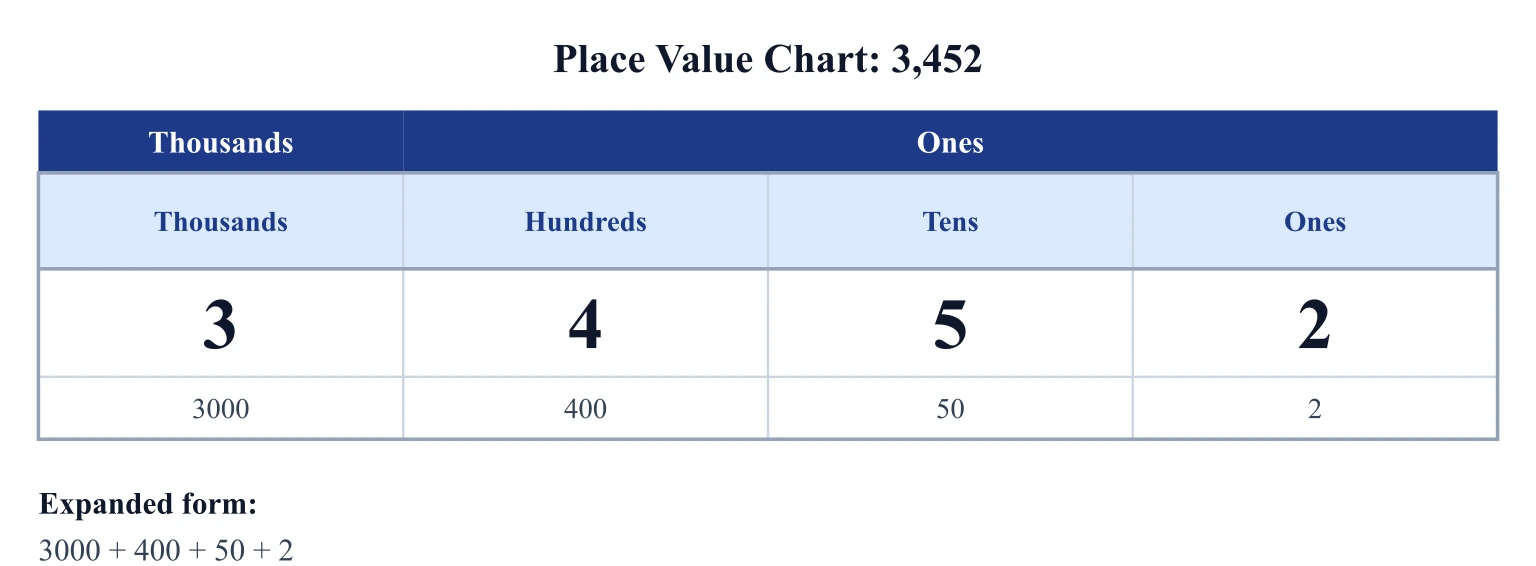
Place Value Chart Generator
Printable place-value charts and column grids for writing multi-digit numbers.
 Education
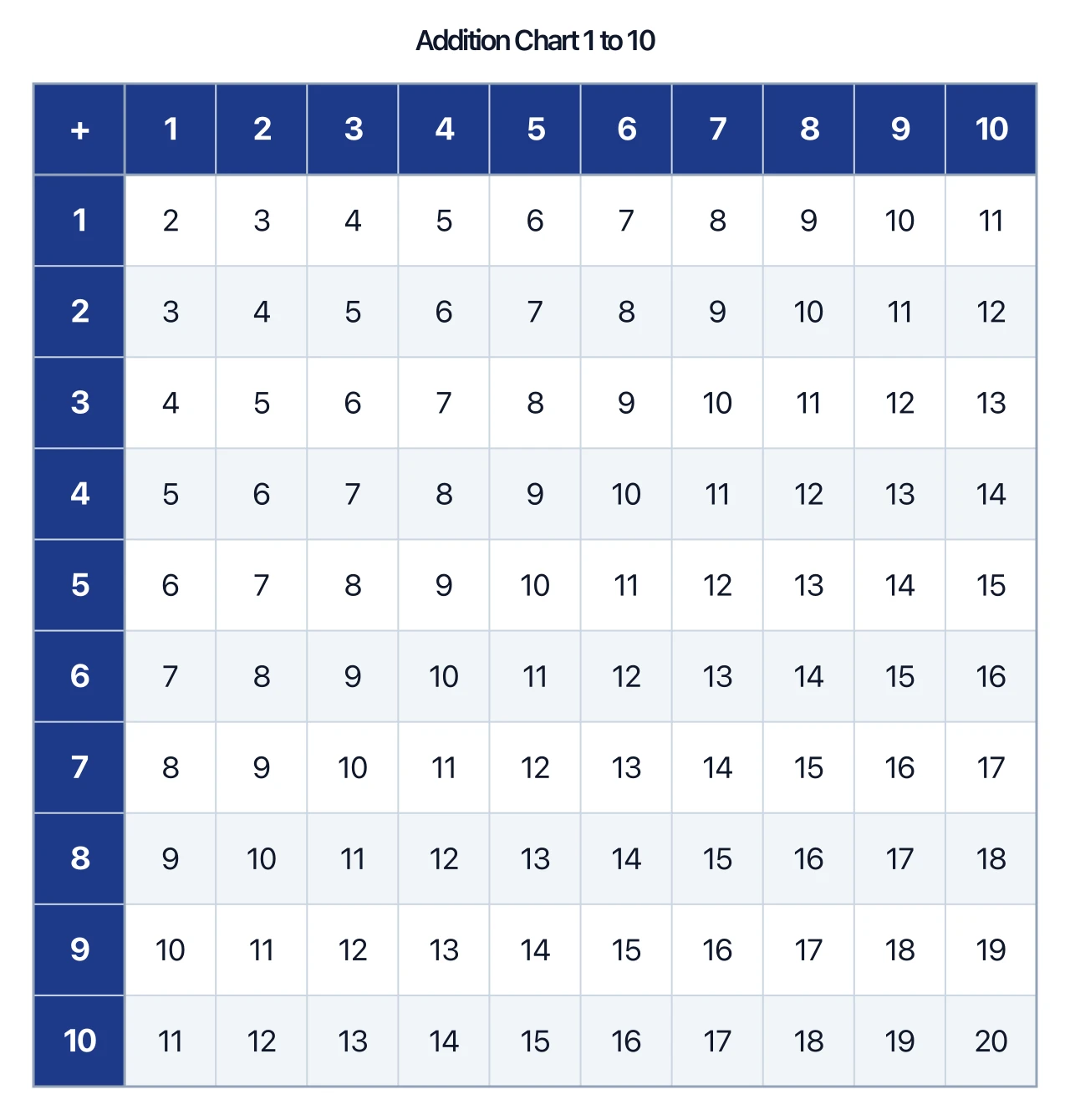
Addition Chart Generator
Printable addition facts grids with make-10 highlights and worksheets.