Mohs Hardness Scale
See all 10 Mohs hardness levels with minerals, everyday scratch tests and gem hardness, plus a bar chart you can print or edit. Free, no sign-up.
Scratch test
Pick two materials to see which one scratches the other. The harder material scratches the softer one.
Result
Calcite scratches Fingernail
Calcite (3) is harder than Fingernail (2.5), so it leaves a scratch and is not scratched back.
- Fingernail: NPS gives 2.5; Geology.com gives 2 to 2.5.
Free Mohs Hardness Scale Charts
Every chart below is drawn from the same code as the tool above. View, download and print them free, no sign-up.
Mohs Hardness Scale Chart: 10 Minerals
Talc to diamond with chemical formulas. Bar length is the Mohs rank, not an absolute hardness.
Charts
Printable versions
Learning about how minerals form? See the rock cycle diagram generator and the plate tectonics diagram generator, or plot your own measurements with the bar chart maker.
What is the Mohs hardness scale?
The Mohs scale ranks minerals by scratch resistance. The German mineralogist Friedrich Mohs devised it, and it uses ten reference minerals from talc (1) to diamond (10). A mineral with a higher number scratches any mineral with a lower number. To place an unknown mineral, find the reference minerals it scratches and the ones that scratch it: a sample that scratches fluorite (4) but is scratched by apatite (5) has a hardness between 4 and 5.
It is an ordinal scale, not a linear one
The numbers only give an order. The step from 1 to 2 is not the same size as the step from 9 to 10. Wikipedia notes that, in absolute hardness, corundum (9) is about twice as hard as topaz (8), while diamond (10) is about four times as hard as corundum. That is why the bar charts on this page show the Mohs rank itself and say so, instead of inventing a spacing.
How to do a scratch test
Pick a clean, fresh surface on the sample and press a point of the test material firmly against it, then drag it about a centimeter. Wipe the area and look closely, ideally with a hand lens: a real scratch is a groove that stays after wiping, while powder from the softer test tool can leave a streak that looks like a scratch but rubs off. Start with a soft tool such as a fingernail (about 2.5) and move up through a copper penny (about 3.5), a knife blade or glass (about 5.5) and a steel nail (about 6.5) until one leaves a mark. Test an edge or a spot that does not matter, and never test a finished gemstone you want to keep.
Why the everyday values are ranges
Sources disagree on common objects because the objects vary. Window glass differs by composition, knife blades and files differ by steel, and a modern penny is mostly zinc, so it behaves differently from the old copper cent. The tables list one value where a source gave one, show a range where it gave a range, and mention the other source in a note. When the ranges of two materials overlap, the scratch test above says they are too close to call.
Hardness is not toughness
Hardness measures resistance to scratching. Toughness is resistance to breaking, chipping or cracking, and it is a different property. Diamond is the hardest natural mineral but can cleave along crystal planes if struck, and jade is famously tough even though it is softer than quartz. A hard gemstone can still chip at an edge. Stability to heat, chemicals and cleavage matters as much as the Mohs number when you choose a stone for a ring.
Frequently Asked Questions
Sources
Hardness numbers on this page were read from the pages below. Formulas and the comparison of absolute hardness come from Wikipedia. Where sources differ, the tables say so.
- US National Park Service: Mohs Hardness Scale (The 10 reference minerals and common test objects)
- Geology.com: Mohs Hardness Scale (Hardness ranges for common test objects)
- USGS: Gemstones, Mineral Hardness (The scale and the hardness of 16 gemstones)
- Wikipedia: Mohs scale of mineral hardness (Chemical formulas and a few metal and material values)
Related Science Tools
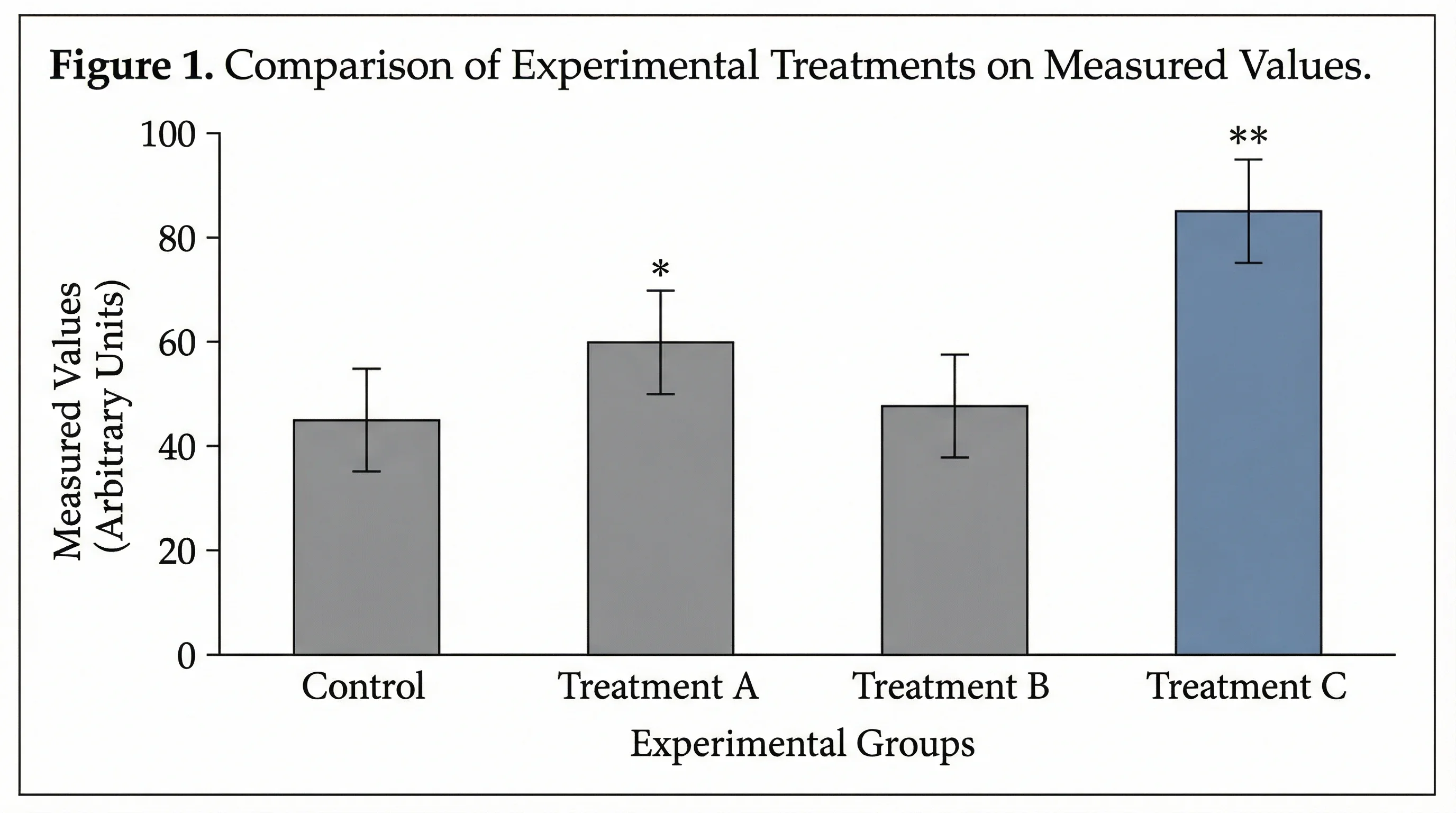 Research
Bar Chart Maker
Create horizontal, grouped, and stacked bar charts for rankings, comparisons, and classroom data visualization.
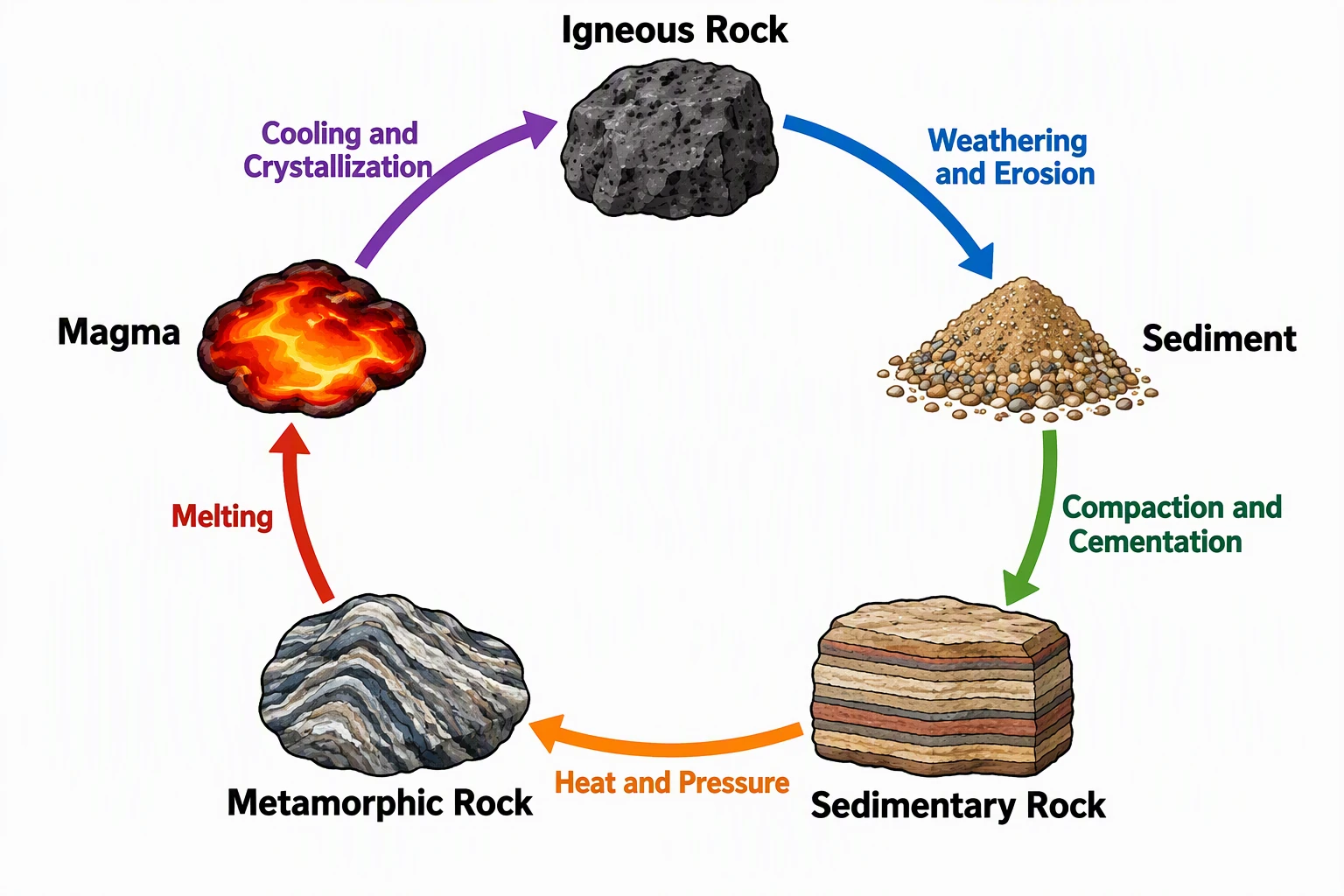 Earth Science
Rock Cycle Diagram Generator
Create rock cycle diagrams showing igneous, sedimentary, and metamorphic rock transformations for earth science.
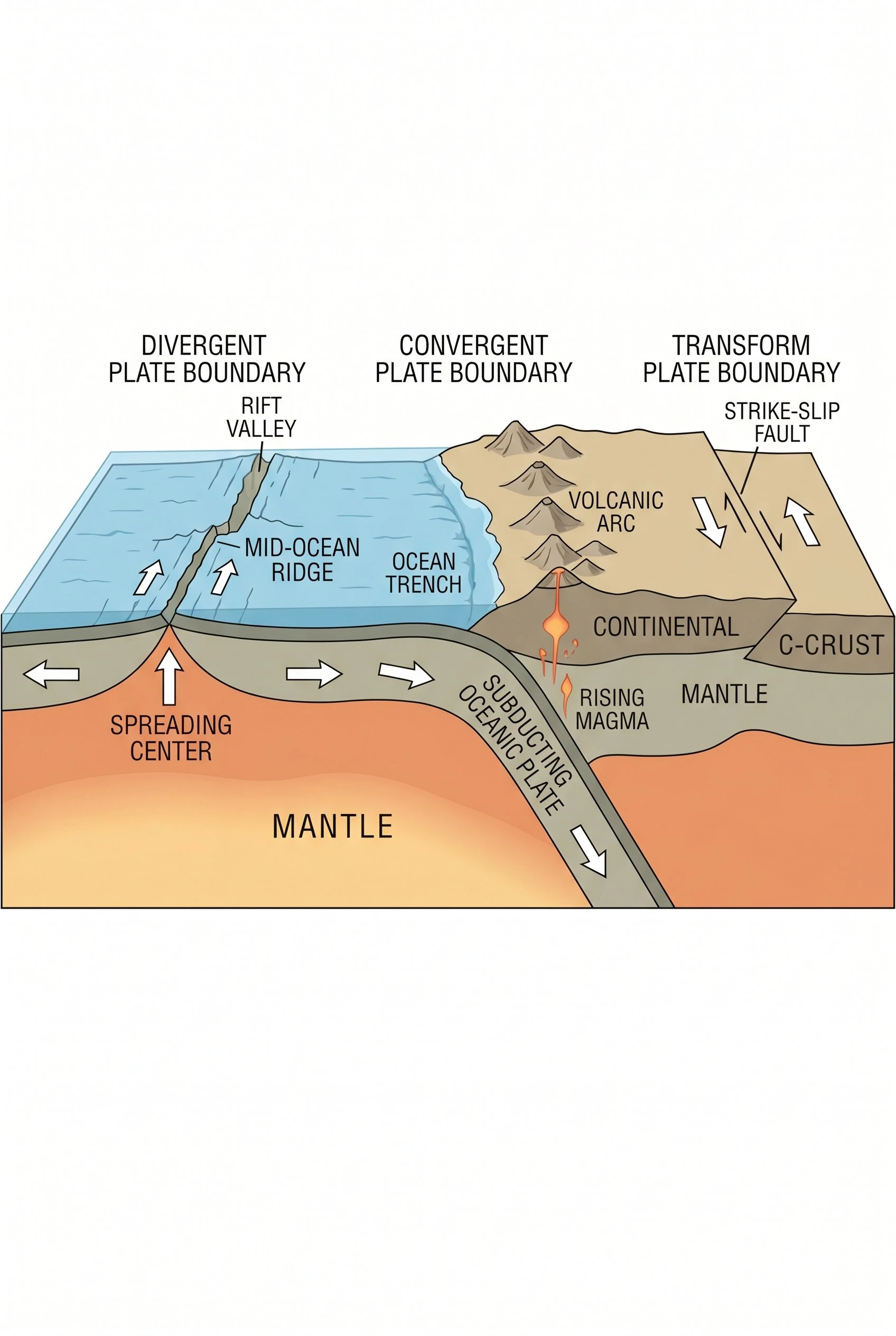 Earth Science
Plate Tectonics Diagram Generator
Create labeled plate tectonics diagrams with AI: divergent, convergent (subduction), and transform plate boundaries, mantle convection, trenches, and volcanic arcs.
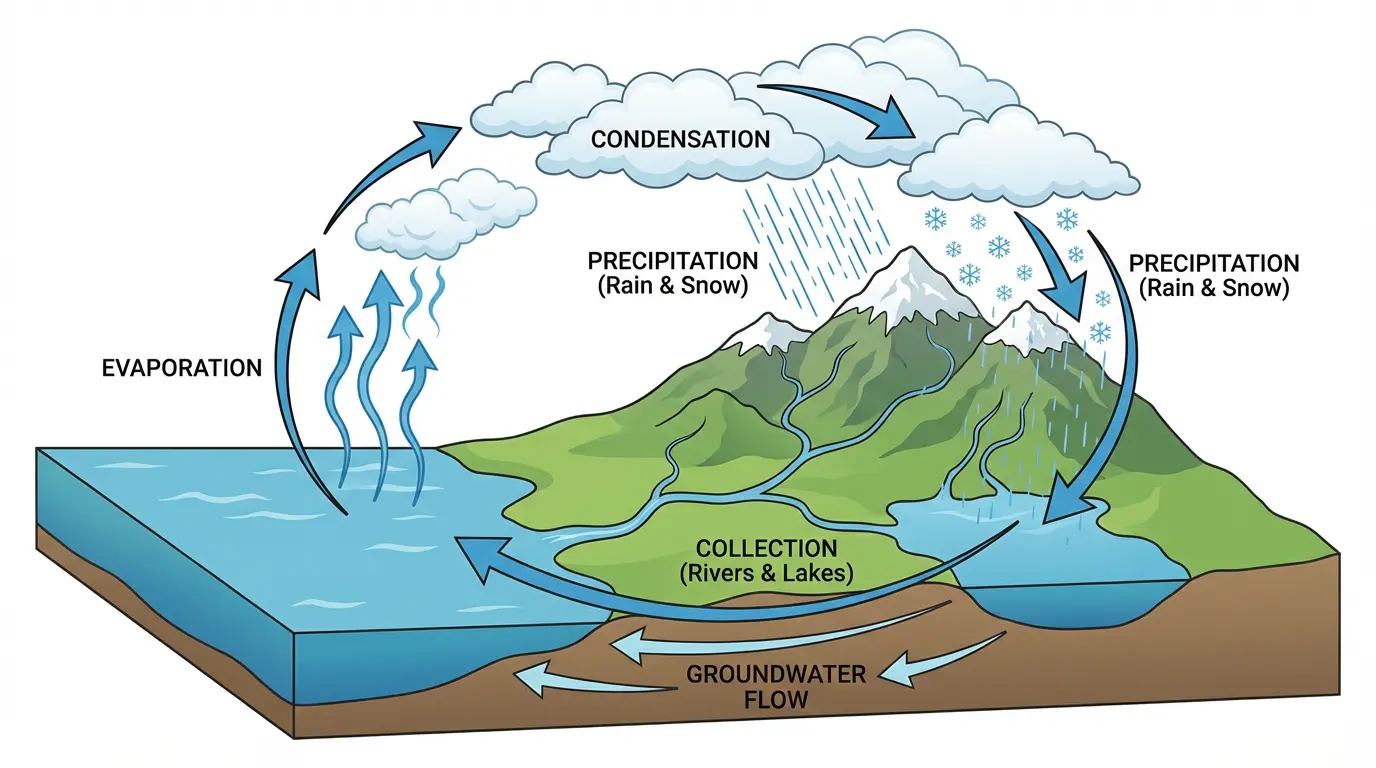 Earth Science
Water Cycle Diagram Generator
Generate free printable water cycle diagrams showing evaporation, condensation, and precipitation. Perfect for earth science worksheets.