Eukaryotic Cell Diagram Generator Labeled or Blank
Make a labeled eukaryotic cell diagram, or a eukaryotic vs prokaryotic cell comparison. Show the nucleus, ER, Golgi, and mitochondria, labeled or blank.
Eukaryotic Cell Diagram Generator
Free to try ·
Your diagram will appear here
Describe what you need and click Generate
Eukaryotic Cell Diagram Examples
A labeled eukaryotic cell, a eukaryotic vs prokaryotic comparison, and a plant cell
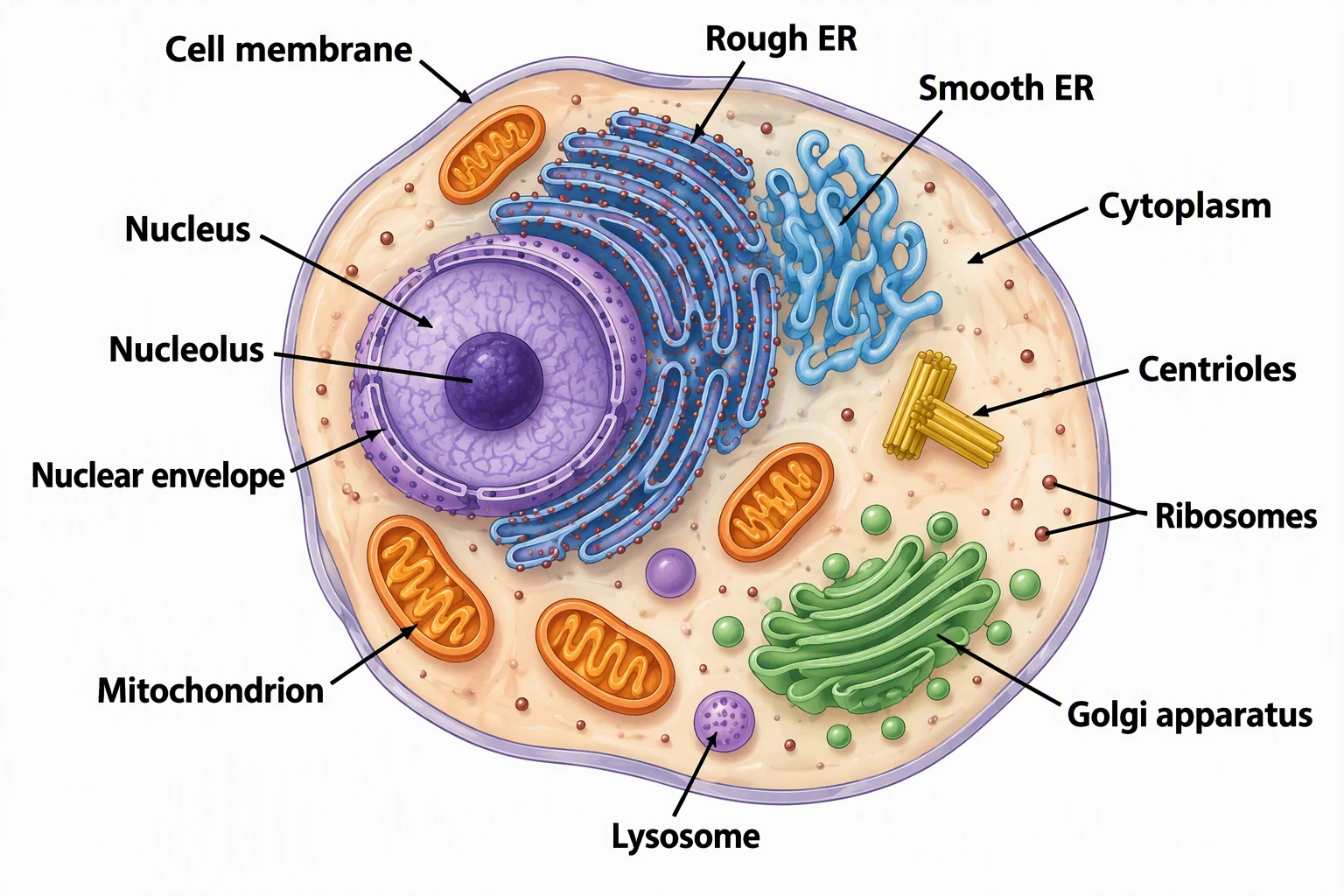
Labeled Eukaryotic Cell
A generalized animal-type eukaryotic cell with 11 labeled parts. Known flaws: the rough ER sits beside the nucleus but its continuity with the nuclear envelope is not drawn, and the Nuclear envelope line crosses the rough ER before it reaches the envelope.
Eukaryotic vs Prokaryotic Cell
Both cell types side by side, labeled. Known flaws: the two cells are not drawn to true scale (a typical bacterium is far smaller than shown), the bacterium's plasma membrane is drawn but not labeled, and the Nucleus line crosses the ER that wraps the nucleus.
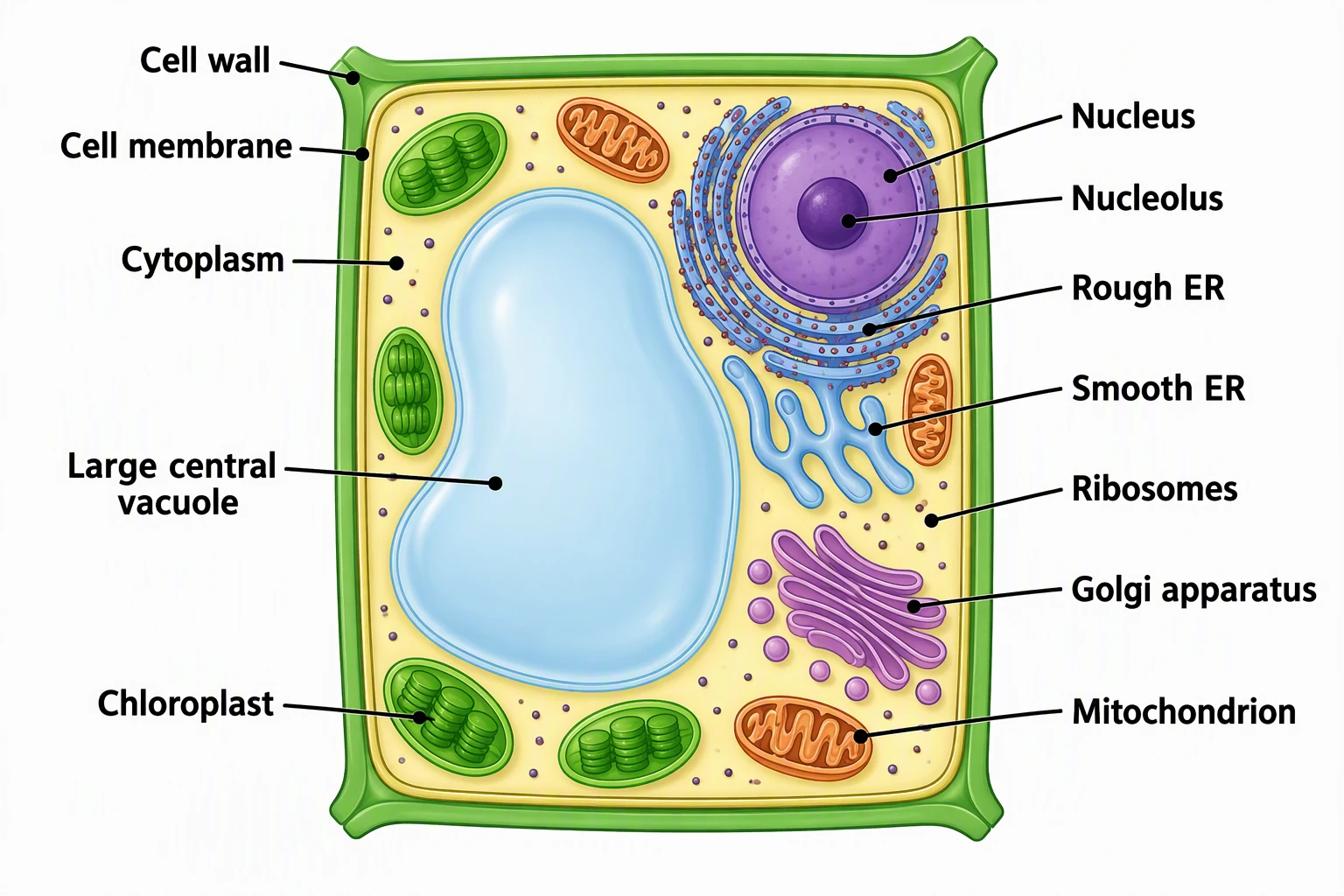
Plant Cell as a Eukaryote
Eukaryotes are not only animal cells: a plant cell adds a cell wall, chloroplasts, and a large central vacuole. Known flaws: the cytoplasm is drawn but not labeled, the nucleus is shown without a visible nuclear envelope, the ER is omitted, and organelle sizes are simplified.
What is a eukaryotic cell?
A eukaryotic cell is a cell whose DNA is enclosed in a membrane-bound nucleus and whose interior is divided into membrane-bound compartments called organelles. Animals, plants, fungi, and protists are all made of eukaryotic cells, so a eukaryotic cell is not the same thing as an animal cell. Most eukaryotic cells measure roughly 10 to 100 micrometres across, although there are many exceptions. A eukaryotic cell diagram shows a cross-section of such a cell so you can see where each organelle sits and how the parts relate to each other.
The labeled parts of a eukaryotic cell
- Nucleus: holds the cell’s DNA and is surrounded by the nuclear envelope; the nucleolus inside it assembles ribosome parts.
- Nuclear envelope: a double membrane with pores that control traffic between the nucleus and the cytoplasm.
- Rough ER: folded membranes studded with ribosomes, continuous with the nuclear envelope; it makes and folds many proteins.
- Smooth ER: membrane tubes without ribosomes, involved in making lipids and handling certain chemicals.
- Golgi apparatus: a stack of flattened sacs that modifies, sorts, and packages proteins and lipids into vesicles.
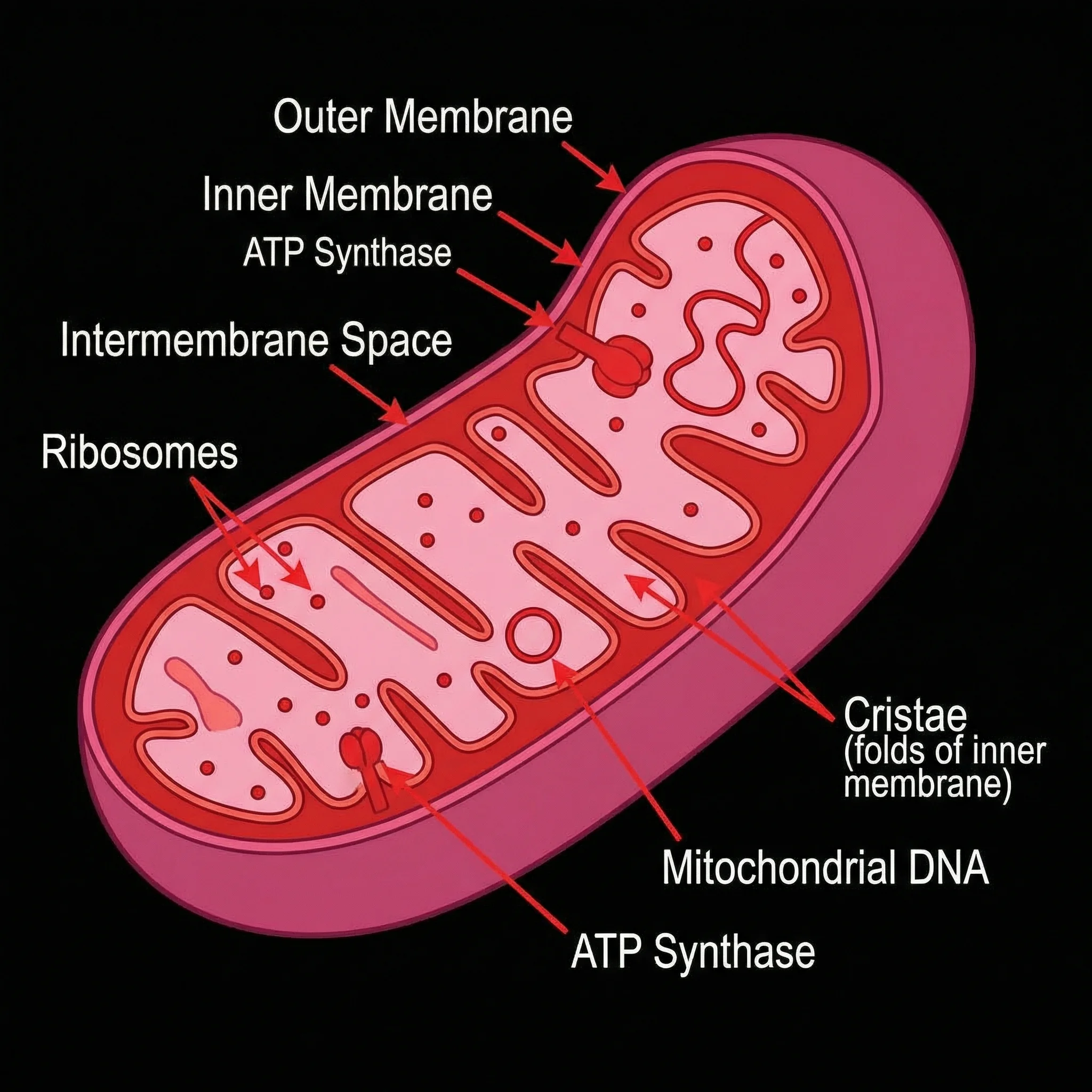
- Mitochondria: organelles where most of the cell’s ATP is produced by aerobic respiration.
- Ribosomes: tiny machines, free or attached to the rough ER, that build proteins (80S in eukaryotes).
- Lysosome: an acidic sac of digestive enzymes in animal-type cells that breaks down worn-out parts and waste.
- Centrioles: paired cylinders near the nucleus of animal cells that help organize the spindle in cell division; most plant cells do not have them.
- Cell membrane and cytoplasm: the flexible outer boundary, and the fluid and cytoskeleton inside it that hold the organelles.
Not just animal cells: kinds of eukaryotic cells
- Animal cells: no cell wall and no chloroplasts, usually no large central vacuole, and most have centrioles. See the animal cell diagram for a full labeled version.
- Plant cells: a cellulose cell wall outside the membrane, chloroplasts for photosynthesis, and one large central vacuole. Flowering plant cells typically lack centrioles.
- Fungal cells (yeast, molds, mushrooms): a cell wall made largely of chitin, no chloroplasts, and often a large vacuole.
- Protists (amoeba, algae, paramecium): a very mixed group of mostly single-celled eukaryotes. Some have chloroplasts and some do not; some have cell walls and some do not.
- What they all share: a nucleus, mitochondria (in most), a membrane-bound endomembrane system, and 80S ribosomes in the cytoplasm.
Eukaryotic vs prokaryotic cells
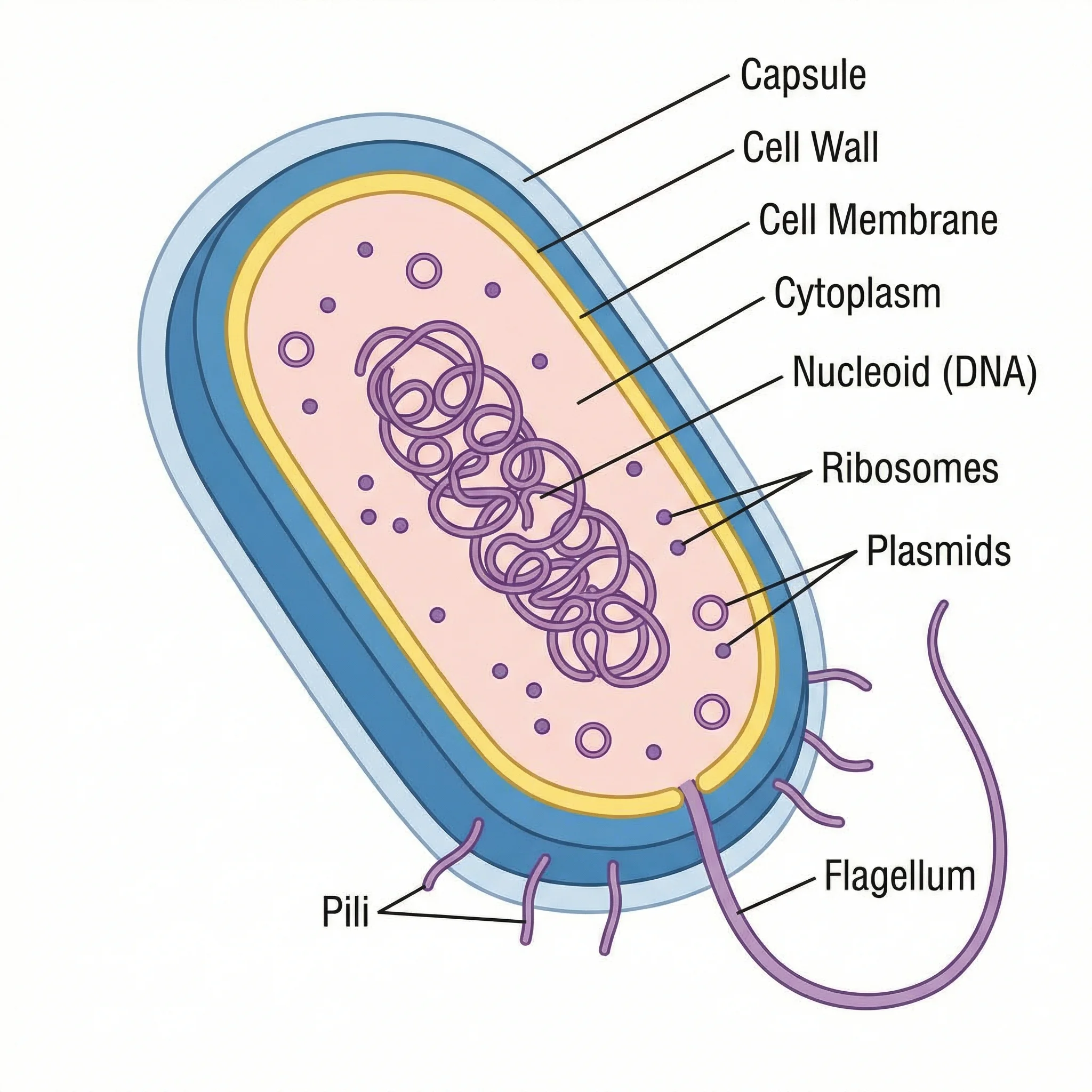
- Nucleus: eukaryotes keep their DNA in a nucleus; prokaryotes have no nucleus, and their DNA lies in a region called the nucleoid.
- DNA: eukaryotic DNA is organized into several linear chromosomes; a typical prokaryote has one circular chromosome, and may also carry small circular plasmids.
- Organelles: eukaryotes have membrane-bound organelles such as mitochondria and the Golgi apparatus; prokaryotes do not.
- Ribosomes: 80S in the eukaryotic cytoplasm and 70S in prokaryotes.
- Size: a typical eukaryotic cell is about 10 to 100 micrometres across, while a typical prokaryote is about 0.1 to 5 micrometres.
- Cell wall: most bacteria have one; among eukaryotes, plants, fungi, and some protists such as algae have walls, while animal cells do not.
- Flagella, pili, and a capsule are found on some prokaryotes but not all, so they are not a defining feature. The bacteria diagram generator covers the prokaryote side in detail.
Labeled vs blank eukaryotic cell diagrams
For teaching you often need two versions of one cell. A labeled diagram names each structure and suits notes, slides, and revision. A blank version keeps the shapes but leaves the labels empty so students can fill them in as a quiz. Describe both in the generator and check that every label line ends on the structure it names before you hand it out: AI drawings can misplace a label even when the text is spelled correctly, so treat each result as a draft to review.
Frequently Asked Questions
Related Biology Tools
 Biology
Animal Cell Diagram Generator
Free labeled, blank, and printable animal cell diagrams, the best-known kind of eukaryotic cell.
 Biology
Plant Cell Diagram Generator
Labeled plant cell diagrams with the cell wall, chloroplasts, and large central vacuole.
 Biology
Bacteria Diagram Generator
The prokaryote side: a labeled bacterial cell with a nucleoid, plasmids, flagella, and capsule.
 Biology
Mitochondria Diagram Generator
Labeled mitochondria diagrams with the inner membrane folds, the energy organelle of eukaryotic cells.
 Biology
Cell Membrane Diagram
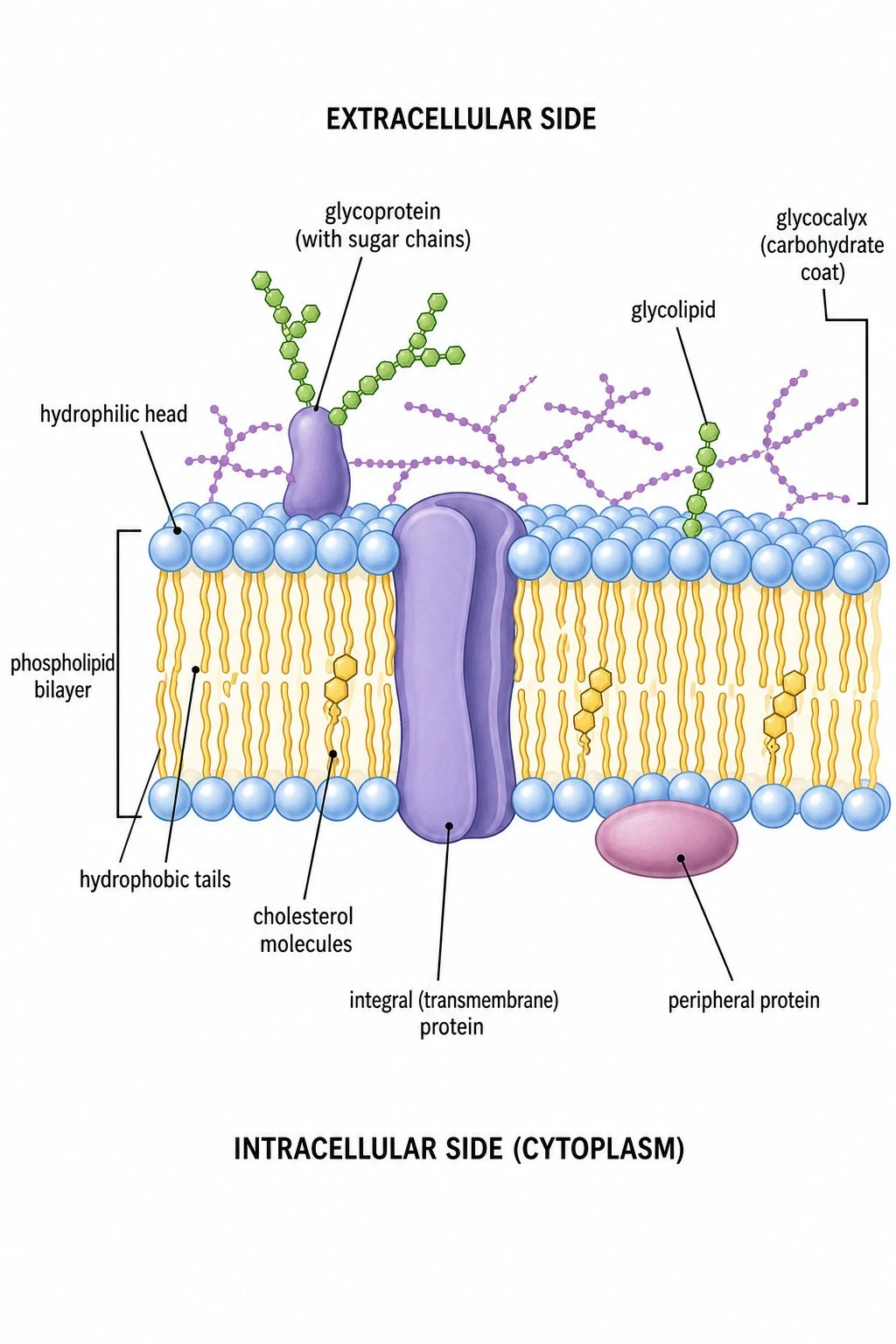
The phospholipid bilayer and membrane proteins that bound every eukaryotic cell.
 Biology
Cell Cycle Diagram Generator
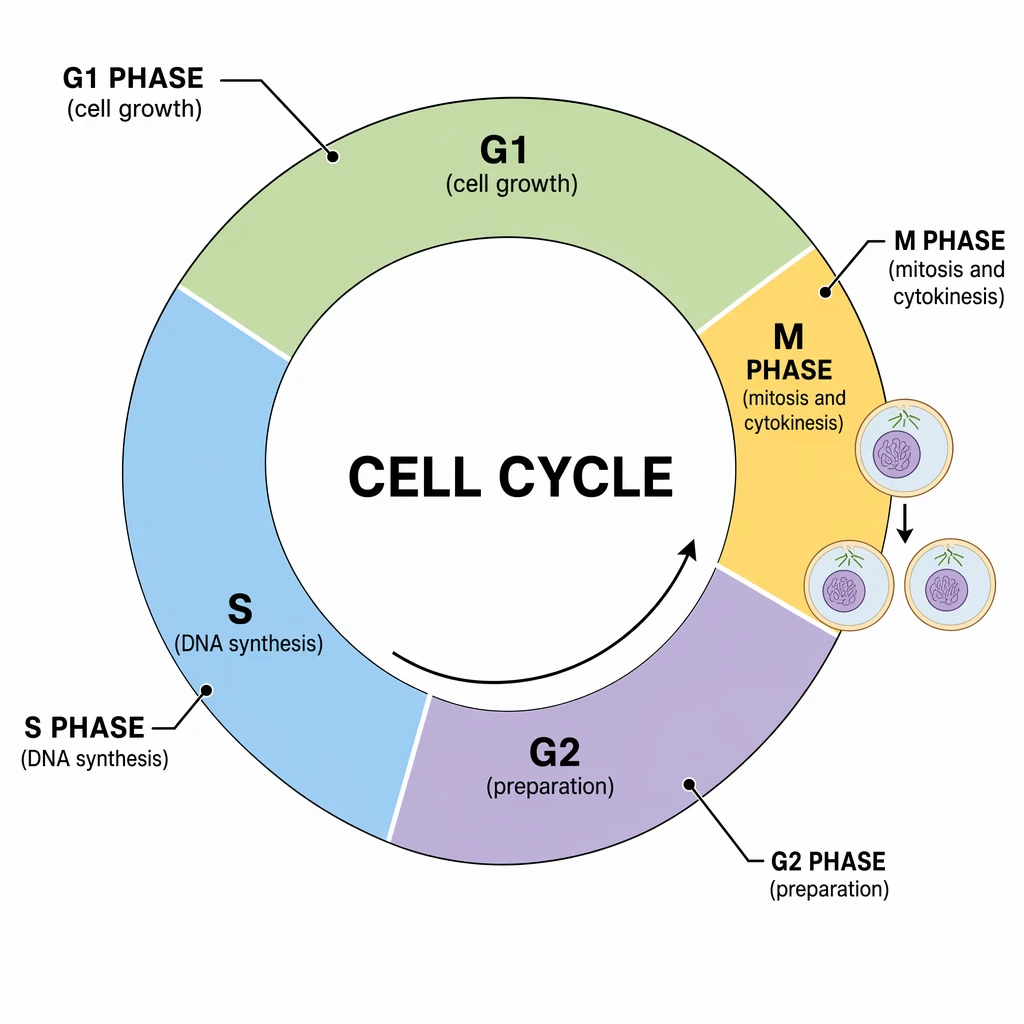
Labeled cell cycle diagrams showing interphase, mitosis, and cytokinesis in eukaryotic cells.