GHS Pictograms: 9 Hazard Symbols, Meanings & Printable Poster
All 9 GHS hazard pictograms (GHS01 to GHS09) with meanings, signal words and hazard classes. Download SVG or PNG and print a free A4 or Letter poster.
The 9 GHS hazard pictograms
Tap a pictogram to see its meaning, hazard classes and signal word, and to download it as SVG or PNG.
GHS01 · Explosive
Exploding bomb
The product can explode, project fragments or react violently when heated, shocked or rubbed.
Hazard classes
- Explosives: unstable explosives and divisions 1.1 to 1.4
- Self-reactive substances and mixtures: types A and B
- Organic peroxides: types A and B
Signal word: Danger for unstable explosives and divisions 1.1 to 1.3, and for types A and B. Warning for division 1.4.
Typical lab examples: Picric acid that has dried out, lead azide, some peroxides such as dry benzoyl peroxide.
Type B self-reactive substances and organic peroxides carry this pictogram together with the Flame pictogram.
All nine on one sheet with names and meanings:
Printable GHS pictogram poster
One page with all nine pictograms, their meanings and signal words. Pick your paper size, then print it or download the file.
Print opens your browser print dialog, where you can also choose Save as PDF. Set margins to none and scale to 100 percent for the sharpest result.
Common lab safety signs
Besides the red-diamond chemical hazard pictograms, labs use signs for actions, equipment and other hazards. These nine follow the usual color shapes: blue circle for a required action, yellow triangle for a warning, green square for a safe condition and red square for fire equipment.
These are simplified illustrative symbols drawn by ConceptViz for teaching. They are not the ISO 7010 originals. For official signage, use signs that match your institution's approved standard.
Wear eye protection
Mandatory
Wear safety goggles or glasses before working with chemicals, glassware or heat.
Wear protective gloves
Mandatory
Wear gloves suited to the chemical or material you are handling.
Biological hazard
Warning
Biological agents or materials such as cultures, blood or tissue may be present.
Radiation hazard
Warning
Radioactive sources or ionizing radiation are in use or stored here.
Laser beam
Warning
A laser is in use. Do not look into the beam and follow laser safety rules.
Eyewash station
Safe condition
Marks the place to flush your eyes after a splash. Keep the path clear.
Emergency shower
Safe condition
Marks the shower for large chemical splashes on the body or on clothing.
First aid
Safe condition
Marks the first aid kit or first aid point.
Fire extinguisher
Fire equipment
Marks where a fire extinguisher is kept. Know which type it is before you use it.
All nine signs on one sheet:
GHS Pictogram Charts and Study Aids
Charts, the printable poster and a sample label, all free to view and download with no sign-up.
The 9 GHS Hazard Pictograms Chart
All nine pictograms on one sheet: exploding bomb, flame, flame over circle, gas cylinder, corrosion, skull and crossbones, exclamation mark, health hazard and environment.
Pictograms
Study aids
Lab safety
Test yourself: GHS pictograms
A quick self-test. Questions reshuffle each time, with a review of anything you miss at the end.
Which pictogram shows a flame over a circle?
What are GHS pictograms?
GHS stands for the Globally Harmonized System of Classification and Labelling of Chemicals, an international system created by the United Nations so that the same hazard looks the same on a label in any country. A GHS pictogram is a black symbol on a white background inside a red diamond border. OSHA describes it as a symbol on a white background framed within a red border that represents a distinct hazard. The pictogram on a label depends on how the chemical is classified. The codes GHS01 to GHS09 are the numbering used in the EU CLP Regulation and on many safety data sheets, while the UN GHS text and OSHA refer to each pictogram by the name of its symbol, such as flame or skull and crossbones.
The 9 hazard symbols at a glance
- GHS01 Exploding bomb: explosives, and self-reactive substances and organic peroxides that can explode.
- GHS02 Flame: flammable gases, aerosols, liquids and solids, pyrophoric and self-heating substances, and those that release flammable gas with water.
- GHS03 Flame over circle: oxidizing gases, liquids and solids.
- GHS04 Gas cylinder: gases under pressure, including compressed, liquefied, dissolved and refrigerated gases.
- GHS05 Corrosion: skin corrosion, serious eye damage and corrosive to metals.
- GHS06 Skull and crossbones: acute toxicity, categories 1 to 3.
- GHS07 Exclamation mark: irritants, skin sensitizers, acute toxicity category 4 and narcotic or respiratory irritation effects.
- GHS08 Health hazard: carcinogens, mutagens, reproductive toxicants, respiratory sensitizers, target organ toxicity and aspiration hazards.
- GHS09 Environment: hazardous to the aquatic environment.
Signal words: Danger and Warning
Pictograms are paired with a signal word. Danger is used for the more severe hazards and Warning for the less severe ones. The signal word belongs to the hazard category, not to the pictogram itself, so the same pictogram can appear with either word. For example, the flame goes with Danger for a category 1 or 2 flammable liquid and with Warning for category 3. The gas cylinder is always Warning and the skull and crossbones is always Danger. OSHA also sets precedence rules: when Danger applies, Warning does not appear, the skull and crossbones replaces the exclamation mark for acute toxicity, the corrosion pictogram replaces the exclamation mark for skin or eye irritation, and when the health hazard pictogram is used for respiratory sensitization, the exclamation mark is not used for skin sensitization or skin or eye irritation.
Where to find pictograms on labels and SDS
On a container, pictograms sit next to the product identifier, signal word, hazard statements, precautionary statements and the supplier name, address and telephone number. Each pictogram appears only once on a label, even if several hazards call for it (OSHA Quick Card). On a safety data sheet, look at Section 2, Hazard identification, where the classification, signal word, hazard statements and symbols are listed. OSHA allows the symbols in an SDS to be shown as black and white graphics or simply by the name of the symbol. Section 14 covers transport information. OSHA does not enforce sections 12 to 15 (other agencies regulate those topics), although an SDS still includes them.
OSHA, the environment pictogram and transport labels
In the United States, the OSHA Hazard Communication Standard (HazCom 2012, updated in 2024) does not require the environment pictogram. OSHA lists it as non-mandatory on its quick card, and OSHA does not enforce SDS Section 12, ecological information (other agencies regulate that topic), although an SDS still includes it. Other systems, including EU CLP, do use it. Transport labels are a separate system. DOT and UN transport labels are colored diamonds placed on shipping packages and are not GHS pictograms, although they share some symbols. On a shipped container that already carries a DOT pictogram for a hazard, OSHA does not require the GHS pictogram for the same hazard (29 CFR 1910.1200(f)(5)(iii)).
How to use the poster and signs in a lab
Post the pictogram poster near chemical storage, the prep room and the fume hood so students can match a symbol to its meaning. Use it as a reference during safety training, and combine it with a few real container labels so students practice reading signal words and statements. The poster does not replace the label on a container or the safety data sheet. The lab safety sign sheet adds the signs students see around a lab: eye protection, gloves, biohazard, radiation, laser, eyewash, emergency shower, first aid and fire extinguisher. These are simplified illustrations, so for official signage choose signs that match your institution or local regulations.
Frequently Asked Questions
Sources and notes
Hazard classes, categories and signal words follow OSHA's adoption of the GHS in the United States. Other countries adopt different GHS revisions, so check local rules. Sources below were checked in October 2026. This page is a study and reference aid, not a regulatory document.
- OSHA, 29 CFR 1910.1200 Appendix C: allocation of label elements (hazard classes, categories, pictograms, signal words)
- OSHA, 29 CFR 1910.1200 Appendix D: safety data sheets
- OSHA Quick Card: Hazard Communication Standard Pictogram (OSHA 3491-08R 2024)
- UNECE: GHS pictograms
- ECHA: CLP pictograms
- OSHA: Hazard Communication pictograms (artwork marked public domain)
Related Science Tools
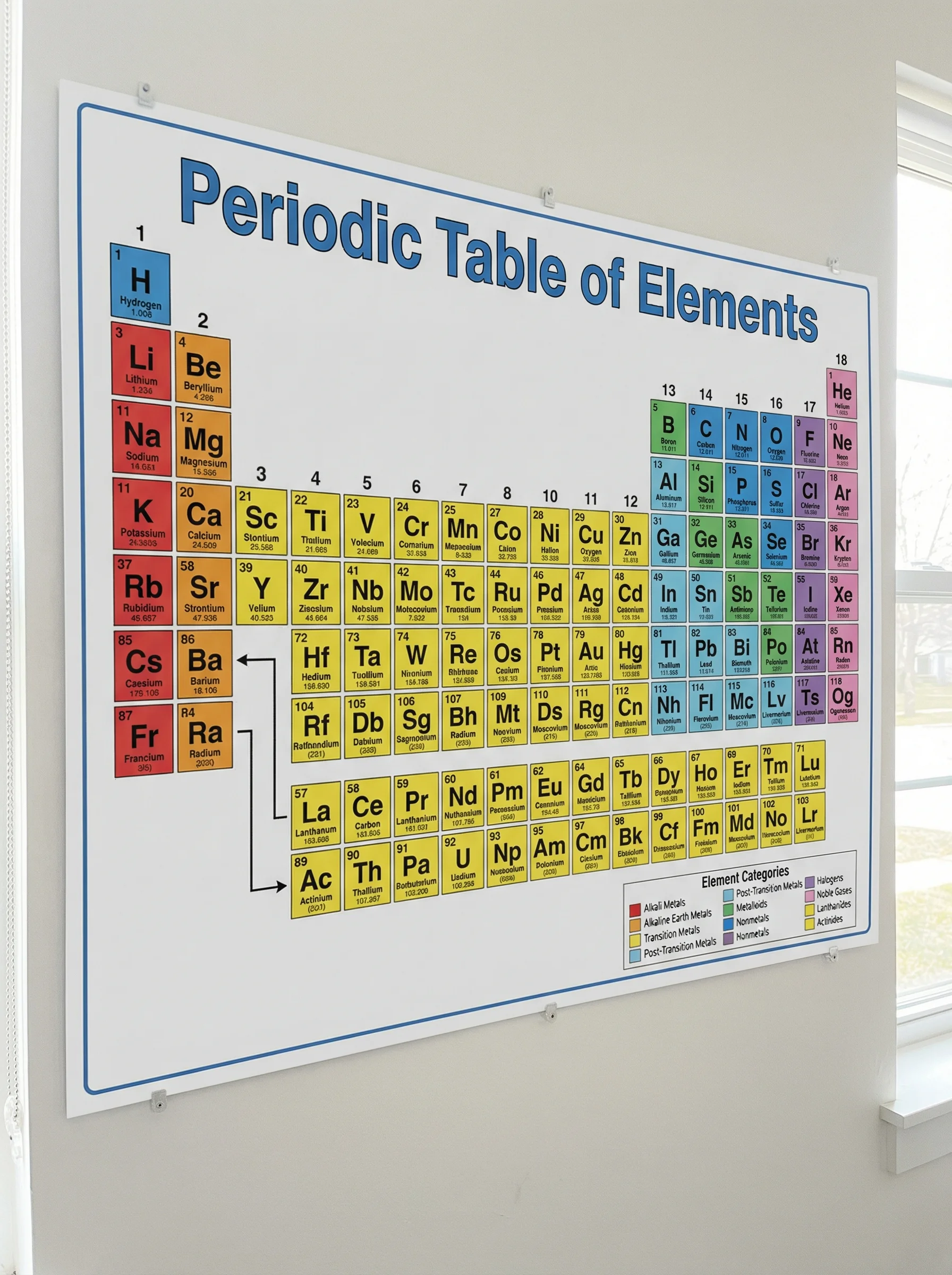 Chemistry
Chemistry Poster Maker
Make chemistry posters and lab safety displays for your classroom.
 Research
AI Scientific Image Generator
Generate scientific illustrations and research visuals with AI.
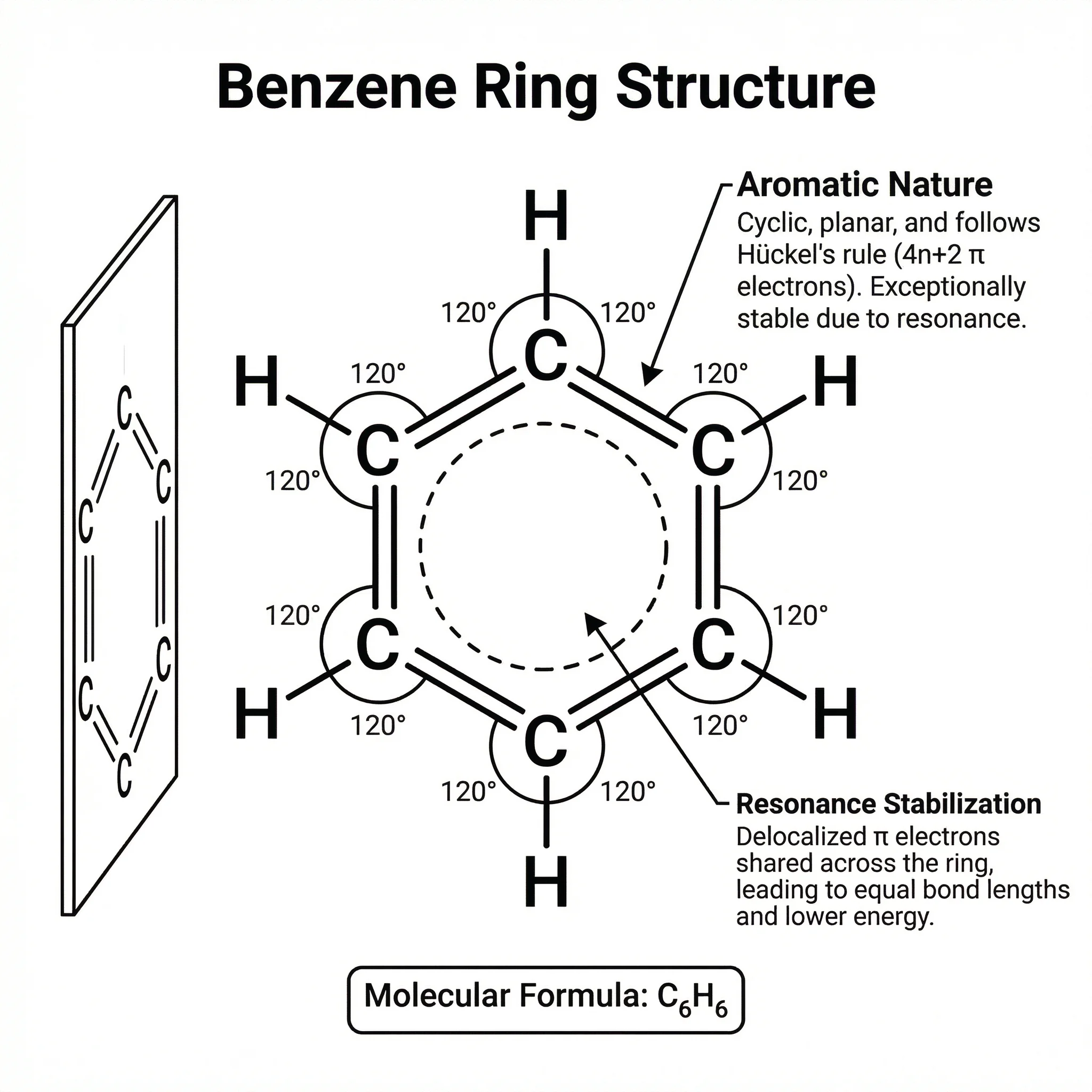 Chemistry
Chemistry Structure Generator
Draw molecular structures and chemical diagrams.
ChemistryLewis Dot Structure Generator
Valence electron diagrams for molecules and compounds.
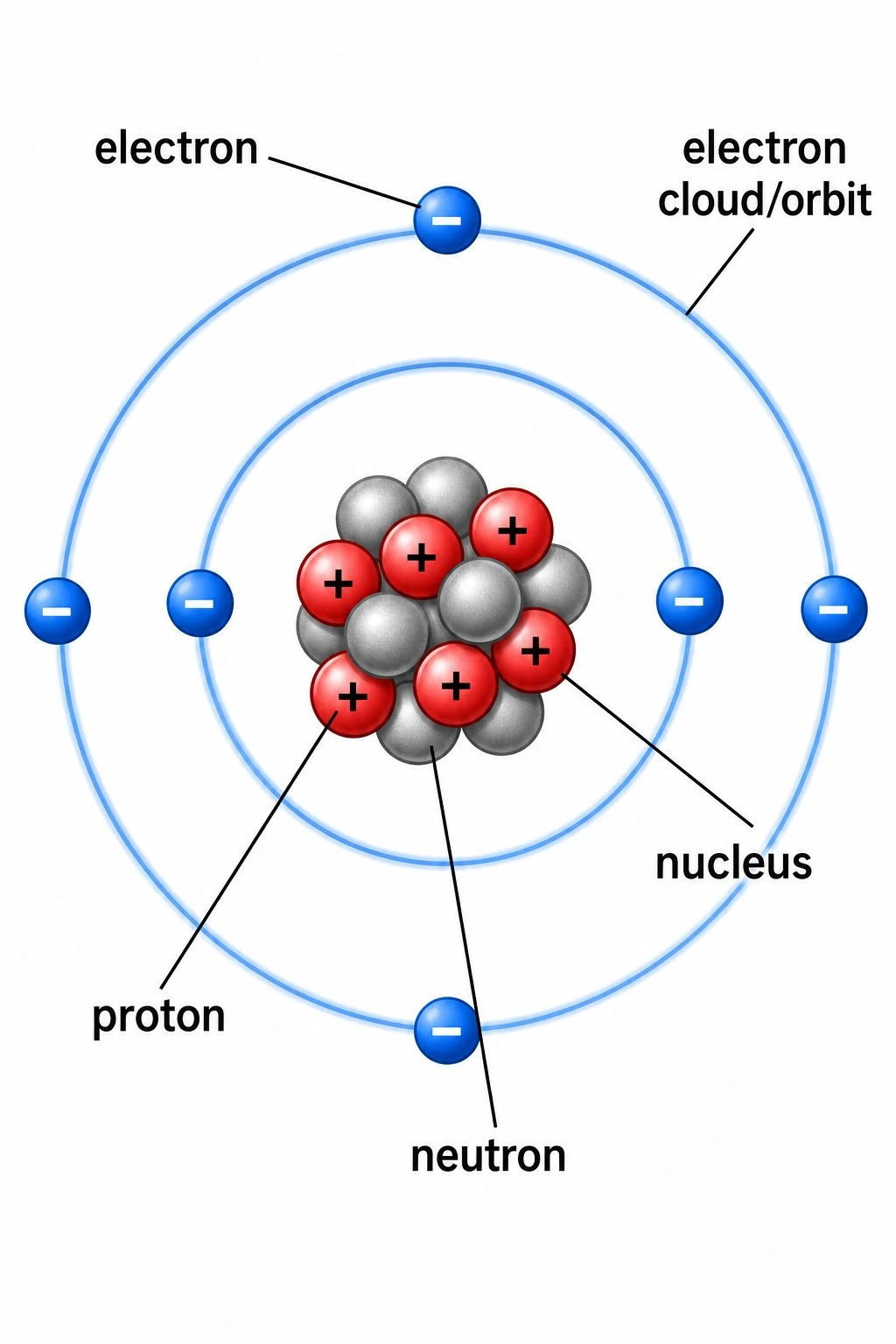 Science
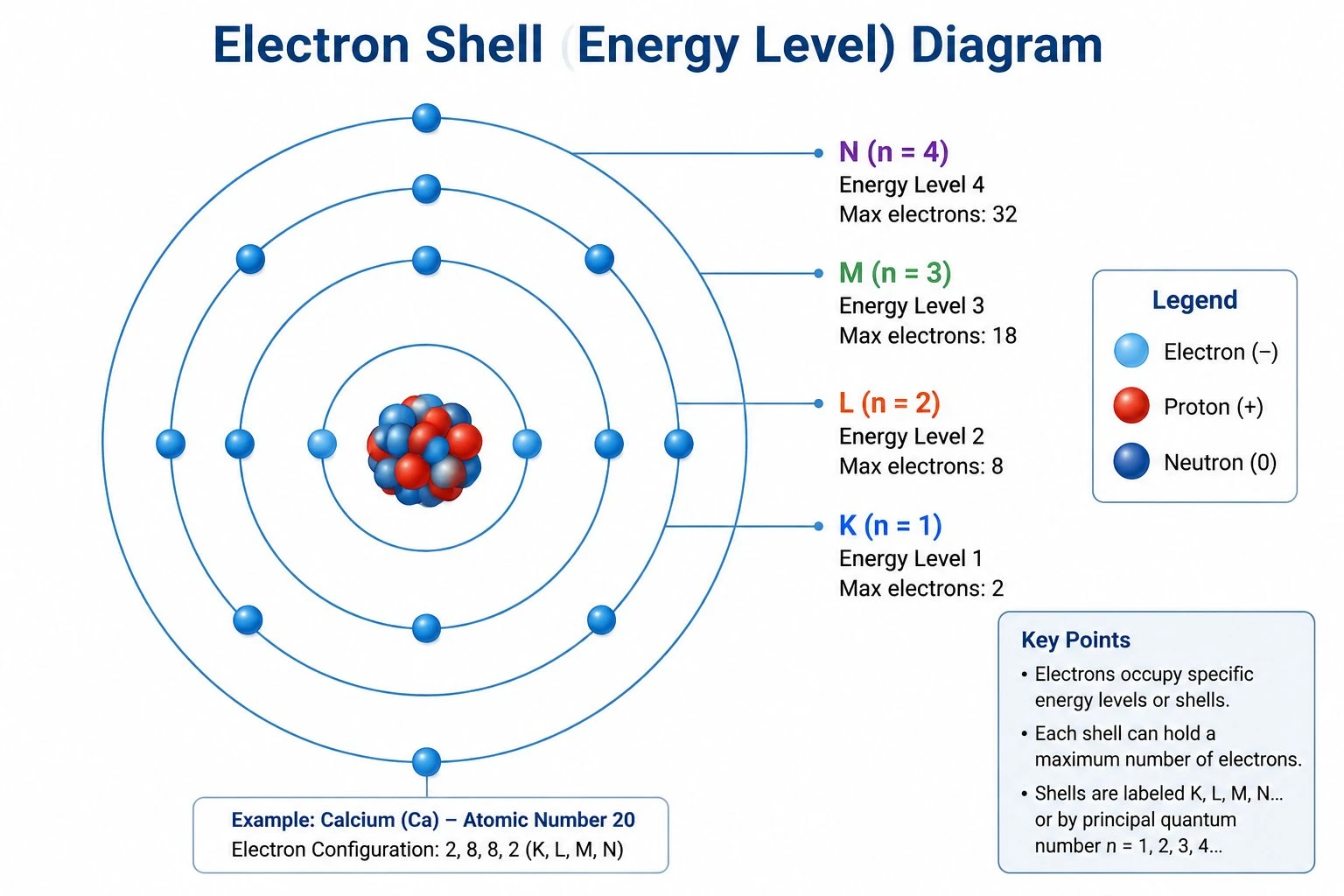
Atom Diagram
Labeled and blank atom diagrams for science class.
 Chemistry
Bohr Model Maker
Bohr models with electron energy levels for any element.