Story Elements Anchor Charts Free Printable Classroom Posters
Free story elements anchor charts — characters, setting, problem, events, solution, and blank story map worksheet. Print free; no sign-up.
Free Story Elements Anchor Charts
Every chart below is free to view and download — no sign-up.
What Are Story Elements?
The five story elements students need for any fiction retell.
Story elements set
Print & practice
Test yourself: story elements
A quick self-test — questions reshuffle each time.
Which list is the five common story elements?
Need a custom version?
Change grade level, labels, or layout — describe it and generate your own poster.
Customize Your Story Elements Chart
Free to try ·
Your custom chart will appear here
Ask for a five-element map or blank worksheet
What is a story elements anchor chart?
A story elements anchor chart is a classroom poster that names the building blocks of fiction: characters, setting, problem, important events, and solution. Students use it while reading and retelling so responses stay complete — not just “what happened at the end.” These free charts are ready to view, download, and print with no account.
The five elements at a glance
- Characters — who is in the story (main and supporting).
- Setting — where and when.
- Problem — the conflict or challenge.
- Events — key things that happen in order.
- Solution — how the problem is resolved.
Story elements vs plot diagram
Story elements posters teach vocabulary and a simple map for any fiction text. A plot diagram (plot mountain) is a different shape — exposition, rising action, climax, falling action, resolution. Use this page for element posters and blank maps; use the Plot Diagram Generator when you need a custom mountain for a specific story.
How to use these charts
- Introduce one element a day, or post the full five-box map for a unit.
- During reading, stop and add notes to the blank story map.
- Pair with character traits charts when students describe who characters are inside.
Frequently Asked Questions
Related ELA Resources
 Education
Plot Diagram Generator
Build a plot mountain (exposition → climax → resolution) for a specific story.
 Education
Character Traits Anchor Charts
Inside vs outside traits, word bank, and trait + evidence.
 Education
Theme Anchor Charts
Theme vs main idea and strong theme statements.
 Education
Main Idea Anchor Charts
Main idea and supporting details posters.
 Education
Text Structure Anchor Charts
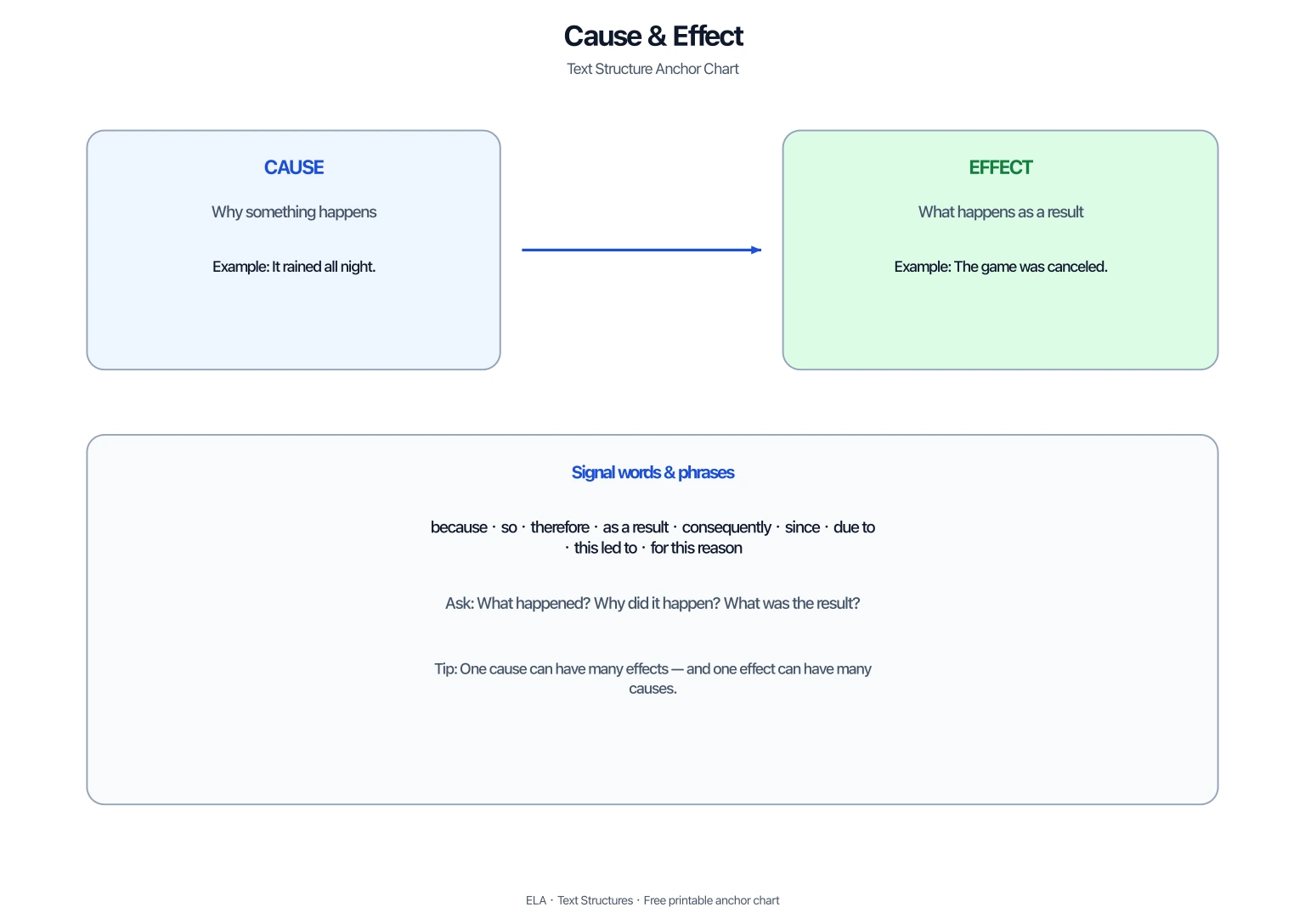
Cause/effect, sequence, compare, problem/solution posters.
 Education
Frayer Model Generator
Vocabulary organizer for story words and concepts.