Dermatology Patient Education Illustration Maker
Make skin condition illustrations for patient handouts: acne, eczema, moisturizing steps, mole checks. Ask for diverse skin tones. Clinician review needed.
Create Your Patient Education Illustration
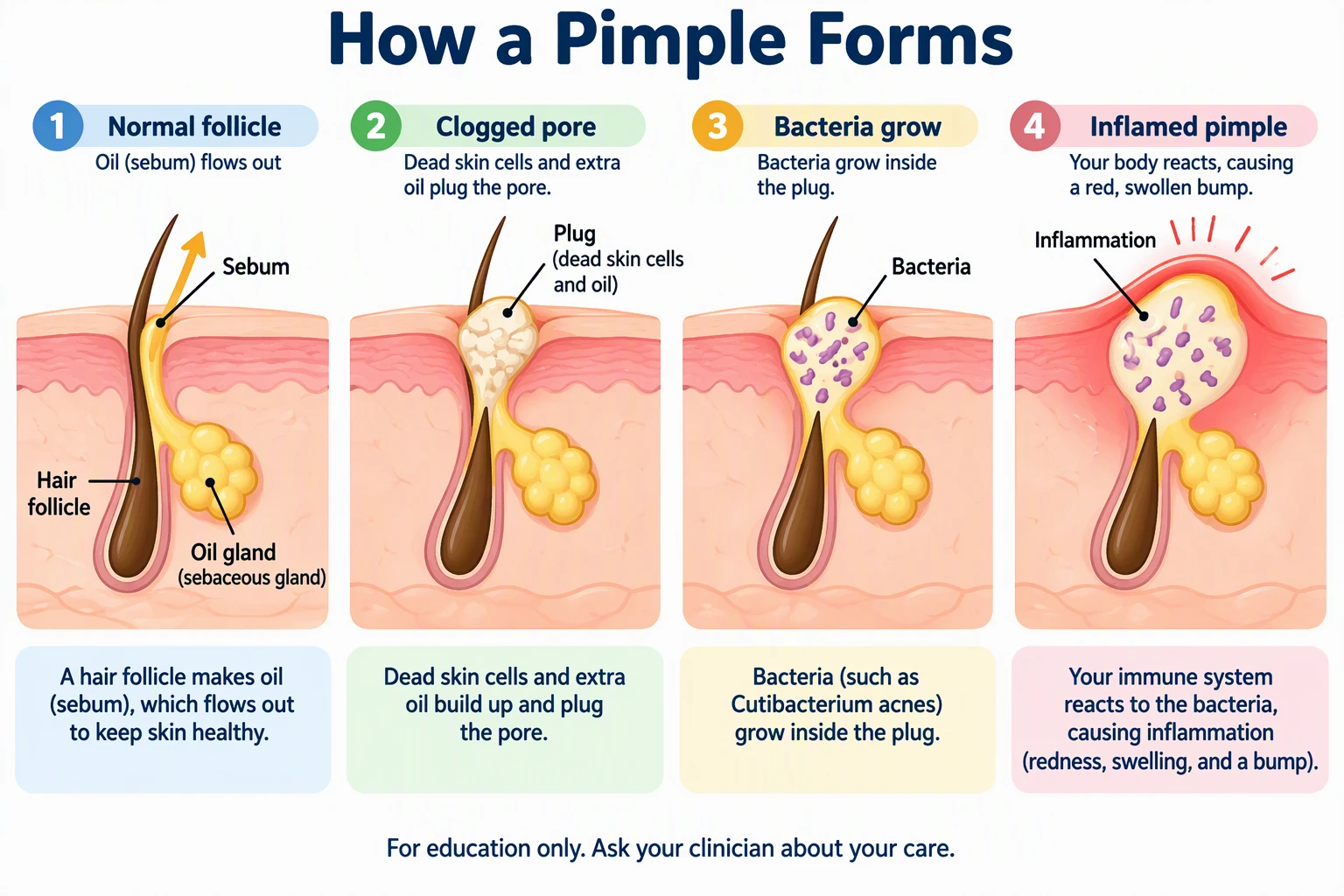 Example: How a pimple formsView full size
Preview is free on this page ·
Your patient education illustration will appear here
AI illustrations are drafts. A clinician must review them before use with patients. No real patient data.
Dermatology Patient Education Examples
Five AI illustrations with their known flaws noted. Generic drawings, no real patients. A clinician should review every illustration before patient use.
How a pimple forms (AI illustration)
AI-generated from the prompt shown. The sequence is right: sebum flows out, dead cells and oil plug the pore, bacteria grow, the body reacts with a red bump. Known flaws: the plug and the final bump are drawn as a large, round, pus-filled sac, like a cyst or pustule, while most pimples are much smaller; the hair shaft stops above the plug in panel 3 and is gone in panel 4; the bacteria are simple purple shapes; the panel 1 text says the hair follicle makes oil, but the oil (sebaceous) gland makes sebum, as the drawing labels it. It also leaves out hormones and the follicle lining, which a clinician may want to add. It shows one skin tone.
Healthy vs eczema skin barrier (AI illustration)
AI-generated from the prompt shown. The idea is correct: an intact barrier holds moisture in and keeps irritants out, while gaps let moisture escape and irritants in. The strip at the bottom shows how redness can look pink, red, or purple to dark brown on different skin tones. Known flaws: irritants are drawn as cartoon germs with faces, which can suggest infection; each skin swatch is a generic, photo-like single round red spot, not a clinical photograph and not an eczema patch with scale, so do not use them as lesion references. Simplified for teaching.
Moisturizing steps for dry skin (AI illustration)
AI-generated from the prompt shown. Hands and arms only, with three different skin tones, no faces. The steps (bathe, pat dry, apply a thick fragrance-free moisturizer, repeat) follow common eczema skin care advice. Known flaws: step 1 shows an arm in a tub under a shower at the same time; step 4 shows a pump lotion bottle, which suggests a thin lotion while the text says a thick moisturizer, and the bottle label is invented, so use the product type your clinician names; the skin tone changes between panels as requested, so it is not one person. Your clinician may give different bath times or products.
ABCDE mole checklist (AI illustration)
AI-generated from the prompt shown. Asymmetry, Border, Color, Diameter (about 6 mm), and Evolving are all present, each with a typical mole and one that needs a closer look, on three skin tones. Known flaws: the moles are AI-rendered, photo-like examples, not photographs of real lesions, and a real melanoma can look different. Melanomas can be smaller than 6 mm, and some do not follow ABCDE, so any new, changing, or unusual spot should be checked. On darker skin, also check palms, soles, and under the nails. ABCDE is a self-check prompt and does not diagnose anything.
Minor scrape care steps (AI illustration)
AI-generated from the prompt shown. Wash hands, press gently with clean gauze to stop bleeding, rinse with clean running water, apply a thin layer of petroleum jelly, cover with a clean bandage, then change it daily and watch for redness, warmth, swelling, pus, or fever. A "Get care for" box lists deep or gaping cuts, bleeding that will not stop, dirty wounds, bite or puncture wounds, and a tetanus shot that is not up to date. Known flaws: the petroleum jelly jar and its label are invented; the bite icon is a paw print; step 6 repeats its text and the infection list leaves out red streaks; the wound is only a small red line; all panels show one skin tone, so ask for several in the prompt. Wound advice varies by clinician and situation.
Teaching skin structure to students? Use the Skin Diagram page. For anatomy figures and other medical visuals, try the Medical Illustration Generator, or compare options in our guide to the best medical illustration software, including licensing for patient education use.
What this page is for
This page is for clinicians, nurses, dermatology practice staff, and health educators who need an illustration for a patient conversation or a handout: how acne forms, what is different about eczema skin, how to moisturize, how to check a mole. You describe the picture, the generator drafts it, and you review it before it reaches a patient. It is an illustration maker, not a library of ready-made handouts. If you want a labeled skin structure diagram for a biology class, use the Skin Diagram page instead.
Patient education illustrations vs a skin structure diagram
A skin diagram shows what skin is made of: epidermis, dermis, hypodermis, follicles, and glands. A patient education illustration explains a problem or a routine to someone who is not a student: why a pore gets blocked, why dry skin cracks, what to do after washing, when a mole needs a closer look. The labels are shorter, the steps are numbered, and the picture ends with an action. For class diagrams and worksheets, see the Skin Diagram page. For general anatomy and surgical-style figures, see the Medical Illustration Generator.
Illustrations you can ask for
- Condition explainers: how acne forms and what happens in the skin barrier in eczema (atopic dermatitis). Other conditions may work too, but results vary and need review.
- Care steps: moisturizing and caring for a minor scrape, as shown in the examples. Ask for the instructions your clinician gives.
- Self-check aids: the ABCDE mole checklist (melanoma can be smaller than 6 mm and does not always follow ABCDE), a prompt to look at the scalp, back, palms, soles, and under the nails, and a reminder to photograph a changing spot for the clinic.
- Care-step aids: how to care for a minor scrape at home and when to get care instead.
- Always add the instruction that your own clinician gives. The picture supports the conversation. It does not replace it.
Show a range of skin tones
Redness, rash, and bruising do not look the same on every patient. Eczema redness can appear pink or red on light skin and purple, gray, or dark brown on deeper skin. If every example in a handout shows light skin, many patients will not recognize their own skin in it. Ask for the skin tones in the prompt, as the examples on this page do ("light, medium, and dark brown"), and check the result. AI illustrations can drift back to one tone, can draw stylized lesions that do not match real ones, and are not a substitute for clinical photographs when you are teaching diagnosis. For patient handouts, drawn illustrations with several tones are a good fit.
Write for patients first: plain language
Patient education is read by people with very different health literacy. Patient materials commonly target about a sixth to eighth grade reading level, so test your final text with a readability tool. In practice: short words, one idea per panel, "oil gland" next to "sebaceous gland", numbered steps, and a clear action at the end such as "call your clinician if you see pus or fever". Put the exact labels you want in the prompt, because the generator will otherwise choose its own words.
How to make a dermatology patient education illustration
- Pick one message for one picture: how a pimple forms, or how to moisturize, not both.
- Name the audience and the reading level in the prompt (for example, "for teenagers, 6th to 8th grade").
- List the panels or steps in order and write the labels you want, using plain words.
- Ask for diverse skin tones, hands and arms or cross-sections only, and no faces.
- Add a footer such as "For education only. Follow your clinician's plan."
- Generate, then check every label, the order of steps, and anything that looks like a medical claim.
- Have a clinician review the final picture and wording before it goes into a handout or a patient portal.
Accuracy and what AI gets wrong
The five illustrations on this page were generated from the prompts shown in the examples above, and each caption lists the flaws we found when we checked them. Typical problems are cyst-like exaggeration of simple lesions, cartoon germs where none are meant, a skin tone that changes between panels, extra or reworded text, and examples that look neat but are not real lesions. The illustrations are drafts to support a conversation. They do not diagnose, they do not promise a result from any treatment, and they must be reviewed by a qualified clinician before use with patients.
Privacy and use with patients
Do not enter a patient name, date of birth, record number, or a photograph that could identify someone. Describe the condition in general terms. The examples here show cross-sections, hands, forearms, and generic skin patches, and no identifiable faces. Check your organization's policy on AI tools and on what may go into patient handouts, and follow its rules on review and sign-off.
Free trial and downloads
Start free with 2 image credits, valid for 7 days, no card required. Free accounts download PNG or JPG.
Frequently Asked Questions
Related Medical Tools
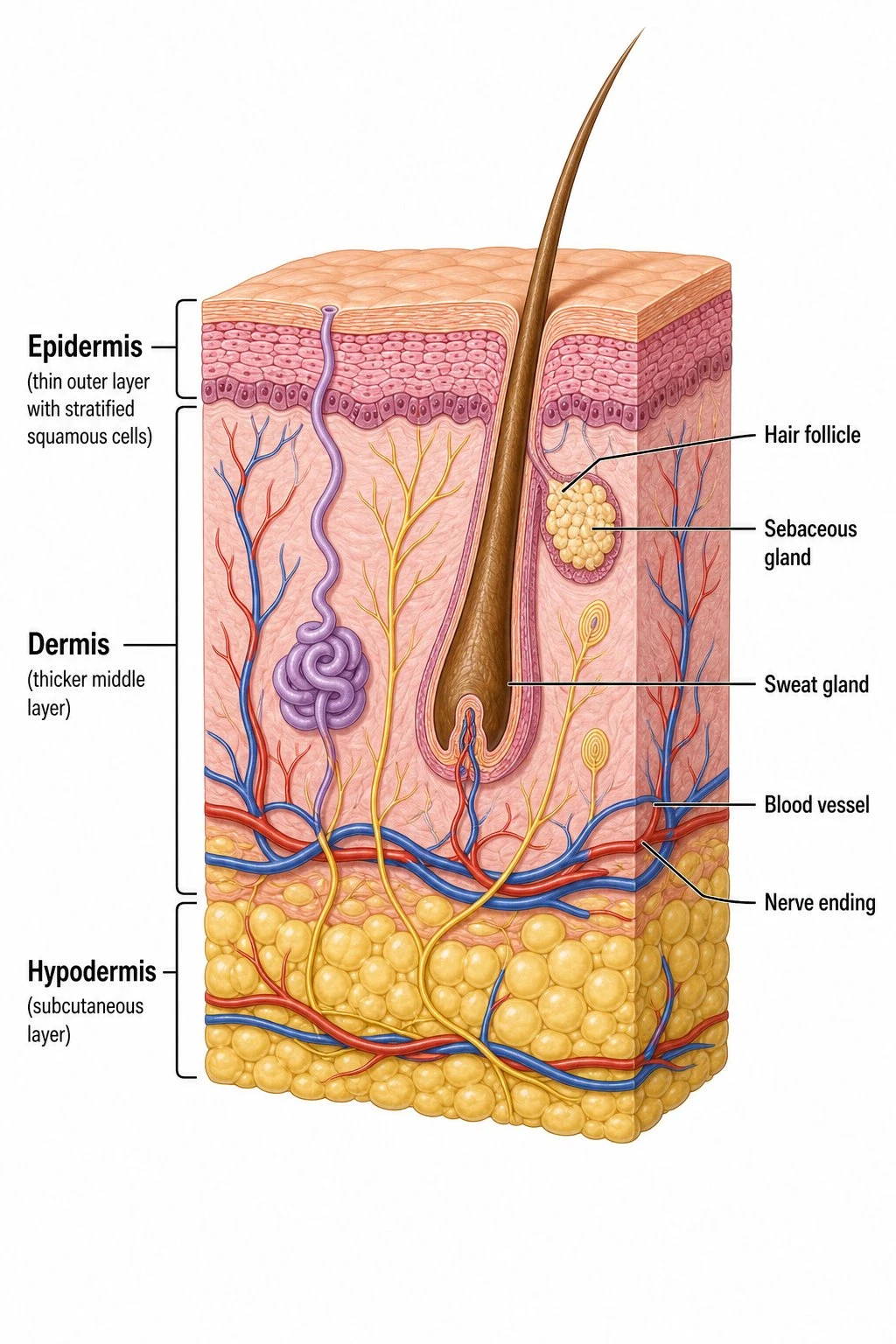 Biology
Skin Diagram
Labeled skin layers, blank worksheets, and simple diagrams for teaching skin structure.
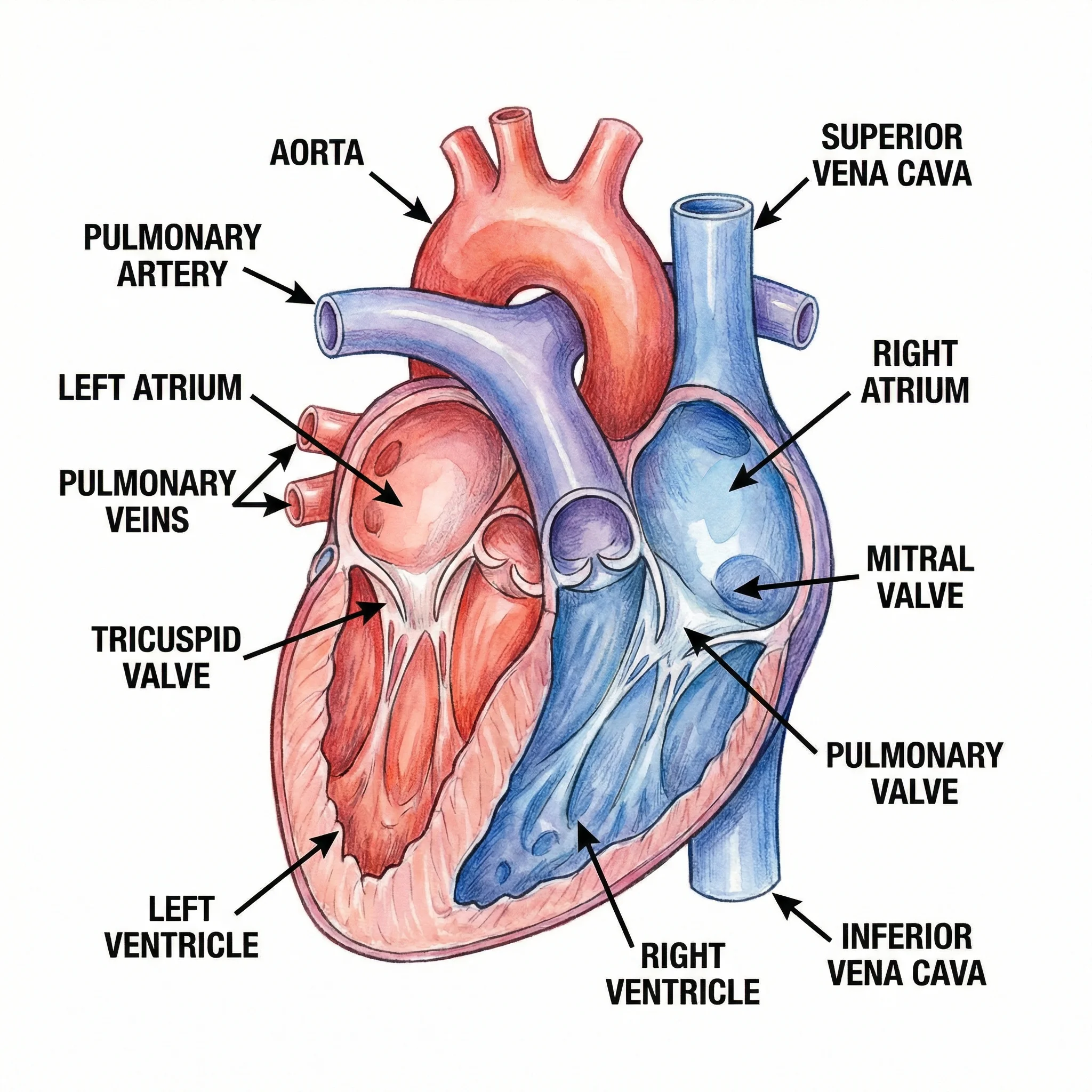 Medical
Medical Illustration Generator
Create labeled medical and anatomy illustrations for teaching and patient education.
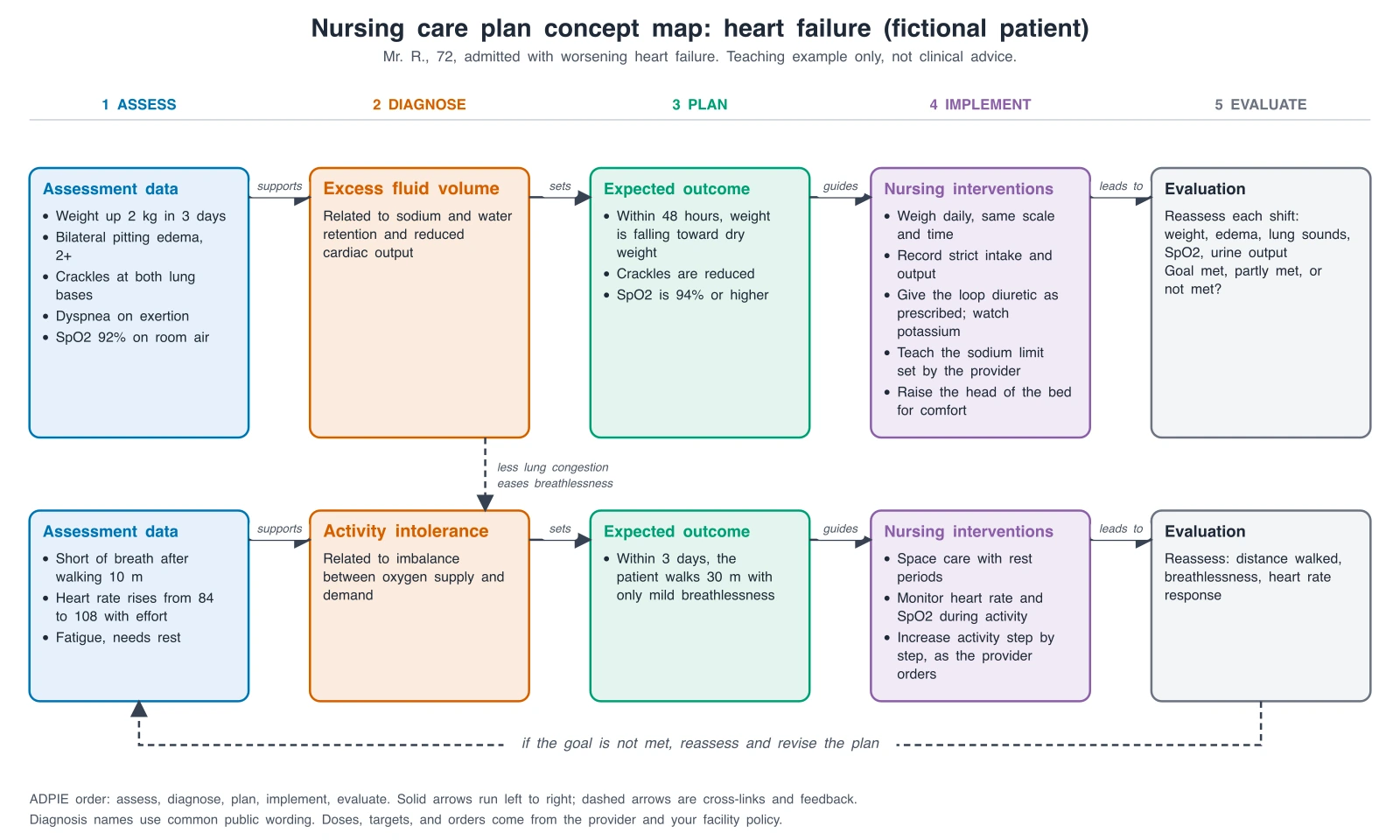 Medical
Nursing Concept Map Generator
Generate nursing care plan and pathophysiology concept maps from a fictional case.