Author's Purpose Anchor Charts Free Printable PIE Set
Free author's purpose anchor charts — PIE definition, examples, how to identify purpose, signal words, and PIE’ED. Download or print; no sign-up.
Free Author's Purpose Anchor Charts
Every chart below is free to view and download — no sign-up.
What Is the Author's Purpose?
Classic PIE definition with three purpose cards.
Author's purpose set
Test yourself: author's purpose
Quick check — answers reshuffle each time.
Author's purpose means…
Need a custom version?
Change colors, grade level, or examples — describe it and generate a poster variant. For classroom-accurate charts, use the free posters above.
Customize an Anchor Chart
Free to try ·
Your custom chart will appear here
Decorative variants — free accurate posters are above
What is an author's purpose anchor chart?
An author's purpose anchor chart helps students name why a writer created a text — usually persuade, inform, or entertain (PIE). These free posters cover the definition, examples, a finding process, signal words, and the expanded PIE’ED model. Download and print with no account.
How to use these charts
- Hang the PIE definition during mini-lessons, then use examples when students mix up text types.
- Practice “prove it” with the how-to chart: purpose claim + one piece of evidence.
- Upper grades can switch to PIE’ED when explain/describe show up in standards.
Author's purpose vs main idea
Purpose is why the author wrote. Main idea is what the text is mostly about. A text can inform you (purpose) about how volcanoes form (main idea). Pair with Main Idea Anchor Charts when you teach both.
Frequently Asked Questions
Related ELA Tools
 Education
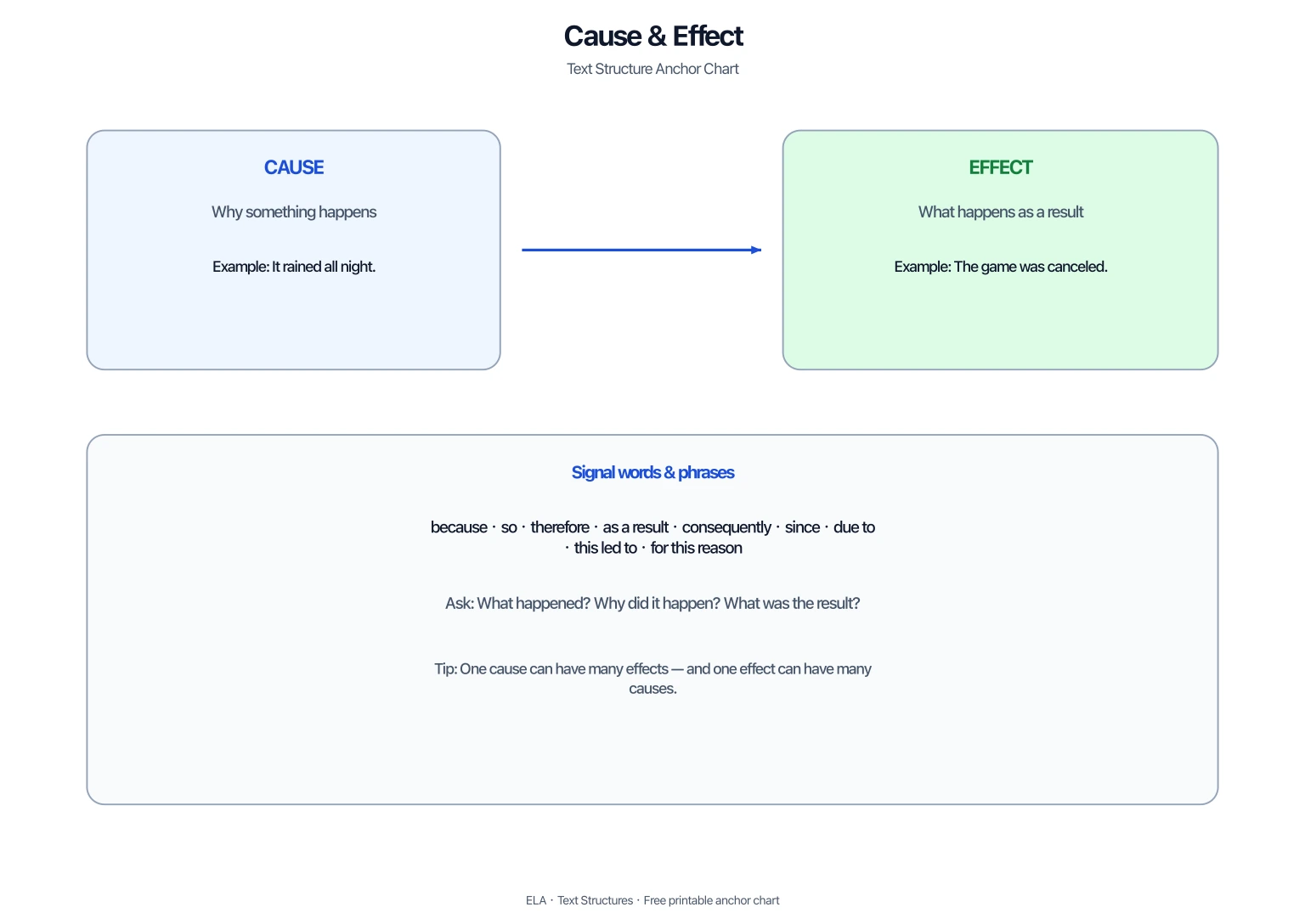
Text Structure Anchor Charts
Cause & effect, compare & contrast, sequence, problem & solution, description.
 Education
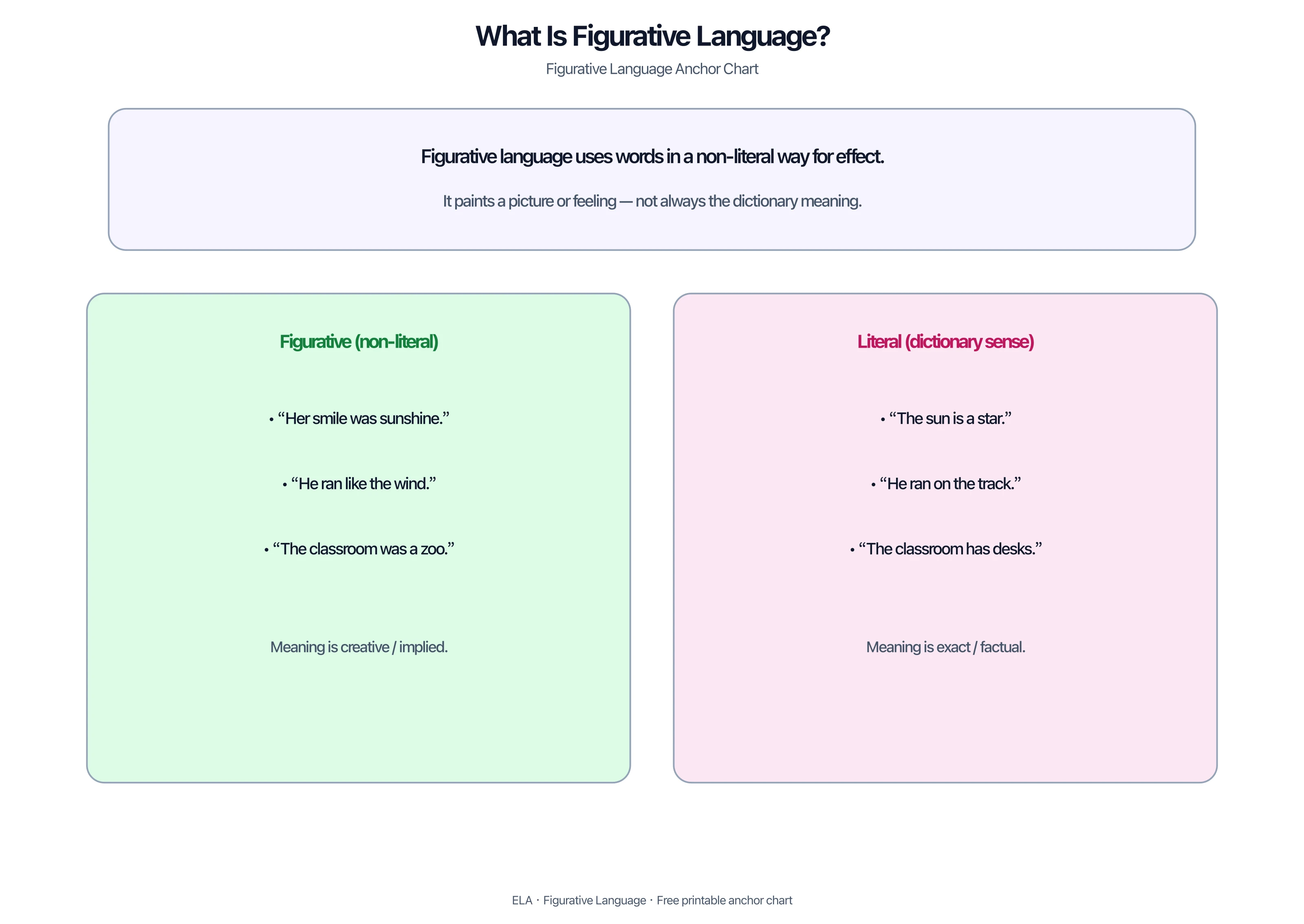
Figurative Language Anchor Charts
Simile vs metaphor, personification, hyperbole, idiom, onomatopoeia.
 Education
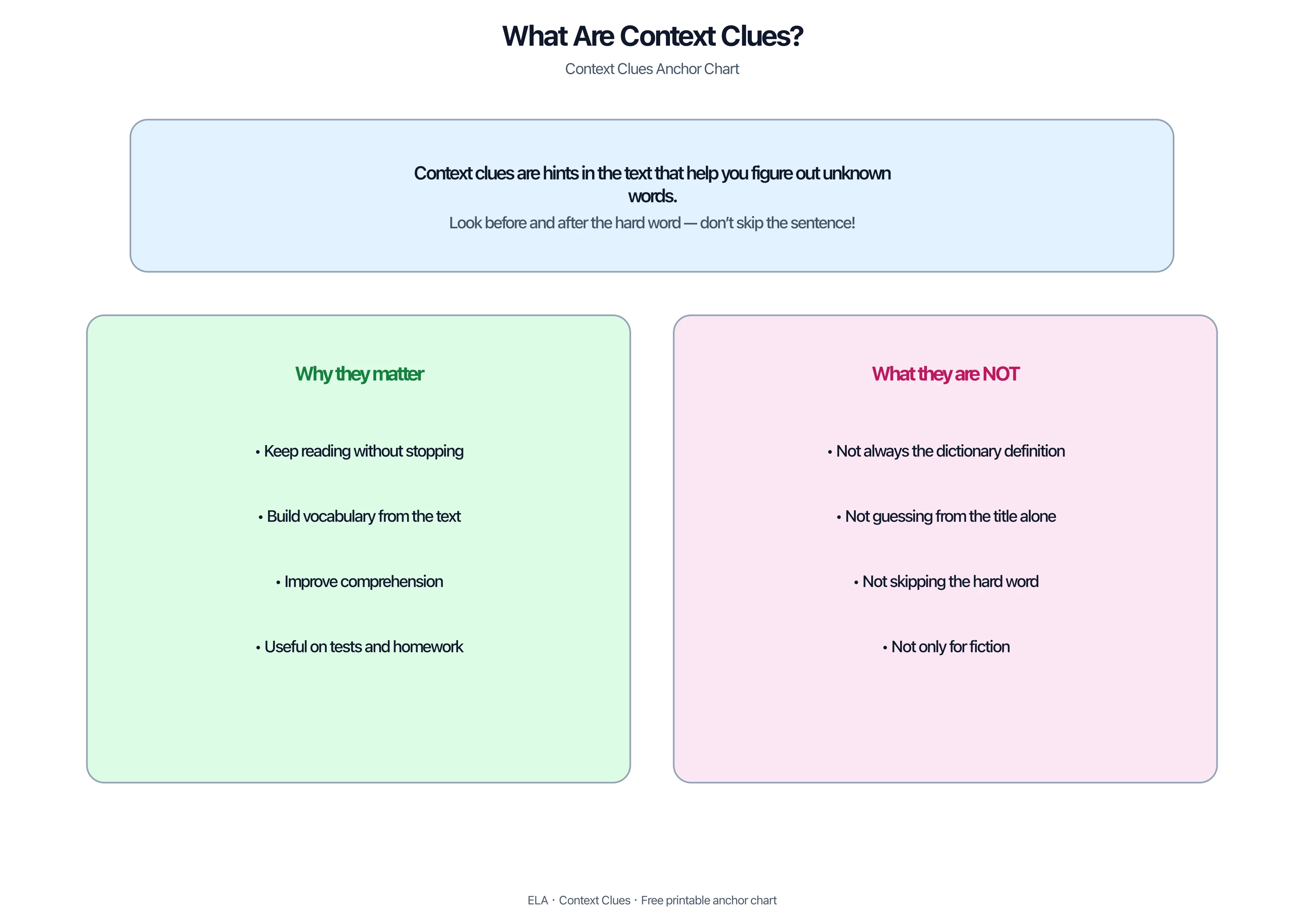
Context Clues Anchor Charts
Five clue types, how-to steps, signal words, and worked examples.