Figurative Language Anchor Charts Free Printable Set
Free figurative language anchor charts — definition, simile vs metaphor, personification, hyperbole, idiom, onomatopoeia. Print free; no sign-up.
Free Figurative Language Anchor Charts
Every chart below is free to view and download — no sign-up.
What Is Figurative Language?
Defines figurative language and contrasts it with literal wording.
Figurative language set
Test yourself: figurative language
Quick check — answers reshuffle each time.
A simile always uses…
Need a custom version?
Change colors, grade level, or examples — describe it and generate a poster variant. For classroom-accurate charts, use the free posters above.
Customize an Anchor Chart
Free to try ·
Your custom chart will appear here
Decorative variants — free accurate posters are above
What is a figurative language anchor chart?
A figurative language anchor chart helps students name non-literal language — simile, metaphor, personification, hyperbole, idiom, and onomatopoeia — and give accurate examples. These free posters stay classroom-correct (similes need like/as; metaphors do not). Download and print with no account.
How to use these charts
- Start with “What is figurative language?” so students separate literal vs non-literal.
- Drill simile vs metaphor until students stop calling every comparison a metaphor.
- Use the types overview as a desk reference during reading and writing.
Pair with other ELA charts
Figurative language often appears in fiction and poetry. Pair with Theme Anchor Charts when discussing tone and meaning, and with Context Clues when an idiom or metaphor hides a word’s sense.
Frequently Asked Questions
Related ELA Tools
 Education
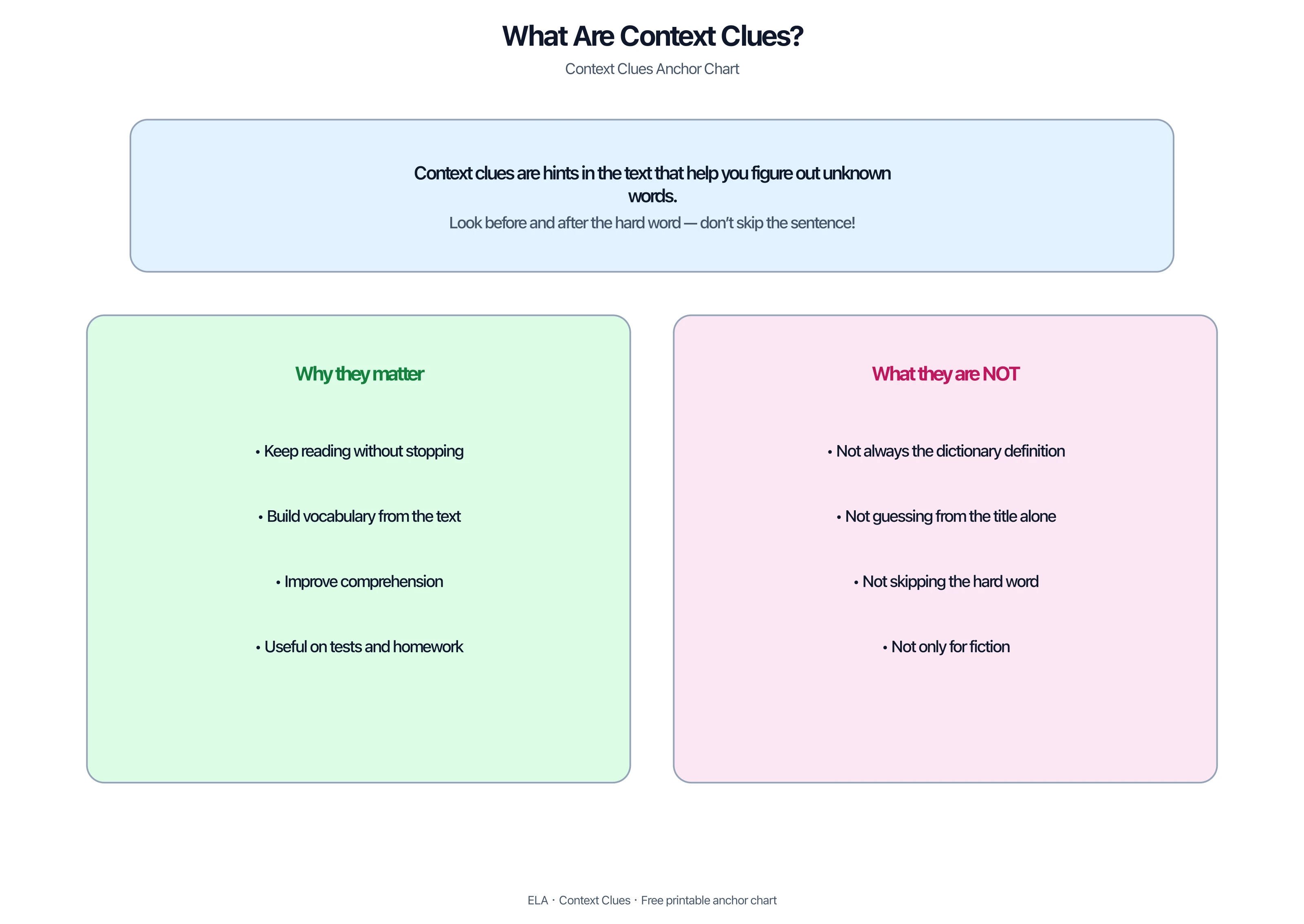
Context Clues Anchor Charts
Five clue types, how-to steps, signal words, and worked examples.
 Education
Main Idea Anchor Charts
Definition, umbrella details, how to find main idea, signal words, topic sentences.
 Education
Theme Anchor Charts
Free theme posters — theme vs main idea, how to find theme, strong theme statements.