Framework vs Model in Research: Complete Guide to Understanding the Difference
Learn the key differences between frameworks and models in academic research, with examples, when to use each, and how to apply them in your methodology.
Understanding the distinction between frameworks and models is crucial for developing robust research methodologies, yet many researchers struggle with these concepts. Whether you're designing your first study or refining your research approach, knowing when to use a framework versus a model can significantly strengthen your work.
What is a Framework in Research?
A framework in research is a structured conceptual system that provides the overall architecture for organizing and conducting your study. It establishes the boundaries, relationships, and context within which your research operates.
Think of a framework as the scaffolding of a building—it provides the structural support and defines the space where your research activities take place. Frameworks are typically broader and more flexible than models, offering guidance rather than prescriptive steps.
Key Characteristics of Research Frameworks
Research frameworks share several defining features:
- Structural organization: Provides the overall architecture for your study
- Conceptual boundaries: Defines what is included and excluded from your research
- Relationship mapping: Shows how different elements connect and interact
- Theoretical grounding: Often based on established theories or concepts
- Flexibility: Allows adaptation to specific research contexts
- Guiding function: Directs rather than dictates research decisions
Types of Research Frameworks
Different types of frameworks serve different purposes in research:
Theoretical Framework draws on existing theories to explain phenomena and guide hypothesis development. It connects your research to established knowledge in your field.
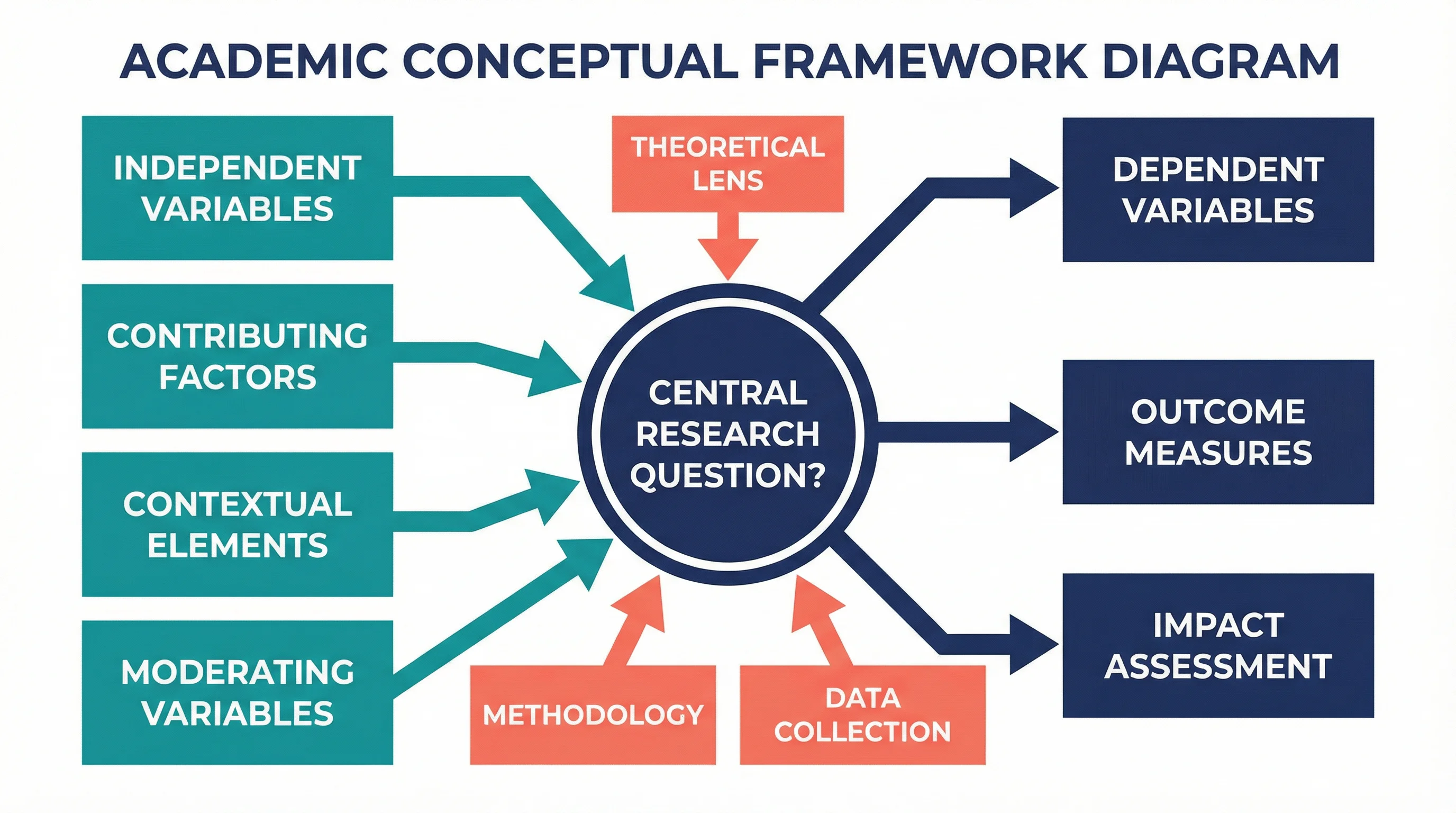
Conceptual Framework maps out the key concepts, variables, and relationships you'll examine in your study. It's often more specific to your particular research question than a theoretical framework.
Methodological Framework outlines the overall approach and procedures for conducting your research, including data collection and analysis strategies.
Analytical Framework provides the structure for interpreting and making sense of your data, guiding how you'll analyze and present findings.
What is a Model in Research?
A model in research is a simplified representation of a phenomenon, system, or process that helps explain, predict, or test specific relationships. Models are more concrete and specific than frameworks, often including measurable variables and defined pathways.
If a framework is the scaffolding, a model is more like a blueprint—it shows specific components, their measurements, and how they fit together in precise ways.
Key Characteristics of Research Models
Research models have distinct features:
- Representational: Depicts specific elements and their relationships
- Predictive: Often used to forecast outcomes or behaviors
- Testable: Includes hypotheses that can be empirically verified
- Specific: Focuses on particular variables and relationships
- Visual: Frequently presented as diagrams with arrows and connections
- Quantifiable: Often includes measurable components
Types of Research Models
Various model types serve different research purposes:
Conceptual Models illustrate relationships between concepts or variables in your study, showing how you expect them to interact.
Statistical Models use mathematical equations to represent relationships between variables, enabling quantitative analysis and prediction.
Process Models depict sequences of events, stages, or steps in a phenomenon, showing how things unfold over time.
Structural Models represent the organization and relationships within a system, often used in fields like sociology or organizational research.
Framework vs Model: Key Differences
Understanding the distinctions between frameworks and models helps you choose the right tool for your research needs.

Frameworks provide the overall structure for organizing complex research concepts and relationships
Scope and Breadth
Frameworks are broader and more comprehensive, encompassing multiple theories, concepts, and approaches. They provide the big picture of your research landscape.
Models are narrower and more focused, representing specific relationships or processes within a defined scope. They zoom in on particular aspects of your research.
Purpose and Function
Frameworks guide and organize your research approach, providing structure without prescribing exact steps. They help you think about your research systematically.
Models explain, predict, or test specific relationships and outcomes. They help you understand how particular elements interact and what results to expect.
Flexibility vs Specificity
Frameworks offer flexibility, allowing adaptation to different contexts and research questions. They're more like guidelines than rules.
Models are more rigid and specific, with defined components and relationships. They're designed to represent particular phenomena accurately.
Application Timing
Frameworks are typically established early in the research process, guiding your overall approach and methodology design.
Models may be developed or selected at various stages, often after initial exploration helps identify key variables and relationships.
Theoretical vs Empirical
Frameworks are often more theoretical, drawing on existing knowledge to provide conceptual structure.
Models are frequently more empirical, based on observed data and testable hypotheses about specific relationships.
When to Use a Framework
Frameworks are most appropriate in these research situations:
Exploratory Research
When investigating new or under-researched areas, frameworks help organize your exploration without constraining discovery. They provide structure while maintaining openness to unexpected findings.
Complex Phenomena
For multifaceted research problems involving numerous factors, frameworks help manage complexity by organizing elements into coherent structures.
Qualitative Studies
Qualitative research often benefits from frameworks that guide data collection and analysis while allowing flexibility for emergent themes and patterns.
Literature Reviews
Frameworks help organize and synthesize existing research, showing how different studies relate to each other and identifying gaps in knowledge.
Theory Development
When building new theoretical understanding, frameworks provide the scaffolding for organizing concepts and proposing relationships.
When to Use a Model
Models are most suitable in these research contexts:
Hypothesis Testing
When you have specific predictions about relationships between variables, models help formalize and test these hypotheses empirically.
Quantitative Research
Statistical and mathematical models are essential for analyzing numerical data and testing relationships between measured variables.
Prediction and Forecasting
Models excel at predicting outcomes based on input variables, making them valuable for applied research and decision-making.
Process Understanding
When examining how things work or unfold over time, process models clarify sequences, stages, and mechanisms.
Comparative Analysis
Models facilitate comparison across different contexts or conditions by providing standardized representations of phenomena.
Practical Examples: Framework vs Model
Let's examine concrete examples to clarify the distinction:
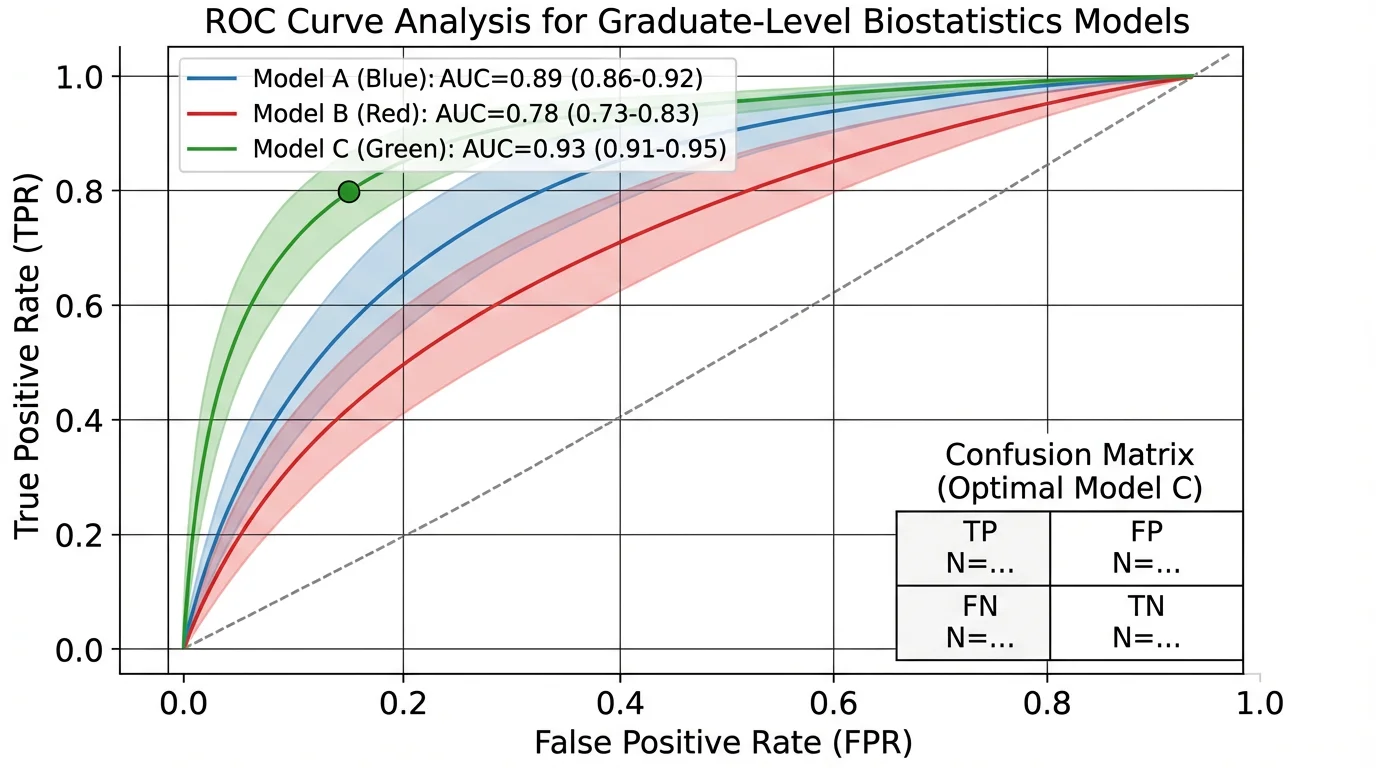
Models provide specific, testable representations of relationships between variables
Example 1: Educational Research
Framework: A theoretical framework based on constructivist learning theory guides your overall study of student engagement. It provides the conceptual foundation for understanding how students construct knowledge.
Model: A specific model showing how classroom technology use (independent variable) affects student engagement (dependent variable), mediated by teacher support and moderated by student age.
Example 2: Health Research
Framework: A socio-ecological framework organizes your study of health behaviors, considering individual, interpersonal, organizational, community, and policy factors.
Model: The Health Belief Model predicts health behavior based on specific variables: perceived susceptibility, perceived severity, perceived benefits, perceived barriers, cues to action, and self-efficacy.
Example 3: Business Research
Framework: A strategic management framework guides your analysis of organizational performance, incorporating internal resources, external environment, and competitive dynamics.
Model: Porter's Five Forces Model analyzes competitive intensity through five specific forces: competitive rivalry, supplier power, buyer power, threat of substitution, and threat of new entry.
Example 4: Social Science Research
Framework: A feminist framework shapes your study of workplace inequality, emphasizing power dynamics, gender roles, and systemic discrimination.
Model: A path analysis model tests specific relationships between education level, work experience, gender, and salary outcomes, with quantified pathways between variables.
Combining Frameworks and Models
Many successful research projects use both frameworks and models complementarily:
Hierarchical Integration
Use a framework to provide overall structure and a model to examine specific relationships within that structure. The framework sets the context; the model tests specific hypotheses.
Sequential Application
Start with a framework to guide initial exploration, then develop or apply models based on what you discover. This approach works well for mixed-methods research.
Multiple Models Within a Framework
A single framework can accommodate multiple models examining different aspects of your research question. Each model focuses on specific relationships while the framework maintains coherence.
Developing Your Own Framework or Model
Creating original frameworks or models requires careful consideration:
For Frameworks
- Review existing literature to understand current theoretical perspectives
- Identify key concepts relevant to your research question
- Map relationships between concepts logically
- Define boundaries of what your framework includes and excludes
- Ensure flexibility for adaptation to specific contexts
- Validate with experts in your field
For Models
- Specify variables clearly with operational definitions
- Propose relationships based on theory or preliminary data
- Create visual representation showing connections and pathways
- Define testable hypotheses derived from the model
- Consider alternative models that might explain the same phenomena
- Plan empirical testing to validate your model
Common Mistakes to Avoid
Researchers frequently make these errors when working with frameworks and models:
Confusing the Terms
Using "framework" and "model" interchangeably creates confusion. Be precise in your terminology to communicate clearly.
Choosing Inappropriately
Selecting a framework when you need a model (or vice versa) weakens your research design. Match your choice to your research purpose.
Over-Complicating
Adding unnecessary complexity to frameworks or models obscures rather than clarifies. Keep them as simple as possible while remaining comprehensive.
Ignoring Context
Applying frameworks or models without considering your specific research context reduces their effectiveness. Adapt them thoughtfully.
Lacking Justification
Failing to explain why you chose a particular framework or model leaves readers questioning your methodological decisions.
Inconsistent Application
Starting with one framework or model but shifting to another mid-study creates methodological confusion and weakens findings.
Frameworks and Models Across Disciplines
Different fields emphasize frameworks and models differently:
Social Sciences
Heavy use of theoretical frameworks (e.g., social cognitive theory, ecological systems theory) combined with conceptual models showing variable relationships.
Natural Sciences
Emphasis on mathematical and statistical models for prediction and explanation, with methodological frameworks guiding experimental design.
Engineering
Process models and system models predominate, with frameworks organizing design and testing procedures.
Humanities
Interpretive frameworks (e.g., postcolonial, critical theory) guide analysis, with less emphasis on predictive models.
Business and Management
Strategic frameworks (e.g., SWOT, Porter's frameworks) combined with business models showing value creation and delivery.
Visualizing Frameworks and Models
Effective visual representation enhances understanding:
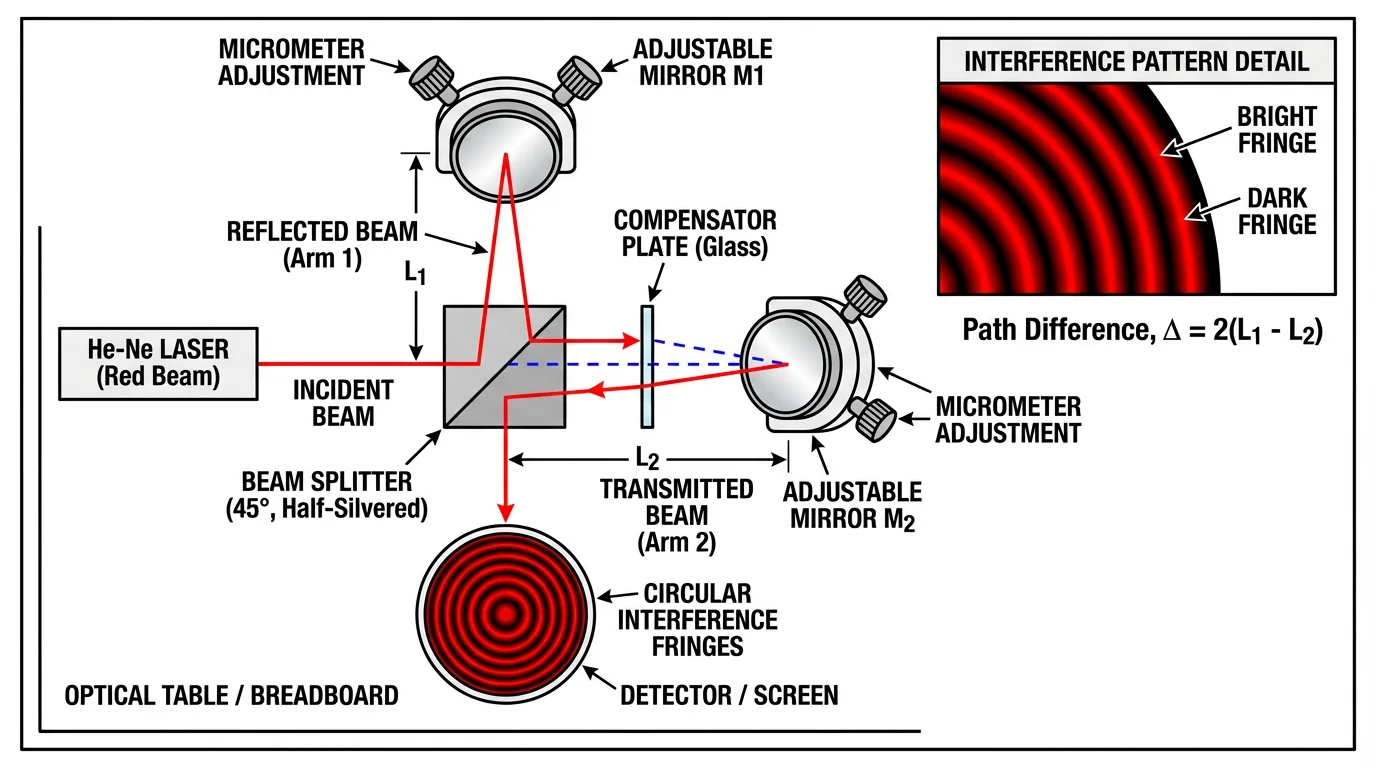
Clear visualizations help communicate complex frameworks and models to diverse audiences
Framework Visualization
- Use hierarchical diagrams showing levels and relationships
- Employ concept maps with connecting lines and labels
- Create matrix structures organizing multiple dimensions
- Design flowcharts showing research process stages
Model Visualization
- Draw path diagrams with arrows indicating relationships
- Use boxes and circles to represent variables and constructs
- Include symbols (+ or -) to show positive or negative relationships
- Add numerical values for quantified relationships
Consider using scientific diagram tools to create professional visualizations of your frameworks and models.
Reporting Frameworks and Models in Research
Proper documentation is essential:
In Your Methodology Section
- Identify clearly whether you're using a framework, model, or both
- Describe the origin (existing or newly developed)
- Explain the rationale for your choice
- Define all components and their relationships
- Show visual representation with clear labels
- Discuss limitations of your framework or model
In Your Results Section
- Reference the framework or model when presenting findings
- Show how results relate to predicted relationships
- Identify unexpected findings that don't fit the framework or model
- Discuss modifications if you adapted the framework or model
In Your Discussion Section
- Evaluate effectiveness of your framework or model
- Compare with alternative approaches from the literature
- Suggest refinements based on your findings
- Propose future applications in different contexts
Tools and Resources
Leverage these resources for working with frameworks and models:
Literature Resources
- Theoretical and conceptual framework textbooks
- Discipline-specific methodology guides
- Journal articles explaining framework and model development
- Systematic reviews of frameworks and models in your field
Software Tools
- ConceptViz tools for creating framework and model diagrams
- NVivo or ATLAS.ti for qualitative framework analysis
- AMOS or Mplus for structural equation modeling
- R or Python for statistical modeling
Learning Resources
- Research methodology courses and workshops
- Online tutorials on framework and model development
- Webinars from professional associations
- Mentorship from experienced researchers
Conclusion
Understanding the distinction between frameworks and models is fundamental to rigorous research design. Frameworks provide the broad conceptual structure guiding your research approach, while models offer specific representations of relationships you can test empirically.
The key is matching your choice to your research purpose: use frameworks when you need flexible guidance and conceptual organization, and use models when you need to specify and test particular relationships. Many successful studies use both, with frameworks providing overall structure and models examining specific hypotheses within that structure.
As you develop your research skills, practice identifying frameworks and models in published research, understanding how they're applied, and considering how you might adapt them to your own work. With experience, you'll develop intuition for when each approach is most appropriate.
Ready to visualize your research framework or model? Explore our conceptual framework generator to create professional diagrams that clearly communicate your research design.
Related Articles:
更多文章

3 Minute Thesis (3MT): Tips, Slide Examples & Presentation Guide (2026)
3MT tips and winning slide examples. Learn how to design your 3 Minute Thesis slide, structure your presentation, and avoid common mistakes.
How to Create a Vector Image: A Complete Guide for Beginners and Researchers
Learn how to create vector images using Inkscape, Illustrator, and AI tools. Covers the SVG format, tracing raster images, and best practices for illustration.
How to Present References in a Scientific Poster: Complete Citation Guide
Learn best practices for formatting and presenting references on scientific posters, with citation styles, font sizes, placement tips, and real examples.