
AI Conceptual Framework for Thesis: Prompts, Examples, and Chapter 1 Workflow
Create an AI conceptual framework for thesis work with prompts, examples, variable tables, Chapter 1 writing tips, and validation checks.
An AI conceptual framework for thesis writing can save hours, but only if you treat it as a research assistant rather than an authority. The useful job for AI is not to invent your study. It is to help you turn a research problem, variables, theory, and hypotheses into a clear working model that you can check against the literature.
Search intent around this topic is practical. Students are not only asking "what is a conceptual framework?" They want to know how to make one for Chapter 1, how it differs from a theoretical framework, what variables to include, how to draw the diagram, and whether AI can generate a framework they can defend.
Conceptual Framework Generator
Turn your research question, variables, and hypotheses into a thesis-ready conceptual framework diagram.
Try it free ->Quick Answer: Can AI Make a Conceptual Framework for a Thesis?
Yes, AI can help you create a conceptual framework for a thesis, but the framework still needs human validation. Use AI to:
- Extract possible variables from your research title and objectives
- Classify independent, dependent, mediating, moderating, and control variables
- Suggest relationship directions based on your stated hypotheses
- Convert your variable list into a clean diagram prompt
- Draft a short Chapter 1 explanation of the framework
Do not use AI to invent unsupported relationships, fabricate citations, or replace your literature review. A strong thesis framework must still be grounded in sources, aligned with your research questions, and approved by your advisor or committee.

AI is most useful when it turns structured research notes into a first visual draft, not when it guesses the study for you.
What a Thesis Conceptual Framework Actually Does
A conceptual framework shows the expected relationship between the key concepts or variables in your study. Scribbr's guide to conceptual frameworks emphasizes that the framework should be built before data collection because it guides the research process and clarifies variable relationships.
For thesis writing, that means your framework should answer five questions:
| Question | What the framework should show |
|---|---|
| What is the main problem? | The issue or gap your study investigates |
| What factors matter? | The concepts, constructs, or variables |
| What outcome changes? | The dependent variable or final phenomenon |
| How are factors related? | Directional arrows, paths, or propositions |
| Why should readers believe it? | Literature, theory, or prior findings behind each link |
This is why a conceptual framework belongs close to your research problem, objectives, hypotheses, and methodology. It is not a decorative diagram at the end of Chapter 1. It is the bridge between your literature review and your research design.
Conceptual Framework vs. Theoretical Framework
Many students search for AI conceptual framework help because they are not sure whether they need a conceptual framework, a theoretical framework, or both. The simplest distinction is this:
| Aspect | Conceptual framework | Theoretical framework |
|---|---|---|
| Main job | Shows how your study's variables or concepts relate | Grounds the study in established theory |
| Source | Your synthesis of literature, context, variables, and assumptions | Named theories, models, or schools of thought |
| Flexibility | More customized to your study | More constrained by existing theory |
| Typical output | Diagram, relationship map, variable table, propositions | Theory explanation and justification |
| Thesis use | Helps explain what you will examine | Helps explain why the relationships make sense |
University of Phoenix's research overview frames both as structures that guide a study, while noting that conceptual frameworks can be broader and more customized than a single theory. ATLAS.ti's guide makes a similar point for qualitative research: the framework can orient the study even when it combines theory, prior research, and context.
In practice, many theses use both. The theoretical framework may explain that you are using Technology Acceptance Model, Social Cognitive Theory, or Theory of Planned Behavior. The conceptual framework then adapts that theory to your exact variables, population, and research questions.
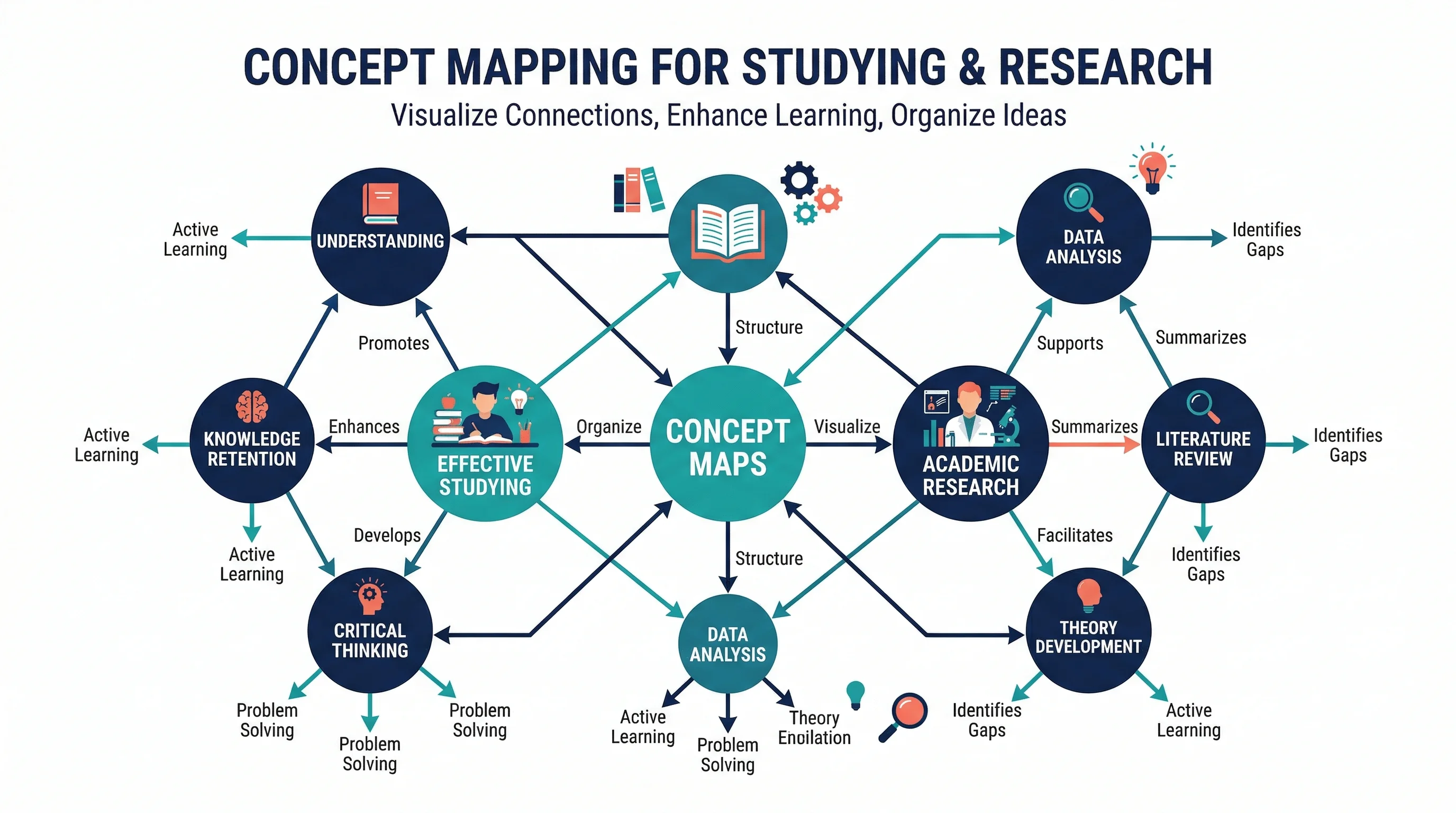
A thesis conceptual framework often starts as a concept map before it becomes a final variable diagram.
The AI Workflow: From Research Topic to Framework Diagram
Use this workflow when you have a thesis title, a research question, and early literature notes, but you do not yet have a clean framework diagram.
Step 1: Write a Structured Research Brief
AI works better when you give it structured input. Before asking for a diagram, prepare this brief:
Research title:

Research problem:

Population/context:

Main research question:

Specific objectives:

Known theory or model:

Possible independent variables:

Possible dependent variable:

Possible mediators/moderators:

Important sources or findings:

Methodology:
If you cannot fill these fields yet, you are not ready for a final conceptual framework. You can still use AI to brainstorm, but mark the result as provisional.
Step 2: Ask AI to Extract and Classify Variables
Start with classification before diagramming. This avoids the common mistake of producing a beautiful diagram with unclear variable roles.
Use this prompt:
I am writing a thesis. Based on the research brief below, identify the likely independent, dependent, mediating, moderating, and control variables.

For each variable, explain why it belongs in that role and whether the evidence is strong, tentative, or missing. Do not invent citations. If a relationship needs literature support, mark it as "needs source."

[Paste research brief]
The useful output is not just a list. You want a classification table:
| Variable | Role | Why it belongs | Evidence status |
|---|---|---|---|
| Teaching method | Independent variable | Proposed cause or intervention | Supported by literature |
| Student engagement | Mediator | Explains how teaching method affects achievement | Needs stronger source |
| Academic achievement | Dependent variable | Outcome measured in the study | Supported |
| Prior knowledge | Control variable | Could influence achievement independent of intervention | Supported |
Step 3: Convert Variables Into Relationship Claims
Next, ask AI to turn the variable list into explicit relationship claims.
Using the variable table, draft 5 to 8 relationship statements for a thesis conceptual framework.

Each statement should include:
1. The source variable
2. The target variable
3. The expected direction of influence
4. Whether the relationship is direct, mediated, moderated, or controlled
5. A note saying what kind of literature evidence is needed
This step matters because every arrow in the final diagram should have a reason. If you cannot explain an arrow in one sentence, it should not be in the framework yet.
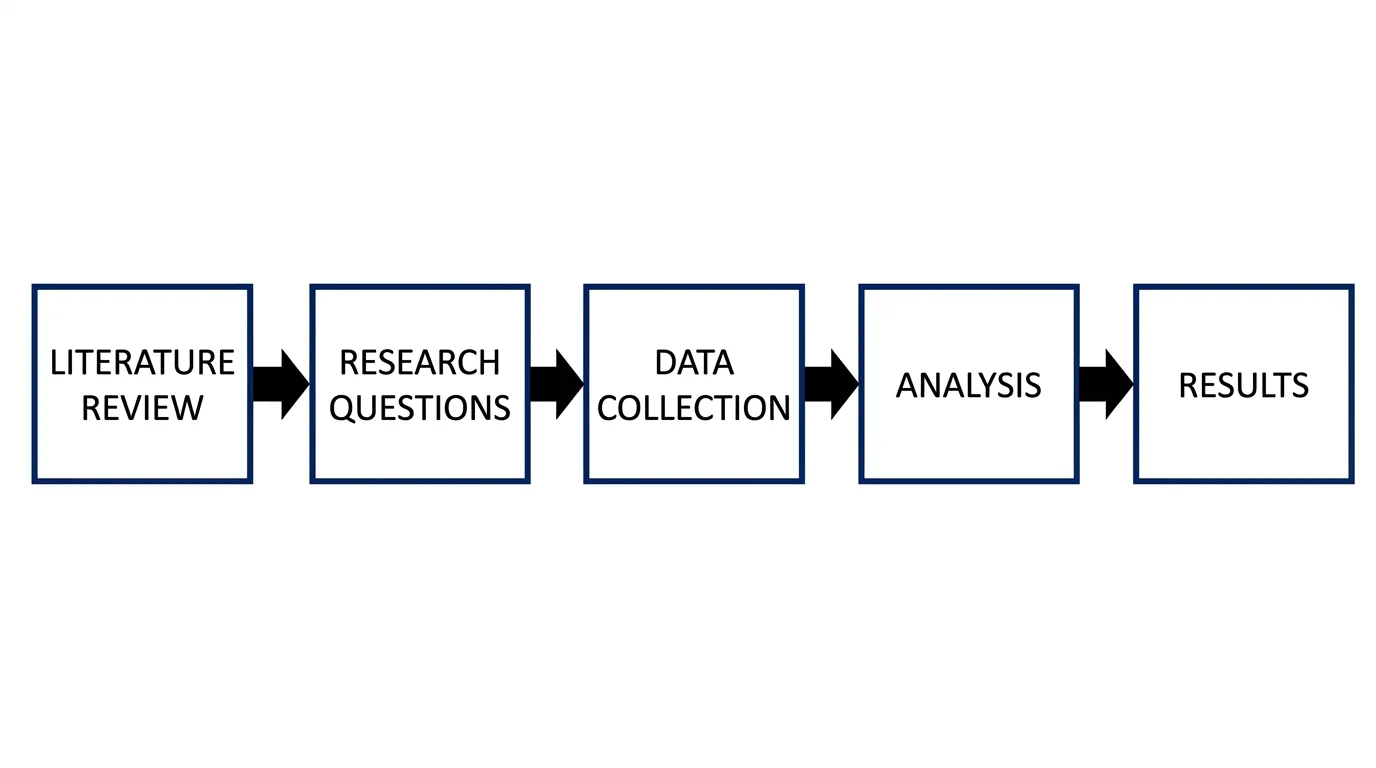
Build the framework as a research workflow: problem, variables, data collection, analysis, and interpretation should connect logically.
AI Prompt for a Thesis Conceptual Framework Diagram
Once the variables and relationships are clear, use a diagram prompt. You can paste this into ConceptViz or adapt it for another diagramming tool:
Create a thesis conceptual framework diagram for the study:
"[Insert thesis title]"

Use a clean academic diagram style on a white background.

Show the independent variables on the left:
- [IV 1]
- [IV 2]
- [IV 3]

Show the mediating variable in the center:
- [Mediator]

Show the dependent variable on the right:
- [DV]

Show the moderating variable above the path:
- [Moderator]

Show control variables below the model:
- [Control 1]
- [Control 2]

Use directional arrows with hypothesis labels:
- H1: [IV 1] -> [DV]
- H2: [IV 2] -> [DV]
- H3: [IV 3] -> [DV]
- H4: [IV 1/2/3] -> [Mediator] -> [DV]
- H5: [Moderator] changes the strength of the relationship between [X] and [Y]

Keep labels readable. Use rectangular boxes. Do not add decorative icons. Make it suitable for a thesis Chapter 1 or methodology chapter.
The "do not add decorative icons" instruction is important. Thesis committees usually care more about clarity than visual novelty. A framework diagram should look defensible, not trendy.
Example: AI Conceptual Framework for an Education Thesis
Here is a realistic example.
Thesis topic: The effect of AI-assisted formative feedback on academic writing performance among first-year university students.
Possible variables:
| Variable | Role |
|---|---|
| AI-assisted formative feedback | Independent variable |
| Feedback frequency | Independent variable or control variable |
| Student engagement | Mediating variable |
| Prior writing proficiency | Control variable |
| Academic writing performance | Dependent variable |
| Digital literacy | Moderating variable |
Possible relationship logic:
- AI-assisted feedback may improve academic writing performance.
- Student engagement may mediate the effect because feedback only helps if students revise.
- Digital literacy may moderate the effect because students with higher tool fluency may use AI feedback more effectively.
- Prior writing proficiency should be controlled because stronger writers may improve regardless of the intervention.
Diagram prompt:
Create a thesis conceptual framework diagram for an education study on AI-assisted formative feedback and academic writing performance.

Left side: AI-assisted formative feedback and feedback frequency.
Center: Student engagement as mediator.
Right side: Academic writing performance.
Top: Digital literacy as moderator affecting the link between AI-assisted feedback and student engagement.
Bottom: Prior writing proficiency as control variable.

Use arrows:
AI-assisted formative feedback -> Student engagement -> Academic writing performance.
Feedback frequency -> Student engagement.
AI-assisted formative feedback -> Academic writing performance.
Digital literacy moderates the first path.
Prior writing proficiency controls the outcome.

Add hypothesis labels H1 to H5. Use a clean thesis diagram style.
This kind of prompt is specific enough for AI to produce a usable first draft, while still leaving the researcher responsible for evidence and wording.
Research Roadmap Maker
Plan thesis milestones, literature review, data collection, analysis, and writing phases.
How to Write the Framework in Chapter 1
After the diagram, you need prose. A common Chapter 1 structure is:
- Introduce the research problem.
- Name the main concepts or variables.
- Explain the theoretical or literature basis.
- Describe the expected relationships.
- Refer to the figure.
- Explain how the framework guides the methodology.
Here is a reusable paragraph pattern:
This study is guided by a conceptual framework that links [independent variable] to [dependent variable] through [mediator or process], while considering [moderator/control variable]. The framework is based on prior research showing that [brief evidence statement]. As shown in Figure 1, the model proposes that [main relationship]. This framework informs the selection of variables, the development of research instruments, and the interpretation of findings.For stronger academic writing, make each relationship traceable to a source. USC Libraries' research guide is useful here because it treats the conceptual framework as part of the broader scholarly argument, not just a visual object.
Validation Checklist Before You Put It in Your Thesis
Before sending the framework to your advisor, check the following:
| Check | Why it matters |
|---|---|
| Every variable appears in your research questions or hypotheses | Prevents irrelevant boxes |
| Every arrow can be explained in one sentence | Prevents decorative relationships |
| Every major relationship has literature support | Prevents AI hallucination |
| The model matches your methodology | Prevents collecting the wrong data |
| Mediators and moderators are not confused | Prevents analysis problems |
| The diagram is readable in grayscale | Helps with printing and thesis formatting |
| The prose and diagram use the same terms | Avoids committee confusion |
This is where AI output often fails. It may produce a clean model, but it can confuse mediators with moderators, include variables that are not measured, or imply causality when your design is only correlational.
Common Mistakes When Using AI for a Conceptual Framework
Mistake 1: Asking for a framework before doing the literature review
AI can summarize patterns, but it cannot know which studies your committee expects you to cite. Use AI after you have at least a starter literature matrix.
Mistake 2: Accepting too many variables
AI tends to be inclusive. A thesis framework with fifteen boxes may look comprehensive, but it becomes hard to measure and defend. Keep only variables tied to your research questions.
Mistake 3: Mixing theory names with variable names
"Technology Acceptance Model" is not the same kind of item as "perceived usefulness." Put theory in the written explanation or as a label, not as a random box in the variable pathway.
Mistake 4: Treating correlation as causation
If your thesis uses a cross-sectional survey, be careful with arrows that imply causal influence. You can write "is associated with" or "is expected to relate to" unless your design supports causal claims.
Mistake 5: Letting visual design hide weak logic
A professional diagram does not fix a weak model. Paperpal's comparison of conceptual and theoretical frameworks is helpful because it keeps the focus on clarity in research design, methodology, and presentation.
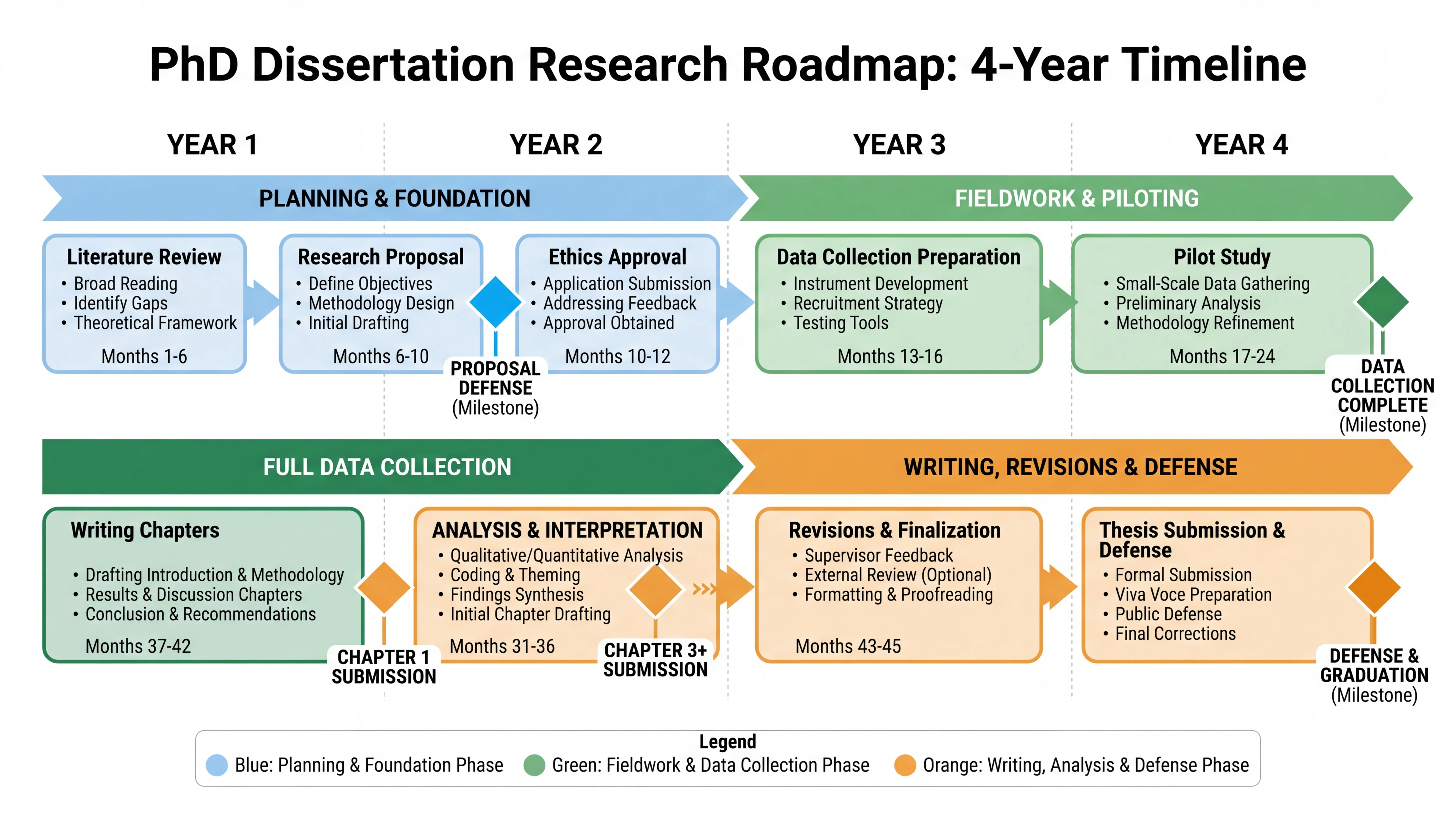
A conceptual framework should fit inside the larger thesis roadmap: proposal, literature review, methods, analysis, and defense.
When to Use a Concept Map Instead
Not every thesis needs a strict variable model at the beginning. Qualitative and exploratory studies may need a concept map first. A concept map is useful when:
- You are still organizing themes from the literature
- Your study is exploratory rather than hypothesis testing
- Relationships are not yet directional
- You need to show categories, not measured variables
- Your advisor wants a broader map before the final framework
For this stage, use a looser prompt:
Create a concept map for my thesis topic.
Central concept: [topic]
Branches: [themes from literature]
Show non-directional relationships and linking phrases.
Do not force causal arrows.
Use this as an exploratory map, not a final hypothesis model.
Then convert the concept map into a conceptual framework only when your research questions, variables, and methodology become clear.
Concept Map Generator
Map early thesis themes, literature concepts, and relationships before finalizing your framework.
Final Thesis Prompt: Generate and Explain the Framework
Use this final prompt when your inputs are ready:
Act as a thesis research methodology assistant.

Using the details below, create:
1. A conceptual framework diagram prompt
2. A variable classification table
3. A short Chapter 1 explanation
4. A list of relationships that need citation support
5. A warning list of possible logic problems

Research title:
[title]

Research questions:
[questions]

Theory or model:
[theory]

Literature findings:
[bullet list with real sources]

Variables:
[variables]

Methodology:
[quantitative, qualitative, mixed methods, experimental, survey, case study, etc.]

Do not invent references. If evidence is missing, say so.
This prompt gives you a practical output while keeping the research responsibility visible. That is the right balance for thesis work.
Conclusion
An AI conceptual framework for thesis writing is valuable when it helps you organize thinking, not when it replaces thinking. The best workflow is simple: define the research problem, classify variables, write relationship claims, generate a diagram, and validate every arrow against the literature and methodology.
Use AI for structure, speed, and visual drafting. Use your literature review, advisor feedback, and research design to decide what belongs in the final framework.
For the next step, try building your first visual draft with the Conceptual Framework Generator, then compare it with our broader guide on how to create a conceptual framework for a research paper and the difference between a framework and model in research.
FAQ
Can I use AI to create my thesis conceptual framework?
Yes, you can use AI to draft and visualize a conceptual framework, but you must validate the variables, relationships, and wording against your literature review and methodology. AI should not invent citations or decide your research logic for you.
What should I give an AI conceptual framework generator?
Give it your research title, research problem, research questions, variables, known theory, hypotheses, methodology, and literature notes. The more structured your input is, the more defensible the output will be.
Is a conceptual framework required in Chapter 1?
Many thesis formats place the conceptual framework in Chapter 1 because it clarifies the study early. Some programs place it in the literature review or methodology chapter instead. Follow your department template and advisor guidance.
What is the difference between a conceptual framework and a theoretical framework?
A theoretical framework explains the established theory guiding the study. A conceptual framework adapts theory, literature, variables, and context into a model specific to your research question.
Should my conceptual framework include hypotheses?
For quantitative thesis work, hypothesis labels are often useful because they connect arrows in the diagram to testable claims. For qualitative or exploratory studies, propositions, assumptions, or research questions may be more appropriate.
Can AI choose my independent and dependent variables?
AI can suggest classifications, but you should make the final decision. Variable roles depend on your research question, study design, measurement plan, and literature support.
How many variables should a thesis conceptual framework have?
Most thesis frameworks work best with a focused set of variables: a few independent variables, one main outcome, and only necessary mediators, moderators, or controls. Too many variables make the study harder to measure and defend.
What makes an AI-generated framework unacceptable?
A framework is weak if it includes unsupported arrows, vague constructs, fabricated citations, variables not measured in the study, or causal claims that your methodology cannot support.
分类
更多文章
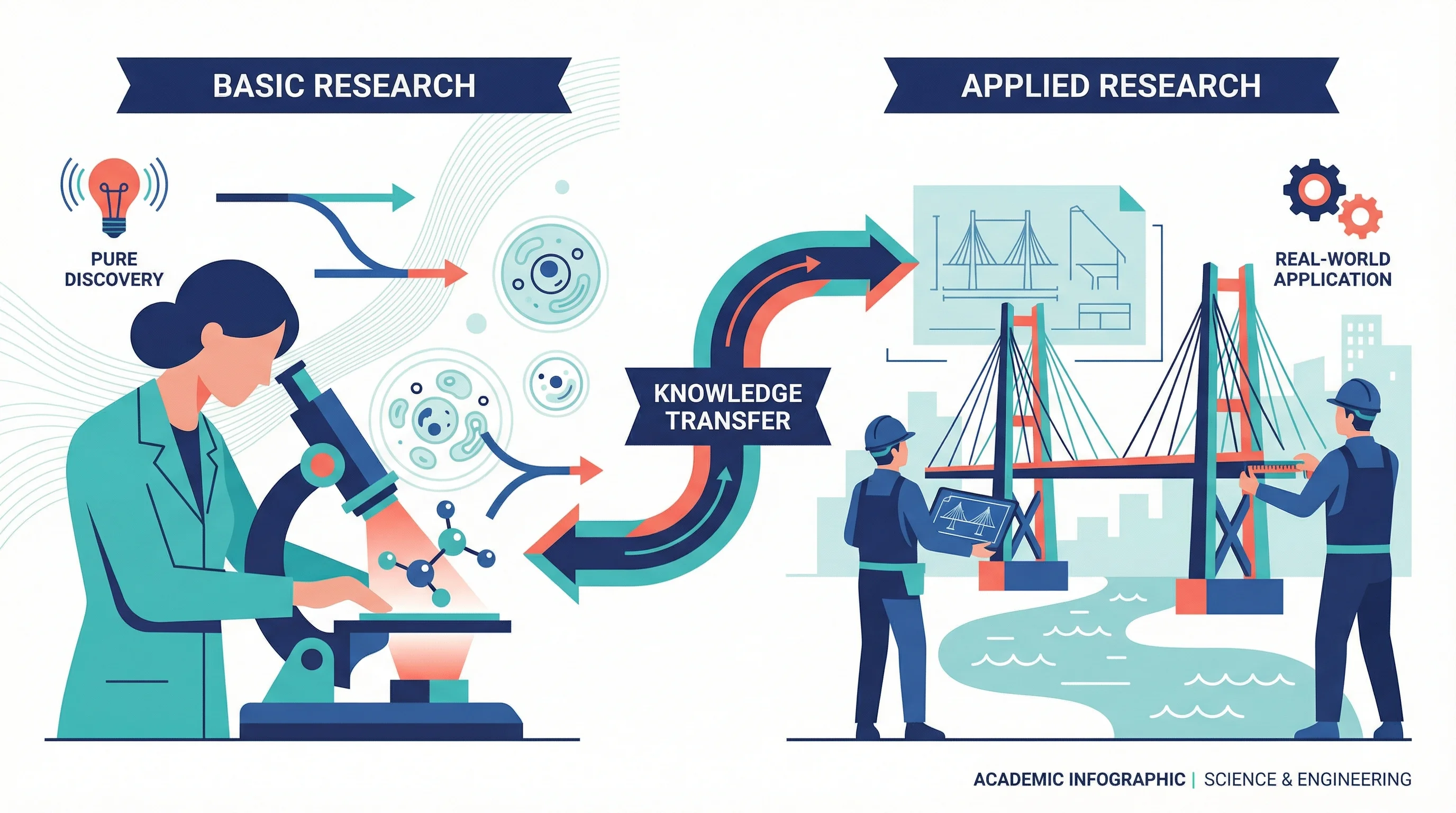
Applied vs Basic Research: Key Differences, Examples & When to Use Each
What is the difference between applied and basic research? Applied research solves specific real-world problems, while basic research expands fundamental knowledge. Compare goals, methods, examples, funding, and timelines side by side.

Column Chart Maker Guide: When to Use Column Charts and How to Make One
Learn when to use a column chart, how it differs from a bar chart, and how to make clean grouped, stacked, and spreadsheet-ready column charts.

7 Best Free Napkin AI Alternatives in 2026 (Text-to-Visual Tools)
Best free Napkin AI alternatives: Gamma, Canva, Piktochart, Venngage & more. Compare AI-powered text-to-visual tools for diagrams and infographics.