Applied vs Basic Research: Key Differences, Examples & When to Use Each
What is the difference between applied and basic research? Applied research solves specific real-world problems, while basic research expands fundamental knowledge. Compare goals, methods, examples, funding, and timelines side by side.
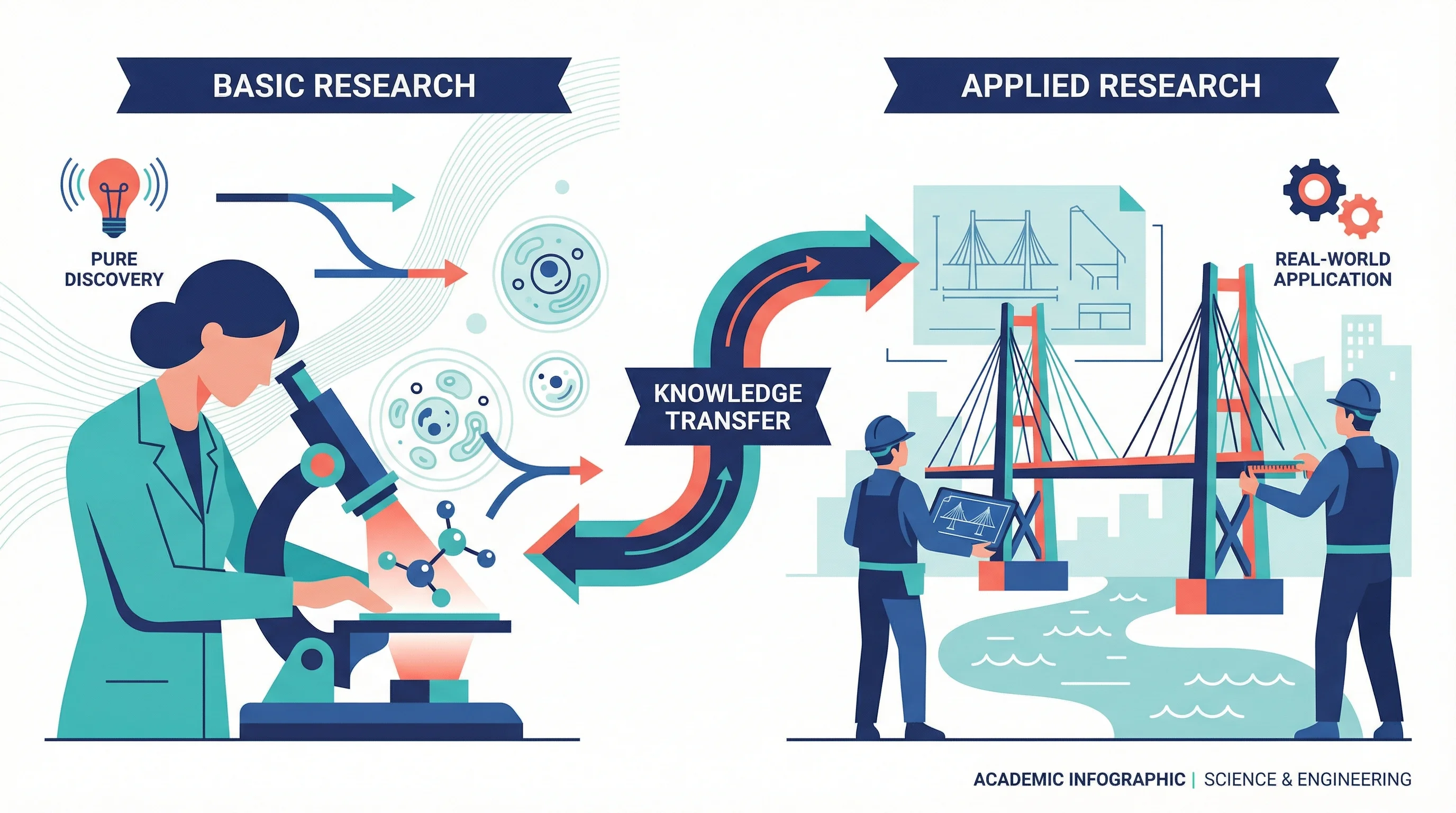
The core difference between applied and basic research is their purpose: basic research (also called pure or fundamental research) aims to expand knowledge and understanding without targeting a specific problem, while applied research uses existing knowledge to solve specific, real-world problems. Basic research asks "why does this happen?" and applied research asks "how can we use this to fix something?"
Here is a quick-reference comparison table to help you distinguish the two at a glance:
| Dimension | Basic Research | Applied Research |
|---|---|---|
| Goal | Expand fundamental knowledge | Solve a specific practical problem |
| Approach | Curiosity-driven, theoretical | Problem-oriented, practical |
| Timeframe | Long-term (years to decades) | Short-to-medium term (months to years) |
| Examples | Studying DNA replication; prime number theory | Developing a vaccine; testing a new teaching method |
| Funding Sources | Government grants, academic institutions | Corporate sponsors, industry, targeted grants |
| Setting | Universities, research institutes | Industry labs, hospitals, government agencies |
| Outcome | Theories, principles, laws | Products, solutions, recommendations |
This complete guide breaks down everything you need to know about basic vs applied research--from clear definitions and side-by-side comparisons to real-world examples across multiple disciplines.
What Is Basic Research?
Basic research (also called pure research or fundamental research) is driven by curiosity and the desire to expand human knowledge. Its primary goal is to deepen our understanding of fundamental principles, without any immediate concern for practical applications.
Think of basic research as building the foundation of a house. You may not see the immediate benefit, but without it, nothing else can stand.
Key Characteristics of Basic Research
- Curiosity-driven: Motivated by the desire to understand, not to solve a specific problem
- Theoretical focus: Aims to develop or refine theories, laws, and principles
- Long-term impact: Results may not have immediate practical use but often lead to breakthroughs decades later
- Universal scope: Findings tend to be generalizable across contexts
- Academic setting: Primarily conducted in universities and research institutions
Examples of Basic Research
| Discipline | Basic Research Example |
|---|---|
| Physics | Studying the properties of subatomic particles at CERN |
| Biology | Investigating how DNA replication mechanisms work |
| Psychology | Researching how human memory formation occurs |
| Mathematics | Exploring prime number distribution patterns |
| Chemistry | Analyzing molecular bonding behavior in new compounds |
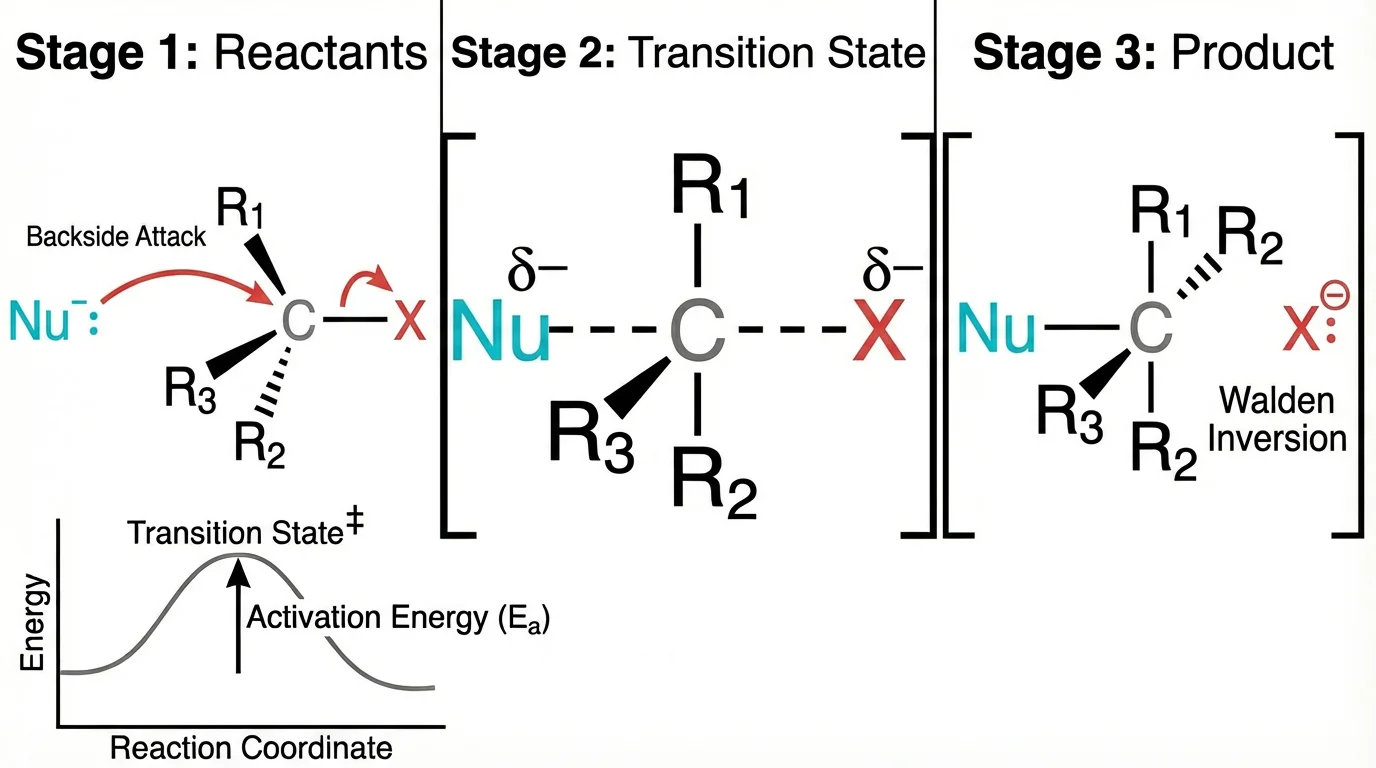
Basic research in chemistry often involves studying fundamental reaction mechanisms like this SN2 pathway, expanding our understanding of how molecules interact
What Is Applied Research?
Applied research is designed to solve specific, practical problems. It takes the theoretical knowledge produced by basic research and converts it into actionable solutions that address real-world challenges in fields like medicine, engineering, education, and business.
If basic research builds the foundation, applied research builds the house people actually live in.
Key Characteristics of Applied Research
- Problem-oriented: Addresses a specific, identified problem or need
- Practical focus: Aims to produce tangible solutions, products, or improvements
- Short-to-medium term: Results are expected to have immediate or near-term applicability
- Specific scope: Findings are often context-dependent and less generalizable
- Diverse settings: Conducted in corporate R&D labs, hospitals, government agencies, and universities
Examples of Applied Research
| Discipline | Applied Research Example |
|---|---|
| Medicine | Developing a vaccine for a specific viral strain |
| Education | Testing whether a new teaching method improves student scores |
| Engineering | Designing a more energy-efficient battery for electric vehicles |
| Agriculture | Developing drought-resistant crop varieties |
| Business | Evaluating marketing strategies for a new consumer product |
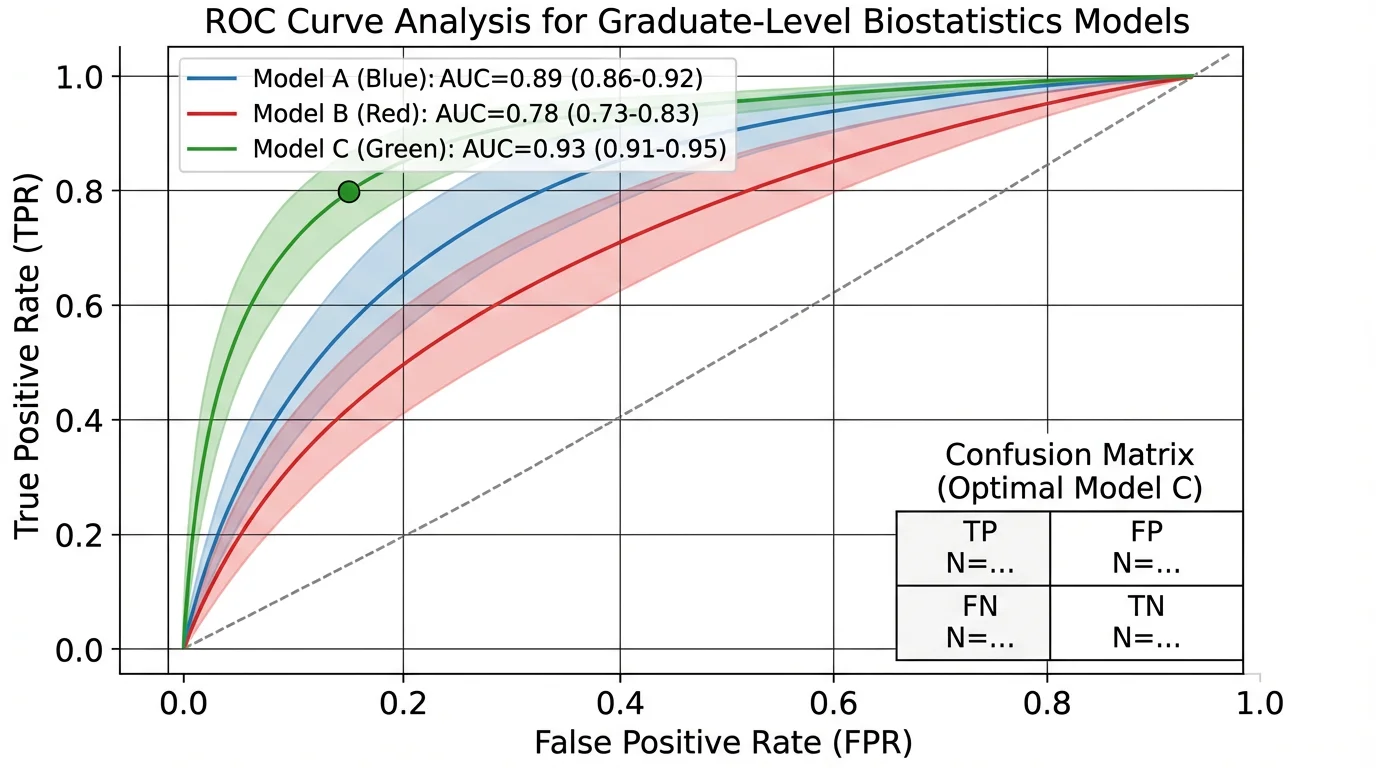
Applied research in data science uses analytical tools like ROC curves to evaluate real-world model performance and make practical decisions
Basic Research vs Applied Research: Side-by-Side Comparison
Here is a comprehensive comparison of the two research types across every major dimension:
| Dimension | Basic Research | Applied Research |
|---|---|---|
| Purpose | Expand knowledge and understanding | Solve specific practical problems |
| Motivation | Curiosity and intellectual inquiry | Real-world needs and challenges |
| Scope | Broad and generalizable | Narrow and context-specific |
| Timeline | Long-term (years to decades) | Short-to-medium term (months to years) |
| Outcome | Theories, principles, and laws | Products, solutions, and recommendations |
| Setting | Universities and research institutes | Industry, hospitals, government labs |
| Funding | Government grants, academic institutions | Corporate sponsors, targeted grants |
| Methodology | Often experimental or observational | Often experimental, evaluative, or action-based |
| Generalizability | High — findings apply broadly | Lower — findings are often situational |
| Risk | Higher — outcomes are uncertain | Lower — goals are more defined |
| Examples | Einstein's theory of relativity | GPS navigation systems (built on relativity) |
Three Types of Applied Research
Applied research is not a monolithic category. It can be further divided into three primary types, each serving a distinct purpose:
1. Evaluation Research
Evaluation research analyzes existing programs, policies, or interventions to determine their effectiveness. It answers the question: Is this working?
Example: A school district evaluates whether its new literacy program actually improved student reading scores over two years.
When to use it: When you need to assess the impact or effectiveness of an existing initiative.
2. Research and Development (R&D)
R&D focuses on creating new products, processes, or services—or improving existing ones—based on identified market or societal needs.
Example: A pharmaceutical company develops a new drug to treat antibiotic-resistant infections, building on fundamental microbiology research.
When to use it: When you need to translate theoretical knowledge into a tangible product or technology.
3. Action Research
Action research is a participatory approach where the researcher works directly within a real-world setting to identify problems and implement solutions iteratively.
Example: A teacher tests different classroom management techniques in her own classroom, collects data, and adjusts her approach each semester.
When to use it: When you want to improve a specific practice within your own professional context.
How Basic and Applied Research Work Together
One of the most important things to understand is that basic and applied research are not opposing forces. They exist on a continuum and frequently feed into each other in what scientists call the research cycle.
The Research Cycle
Basic Research → Foundational Knowledge → Applied Research → Practical Solutions
      ↑                                                           │
      └───────────── New questions arise ──────────────────────────┘
Real-World Examples of the Research Cycle
Example 1: GPS Technology
- Basic research: Einstein developed the theory of general relativity in 1915 with no practical application in mind
- Applied research: Decades later, engineers used relativistic corrections to build accurate GPS satellite systems
- New questions: GPS accuracy challenges sparked new basic research into atmospheric interference
Example 2: mRNA Vaccines
- Basic research: Scientists spent decades studying messenger RNA biology and its role in protein synthesis
- Applied research: During the COVID-19 pandemic, this knowledge was rapidly applied to develop mRNA vaccines
- New questions: Vaccine results generated new basic research into immune response mechanisms
Example 3: Internet Encryption
- Basic research: Mathematicians studied prime number theory and abstract algebra for centuries
- Applied research: Cryptographers used these principles to create RSA encryption, securing online transactions
- New questions: Quantum computing threats have sparked new basic research into post-quantum cryptography
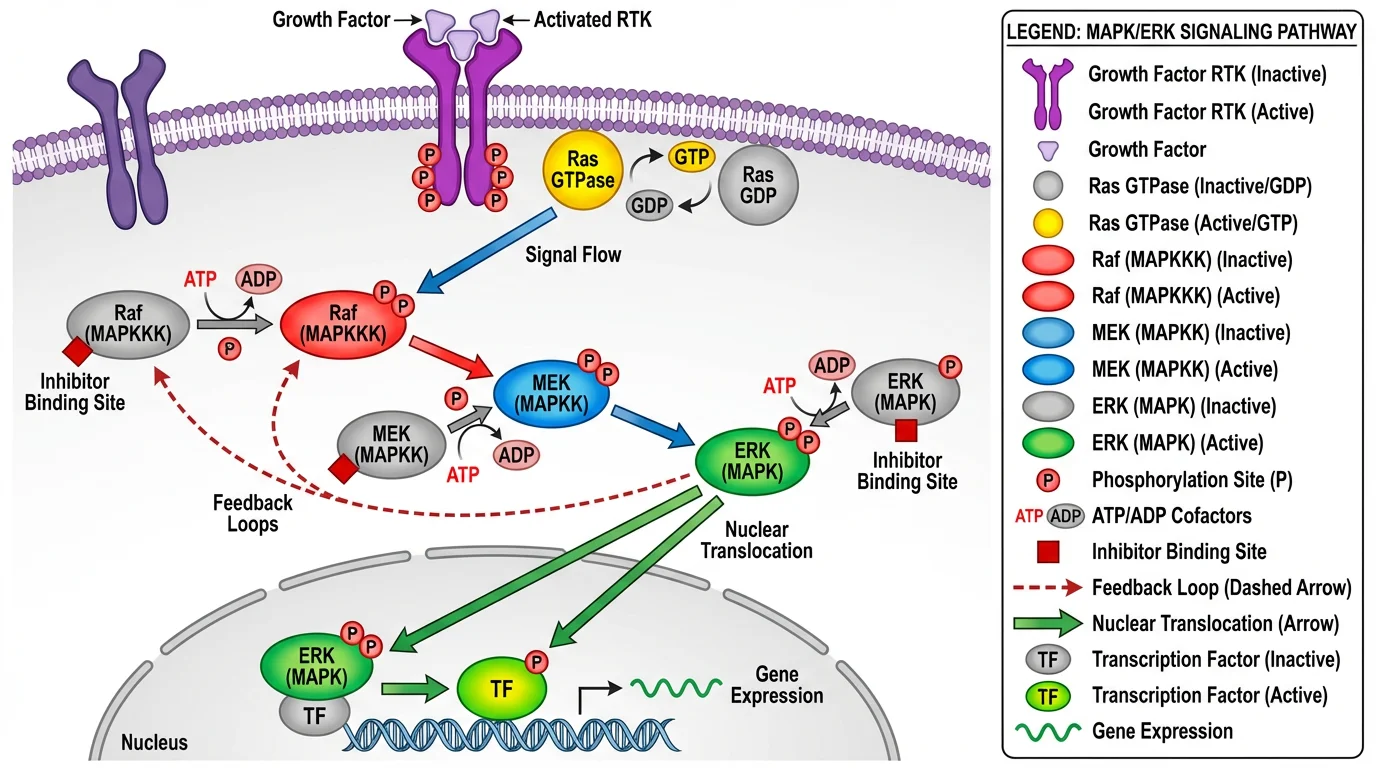
Just as biological signaling pathways show how molecular processes cascade from one to another, basic research often triggers a chain of applied discoveries
Basic vs Applied Research: Which Should You Choose?
The right choice depends on your research goals, context, and career stage. Use the decision framework below to guide your thinking:
Choose Basic Research If:
- You want to advance theoretical understanding in your field
- Your research question is about why or how something works at a fundamental level
- You are in an academic environment focused on knowledge creation
- You are comfortable with outcomes that may not have immediate applications
- You are pursuing a PhD that requires original theoretical contributions
Choose Applied Research If:
- You need to solve a specific, identifiable problem
- Your research question is about what works or how to improve something
- You are working in industry, healthcare, education, or government
- Stakeholders expect practical, actionable results
- You are pursuing a professional degree or working on commissioned research
The Hybrid Approach: Use-Inspired Basic Research
Many modern research projects combine elements of both. This is sometimes called use-inspired basic research (or Pasteur's Quadrant), where the work is motivated by both the desire to understand and the need to solve problems.
Example: A neuroscientist studying how memory consolidation works (basic) specifically in the context of Alzheimer's disease (applied).
For more on building effective research frameworks that accommodate both approaches, see our guide on how to create a conceptual framework for your research paper.
Applied Research and Basic Research in Different Disciplines
Medicine and Health Sciences
| Research Type | Example |
|---|---|
| Basic | Studying how immune cells recognize pathogens at the molecular level |
| Applied | Developing a diagnostic test for early detection of a specific cancer |
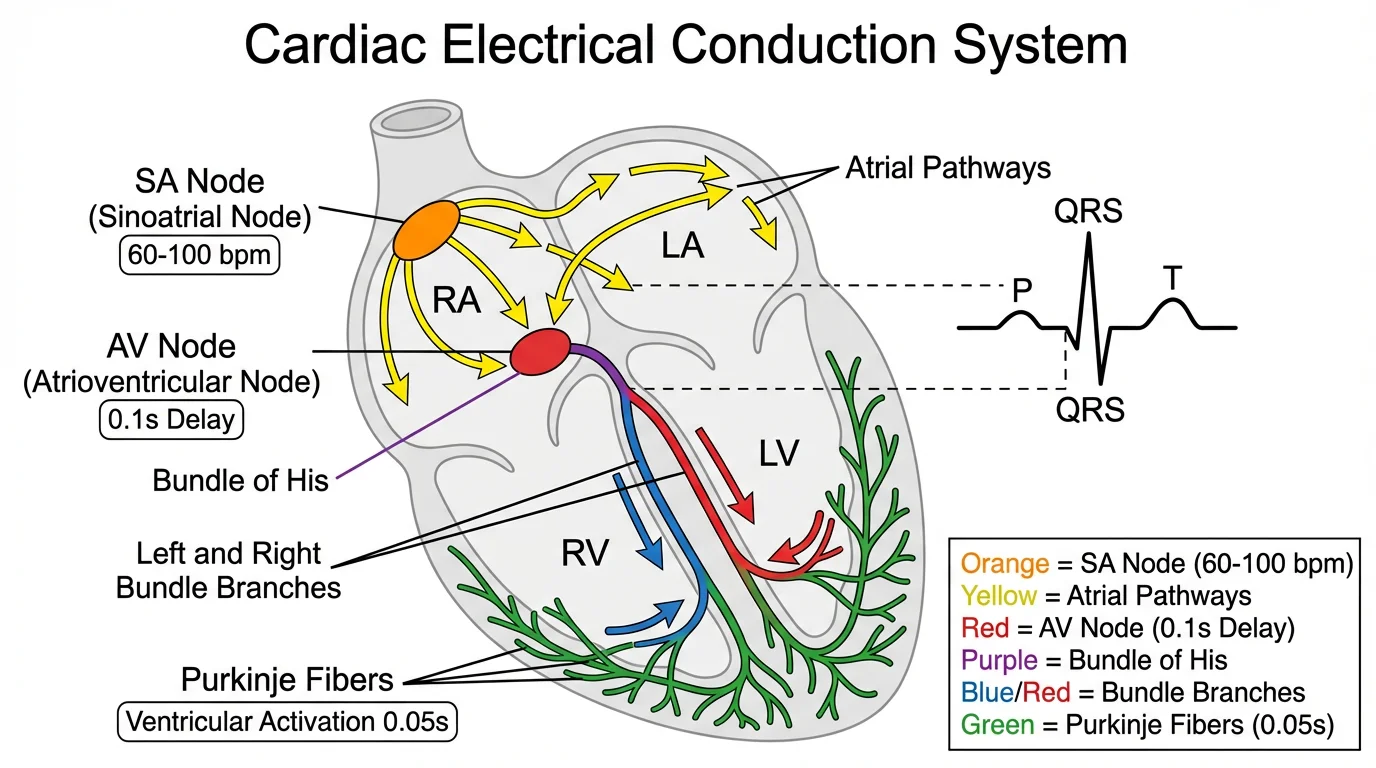
Medical research often bridges basic and applied approaches—understanding the cardiac conduction system (basic) leads to better pacemaker designs (applied)
Social Sciences and Education
| Research Type | Example |
|---|---|
| Basic | Investigating how children develop language acquisition skills |
| Applied | Designing a reading intervention program for struggling third-graders |
Computer Science and Engineering
| Research Type | Example |
|---|---|
| Basic | Researching new algorithms for graph theory problems |
| Applied | Building a recommendation engine for an e-commerce platform |
Environmental Science
| Research Type | Example |
|---|---|
| Basic | Studying carbon cycling processes in deep ocean ecosystems |
| Applied | Developing a cost-effective method to remove microplastics from waterways |
How to Present Research Types in Your Paper
When writing your thesis, dissertation, or research paper, you will need to clearly identify your research type. Here are best practices:
In the Methodology Chapter
State your research type explicitly:
"This study adopts an applied research design, specifically evaluation research, to assess the effectiveness of mindfulness-based interventions on workplace stress reduction."
In the Introduction
Connect your research type to the broader context:
"While basic research has established the neurological mechanisms of stress response (Smith, 2022), there remains a gap in applied research examining scalable workplace interventions."
Justifying Your Approach
Explain why your chosen research type is appropriate for your research questions. For guidance on structuring your full research paper, see our complete guide on how to write a research manuscript in IMRaD format.
When defining key terms like "applied research" or "basic research" in your paper, follow the formatting guidelines in our definition of terms in research guide.
Common Misconceptions About Basic and Applied Research
Misconception 1: "Basic research is useless"
Reality: Nearly every modern technology traces back to basic research. The laser, the internet, and life-saving medications all originated from curiosity-driven studies that had no obvious immediate application.
Misconception 2: "Applied research is less rigorous"
Reality: Applied research demands the same methodological rigor as basic research. It must still use valid designs, proper sampling, and sound analysis—often with the added challenge of working in messy real-world conditions.
Misconception 3: "You must choose one or the other"
Reality: As discussed above, use-inspired basic research blends both approaches. Many of the most impactful studies operate in this hybrid space.
Misconception 4: "Basic research never leads to applications"
Reality: The timeline is simply longer. The mathematical theory of information developed by Claude Shannon in 1948 is now the foundation of every digital communication system in the world.
Misconception 5: "Applied research is just engineering"
Reality: Applied research still generates new knowledge. It tests theories in real-world conditions and often reveals phenomena that basic research had not predicted.
Visualizing Your Research Design
Whether your project is basic or applied, a clear visual representation of your research design helps communicate your approach to reviewers, advisors, and readers. Diagrams showing variable relationships, research flow, and methodology decisions are essential tools.
For practical advice on creating research visuals, explore these resources:
- Research data visualization best practices
- How to make scientific diagrams for research papers
- Framework vs model in research
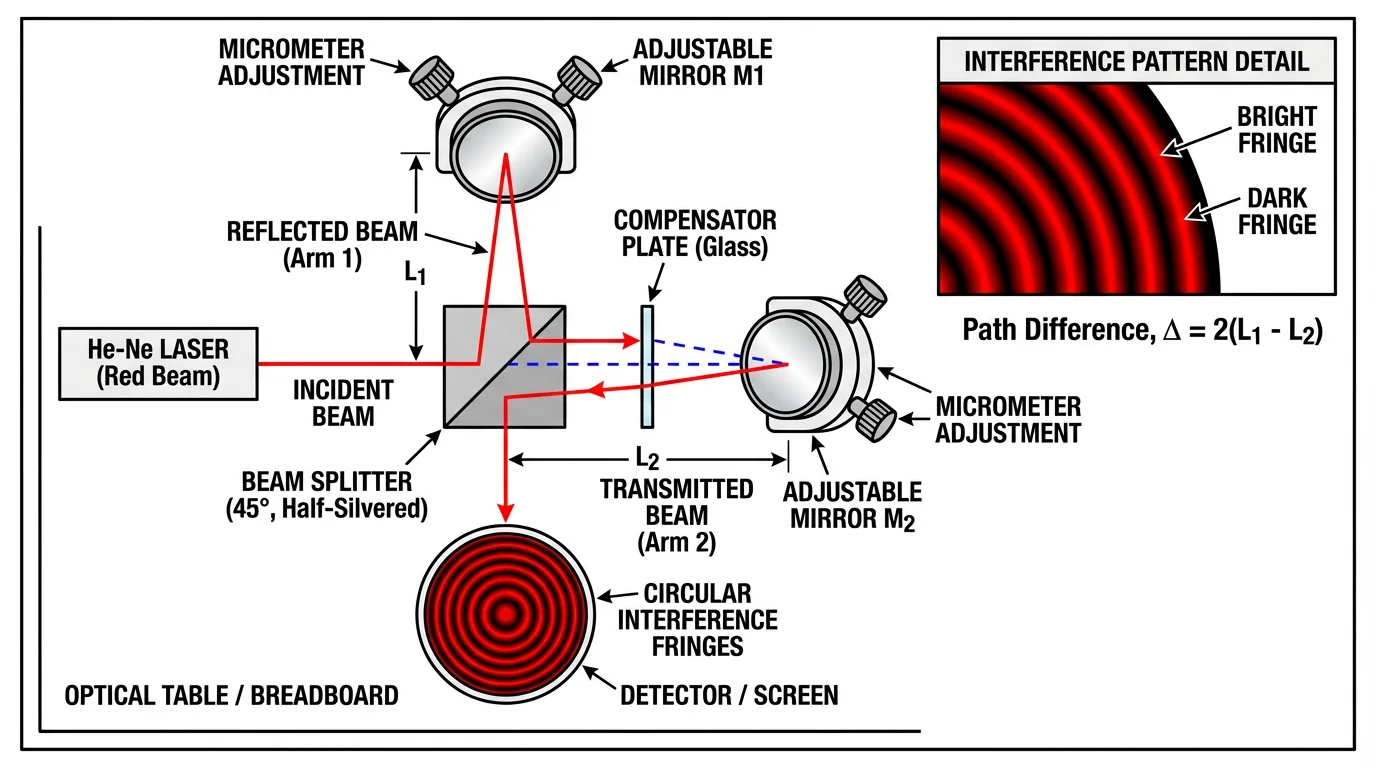
Both basic and applied researchers rely on carefully designed experimental setups—like this Michelson interferometer—to gather reliable data
Frequently Asked Questions
What is the main difference between basic and applied research?
The main difference is purpose. Basic research aims to expand fundamental knowledge and understanding without targeting a specific practical problem. Applied research uses existing knowledge to solve specific, real-world problems. Basic research asks 'why does this happen?' while applied research asks 'how can we use this to fix a problem?'
What are three examples of applied research?
Three examples of applied research include: (1) developing a new vaccine to combat a specific disease, (2) testing whether a new teaching method improves student test scores, and (3) designing a water purification system for rural communities using solar energy. Each example targets a specific, identifiable problem and aims for practical, actionable results.
Can a study be both basic and applied research?
Yes. This is called use-inspired basic research, sometimes referred to as Pasteur's Quadrant. It combines the pursuit of fundamental understanding with a focus on practical relevance. For example, studying how antibiotic resistance develops at the molecular level (basic) specifically to develop new antimicrobial drugs (applied) blends both approaches.
What are the three types of applied research?
The three main types of applied research are: (1) Evaluation research, which assesses the effectiveness of existing programs or policies; (2) Research and Development (R&D), which creates new products or processes; and (3) Action research, which involves practitioners conducting research within their own professional settings to improve specific practices.
Is a thesis considered basic or applied research?
A thesis can be either basic or applied research depending on its purpose. A PhD thesis exploring theoretical concepts in quantum physics is basic research. A Master's thesis evaluating the effectiveness of a new nursing intervention is applied research. Many theses incorporate elements of both. Check with your advisor and departmental guidelines to determine which approach fits your program requirements.
Who funds basic research vs applied research?
Basic research is primarily funded by government agencies (such as the NSF, NIH, or ERC), academic institutions, and private foundations that support knowledge creation without requiring immediate returns. Applied research is often funded by private companies, industry sponsors, government agencies with specific mandates, and nonprofit organizations seeking practical solutions to defined problems.
Why is basic research important if it has no immediate application?
Basic research is essential because it builds the foundational knowledge that all future applications depend on. Technologies like GPS, MRI scanners, the internet, and mRNA vaccines all originated from basic research conducted years or decades before any practical use was envisioned. Without continuous investment in basic research, the pipeline of innovation would eventually dry up.
How do I identify whether my research is basic or applied?
Ask yourself these questions: (1) Is my primary goal to understand a phenomenon or to solve a specific problem? (2) Are my expected outcomes theoretical insights or practical recommendations? (3) Is my audience primarily other researchers or practitioners and decision-makers? If your answers lean toward understanding, theory, and academic audiences, your research is likely basic. If they lean toward problem-solving, practical outcomes, and practitioner audiences, it is applied.
Conclusion
The distinction between basic research and applied research is not a rigid boundary but a useful spectrum for understanding the purpose, methods, and expected outcomes of any research project. Basic research builds the knowledge base; applied research puts that knowledge to work. Both are indispensable to scientific progress.
Key takeaways:
- Basic research expands fundamental understanding without targeting specific problems
- Applied research uses existing knowledge to solve real-world challenges
- They exist on a continuum — many studies blend both approaches
- Neither is superior — both are essential to the research ecosystem
- Your choice depends on your research questions, goals, and context
When planning your next research project, clearly identify where your work falls on the basic-to-applied spectrum. This clarity will strengthen your methodology, sharpen your research questions, and make your proposal more compelling to funders and reviewers.
Additional Resources
- How to Create a Conceptual Framework for Your Research Paper
- How to Write a Research Manuscript in IMRaD Format
- Definition of Terms in Research: Complete Guide
- Framework vs Model in Research
- Research Data Visualization Best Practices
Ready to visualize your research design? Try ConceptViz to create professional research diagrams, conceptual frameworks, and methodology flowcharts from simple text descriptions.
分类
更多文章
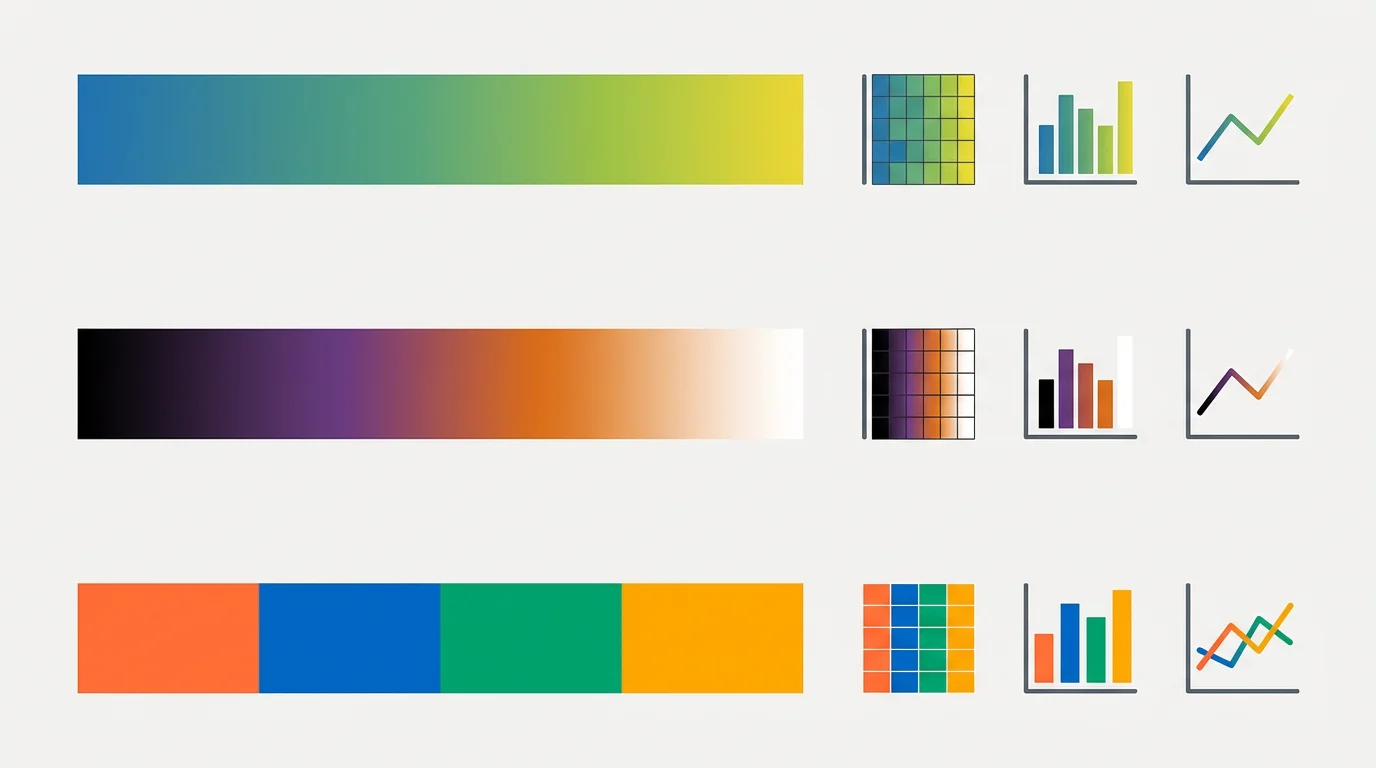
Best Scientific Color Palettes: Hex Codes & Examples
Compare Okabe-Ito, Viridis, Paul Tol and other scientific color palettes for research figures. Includes colorblind-safe hex codes, use cases and code snippets.
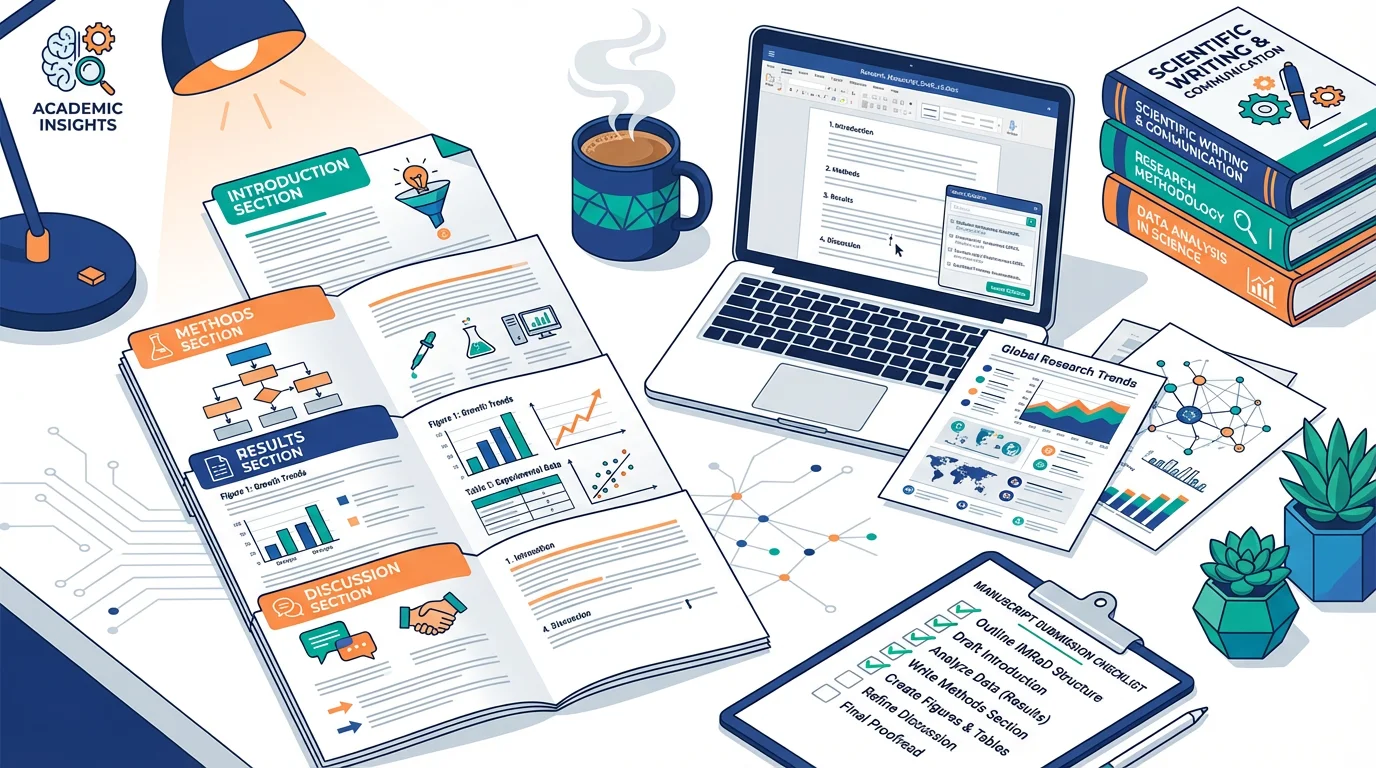
How to Write a Research Manuscript: Complete IMRaD Format Guide
Master the art of writing research manuscripts with this comprehensive IMRaD format guide. Learn the best writing order, avoid common rejection reasons, and get your paper published.
Vector Diagram Physics Guide: How to Draw and Read Vector Diagrams
Learn how to draw vector diagrams in physics, add vectors head-to-tail, resolve components, find resultants, and avoid common diagram mistakes.