VSEPR Chart and Molecular Geometry Table
Free VSEPR chart with all 13 molecular geometries, bond angles, hybridization and polarity. Look up any AXmEn shape, then download or print it.
Find a shape from AXmEn
Pick the number of bonded atoms (X) and lone pairs (E) on the central atom, or type a notation such as AX4E2.
Bonded atoms (X)
Lone pairs (E)
AX4E2 (6 electron domains, 2 lone pairs)
Square planar
- Electron geometry
- octahedral
- Ideal angle
- 90°, 180°
- Real molecules
- 90°, 180°
- Hybridization
- sp3d2
- Polarity
- Nonpolar if all four X are the same: the dipoles cancel.
- Examples
- XeF4, ICl4−, BrF4−
- XeF4 F-Xe-F: 90° (fixed by symmetry)
Measured angles: NIST CCCBDB experimental geometries.
VSEPR chart: all 13 shapes
Electron domains
13 shapes. Click a row to open it above.
| Shape | AXmEn | Domains | Lone pairs | Electron geometry | Molecular shape | Ideal angle | Hybrid | Polarity | Examples |
|---|---|---|---|---|---|---|---|---|---|
| AX2 | 2 | 0 | linear | Linear | 180° | sp | Nonpolar if both X are the same; polar if they differ. | CO2, BeCl2, HCN | |
| AX3 | 3 | 0 | trigonal planar | Trigonal planar | 120° | sp2 | Nonpolar if all three X are the same; polar if they differ. | BF3, SO3, NO3− | |
| AX2E | 3 | 1 | trigonal planar | Bent (V-shaped) | 120°real: a little under 120° | sp2 | Polar: the bond dipoles do not cancel. | SO2, O3, NO2− | |
| AX4 | 4 | 0 | tetrahedral | Tetrahedral | 109.5° | sp3 | Nonpolar if all four X are the same; polar if they differ. | CH4, CCl4, NH4+ | |
| AX3E | 4 | 1 | tetrahedral | Trigonal pyramidal | 109.5°real: under 109.5° | sp3 | Polar: the lone pair leaves a net dipole. | NH3, PH3, H3O+ | |
| AX2E2 | 4 | 2 | tetrahedral | Bent (V-shaped) | 109.5°real: under 109.5° | sp3 | Polar: the bond dipoles do not cancel. | H2O, H2S, OF2 | |
| AX5 | 5 | 0 | trigonal bipyramidal | Trigonal bipyramidal | 90°, 120°, 180°real: ax-eq 90°, eq-eq 120°, ax-ax 180° | sp3d | Nonpolar if all five X are the same; polar if they differ. | PCl5, PF5, AsF5 | |
| AX4E | 5 | 1 | trigonal bipyramidal | Seesaw | 90°, 120°, 180°real: ax-ax under 180°, eq-eq under 120°, ax-eq under 90° | sp3d | Polar: the lone pair leaves a net dipole. | SF4, IF4+, XeO2F2 | |
| AX3E2 | 5 | 2 | trigonal bipyramidal | T-shaped | 90°, 180°real: ax-eq under 90°, ax-ax under 180° | sp3d | Polar: the lone pairs leave a net dipole. | ClF3, BrF3, ICl3 | |
| AX2E3 | 5 | 3 | trigonal bipyramidal | Linear | 180° | sp3d | Nonpolar if both X are the same: the lone pairs cancel too. | XeF2, I3−, ICl2− | |
| AX6 | 6 | 0 | octahedral | Octahedral | 90°, 180° | sp3d2 | Nonpolar if all six X are the same; polar if they differ. | SF6, PF6−, SiF62− | |
| AX5E | 6 | 1 | octahedral | Square pyramidal | 90°, 180°real: apical-basal under 90° | sp3d2 | Polar: the lone pair leaves a net dipole. | BrF5, IF5, XeF5+ | |
| AX4E2 | 6 | 2 | octahedral | Square planar | 90°, 180° | sp3d2 | Nonpolar if all four X are the same: the dipoles cancel. | XeF4, ICl4−, BrF4− |
sp³d and sp³d² are a teaching model. Modern calculations show that d orbitals contribute little to bonding in these molecules, and the bonding is better described by three-center four-electron bonds. Scroll sideways on small screens.
Download or print the chart
Sheet
Printing
Paper (landscape)
PNG is 2800 px wide. The full table prints on two landscape pages. Print uses your browser print dialog, so pick Save as PDF there if you want a PDF file.
Free VSEPR Charts and Molecular Geometry Tables
Every chart below is drawn from the same checked data as the tool above. View, download and print them free, no sign-up.
VSEPR Chart: Molecular Geometry Table
All 13 shapes by AXmEn with ideal angles, hybridization, polarity and examples with measured angles.
VSEPR charts
Printer friendly
Bond angles
How to read a VSEPR chart
VSEPR stands for valence shell electron pair repulsion. The idea is simple: electron domains around a central atom repel each other, so they spread as far apart as they can. A chart lists every common arrangement using the AXmEn code, where A is the central atom, X is a bonded atom and E is a lone pair. The first two columns, the number of electron domains and the number of lone pairs, are all you need to find a row. From that row you read the electron geometry, the molecular geometry, the ideal bond angle, the hybridization and whether the shape tends to be polar.
How to count electron domains from a Lewis structure
- Draw the Lewis structure first, then look only at the central atom.
- Count each bonded atom as one domain. A double or triple bond still counts as one domain, because all of its electrons sit in the same region.
- Count each lone pair on the central atom as one domain, and add the two numbers. Four domains with one lone pair is AX3E, which is trigonal pyramidal.
Why lone pairs squeeze bond angles
A lone pair is held by one nucleus only, so its electron cloud is wider and repels more strongly than a bonding pair. That pushes the bonded atoms closer together. The ideal tetrahedral angle is 109.5 degrees, but the measured H-N-H angle in ammonia is 106.7 degrees and the H-O-H angle in water is 104.5 degrees. In trigonal bipyramidal shapes a lone pair sits in an equatorial position, where it has fewer close neighbors at 90 degrees. That is why SF4 is a seesaw, ClF3 is T-shaped and XeF2 is linear. In octahedral shapes two lone pairs sit opposite each other, which gives square planar XeF4.
Electron geometry versus molecular geometry
Electron geometry describes where all the electron domains point, lone pairs included. Molecular geometry names only the arrangement of the atoms. Water and methane share a tetrahedral electron geometry, but water is bent because two of the four positions hold lone pairs. Ammonia has the same electron geometry with one lone pair, so its molecular geometry is trigonal pyramidal. The chart groups rows by electron domains, so the electron geometry repeats within a group while the molecular geometry changes with each added lone pair.
Hybridization and polarity
The hybridization follows the number of domains: two is sp, three is sp2, four is sp3, five is sp3d and six is sp3d2. The sp3d and sp3d2 labels are a teaching model, because modern calculations show that d orbitals contribute little in these molecules, but the geometry that VSEPR predicts is not affected. For polarity, check whether the bond dipoles cancel. Symmetric shapes with identical X atoms, such as CO2, BF3, CH4, PCl5, SF6 and XeF4, are nonpolar. Shapes with lone pairs that break the symmetry, such as H2O, NH3 and SF4, are polar.
Where the angles come from
Ideal angles are the standard textbook values for each arrangement. Measured angles are experimental values from the NIST Computational Chemistry Comparison and Benchmark Database, shown to one decimal place, and shape names and ideal angles were cross-checked against the LibreTexts VSEPR chapter. Angles that follow from molecular symmetry rather than a separate measurement, such as the 180 degrees of XeF2, are marked as such. Checked October 2026. Real molecules can deviate from VSEPR predictions, especially for heavy central atoms, so use the chart as a first prediction and confirm with your course material.
Frequently Asked Questions
Need the Lewis structure first? Draw it with the Lewis dot structure generator, then count the electron domains on the central atom and look the shape up in the chart above.
Related Chemistry Tools
 Chemistry
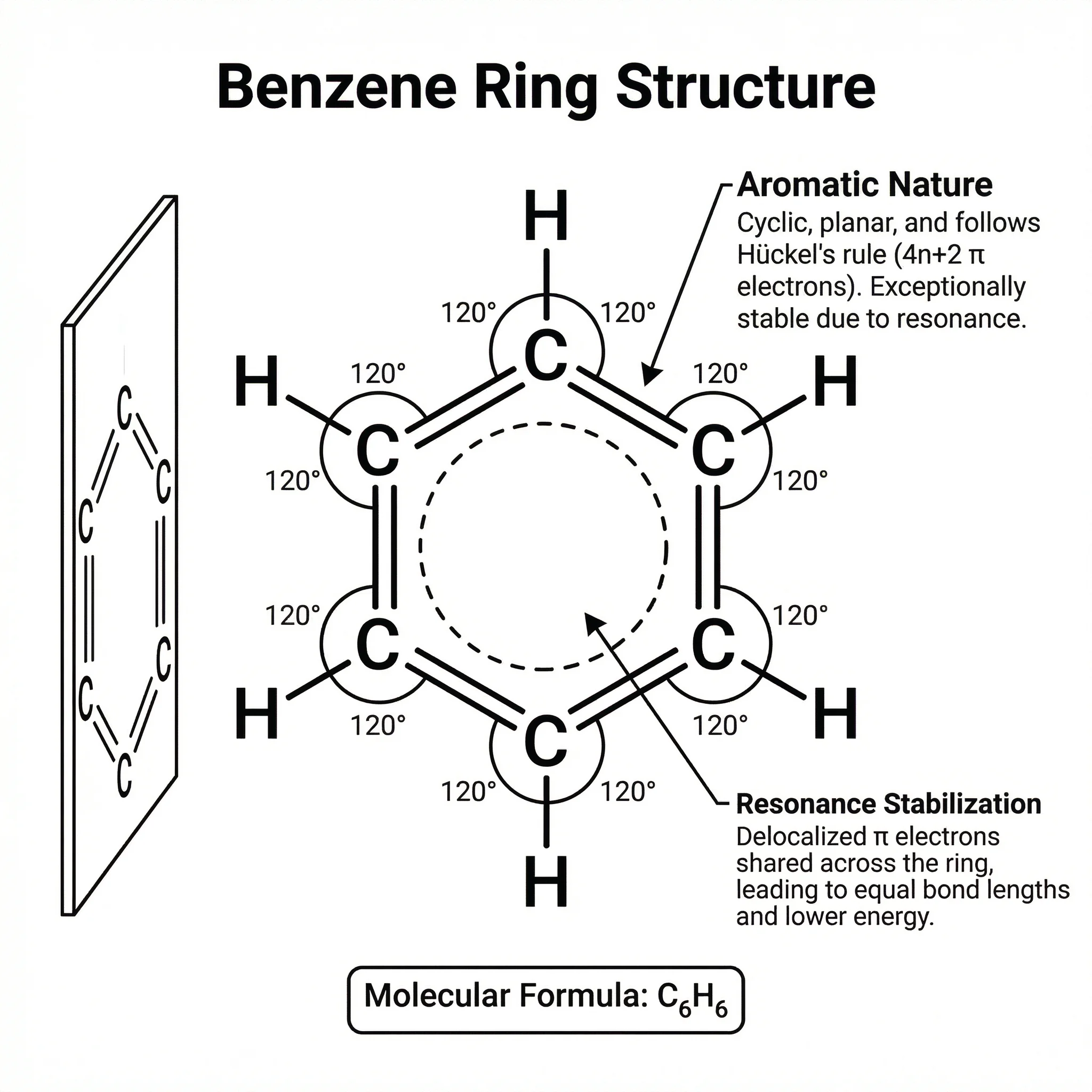
Lewis Dot Structure Generator
Draw the Lewis structure first, then count electron domains for this chart.
 Chemistry
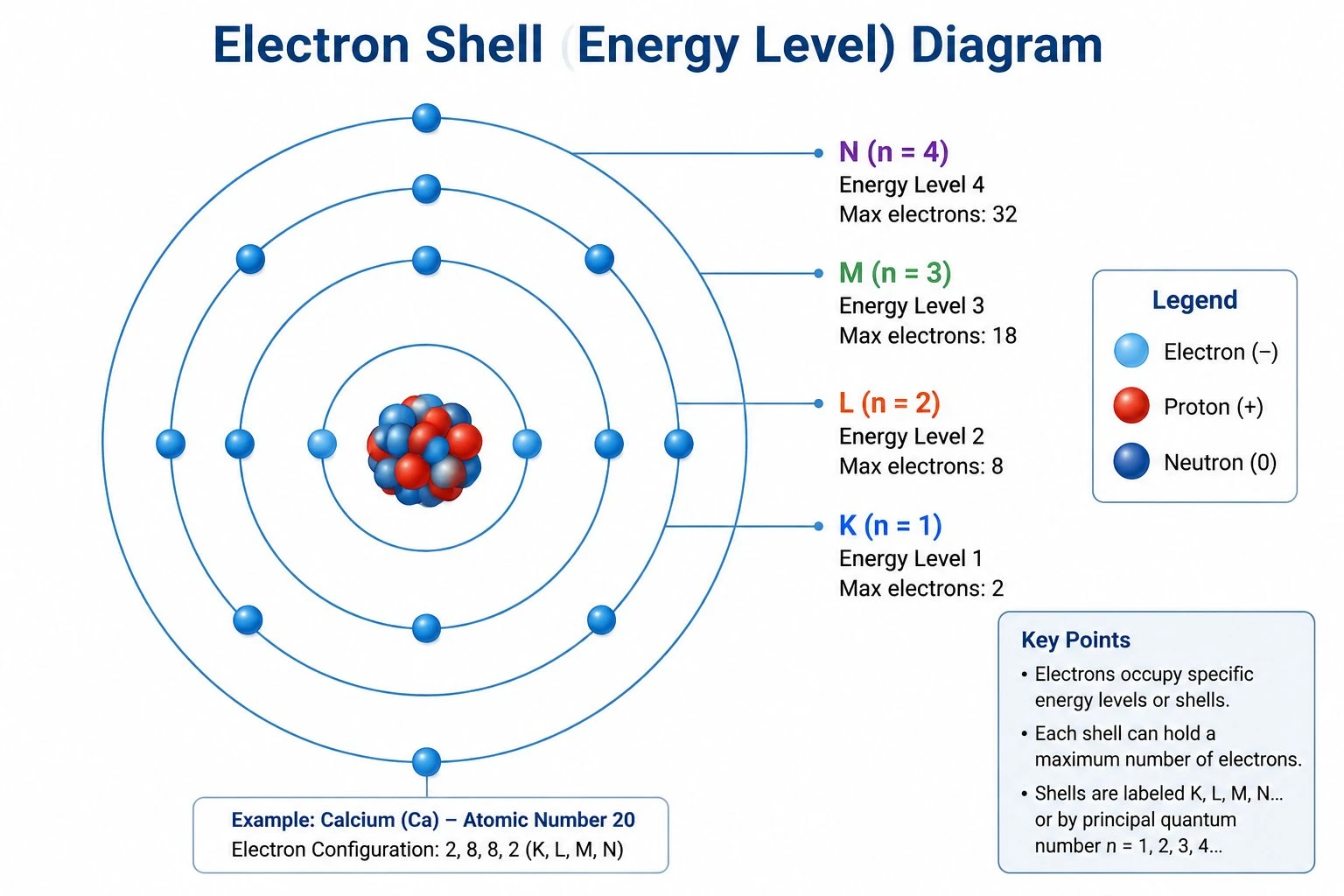
Electron Configuration Diagram Generator
Shell, orbital box and aufbau diagrams that explain where hybridization starts.
 Chemistry
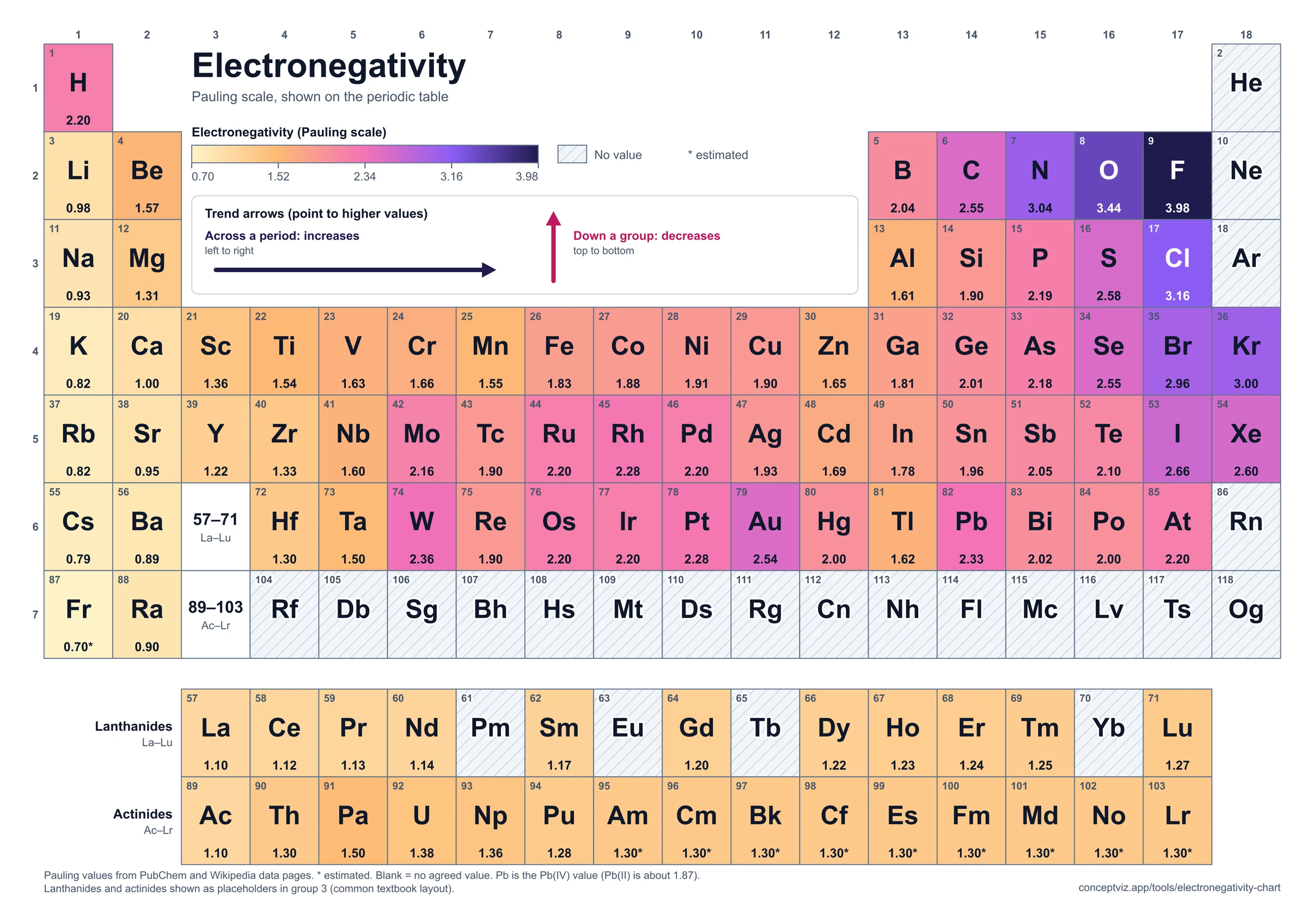
Electronegativity Chart
Periodic table heatmaps and a bond type calculator for deciding polarity.