Solubility Rules Chart Table & Precipitate Checker
Free solubility chart with 19 cations and 10 anions, 8 rules and a precipitate checker with net ionic equations. Print or download.
Style
Swipe sideways to see all anions.
| Cation / Anion | ||||||||||
|---|---|---|---|---|---|---|---|---|---|---|
S soluble, sS slightly soluble, I insoluble, R reacts with water or does not exist as a stable salt. Teaching approximation at about 25 °C: soluble at about 1 g per 100 mL or more, insoluble below 0.01 g. Textbook exceptions such as Li₂CO₃, Sr(OH)₂, silver acetate and PbCl₂ are marked sS although they sit just above 1 g. Downloads and Print always use the full chart; print splits it over two A4 pages.
Select a box to see the formula, the verdict and the rule that applies.
Free Solubility Charts
Every chart below is drawn from the same compiled data as the tool above. View, download and print them free, no sign-up.
Solubility Chart: 19 Cations by 10 Anions
Every salt in the table, colored by how it behaves in water, with the exceptions marked.
Reference charts
Printable versions
Practice sheets
How to use a solubility rules chart
- Start with the cation. If it is Li⁺, Na⁺, K⁺ or NH₄⁺, the salt is almost always soluble and you can usually stop. The exceptions are Li₂CO₃ and Li₃PO₄ (only slightly soluble) and the ammonium hydroxide and ammonium sulfide cases marked R in the chart. Sulfides of the alkaline earths are marked R as well. Otherwise look at the anion. Nitrates and acetates are soluble. Chlorides, bromides and iodides are soluble. Sulfates are soluble. Carbonates, phosphates, hydroxides and sulfides are insoluble. Then check the exceptions for that anion, because the exceptions are where most exam questions live.
- Click a header in the chart above to highlight a whole row or column, or select any box to see its rule and whether it is an exception. The Practice style hides the answers so you can test yourself before revealing them.
Exceptions that catch people out
- Chlorides, bromides and iodides are soluble except with Ag⁺, Hg₂²⁺ and Pb²⁺. Lead(II) halides are only slightly soluble, which is why PbCl₂ dissolves in hot water but PbI₂ gives a bright yellow precipitate. Sulfates are soluble except BaSO₄ and PbSO₄ (insoluble) and CaSO₄, SrSO₄, Ag₂SO₄ and Hg₂SO₄ (slightly soluble).
- Hydroxides are insoluble except Group 1 and Ba(OH)₂, while Ca(OH)₂ and Sr(OH)₂ are slightly soluble. Some hydroxides, such as Al(OH)₃, Zn(OH)₂ and Pb(OH)₂, redissolve in excess OH⁻. A few boxes in the chart are marked R. Al₂S₃, Al₂(CO₃)₃ and Fe₂(CO₃)₃ do not survive in water, and Fe³⁺ with I⁻ is a redox reaction. We do not force those into soluble or insoluble.
Writing a net ionic equation
- Swap the partners of the two salts, look each new salt up in the chart, and decide which one is a solid. Write the full ionic equation with every dissolved salt split into ions, then cancel the ions that appear unchanged on both sides. Those are spectator ions. What is left is the net ionic equation, and both the atoms and the total charge must balance. For Pb(NO₃)₂ + 2 KI the net result is Pb²⁺(aq) + 2 I⁻(aq) → PbI₂(s). The checker tab does this for you for any pair of soluble salts in the chart and shows the spectator ions it removed.
Solubility rules versus solubility curves and Ksp
- A rules chart gives a yes or no answer at about 25 °C, which is enough to predict whether a precipitate will form in a typical lab. A solubility curve shows how much of a salt dissolves as the temperature changes, so use our solubility curve chart when the question involves heating or cooling. The solubility product Ksp goes further and gives a number for sparingly soluble salts, but exact Ksp values differ between reference tables, so treat the rules as a guide and your course table as the final word.
How this chart was compiled
Every box was compiled by hand and cross-checked against the Wikipedia solubility chart, CRC-derived solubility values, the LibreTexts rules, the OpenStax general chemistry rules and published Ksp tables. We use one teaching threshold throughout, at about 25 °C: soluble at about 1 g per 100 mL or more, slightly soluble from about 0.01 to 1 g, and insoluble below 0.01 g. Textbook exceptions are marked slightly soluble (Li₂CO₃, Sr(OH)₂, silver acetate and PbCl₂) even though they sit just above 1 g. Sources also disagree on borderline salts such as CaSO₄, Ag₂SO₄, MgCO₃ and Ca(OH)₂, and we noted the reading behind each choice in the box details. Your textbook may draw a line somewhere else, so check which table your course uses.
Frequently Asked Questions
Related Chemistry Tools
 Chemistry
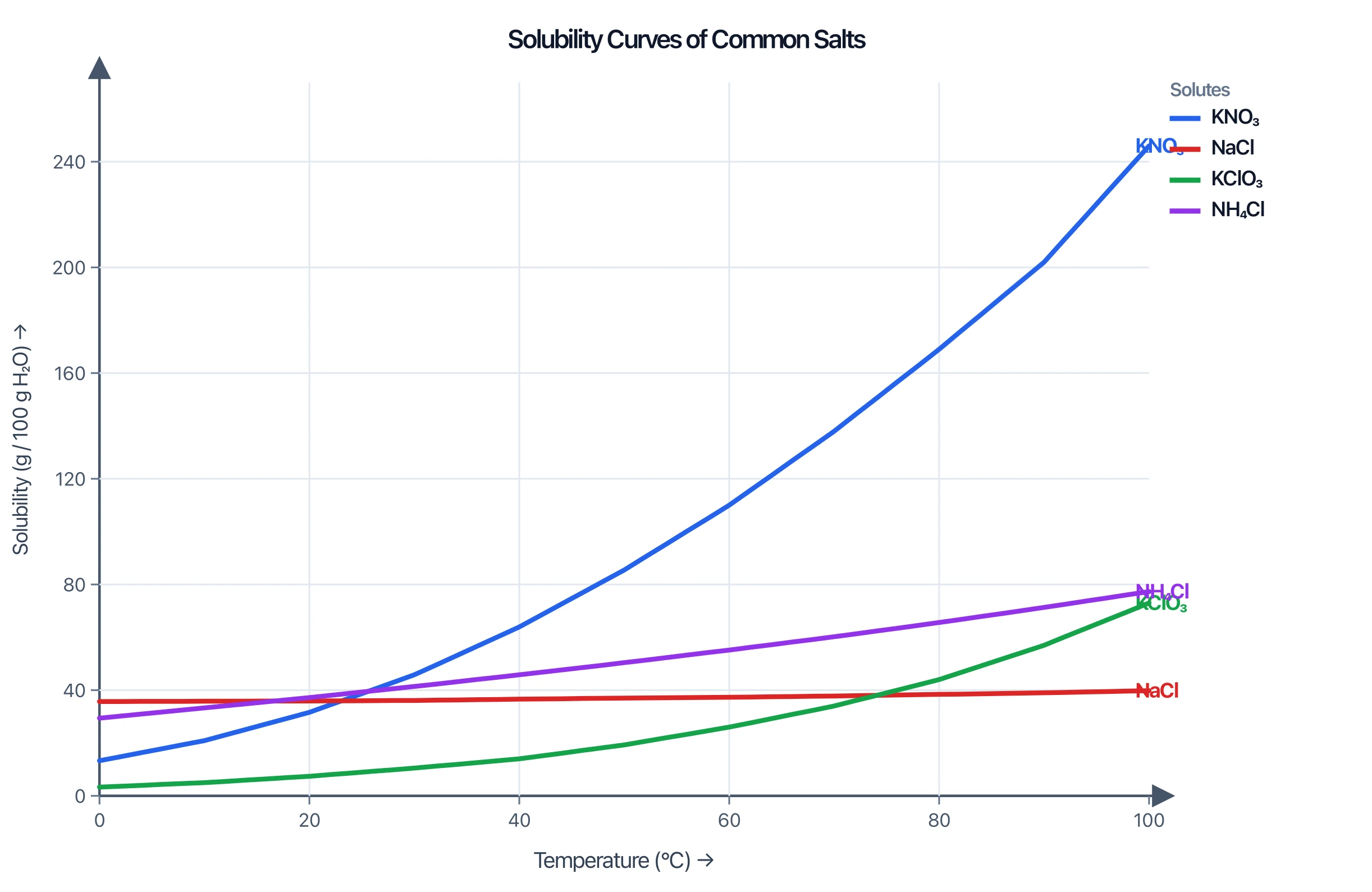
Solubility Curve
Solubility versus temperature for common salts, with worksheets to print.
 Chemistry
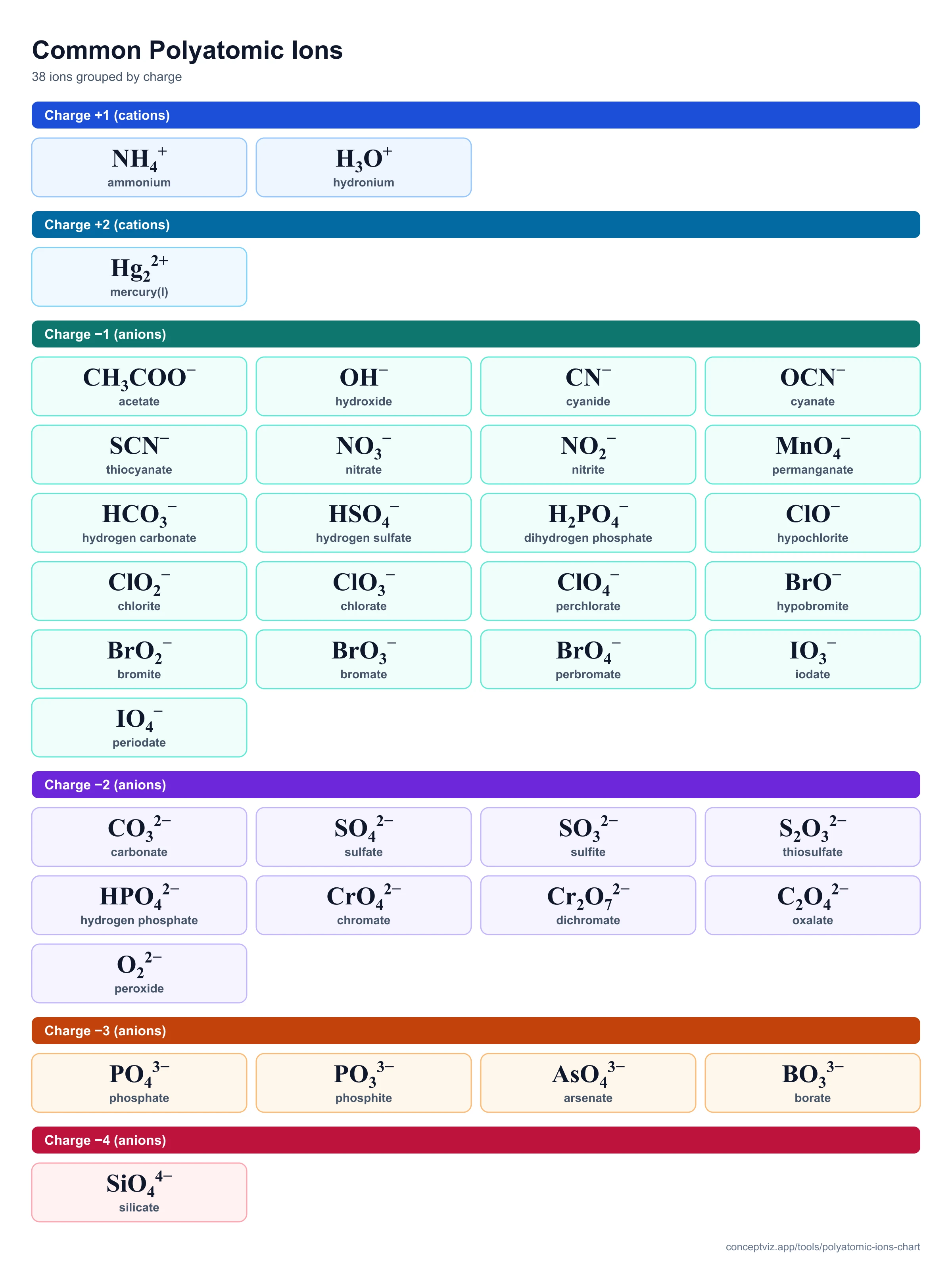
Polyatomic Ions Chart
Common polyatomic ions with charges, naming rules, flashcards and practice sheets.
 Chemistry
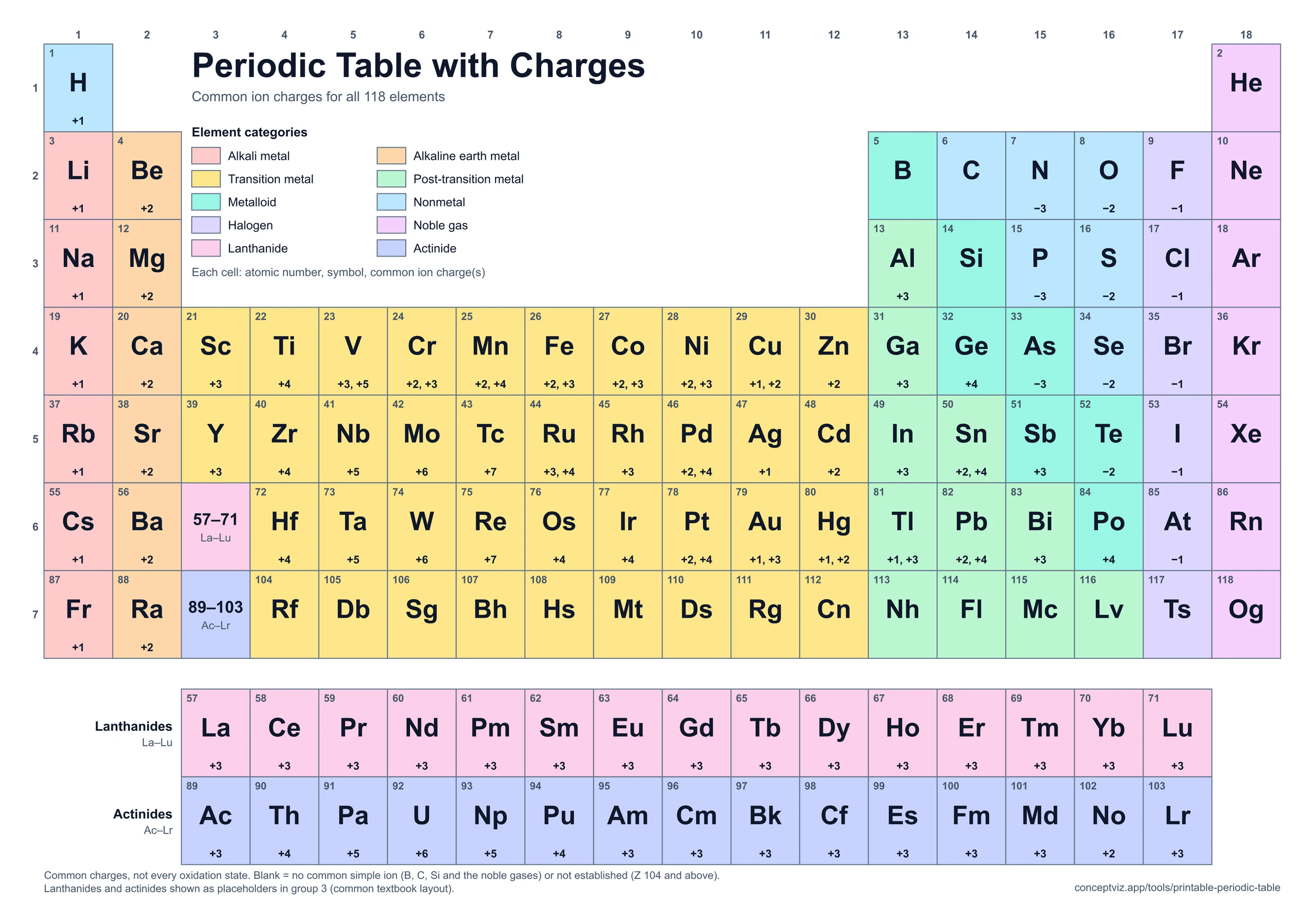
Printable Periodic Table
Periodic table with ion charges, atomic mass, and blank versions to print.
 Chemistry
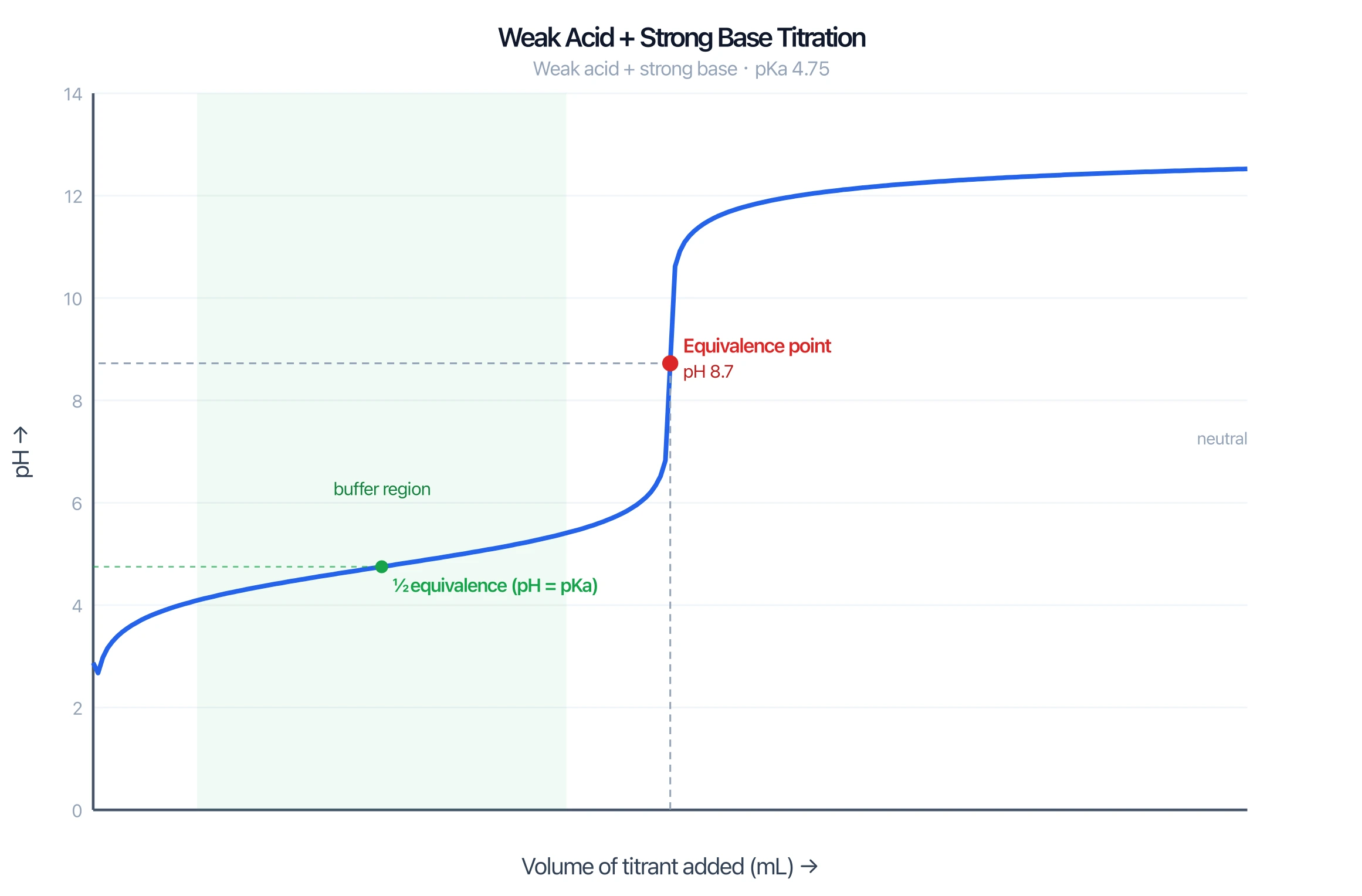
Titration Curve Generator
pH vs titrant volume with equivalence and buffer regions.