Inference Anchor Charts Free Printable Set
Free inference anchor charts — definition, clues + knowledge formula, how to infer, inference vs guess, and practice examples. Print free; no sign-up.
Free Inference Anchor Charts
Every chart below is free to view and download — no sign-up.
What Is an Inference?
Defines inference and lists what it is and is not.
Inference set
Test yourself: inference
Quick check — answers reshuffle each time.
An inference is best described as…
Need a custom version?
Change colors, grade level, or examples — describe it and generate a poster variant. For classroom-accurate charts, use the free posters above.
Customize an Anchor Chart
Free to try ·
Your custom chart will appear here
Decorative variants — free accurate posters are above
What is an inference anchor chart?
An inference anchor chart helps students read between the lines: combine text clues with background knowledge to form a logical conclusion. These free posters cover the definition, the classic formula, a how-to routine, inference vs wild guess, and practice examples. Download and print with no account.
How to use these charts
- Teach the formula first, then practice “I think ___ because the text says ___.”
- Use inference vs wild guess when students invent ideas with no evidence.
- Pair with Context Clues when the unknown is a word; use inference when the unknown is an idea or feeling.
Inference vs summary
Inference fills in what is not fully stated. A summary retells the important stated ideas briefly. Students often need both skills on the same text.
Frequently Asked Questions
Related ELA Tools
 Education
Summarizing Anchor Charts
What a summary is, vs main idea, how-to steps, and SWBST story frame.
 Education
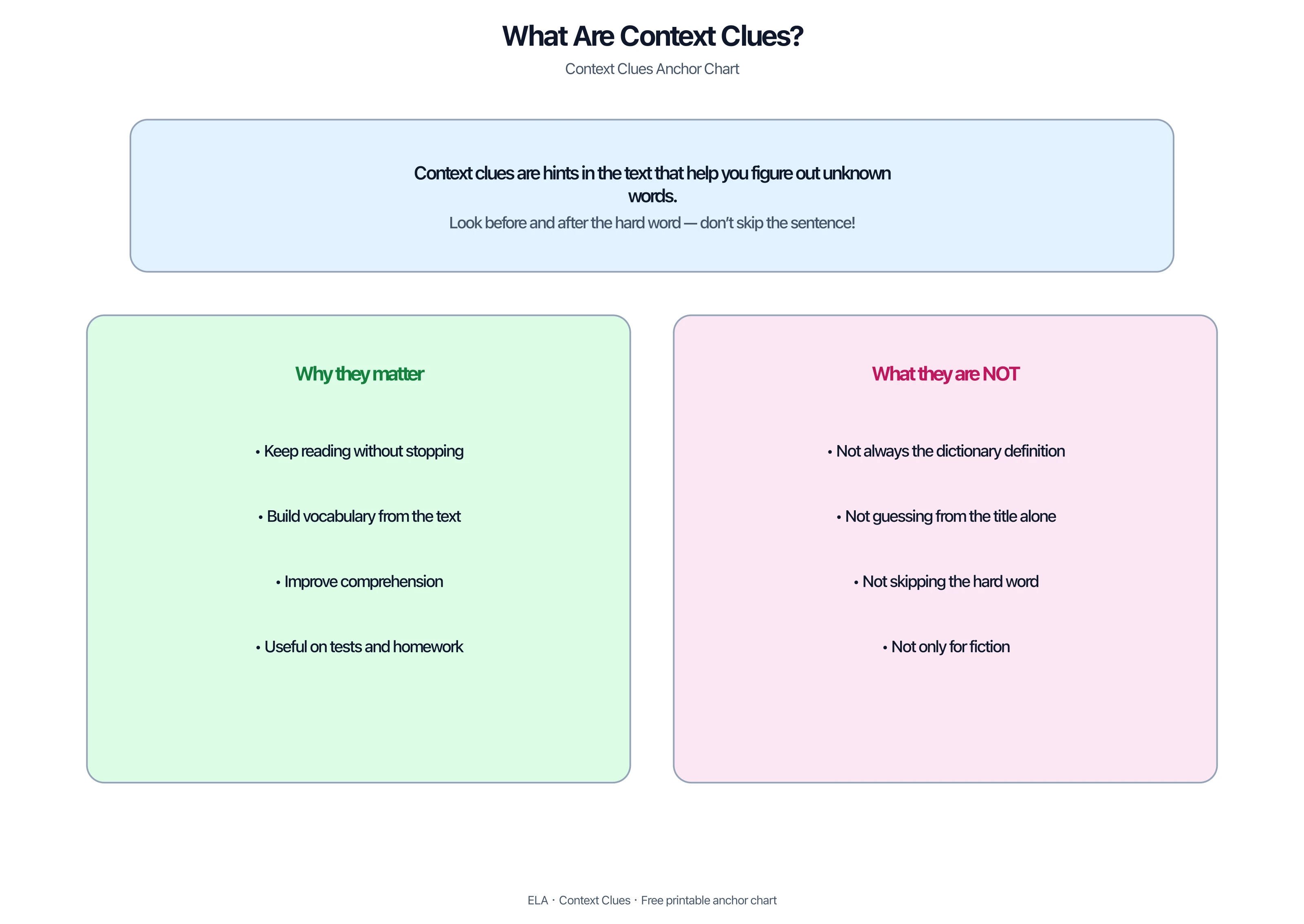
Context Clues Anchor Charts
Five clue types and worked examples for unknown words.
 Education
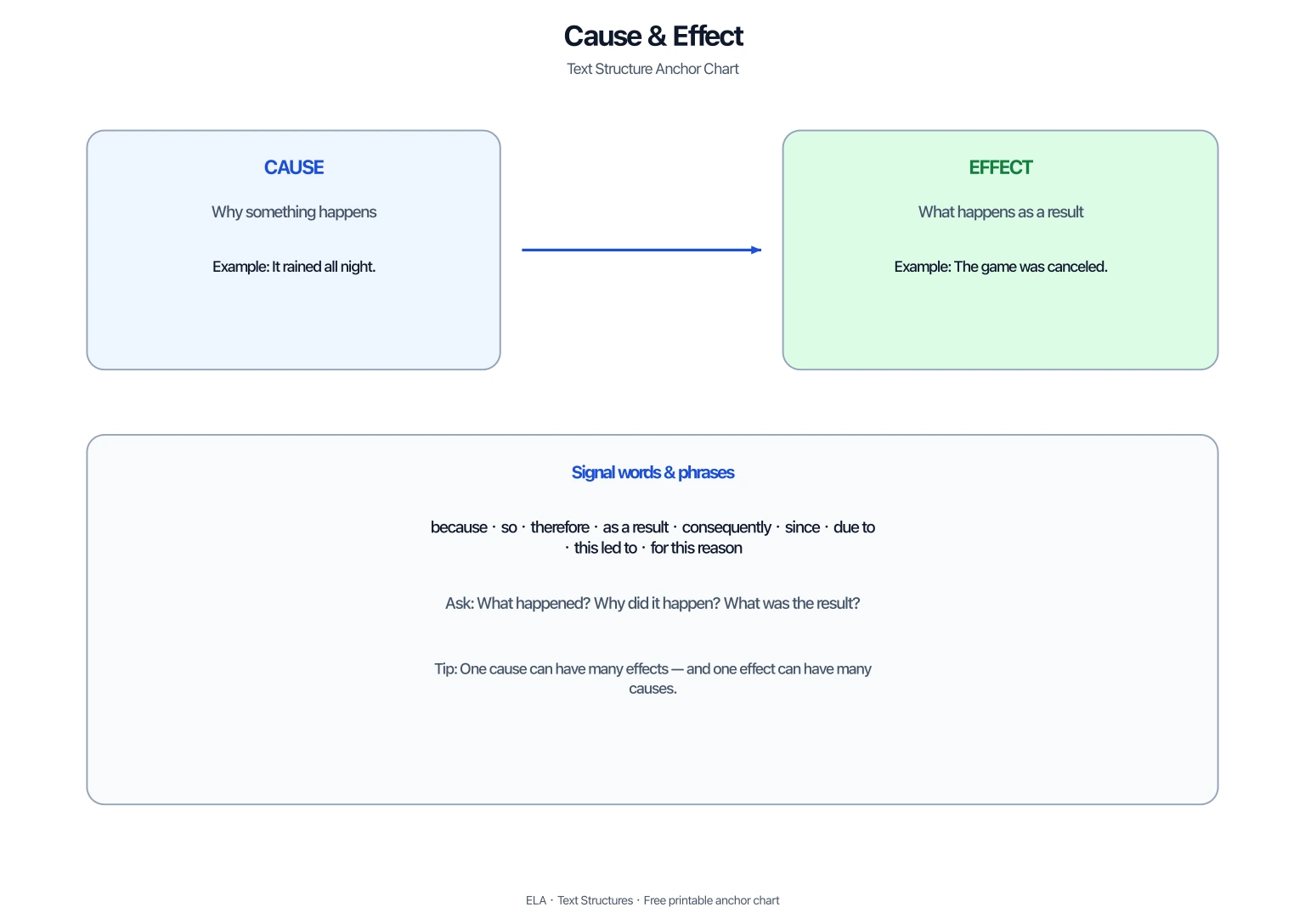
Text Structure Anchor Charts
Cause & effect, compare & contrast, sequence, problem & solution, description.
 Education
Main Idea Anchor Charts
Definition, details umbrella, how to find main idea, signal words.