Genetics Tool

Punnett Square Maker for Genetics Crosses

Make a Punnett square online for monohybrid (Aa × Aa) and dihybrid crosses. Type both parent genotypes for an exact, labeled square with genotype and phenotype ratios, or describe one for an AI illustration — then export SVG, free.

Precise data mode + AI illustration modeMonohybrid (2×2) and dihybrid (4×4) crosses

Enter both parent genotypes (e.g. Aa × Aa) — builds an exact, labeled Punnett square as SVG, free

Cross settings

Exact Punnett square, rendered as SVG.

Genotype ratio

1 AA : 2 Aa : 1 aa

Phenotype ratio

3:1(dominant : recessive)

Punnett SquareAa × AaParent 1: AaParent 2: AaAaAaAAAaAaaaPhenotype ratio 3:1 (dominant : recessive)

Monohybrid cross · 2×2 grid. Alleles are sorted dominant-first in every cell. Download an editable SVG for slides, reports, and worksheets.

Punnett Square Examples

Monohybrid, carrier, sex-linked, and dihybrid crosses

视图:

Monohybrid Cross (Aa × Aa)

The classic 2×2 cross — two heterozygous parents give a 1:2:1 genotype ratio and 3:1 phenotype ratio.

geneticsdominantinheritance

Carrier Cross (Cc × Cc)

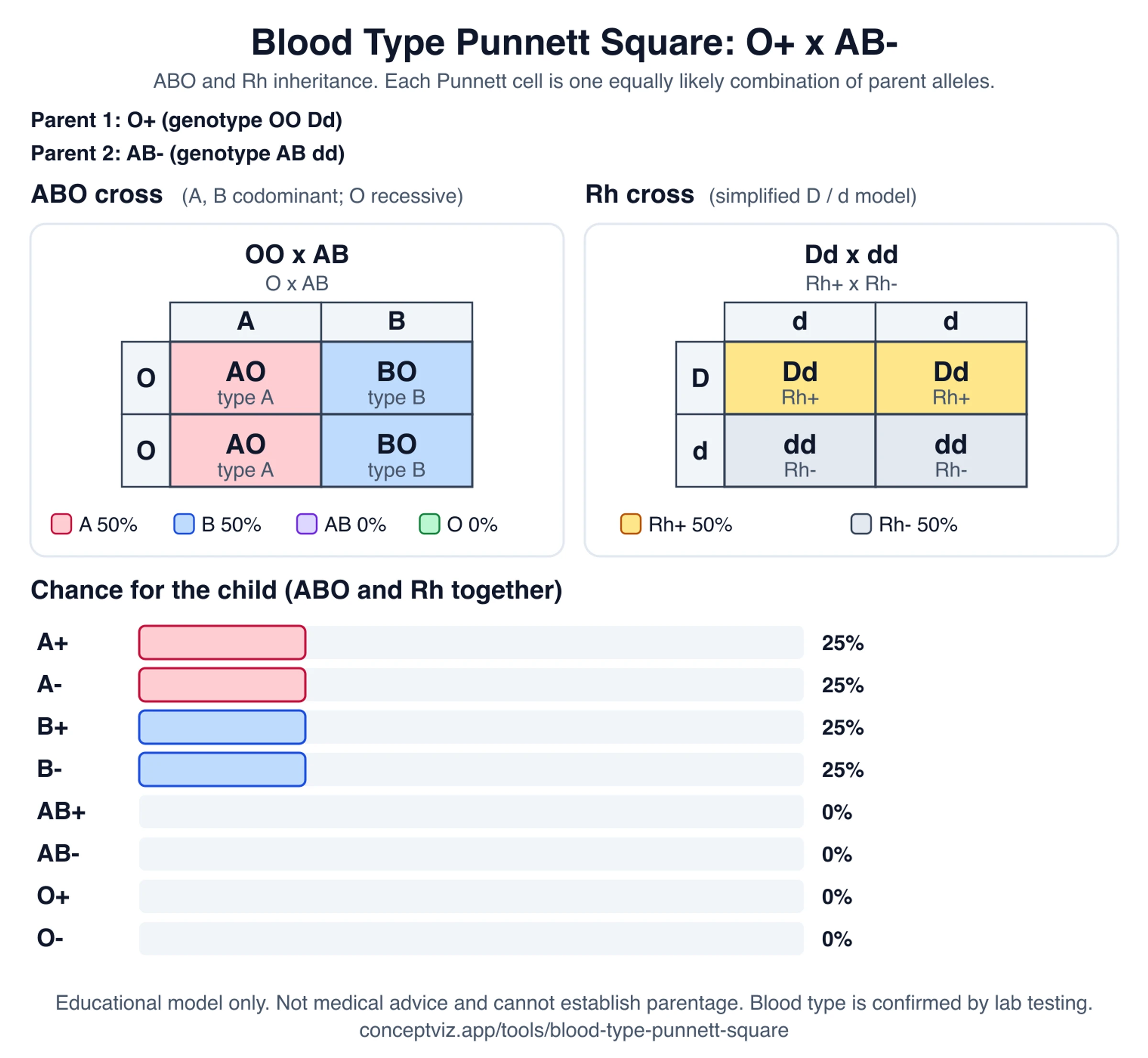
Two carriers of a recessive allele — each child has a 25% chance of being affected (cc).

geneticsrecessivecarrier

Trait Inheritance

How a real human trait passes on — the square predicts normal, carrier, and affected outcomes.

sickle-cellmedicalgenetics

Sex-Linked Cross

Sex-linked inheritance — outcomes differ for sons and daughters in an X-linked cross.

x-linkedsex-linkedgenetics

Genotype & Phenotype Reference

A notation refresher — dominant vs recessive alleles and how genotype maps to phenotype.

referencenotationalleles

Dihybrid Cross (4×4)

Two genes at once — a 4×4 grid of 16 combinations giving the famous 9:3:3:1 phenotype ratio.

dihybridmendelianadvanced

Dihybrid Cross Worked Examples

A dihybrid cross follows two genes at once. These three examples were drawn by the same maker above, so every cell and ratio is computed from the genotypes shown. Type the same genotypes into the generator to edit them or download the SVG. New to the method? Read the step-by-step Punnett square guide.

How to list gametes with FOIL

For a parent such as AaBb, FOIL (First, Outer, Inner, Last) lists the four gametes without missing one.

  1. Write the genotype as two gene pairs, for example A a and B b for AaBb.
  2. First: take the first allele of each pair. A with B gives AB.
  3. Outer: take the first allele of the first pair and the second allele of the last pair. A with b gives Ab.
  4. Inner: take the second allele of the first pair and the first allele of the last pair. a with B gives aB.
  5. Last: take the second allele of each pair. a with b gives ab.
  6. Check that each gamete holds exactly one allele per gene. A parent with two genes always makes four gamete slots; a homozygous gene repeats the same gamete, as in aabb.

Result for AaBb: AB, Ab, aB, ab. Put one parent’s four gametes across the top and the other’s down the side, then combine each row and column.

Example 1: RrYy × RrYy, the 9:3:3:1 cross

R is round and r is wrinkled; Y is yellow and y is green, the two seed traits Mendel followed in peas. Both parents are double heterozygotes, so each makes four gamete types in equal numbers: RY, Ry, rY, and ry.

The 16 squares sort into four looks: 9 round and yellow (DD, the pale blue squares), 3 round and green (Dr, green), 3 wrinkled and yellow (rD, yellow), and 1 wrinkled and green (rr, pink). In the figure, D stands for the dominant form and r for the recessive form of each gene, first gene first. Mendel counted 315 round yellow, 108 round green, 101 wrinkled yellow, and 32 wrinkled green seeds in 556, close to the 313, 104, 104, and 35 that 9:3:3:1 predicts.

Phenotype ratio in the figure: 9:3:3:1
Punnett SquareRrYy × RrYyParent 1: RrYyParent 2: RrYyRYRyrYryRYRyrYryRRYYRRYyRrYYRrYyRRYyRRyyRrYyRryyRrYYRrYyrrYYrrYyRrYyRryyrrYyrryyPhenotype ratio 9:3:3:1
Punnett square for RrYy × RrYy, drawn by the maker above.

Example 2: AaBb × aabb, the dihybrid test cross

Crossing a double heterozygote with a double recessive reveals which gametes the heterozygote makes, because the aabb parent only adds ab. Here the figure shows 4:4:4:4 because the aabb parent makes ab four times in the grid; divided by 4, that is the 1:1:1:1 ratio.

Each of the four offspring classes (AaBb, Aabb, aaBb, aabb) shows up once in four. If a real cross gives far more of two classes than the other two, the genes are probably linked rather than assorting independently.

Phenotype ratio in the figure: 4:4:4:4

Punnett SquareAaBb × aabbParent 1: AaBbParent 2: aabbABAbaBabababababAaBbAabbaaBbaabbAaBbAabbaaBbaabbAaBbAabbaaBbaabbAaBbAabbaaBbaabbPhenotype ratio 4:4:4:4
Punnett square for AaBb × aabb, drawn by the maker above.

Example 3: RrYy × rrYy, a 3:3:1:1 cross

When one parent is homozygous for one gene, the grid is still 4×4, but the ratio changes. The R gene gives 1:1 (Rr × rr) and the Y gene gives 3:1 (Yy × Yy), so the combined ratio is (1:1) × (3:1) = 3:3:1:1.

The figure lists the classes in the maker’s fixed order, round yellow, round green, wrinkled yellow, wrinkled green, so it reads 6:2:6:2 of 16 squares. That is 3:1:3:1, which is the 3:3:1:1 ratio with the classes listed in the maker’s order.

Phenotype ratio in the figure: 6:2:6:2

Punnett SquareRrYy × rrYyParent 1: RrYyParent 2: rrYyRYRyrYryrYryrYryRrYYRrYyrrYYrrYyRrYyRryyrrYyrryyRrYYRrYyrrYYrrYyRrYyRryyrrYyrryyPhenotype ratio 6:2:6:2
Punnett square for RrYy × rrYy, drawn by the maker above.

When the ratio is not 9:3:3:1

  • Linked genes. Genes close together on one chromosome tend to travel together, so a test cross gives many more parental than recombinant offspring and the 1:1:1:1 and 9:3:3:1 ratios do not hold. The square assumes independent assortment and cannot show linkage.
  • Lethal alleles. If one genotype does not survive, its squares disappear from the offspring count. In mice, the yellow coat allele behaves this way: two yellow parents give 2 yellow to 1 non-yellow instead of 3:1. Remove the lethal squares by hand and recount.
  • Incomplete dominance, codominance, or gene interaction. The maker sorts every cell as dominant or recessive, so when heterozygotes look different, count the genotypes instead of the phenotype ratio.

What is a Punnett square?

A Punnett square is a grid that predicts the possible genotypes of offspring from a genetic cross. You list one parent’s gametes across the top and the other parent’s gametes down the side, then fill each cell by combining the row and column alleles. Each cell is one equally likely offspring outcome, so the grid shows both the genotype combinations and how often each is expected. Named after geneticist Reginald Punnett, it is the standard tool for working out inheritance in biology class — and this maker fills, labels, and ratios the square for you, exactly, every time.

Alleles, dominant vs recessive, genotype vs phenotype

  • An allele is one version of a gene; you inherit one from each parent. Alleles are written as letters — a capital letter for the dominant allele (A) and the same letter in lowercase for the recessive allele (a).
  • A dominant allele is expressed whenever it is present; a recessive allele only shows when both copies are recessive (aa). So AA and Aa look the same outwardly, while aa looks different.
  • The genotype is the allele pair itself (AA, Aa, or aa). The phenotype is the observable trait that genotype produces (for example, dominant vs recessive appearance). One phenotype can come from more than one genotype, which is why the two ratios differ.

Two ways to make a Punnett square here

  • Precise mode: type both parent genotypes (for example Aa and Aa, or AaBb and AaBb). The tool derives each parent’s gametes, fills every cell with the correctly combined and ordered genotype, and computes the genotype and phenotype ratios automatically — accurate every time, with nothing to align by hand.
  • AI illustration mode: describe the cross in plain English and the tool generates a polished, presentation-ready illustration with color-coded results and labels.
  • Use Precise mode when correctness matters (homework, exams, lab reports); use AI mode when you want a styled graphic for slides or a handout.

Monohybrid vs dihybrid crosses

A monohybrid cross tracks one gene, so each parent has two alleles and produces two gamete types — the square is 2×2 with four cells. The textbook example is Aa × Aa, which yields a 1:2:1 genotype ratio (1 AA : 2 Aa : 1 aa) and a 3:1 phenotype ratio (dominant : recessive). A dihybrid cross tracks two genes at once. Each parent like AaBb produces four gamete types (AB, Ab, aB, ab) by combining one allele from each gene, so the square becomes 4×4 with sixteen cells. The dihybrid AaBb × AaBb gives the classic 9:3:3:1 phenotype ratio. This maker builds both the 2×2 and 4×4 squares from your genotypes.

How to use the Punnett square maker

  • Enter the Parent 1 genotype — two letters for a monohybrid cross (Aa) or four for a dihybrid (AaBb).
  • Enter the Parent 2 genotype using the same gene letters so the cross is valid.
  • The tool derives the gametes, fills every cell with the combined offspring genotype (alleles sorted dominant-first, e.g. Aa not aA), and reads out the genotype and phenotype ratios.
  • Download a clean, editable SVG to drop into a worksheet, slide, or report — or switch to AI mode for a styled illustration.

Genotype and phenotype ratios for genetics class

The two ratios a Punnett square produces are exactly what most genetics questions ask for. The genotype ratio counts how many cells fall into each allele combination — for Aa × Aa that is 1 AA : 2 Aa : 1 aa. The phenotype ratio groups genotypes by the trait they show: because both AA and Aa display the dominant trait, Aa × Aa gives a 3:1 dominant-to-recessive split. For a dihybrid cross the phenotype ratio is 9:3:3:1. Because this maker tallies the ratios directly from the filled grid, the numbers always match the square you see — handy for checking homework, building test-prep examples, or teaching Mendelian inheritance.

常见问题