Phosphorus Cycle Diagram Phosphorus Cycle
Describe the phosphorus cycle processes you want to visualize and our AI will create a professional diagram instantly. Perfect for biology classes, environmental science courses, and ecology presentations.
Phosphorus Cycle Diagram Generator
Free to try ·
Your phosphorus cycle diagram will appear here
Describe your phosphorus cycle and click Generate
Phosphorus Cycle Diagram Examples
Browse phosphorus cycle examples or generate your own above
Complete Labeled Phosphorus Cycle
Comprehensive phosphorus cycle diagram showing all major processes: rock weathering, soil absorption, plant uptake, animal consumption, decomposition, runoff, and ocean sedimentation.
Simple Overview Phosphorus Cycle
Simplified overview of the phosphorus cycle suitable for introductory biology courses, highlighting the four main reservoirs and key transfer pathways.
Aquatic Phosphorus Cycle
Aquatic-focused phosphorus cycle showing dissolved phosphate dynamics in freshwater and marine ecosystems, including eutrophication pathways.
Terrestrial Phosphorus Cycle
Terrestrial-focused phosphorus cycle emphasizing soil chemistry, plant root uptake, mycorrhizal interactions, and organic matter turnover.
Phosphorus Cycle with Human Impact
Phosphorus cycle showing how human activities disrupt natural phosphorus flows through mining, agriculture, and wastewater discharge.
Blank Phosphorus Cycle Worksheet
Printable blank phosphorus cycle worksheet with empty label boxes for students to fill in process names and reservoir descriptions.
What is the Phosphorus Cycle?
The phosphorus cycle is a biogeochemical cycle that describes the movement of phosphorus through the lithosphere, hydrosphere, and biosphere. Unlike the carbon and nitrogen cycles, the phosphorus cycle does not include a significant atmospheric component — phosphorus moves primarily through rocks, soil, water, and living organisms. The cycle begins with the slow weathering of phosphate-containing rocks, which releases phosphorus into soil and water. From there, it is absorbed by plants, passes through food chains, returns to soil through decomposition, and eventually makes its way back to sedimentary rock over geological timescales. This makes the phosphorus cycle one of the slowest biogeochemical cycles on Earth.
Key Processes in the Phosphorus Cycle
- Weathering: Phosphate rocks slowly break down through physical and chemical erosion, releasing phosphate ions (PO₄³⁻) into soil and water
- Absorption and Uptake: Plants absorb dissolved phosphate from soil through their roots, often aided by mycorrhizal fungi that extend nutrient reach
- Consumption: Animals obtain phosphorus by eating plants or other animals, incorporating it into bones, teeth, DNA, and ATP molecules
- Decomposition: When organisms die, decomposers break down organic matter and release phosphorus back into the soil as phosphate
- Runoff and Erosion: Rainfall and water flow carry dissolved and particulate phosphorus from land into rivers, lakes, and oceans
- Sedimentation: In aquatic environments, phosphorus settles to the bottom as sediment, eventually forming new phosphate rock over millions of years
Why Phosphorus Matters for Life
Phosphorus is essential for all living organisms. It is a key component of DNA and RNA, which carry genetic information. It forms the backbone of ATP (adenosine triphosphate), the primary energy currency of cells. Phosphorus is a major structural element in bones and teeth as calcium phosphate (hydroxyapatite). Cell membranes are built from phospholipids, which require phosphorus. In ecosystems, phosphorus is often the limiting nutrient — meaning its availability controls the rate of biological productivity. This is especially true in freshwater systems, where even small increases in phosphorus can trigger dramatic ecological changes.
Human Impact on the Phosphorus Cycle
- Phosphate mining extracts millions of tons of phosphorus from rock deposits annually for fertilizer production, accelerating natural release rates by orders of magnitude
- Agricultural fertilizer application adds massive amounts of phosphorus to soils, much of which runs off into waterways during rain events
- Eutrophication occurs when excess phosphorus enters lakes and rivers, triggering algal blooms that deplete oxygen and kill aquatic life
- Wastewater discharge from cities and livestock operations introduces concentrated phosphorus into waterways
- Peak phosphorus concerns suggest that economically recoverable phosphate rock reserves may be depleted within 50–100 years at current extraction rates
- Sustainable phosphorus management through recycling, precision agriculture, and wastewater recovery is becoming increasingly critical for food security
Phosphorus Cycle vs Other Biogeochemical Cycles
The phosphorus cycle differs from other major biogeochemical cycles in several important ways. Unlike the carbon, nitrogen, and water cycles, phosphorus has no significant gaseous phase, meaning it does not cycle through the atmosphere. This makes the phosphorus cycle much slower — geological processes like rock weathering and sedimentation operate over millions of years. The nitrogen cycle involves atmospheric nitrogen fixation by bacteria, while carbon cycles rapidly between atmosphere, oceans, and biosphere through photosynthesis and respiration. The water cycle is driven by solar energy through evaporation and precipitation. Because phosphorus lacks an atmospheric pathway, it cannot be replenished from the air once depleted from local soils, making it a uniquely vulnerable nutrient in ecosystems.
Frequently Asked Questions
More Biology & Science Diagram Tools
BiologyWater Cycle Diagram Generator
Create detailed water cycle diagrams showing evaporation, condensation, precipitation, and collection.
ScienceRock Cycle Diagram Generator
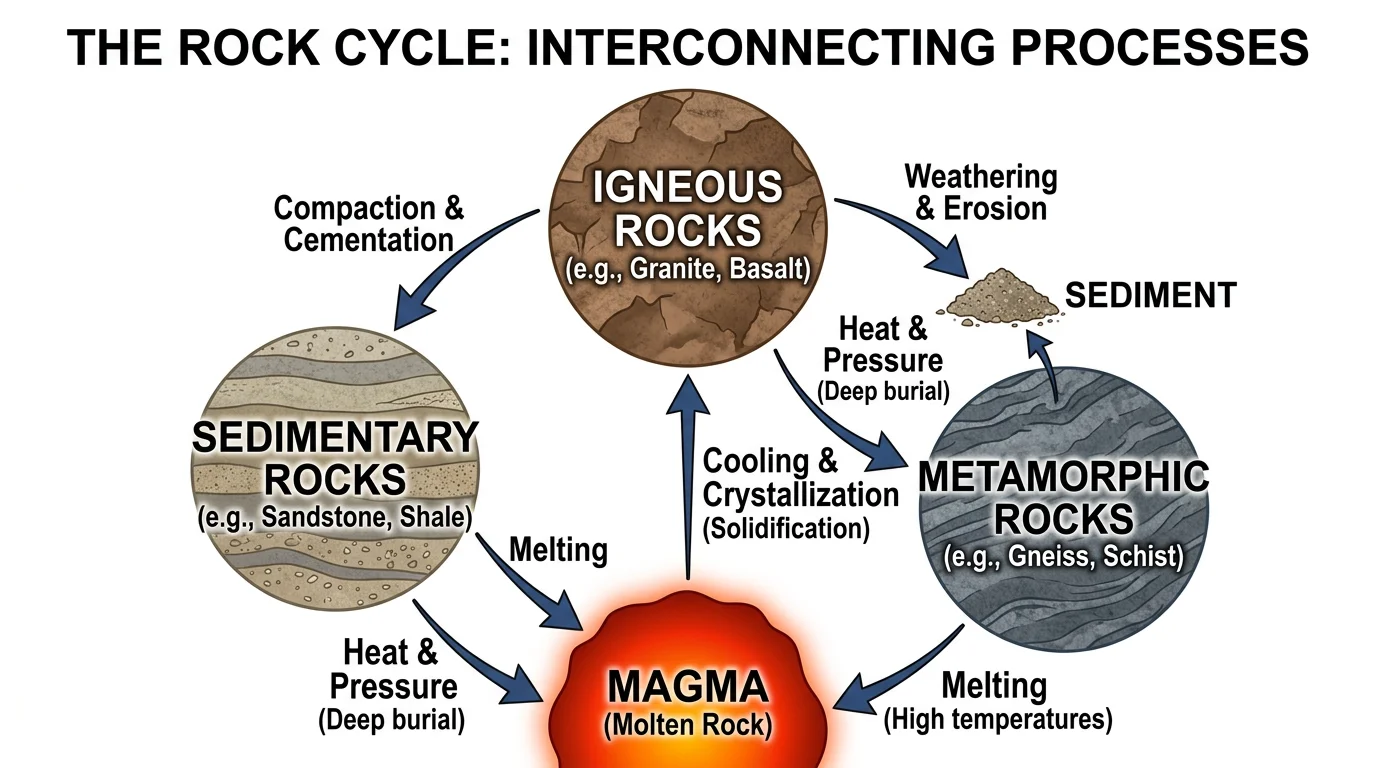
Generate rock cycle diagrams illustrating igneous, sedimentary, and metamorphic rock transformations.
BiologyFood Web Maker
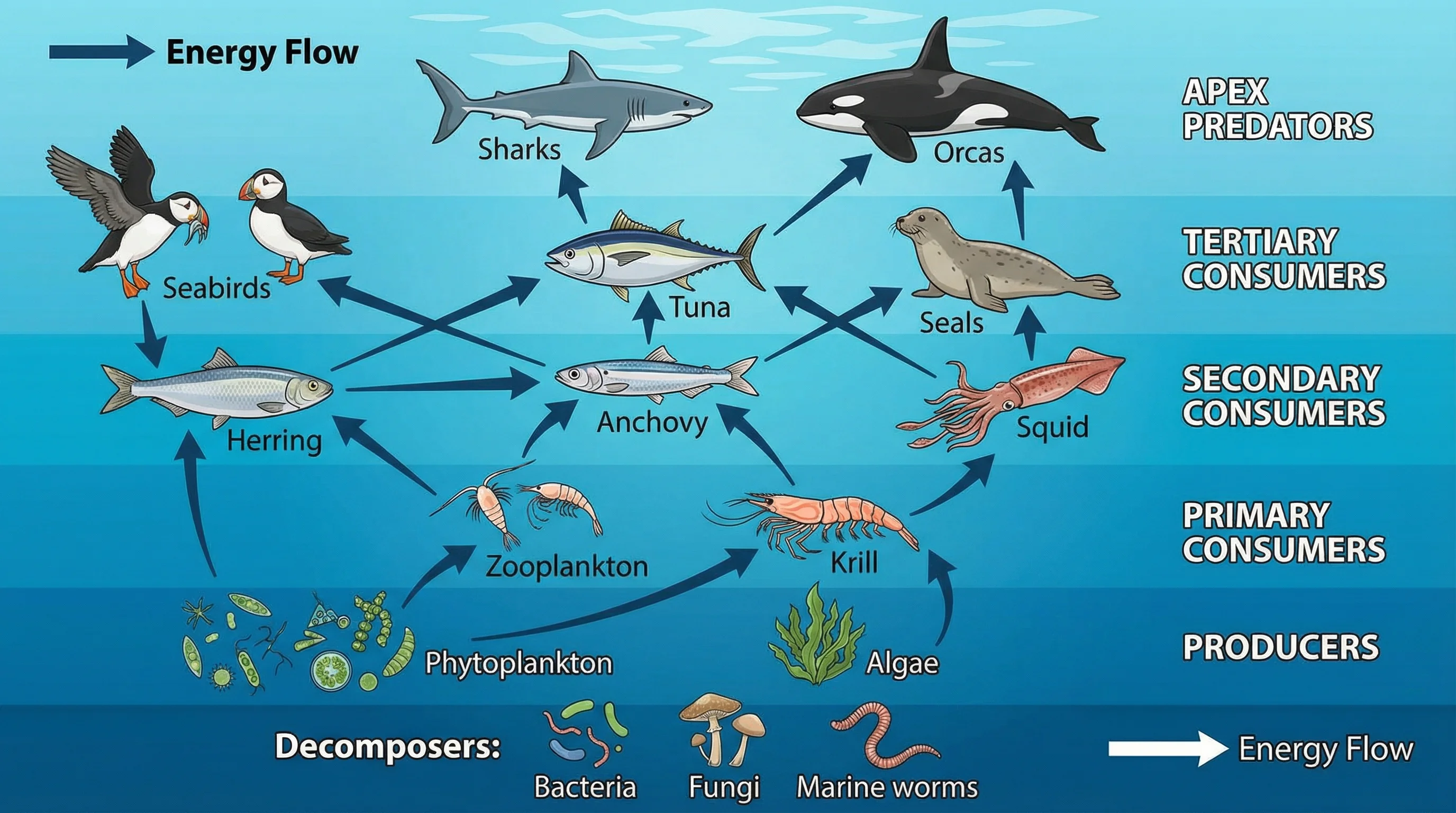
Create food web diagrams showing energy flow and trophic relationships in ecosystems.