Food Web Maker
Make a food web in seconds. Describe any ecosystem and this free AI food web maker draws the producers, consumers, and decomposers with arrows showing how energy flows — ready to download for biology class, worksheets, and study notes.
Food Web Maker
Free to try ·
Your food web diagram will appear here
Describe what you need and click Generate
Food Web Examples
AI-generated food webs across oceans, forests, grasslands, and more
Ocean Food Web
Marine energy flow from phytoplankton up to apex predators like sharks and orcas, with decomposers at the base.
Forest Food Web
A woodland web with crossing arrows showing how many feeding paths connect the same organisms.
Grassland Food Web
A prairie web color-coded by trophic level, from grasses through grazers to hawks and eagles.
Arctic Tundra Food Web
A cold-climate web where short food chains lead up to the polar bear as the apex predator.
Freshwater Lake Food Web
A lake cross-section that links underwater and shoreline organisms in one connected web.
Desert Food Web
An arid-ecosystem web showing how energy moves through a harsh, low-rainfall environment.
What is a food web?
A food web is a diagram that shows all the feeding relationships in an ecosystem at once. Instead of a single straight line, it links many organisms together with arrows, because most animals eat more than one food source and are eaten by more than one predator. Each arrow points from the organism being eaten to the organism that eats it, following the direction that energy and nutrients move through the community. A food web gives a realistic picture of how plants, animals, and decomposers depend on each other — and that interconnected picture is exactly what this AI food web maker draws from your description.
Trophic levels: producers, consumers, and decomposers
- Producers (autotrophs): plants, algae, and phytoplankton that make their own food through photosynthesis. They form the base of every food web.
- Primary consumers (herbivores): animals that eat producers, such as rabbits, grasshoppers, deer, and zooplankton.
- Secondary consumers: animals that eat primary consumers — frogs, small birds, and many fish, which are often carnivores or omnivores.
- Tertiary consumers and apex predators: top carnivores such as hawks, foxes, sharks, and lions that have few or no natural predators of their own.
- Decomposers: bacteria, fungi, and detritivores like earthworms and dung beetles that break down dead organisms and recycle nutrients back to the producers.
Energy flow and predator–prey relationships
Energy enters a food web at the producer level, captured from sunlight, and then flows upward each time one organism eats another. Only about 10% of the energy at one trophic level is passed on to the next — the rest is used for life processes or lost as heat. That is why food webs have many producers at the base but only a few apex predators at the top, and why food chains are rarely more than four or five links long. The arrows in the diagram trace these predator–prey relationships, making it easy to follow how a single organism, such as grass or phytoplankton, ultimately supports the predators many levels above it.
Food web vs food chain: what is the difference?
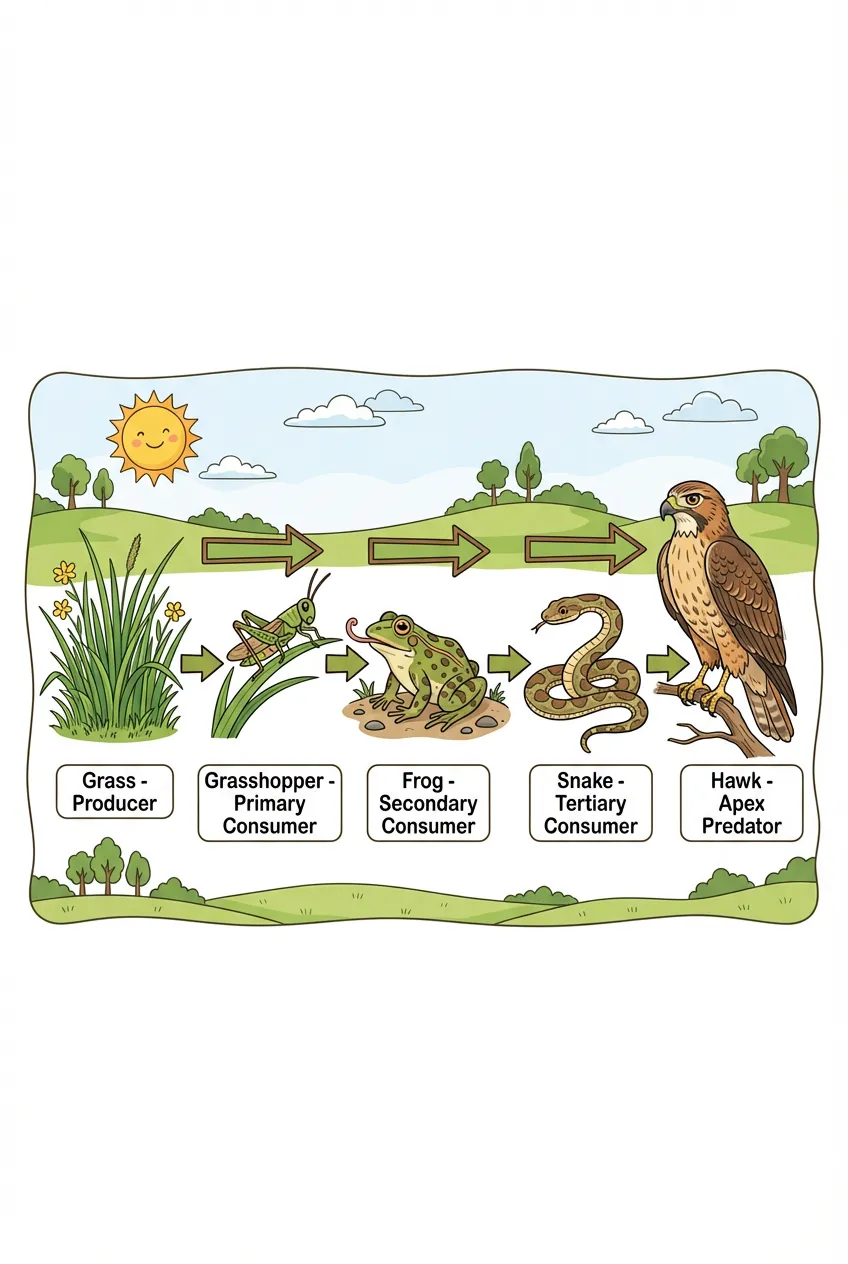
A food chain is a single, linear path of who eats whom — for example, grass → grasshopper → frog → snake → hawk. A food web is many food chains overlaid and interconnected, showing that organisms have multiple food sources and predators. Food webs are more realistic because few animals rely on just one food; if one species disappears, the web reveals which other organisms are affected. Use a food chain when you want to show one clear sequence, and a food web when you want to show the full, branching network of an ecosystem. This maker can produce either — describe a simple chain for a single path, or a full web for the complete network.
Using food webs in biology and the classroom
Food webs are a core topic in middle school, high school, and introductory college biology and environmental science. Teachers use them to explain trophic levels, energy transfer, and the impact of removing a species (such as a keystone predator) from an ecosystem. With this tool you can quickly generate food webs for specific biomes — ocean, forest, grassland, tundra, freshwater, desert, savanna, or wetland — to use in lecture slides, printed worksheets, lab handouts, and study guides. Students can compare webs from different ecosystems and see how the same trophic structure appears even when the organisms are completely different.
How to make a food web with this AI tool
- Describe the ecosystem you want — name the biome (for example, "temperate forest" or "coral reef") and any specific organisms to include.
- Mention the level of detail: a simple 6–8 organism web for younger students, or a complex 15+ organism web spanning every trophic level.
- Ask for trophic-level labels, color coding, or directional arrows in your prompt so the diagram reads clearly.
- Generate the image, then download it to drop straight into a worksheet, slide deck, or study guide. Regenerate with a tweaked description until it fits your lesson.
Frequently Asked Questions
Related Biology Tools
 Biology
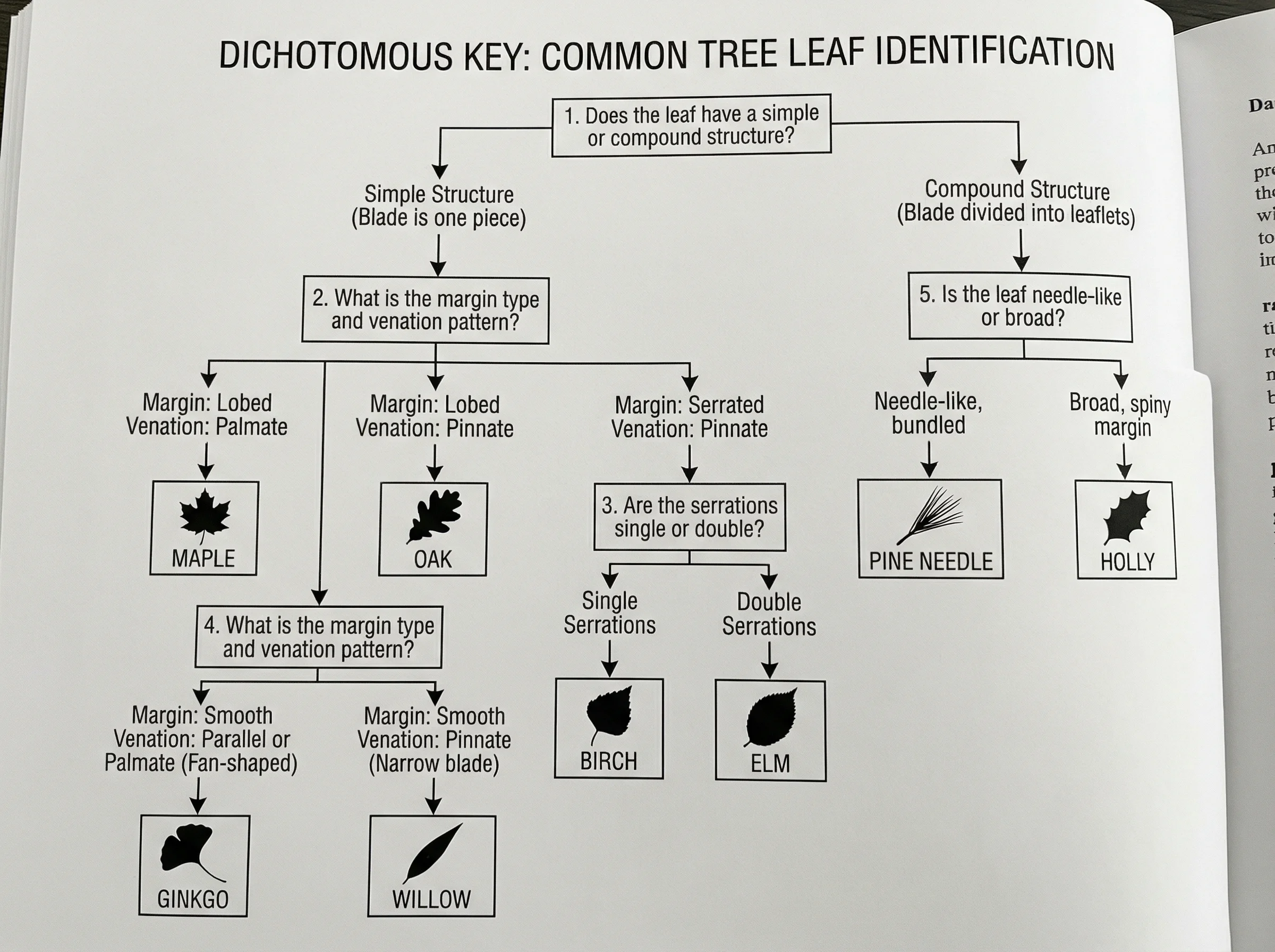
Dichotomous Key Maker
Build branching dichotomous keys to identify organisms by their traits.
 Biology
Food Chain Diagram Generator
Draw a single-path food chain showing producers, consumers, and energy flow.
 Biology
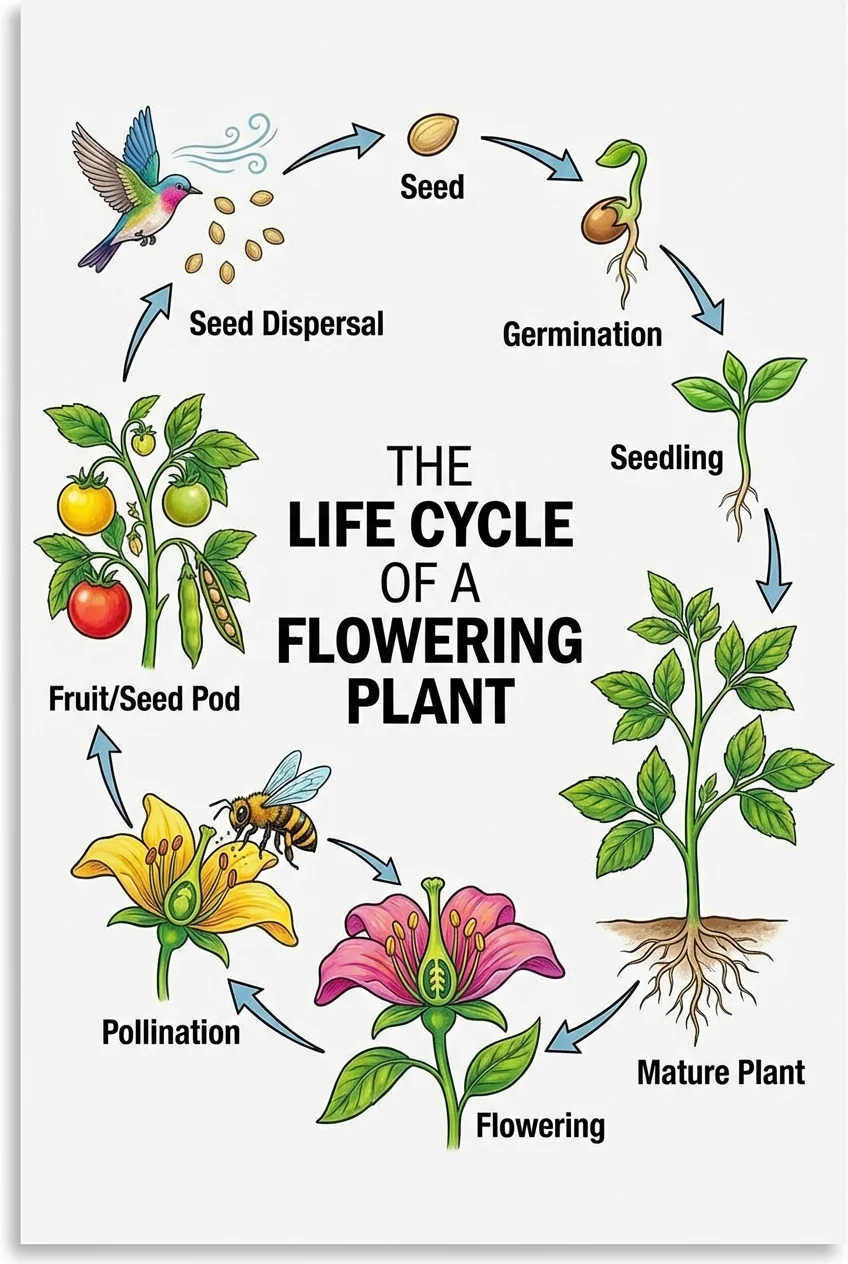
Life Cycle Diagram Generator
Create labeled life cycle diagrams for plants and animals with each stage in order.
 Biology
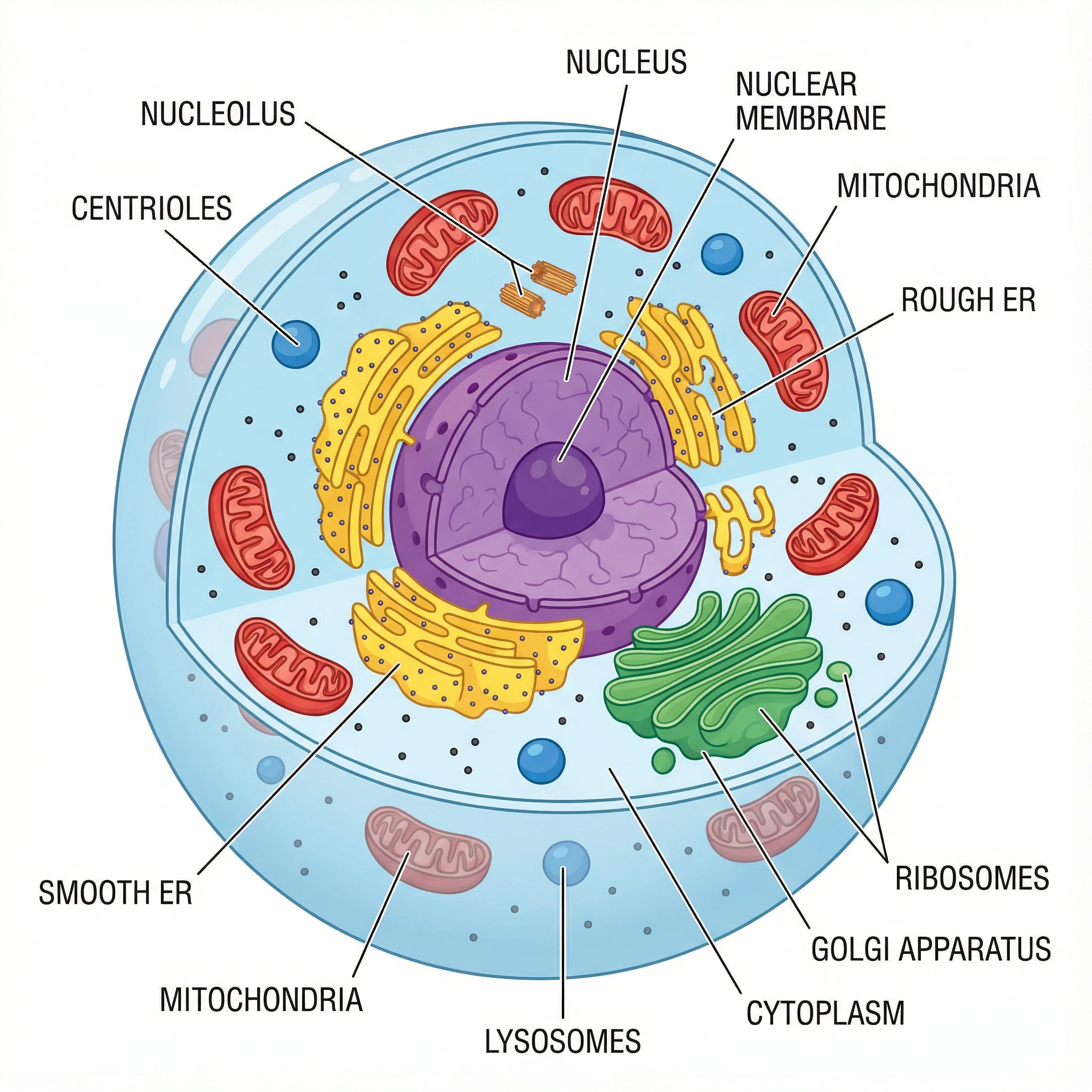
Animal Cell Diagram Generator
Make labeled animal cell diagrams with the nucleus, mitochondria, and other organelles.