Syntax Tree Generator for Constituency & X-Bar Trees
Generate a syntactic tree diagram from any sentence. Get a labeled constituency or X-bar parse tree with S, NP, VP, and traces, then export the image free.
AI Syntax Tree Generator
Free to try ·
Your syntax tree will appear here
Describe a sentence or phrase and choose constituency or X-bar notation
Syntax Tree Examples
Constituency and X-bar trees covering sentences, questions, and movement
Simple Sentence Parse Tree
A basic constituency tree: S at the root splitting into a noun phrase (NP) subject and a verb phrase (VP).
Complex Sentence with a Clause
An embedded clause (CP) hangs inside the main VP, headed by the complementizer "that".
Wh-Question with Movement
A wh-word moves to Spec-CP and the auxiliary raises to C, leaving a trace in the original position.
Passive Voice Tree
The object raises to subject position (NP-movement), leaving a trace, with the agent in a by-phrase.
Relative Clause Tree
A relative clause (CP) modifies the head noun, with the relative pronoun moved to Spec-CP.
X-Bar Noun Phrase
A full X-bar structure: the maximal projection NP, intermediate N-bar levels, the head N, and its complement.
What is a syntax tree?
A syntax tree — also called a syntactic tree, parse tree, or phrase-structure tree — is a diagram that shows how the words in a sentence group together into larger units called constituents. The whole sentence sits at the top as the root node, and it branches downward through phrases until it reaches the individual words at the bottom. Each branch point shows that a set of words behaves as a single grammatical unit. A constituency tree captures the hierarchical structure of a sentence rather than just its left-to-right word order, which is why it is the standard way to represent sentence structure in linguistics. This generator draws that structure for you, with every node labeled.
The parts of a syntax tree: nodes, phrases, and leaves
- S (sentence) or TP/IP: the root node that dominates the entire sentence.
- NP (noun phrase): a noun and the words that go with it, such as "the cat" or "every tall student".
- VP (verb phrase): the verb together with its objects and modifiers, such as "sat on the mat".
- PP (prepositional phrase): a preposition plus its object, such as "on the mat".
- Non-terminal nodes: the labeled phrase and category nodes (S, NP, VP, PP, Det, N, V) that branch.
- Terminal nodes (leaves): the actual words at the bottom of the tree, which have no children.
X-bar theory: specifier, head, and complement
X-bar theory says that every phrase shares the same internal skeleton, no matter what category it is. A phrase XP (the maximal projection) contains a specifier and an intermediate X′ ("X-bar") level; the X′ contains the head X and its complement. In schema form, XP → (Specifier) X′ and X′ → X (Complement). The head X is the word the phrase is built around — the noun in an NP, the verb in a VP. The complement is the head's sister inside X′, the phrase it selects (the object of a verb, for example). The specifier sits higher, as a daughter of XP and sister of X′, and is where subjects and determiners appear. Adjuncts attach by adjoining to X′, creating a recursive X′ that lets a phrase take any number of modifiers.
How to parse a sentence into a tree
- Find the main verb and identify the subject — the subject becomes the NP under S and the verb anchors the VP.
- Group the remaining words into phrases: objects and complements join the verb inside the VP, and prepositions head their own PPs.
- Build each phrase from the bottom up, attaching determiners, adjectives, and modifiers to the noun or verb they belong to.
- Label every node with its category (S, NP, VP, PP, Det, N, V, P) and place each word as a terminal leaf at the bottom.
- Check that every constituent forms a single connected subtree — if words that belong together are split apart, the structure is wrong.
Movement: questions, passives, and relative clauses
Many sentences are easiest to draw by showing movement. In a wh-question such as "What did she read?", the wh-word moves to the specifier of CP (Spec-CP) and the auxiliary moves to C, leaving traces in the positions they came from. In the passive "The book was read", the object raises to the subject position by NP-movement. In a relative clause, the relative pronoun moves to Spec-CP to link the clause to the noun it modifies. Drawing the trace and a movement arrow makes these transformations explicit, which is exactly what generative syntax assignments ask for. This tool can render trees with movement arrows, traces, and the CP/IP layer intact.
Using syntax trees in linguistics coursework
Syntax trees are a core skill in introductory and intermediate linguistics: syntax problem sets, morphology and syntax exams, and generative grammar courses all expect you to diagram sentences accurately. A clean, correctly labeled tree shows that you understand constituency, phrase structure, and the X-bar schema rather than just memorizing definitions. Use this generator to draft a tree quickly, compare it against your hand analysis, produce figures for a paper or slide deck, or check that your bracketing and node labels are consistent before you submit. Because the diagram is generated from your description, you can iterate on structure and notation without redrawing branches by hand.
Frequently Asked Questions
Related Education Tools
 Education
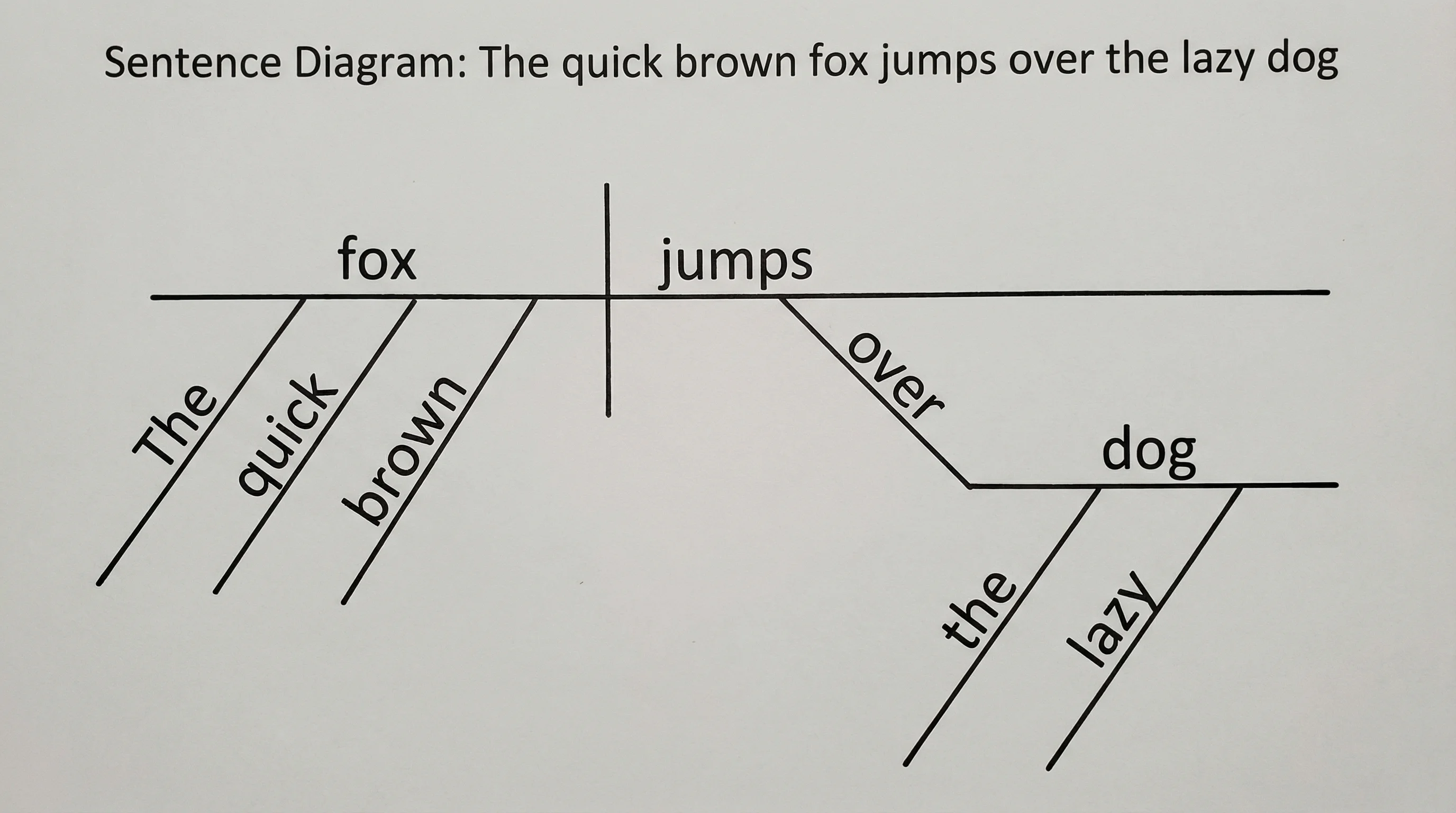
Sentence Diagram Generator
Diagram sentences with subjects, verbs, and modifiers in the classic Reed-Kellogg style.
 Education
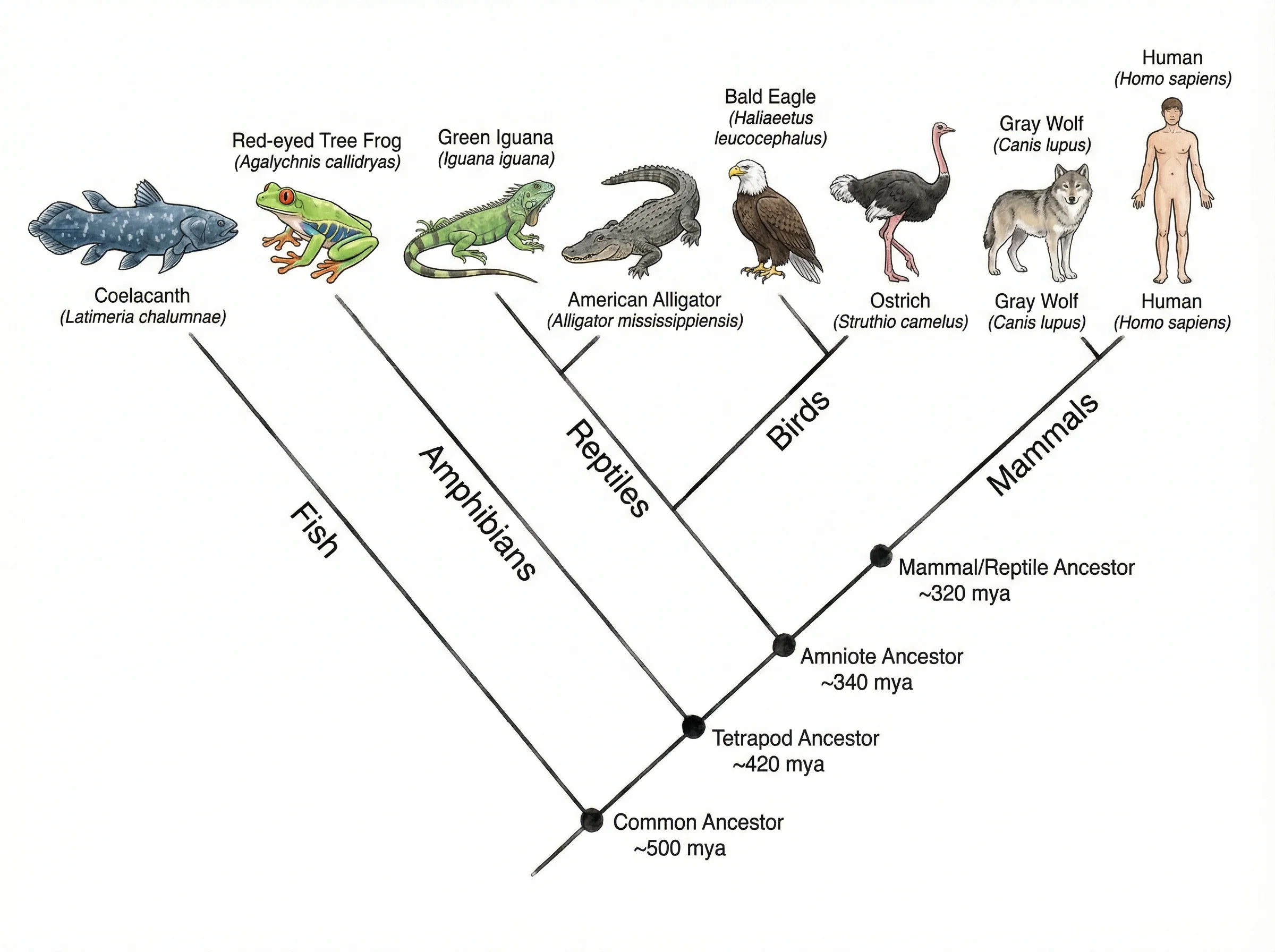
Tree Diagram Generator
Build branching tree diagrams for hierarchies, decisions, and classifications.
 Education
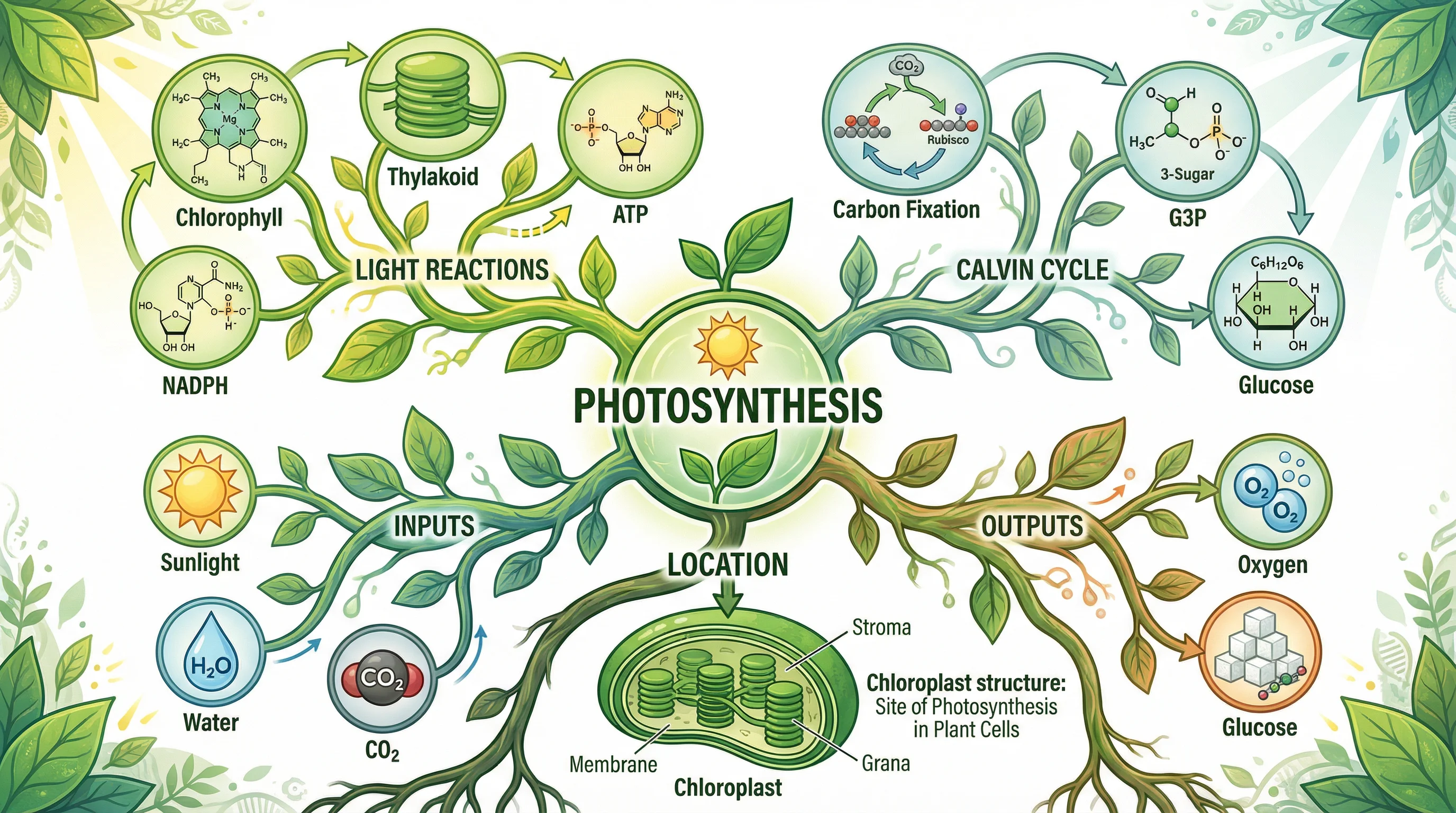
Mind Map Generator
Turn a topic into an organized mind map with branches and sub-branches.