Skeletal System Diagram Generator for Labeled & Blank Diagrams
Create a clearly labeled skeletal system diagram in seconds. Show the full human skeleton with every major bone named, compare the axial and appendicular divisions, explore joint types, or generate a blank diagram for worksheets and quizzes. Free to use.
Skeletal System Diagram Generator
Free to try ·
Your skeletal system diagram will appear here
Describe what you need and click Generate
Skeletal System Diagram Examples
Labeled diagrams of the full skeleton, axial and appendicular divisions, bone types, and joints
Full Skeleton — Labeled
Every major bone named — from skull to phalanges — in a clean anterior-view diagram.
Axial vs Appendicular Skeleton
Axial in blue, appendicular in green — the two major divisions shown side by side on one figure.
Major Bones — Posterior View
The skeleton from behind — scapula, spine, sacrum, and leg bones labeled for study.
Types of Joints
Three joint categories side by side — from immovable skull sutures to freely moving synovial joints.
Simple Skeleton for Kids
A simplified, friendly skeleton diagram with big labels — great for elementary science classes.
Blank Skeleton Worksheet
Numbered blank lines, no labels — print and fill in as a quiz or study activity.
What is the skeletal system?
The skeletal system is the rigid framework of 206 bones that supports the human body. It gives the body its shape, protects vital organs (the skull protects the brain, the rib cage shields the heart and lungs), and works with muscles to produce movement. The skeleton also stores minerals such as calcium and phosphorus, and the soft tissue inside certain bones — bone marrow — produces red blood cells, white blood cells, and platelets. This generator draws the full skeleton with each bone labeled so you can see exactly where every structure sits.
Axial vs appendicular skeleton
- Axial skeleton (80 bones): the central axis of the body — the skull, auditory ossicles (three tiny ear bones), hyoid bone, vertebral column (26 bones: cervical, thoracic, lumbar, sacrum, coccyx), sternum, and 12 pairs of ribs. It protects the brain, spinal cord, and thoracic organs.
- Appendicular skeleton (126 bones): everything attached to the axial skeleton — the pectoral girdle (clavicle and scapula), upper limbs (humerus, radius, ulna, carpals, metacarpals, phalanges), pelvic girdle (ilium, ischium, pubis), and lower limbs (femur, patella, tibia, fibula, tarsals, metatarsals, phalanges). It supports movement and locomotion.
Key bones of the upper body
The skull houses the brain and is made of eight cranial bones (frontal, parietal ×2, temporal ×2, occipital, sphenoid, ethmoid) fused at immovable joints called sutures. The mandible is the only movable skull bone. Below the skull, the clavicle (collarbone) and scapula (shoulder blade) form the pectoral girdle. The sternum and 12 pairs of ribs create the rib cage. The humerus forms the upper arm; the radius and ulna are the two bones of the forearm. The wrist contains eight small carpal bones, followed by the metacarpals of the palm and the phalanges of the fingers.
Key bones of the lower body
The vertebral column runs from the base of the skull to the pelvis: 7 cervical (neck), 12 thoracic (mid-back), 5 lumbar (lower back), the sacrum (5 fused vertebrae), and the coccyx (tailbone). The pelvis is formed by the two hip bones (each made of ilium, ischium, and pubis) fused to the sacrum. The femur (thigh bone) is the longest and strongest bone in the body. The patella (kneecap) protects the knee joint. The tibia and fibula form the lower leg. Seven tarsal bones make up the ankle and heel (the calcaneus is the largest), followed by the metatarsals of the foot and the phalanges of the toes.
Types of bones and joints
- Long bones: longer than they are wide; found in limbs (femur, humerus, tibia). They have a shaft (diaphysis) and two ends (epiphyses) with spongy bone inside.
- Short bones: roughly cube-shaped; found in the wrist (carpals) and ankle (tarsals). They provide stability and some movement.
- Flat bones: thin and plate-like; protect organs and provide muscle attachment (skull, scapula, sternum, ribs).
- Irregular bones: complex shapes that do not fit other categories (vertebrae, hip bones, facial bones).
- Sesamoid bones: embedded in tendons; the patella is the largest example.
- Joints: fibrous joints (sutures of the skull — immovable), cartilaginous joints (intervertebral discs — slightly movable), and synovial joints (knee, hip, shoulder — freely movable with a fluid-filled joint capsule).
Labeled vs blank diagrams for worksheets and quizzes
A fully labeled skeleton diagram is ideal for lectures, study notes, and handouts, while a blank, unlabeled version with numbered arrows is what you need for student worksheets and quizzes. Ask for "a labeled human skeleton diagram" to get every bone named, or "a blank skeleton diagram with numbered blank lines" to get a printable quiz sheet. Black-and-white line art works best for printing. You can also ask for simplified versions for younger students, or detailed regional close-ups (skull, hand, foot, vertebral column) for deeper study.
How to generate a labeled skeletal system diagram
- Describe what you need in plain English — the full skeleton, the axial or appendicular division, a specific region such as the hand or spine, bone types, or joint types.
- Specify the view and labeling style you want, for example "anterior full-body view with every major bone labeled" or "posterior view with the spine highlighted."
- Choose labeled for teaching or unlabeled (blank) for a worksheet or quiz, then generate the diagram.
- Review the result, refine your description if needed, and download the image to use in a slide deck, worksheet, or study guide.
Frequently Asked Questions
Related Biology Tools
 Biology
Human Body Systems Diagram Generator
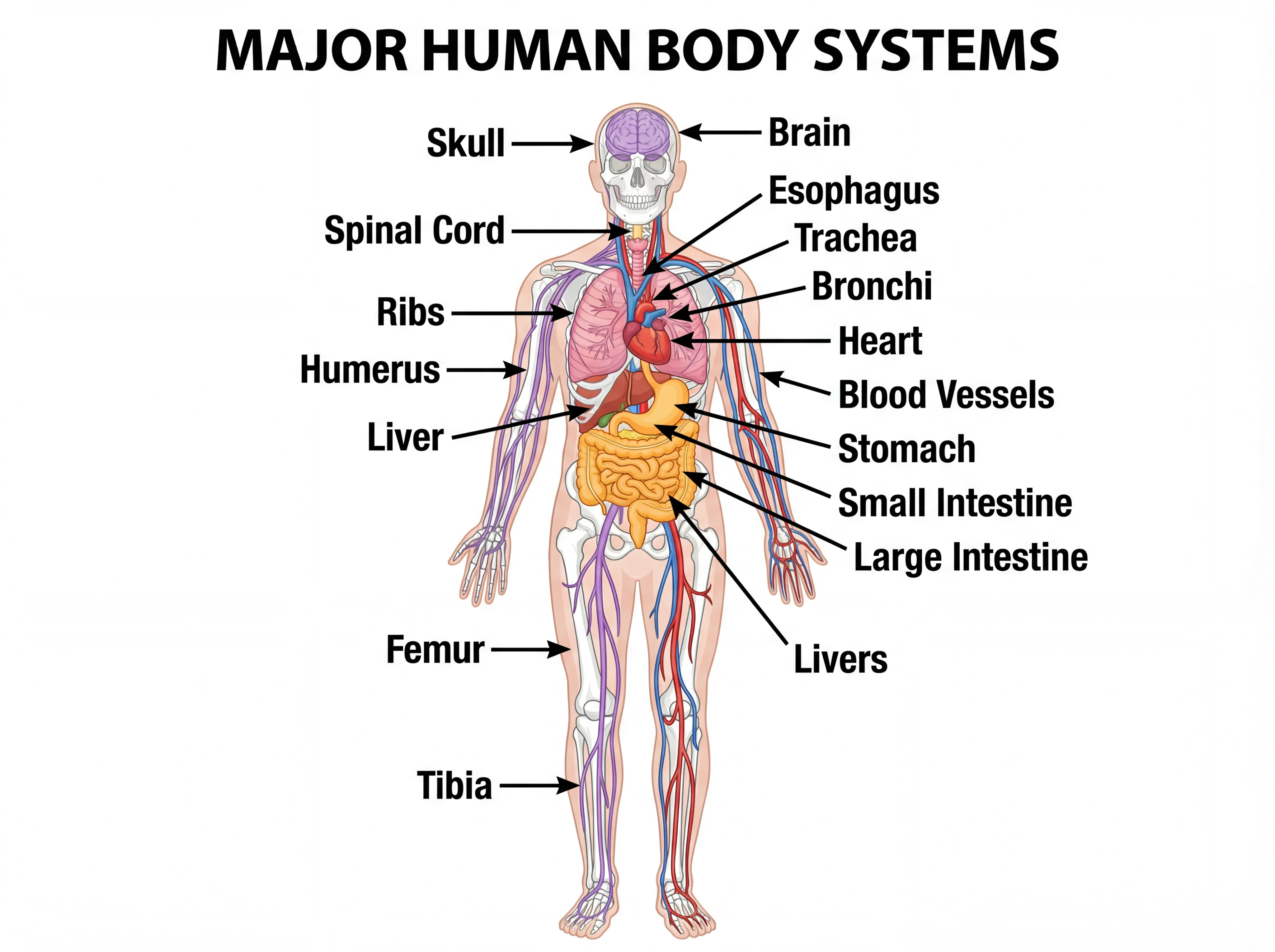
Draw labeled diagrams of all the body's organ systems — skeletal, muscular, nervous, circulatory, and more.
 Biology
Nervous System Diagram Generator
Create labeled nervous system diagrams showing the brain, spinal cord, and major nerves.
 Biology
Anatomical Drawing Generator
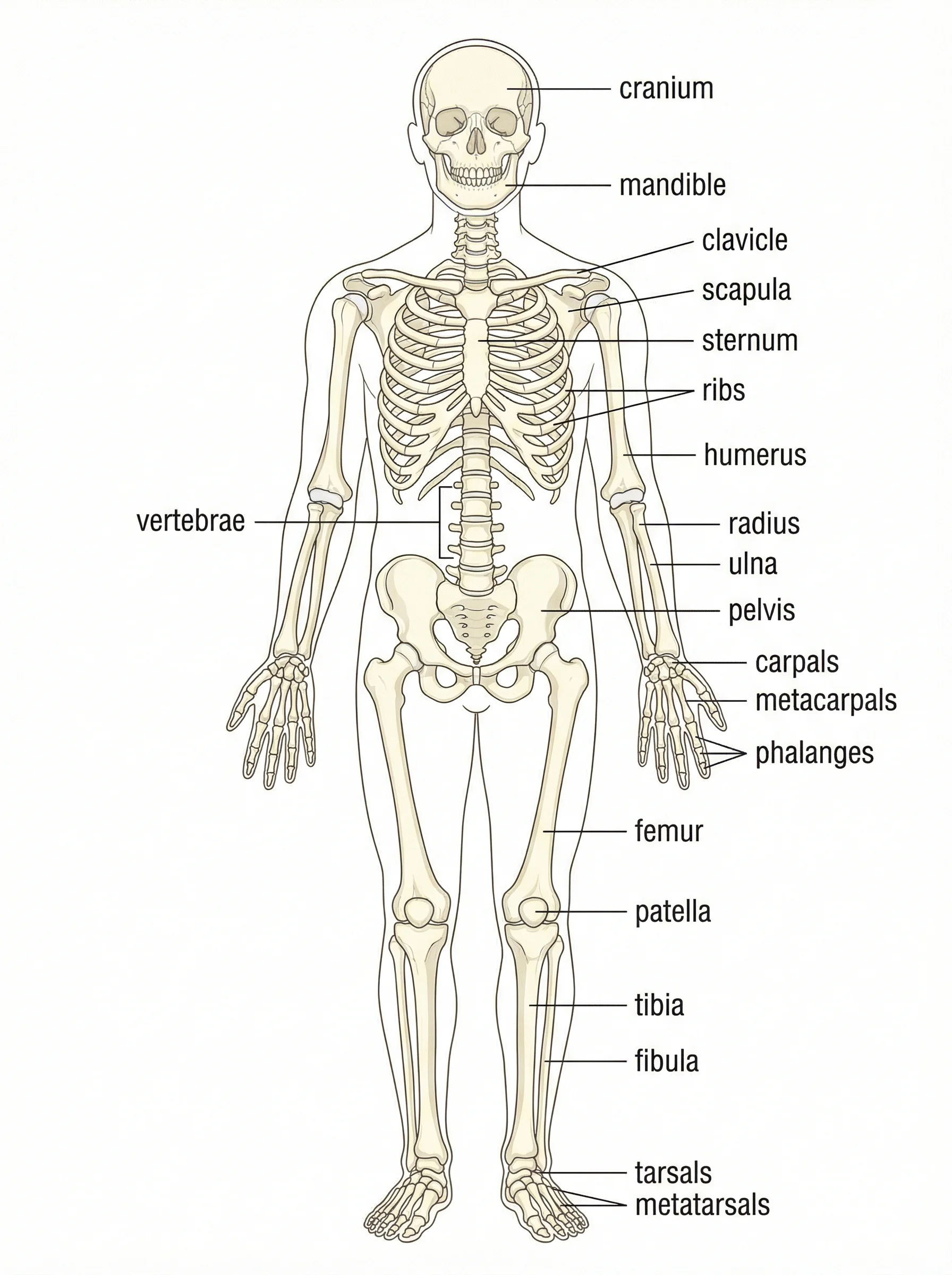
Generate clean, labeled anatomical drawings of the body's systems and structures.