Human Body Systems Diagram Generator for Labeled & Blank Anatomy
Generate a human body systems diagram from a short description. Make labeled charts for teaching or a blank diagram of the human body for worksheets and quizzes — single-system or all 11 organ systems, free.
Human Body Systems Diagram Generator
Free to try ·
Your anatomy diagram will appear here
Describe what you need and click Generate
Human Body Systems Diagram Examples
Labeled and blank diagrams for single systems and the full-body overview
All Systems Overview (Labeled)
One figure, every major system color-coded and labeled — the all-systems overview for an introductory lesson.
Digestive System (Labeled)
A single-system diagram with every organ of the GI tract labeled, from mouth to rectum.
Circulatory System (Blank Quiz)
A blank, numbered version of the same diagram — print it as a fill-in quiz and label the answer key from the version above.
Respiratory System (Worksheet)
A worksheet-ready respiratory diagram mixing labeled structures with blank lines for student completion.
What are the human body systems?
The human body is organized into 11 major organ systems that work together to keep you alive. Each system is a group of organs that share a job — moving blood, digesting food, sensing the world, or holding the body upright. A human body systems diagram shows those organs in place on a single figure so students can see where each one sits and how the systems overlap. This generator turns a short description into exactly that kind of diagram, in either a labeled or a blank version.
The 11 organ systems and what each does
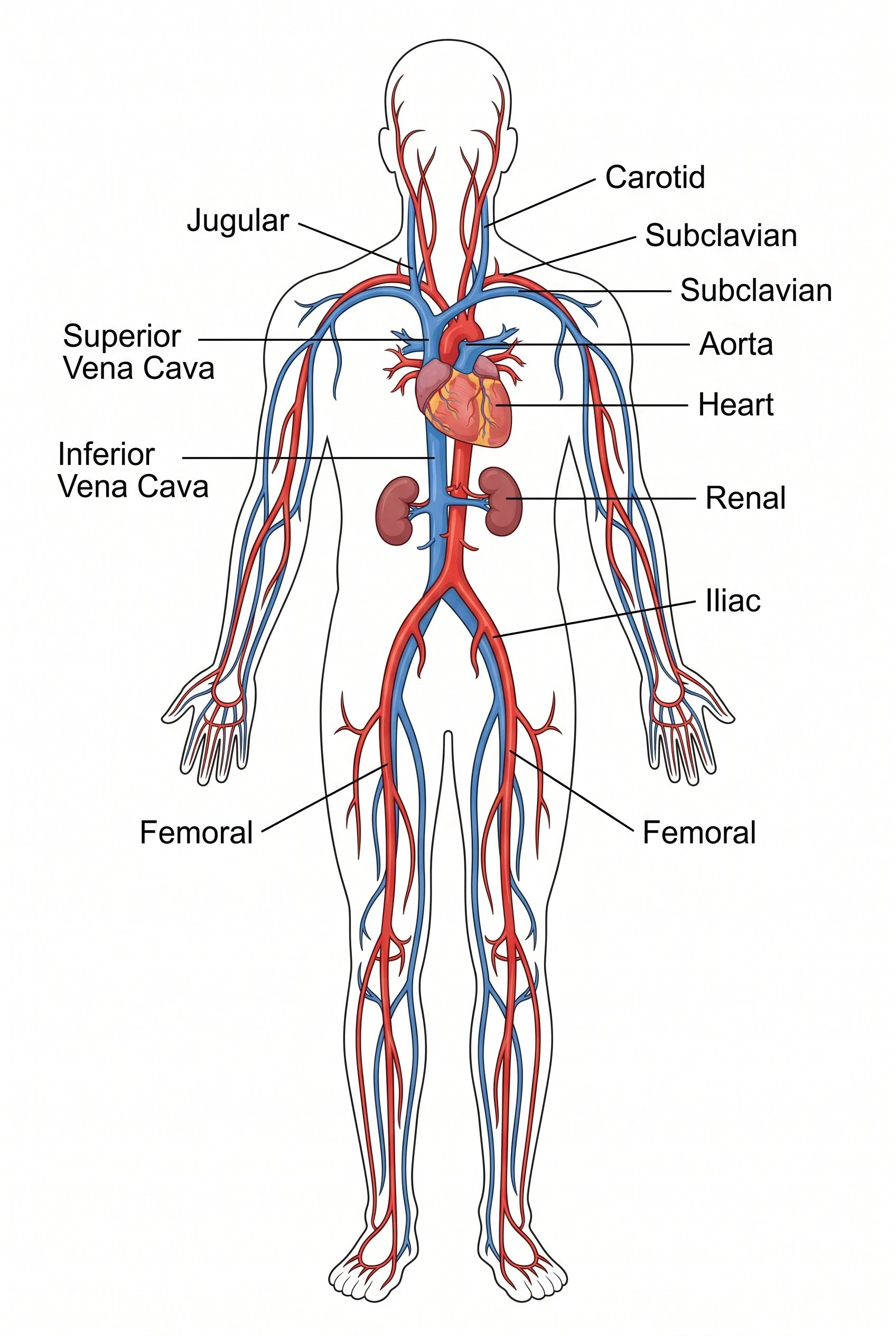
- Circulatory: the heart, arteries, and veins pump blood to carry oxygen, nutrients, and waste.
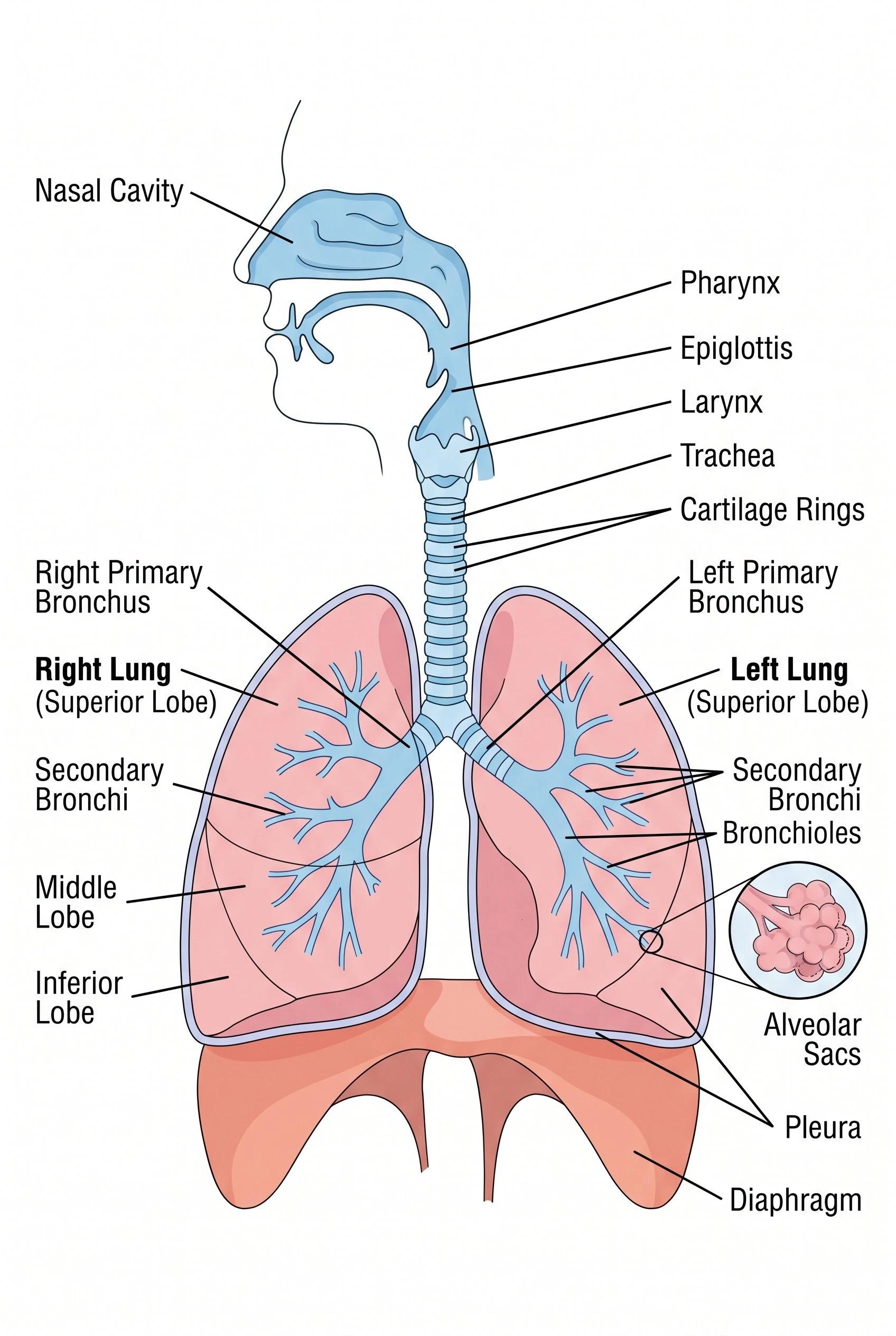
- Respiratory: the lungs, trachea, and diaphragm take in oxygen and release carbon dioxide.
- Digestive: the mouth, stomach, intestines, liver, and pancreas break food down into nutrients.
- Nervous: the brain, spinal cord, and nerves sense, decide, and control the rest of the body.
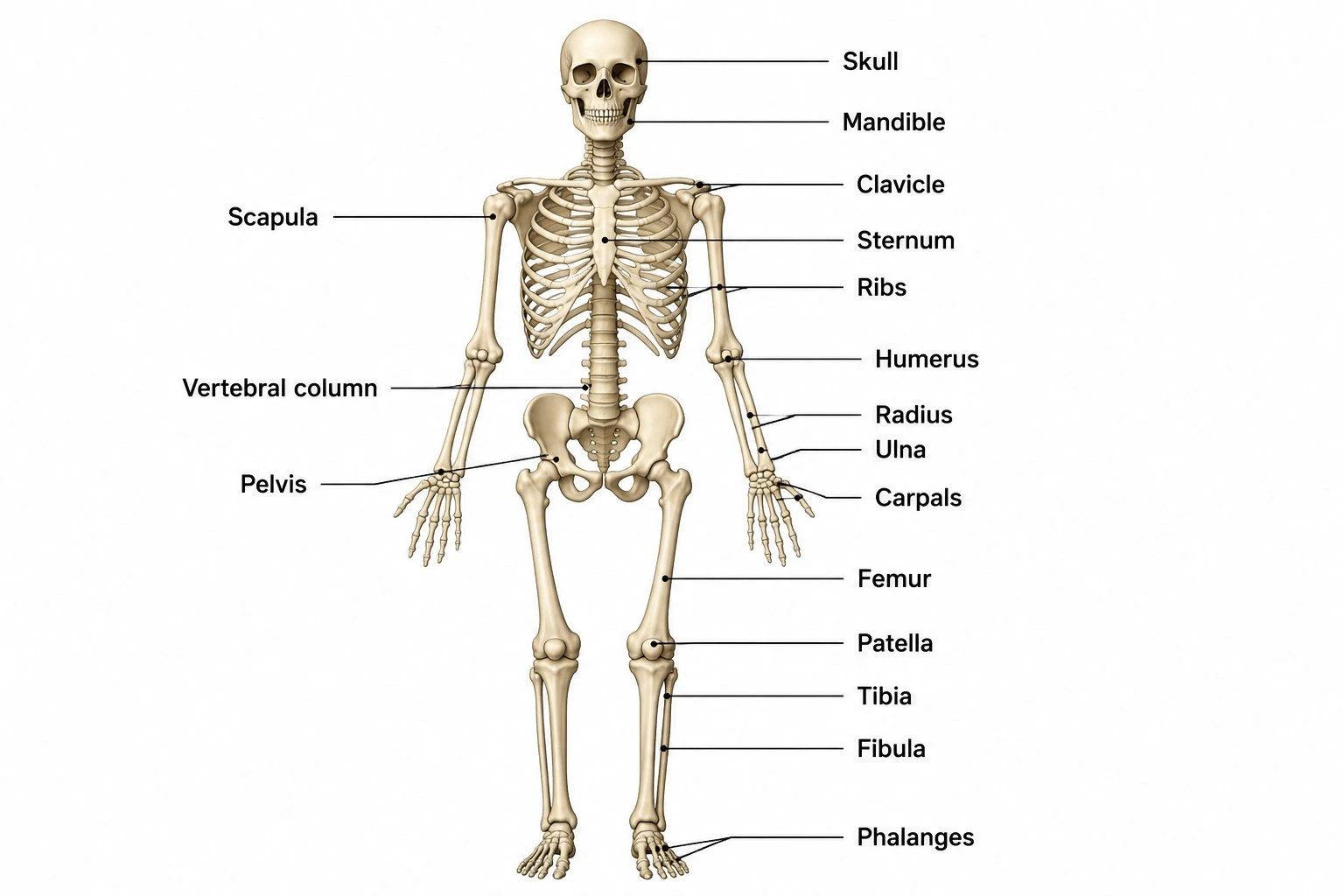
- Skeletal: 206 bones give the body structure, protect organs, and make blood cells.
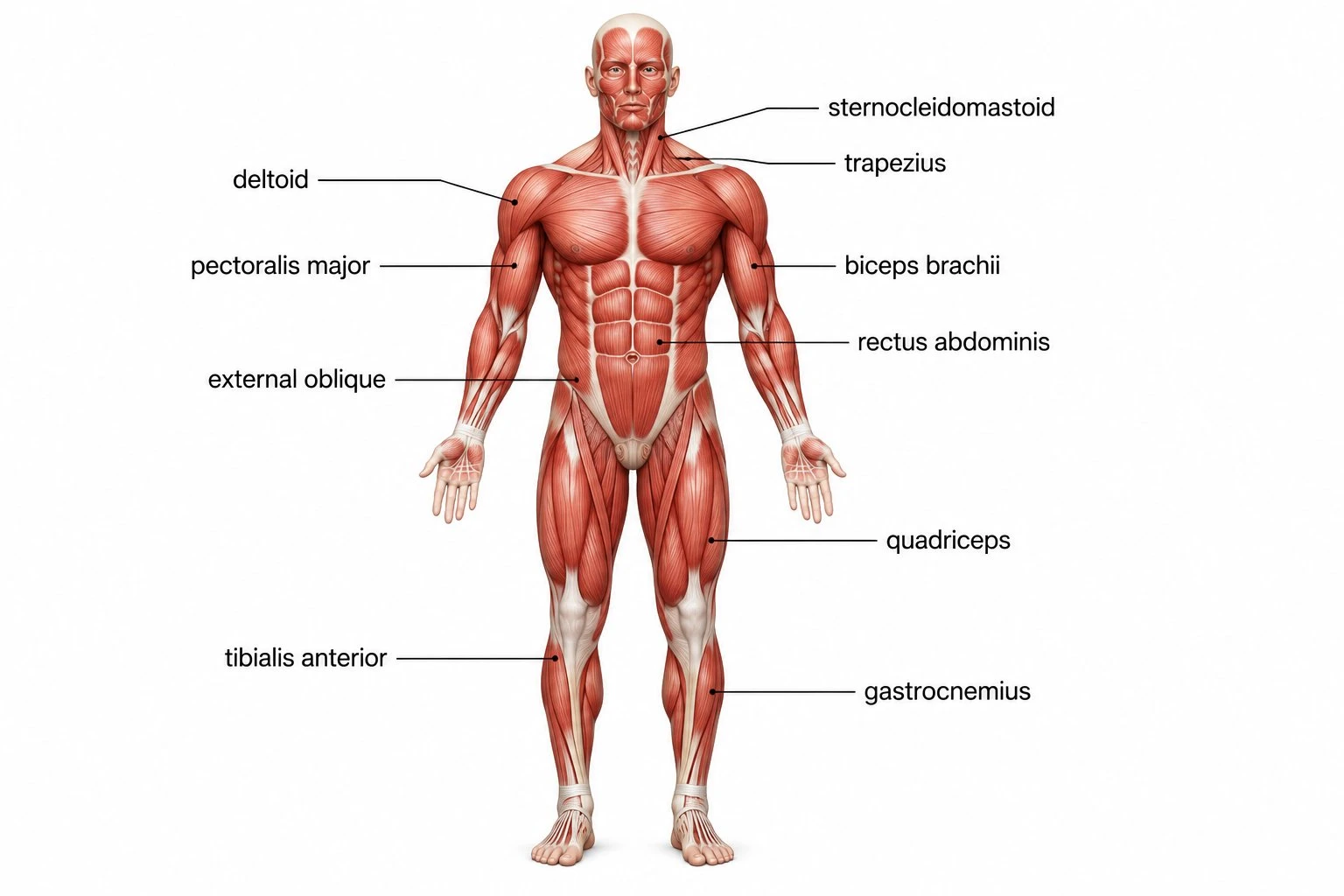
- Muscular: skeletal, smooth, and cardiac muscle produce movement and generate heat.
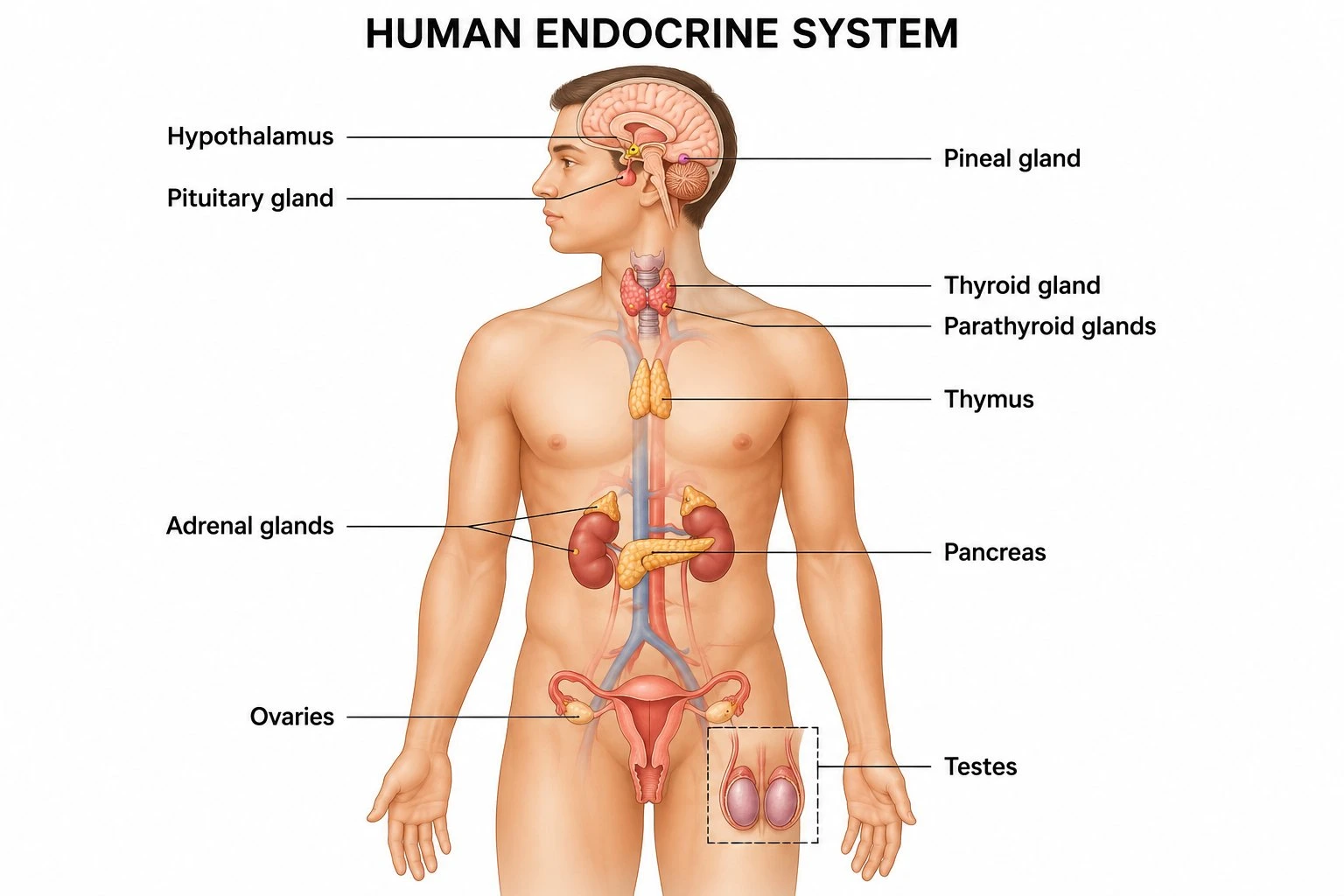
- Endocrine: glands such as the thyroid and pancreas release hormones that regulate the body.
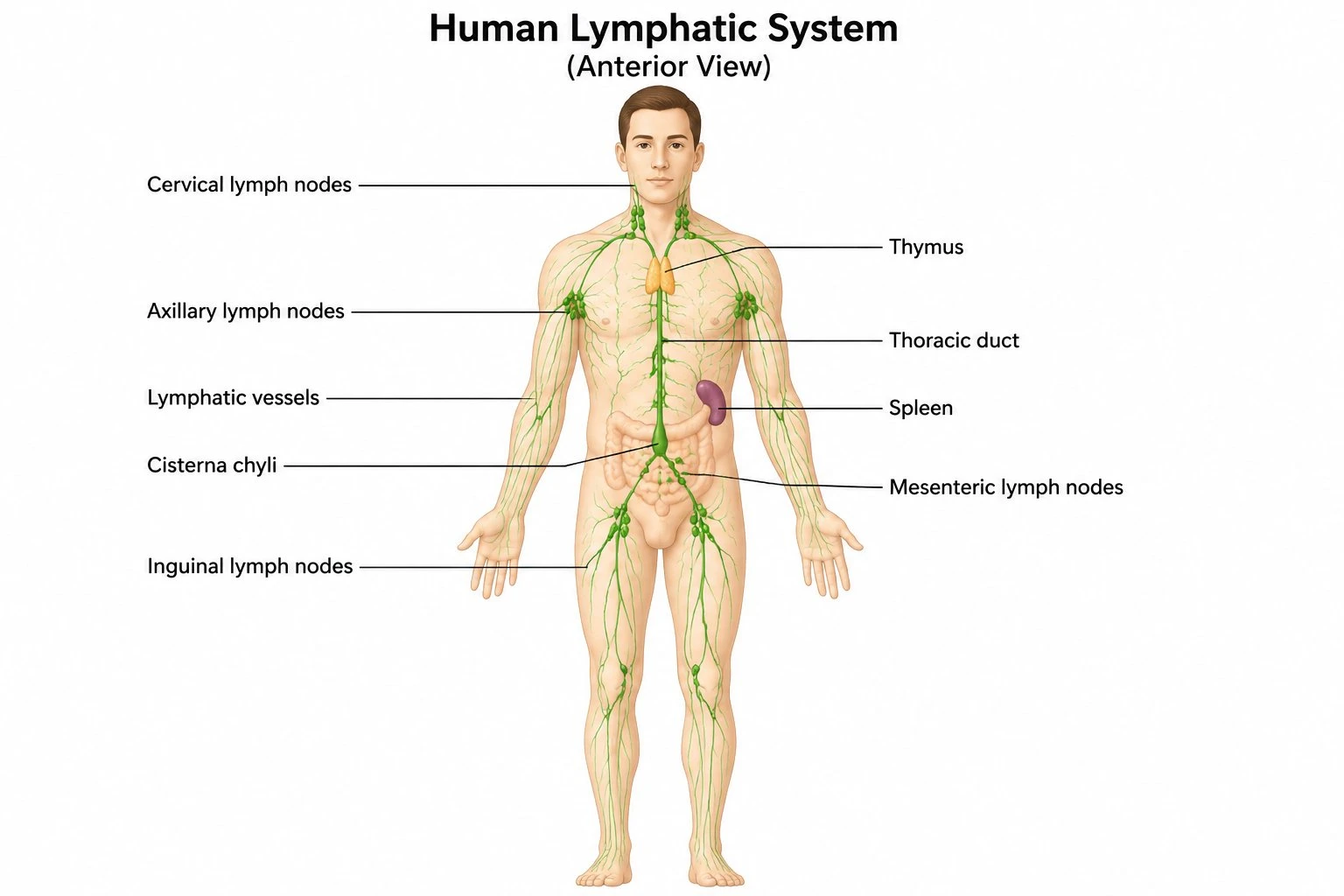
- Immune / lymphatic: lymph nodes, the spleen, and white blood cells defend against disease.
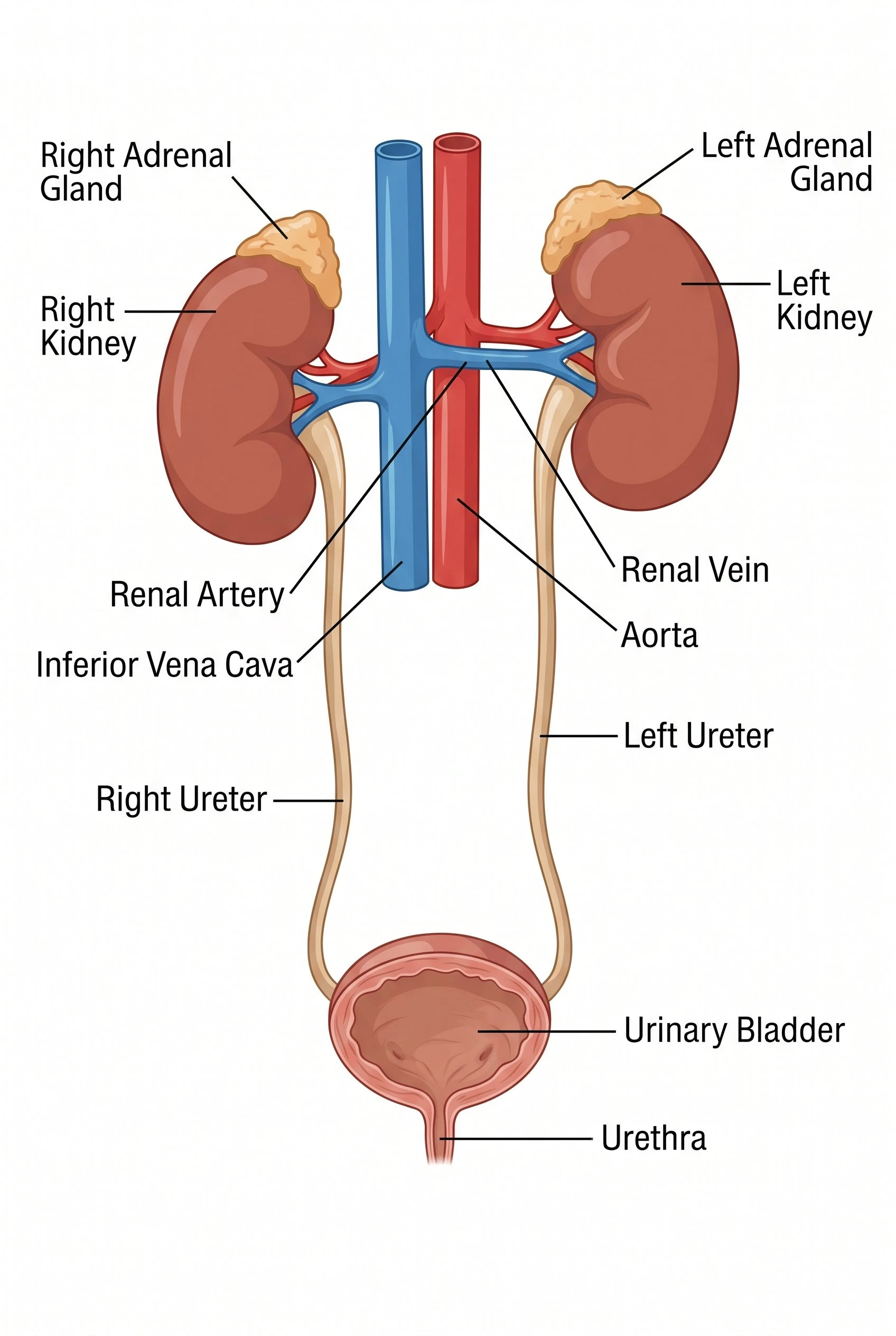
- Urinary: the kidneys and bladder filter the blood and remove liquid waste.
- Reproductive: the organs that produce offspring and the hormones that drive development.
- Integumentary: the skin, hair, and nails protect the body and help control temperature.
Labeled vs. blank diagrams
Use a labeled diagram when you are teaching or demonstrating — every organ is named so students can follow along. Use a blank diagram of the human body when you want students to do the work themselves: the same figure with numbered lines or empty boxes instead of names. Generating both from one description gives you a matched pair — the labeled version becomes the answer key and the blank version becomes the quiz or homework sheet. Ask for "unlabeled" or "blank with numbered lines" in your prompt to get the worksheet form.
Single-system vs. all-systems diagrams
For an introduction, an all-systems overview puts the digestive, circulatory, respiratory, nervous, skeletal, and muscular systems on one figure, usually color-coded with a legend, so students see the body as a whole. When you focus on one unit, a single-system diagram — just the respiratory system, or just the skeleton — gives room to label every structure in detail, down to alveoli or individual bones. State which system you want, or ask for an "overview of all body systems," and the diagram is built to match.
How to generate a diagram from a description
- Describe what you need in plain English: name the system (or "all systems"), the grade level, and whether you want it labeled or blank.
- List the specific structures that must appear so the diagram includes them — for example "stomach, liver, pancreas, small and large intestine."
- Pick the orientation and quality, then generate. The body diagram is drawn as a tall portrait image that fits a worksheet.
- Download it and drop it into a slide, a printable worksheet, or a quiz. Generate a labeled and a blank version of the same prompt to get a matched answer key and student copy.
Using body system diagrams in class
A clear body diagram for biology supports a lot of classroom work: blank diagrams become labeling quizzes and exit tickets, labeled diagrams anchor a lecture or a study guide, and an all-systems chart sets up a "how the systems work together" discussion — the lungs oxygenate blood, the heart pumps it, the digestive system supplies nutrients. Because the images are AI-generated, always review each diagram for anatomical accuracy before you hand it to students; treat it as a fast first draft you can regenerate or correct, not a verified medical reference.
Frequently Asked Questions
Related Biology Tools
 Biology
Respiratory System Diagram Generator
Generate labeled respiratory system diagrams — trachea, bronchi, lungs, alveoli, and the diaphragm.
 Biology
Skeletal System Diagram Generator
Generate labeled skeletal system diagrams — the skull, spine, rib cage, pelvis, and limb bones.
 Biology
Urinary System Diagram Generator
Generate labeled urinary system diagrams — kidneys, ureters, bladder, and urethra.
 Biology
Circulatory System Diagram Generator
Generate labeled circulatory system diagrams — heart, arteries, veins, and blood flow.
 Biology
Muscular System Diagram Generator
Generate labeled muscular system diagrams — major muscles, anterior and posterior views.
 Biology
Lymphatic System Diagram Generator
Generate labeled lymphatic system diagrams — lymph nodes, vessels, spleen, and thymus.
 Biology
Endocrine System Diagram Generator
Generate labeled endocrine system diagrams — pituitary, thyroid, adrenal glands, pancreas, and the hormones they secrete.