Number Bond Generator Part-Part-Whole
Make printable number bonds — the part-part-whole circle diagram for early math. Build 2- or 3-part bonds, blank missing values, and export SVG & PNG.
Number of parts
Parts (leave blank for ?)
Layout
Number Bond Examples
Common ways to build a part-part-whole diagram
Labeled Number Bond
A clean part-part-whole bond: whole 10 split into the parts 6 and 4.
Number Bond to 10
A number bond to 10, the classic model for the pairs that make ten.
Three-Part Number Bond
A 3-part bond: the whole 12 split into three parts, 5, 4 and 3.
Missing Part Number Bond
A worksheet-style bond with one part left blank for students to solve.
Blank Number Bond
An empty part-part-whole template for filling in any bond by hand.
Number Bond Example
A bright example bond, handy as a classroom poster or worked example.
What is a number bond?
A number bond is a simple picture that shows how a number can be broken into parts. A larger circle holds the "whole" and is joined by short lines to two or three smaller circles that hold the "parts", so a single glance tells you both the total and the pieces it is made of. For example, the whole 10 connected to the parts 6 and 4 says 6 and 4 make 10, and also that 10 take away 6 leaves 4. Because the model links a whole to its parts in one image, it builds the flexible sense of number that later addition, subtraction, and mental-math strategies all depend on. This generator draws the circles and connecting lines exactly, so every bond prints cleanly for worksheets, flashcards, or the board.
The part-part-whole relationship
- Every number bond captures the same idea: two or more parts combine to make a whole, and the whole can always be split back into those parts. Seeing both directions in one diagram is what makes the model so powerful — it shows addition and subtraction as two views of a single relationship rather than as separate, unrelated skills.
- From one bond a child can read a whole fact family. The bond of 10, 6, and 4 gives 6 + 4 = 10, 4 + 6 = 10, 10 − 6 = 4, and 10 − 4 = 6, four facts from one picture.
- That flexibility is exactly what mental arithmetic needs. A learner who knows the parts of a number can regroup and rebuild it on the fly, which is the foundation for strategies like making ten and bridging through ten.
Number bonds to 10
- The bonds that make ten — 1 and 9, 2 and 8, 3 and 7, 4 and 6, 5 and 5 — are the first ones most children commit to memory, because ten is the anchor of our whole number system. Drawing each pair as its own bond makes the set of "friends of ten" concrete and memorable.
- Fluency with the number bonds to 10 unlocks the make-ten strategy: to add 8 + 5, a learner splits the 5 into 2 and 3, uses 8 + 2 to reach ten, then adds the remaining 3 to get 13. The bond diagram is where that splitting is first practised.
- Once ten is secure, the same idea scales up to bonds of 20, 100, and beyond, so the early work with tens pays off across the rest of primary math.
Three-part number bonds
- Switch to a 3-part bond and the whole is joined to three part circles instead of two — for instance 12 split into 5, 4, and 3. This shows that a number can be composed in more than one step and from more than two pieces.
- Three-part bonds are useful for adding a string of numbers, for decomposing a teen number into tens and two smaller parts, and for early work on grouping and the associative property of addition.
- They also make richer problems: give the whole and two of the parts and leave the third blank, and a student has to combine and subtract in the same step to find the missing piece.
Blank and missing-value bonds for practice
- Leave any circle empty and the tool draws it as a question mark, turning a finished bond into a practice problem. Give the whole and one part and ask for the other, or give the parts and ask for the whole — each version rehearses a different link in the part-part-whole relationship.
- Turn on "Auto-solve the missing value" and the generator fills the single blank for you, so you can print an answer key alongside a worksheet, or check a bond at a glance while teaching.
- Everything renders in your browser and exports as a crisp SVG or a high-resolution PNG, so bonds print sharply on any paper size and drop cleanly into worksheets, flashcards, and slides.
Frequently Asked Questions
Related Math Tools
 Education
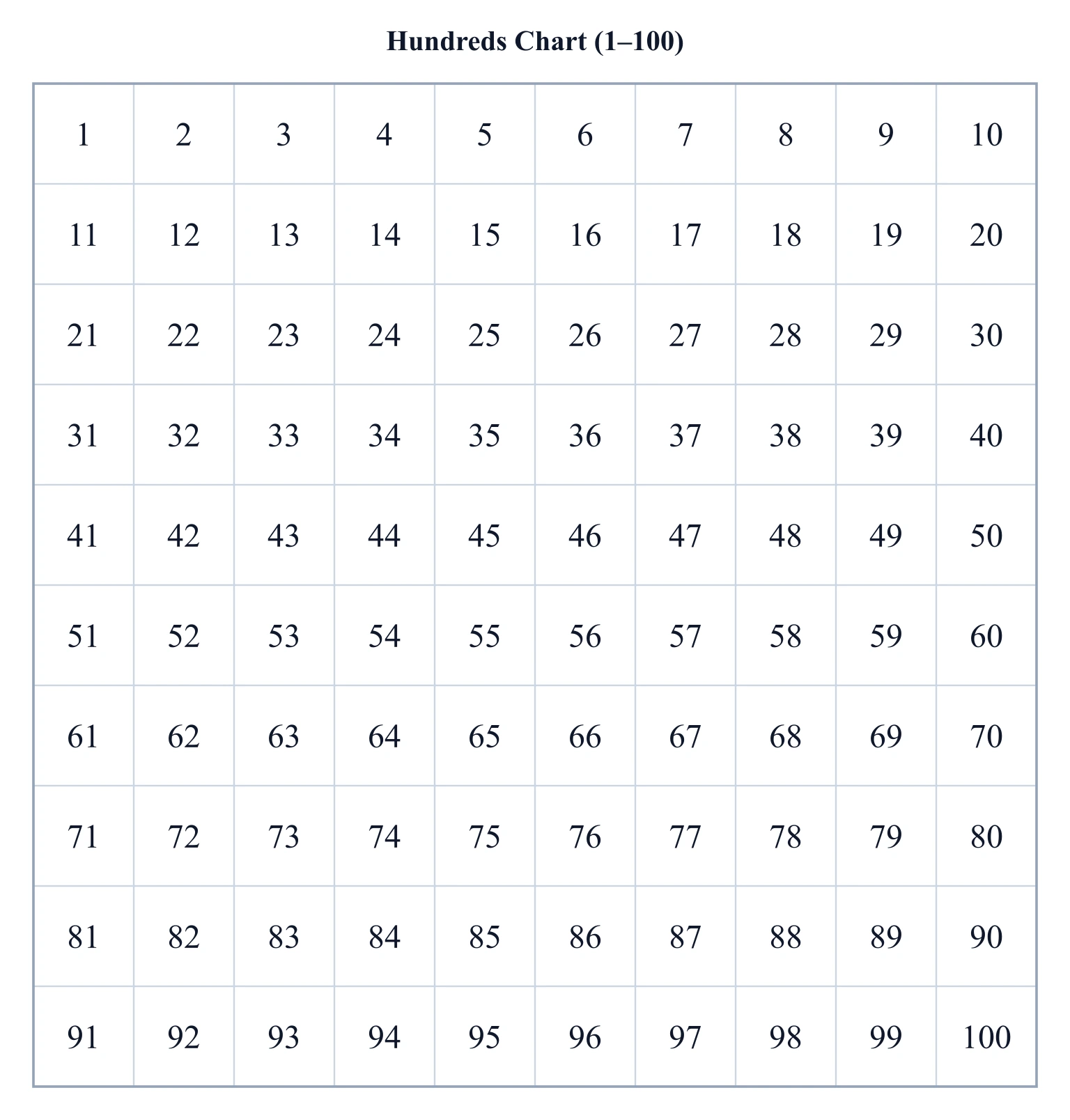
Hundreds Chart Generator
Make a printable 10×10 hundreds chart: skip count, highlight multiples or primes, or print a blank practice grid.
 Education
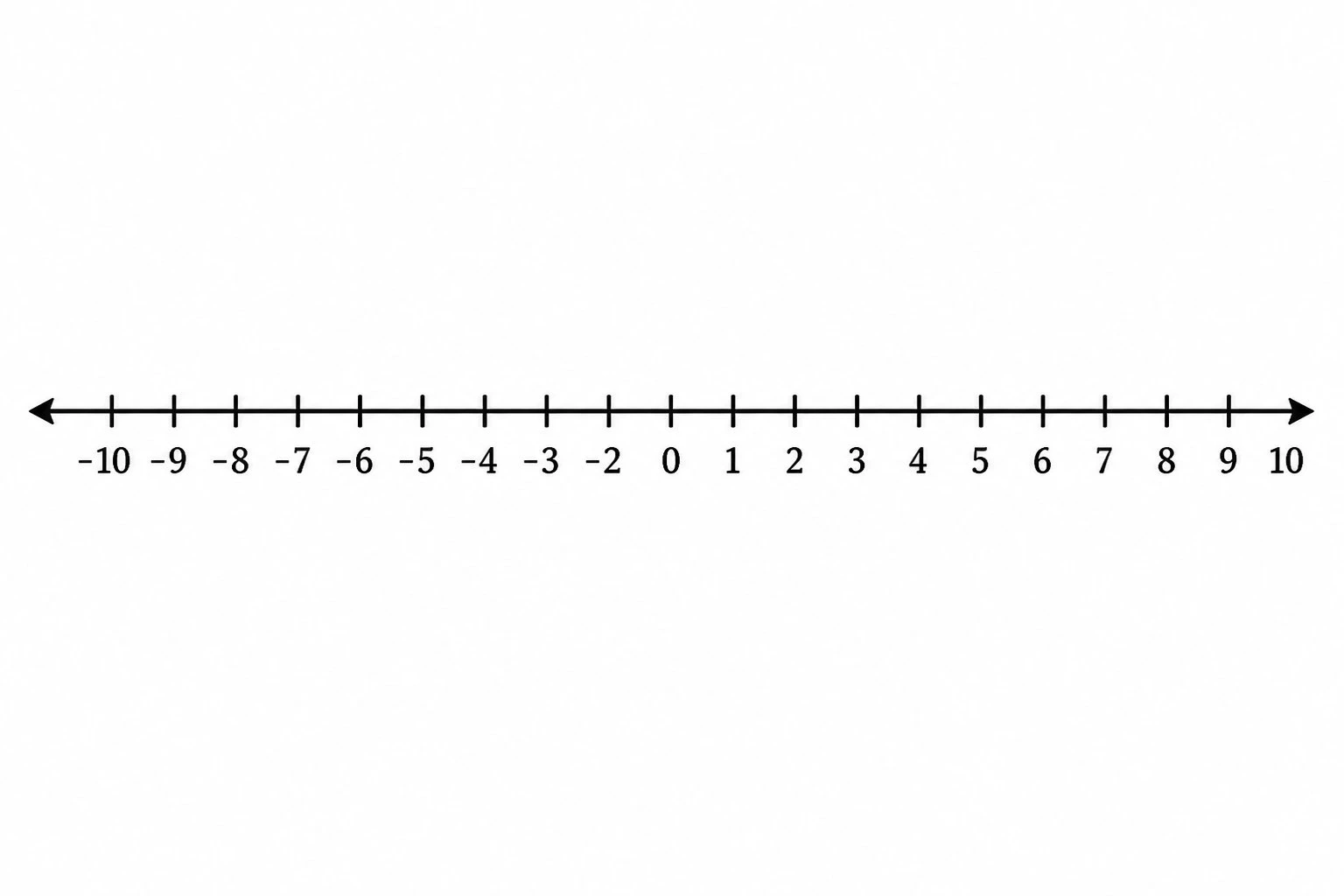
Number Line Generator
Create precise number lines: plot points, graph inequalities and intervals, and mark fractions or decimals.
 Education
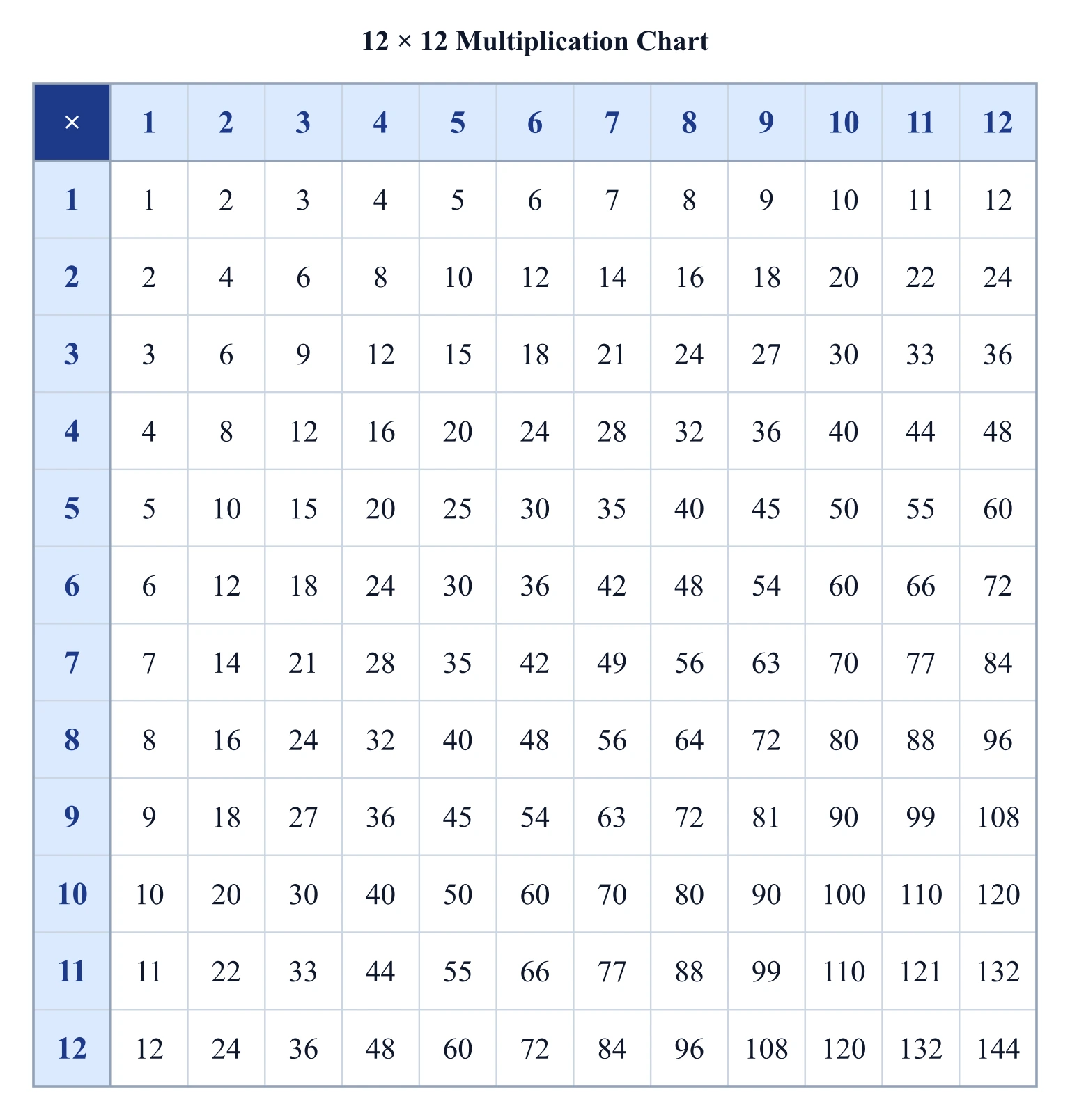
Multiplication Chart Generator
Create a printable multiplication chart: pick the grid size, highlight any times table, and export a clean SVG or PNG.