Magnetic Field Diagram Generator for Magnets & Currents
Generate labeled magnetic field diagrams for a bar magnet, attracting unlike poles, repelling like poles, a current-carrying wire, or a solenoid. Download a clean, textbook-style diagram for homework, worksheets, and physics class — free.
AI Magnetic Field Diagram
Free to try ·
Your magnetic field diagram will appear here
AI-generated — review field line directions and pole labels for accuracy before using in class
Magnetic Field Diagram Examples
Standard magnetism configurations for physics homework and class
Bar Magnet Field Lines
Field lines emerge from the north pole, curve around outside the magnet, and re-enter at the south pole. Inside the magnet, lines run from S to N to form closed loops.
Attracting Unlike Poles
Unlike poles attract: field lines run continuously from north on one magnet directly into south on the other, creating a strong concentrated field between them.
Repelling Like Poles
Like poles repel: field lines from each north pole curve away from each other. A neutral point forms between the magnets where the two fields cancel to zero.
Current-Carrying Straight Wire
A current-carrying wire creates concentric circular field lines. The right-hand rule: wrap the right hand around the wire with the thumb pointing in the current direction — fingers show field direction.
Solenoid / Electromagnet
A solenoid concentrates field lines into a uniform field inside the coil. Outside the solenoid, the field pattern looks identical to a bar magnet with a north and south pole at each end.
Blank Magnetic Field Worksheet
A blank template for worksheets and quizzes — students draw the field lines themselves and label poles, neutral points, and field directions.
What is a magnetic field diagram?
A magnetic field diagram uses field lines to show the direction and relative strength of the magnetic field in a region of space. Field lines are imaginary curves that run from the north pole to the south pole outside a magnet and from south to north inside it, forming closed loops. The direction of a field line at any point shows the direction a free north pole would move if placed there. The spacing of the lines indicates field strength: lines packed closely together mean a strong field, widely spaced lines mean a weak field. Magnetic field diagrams are a fundamental tool in magnetism and electromagnetism, appearing throughout GCSE, A-level, and introductory college physics.
Rules for drawing magnetic field lines
- Direction: field lines outside a magnet always run from north pole to south pole. Inside the magnet they run from south to north, so each line forms a complete closed loop.
- Density: the closer the lines are packed together, the stronger the magnetic field at that location. Field lines bunch near the poles where the field is strongest.
- No crossing: magnetic field lines never cross each other. At any point in space there is only one net field direction, so two lines intersecting would be physically impossible.
- Closed loops: unlike electric field lines, magnetic field lines always form closed loops. They have no starting or ending point — they circulate continuously.
- Neutral points: where field lines from two sources cancel, a neutral point appears — a location where the net field is exactly zero. No field lines pass through a neutral point.
The five standard magnetic field configurations
- Single bar magnet: curved field lines emerge from the north pole, arch around the outside of the magnet, and re-enter the south pole. Inside the magnet, the lines continue from S to N to close the loop.
- Unlike poles facing (attraction): field lines from the north pole of one magnet run directly across into the south pole of the other. The combined field between the magnets is strong and well-ordered.
- Like poles facing (repulsion): lines from each pole curve sideways and away from each other. A neutral point forms midway between the two poles where the fields cancel. No field lines cross the space directly between the poles.
- Straight current-carrying wire: the magnetic field forms concentric circles around the wire. The right-hand rule gives the direction: point the right thumb along the current; the fingers curl in the direction of the field.
- Solenoid / electromagnet: inside the coil, field lines run parallel and evenly spaced, giving a uniform field. Outside, the pattern matches a bar magnet with a north end and a south end.
Magnetic field strength and field line density
The magnitude of the magnetic field B is measured in tesla (T). For a long straight wire carrying current I, the field at distance r is B = μ₀I / (2πr), where μ₀ is the permeability of free space (4π × 10⁻⁷ T·m/A). As r increases, B decreases and the concentric field lines spread apart — matching what the diagram shows. For a solenoid with n turns per meter carrying current I, the interior field is B = μ₀nI, which is uniform and independent of position. On a diagram, the evenly spaced parallel lines inside a solenoid represent this constant strength. Near the poles of a bar magnet, lines converge sharply, indicating the strongest field.
The right-hand rule for current and field direction
The right-hand rule links current direction to magnetic field direction for a straight wire and a solenoid. For a straight wire: grip the wire with the right hand so the thumb points in the direction conventional current flows; the fingers curl in the direction the magnetic field circles around the wire. For a solenoid: curl the right-hand fingers in the direction current flows through the coils; the thumb points toward the north pole of the electromagnet. On field line diagrams, a dot inside a circle (⊙) represents current coming toward you and a cross inside a circle (⊗) represents current going away from you — these symbols are standard shorthand in textbook diagrams.
How to use this magnetic field diagram generator
- Describe the magnetic configuration you need — for example, "a bar magnet with labeled poles and field lines" or "two north poles facing each other showing the neutral point."
- Specify the level of detail: a simple labeled diagram for a revision note, a fully annotated version with field strength indicators, or a blank template for student practice.
- Generate the diagram, then download the image and embed it in your worksheet, slide deck, homework solution, or lab report.
- For a current-carrying wire diagram, mention whether the current should be shown coming toward the viewer (dot) or away (cross), and whether to label the right-hand rule steps.
Frequently Asked Questions
Related Physics Tools
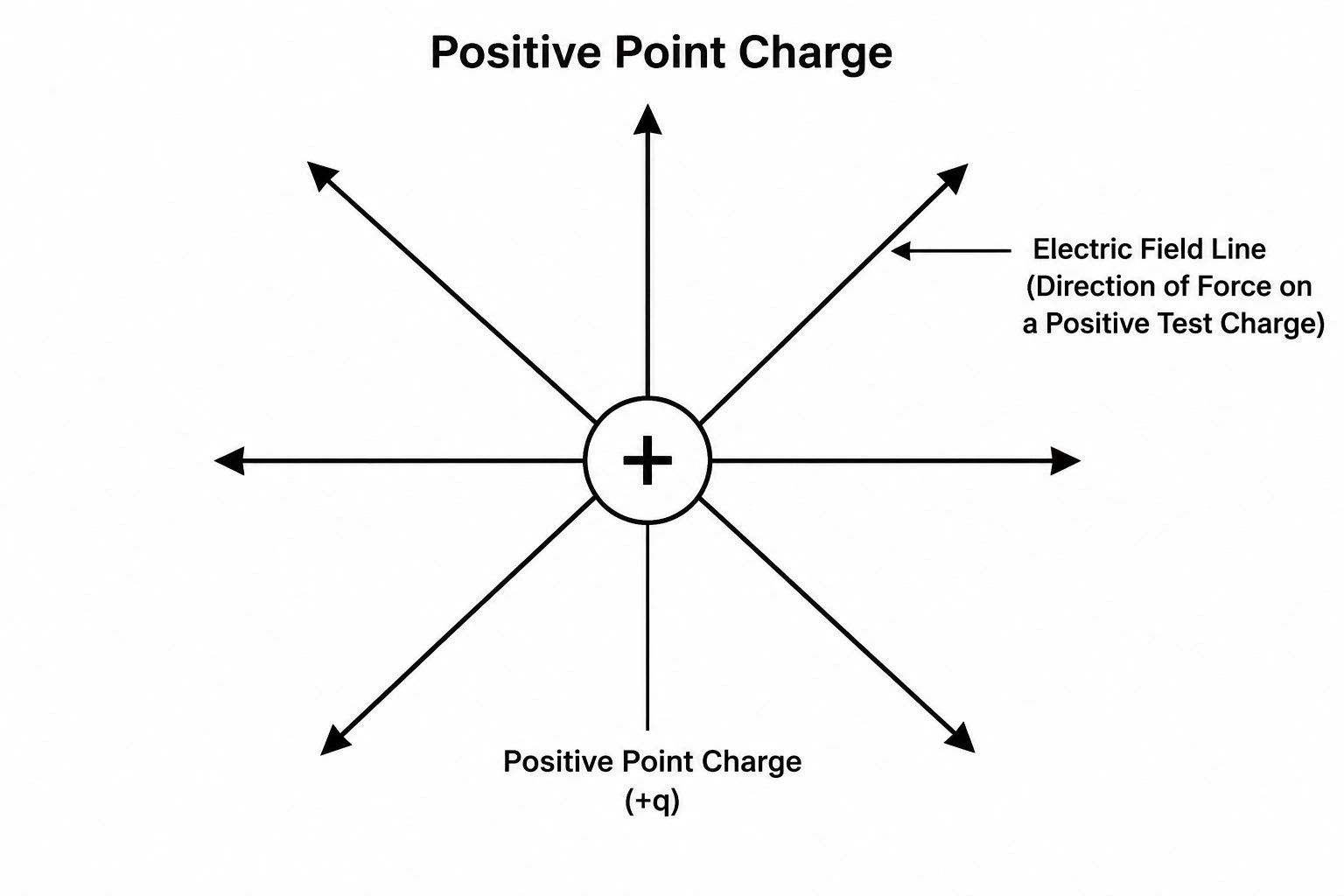 Physics
Electric Field Diagram Generator
Generate labeled electric field diagrams for point charges, dipoles, parallel plates, and more.
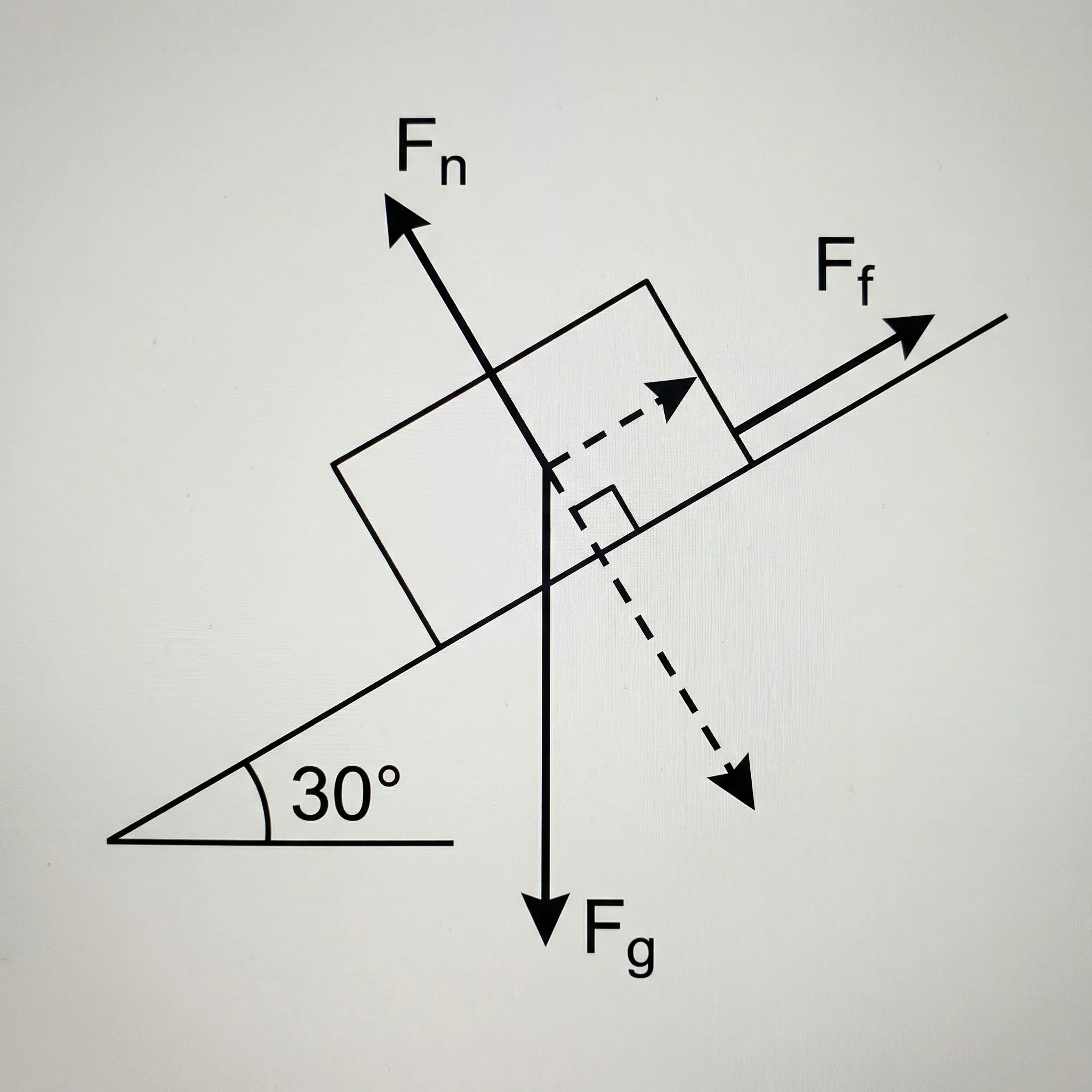 Physics
Free Body Diagram Generator
Create physics force diagrams with labeled weight, normal force, friction, tension, and applied-force vectors.
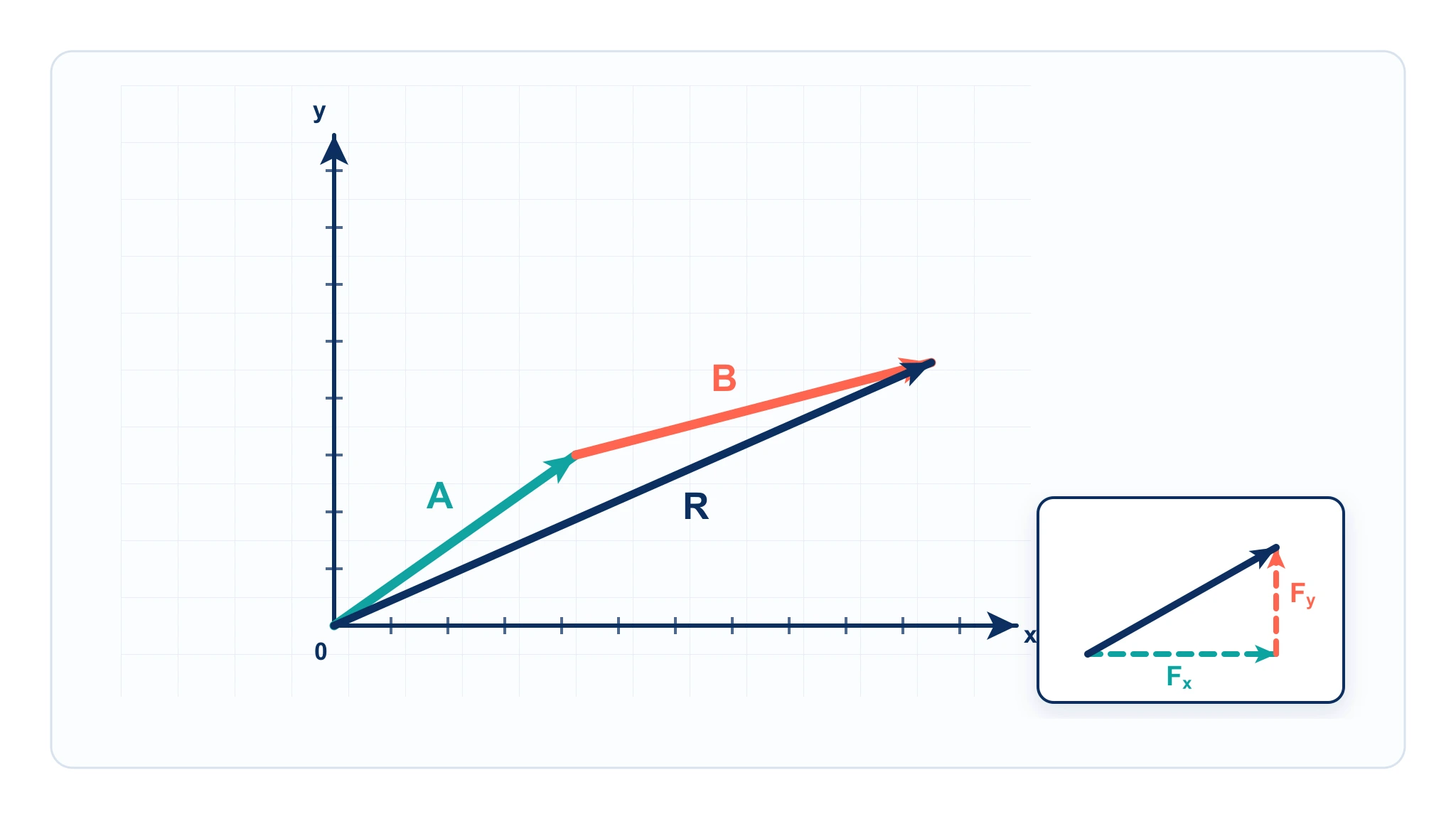 Physics
Vector Diagram Physics Maker
Draw vector arrows, components, and resultants with precise angles and scale for physics problems.