Electric Field Diagram Generator for Charges & Fields
Generate labeled electric field diagrams for a single positive charge, a negative charge, an electric dipole, two like charges, or parallel plates. Download a clean, textbook-style diagram for homework, worksheets, and physics class — free.
AI Electric Field Diagram
Free to try ·
Your electric field diagram will appear here
AI-generated — review field line directions and density for accuracy before using in class
Electric Field Diagram Examples
Standard electrostatics configurations for physics homework and class
Single Positive Point Charge
Field lines radiate outward from a positive charge in all directions. Closer lines mean stronger field near the charge.
Single Negative Point Charge
Field lines point inward toward a negative charge. The field direction is always toward the charge, the opposite of a positive charge.
Electric Dipole
A dipole (equal and opposite charges) produces curved field lines that leave the positive charge and enter the negative charge.
Two Like (Positive) Charges
Like charges repel: field lines curve away from both charges. A neutral point exists midway where the net field is zero.
Parallel Plates — Uniform Field
Parallel plates produce a uniform field: straight, evenly spaced lines from + to −. Field strength is constant between the plates.
Blank Electric Field Worksheet
A blank template for worksheets and quizzes — students draw the field lines and add labels themselves.
What is an electric field diagram?
An electric field diagram (also called a field line diagram) is a visual representation of the electric field in a region of space. Field lines are imaginary lines whose direction at any point matches the direction of the electric force that would act on a small positive test charge placed there. The lines start on positive charges and end on negative charges (or travel to infinity if no negative charge is present). The density of field lines — how closely spaced they are — indicates the strength of the field: the closer the lines, the stronger the field. Electric field diagrams are a core tool in electrostatics and appear throughout high school and introductory college physics.
Rules for drawing electric field lines
- Direction: field lines always point from positive charges toward negative charges. An arrow on each line shows the direction a positive test charge would move.
- Starting and ending: lines begin on positive charges (or come from infinity) and end on negative charges (or go to infinity). They never start or end in empty space.
- Density: the number of lines per unit area perpendicular to the field represents field strength. More lines close together means a stronger field.
- No crossing: field lines never cross. If they did, the field would have two directions at one point, which is impossible.
- Perpendicular to conductors: where field lines meet a conductor surface, they are always perpendicular to the surface.
The five standard electric field configurations
- Single positive charge: lines radiate outward in all directions equally. Field strength decreases with the square of the distance from the charge (inverse-square law).
- Single negative charge: lines point inward from all directions toward the charge. The pattern is the mirror image of a positive charge.
- Electric dipole (opposite charges): curved lines leave the positive charge and enter the negative charge. The field is strongest between and near the charges.
- Two like charges (same sign): lines repel each other and curve away from both charges. A neutral point exists midway between them where the field is zero.
- Parallel plates: two large conducting plates with opposite charges produce a nearly uniform field between them — straight, evenly spaced, parallel lines from the positive to the negative plate. Edge effects cause slight fringing at the ends.
Electric field strength and field line density
The magnitude of the electric field E at a point is related to how densely the field lines are packed at that location. For a single point charge Q, the field strength at distance r is given by Coulomb's law: E = kQ/r², where k is Coulomb's constant (8.99 × 10⁹ N·m²/C²). Field lines radiate outward over a sphere of surface area 4πr², so as r increases the same number of lines spread over a larger area — meaning the field weakens. Between parallel plates the lines are uniformly spaced because the field is constant, making parallel-plate geometry the standard setup for uniform-field experiments and capacitor problems.
Electric field direction and the positive test charge convention
By convention, electric field direction is defined as the direction of force on a small positive test charge. This is why field lines point away from positive source charges (the test charge would be repelled) and toward negative source charges (the test charge would be attracted). When you see a field line diagram, tracing a line with a finger from the arrowhead backward shows you the path a positive charge would naturally follow. A negative charge placed in the same field would feel a force in the exactly opposite direction — against the field arrows.
How to use this electric field diagram generator
- Describe the charge configuration you need — for example, "a single positive point charge with labeled field lines" or "two parallel plates with a uniform field and arrows."
- Specify the detail level: a simple labeled diagram for a study note, a detailed version showing field line density, or a blank template for students to complete.
- Generate the diagram, then download the image and drop it into your worksheet, slide deck, homework solution, or lab report.
- For a blank worksheet version, ask for an unlabeled diagram with empty label lines — students can draw in the field lines themselves.
Frequently Asked Questions
Related Physics Tools
 Physics
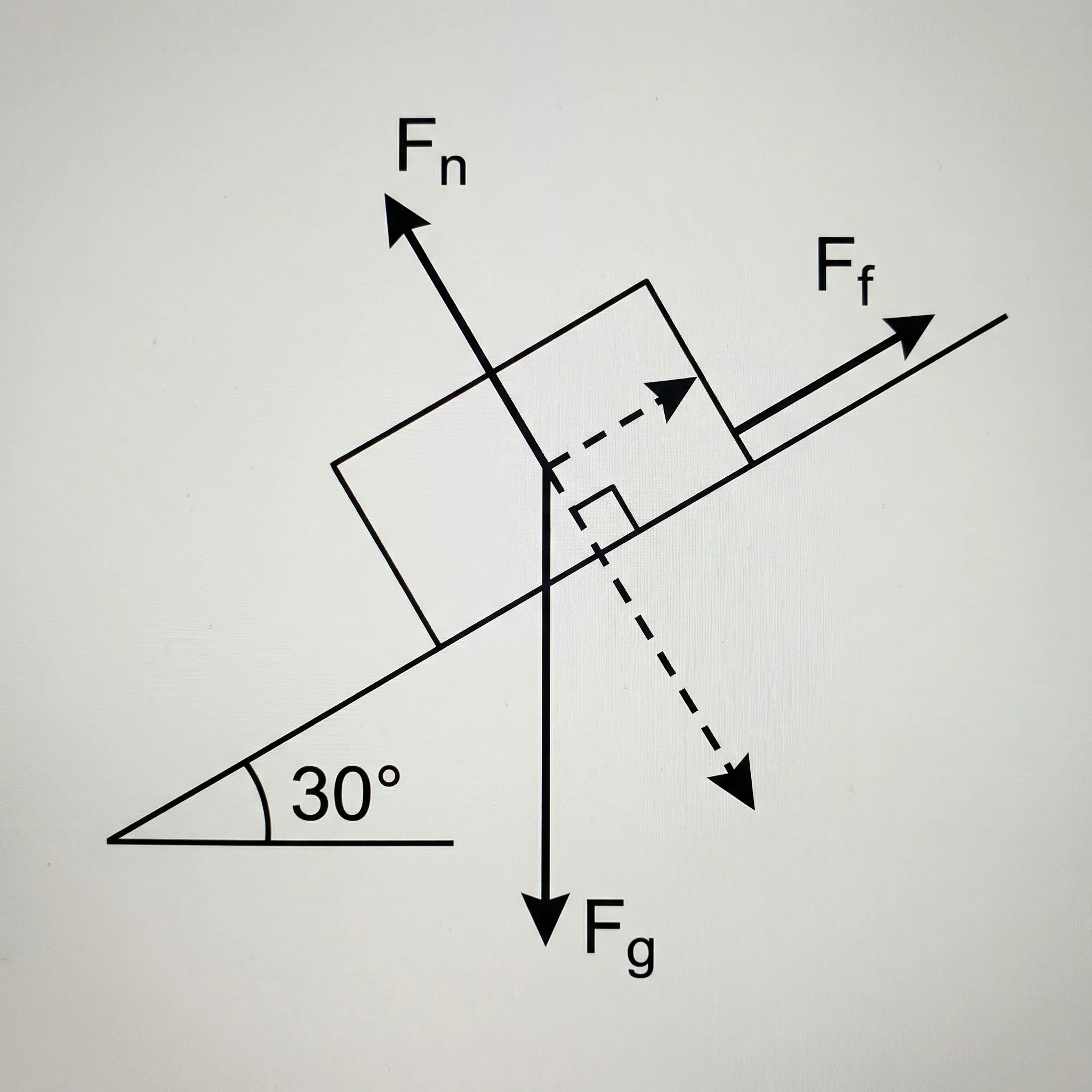
Free Body Diagram Generator
Create physics force diagrams with labeled weight, normal force, friction, tension, and applied-force vectors.
 Physics
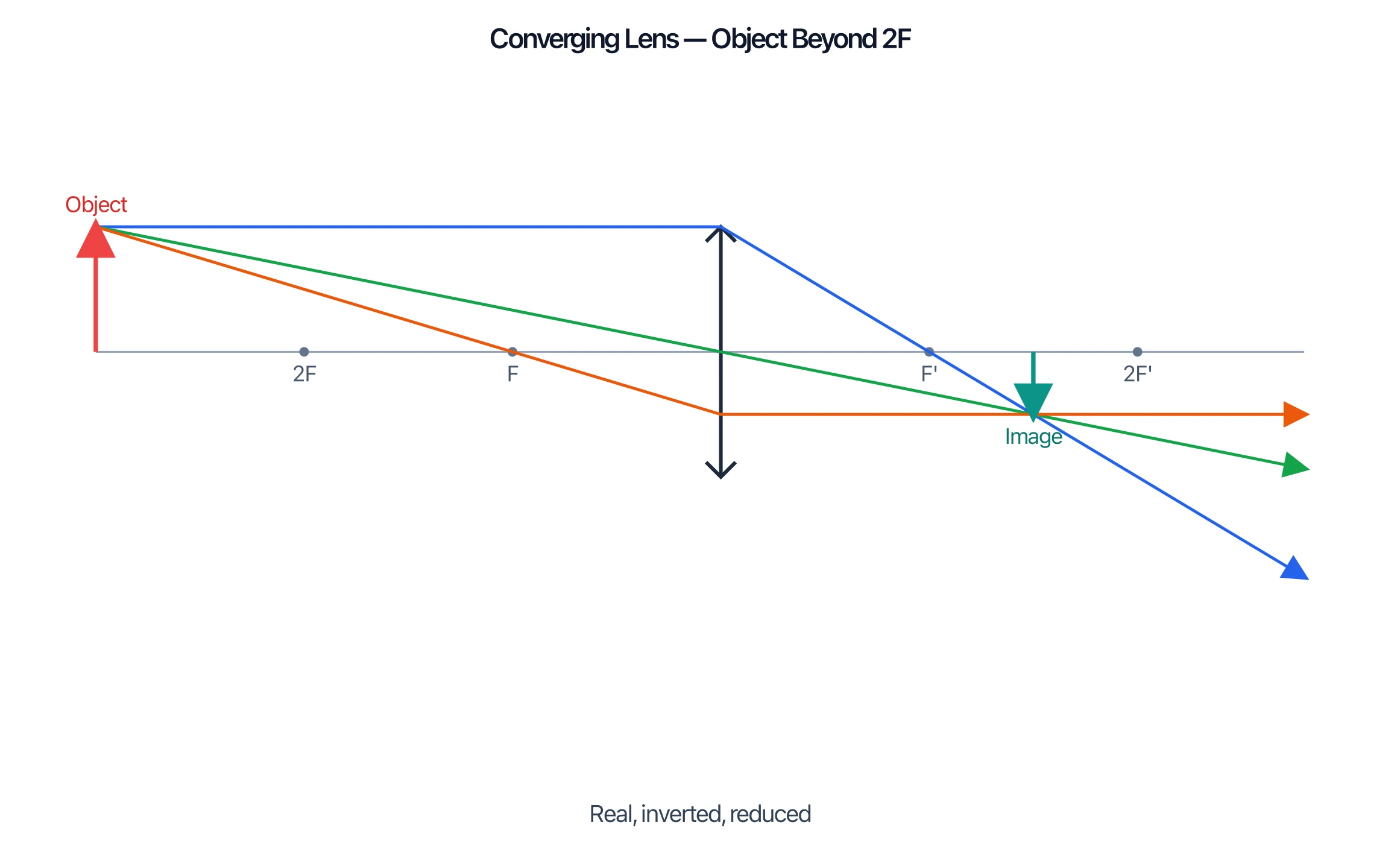
Ray Diagram Generator
Draw accurate ray diagrams for converging and diverging lenses and concave and convex mirrors.
 Physics
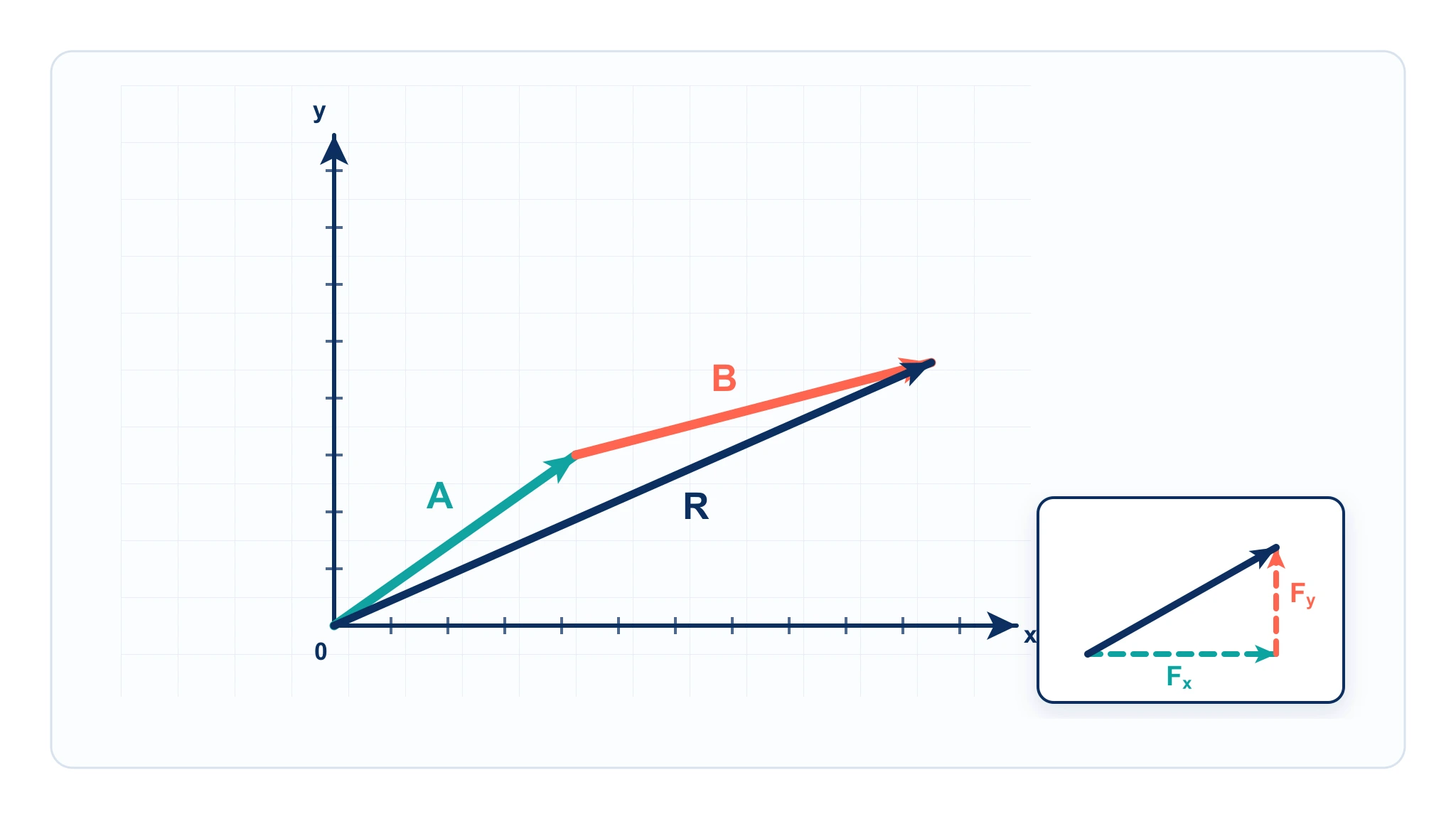
Vector Diagram Physics Maker
Draw vector arrows, components, and resultants with precise angles and scale for physics problems.