Factor Tree Generator Prime Factorization
Build a prime factor tree for any number 2–10000. See the full prime factorization instantly and export a clean SVG or PNG.
Split strategy
Smallest prime matches the classic textbook staircase tree. Balanced splits near the square root for a bushier tree.
Factor Tree Examples
Common ways to build and split a factor tree
Factor Tree of 60
A textbook-style factor tree for 60, ending in the prime factors 2, 2, 3 and 5.
Factor Tree of 36
A factor tree for the perfect square 36, ending in the prime factors 2, 2, 3 and 3.
Factor Tree of 48
A worked factor tree for 48, a common practice number for prime factorization.
Factor Tree Worksheet
A printable worksheet layout with blank factor trees for classroom practice.
Colorful Factor Tree Poster
A vivid factor tree poster, ideal for decorating a classroom wall or bulletin board.
Balanced Factor Tree of 90
A balanced-split factor tree for 90, a bushier alternative to the classic staircase tree.
What is a factor tree?
A factor tree is a branching diagram that breaks a whole number down into smaller and smaller factors until every branch ends in a prime number. Start with the number at the top, split it into any two factors whose product is that number, then split each factor that is still composite the same way. Once every "leaf" of the tree is prime, the diagram is done — and reading the leaves gives the number's complete prime factorization. Factor trees make an abstract idea, prime factorization, into a concrete picture that is easy to build by hand and easy to check, which is why they are the standard way prime factorization is first taught.
Prime factorization: what the tree proves
- Every whole number greater than 1 is either prime itself or can be written as a product of primes in exactly one way (ignoring order) — this is the Fundamental Theorem of Arithmetic. A factor tree is a visual proof of that fact for a specific number: no matter which two factors you choose to split off first, the tree always ends with the same multiset of prime leaves.
- For example, 60 can start as 6 × 10 or as 2 × 30 or as 5 × 12 — the branching looks different at first, but every path bottoms out at the same four primes: 2, 2, 3, and 5. Written compactly with exponents, that is 60 = 2² × 3 × 5.
- Because the final prime factorization never changes, factor trees are a safe way for students to explore different splitting choices without worrying about getting a "wrong" tree shape — only the leaves have to be correct.
How to make a factor tree by hand
- Write the number at the top of the page. Find any two factors that multiply to it — for an easy start, use the smallest prime that divides it (2 if the number is even, 3 if it is divisible by 3, and so on) and its cofactor.
- Circle any factor that is already prime; it is a finished leaf. For any factor that is still composite, repeat the same splitting step below it.
- Keep going until every branch ends in a prime circle. Then read all the prime leaves across the bottom of the tree, left to right, and multiply them together — that product is the number you started with, and the list itself is the prime factorization.
- This generator does exactly that process automatically: choose a whole number from 2 to 10000, pick a splitting strategy, and it draws the finished tree with the factorization written underneath.
Splitting strategies: smallest-prime vs. balanced
- "Smallest prime" always peels off the smallest prime factor at each step (2, then 3, then 5, and so on), which produces the tall, staircase-shaped tree most textbooks and teachers draw by hand — it is also the fastest way to factor a number with pencil and paper, since you never have to guess a large factor pair.
- "Balanced" instead splits each composite number into two factors as close to its square root as possible, which produces a shorter, bushier tree. Balanced trees are useful for showing that a number can be factored in more than one way while still reaching the same prime leaves, and they read cleanly on a slide or poster where a tall staircase would run off the page.
- Both strategies always agree on the final prime factorization — only the shape of the branching differs.
Exponent form and reading the factorization
- Once the prime leaves are collected, repeated primes are grouped with exponents: 60 = 2 × 2 × 3 × 5 becomes 60 = 2² × 3 × 5, and 36 = 2 × 2 × 3 × 3 becomes 36 = 2² × 3². This exponent form is the standard way prime factorizations are written in textbooks and is exactly what this generator prints as the caption under each tree.
- Exponent form also makes several follow-up skills easier: finding the greatest common factor or least common multiple of two numbers, checking whether a number is a perfect square (every exponent is even) or a perfect cube (every exponent is a multiple of three), and simplifying square roots.
- Because the tool computes the factorization by trial division independent of the tree shape, the exponent-form result is always exact and matches the leaves of the tree it draws.
Frequently Asked Questions
Related Math Tools
 Education
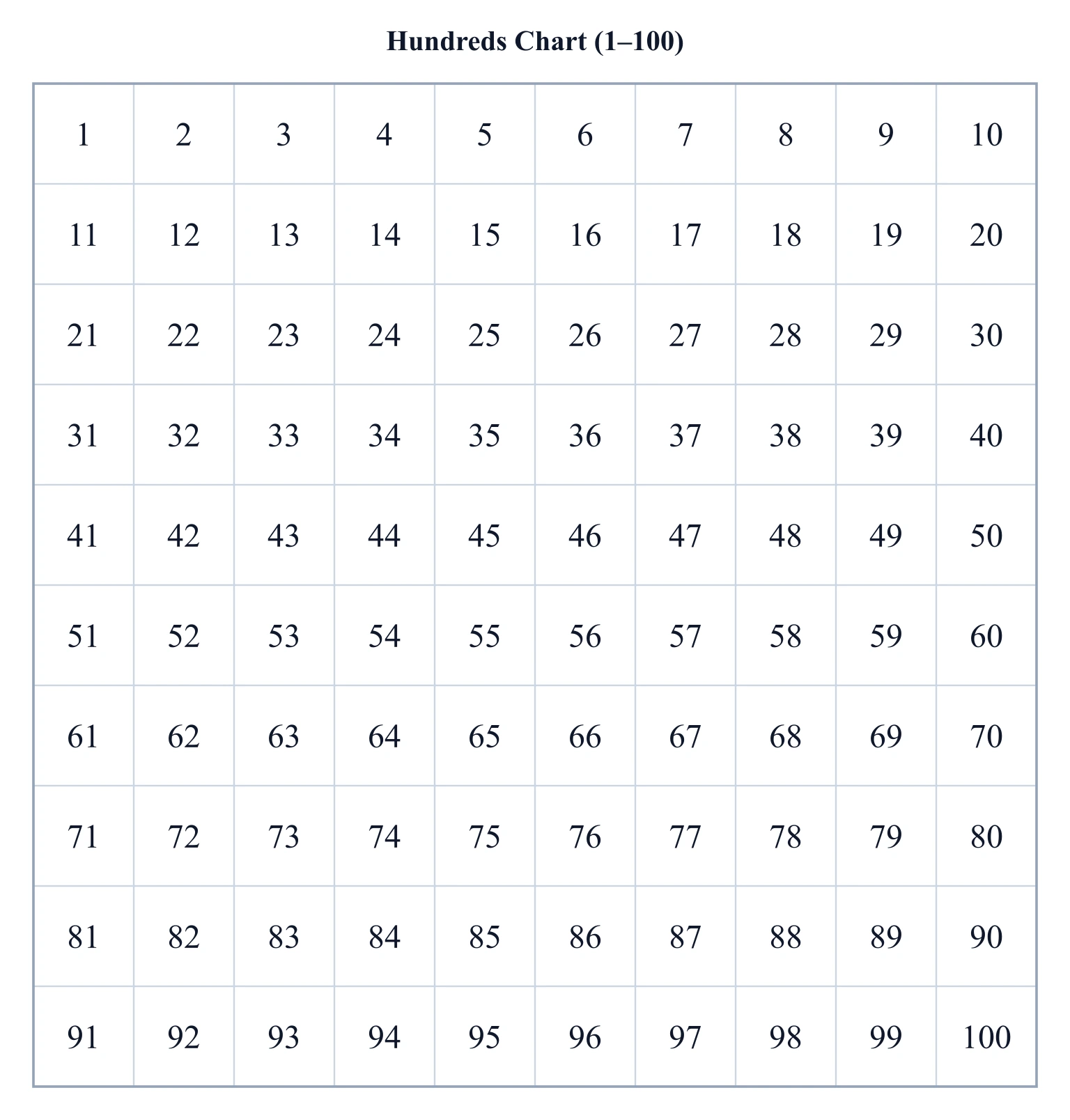
Hundreds Chart Generator
Make a printable 10×10 hundreds chart: skip count, highlight multiples or primes, or print a blank practice grid.
 Education
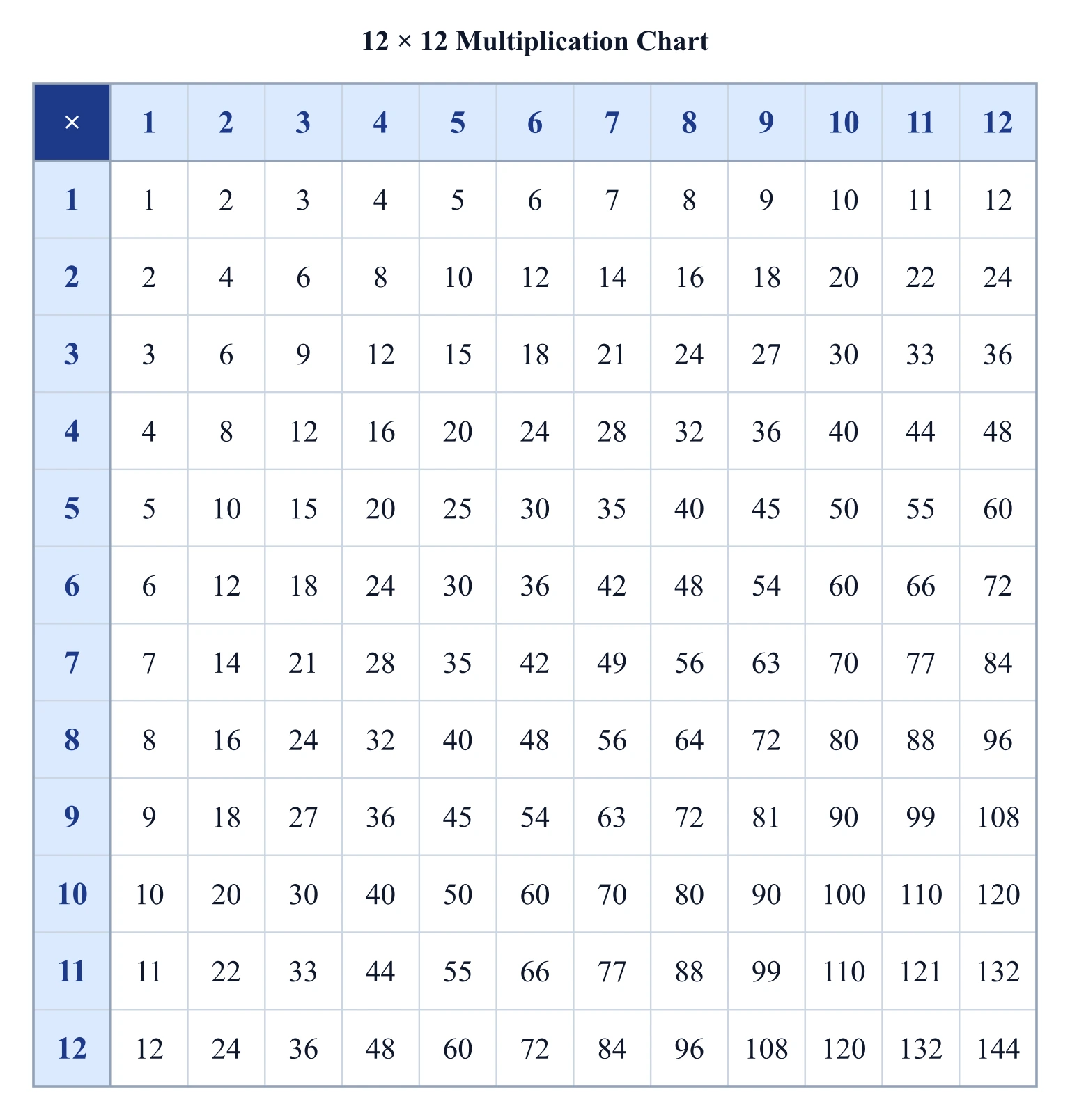
Multiplication Chart Generator
Create a printable multiplication chart: pick the grid size, highlight any times table, and export a clean SVG or PNG.
 Education
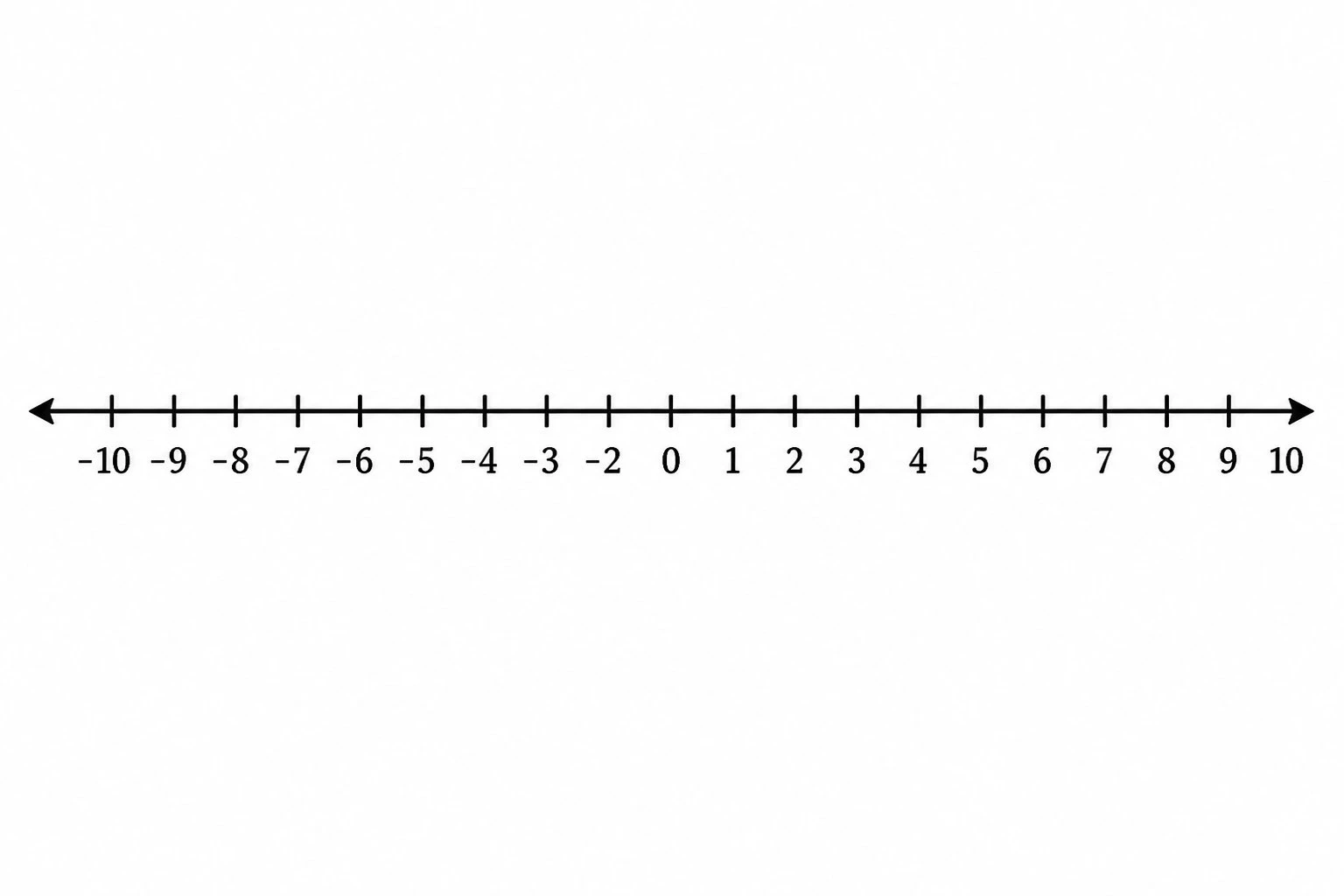
Number Line Generator
Create precise number lines: plot points, graph inequalities and intervals, and mark fractions or decimals.