Endocrine System Diagram Generator for Labeled & Blank Diagrams
Create a clearly labeled endocrine system diagram in seconds. Show the hypothalamus, pituitary gland, pineal gland, thyroid, parathyroid glands, thymus, adrenal glands, pancreas, and gonads with the hormones each gland secretes — or generate a blank version for worksheets and quizzes. Free to use.
Endocrine System Diagram Generator
Free to try ·
Your endocrine system diagram will appear here
Describe what you need and click Generate
Endocrine System Diagram Examples
Labeled diagrams of endocrine glands, hormones, the hypothalamus-pituitary axis, and more
Full Endocrine System
The complete map — every major gland from the hypothalamus down to the gonads, with hormones labeled.
Glands and Their Hormones
Each gland paired with its hormone and function — a quick-reference diagram for studying the whole system.
Simple Endocrine Diagram for Kids
A simplified version with large, friendly labels — ideal for elementary and middle-school science.
Male vs Female Endocrine System
Shared glands shown in both figures, with male testes and female ovaries highlighted to show sex-specific hormones.
Hypothalamus–Pituitary Axis
The master control loop — releasing hormones from the hypothalamus, pituitary output, and feedback arrows.
Blank Endocrine System Worksheet
An unlabeled version with numbered blank lines — ready to print as a quiz or fill-in worksheet.
What is the endocrine system?
The endocrine system is the body's chemical messaging network. Instead of sending electrical signals like the nervous system, it releases hormones — molecules that travel through the bloodstream and deliver instructions to distant target cells and organs. These instructions regulate nearly every long-term process in the body: growth, metabolism, reproduction, sleep, mood, and the response to stress. The system is built from a collection of glands scattered from the brain to the pelvis, each secreting specific hormones in precisely controlled amounts. This generator draws that entire network with every gland clearly labeled and, optionally, lists the hormone each gland secretes.
The major endocrine glands and their hormones
- Hypothalamus: sits at the base of the brain and acts as the master regulator. It releases releasing and inhibiting hormones that control the pituitary gland, and it produces ADH and oxytocin, which are stored and released by the pituitary.
- Pituitary gland: the "master gland," divided into anterior and posterior lobes. The anterior lobe secretes growth hormone (GH), thyroid-stimulating hormone (TSH), adrenocorticotropic hormone (ACTH), follicle-stimulating hormone (FSH), luteinizing hormone (LH), and prolactin. The posterior lobe releases ADH and oxytocin from the hypothalamus.
- Pineal gland: a small gland deep in the brain that secretes melatonin, the hormone that regulates the sleep-wake cycle in response to light and darkness.
- Thyroid gland: a butterfly-shaped gland in the neck that secretes thyroxine (T4) and triiodothyronine (T3), which set the overall metabolic rate, and calcitonin, which lowers blood calcium.
- Parathyroid glands: four tiny glands embedded in the back of the thyroid. They secrete parathyroid hormone (PTH), which raises blood calcium by stimulating bone resorption and kidney reabsorption — the opposite of calcitonin.
- Thymus: located behind the sternum, it secretes thymosin and other thymosins that mature T lymphocytes (T cells) and support immune development. It is most active during childhood.
- Adrenal glands: one sits atop each kidney. The outer cortex secretes cortisol (stress response and metabolism), aldosterone (sodium and water balance), and small amounts of sex hormones. The inner medulla secretes epinephrine and norepinephrine for the fight-or-flight response.
- Pancreas: a dual-function organ. Its endocrine islets of Langerhans secrete insulin (lowers blood glucose) from beta cells and glucagon (raises blood glucose) from alpha cells, keeping blood sugar in a narrow range.
- Gonads — ovaries and testes: the ovaries secrete estrogen and progesterone, which regulate the female reproductive cycle and secondary sex characteristics. The testes secrete testosterone, which drives male reproductive development and secondary sex characteristics.
How the hypothalamus and pituitary control the system
The hypothalamus and pituitary gland form the command center of the endocrine system. The hypothalamus monitors blood chemistry and sends releasing or inhibiting hormones down a short portal blood vessel to the anterior pituitary. The pituitary then releases its own hormones — TSH, ACTH, FSH, LH, GH, prolactin — into the general circulation to act on distant glands such as the thyroid, adrenals, and gonads. Those target glands respond by secreting their own hormones, and when the level rises high enough, it feeds back to the hypothalamus and pituitary to turn off the signal. This negative feedback loop keeps hormone levels tightly balanced, and you can generate a diagram that shows the loop with arrows and hormone names at every step.
Hormone functions: regulating metabolism, growth, and reproduction
Every hormone has a specific target and effect. Thyroid hormones set the rate at which cells burn fuel, so a deficiency slows every body process while an excess speeds them all up. Growth hormone drives cell division and protein synthesis throughout childhood and continues to regulate metabolism in adults. Insulin and glucagon act like a thermostat for blood glucose — insulin opens cells to absorb glucose after a meal, and glucagon releases stored glucose when the blood level drops. Cortisol mobilizes energy and dampens inflammation under stress, but chronically high cortisol suppresses immunity and disrupts sleep. Sex hormones govern puberty, fertility cycles, and long-term maintenance of bone and muscle. Understanding which gland makes which hormone and why is the foundation of endocrinology, and a labeled diagram is the fastest way to build that map.
Labeled vs blank diagrams for worksheets and quizzes
A fully labeled diagram works well for teaching and study notes, while a blank, unlabeled version is what you need for worksheets, handouts, and quizzes. With this tool you can generate either: describe "a labeled endocrine system diagram" to get every gland and hormone named, or ask for "a blank endocrine system diagram with numbered blank lines" to get a fill-in version. Black-and-white line art works best for printing, and a numbered blank diagram can double as both the quiz and — with labels added back — the answer key.
How to generate a labeled endocrine system diagram
- Describe what you need in plain English — the full endocrine system, the hypothalamus-pituitary axis, a comparison of male and female glands, or a close-up of the adrenal gland layers.
- Specify the level of detail, for example "label each gland, the hormone it secretes, and a one-line function note" or "anterior view, color-code glands by function."
- Choose labeled for teaching or unlabeled (blank) for a worksheet or quiz, then generate the diagram.
- Review the result for accuracy, regenerate or refine the prompt if needed, and download the image to use in a slide, handout, or study guide.
Frequently Asked Questions
Related Biology Tools
 Biology
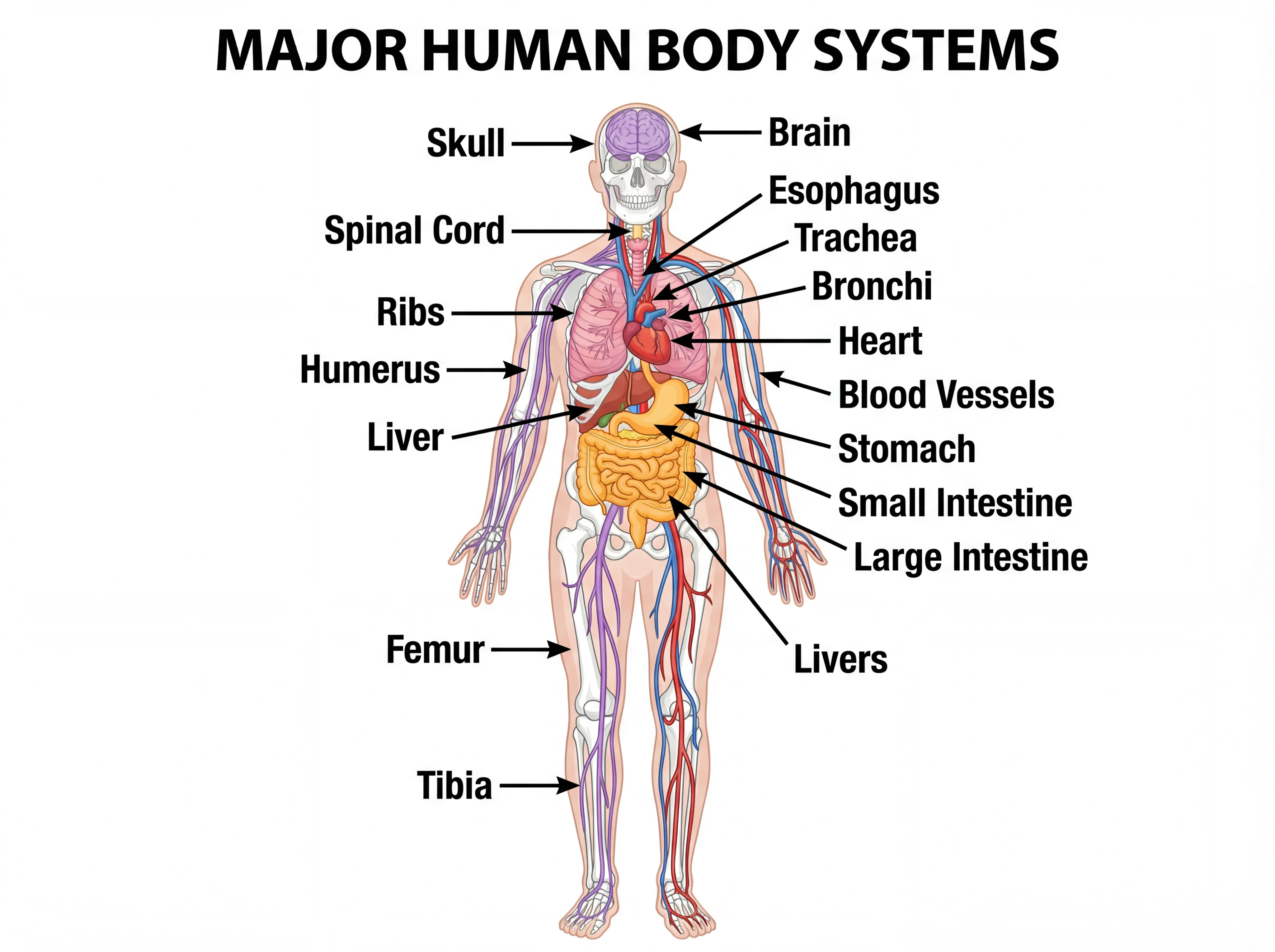
Human Body Systems Diagram Generator
Draw labeled diagrams of the body's organ systems, from skeletal to circulatory.
 Biology
Nervous System Diagram Generator
Create labeled nervous system diagrams showing the CNS, PNS, and autonomic divisions.
 Biology
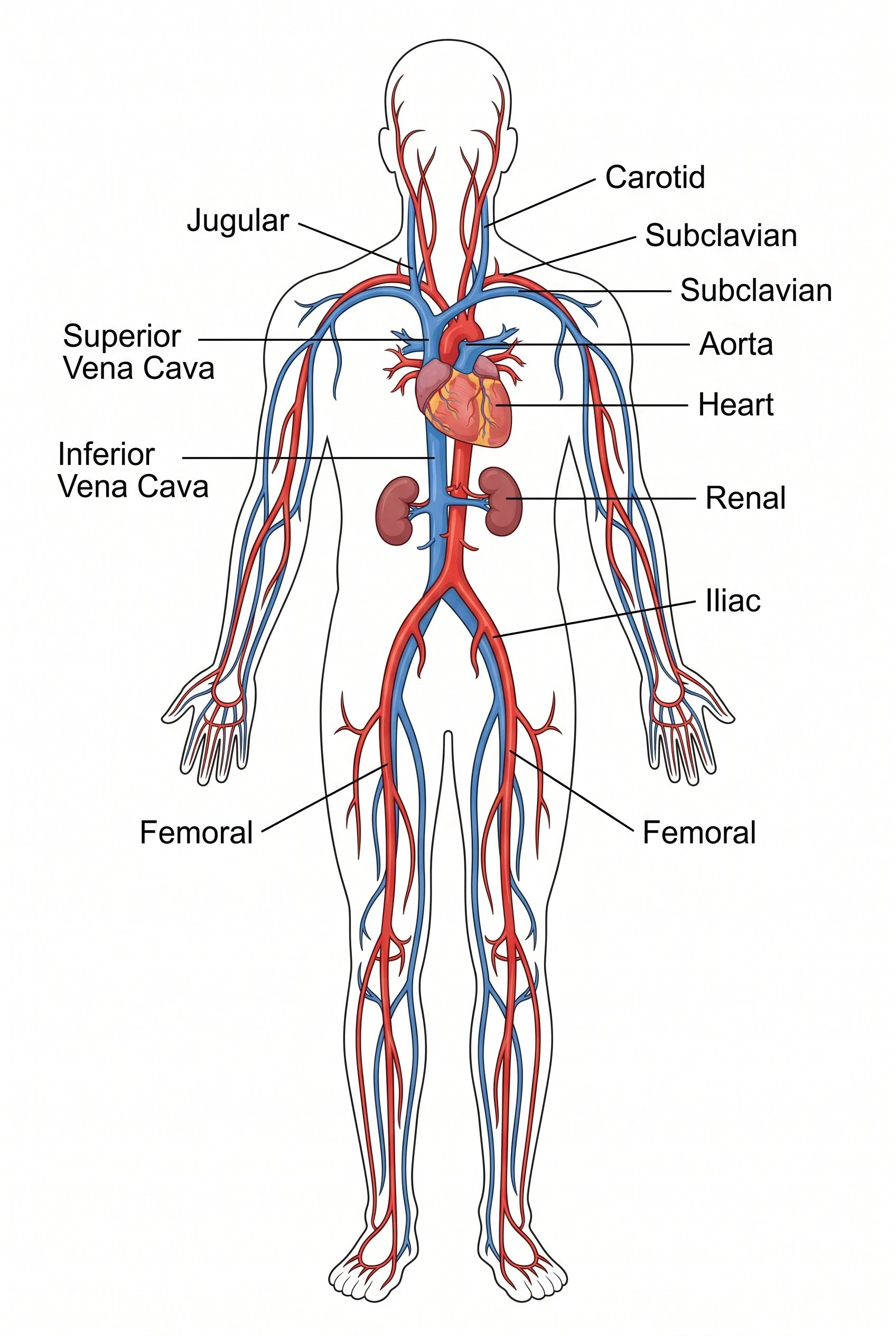
Circulatory System Diagram Generator
Generate labeled diagrams of the heart, blood vessels, and circulatory pathways.