Calvin Cycle Diagram Generator for the Light-Independent Reactions
Make a clearly labeled Calvin cycle diagram in seconds. Show all three phases of the light-independent reactions — carbon fixation, reduction, and regeneration — with RuBisCO, 3-PGA, G3P, RuBP, and the CO2, ATP, and NADPH that drive the cycle. Generate a labeled or blank study version, then export, free.
Calvin Cycle Diagram Generator
Free to try ·
Your Calvin cycle diagram will appear here
AI-generated — review the labels for accuracy before relying on them
Calvin Cycle Diagram Examples
Labeled and blank diagrams covering all three phases of the light-independent reactions
Complete Labeled Calvin Cycle
All three phases in one circular diagram — every molecule, enzyme, and arrow labeled.
Simplified Three-Phase Cycle
A clean three-phase overview with inputs and outputs — ideal for first-time learners.
Detailed Molecular View
Carbon counting (3C, 5C, 6C) at each step, with RuBisCO labeled at fixation.
Calvin Cycle in the Chloroplast
Where it happens — the stroma — with ATP and NADPH arriving from the thylakoids.
Light Reactions vs Calvin Cycle
How the two stages of photosynthesis connect — ATP and NADPH link them.
Blank Quiz Version
A blank, printable version with a word bank — perfect for testing yourself.
What is the Calvin cycle?
The Calvin cycle is the second stage of photosynthesis — the light-independent reactions, also called the dark reactions or the C3 cycle. It uses the chemical energy captured by the light-dependent reactions (ATP and NADPH) to turn carbon dioxide from the air into sugar. Despite the name "dark reactions," the cycle does not require darkness; it simply does not use light directly. Instead, it depends on the energy carriers the light reactions produce, so in practice it runs in the light. This generator draws the cycle as a clear, labeled diagram so each step is easy to follow.
Where does the Calvin cycle happen?
The Calvin cycle takes place in the stroma of the chloroplast — the fluid-filled space surrounding the thylakoid membranes. The light-dependent reactions happen in those thylakoid membranes and feed their products, ATP and NADPH, into the surrounding stroma where the Calvin cycle uses them. Keeping the two stages in neighboring compartments lets the energy carriers pass straight from one to the other. The chloroplast-context diagram in the gallery shows this layout, with CO2 entering the stroma and the sugar product leaving.
The three phases of the Calvin cycle
- Carbon fixation: the enzyme RuBisCO attaches CO2 to a five-carbon molecule called RuBP. The unstable six-carbon product immediately splits into two molecules of 3-phosphoglycerate (3-PGA).
- Reduction: ATP and NADPH from the light reactions add energy and electrons to 3-PGA, converting it into glyceraldehyde-3-phosphate (G3P), a three-carbon sugar. This step uses up the ATP and NADPH.
- Regeneration: most of the G3P is rearranged, using more ATP, to rebuild RuBP so the cycle can accept more CO2 and keep turning.
- The cycle must turn three times — fixing three CO2 molecules — to produce one net molecule of G3P.
Inputs and outputs of the Calvin cycle
The inputs are carbon dioxide (CO2) from the atmosphere, plus ATP and NADPH supplied by the light-dependent reactions. The key output is G3P, a three-carbon sugar; two G3P molecules can combine to form glucose, and G3P is also used to build other carbohydrates, lipids, and amino acids. As the cycle runs, it returns the spent energy carriers — ADP and NADP+ — back to the light reactions to be recharged. To make one G3P, the cycle consumes three CO2, nine ATP, and six NADPH. Labeling these inputs and outputs is one of the most common reasons students draw the diagram.
How the Calvin cycle connects to the light reactions
Photosynthesis runs in two linked stages. The light-dependent reactions in the thylakoid membranes capture light energy, split water to release oxygen, and store energy as ATP and NADPH. The Calvin cycle then spends that ATP and NADPH to fix carbon and build sugar, handing the empty ADP and NADP+ back so the light reactions can recharge them. The two stages depend on each other: without the light reactions there is no ATP or NADPH for the cycle, and without the cycle the energy carriers are never reused. The comparison diagram in the gallery shows this exchange clearly.
Labeled vs blank diagrams for studying
A labeled diagram is best when you are learning the cycle for the first time — every molecule, enzyme, and arrow is named so you can trace the path from CO2 to G3P. A blank version, with numbered boxes and a word bank, turns the same diagram into a self-test: hide the answers, label it from memory, then check yourself. Generating both from the same description means you can study with the labeled version and then quiz yourself with the blank one, which is one of the most effective ways to memorize a biological pathway.
Frequently Asked Questions
Related Biology Tools
 Biology
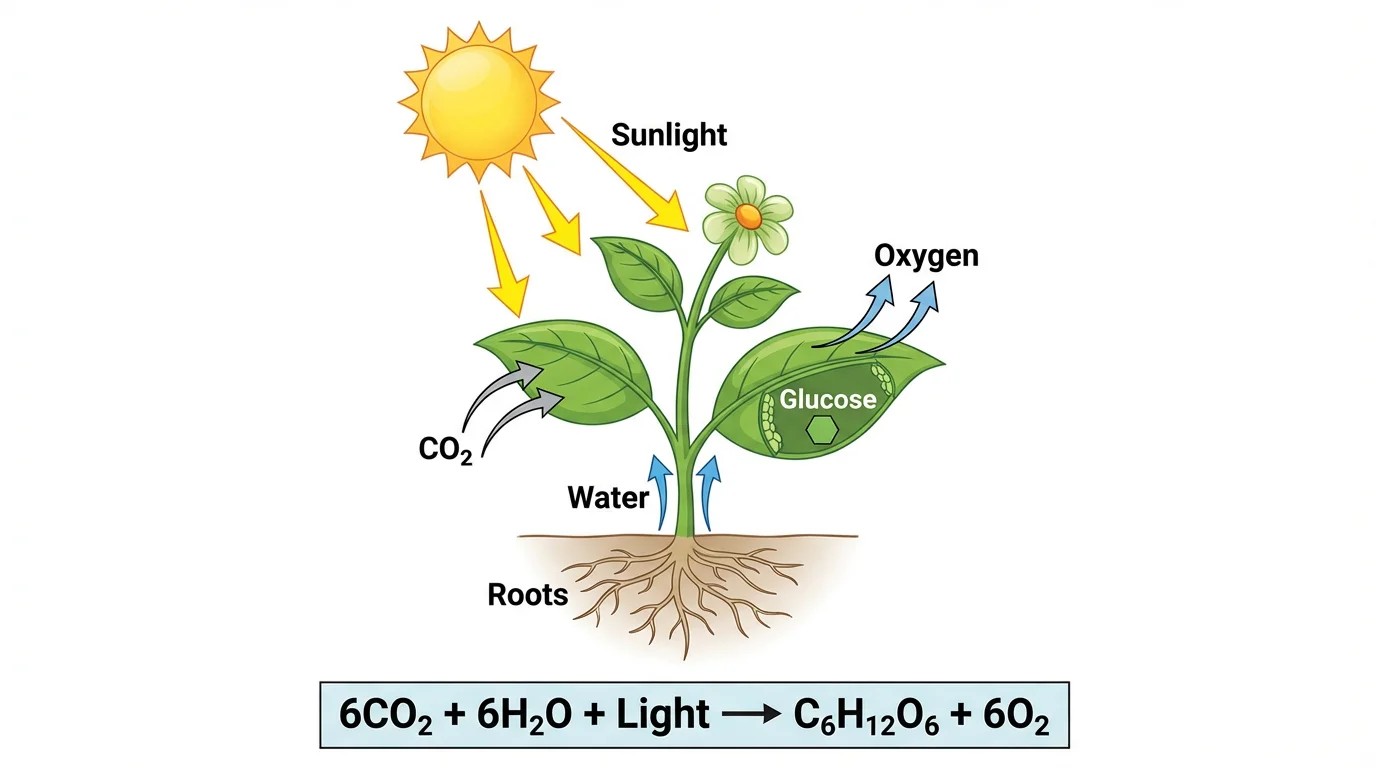
Photosynthesis Diagram Generator
Make labeled photosynthesis diagrams showing the light reactions, inputs, outputs, and the chloroplast.
 Biology
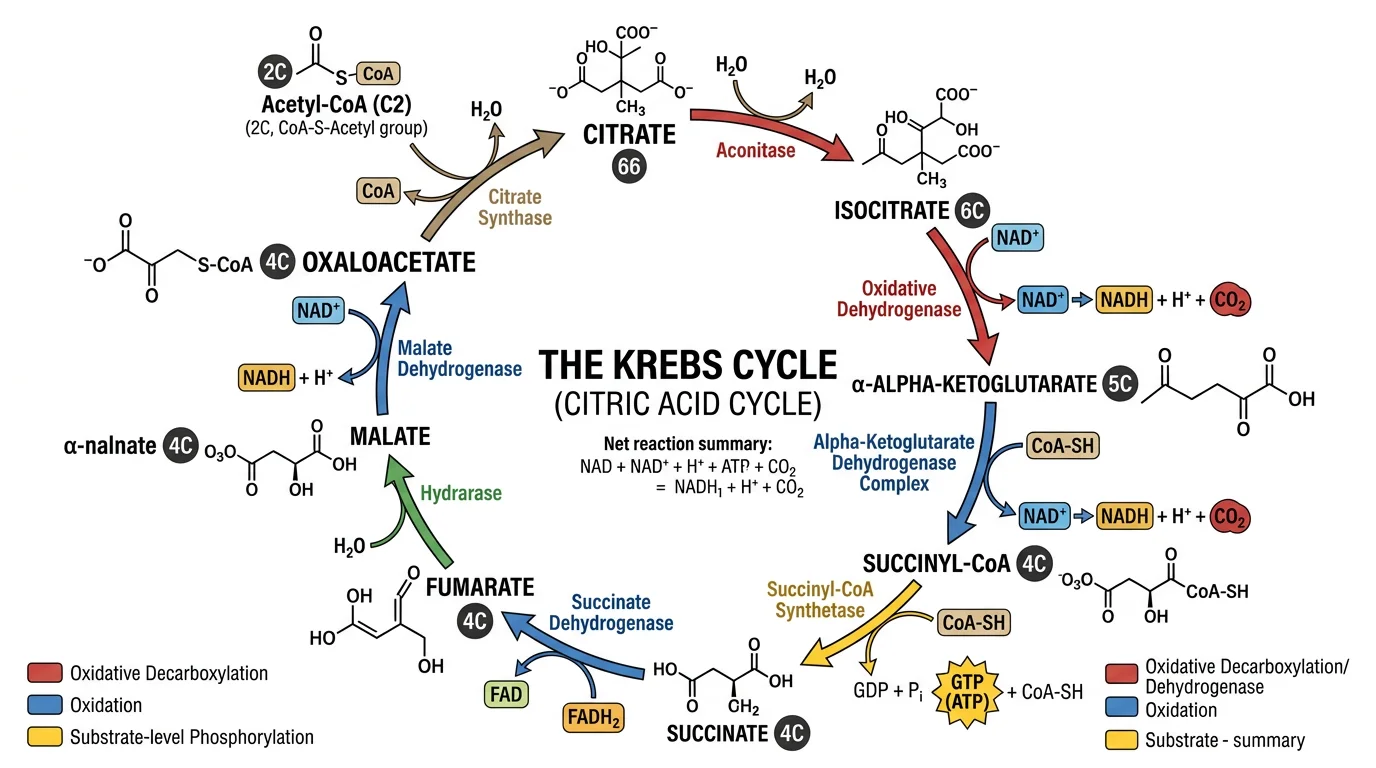
Krebs Cycle Diagram Generator
Draw a labeled Krebs cycle (citric acid cycle) showing each step of cellular respiration.
 Biology
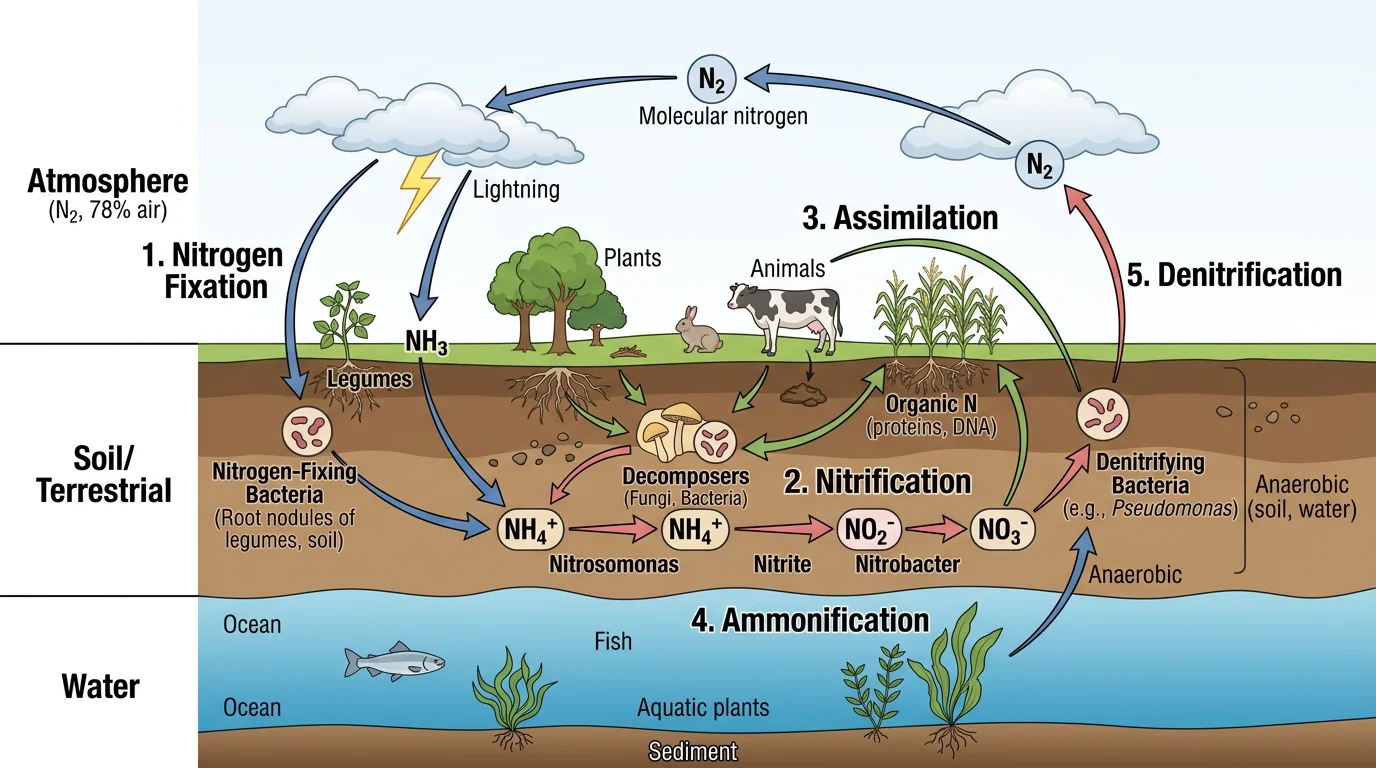
Nitrogen Cycle Diagram Generator
Create a labeled nitrogen cycle diagram showing fixation, nitrification, and denitrification.