Free Printable Life Cycle Worksheets for Teachers (2026)
Download free printable life cycle worksheets for plants, butterflies, frogs, and chickens. Includes labeled diagrams, blank worksheets for quizzes, and hands-on activities aligned with NGSS standards.
Teaching life cycles is a cornerstone of elementary science education. From watching caterpillars transform into butterflies to growing bean plants from seeds, life cycle lessons spark curiosity and wonder in young learners.
In this guide, we'll share free printable life cycle worksheets for plants, butterflies, frogs, and more — plus hands-on activities and tips for teaching this essential concept.
What is a Life Cycle?
A life cycle describes the series of changes that a living organism goes through from birth to death, including reproduction to continue the species. According to the Next Generation Science Standards (NGSS), students should understand that organisms have unique and diverse life cycles, but all share common stages: birth, growth, reproduction, and death.
The key NGSS standard for life cycles is 3-LS1-1: "Develop models to describe that organisms have unique and diverse life cycles but all have in common birth, growth, reproduction, and death."
Types of Life Cycles Students Should Learn
1. Complete Metamorphosis (Butterfly)
The butterfly life cycle is a classic example of complete metamorphosis, where the organism goes through four distinct stages that look completely different from each other.
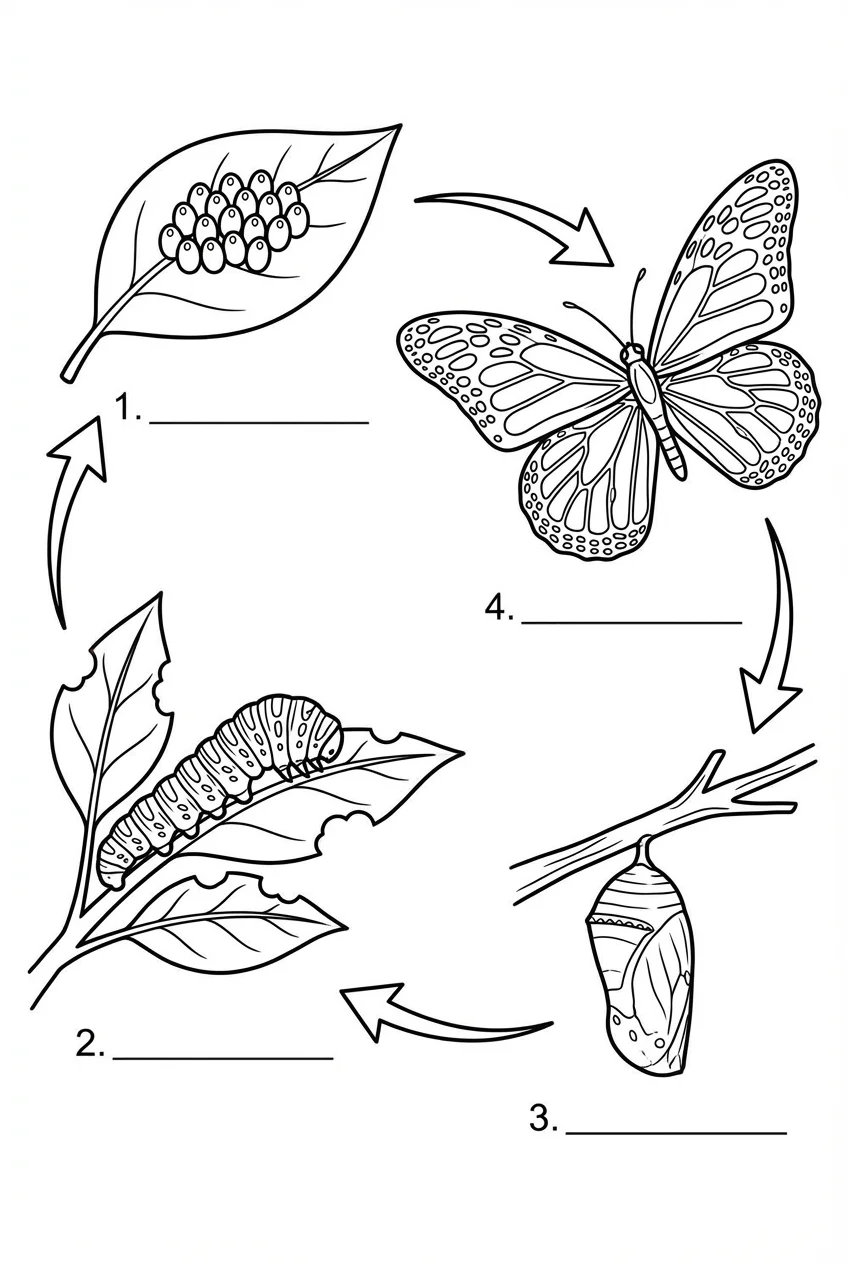 An unlabeled butterfly metamorphosis diagram — perfect for student assessments. Create your own with our Life Cycle Diagram Generator.
According to the American Museum of Natural History, the four stages are:
Stage 1: Egg Female butterflies deposit tiny eggs on host plant leaves. Eggs typically hatch in 1-2 weeks.
Stage 2: Larva (Caterpillar) The caterpillar is the eating and growing stage. Caterpillars can consume up to 1,000 times their original birth weight, shedding their exoskeleton multiple times as they grow.
Stage 3: Pupa (Chrysalis) Inside the chrysalis, the caterpillar's body breaks down and reforms into a butterfly. This transformation can take anywhere from a few days to a year depending on the species.
Stage 4: Adult Butterfly The adult emerges, pumps fluid into its wings, waits for them to dry, and then flies off to find food and mates — starting the cycle again.
The Florida Museum offers excellent educational resources for teaching butterfly metamorphosis in the classroom.
2. Plant Life Cycle
The plant life cycle teaches students about growth, pollination, and seed dispersal — concepts that connect to photosynthesis and ecosystems.
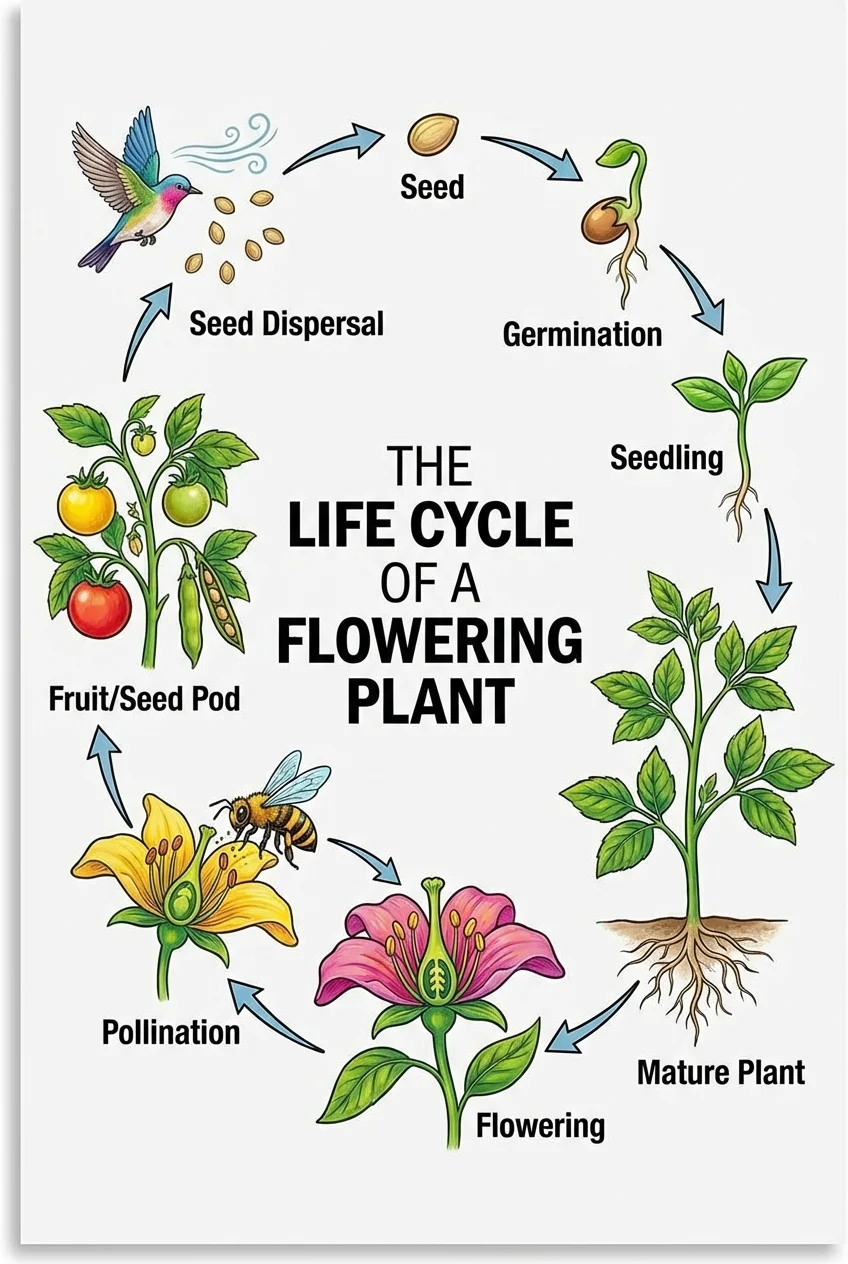
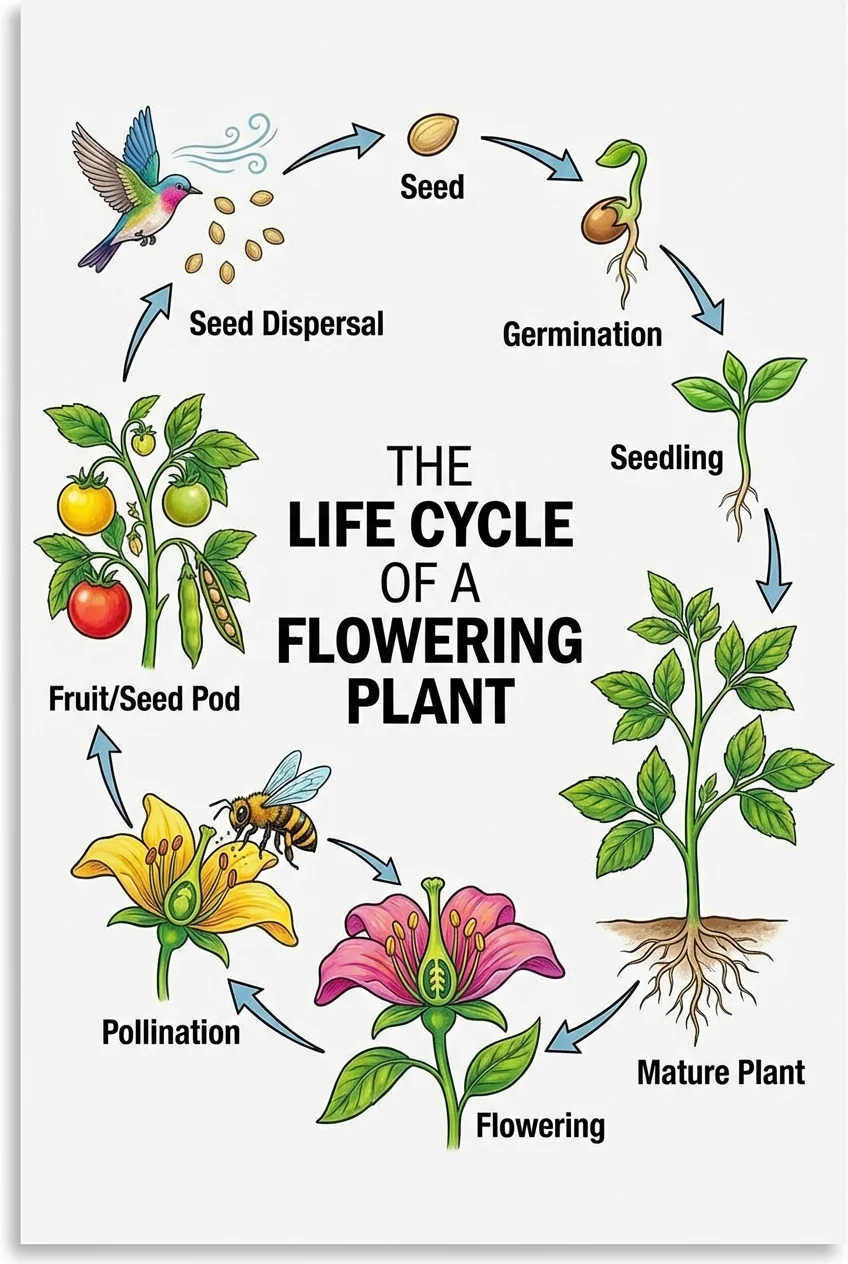 A complete labeled plant life cycle diagram showing all stages from seed to flower. Generate custom versions with our Life Cycle Diagram Generator.
Key stages for flowering plants:
- Seed — Contains the embryo and stored food
- Germination — Roots emerge, seed coat breaks open
- Seedling — First leaves (cotyledons) appear
- Vegetative Growth — Stem, leaves, and roots develop
- Flowering — Reproductive structures form
- Pollination — Pollen transfers to the pistil
- Fertilization — Seeds begin forming
- Seed Dispersal — Seeds spread to new locations
We Are Teachers provides 33 creative teaching ideas for plant life cycles, including hands-on experiments and printable activities.
3. Frog Life Cycle (Amphibian Metamorphosis)
Frogs demonstrate amphibian metamorphosis — the transformation from an aquatic tadpole to a terrestrial adult. According to the NCBI Bookshelf, this metamorphosis is initiated by thyroid hormones.
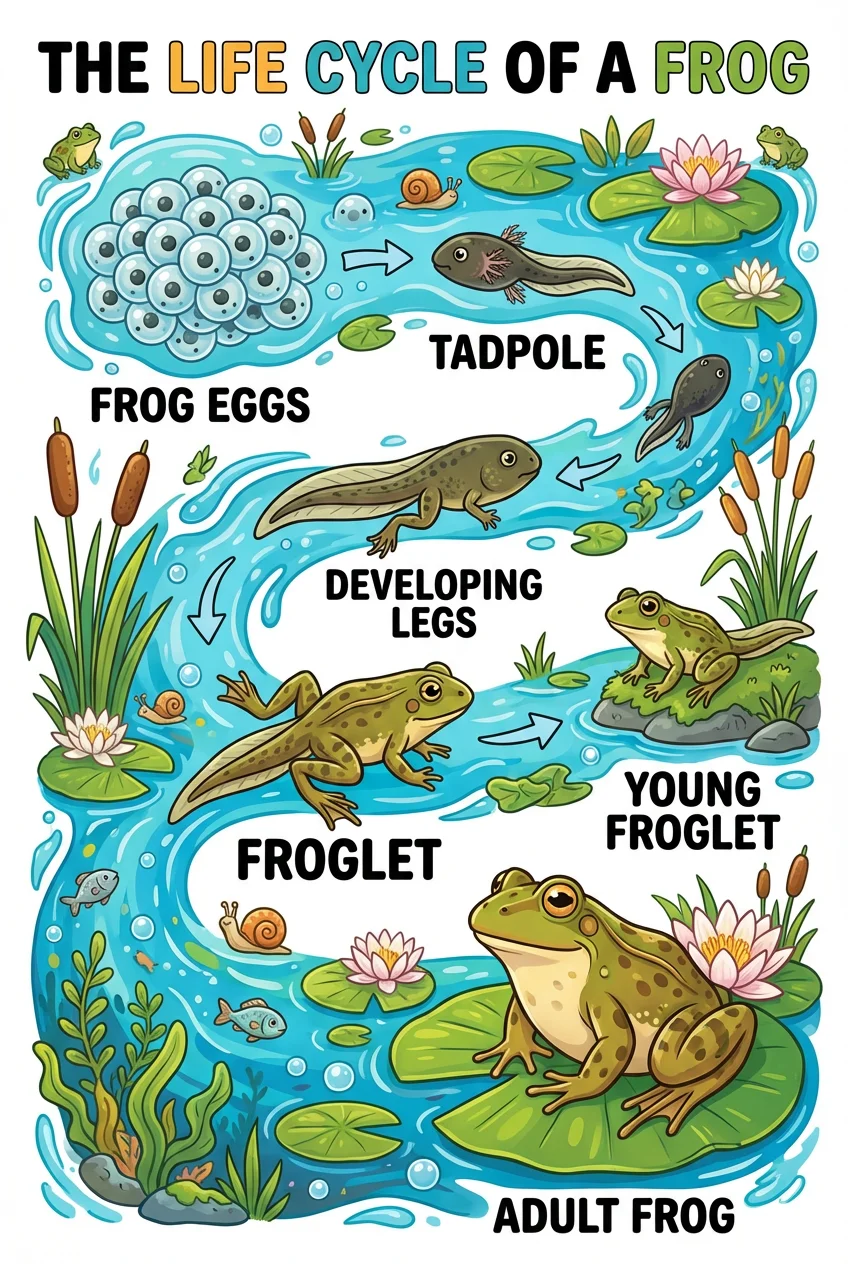 A colorful frog life cycle poster showing complete amphibian metamorphosis. Perfect for classroom display.
National Geographic Kids describes the key stages:
- Eggs (Frogspawn) — Laid in water in large clusters with protective jelly coating
- Tadpole — Aquatic stage with gills and tail, feeding on algae
- Tadpole with Legs — Hind legs develop first (5-9 weeks after hatching)
- Froglet — Front legs appear, tail shrinks, lungs develop
- Adult Frog — Fully terrestrial, ready to reproduce (2-4 years)
The entire transformation takes about 14 weeks, though tadpoles can speed up metamorphosis if they sense danger in their environment.
4. Chicken Life Cycle
The chicken life cycle is excellent for teaching about embryo development and is often paired with egg incubation projects.
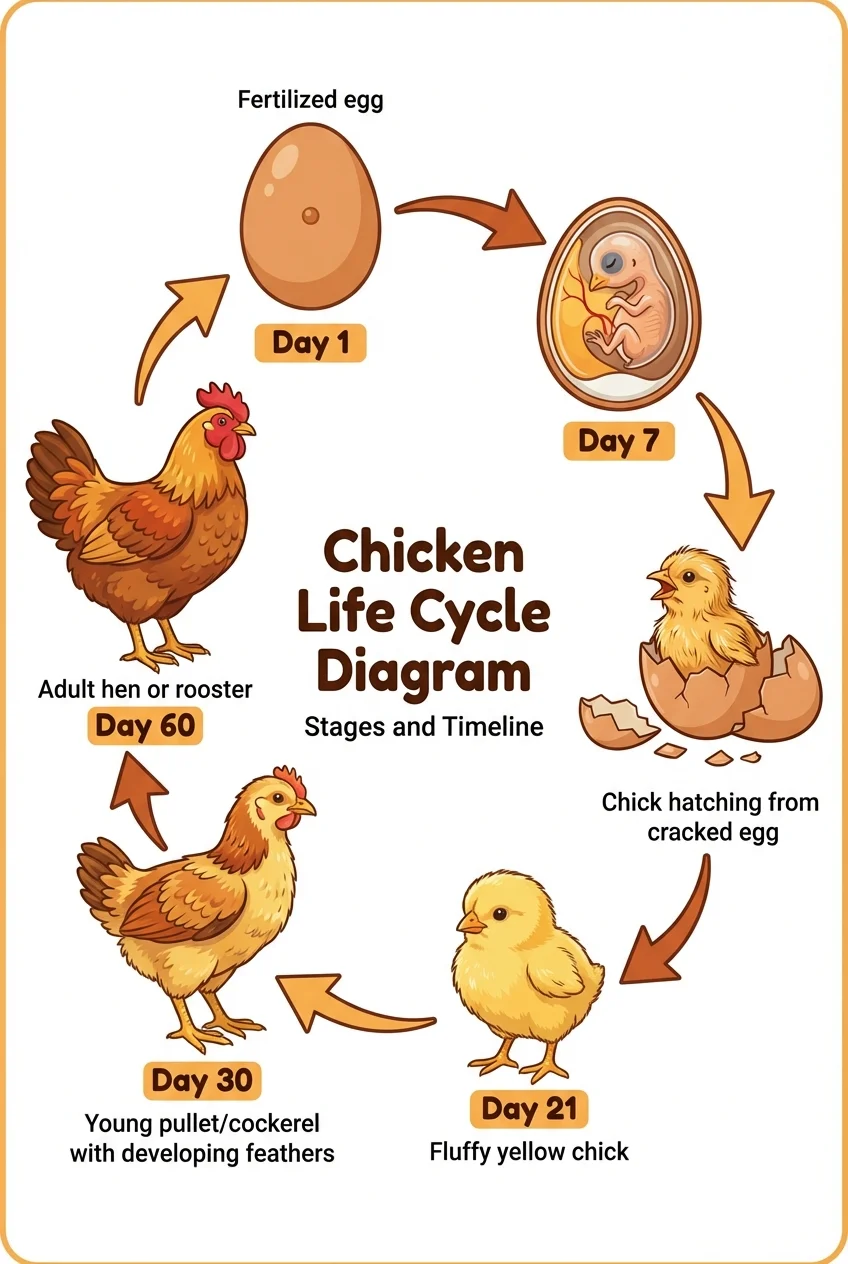 A chicken life cycle diagram showing development from egg to adult.
Key stages:
- Day 1: Fertilized egg begins development
- Day 7: Embryo is clearly visible
- Day 14: Feathers begin forming
- Day 21: Chick hatches from egg
- 6-8 weeks: Chick develops adult feathers
- 5-6 months: Mature adult ready to reproduce
Life Cycle Worksheets by Grade Level
Different grade levels require different levels of complexity. Here's what to focus on:
Pre-K and Kindergarten (Ages 3-5)
For the youngest learners, keep it simple:
- Focus on only 3-4 stages
- Use large, colorful images
- Emphasize familiar animals (butterflies, chickens)
- Include coloring activities
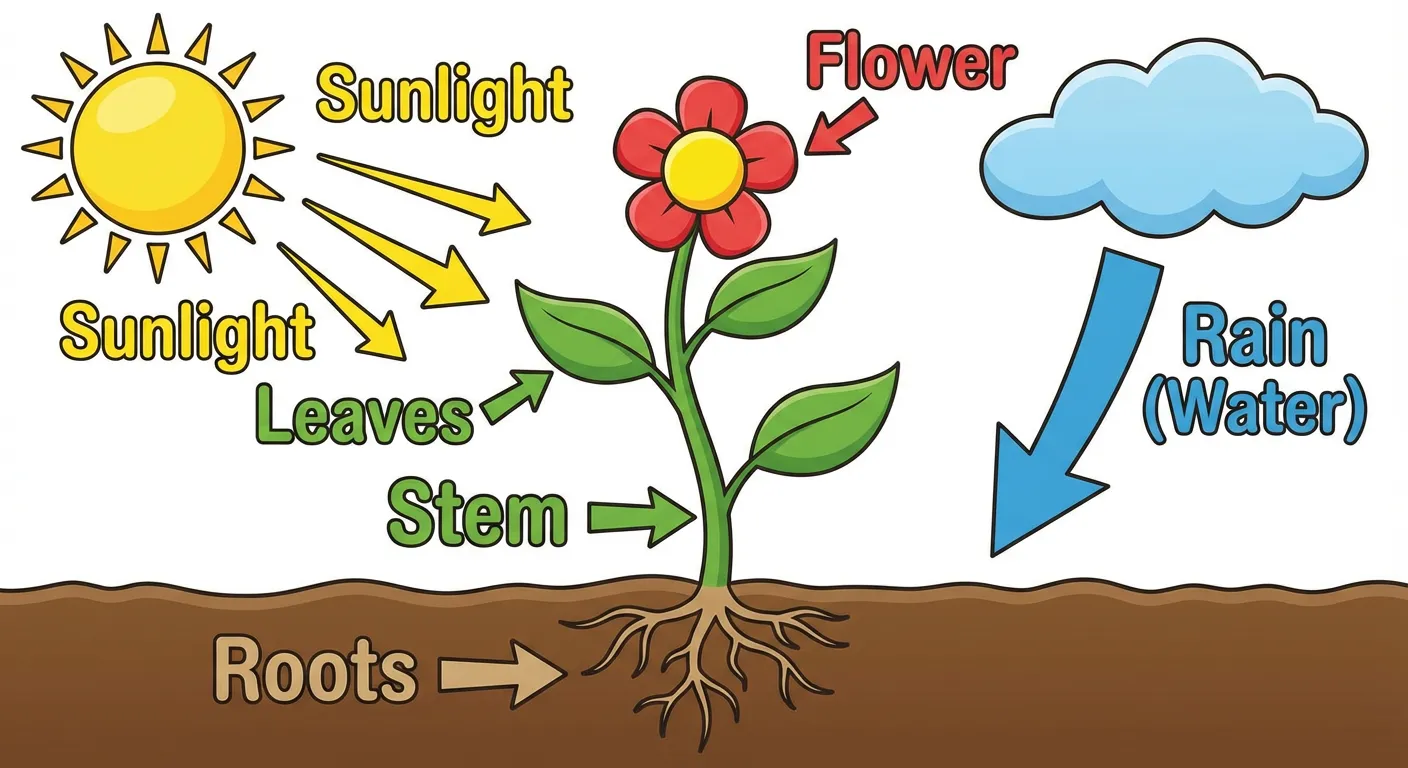 Simple plant diagrams help young learners understand basic structures before learning full life cycles.
Activities:
- Sequencing cards (put stages in order)
- Matching games (picture to picture)
- Coloring pages with simple labels
Elementary (Grades 1-3)
Students can handle more detail:
- All 4-5 stages of each life cycle
- Vocabulary building (larva, pupa, metamorphosis)
- Compare and contrast two life cycles
- Writing activities (describe each stage)
NGSS Alignment: Standard 3-LS1-1 specifically addresses life cycles at this level.
Upper Elementary (Grades 4-5)
More scientific terminology and connections:
- Complete vs. incomplete metamorphosis
- Environmental factors affecting life cycles
- Food chains and ecosystems
- Data collection and graphing
Middle School (Grades 6-8)
Advanced concepts:
- Hormonal control of metamorphosis
- Genetic inheritance across generations
- Evolutionary adaptations
- Comparative anatomy
 For older students, connect life cycles to cell division concepts. Create mitosis diagrams with our Mitosis Diagram Generator.
Labeled vs. Unlabeled Worksheets
Effective teaching requires both types of diagrams:
Labeled Diagrams (For Introduction)
Use labeled diagrams when first teaching a life cycle:
- Students follow along during instruction
- Serve as study guides and reference materials
- Post on classroom walls for reinforcement
Unlabeled Diagrams (For Assessment)
Use blank diagrams for quizzes and practice:
- Students fill in stage names
- Draw arrows showing progression
- Write descriptions of each stage
- Cut-and-paste sequencing activities
Pro tip: Introduce with labeled versions, then assess with unlabeled versions a few days later.
Hands-On Life Cycle Activities
Worksheets work best when paired with real observations. Here are teacher-tested favorites:
1. Butterfly Garden in the Classroom
Materials: Butterfly larvae kit, habitat container, host plants
Process: Order caterpillars from educational suppliers, observe metamorphosis over 3-4 weeks, release adult butterflies.
The Butterfly Conservation organization offers detailed guides for classroom butterfly projects.
2. Bean Plant Growing Experiment
Materials: Bean seeds, clear plastic cups, soil, water
Process: Plant seeds in clear cups against the sides so students can observe root and shoot development. Document growth over 2-3 weeks.
K5 Learning offers free worksheets to accompany plant growing experiments.
3. Frog Observation Journal
Materials: Tadpoles (if available), observation tank, magnifying glasses
Process: If you can obtain tadpoles ethically, students can observe metamorphosis firsthand. Otherwise, use time-lapse videos from resources like Earth Rangers.
4. Life Cycle Wheel Craft
Materials: Paper plates, brass fasteners, printed life cycle images
Process: Students create spinning wheels that show the circular nature of life cycles.
5. Compare and Contrast Charts
Have students create Venn diagrams comparing:
- Complete vs. incomplete metamorphosis
- Plant life cycle vs. animal life cycle
- Frog vs. butterfly metamorphosis
Create Custom Life Cycle Worksheets with AI
Need a specific life cycle diagram? ConceptViz lets you generate custom diagrams in seconds.
What you can create:
- Diagrams for any organism (plants, insects, amphibians, birds)
- Labeled or unlabeled versions
- Black & white (printer-friendly) or full color
- Grade-appropriate complexity levels
Try it free: Life Cycle Diagram Generator
Simply describe what you need, select your options, and download a print-ready worksheet.
More Free Resources
Looking for additional life cycle materials? Check out these trusted sites:
| Resource | What's Included | Best For |
|---|---|---|
| We Are Teachers | Plant life cycle bundle | Elementary |
| Superstar Worksheets | Cut & paste activities | K-3 |
| 123 Homeschool 4 Me | 50+ life cycle worksheets | All grades |
| Teachers Pay Teachers | Variety of free options | All grades |
| Mombrite | Free printables | K-3 |
| Oak National Academy | Full lesson plans | UK Key Stage 2 |
Related Science Topics
Life cycles connect to many other science concepts. Explore more with these tools:
- Photosynthesis Diagram Generator — How plants make food
- Plant Cell Diagram Generator — Plant cell structures
- Water Cycle Diagram Generator — Environmental cycles
- Mitosis Diagram Generator — Cell division and growth
Frequently Asked Questions
What are the 4 stages of a butterfly life cycle?
The four stages are: Egg (laid on host plants), Larva/Caterpillar (eating and growing stage), Pupa/Chrysalis (transformation stage), and Adult Butterfly (reproductive stage). This is called complete metamorphosis because each stage looks completely different.
What grade level are life cycles taught?
Life cycles are introduced in Pre-K/Kindergarten with simple concepts and revisited with increasing complexity through elementary school. The main NGSS standard (3-LS1-1) is addressed in 3rd grade, with more advanced concepts in grades 4-5 and middle school.
What's the difference between complete and incomplete metamorphosis?
Complete metamorphosis (butterflies, beetles, flies) has 4 distinct stages where the larva looks completely different from the adult. Incomplete metamorphosis (grasshoppers, dragonflies, cockroaches) has 3 stages where the nymph resembles a small wingless adult.
How long does butterfly metamorphosis take?
The entire butterfly life cycle takes about 3-5 weeks depending on species and temperature. The egg stage is 1-2 weeks, caterpillar stage is 2-4 weeks, pupa stage is 1-2 weeks, and adult lifespan averages 2-4 weeks.
Can I watch metamorphosis in my classroom?
Yes! Many educational suppliers sell butterfly larvae kits that allow students to observe the complete transformation from caterpillar to butterfly over 3-4 weeks. This hands-on experience is incredibly valuable for learning.
Are these worksheets aligned with NGSS standards?
Yes. Our life cycle worksheets align with NGSS standard 3-LS1-1 (developing models to describe that organisms have unique and diverse life cycles) and support the broader topic of "Inheritance and Variation of Traits: Life Cycles and Traits."
Ready to create your own life cycle worksheets? Try our free Life Cycle Diagram Generator and download print-ready diagrams for butterflies, plants, frogs, and more in seconds.
Categories
More Posts

3 Minute Thesis (3MT): Tips, Slide Examples & Presentation Guide (2026)
3MT tips and winning slide examples. Learn how to design your 3 Minute Thesis slide, structure your presentation, and avoid common mistakes.

How to Make a Pie Chart in Excel: Step-by-Step Guide (2026)
Learn how to create a pie chart in Excel, format labels, choose better colors, and avoid misleading slices. Includes Excel 365, 2024, 2021, and 2019 workflows.
Knee Anatomy Explained: Bones, Ligaments & Diagram
A clear guide to knee anatomy: the bones, cartilage, four main ligaments and tendons, how the knee joint moves, and how to read and label a knee diagram.