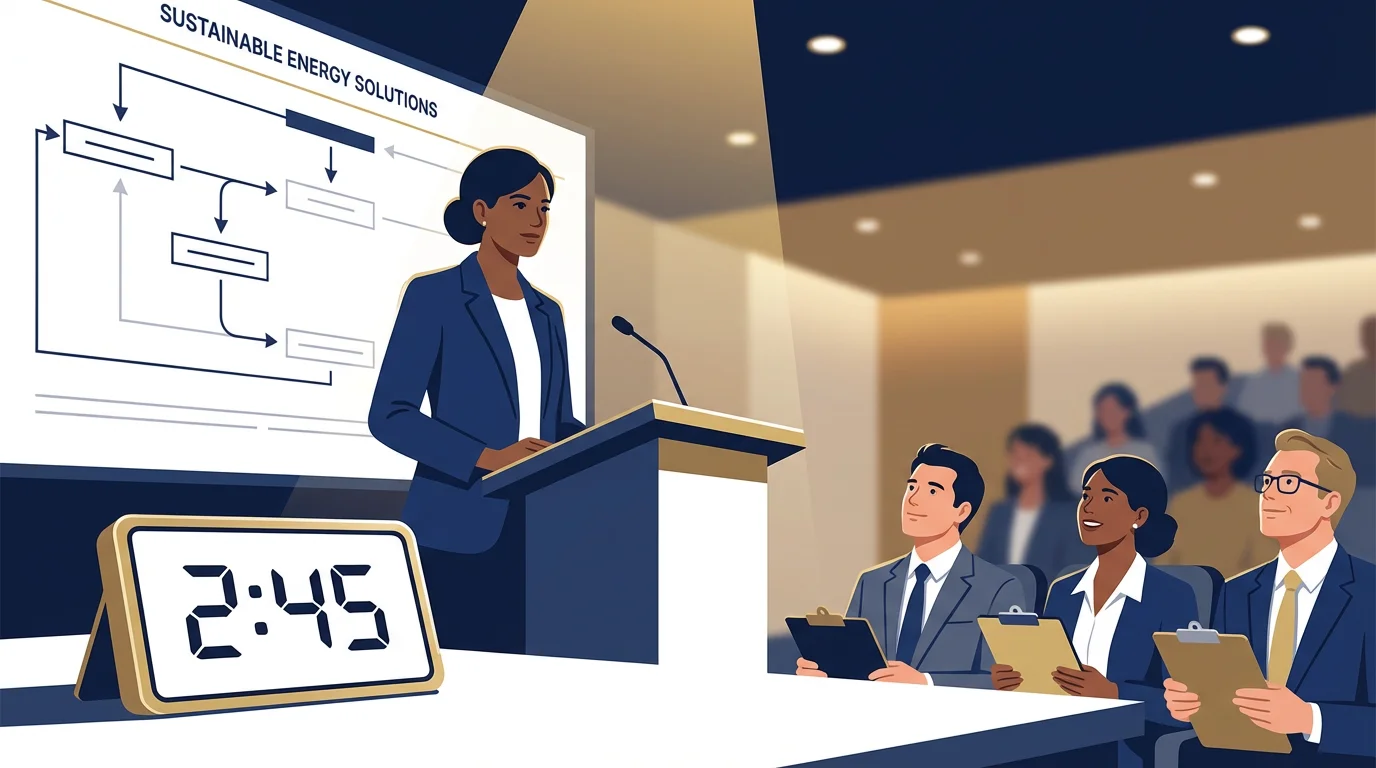
3 Minute Thesis (3MT): Tips, Slide Examples & Presentation Guide (2026)
3MT tips and winning slide examples. Learn how to design your 3 Minute Thesis slide, structure your presentation, and avoid common mistakes.
3 Minute Thesis (3MT): Tips, Slide Examples & Presentation Guide (2026)
The 3 Minute Thesis (3MT) competition challenges researchers to explain years of complex research in just 180 seconds—with only a single static slide. It's one of the most demanding yet rewarding academic presentation formats.
This guide covers 3MT tips, winning slide examples, and proven strategies to help you craft a compelling presentation.
AI Scientific Image Generator
Create a stunning 3MT slide with AI. Professional visuals in seconds.
Try it free →What is the 3 Minute Thesis (3MT)?
Origins and Global Reach
The 3 Minute Thesis competition was created by the University of Queensland, Australia in 2008. What started as a local initiative has grown into a global phenomenon, now held at over 900 universities across 85+ countries.
The competition's mission: develop researchers' academic, presentation, and communication skills while celebrating the importance of research.
Official Rules
| Rule | Requirement |
|---|---|
| Time Limit | Exactly 3 minutes (180 seconds) |
| Slides | One static slide only |
| Animations | Not permitted |
| Props | Not allowed |
| Notes | Cannot be used during presentation |
| Attire | Professional/business casual |
Important: Going over 3 minutes typically results in disqualification. Most competitions allow a 10-second grace period, but this varies.
The 3MT Judging Criteria
Understanding how you'll be evaluated is crucial for success. Most 3MT competitions use these four criteria, each weighted equally at 25%:
1. Comprehension & Content (25%)
- Did the presentation help the audience understand the research?
- Was the significance of the research clearly explained?
- Did the presenter convey enthusiasm for their work?
2. Engagement & Communication (25%)
- Did the presenter capture and maintain audience attention?
- Was the speech clear and well-paced?
- Did the presenter avoid excessive jargon?
3. Visual Presentation (25%)
- Did the slide enhance the presentation?
- Was the slide clear and easy to read?
- Did the visual support rather than distract from the message?
4. Time Management (25%)
- Did the presenter use the full 3 minutes effectively?
- Was the pacing appropriate throughout?
- Did the presentation have a clear structure?
Designing Your Single Slide
Your one slide must work hard. It needs to support your presentation without becoming a crutch or distraction.
The Golden Rule: Less is More
The biggest mistake presenters make is cramming too much onto their slide. Remember:
Your slide is a visual aid, not a script. If the audience is reading your slide, they're not listening to you.
What to Include
Essential elements:
- A compelling title or research question
- One high-quality, relevant image or diagram
- Your name and institution (small, corner placement)
Optional elements:
- 2-3 key words (not sentences)
- A simple data visualization
- Your research "tagline"
What to Avoid
- Blocks of text
- Bullet points
- Complex graphs or tables
- Multiple images competing for attention
- Animations or transitions
- Low-resolution images
- Busy backgrounds
Typography Guidelines
| Element | Recommended Size | Notes |
|---|---|---|
| Title | 44-60pt | Bold, attention-grabbing |
| Keywords | 28-36pt | Sans-serif, high contrast |
| Name/Affiliation | 18-24pt | Corner placement |
Font choices: Stick to clean, professional fonts like Arial, Helvetica, Calibri, or Open Sans. Avoid decorative fonts entirely.
For detailed typography guidance, see our Best Fonts for Scientific Posters.
Color Strategy
- Use 2-3 colors maximum
- Ensure high contrast between text and background
- Consider color blindness accessibility
- Match colors to your research field or institution
For science-appropriate color palettes, check our Scientific Color Palette Guide.
Structuring Your 3-Minute Presentation
With only 180 seconds, every word counts. Here's a proven structure:
The 30-60-60-30 Framework
| Section | Time | Purpose |
|---|---|---|
| Hook | 30 seconds | Grab attention, establish relevance |
| Problem & Context | 60 seconds | Explain what you're studying and why it matters |
| Your Research | 60 seconds | Describe your approach and key findings |
| Impact & Close | 30 seconds | Summarize significance, memorable ending |
Section 1: The Hook (0:00-0:30)
Your opening must immediately engage the audience. Effective techniques:
Ask a provocative question:
"What if I told you that the cure for antibiotic resistance might be hiding in your backyard soil?"
Share a surprising statistic:
"Every year, 700,000 people die from drug-resistant infections. By 2050, that number could reach 10 million."
Tell a brief story:
"When my grandmother was diagnosed with Alzheimer's, I watched her memories fade. That's when I decided to dedicate my research to understanding how we form memories."
Avoid:
- "My name is... and today I'll be talking about..."
- Starting with your thesis title
- Technical definitions
Section 2: Problem & Context (0:30-1:30)
Now bridge from your hook to your research. Explain:
- What's the problem or question?
- Why should non-experts care?
- What's the gap in current knowledge?
Use analogies to make complex concepts accessible:
"Think of cancer cells like cars without brakes—they can't stop dividing. My research is trying to reinstall those brakes."
Section 3: Your Research (1:30-2:30)
This is where you describe what YOU specifically did. Focus on:
- Your unique approach or methodology
- Key findings (not all findings—choose 1-2)
- Why your approach is innovative
Avoid drowning in details. You don't need to explain every step of your methodology. Focus on the insight, not the process.
Section 4: Impact & Close (2:30-3:00)
End with power. Address:
- So what? Why does this matter?
- What could this lead to?
- A memorable final line
Strong closing techniques:
- Circle back to your opening hook
- Paint a picture of the future your research enables
- End with a call to action or thought-provoking question
Presentation Delivery Tips
Content is only half the battle. How you deliver your presentation matters equally.
Voice & Pacing
- Speed: Aim for 130-150 words per minute (slower than normal conversation)
- Pauses: Use strategic pauses after key points
- Variation: Vary your tone to maintain interest
- Volume: Project to the back of the room
Body Language
- Stance: Stand confidently, feet shoulder-width apart
- Hands: Use natural gestures; avoid crossing arms or pockets
- Movement: Minimal movement; don't pace nervously
- Eye contact: Scan the entire audience, not just judges
Practice Strategy
- Write a full script (~400-450 words for 3 minutes)
- Memorize the structure, not word-for-word
- Practice out loud at least 20 times
- Time every practice run
- Record yourself and review
- Practice in front of non-experts and get feedback
- Do a dress rehearsal in similar conditions
Handling Nerves
- Arrive early to familiarize yourself with the space
- Do breathing exercises before your turn
- Remember: the audience wants you to succeed
- Focus on your passion for the research, not on being judged
Common 3MT Mistakes (And How to Avoid Them)
Mistake #1: The Slide is a Teleprompter
Problem: Putting your script on the slide and reading from it.
Fix: Your slide should have minimal text. Memorize your presentation so thoroughly that you never need to look at the slide.
Mistake #2: Too Much Jargon
Problem: Using specialized terminology that only experts understand.
Fix: Explain concepts as if talking to an intelligent friend outside your field. When you must use a technical term, immediately explain it.
Mistake #3: Methodological Deep Dive
Problem: Spending too much time on how you did the research instead of what you found.
Fix: Methodology should take no more than 20 seconds unless it's the innovation itself.
Mistake #4: No Clear Takeaway
Problem: Ending without a memorable message or clear significance.
Fix: Write your takeaway first, then build your presentation around it.
Mistake #5: Running Over Time
Problem: Exceeding 3 minutes and getting cut off or disqualified.
Fix: Practice with a timer. Aim for 2:50 to give yourself a buffer.
Mistake #6: Monotone Delivery
Problem: Speaking in a flat, academic tone that puts the audience to sleep.
Fix: Inject energy and passion. Vary your pitch, speed, and volume. Remember: you're telling a story, not reading a paper.
Mistake #7: Ignoring the Slide
Problem: Never referencing your visual, making it pointless.
Fix: Design your slide to support a specific moment in your presentation, then reference it naturally.
Mistake #8: The Humble Brag Close
Problem: Ending with "So my research is really important because..."
Fix: Show, don't tell. Let the significance emerge from your explanation rather than stating it directly.
3MT Slide Templates & Examples
Template 1: The Single Powerful Image
Layout:
- One full-bleed, high-impact image
- Title overlaid in contrasting color
- Name in corner
Best for: Research with strong visual elements (biology, medicine, environmental science)
Template 2: The Central Diagram
Layout:
- Key concept diagram centered
- Title at top
- 2-3 keywords around the diagram
Best for: Process-oriented research, mechanisms, workflows
Template 3: The Data Spotlight
Layout:
- One clear, simplified graph or chart
- Title that states the finding (not just the topic)
- Minimal labeling on the visualization
Best for: Research with a striking statistical finding
Template 4: The Before/After
Layout:
- Split screen showing contrast
- Title connecting the two halves
- Clear visual difference between states
Best for: Research showing transformation, change, or comparison
Winning 3MT Presentations: What They Have in Common
After analyzing dozens of winning 3MT presentations, these patterns emerge:
1. Strong Narrative Arc
Winners tell a story with a clear beginning, middle, and end. They create tension (the problem) and resolution (the solution).
2. Personal Connection
The best presenters explain why this research matters to them personally, not just academically.
3. Universal Relevance
Winners connect their specialized research to universal human experiences: health, family, environment, fairness.
4. Confident, Conversational Delivery
They speak with the audience, not at them. The tone is professional but approachable.
5. Memorable Closing
Winners end with impact—a provocative thought, a vivid image of the future, or a callback to their opening.
Frequently Asked Questions
How many words should a 3 minute thesis script be?
Aim for 400-450 words, which translates to roughly 130-150 words per minute—a comfortable, clear speaking pace. Speaking too fast (over 500 words) makes you difficult to follow; too slow (under 350 words) can seem like you're not using your time effectively. Practice with a timer to find your natural rhythm.
Can I use animations or videos in my 3MT slide?
No. Official 3MT rules explicitly prohibit animations, slide transitions, and embedded videos. Your single slide must be completely static. This levels the playing field and ensures the focus remains on your presentation skills rather than technical wizardry.
What if I go over 3 minutes?
Most competitions will cut you off or disqualify you for exceeding the time limit. Some allow a 10-second grace period, but don't count on it. Practice to hit 2:50 consistently, giving yourself a buffer. Being stopped mid-sentence is not a good look for judges.
Should I memorize my presentation word-for-word?
Memorize the structure and key phrases, but not every word. Word-for-word memorization often leads to robotic delivery and catastrophic failure if you forget a line. Know your content so well that you can present it naturally, like explaining your research to a curious friend.
How do I explain complex research to a general audience?
Use analogies, metaphors, and concrete examples. Instead of 'I study apoptotic pathways in neural tissue,' try 'I study why brain cells decide to self-destruct—and how we might convince them not to.' Avoid jargon, or immediately explain any technical term you must use.
Is it okay to use humor in a 3MT presentation?
Yes, when used appropriately. Light humor can make you memorable and likeable. However, avoid forced jokes, puns that require explanation, or humor that might not translate across cultures. The safest humor comes from genuine observations about your research experience.
What should I wear for a 3MT presentation?
Business casual to business professional is standard. Avoid distracting patterns, excessive jewelry, or anything that makes noise when you move. Dress one level above your audience—if students wear jeans, wear slacks. Comfort matters too; you want to focus on presenting, not adjusting your clothes.
How do I handle questions after my 3MT?
Most 3MT competitions don't include Q&A—it's purely the 3-minute presentation. However, judges may ask follow-up questions in finals. Prepare brief answers to obvious questions: methodology details, limitations, next steps. Keep answers concise; the Q&A is not a chance to add everything you couldn't fit in 3 minutes.
Conclusion
The 3 Minute Thesis challenges you to distill years of research into a compelling 3-minute story. Success requires:
- A single, clear message that non-experts can understand
- A minimal, impactful slide that supports without distracting
- An engaging delivery that shows your passion
- Rigorous practice until the 3 minutes feel natural
More than a competition, 3MT trains a skill every researcher needs: the ability to communicate complex ideas clearly and compellingly. Whether you win or not, the process makes you a better communicator.
Remember: you're not just presenting data—you're sharing why your research matters to the world. Make them care in 180 seconds, and you've already won.
Need to create a compelling diagram for your 3MT slide? Try ConceptViz to generate clear, professional scientific visuals from simple text descriptions. Create the perfect centerpiece for your one-slide presentation without any design skills required.
Categories
More Posts
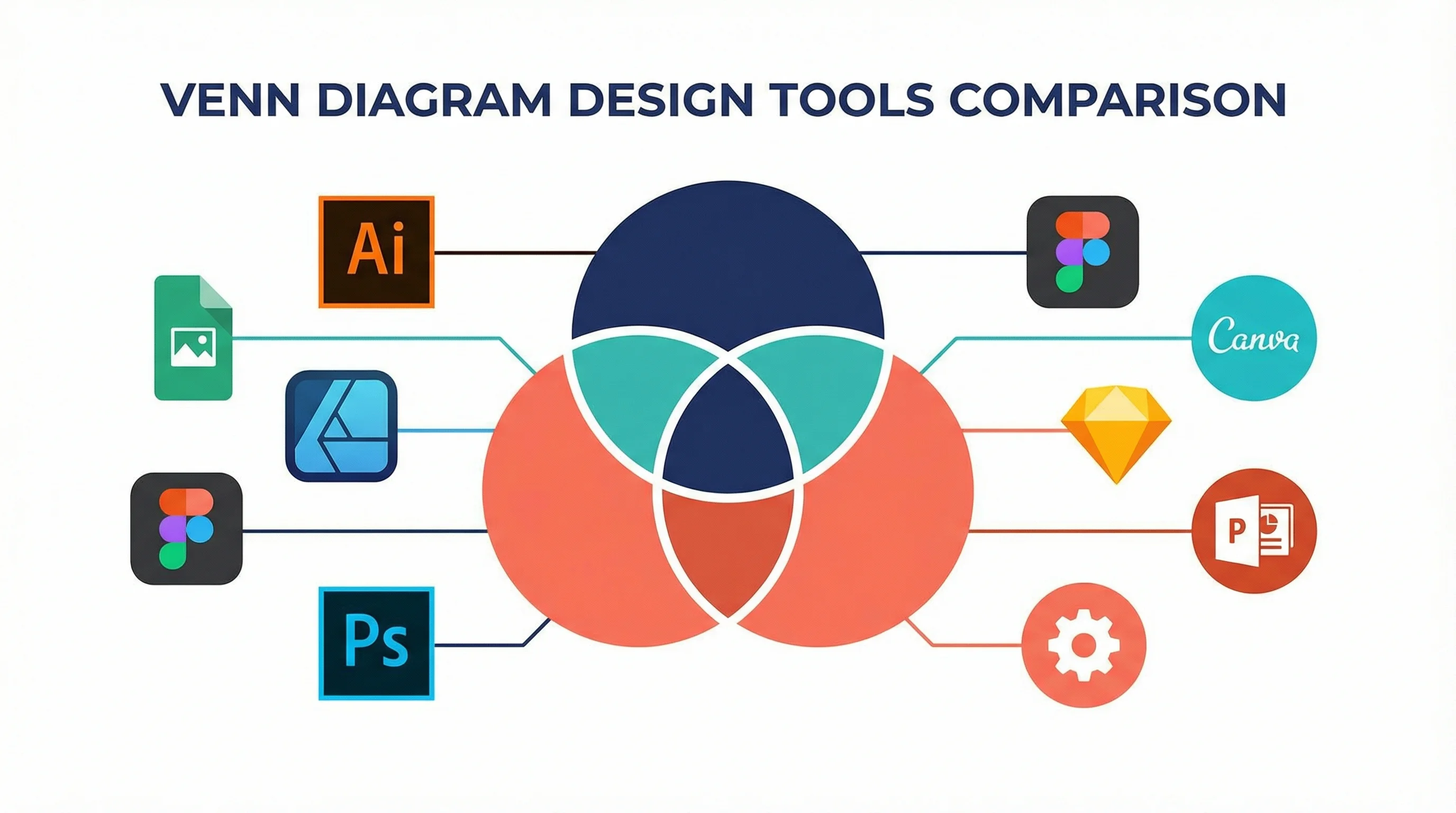
Canva Venn Diagram Maker: Complete Guide + Free Alternatives (2026)
Learn how to make a Venn diagram in Canva step by step, see its limitations, and explore the best free alternatives, including AI-powered tools.
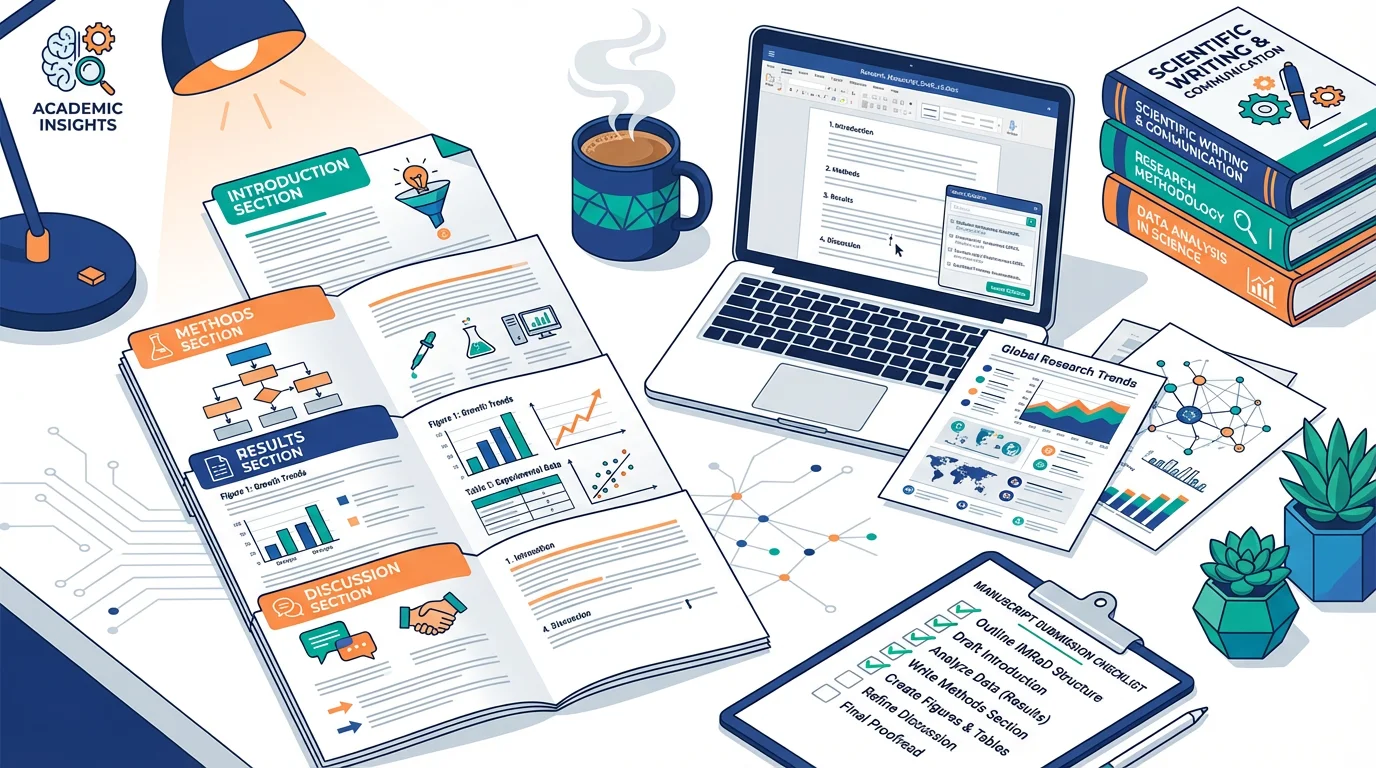
How to Write a Research Manuscript: Complete IMRaD Format Guide
A comprehensive IMRaD format guide to writing research manuscripts. Learn the best writing order, avoid common rejection reasons, and get your paper published.
5 Best Free BioRender Alternatives in 2026 (For Science Illustrations)
Free BioRender alternatives for science illustrations. Compare Canva, ConceptViz AI, draw.io + Bioicons, Mind the Graph and more. No $420/year subscription.