Meiosis Diagram Meiosis Diagrams
Create free meiosis diagrams showing all stages of cell division in seconds. Generate labeled and unlabeled versions illustrating Prophase I, Metaphase I, Anaphase I, Telophase I, and Meiosis II with crossing over and independent assortment. Perfect for biology worksheets, quizzes, and classroom presentations.
Meiosis Diagram Generator
Free to try ·
Your meiosis diagram will appear here
Describe what you need and click Generate
Meiosis Diagram Examples
Browse our collection or generate your own custom diagram above
Complete Meiosis Diagram (Labeled)
Comprehensive labeled meiosis diagram covering both Meiosis I and Meiosis II stages for biology education.
Crossing Over in Prophase I
Focused diagram showing the crossing over process during Prophase I with chiasma formation and genetic recombination.
Independent Assortment Diagram
Visual explanation of independent assortment showing how chromosome combinations create genetic diversity.
Meiosis vs Mitosis Comparison
Side-by-side comparison diagram highlighting the key differences between meiosis and mitosis.
Meiosis Worksheet (Unlabeled)
Unlabeled meiosis worksheet for quizzes and student labeling exercises.
Meiosis Classroom Poster
Vibrant classroom poster illustrating the complete meiosis process for wall display.
What is Meiosis?
Meiosis is a specialized type of cell division that reduces the chromosome number by half, producing four genetically unique haploid cells from a single diploid parent cell. This process is essential for sexual reproduction, as it generates the gametes (sperm and egg cells) that combine during fertilization to restore the full chromosome number. Unlike mitosis, which produces identical copies, meiosis introduces genetic variation through two key mechanisms: crossing over during Prophase I and independent assortment during Metaphase I. These processes ensure that each gamete carries a unique combination of genetic material, which is fundamental to biodiversity and evolution.
Stages of Meiosis
**Meiosis I (Reductional Division):** • **Prophase I**: The longest and most complex phase. Homologous chromosomes pair up (synapsis) to form tetrads, and crossing over occurs at points called chiasmata, exchanging genetic material between non-sister chromatids. • **Metaphase I**: Homologous chromosome pairs (bivalents) line up at the cell equator. The orientation of each pair is random, leading to independent assortment. • **Anaphase I**: Homologous chromosomes separate and move to opposite poles. Unlike mitosis, sister chromatids remain joined at their centromeres. • **Telophase I**: Two haploid cells form, each containing one chromosome from each homologous pair. **Meiosis II (Equational Division):** • **Prophase II**: Chromosomes condense again and spindle fibers form in each haploid cell. • **Metaphase II**: Chromosomes align at the equator of each cell. • **Anaphase II**: Sister chromatids finally separate and move to opposite poles. • **Telophase II**: Four genetically unique haploid daughter cells are produced, each with half the original chromosome number.
Meiosis vs Mitosis
Understanding the differences between meiosis and mitosis is a core concept in biology education: **Meiosis**: - Two rounds of division (Meiosis I and Meiosis II) - Produces 4 genetically unique haploid cells - Includes crossing over and independent assortment - Reduces chromosome number by half (diploid to haploid) - Used exclusively for gamete production (sperm and egg cells) - Homologous chromosomes pair up during Prophase I **Mitosis**: - One round of division - Produces 2 genetically identical diploid cells - No crossing over or independent assortment - Maintains the same chromosome number (diploid to diploid) - Used for growth, repair, and asexual reproduction - No homologous pairing occurs Our meiosis diagram generator helps students visualize these differences clearly, making it easier to study for exams and understand the biological significance of each process.
Best Practices for Meiosis Diagrams
Creating effective meiosis diagrams requires attention to several key details that help students understand this complex process: • **Color-code chromosomes**: Use distinct colors (such as red and blue) to represent maternal and paternal homologous chromosomes. This makes it easy to track chromosome movement through each stage and visualize crossing over. • **Show crossing over clearly**: Highlight the chiasma points in Prophase I where genetic material is exchanged. Use mixed colors at crossover points to show recombinant chromosomes. • **Label ploidy at each stage**: Indicate the chromosome number (2n or n) at each stage to reinforce the concept of chromosome reduction in Meiosis I versus equational division in Meiosis II. • **Distinguish Meiosis I from Meiosis II**: Clearly separate the two divisions visually, emphasizing that homologous chromosomes separate in Meiosis I while sister chromatids separate in Meiosis II. • **Include key vocabulary**: Label structures such as bivalents, chiasmata, kinetochore fibers, and the metaphase plate to reinforce terminology alongside visual learning. • **Compare with mitosis**: When possible, include a side-by-side comparison to help students understand what makes meiosis unique and why it is essential for sexual reproduction.
Frequently Asked Questions
More Biology Diagram Tools
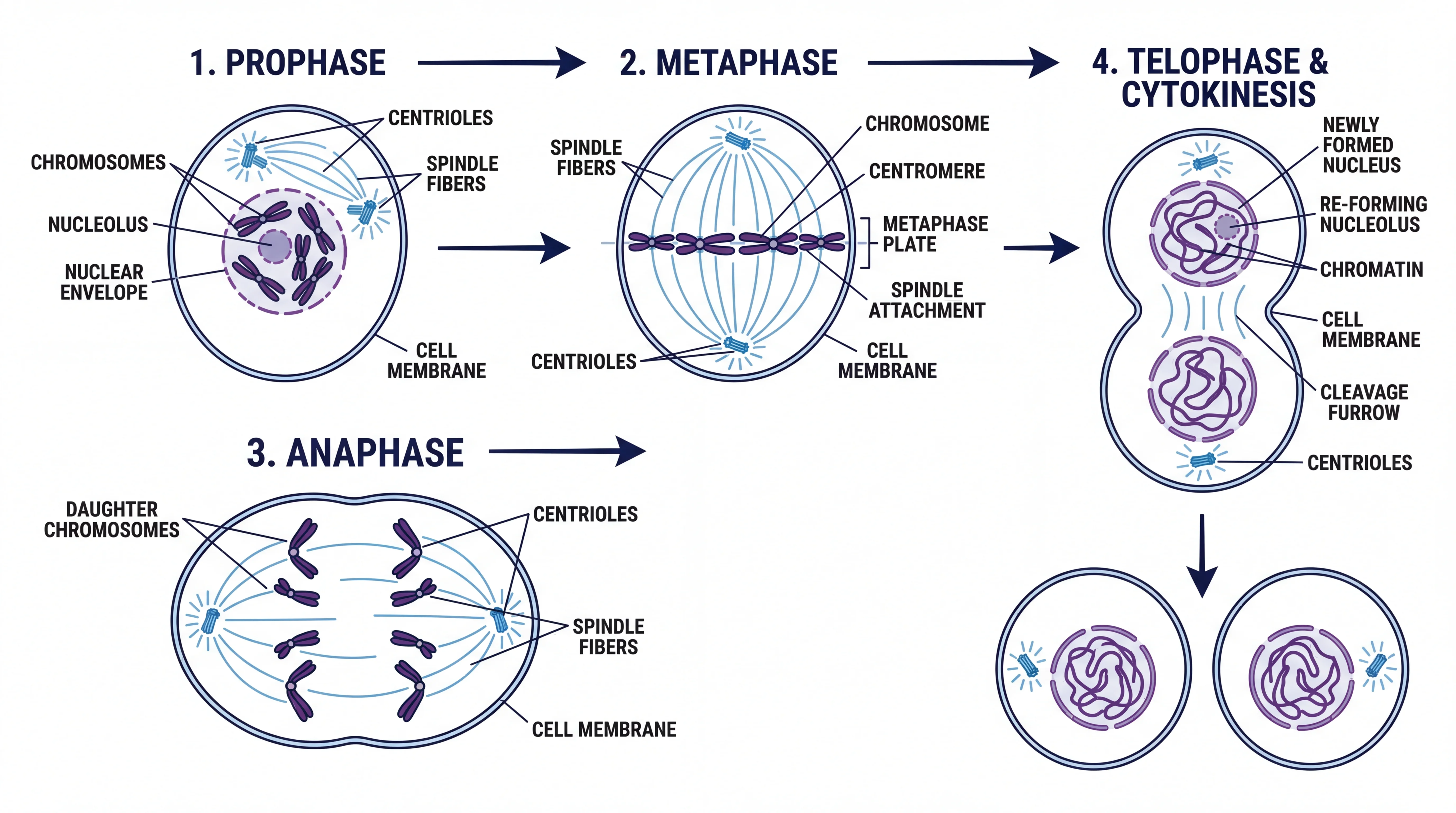
BiologyMitosis Diagram Generator
Create detailed mitosis diagrams showing prophase, metaphase, anaphase, and telophase phases of cell division.
BiologyPlant Cell Diagram Generator
Generate plant cell diagrams showing cell wall, chloroplasts, and central vacuole for biology class.
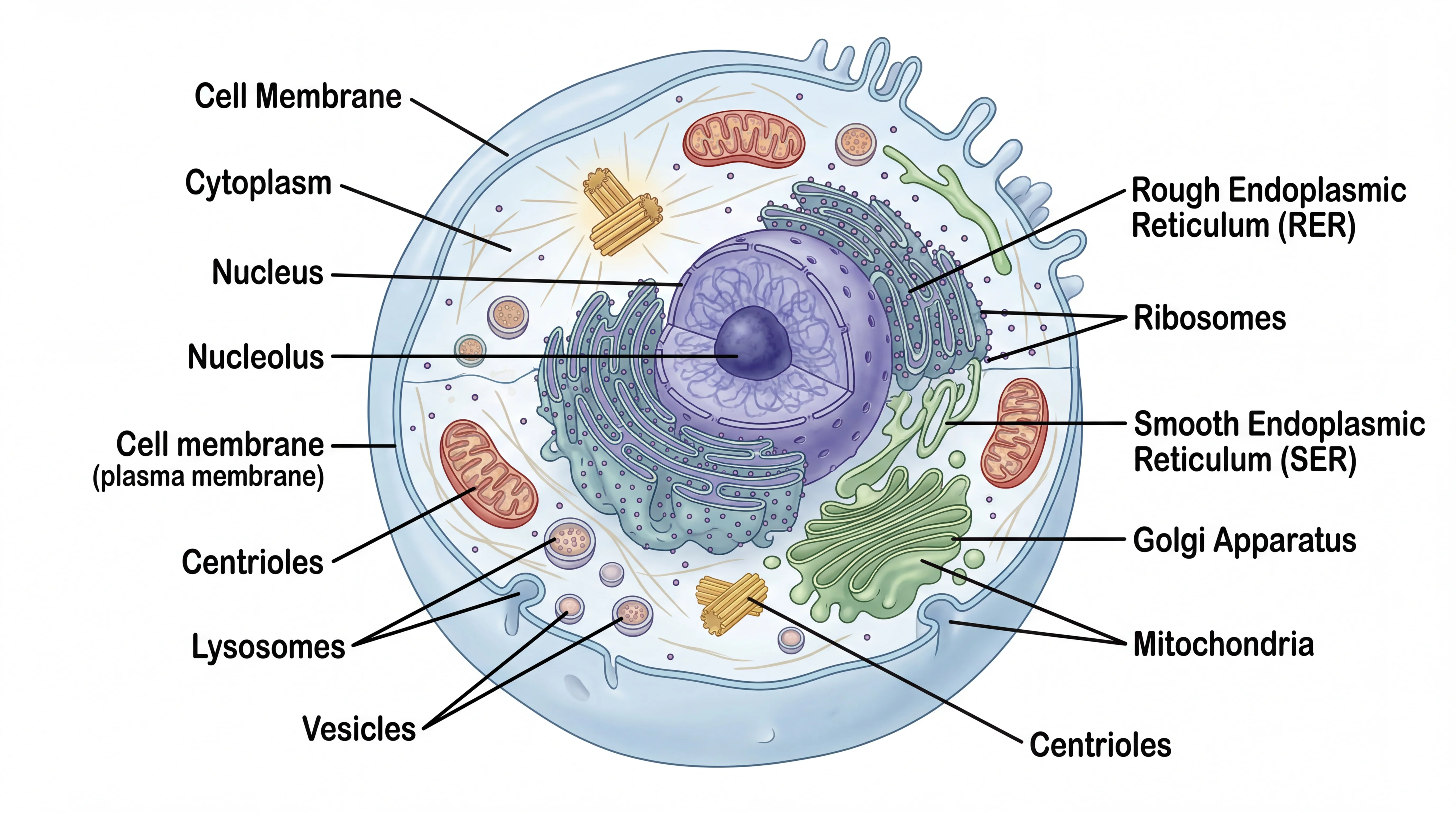
BiologyAnimal Cell Diagram Generator
Create labeled and unlabeled animal cell diagrams for biology worksheets and exams.