Volcano Diagram Generator Labeled Volcano Diagrams
Create labeled volcano diagrams with AI. Show the magma chamber, conduit, vent, crater, lava flows, ash cloud, side vent, and layers of lava and ash — or compare shield, composite, and cinder cone types. Download as PNG for earth science class, notes, or worksheets.
AI Volcano Diagram Generator
Free to try ·
Your volcano diagram will appear here
Describe the parts to label and click Generate
Volcano Diagram Examples
Labeled cross-sections, volcano type comparisons, eruption process diagrams, and blank worksheets
Labeled Volcano Cross-Section
A full cross-section with every major part of a volcano labeled — from magma chamber to ash cloud.
Simple Volcano Diagram for Kids
A clean, simplified version with the main parts — ideal for elementary and middle school.
Volcano Types Comparison
Shield, composite (stratovolcano), and cinder cone — three volcano shapes side by side.
How a Volcano Erupts
Arrows trace magma from the mantle through the conduit and vent to lava and ash at the surface.
Magma Chamber Detail
A close-up of the underground plumbing — magma chamber, conduit, dikes, and sills.
Blank Volcano Worksheet
An unlabeled outline with leader lines — print as a quiz or fill-in worksheet.
What does a volcano diagram show?
A volcano diagram is a labeled cross-section that shows the internal structure and surface features of a volcano. A complete diagram identifies the magma chamber (where molten rock collects underground), the conduit or pipe (the channel carrying magma upward), the main vent (where magma reaches the surface), the crater (the depression at the top), lava flows, ash cloud, and often a side vent with a secondary or parasitic cone. Inside the volcano, alternating layers of hardened lava and compacted ash record its eruption history. This generator creates clear, labeled volcano diagrams for earth science and geography classes.
The main parts of a volcano
- Magma chamber: a reservoir of molten rock deep underground that feeds the volcano. Pressure builds here until an eruption occurs.
- Conduit (pipe): the channel that connects the magma chamber to the surface; magma travels upward through it during an eruption.
- Vent: the opening at the surface where magma, gases, and ash escape. A volcano may have one main vent and several smaller side vents.
- Crater: the bowl-shaped depression at the summit, formed by eruptions or collapse. A caldera is a much larger version formed by major collapse.
- Lava and ash layers: each eruption adds a new layer of lava or ash, building up the cone over time — clearly visible in a cross-section.
- Side vent and parasitic cone: secondary openings on the flanks of the volcano that form their own smaller cones.
The three main types of volcanoes
- Shield volcano: broad and gently sloping, built from runny (low-viscosity) basaltic lava that spreads far before cooling. Mauna Loa in Hawaii is a famous example.
- Composite volcano (stratovolcano): the classic steep-sided, cone-shaped volcano built from alternating layers of lava and ash. Mount Fuji and Mount St. Helens are composite volcanoes.
- Cinder cone: the smallest and simplest type, formed from fragments of lava (cinders) piling up around a single vent. They have steep sides and a symmetrical shape.
How a volcano erupts
Eruptions begin when magma in the chamber becomes buoyant enough — through gas pressure or new magma input — to force its way up the conduit. As it rises, pressure drops and dissolved gases expand, driving the eruption. Runny lava flows quietly downhill; thick, viscous magma traps gas and explodes, blasting ash, rock fragments (tephra), and gases high into the atmosphere. The ash cloud can reach the stratosphere and spread over vast distances. After an eruption, the vent may collapse to form a crater, or magma may solidify in the conduit to plug it until the next eruption.
Tips for a clear volcano diagram
Choose the type of diagram you need: a full labeled cross-section for study notes, a simplified version for younger students, a types-comparison for a broader earth-science unit, or a blank worksheet for a quiz. Specify which parts you want labeled — including internal structures like the conduit and magma chamber — and how much detail you need. Generating a few variants and downloading the clearest one for your slides or handout takes only seconds.
Frequently Asked Questions
Related Earth Science Tools
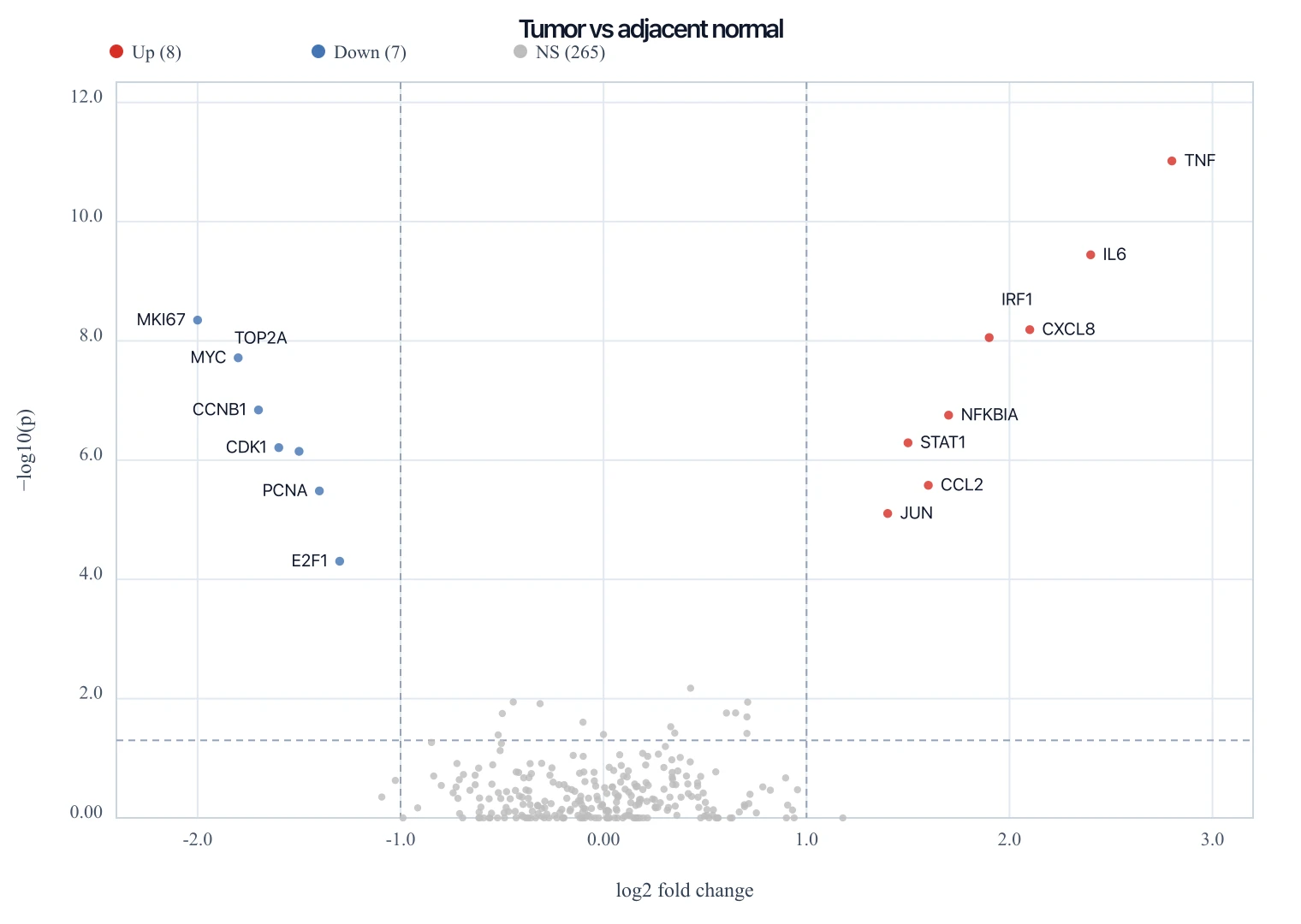 Research
Volcano Plot Generator
Make an RNA-seq volcano plot from a DESeq2 table — this is the statistical figure, not a geology diagram.
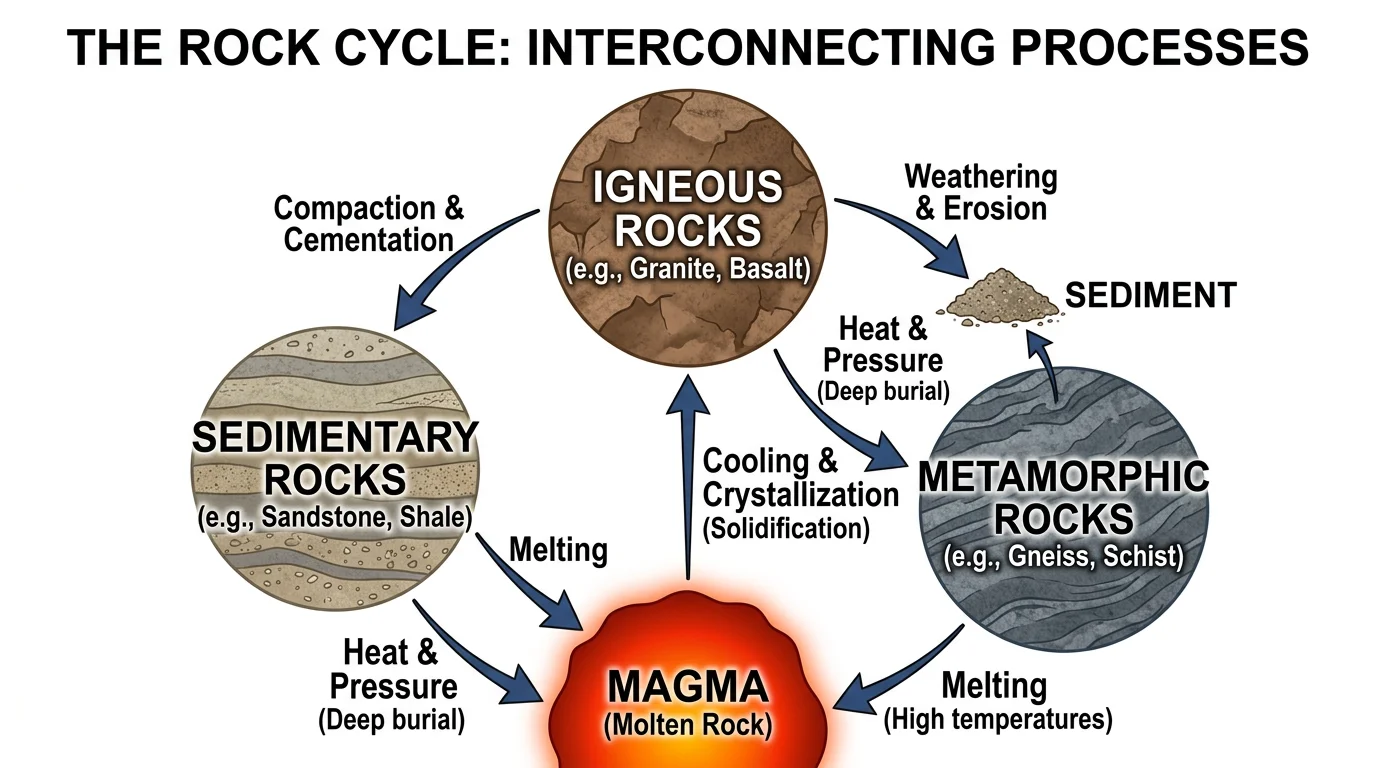 Earth Science
Rock Cycle Diagram Generator
Create labeled rock cycle diagrams showing igneous, sedimentary, and metamorphic rocks and the processes that connect them.
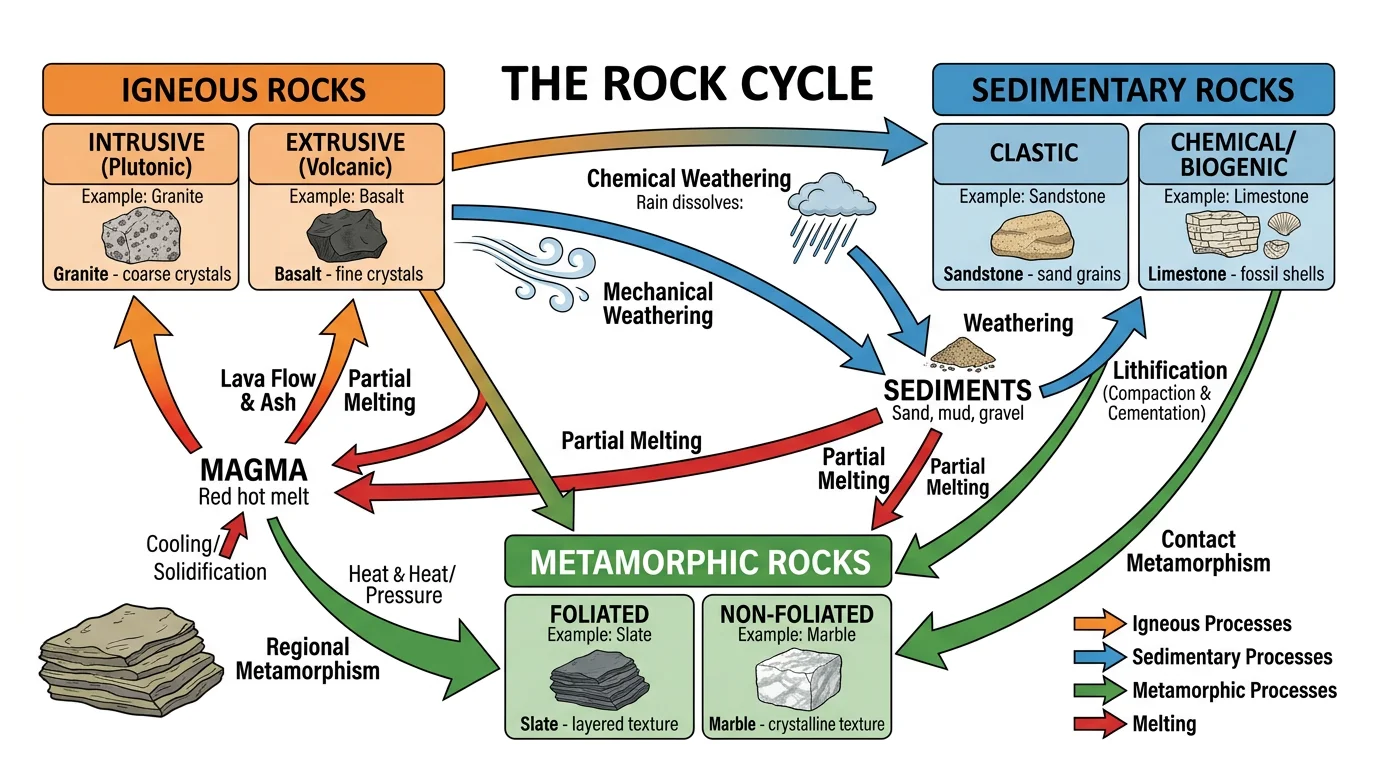 Earth Science
Water Cycle Diagram Generator
Generate labeled water cycle diagrams covering evaporation, condensation, precipitation, and runoff for earth science class.
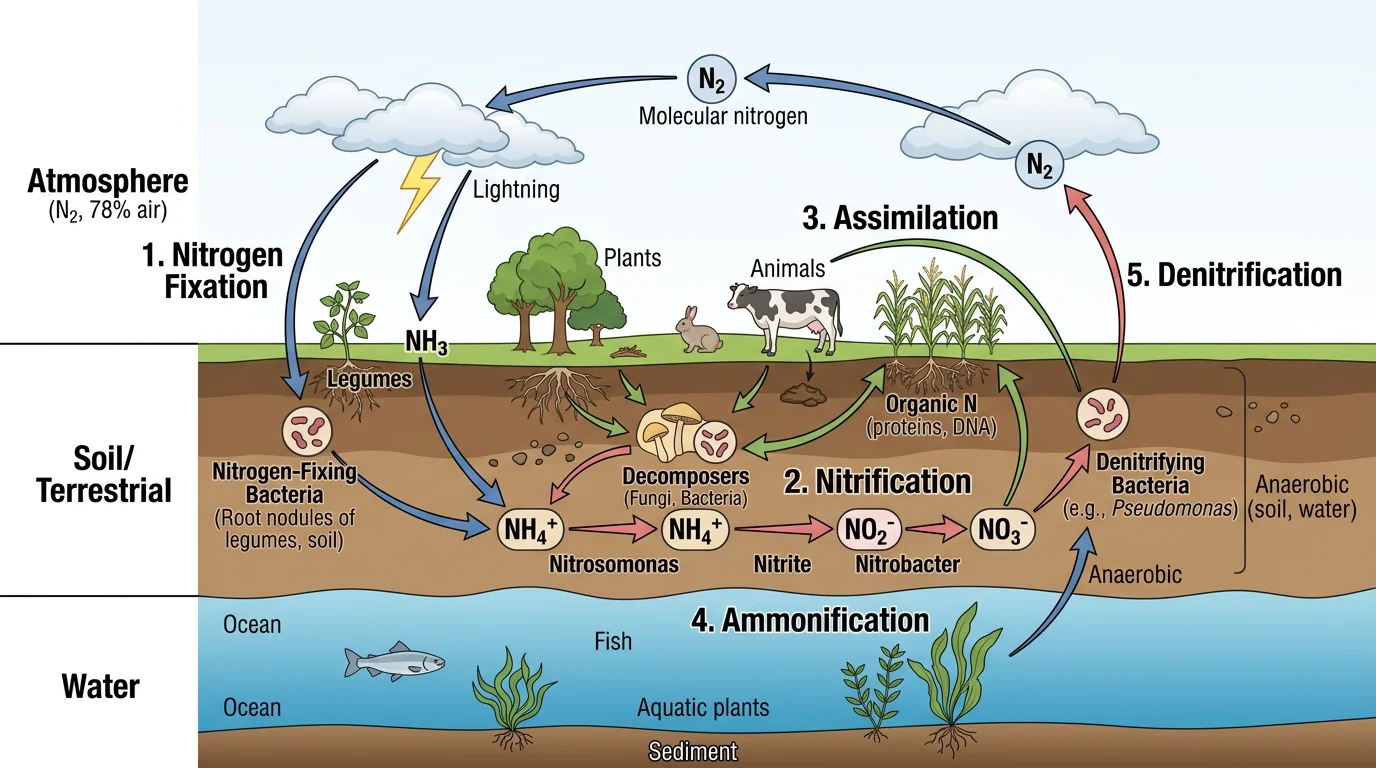 Biology
Nitrogen Cycle Diagram Generator
Create labeled nitrogen cycle diagrams showing fixation, nitrification, denitrification, and decomposition.