Solar System Diagram Generator Labeled Solar System Diagrams
Create labeled solar system diagrams with AI. Show the Sun and all eight planets in order — Mercury, Venus, Earth, Mars, Jupiter, Saturn, Uranus, and Neptune — plus the asteroid belt, planetary orbits, relative sizes, and the dwarf planet Pluto. Download as PNG for science class, notes, or worksheets.
AI Solar System Diagram Generator
Free to try ·
Your solar system diagram will appear here
Describe the planets and details to include and click Generate
Solar System Diagram Examples
Labeled overviews, planets in order, inner vs outer planet comparisons, size charts, and blank worksheets
Labeled Solar System Diagram
A complete labeled solar system diagram — the Sun, all eight planets in order, the asteroid belt, and Pluto.
Planets in Order from the Sun
All eight planets in order from the Sun, each labeled with its name and a memorable fact.
Simple Solar System for Kids
A clean, simplified solar system with labeled planets — perfect for elementary students.
Inner vs Outer Planets
Inner terrestrial planets vs outer gas and ice giants — separated by the asteroid belt.
Planet Size Comparison
All eight planets lined up by size next to the Sun, with diameter labels showing just how large Jupiter and Saturn are.
Blank Solar System Worksheet
An unlabeled solar system outline — print as a quiz or fill-in worksheet for science class.
What does a solar system diagram show?
A solar system diagram is a labeled illustration of the Sun and the eight planets orbiting it. A complete diagram shows the Sun at the center, the eight planets in order from the Sun (Mercury, Venus, Earth, Mars, Jupiter, Saturn, Uranus, Neptune), each planet's elliptical orbital path, the asteroid belt between Mars and Jupiter, and often the dwarf planet Pluto beyond Neptune. Diagrams may also show relative planet sizes, the distinction between inner terrestrial planets and outer gas and ice giants, Saturn's rings, and key facts about each planet. This generator creates clear labeled solar system diagrams for science class, notes, and worksheets.
The eight planets in order from the Sun
- Mercury: the smallest planet and the closest to the Sun. It has no atmosphere and experiences extreme temperature swings between its day and night sides.
- Venus: the hottest planet despite not being the closest to the Sun. Its thick carbon dioxide atmosphere creates a runaway greenhouse effect, raising surface temperatures to around 465 °C.
- Earth: the third planet and the only one known to support life. It has liquid water on its surface and a protective atmosphere.
- Mars: the Red Planet, named for its iron-oxide-covered surface. It has the tallest volcano in the solar system (Olympus Mons) and evidence of ancient liquid water.
- Jupiter: the largest planet, a gas giant more than twice as massive as all other planets combined. Its Great Red Spot is a storm that has raged for centuries.
- Saturn: a gas giant famous for its spectacular ring system made of ice and rock. Saturn is less dense than water and has more than 140 known moons.
- Uranus: an ice giant that rotates on its side — its axial tilt is about 98°. It has faint rings and a blue-green color from methane in its atmosphere.
- Neptune: the farthest planet from the Sun, a dark and cold ice giant with the strongest winds in the solar system. It takes 165 Earth years to complete one orbit.
Inner planets vs outer planets
The solar system is divided into inner and outer regions by the asteroid belt between Mars and Jupiter. The four inner planets — Mercury, Venus, Earth, and Mars — are called terrestrial planets. They are small, rocky, and relatively dense, with solid surfaces. The four outer planets — Jupiter, Saturn, Uranus, and Neptune — are much larger. Jupiter and Saturn are gas giants composed mainly of hydrogen and helium. Uranus and Neptune are ice giants composed mainly of water, methane, and ammonia ices under high pressure. Understanding this division is a core concept in earth and space science.
The asteroid belt and Pluto
The asteroid belt is a region between the orbits of Mars and Jupiter containing millions of rocky and metallic bodies called asteroids. The largest asteroid, Ceres, is also classified as a dwarf planet. Beyond Neptune lies the Kuiper Belt, a region of icy bodies including Pluto. Pluto was classified as the ninth planet until 2006, when the International Astronomical Union redefined "planet" and reclassified it as a dwarf planet. It is still commonly included in solar system diagrams for its historical and educational significance.
Tips for creating a clear solar system diagram
Choose the type of diagram that fits your purpose: a fully labeled overview for study notes, a simplified version with planet names and key facts for younger students, an inner-vs-outer comparison for a unit on planet types, a size comparison to show scale, or a blank worksheet for a quiz. You can specify whether you want orbital paths, relative sizes, the asteroid belt, Saturn's rings, Pluto, or specific planet facts included. Generating a few variants and downloading the clearest one for your slides or handout takes only seconds.
Frequently Asked Questions
Related Science Tools
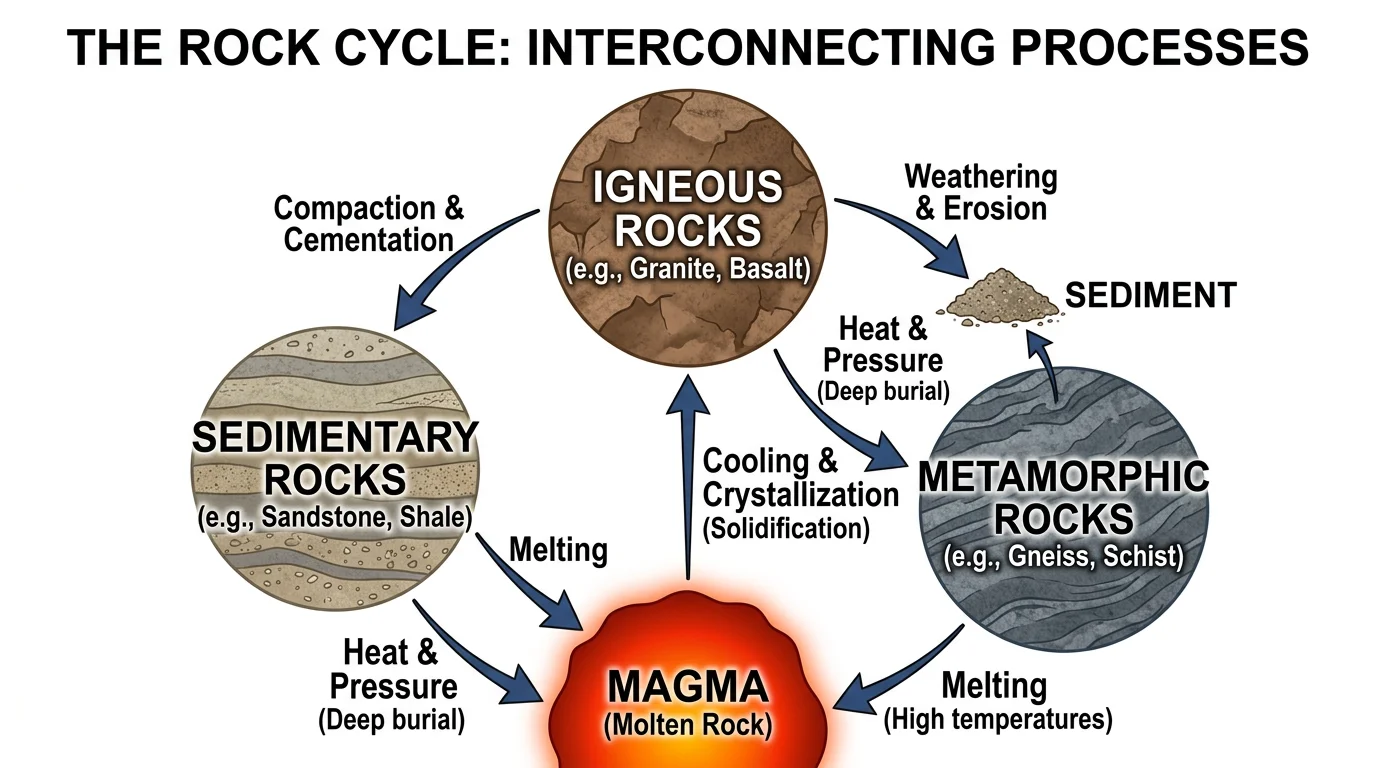 Earth Science
Rock Cycle Diagram Generator
Create labeled rock cycle diagrams showing igneous, sedimentary, and metamorphic rocks and the processes that connect them.
 Earth Science
Water Cycle Diagram Generator
Generate labeled water cycle diagrams covering evaporation, condensation, precipitation, and runoff for earth science class.
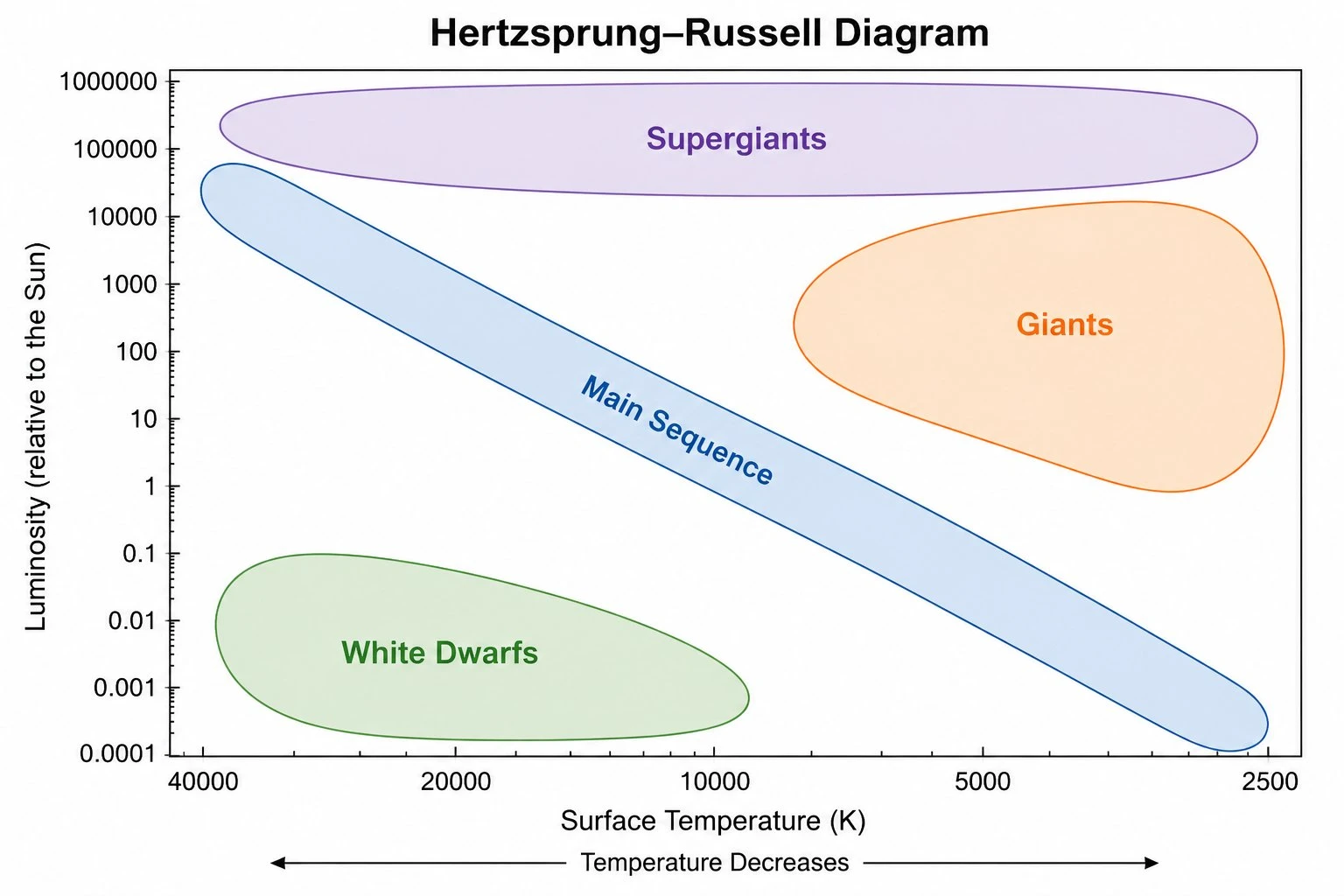 Astronomy
Hertzsprung-Russell Diagram Generator
Plot stars by temperature and luminosity across the main sequence, giant, supergiant, and white dwarf regions.