Moon Phases Diagram Generator Labeled Moon Phases Diagrams
Create labeled moon phases diagrams with AI. Show all 8 phases in order — new moon, waxing crescent, first quarter, waxing gibbous, full moon, waning gibbous, third quarter, and waning crescent — or the Sun-Earth-Moon geometry that explains why phases happen. Download as PNG for astronomy and earth science class, notes, or worksheets.
AI Moon Phases Diagram Generator
Free to try ·
Your moon phases diagram will appear here
Describe the phases to label and click Generate
Moon Phases Diagram Examples
Labeled 8-phase charts, Sun-Earth-Moon geometry, lunar cycle rings, and blank worksheets
8 Phases of the Moon Labeled
All eight phases in order, from new moon to waning crescent, each labeled with the correct illumination.
Sun-Earth-Moon Geometry
Why phases happen: the Moon in eight positions around Earth with sunlight coming from one side.
Simple Moon Phases for Kids
A clean, friendly version of the 8 phases in a row — ideal for elementary and middle school.
Waxing vs Waning Moon
Waxing grows (right side lit) and waning shrinks (left side lit) — the two halves of the cycle compared.
Lunar Cycle Circular Diagram
The full ~29.5-day cycle laid out as a ring, waxing on one side and waning on the other.
Blank Moon Phases Worksheet
The eight phase shapes in order with blank label lines — print as a quiz or fill-in worksheet.
What does a moon phases diagram show?
A moon phases diagram shows the changing appearance of the Moon as it orbits the Earth over roughly a 29.5-day lunar cycle. The most common version lays out all 8 phases in order — new moon, waxing crescent, first quarter, waxing gibbous, full moon, waning gibbous, third (last) quarter, and waning crescent — each drawn with the correct portion of the Moon lit. A second common version is the Sun-Earth-Moon geometry diagram, which shows the Moon in eight positions around the Earth with sunlight arriving from one side, explaining why we see each phase. This generator creates clear, labeled moon phases diagrams for astronomy and earth science lessons.
The 8 phases of the Moon in order
- New moon: the side of the Moon facing Earth is unlit, so the Moon is essentially invisible in the night sky.
- Waxing crescent: a thin sliver of light appears on the right (in the Northern Hemisphere) and grows each night.
- First quarter: the right half of the Moon is lit; the Moon is one quarter of the way through its cycle.
- Waxing gibbous: more than half is lit and the illuminated area keeps growing toward full.
- Full moon: the entire face of the Moon that we see is lit, with the Earth between the Sun and the Moon.
- Waning gibbous: more than half is still lit, but the illuminated area is now shrinking.
- Third (last) quarter: the left half of the Moon is lit as the cycle winds down.
- Waning crescent: only a thin sliver on the left remains lit before returning to new moon.
Why the Moon has phases
The Moon does not make its own light — we only see the half that the Sun is lighting up. As the Moon orbits the Earth, the angle between the Sun, Earth, and Moon changes, so we see a different amount of that lit half from night to night. At new moon the lit side faces away from us; at full moon the lit side faces us. The Sun-Earth-Moon geometry diagram makes this clear by placing the Moon in eight positions around the Earth and showing the phase we observe from each. The phases are not caused by the Earth’s shadow — that is a lunar eclipse, which is a separate event.
Waxing vs waning
Waxing means the lit part of the Moon is growing, from new moon up to full moon. Waning means the lit part is shrinking, from full moon back down to new moon. In the Northern Hemisphere the Moon is lit on the right side while waxing and on the left side while waning; in the Southern Hemisphere the sides are reversed. A gibbous moon is more than half lit, while a crescent is less than half lit. Getting the lit side correct is the most important accuracy detail in any moon phases diagram, so specify your hemisphere when you generate one.
Tips for a clear moon phases diagram
Choose the version you need: a labeled 8-phase chart in order for study notes, a Sun-Earth-Moon geometry diagram to explain why phases happen, a simplified row for younger students, a circular lunar-cycle diagram, or a blank worksheet for a quiz. State that you want all eight phases in the correct order with the illuminated side matching the Northern Hemisphere (waxing lit on the right, waning lit on the left). Generating a few variants and downloading the clearest one for your slides or handout takes only seconds.
Frequently Asked Questions
Related Earth Science Tools
 Earth Science
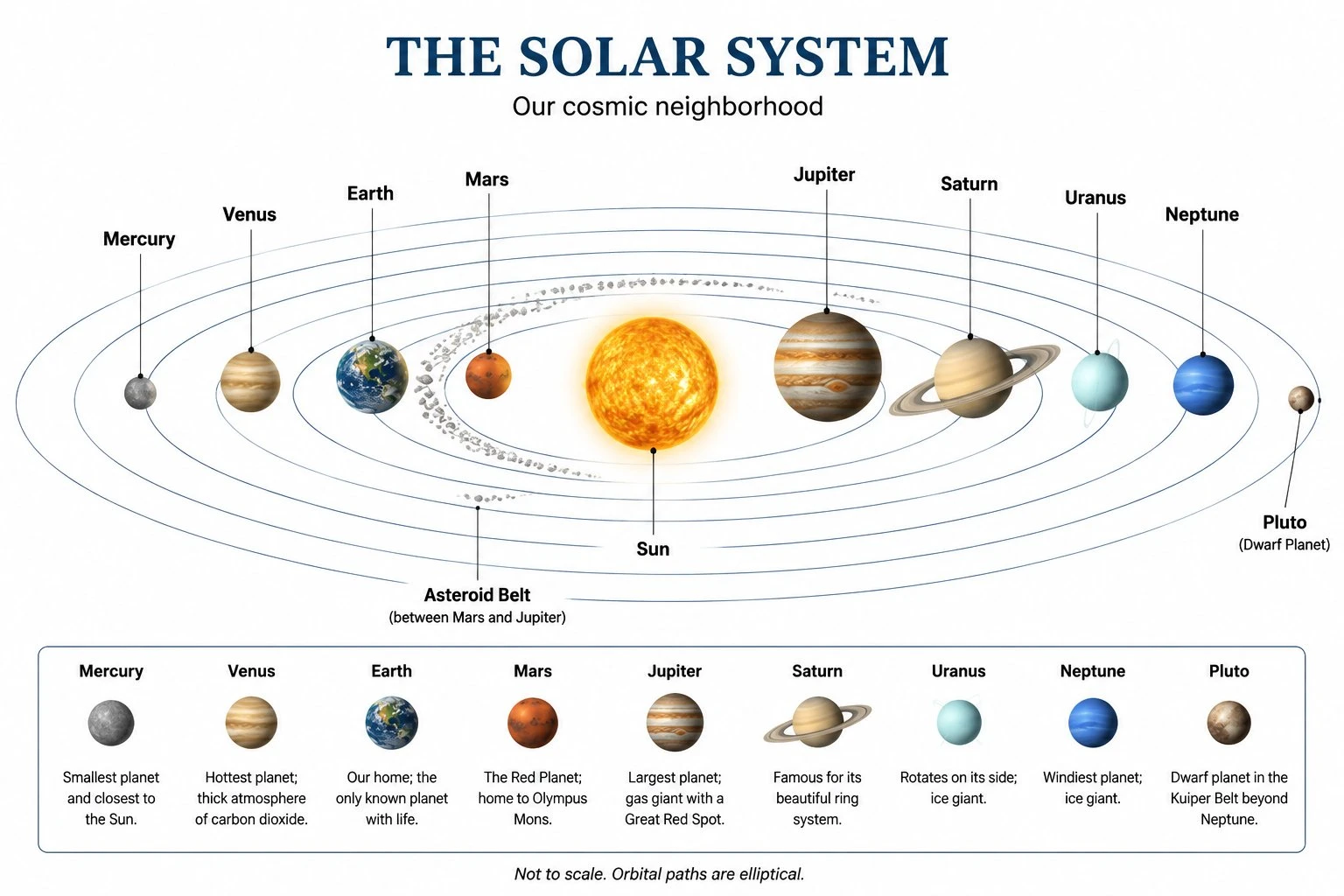
Solar System Diagram Generator
Create labeled solar system diagrams showing the Sun, the eight planets in order, and their orbits for astronomy class.
 Earth Science
Water Cycle Diagram Generator
Generate labeled water cycle diagrams covering evaporation, condensation, precipitation, and runoff for earth science class.
 Astronomy
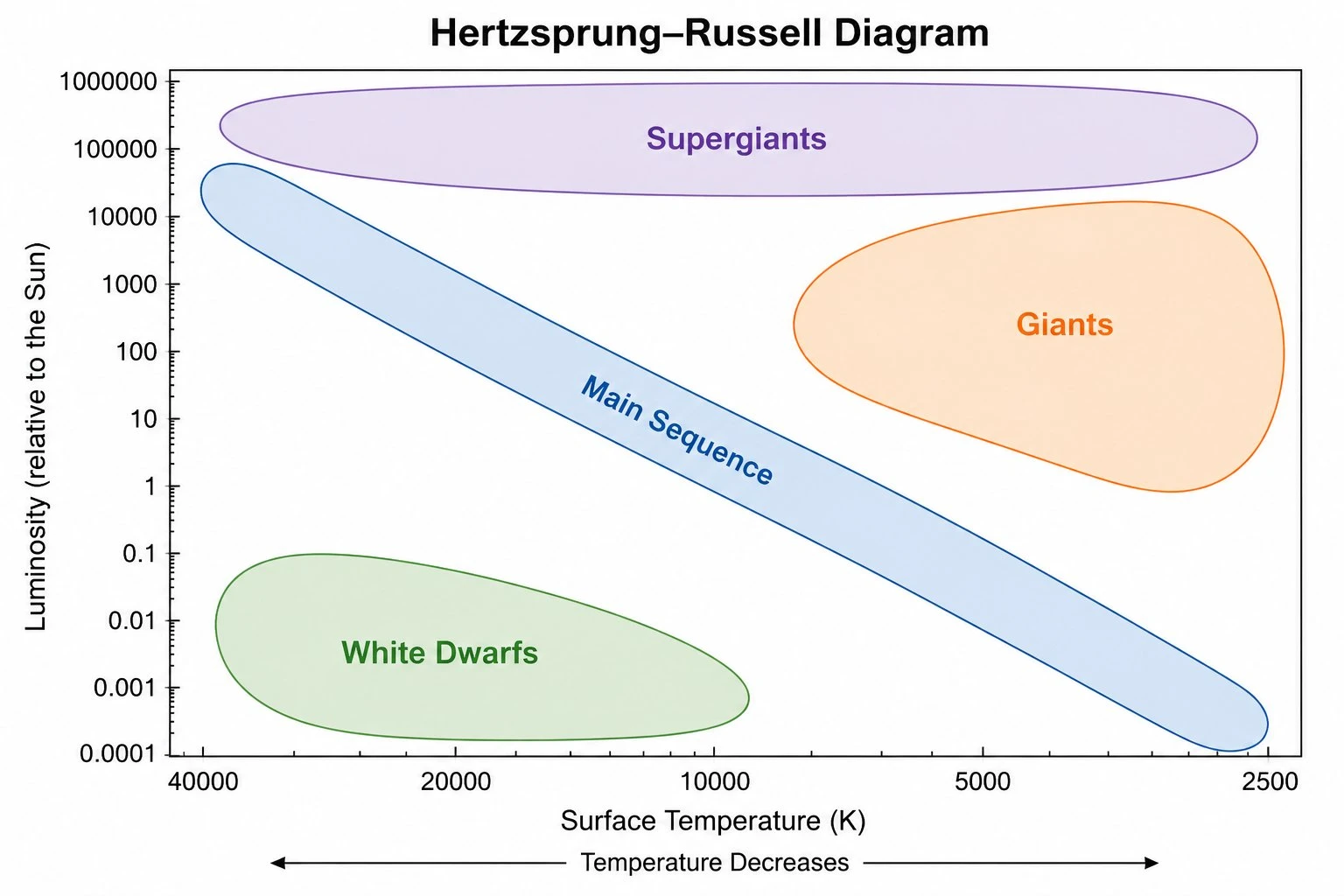
Hertzsprung-Russell Diagram Generator
Plot stars by temperature and luminosity and compare the main sequence, giants, supergiants, and white dwarfs.