Chloroplast Diagram — Labeled, Unlabeled & Printable
Generate a labeled chloroplast diagram in seconds — outer and inner membranes, stroma, thylakoids, grana, and lamellae all marked. Make labeled, unlabeled, or printable versions for biology worksheets and study, then download free.
Chloroplast Diagram Generator
Free to try ·
Your chloroplast diagram will appear here
AI-generated — review for scientific accuracy
Chloroplast Diagram Examples
Labeled, unlabeled, and detailed diagrams rendered by the generator
Labeled Chloroplast Diagram
Every major part labeled — both membranes, stroma, thylakoids, grana, lamellae, ribosomes, and chloroplast DNA.
Unlabeled / Blank Diagram
The same structure with the labels removed — print it as a blank worksheet for students to fill in.
Photosynthesis in the Chloroplast
Shows where the light-dependent reactions and the Calvin cycle each take place inside the chloroplast.
Simple Chloroplast Diagram
A clean, simplified version for younger students — just the envelope, grana, and stroma.
Thylakoids & Grana Close-Up
A magnified look at the thylakoid membranes, stacked into grana and joined by stroma lamellae.
Chloroplast vs Mitochondrion
Both organelles have a double membrane and folded interior — see how they line up and differ.
What is a chloroplast?
A chloroplast is the organelle inside plant and algal cells where photosynthesis takes place — the process that turns light energy, water, and carbon dioxide into glucose and oxygen. Chloroplasts contain the green pigment chlorophyll, which absorbs sunlight and gives leaves their color. Like mitochondria, chloroplasts have their own DNA and ribosomes and are surrounded by a double membrane, which is why biologists think they descended from free-living bacteria. A clear chloroplast diagram is one of the most common figures in biology class, because seeing where each part sits makes photosynthesis much easier to understand. This tool draws that diagram from a short description, with every part labeled.
The labeled parts of a chloroplast diagram
- Outer membrane: the smooth outer boundary of the chloroplast, freely permeable to small molecules.
- Inner membrane: the second membrane just inside the outer one; it controls what enters and leaves the stroma.
- Intermembrane space: the narrow gap between the outer and inner membranes.
- Stroma: the thick fluid filling the chloroplast, where the Calvin cycle and the chloroplast DNA and ribosomes are found.
- Thylakoid: the flattened membrane sacs that hold chlorophyll and carry out the light-dependent reactions.
- Thylakoid lumen: the fluid-filled space inside each thylakoid, where protons build up to drive ATP synthesis.
- Granum (plural grana): a stack of thylakoids, like a pile of coins.
- Stroma lamellae: the membrane bridges that connect one granum to another.
- Chlorophyll: the green pigment embedded in the thylakoid membranes that absorbs light.
- Chloroplast DNA and ribosomes: the chloroplast’s own genetic material and protein-making machinery, sitting in the stroma.
What does each part of the chloroplast do?
The two membranes act as the chloroplast’s envelope: the outer membrane lets small molecules pass freely, while the inner membrane is selective and controls traffic into the stroma. Inside, the thylakoids are where the action of capturing light happens — their membranes are packed with chlorophyll and the protein complexes (photosystems) that absorb sunlight. Thylakoids stack into grana to maximize surface area, and stroma lamellae connect the stacks so reactions can be coordinated across the whole organelle. The stroma is the surrounding fluid where sugars are actually assembled, and it also holds the chloroplast’s own DNA and ribosomes, which let it make some of its own proteins.
Where do the light reactions and the Calvin cycle happen?
Photosynthesis happens in two stages, and a labeled chloroplast diagram is the clearest way to show where each one occurs. The light-dependent reactions take place in the thylakoid membranes: chlorophyll absorbs sunlight, water is split to release oxygen, and the energy is captured as ATP and NADPH. The light-independent reactions — the Calvin cycle — take place in the stroma, where that ATP and NADPH are used to fix carbon dioxide into glucose. Students often mix these up, so a diagram that points clearly to the thylakoid for the light reactions and to the stroma for the Calvin cycle is a powerful study aid.
Labeled, unlabeled, and printable diagrams for worksheets
Different lessons need different versions of the same diagram. A labeled chloroplast diagram is best for introducing the structure and for revision, because every part is named. An unlabeled (blank) diagram shows the same structures with the text removed, so students can fill in the labels themselves — ideal for quizzes, homework, and assessments. You can generate both from the same description, then download them as printable images for handouts. Generate the labeled version first to use as an answer key, then make a matching blank copy for the worksheet.
How to generate a labeled chloroplast diagram
Describe the diagram you want in plain English — for example, “a labeled chloroplast diagram showing the outer membrane, inner membrane, stroma, thylakoid, grana, and lamellae, textbook style on a white background.” Choose a quality and aspect ratio, then generate. You can ask for a fully labeled version, an unlabeled blank for a worksheet, a simple version for younger students, or a detailed cross-section showing photosynthesis. Because the diagrams are created by an AI image model, always review the result for scientific accuracy before using it in class — check that the parts are placed and spelled correctly, and regenerate or edit if anything looks off.
Frequently Asked Questions
Related Biology Tools
 Biology
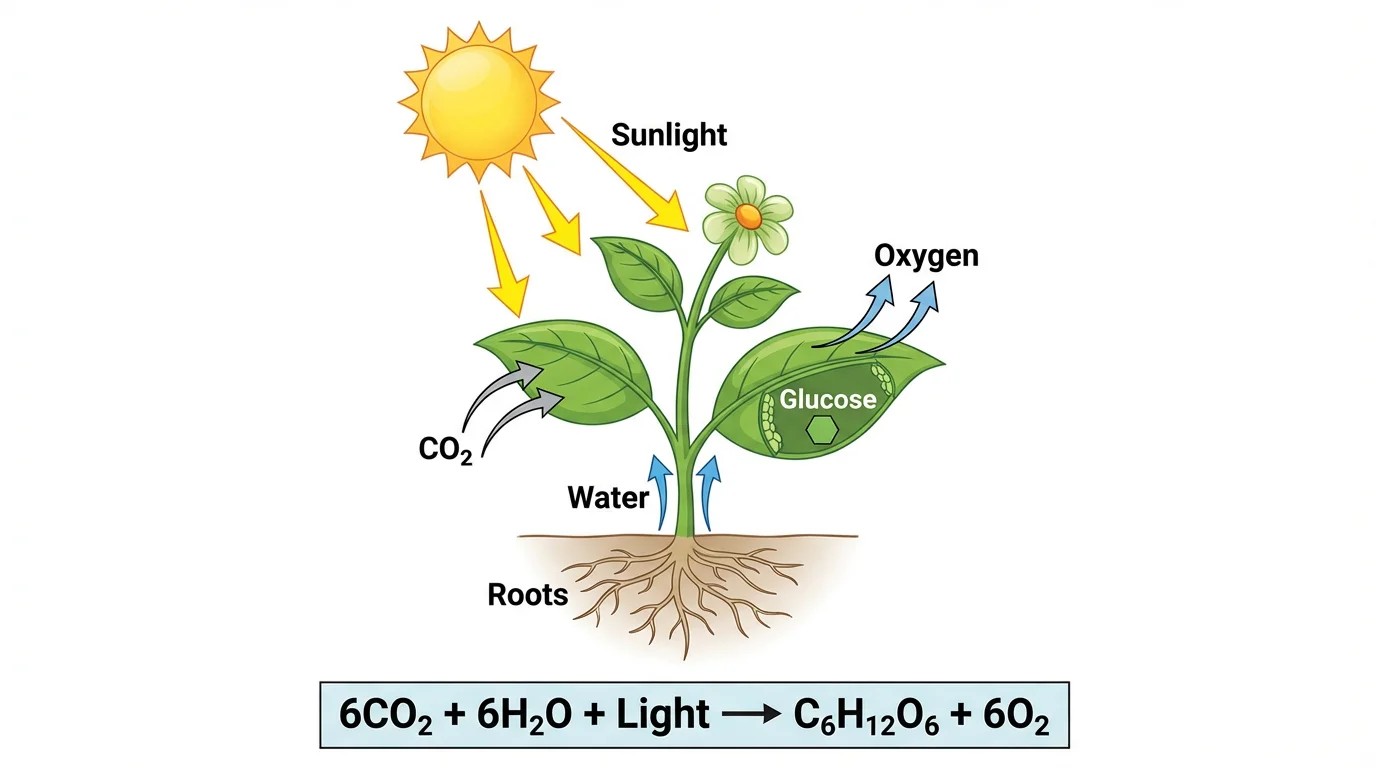
Photosynthesis Diagram Generator
Make labeled photosynthesis diagrams showing inputs, outputs, and the role of the chloroplast.
 Biology
Calvin Cycle Diagram Generator
Draw the Calvin cycle in the stroma with labeled carbon fixation, reduction, and RuBP regeneration.
 Biology
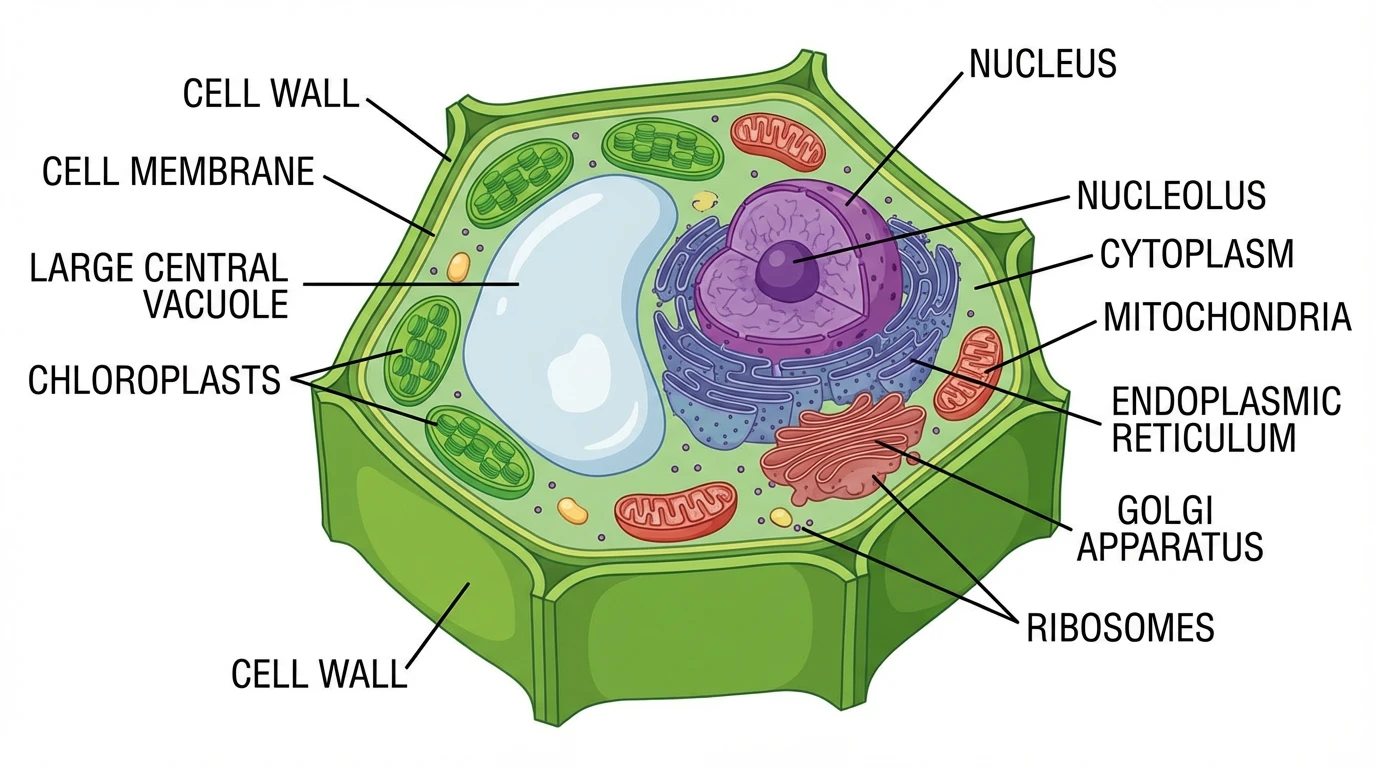
Plant Cell Diagram Generator
Create labeled plant cell diagrams with the chloroplast, cell wall, vacuole, and other organelles.