Water Cycle Diagram Labeled, Blank & Printable
Free water cycle diagrams — labeled, blank to-label, simple, detailed, and coloring versions. View, download, or print any format, or make your own.
Free Water Cycle Diagrams
Every version below is free to view and download — no sign-up.
Labeled Water Cycle Diagram
Every stage named with arrows showing how water moves — evaporation, condensation, precipitation, collection, and groundwater flow.
Diagrams
Print & practice
Test yourself: the water cycle
A quick self-test — questions and answers reshuffle each time, with a review of anything you miss at the end.
Where does most collected water gather before the cycle repeats?
Need a custom version?
Change the grade level, style, or which stages are highlighted — describe it and generate your own.
Customize Your Water Cycle Diagram
Gratuit à essayer ·
Your custom water cycle diagram will appear here
Tip: ask for a blank version for students to label, or a fully labeled version for teaching
What is the water cycle?
The water cycle (also called the hydrologic cycle) is the continuous movement of water between the oceans, the atmosphere, the land, and living things. Water evaporates from oceans, lakes, and rivers, rises and cools to form clouds, falls back to Earth as rain or snow, collects in bodies of water, and then evaporates again — an endless loop powered by the Sun. Use a fully labeled version for teaching, or a blank version for students to label themselves.
Labeled or blank: pick the diagram you need
- Labeled diagram: every stage is named with arrows showing the direction water moves — ideal for explaining the cycle or for student notes and study guides.
- Blank diagram to label: the same diagram with numbered callout lines and no text, so students fill in evaporation, condensation, precipitation, and the rest themselves — perfect as a worksheet or quiz.
- Detailed version: a cross-section that adds transpiration, runoff, infiltration, groundwater, and the aquifer for high-school earth science.
- Simple version: a four-stage layout with large labels and friendly artwork for elementary classrooms.
The stages of the water cycle
- Evaporation: the Sun heats water in oceans, lakes, and rivers, turning it into water vapor that rises into the air.
- Transpiration: plants release water vapor from their leaves, adding moisture to the atmosphere alongside evaporation.
- Condensation: as vapor rises and cools, it changes back into tiny liquid droplets that gather to form clouds.
- Precipitation: when droplets in clouds grow heavy enough, they fall to Earth as rain, snow, sleet, or hail.
- Collection (accumulation): fallen water collects in oceans, lakes, rivers, and snowpack, where the cycle begins again.
- Runoff: water that flows over the land surface into streams and rivers rather than soaking into the ground.
- Infiltration: water that soaks into the soil and seeps down to become groundwater stored in aquifers.
A blank water cycle diagram to label
Teachers often need a blank water cycle diagram so students can label the stages themselves — and that is one of the most common requests for this topic. The blank version keeps the artwork and the callout lines but removes the text, leaving numbered arrows that point to each stage. Students write in evaporation, condensation, precipitation, collection, and the rest, which checks understanding far better than reading a finished diagram. Use the blank diagram for the worksheet and the matching labeled diagram for the answer key.
Using the diagram in the classroom
A water cycle diagram fits naturally into earth science and geography lessons from elementary through high school. Use the simple four-stage version to introduce the cycle to younger students, the fully labeled version for guided notes, and the blank version as a hands-on worksheet or quiz. The detailed cross-section — with transpiration, runoff, infiltration, groundwater, and the aquifer — suits older students studying watersheds and water resources. Download any diagram to drop it into a worksheet, slide deck, handout, or printed poster.
Why water cycles continuously
The water cycle never stops because it is driven by the Sun and gravity, and the total amount of water on Earth stays essentially constant — it just changes form and location. Solar energy powers evaporation and transpiration; cooling drives condensation; gravity pulls precipitation down and moves runoff and groundwater downhill toward the sea. Because water is constantly recycled this way, the same water has been cycling through the planet for billions of years, which is the big idea a clear diagram helps students grasp.
Questions Fréquentes
Related Science Tools
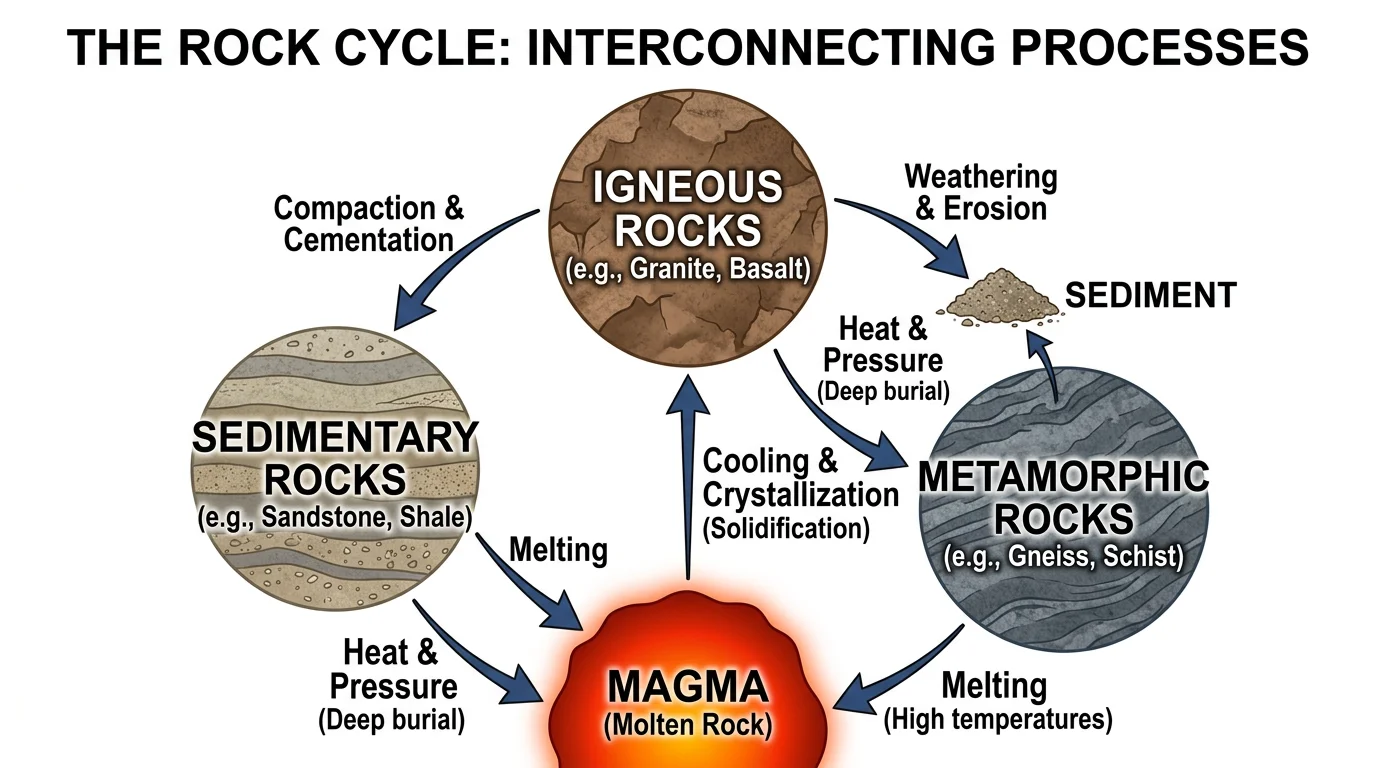 Earth Science
Rock Cycle Diagram
Labeled rock cycle diagrams showing igneous, sedimentary, and metamorphic rock and how they change.
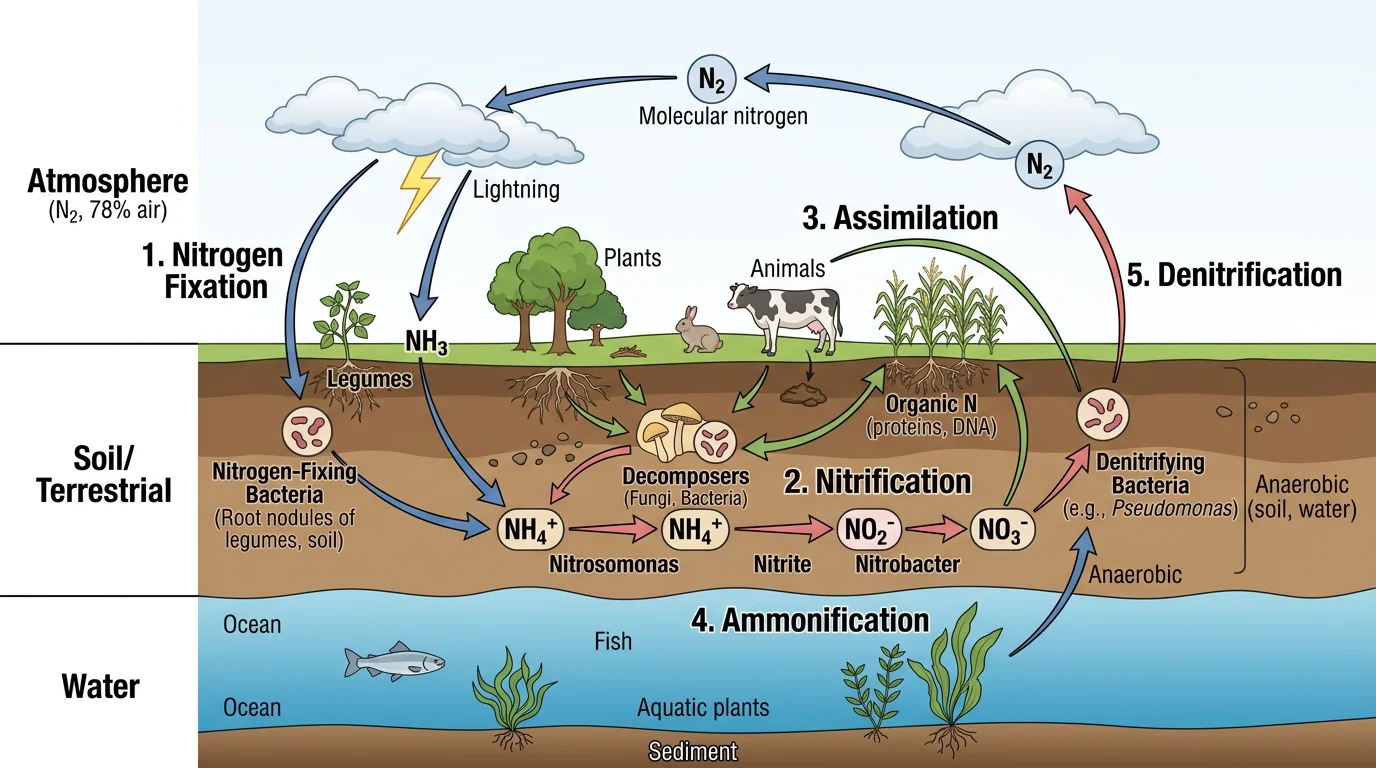 Earth Science
Nitrogen Cycle Diagram
Labeled nitrogen cycle diagrams — fixation, nitrification, and the flow of nitrogen through ecosystems.
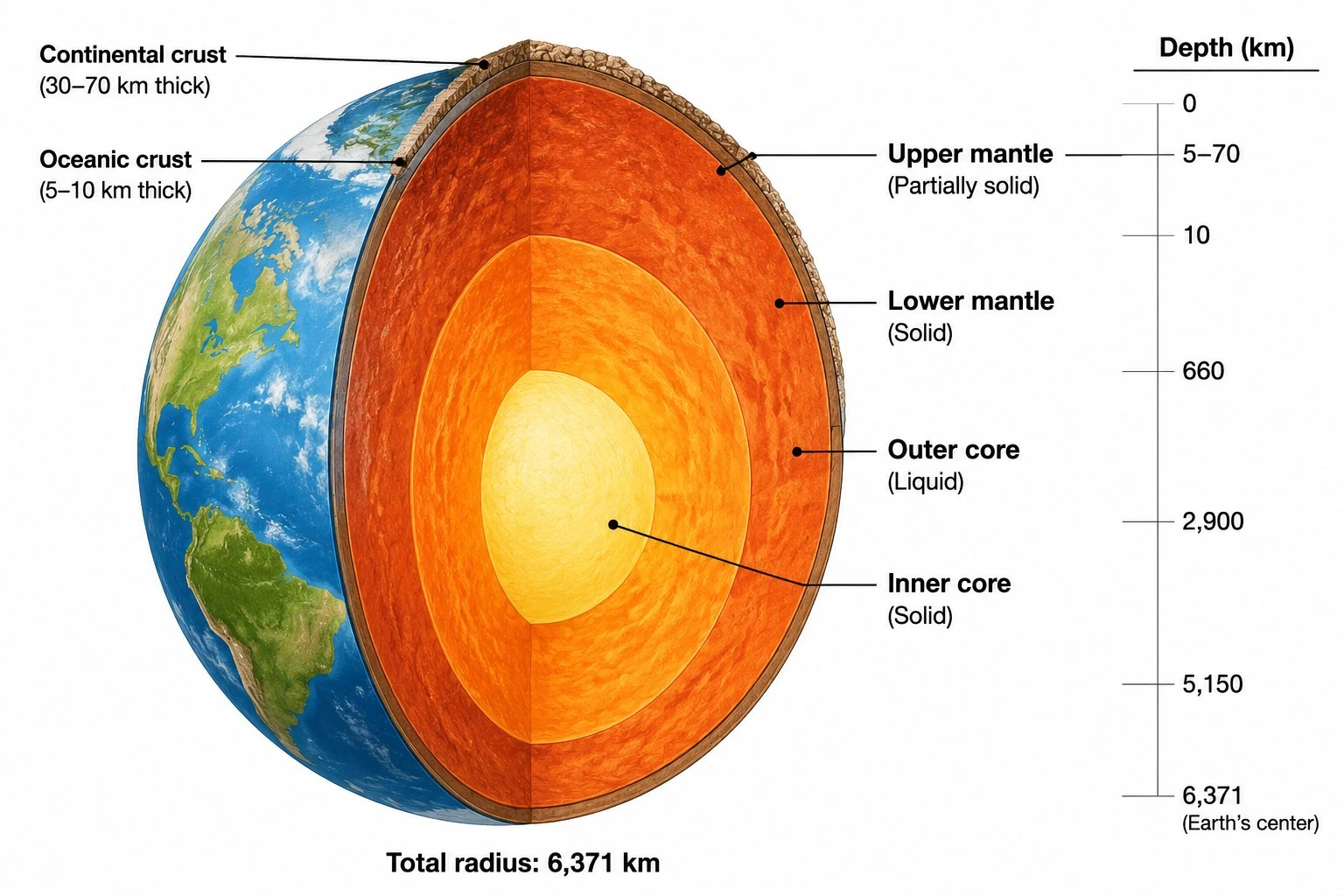 Earth Science
Layers of the Earth Diagram
Labeled cross-sections of Earth’s crust, mantle, outer core, and inner core.
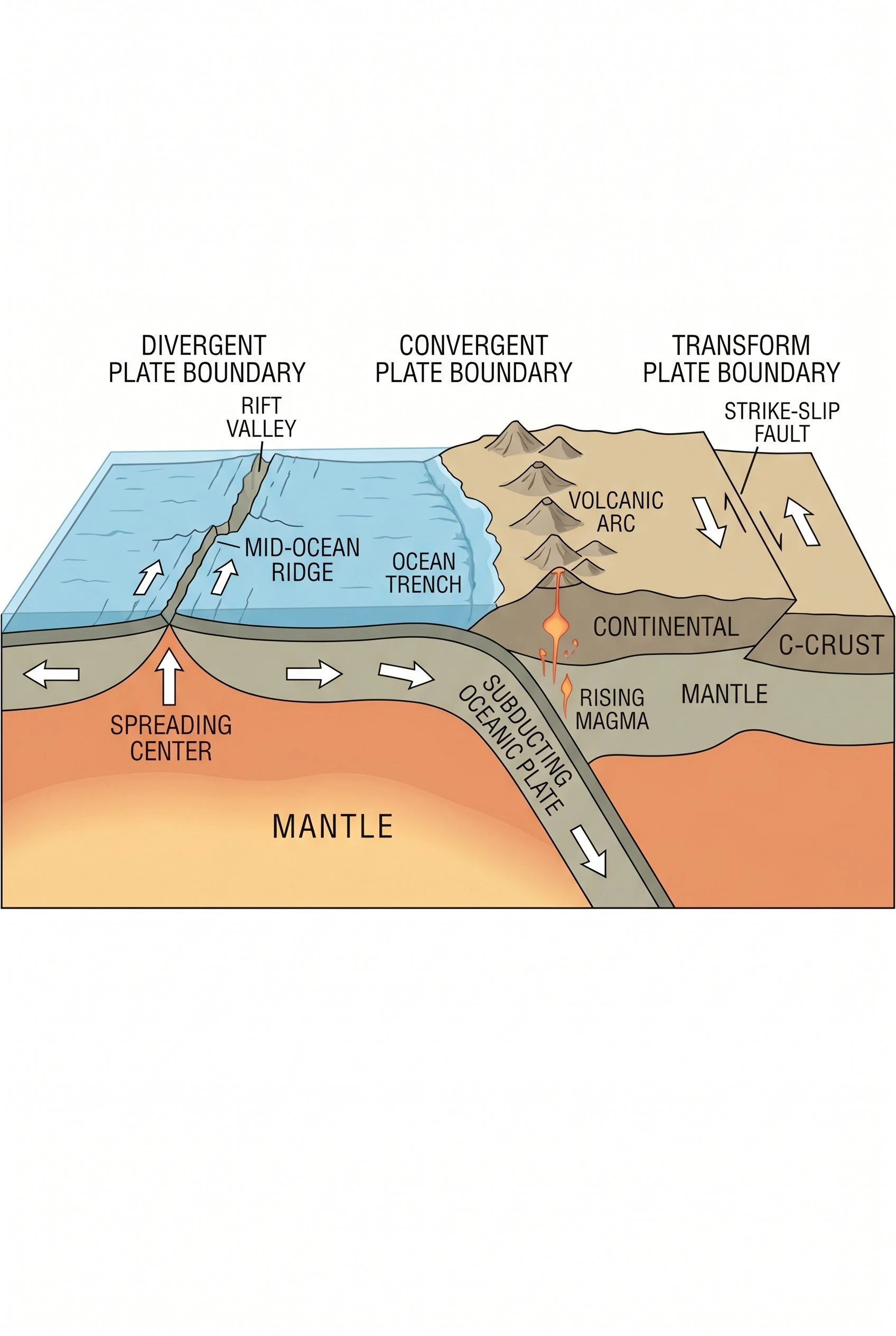 Earth Science
Plate Tectonics Diagram
Labeled plate-boundary diagrams — convergent, divergent, and transform boundaries.
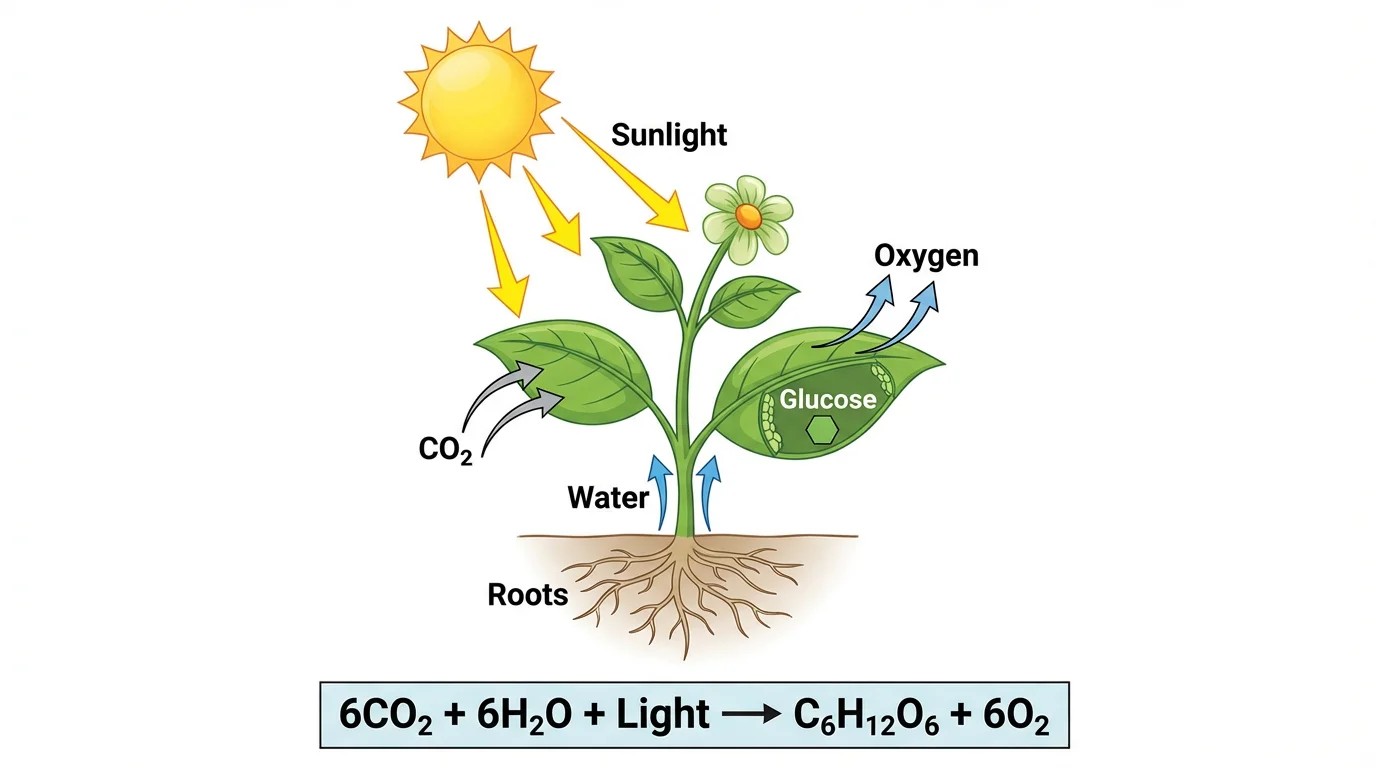 Biology
Photosynthesis Diagram
See how plants use water and sunlight to make glucose — a key link to the water cycle.