
Definition of Terms in Research: Thesis Examples, Format & Chapter 1 Guide
What definition of terms means in research and thesis Chapter 1, with examples, format rules, alphabetical order guidance, and common mistakes.
The "Definition of Terms" section is one of the most overlooked yet critical components of academic research papers, theses, and dissertations. It is especially common in thesis Chapter 1, where students define key concepts, variables, and operational terms before presenting the full study.
This comprehensive guide will walk you through everything you need to know about writing effective definitions of terms, from understanding their purpose to avoiding common pitfalls that can undermine your research credibility.
Quick Answer: What is Definition of Terms in Research?
Definition of Terms in research is the section where you explain the exact meaning of important terms used in your study. In a thesis or dissertation, it often appears in Chapter 1 after the background, problem statement, research questions, or scope of the study.
Use this section to define:
- Technical terms that readers may not know
- Variables used in your study
- Operational definitions, or how a concept is measured in your research
- Terms that have a specific meaning in your thesis
Basic format:
| Term | Definition type | Example |
|---|---|---|
| Academic performance | Operational definition | Measured using the student's final grade point average |
| Student engagement | Conceptual definition | The degree of behavioral, emotional, and cognitive participation in learning |
| Online learning | Study-specific definition | Instruction delivered through a web-based learning platform during the semester |
What is Definition of Terms in Research?
The Definition of Terms (also called "Definition of Key Terms" or "Operational Definitions") is a section in academic papers where researchers explicitly define specialized, technical, or ambiguous terms used throughout their study. According to research writing best practices, this section establishes a shared understanding between the researcher and the audience by explicitly stating how particular terms will be used within the specific context of the research.
Why is it Important?
The Definition of Terms section serves several critical functions:
- Prevents Misinterpretation: Technical terms can have different meanings across disciplines or contexts
- Establishes Clarity: Ensures readers understand exactly what you mean by specific terminology
- Demonstrates Rigor: Shows you've thought carefully about your conceptual framework
- Facilitates Replication: Other researchers can replicate your study using the same operational definitions
- Avoids Ambiguity: Eliminates confusion about terms that might have multiple interpretations
As noted in academic writing guidelines, failing to properly define terms can lead to confusion, misinterpretation, and ultimately weaken the validity of your research findings.
Where Does Definition of Terms Appear in Research Papers?
The placement of your Definition of Terms section depends on the type of document and institutional requirements:
| Document Type | Typical Placement | Alternative Placement |
|---|---|---|
| Research Paper | End of Introduction section | After Literature Review |
| Thesis/Dissertation | Separate chapter (usually Chapter 1) | Appendix or Glossary |
| Journal Article | Within Methods section | Footnotes or endnotes |
| Proposal | After Research Questions | Before Methodology |
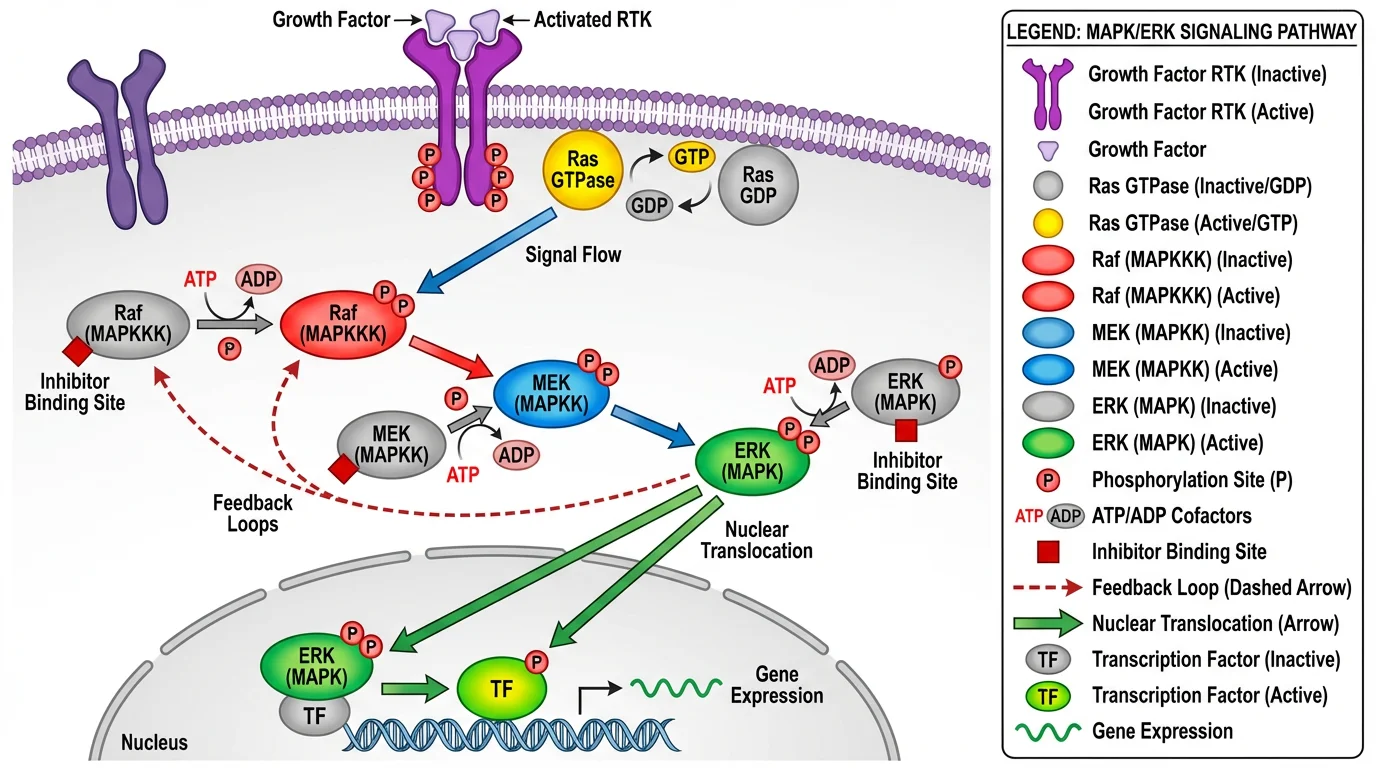
Example of how definitions integrate into research structure - clear terminology helps readers follow complex concepts
General Guidelines for Placement
- Before First Use: Define terms before or when they first appear in your text
- Logical Flow: Place definitions where they make the most sense contextually
- Accessibility: Ensure readers can easily reference definitions when needed
- Consistency: Follow your institution's or journal's specific formatting requirements
What Terms Should You Define?
Not every word in your research needs definition. According to research methodology guidelines, only terms directly relevant to the study should be defined.
Terms That SHOULD Be Defined
✅ Technical or Specialized Terms
- Discipline-specific jargon (e.g., "proteomics," "phenomenology," "heteroscedasticity")
- Terms with precise scientific meanings
✅ Ambiguous Terms
- Words with multiple meanings (e.g., "significant," "normal," "positive")
- Terms that could be interpreted differently across contexts
✅ Operational Definitions
- How you're measuring abstract concepts (e.g., "student engagement," "organizational culture")
- Specific criteria or thresholds you're using
✅ Newly Coined Terms
- Neologisms or terms you've created for your research
- Novel combinations of existing concepts
✅ Terms Used Differently Than Common Usage
- When you're using a familiar word in a specialized way
- Terms with context-specific meanings in your study
Terms That Should NOT Be Defined
❌ Common Knowledge Terms
- Basic vocabulary (e.g., "student," "school," "computer")
- Widely understood concepts in your field
❌ Self-Explanatory Terms
- Terms that are clear from context
- Standard terminology that doesn't require clarification
❌ Over-Defined Terms
- Defining every single term makes your paper tedious
- Focus on terms critical to understanding your research
Types of Definitions in Research
Understanding different types of definitions helps you choose the most appropriate approach for each term.
1. Conceptual Definitions
Conceptual definitions explain the theoretical meaning of a term based on existing literature and scholarly consensus.
Example:
Social Capital: Bourdieu (1986) defines social capital as "the aggregate of the actual or potential resources which are linked to possession of a durable network of more or less institutionalized relationships of mutual acquaintance and recognition."
2. Operational Definitions
Operational definitions specify exactly how you will measure or identify a concept in your study.
Example:
Academic Achievement: For this study, academic achievement is operationally defined as students' cumulative grade point average (GPA) on a 4.0 scale at the end of the spring semester 2025.
3. Stipulative Definitions
Stipulative definitions assign a specific meaning to a term for the purposes of your research, which may differ from common usage.
Example:
Digital Native: In this research, "digital native" refers specifically to individuals born after 1995 who have had continuous access to internet technology since age 5 or younger.
4. Dictionary Definitions
Dictionary definitions cite authoritative sources like dictionaries or encyclopedias. Use these sparingly and only when appropriate.
Example:
Pedagogy: According to Merriam-Webster, pedagogy is "the art, science, or profession of teaching; especially: education."
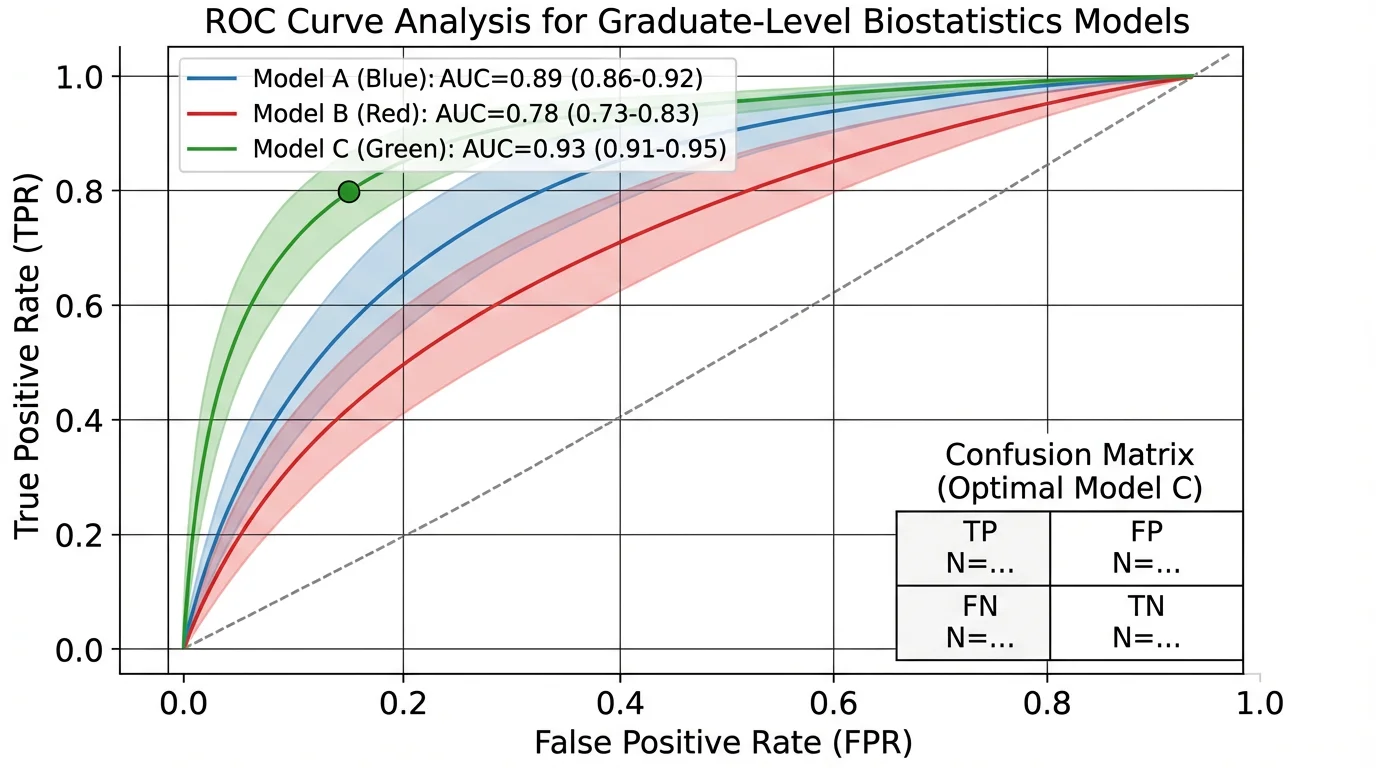
Visual representation of how defined terms relate to each other in research frameworks
How to Write Definition of Terms: Step-by-Step Guide
Follow this systematic approach to create clear, effective definitions for your research.
Step 1: Identify Key Terms
Review your research questions, hypotheses, and methodology to identify terms that require definition.
Questions to Ask:
- Which terms are central to my research?
- What terminology might be unfamiliar to my audience?
- Are there any terms I'm using in a specific or unusual way?
- What concepts need operational definitions for measurement?
Step 2: Research Authoritative Definitions
Consult credible sources for existing definitions:
- Academic Sources: Peer-reviewed journals, textbooks, scholarly books
- Discipline-Specific Resources: Field-specific dictionaries, encyclopedias
- Seminal Works: Foundational papers that introduced or defined the concept
- Professional Organizations: Definitions from recognized professional bodies
Step 3: Adapt Definitions to Your Context
Don't just copy definitions verbatim. Adapt them to fit your specific research context.
Template:
[Term]: [General definition from literature] (Author, Year). In this study, [term] specifically refers to [your operational definition or contextual adaptation].
Step 4: Organize Definitions
Choose an organizational structure:
- Alphabetical Order: Most common and easiest for readers to navigate
- Order of Appearance: Define terms in the sequence they appear in your paper
- Thematic Grouping: Group related terms together
- Importance Hierarchy: Start with most critical terms
Step 5: Format Consistently
Maintain consistent formatting throughout:
**Term**: Definition text with citation (Author, Year).

**Another Term**: Definition text with citation (Author, Year).
Formatting Examples by Discipline
Different academic fields have varying conventions for defining terms. Here are discipline-specific examples:
Social Sciences Example
Self-Efficacy: Bandura (1997) defines self-efficacy as "beliefs in one's capabilities to organize and execute the courses of action required to produce given attainments" (p. 3). For this study, teacher self-efficacy is measured using the Teachers' Sense of Efficacy Scale (TSES), with scores ranging from 1 (low efficacy) to 9 (high efficacy).
Natural Sciences Example
Apoptosis: Programmed cell death characterized by distinct morphological changes including cell shrinkage, chromatin condensation, and DNA fragmentation (Elmore, 2007). In this experiment, apoptosis was quantified using flow cytometry with Annexin V-FITC/PI staining, with cells showing >15% Annexin V+ considered apoptotic.
Engineering Example
Tensile Strength: The maximum stress that a material can withstand while being stretched or pulled before breaking, measured in megapascals (MPa) (ASTM D638-14). For this research, tensile strength was determined using an Instron 5969 universal testing machine at a crosshead speed of 50 mm/min at 23°C.
Education Example
Differentiated Instruction: Tomlinson (2001) describes differentiated instruction as "a teacher's response to learner's needs guided by general principles of differentiation" (p. 7). In this study, differentiated instruction is operationalized as teaching practices that modify content, process, or product based on student readiness, interest, or learning profile, as observed using the Differentiated Instruction Observation Scale (DIOS).
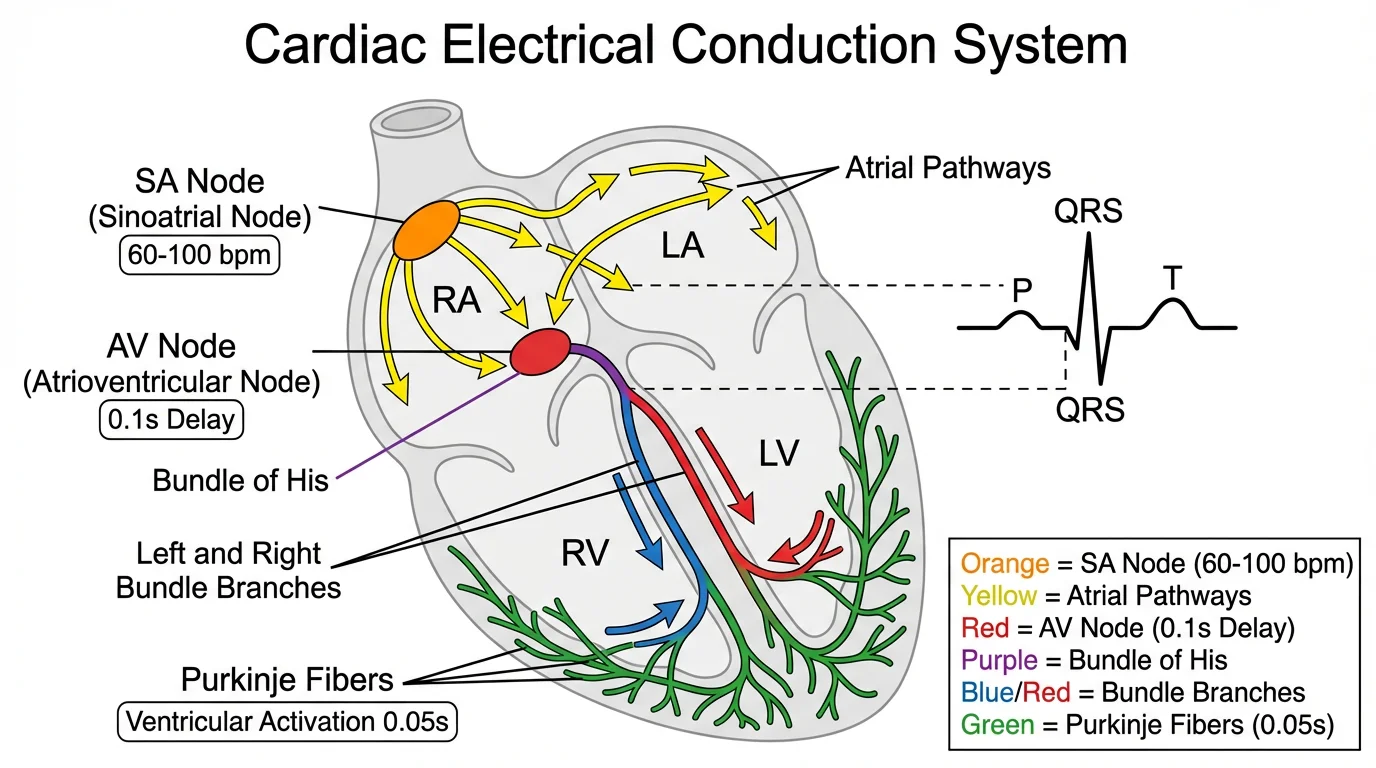
Medical research requires extremely precise definitions - this cardiac system diagram shows why clarity matters
Common Mistakes to Avoid
Based on common research publication mistakes, here are critical errors to avoid:
1. Circular Definitions
❌ Wrong: "Collaborative learning is learning that involves collaboration."
✅ Right: "Collaborative learning is an educational approach where students work together in small groups to achieve shared learning goals, with each member contributing to the collective understanding (Dillenbourg, 1999)."
2. Over-Defining Common Terms
❌ Wrong: Defining basic terms like "student," "teacher," "classroom" unless using them in a specialized way
✅ Right: Only define terms when they have specific operational meanings in your study
3. Using Vague Language
❌ Wrong: "Engagement means when students are kind of involved in learning activities."
✅ Right: "Student engagement is defined as the degree of attention, curiosity, interest, and passion that students show when learning, measured through behavioral, emotional, and cognitive indicators (Fredricks et al., 2004)."
4. Inconsistent Terminology
❌ Wrong: Using "participants," "subjects," and "respondents" interchangeably without clarification
✅ Right: Define your preferred term and use it consistently throughout
5. Missing Citations
❌ Wrong: Presenting definitions without acknowledging sources
✅ Right: Always cite the source of your definitions, whether from literature or your own operational definition
6. Defining Too Many Terms
❌ Wrong: A 10-page definition section with 50+ terms
✅ Right: Focus on 5-15 key terms that are truly essential to understanding your research
7. Placing Definitions Too Late
❌ Wrong: Defining a term after you've already used it extensively
✅ Right: Define terms before or at their first significant use
Definition of Terms Template
Here's a ready-to-use template you can adapt for your research:
## Definition of Terms

This section provides operational definitions of key terms used throughout this study.

**[Primary Term 1]**: [Conceptual definition from literature] (Author, Year).
In this research, [term] is operationally defined as [specific measurement or
criteria used in your study].

**[Primary Term 2]**: [Conceptual definition] (Author, Year). For the purposes
of this study, [term] refers to [your specific contextual definition].

**[Technical Term 3]**: [Standard definition from authoritative source]
(Source, Year). This study measures [term] using [specific instrument, scale,
or methodology].

**[Ambiguous Term 4]**: While [term] can mean [common interpretation], in this
research it specifically denotes [your precise definition] as conceptualized by
[Author, Year].

**[Specialized Term 5]**: [Field-specific definition] (Author, Year).
[Additional context or clarification relevant to your study].
Using Visual Tools to Define Complex Terms
Sometimes, complex terms are better explained with visual aids. This is particularly true for:
- Process-oriented terms: Show workflows or sequences
- Hierarchical concepts: Display relationships and categories
- Spatial or structural terms: Illustrate physical arrangements
- Comparative terms: Visualize differences and similarities

Chemical terms often require visual definitions - molecular diagrams clarify what words alone cannot
Creating Visual Definitions with ConceptViz
For researchers who need to visualize complex terminology and relationships, ConceptViz offers AI-powered tools to create:
- Conceptual framework diagrams showing how terms relate to each other
- Process flowcharts illustrating procedural definitions
- Hierarchical diagrams displaying taxonomies and classifications
- Comparison charts highlighting distinctions between similar terms
The Conceptual Framework Generator is particularly useful for visualizing how your defined terms fit into your overall theoretical framework.
Discipline-Specific Considerations
Different academic fields have unique requirements for defining terms.
Quantitative Research
Focus on:
- Operational definitions with precise measurement criteria
- Statistical terms and their parameters
- Variable definitions (independent, dependent, control)
- Reliability and validity measures
Qualitative Research
Emphasize:
- Conceptual definitions grounded in theory
- Interpretive frameworks
- Emergent themes and categories
- Researcher positionality terms
Mixed Methods Research
Include:
- Definitions for both quantitative and qualitative components
- Integration terminology
- Paradigmatic terms
- Methodological approach definitions
Applied Research
Prioritize:
- Practical, context-specific definitions
- Industry-standard terminology
- Stakeholder-relevant language
- Implementation-focused terms
Checklist for Definition of Terms Section
Use this checklist to ensure your Definition of Terms section is complete and effective:
- All technical and specialized terms are defined
- Ambiguous terms are clarified
- Operational definitions specify measurement methods
- Each definition includes proper citations
- Definitions are written in clear, concise language
- Terms are organized logically (alphabetically or by appearance)
- Formatting is consistent throughout
- No circular definitions are present
- Common knowledge terms are not over-defined
- Definitions align with how terms are used in the paper
- Visual aids are included where helpful
- The section is appropriately placed in the document
- All defined terms are actually used in the research
- Definitions are appropriate for your target audience
- Institutional or journal formatting requirements are followed
Related Resources
To strengthen other aspects of your research writing, explore these guides:
- How to Write a Research Manuscript in IMRAD Format - Complete guide to structuring your research paper
- How to Create a Conceptual Framework for Research Papers - Learn to visualize relationships between your defined terms
- How to Create Graphical Abstracts for Research Papers - Visual communication of research concepts
- Scientific Infographic Design Guide - Create visual definitions and explanations
- How to Make Figures for Nature and Science Journals - Professional standards for research visuals
Frequently Asked Questions
How many terms should I define in my research paper?
There's no fixed number, but typically 5-15 key terms is appropriate for most research papers. Focus on terms that are essential to understanding your research, technical or specialized vocabulary, and any terms you're using in a specific operational way. Avoid over-defining common terms or concepts that are well-understood by your target audience.
Should I define terms in alphabetical order or order of appearance?
Alphabetical order is most common and easiest for readers to navigate, especially in longer papers. However, order of appearance can work well for shorter papers or when terms build on each other logically. Choose the method that best serves your readers and follow your institution's or journal's guidelines if specified.
What's the difference between conceptual and operational definitions?
Conceptual definitions explain the theoretical meaning of a term based on existing literature (what the concept means in theory). Operational definitions specify exactly how you will measure or identify that concept in your specific study (how you're applying it in practice). Most research papers need both types - conceptual definitions establish theoretical grounding, while operational definitions ensure replicability.
Do I need to cite sources for my definitions?
Yes, always cite sources for definitions taken from literature. If you're using an established definition from another researcher, proper citation is essential to avoid plagiarism and give credit. For operational definitions you create yourself, explain your rationale and cite any frameworks or theories that informed your definition.
Can I use dictionary definitions in academic research?
Dictionary definitions should be used sparingly in academic research. They're acceptable for establishing basic understanding of common terms, but scholarly sources (peer-reviewed journals, textbooks, seminal works) are preferred for technical or discipline-specific terms. If you do use dictionary definitions, cite them properly and consider supplementing with academic sources.
Where should the Definition of Terms section be placed in a thesis?
In theses and dissertations, the Definition of Terms typically appears in Chapter 1 (Introduction) after the statement of the problem and research questions, but before the methodology. Some institutions prefer it as a separate section or in an appendix. Always check your institution's specific formatting requirements and thesis guidelines.
What if a term has multiple definitions in the literature?
When a term has multiple definitions, acknowledge this in your paper. Briefly discuss the different interpretations, explain why you're choosing a particular definition, and clearly state which definition you'll use throughout your research. This demonstrates your awareness of the literature and justifies your choice.
Should I define acronyms in the Definition of Terms section?
Acronyms should be defined at their first use in the text (e.g., 'Artificial Intelligence (AI)'), but don't necessarily need to appear in a formal Definition of Terms section unless they represent complex concepts requiring detailed explanation. Reserve the Definition of Terms section for substantive concepts, not just abbreviations.
Conclusion
The Definition of Terms section is far more than a formality—it's a critical component that establishes the foundation for clear, rigorous academic communication. By carefully selecting which terms to define, using appropriate definition types, and following disciplinary conventions, you ensure that your research is accessible, replicable, and credible.
Remember these key principles:
- Be Selective: Define only terms essential to understanding your research
- Be Precise: Use clear, unambiguous language with proper citations
- Be Consistent: Maintain uniform formatting and terminology throughout
- Be Contextual: Adapt definitions to your specific research context
- Be Visual: Use diagrams and frameworks when they enhance clarity
Whether you're writing your first research paper or your fiftieth, taking time to craft clear, well-cited definitions will strengthen your work and help your readers engage more deeply with your research.
For researchers looking to visualize complex terminology and conceptual relationships, explore ConceptViz's AI-powered research tools to create professional diagrams that complement your written definitions.
Sources:
分類
更多文章
How to Design Scientific Infographics: 8-Step Guide for Researchers (2026)
Create credible, publication-ready infographics that scientists trust. Step-by-step process covering data accuracy, visual hierarchy, and source citations - with free templates.

How to Make Scientific Diagrams for Research Papers (2025 Guide)
Learn how to create professional scientific diagrams for research papers, theses, and publications. Includes best practices, tools comparison, and step-by-step tutorials for biology, chemistry, and physics diagrams.

How to Make a Pie Chart in Excel: Step-by-Step Guide (2026)
Learn how to create a pie chart in Excel, format labels, choose better colors, and avoid misleading slices. Includes Excel 365, 2024, 2021, and 2019 workflows.