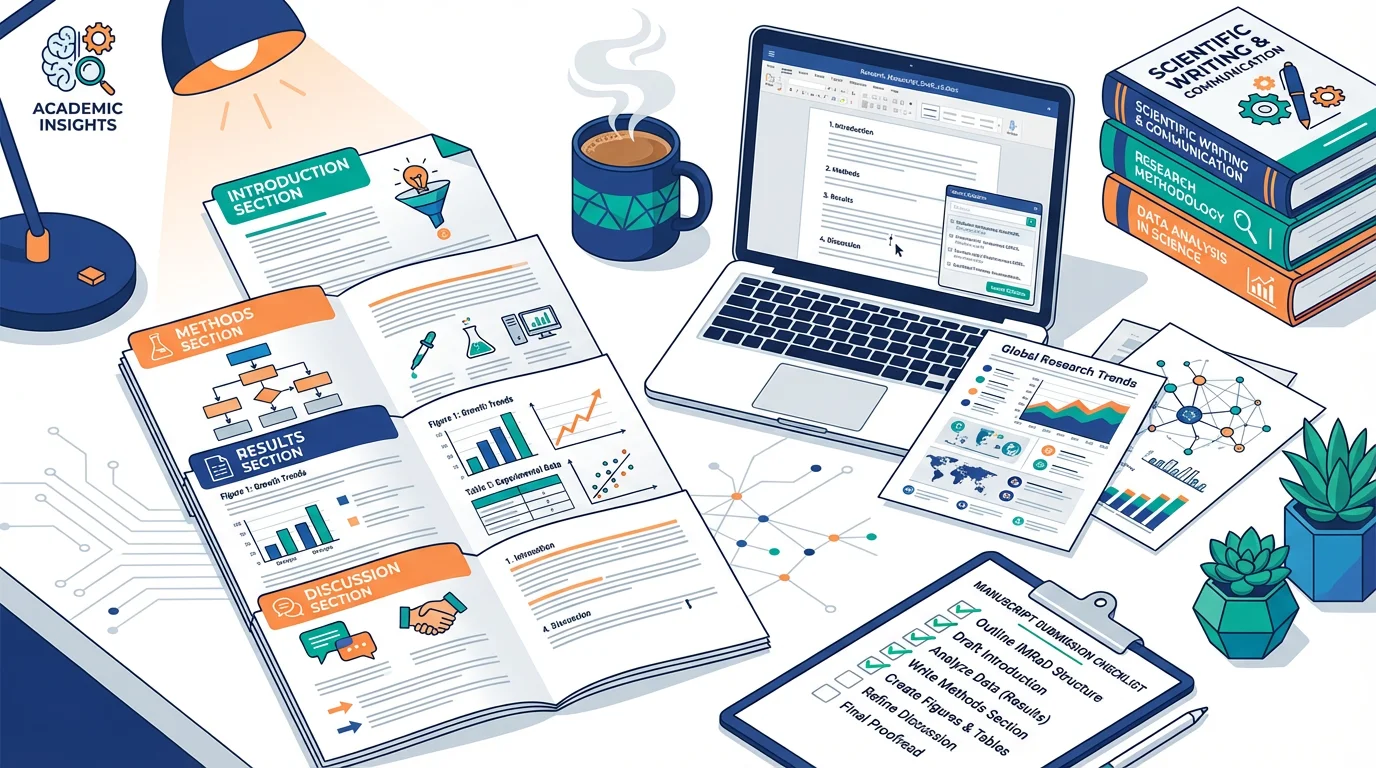
How to Write a Research Manuscript: Complete IMRaD Format Guide
Master the art of writing research manuscripts with this comprehensive IMRaD format guide. Learn the best writing order, avoid common rejection reasons, and get your paper published.
Writing a research manuscript is one of the most challenging yet rewarding tasks in academic life. A well-structured manuscript can mean the difference between acceptance and rejection—and with editors rejecting up to 70% of submissions, understanding how to write effectively is crucial.
This comprehensive guide will walk you through the IMRaD format, the optimal writing order, and strategies to avoid the most common rejection pitfalls.
What is the IMRaD Format?
IMRaD stands for Introduction, Methods, Results, and Discussion. This structure has been the standard format for scientific manuscripts since the 1970s and is recommended by organizations including the American Psychological Association (APA) and the International Committee of Medical Journal Editors (ICMJE).
The IMRaD format provides a logical flow that mirrors the scientific method:
| Section | Purpose | Key Question Answered |
|---|---|---|
| Introduction | Context and rationale | Why did you do this research? |
| Methods | Procedures and approach | How did you do it? |
| Results | Findings and data | What did you find? |
| Discussion | Interpretation and implications | What does it mean? |
Why IMRaD works: This structure guides readers through your research journey in a predictable way, making it easier for them to find specific information and evaluate your work.
The Optimal Writing Order (Not What You'd Expect)
Here's a counterintuitive insight: don't write your manuscript in the order it will be read.
According to research writing experts, the most effective writing sequence is:
Recommended Writing Order
- Tables and Figures → Start here—they tell your story
- Methods → Easiest to write; you know what you did
- Results → Describe what your figures show
- Discussion → Interpret your findings
- Introduction → Now you know what to introduce
- Conclusion → Summarize the key points
- Abstract → Write last; it summarizes everything
- Title → Craft after you know the full story
Why This Order Works
Starting with figures and tables forces you to identify your key findings first. As Redwood Ink explains, "The first task is to lay out your tables and figures in the best order. This order will likely be different from the order in which you carried out the experiments."
Writing Methods first is practical—you know exactly what you did, so this section flows naturally. It also helps you identify any gaps in your experimental record before you've invested time in other sections.
Saving the Introduction for later ensures you introduce exactly what your paper delivers. Many researchers write introductions that promise more than the paper contains, a common reason for rejection.
Writing Each IMRaD Section
Title: Your First Impression
Your title should be:
- Specific: Indicate the main finding or topic
- Concise: Typically 10-15 words
- Searchable: Include key terms for discoverability
- Accurate: Don't oversell or undersell
Examples:
- ❌ "A Study on Cancer Cells" (too vague)
- ✅ "CRISPR-Cas9 Editing Reduces Tumor Growth in BRCA1-Mutant Breast Cancer Models"
Abstract: The 250-Word Summary
The abstract is often the only part reviewers and readers see. According to Frontiers guidelines, it should:
- Summarize the entire study in 250-300 words
- Stand alone without requiring the full paper
- Include: background, objective, methods, results, and conclusion
- Avoid citations and abbreviations (unless essential)
Pro tip: Write the abstract last so it accurately reflects your final manuscript.
Introduction: The Funnel Approach
Structure your introduction like a funnel—broad to narrow:
- Opening context: What's the general field/problem?
- Literature review: What do we already know?
- Knowledge gap: What's missing or unknown?
- Your contribution: How does this study address the gap?
- Objectives/hypotheses: What specifically will you investigate?
The GMU Writing Center emphasizes: "Begin by describing the problem or situation that motivates the research, move to discussing the current state of research in the field, then reveal a 'gap' or problem."
Common mistake: Don't include results or conclusions in the introduction.
Methods: The Recipe for Replication
The gold standard for Methods is reproducibility—another researcher should be able to duplicate your study.
Include:
- Study design and justification
- Population/sample and sampling strategy
- Materials and equipment (with specifications)
- Procedures in chronological order
- Data analysis techniques
- Ethical approvals and consent
Writing tips:
- Use past tense ("We collected samples...")
- Use subheadings for complex procedures
- Include enough detail for replication
- Reference established protocols rather than rewriting them
Results: Just the Facts
The Results section presents your findings without interpretation. Save the "what it means" for Discussion.
Structure:
- Present results in logical order (usually matching your Methods)
- Use tables and figures to display data
- Describe key findings in text
- Report statistical values appropriately
- Highlight significant results
What to include:
- Descriptive statistics
- Comparisons and contrasts
- Statistical test results (with p-values, confidence intervals)
- Effect sizes where relevant
What to avoid:
- Interpretation or speculation
- Repetition of table/figure data in text
- Excessive raw data (use appendices)
Discussion: Making Sense of It All
The Discussion interprets your findings and places them in context. According to Researcher.Life, this section should address:
- Summary: What are the main findings?
- Interpretation: What do these results mean?
- Comparison: How do they relate to previous research?
- Implications: What are the practical or theoretical applications?
- Limitations: What are the study's weaknesses?
- Future directions: What research should come next?
Pro tip: Start each paragraph with your interpretation, then support it with evidence.
Conclusion: The Take-Home Message
Keep conclusions concise and focused:
- Restate main findings (briefly)
- Emphasize significance
- Avoid introducing new information
- End with future implications
Some journals combine Discussion and Conclusion; always check guidelines.
Common Reasons for Manuscript Rejection
Understanding why papers get rejected can help you avoid these pitfalls. According to Springer Nature and Elsevier, the main reasons include:
1. Out of Scope (Desk Rejection)
The problem: The manuscript doesn't fit the journal's aims and scope.
How to avoid:
- Read the journal's scope statement carefully
- Review recent publications in the journal
- Send a pre-submission inquiry if unsure
2. Lack of Novelty
The problem: The research doesn't contribute something new to the field.
How to avoid:
- Clearly state your novel contribution
- Include a "statement of novelty" in the introduction
- Explain how your work advances beyond existing research
3. Weak Methodology
The problem: Flawed study design, inadequate sample size, or inappropriate analysis.
How to avoid:
- Justify your methodological choices
- Include power calculations where relevant
- Consult a statistician if needed
4. Poor Presentation
The problem: Unclear writing, illogical structure, or language issues.
How to avoid:
- Follow IMRaD structure consistently
- Have colleagues review before submission
- Consider professional editing for non-native speakers
5. Unsupported Conclusions
The problem: Claims that go beyond what the data support.
How to avoid:
- Match conclusions directly to results
- Acknowledge limitations that affect interpretation
- Use hedging language appropriately ("suggests" vs. "proves")
6. Formatting and Compliance Issues
The problem: Not following journal guidelines.
How to avoid:
- Read author guidelines thoroughly
- Use the journal's template if provided
- Check reference format, word limits, figure specifications
Pre-Submission Checklist
Before submitting, verify:
Content Quality
- Clear, specific title
- Abstract summarizes all sections (250-300 words)
- Introduction states the gap and objectives
- Methods are detailed enough for replication
- Results present data without interpretation
- Discussion interprets findings in context
- Conclusions match the evidence
Figures and Tables
- High resolution (300 DPI minimum)
- Clear labels and legends
- Consistent style throughout
- Referenced in text in order
For figure creation guidance, see our How to Make Figures for Nature/Science Journals guide.
Technical Requirements
- Word count within limits
- Reference format matches journal style
- All citations are complete and accurate
- Ethical approvals documented
- Conflicts of interest declared
Final Polish
- Proofread for typos and grammar
- Check consistency of terminology
- Verify all numbers and statistics
- Confirm author order and affiliations
Creating Effective Manuscript Figures
Figures are crucial for communicating your research. Key principles:
Design Guidelines
- Use consistent color schemes throughout
- Ensure readability at journal publication size
- Include scale bars and units
- Avoid 3D effects that distort data
For color selection, see our Scientific Color Palette Guide.
Typography in Figures
- Use sans-serif fonts (Arial, Helvetica)
- Minimum 8pt font size in final publication
- Consistent labeling style
For font guidance, check our Best Fonts for Scientific Figures.
Frequently Asked Questions
What is the difference between a manuscript and a published paper?
A manuscript is the unpublished version of your work that you submit to a journal. It becomes a 'paper' or 'article' after peer review, acceptance, and publication. The manuscript goes through revisions based on reviewer feedback before becoming the final published version. Some researchers use the terms interchangeably, but technically, 'manuscript' refers to the pre-publication stage.
How long should each section of an IMRaD paper be?
While proportions vary by field and journal, a general guideline for a standard research article (3,000-5,000 words) is: Introduction 15-20%, Methods 20-30%, Results 20-30%, and Discussion 25-35%. The Abstract is typically 250-300 words. Always check your target journal's guidelines, as word limits and section expectations vary significantly.
Should I write in first person or third person?
Modern scientific writing increasingly accepts first person ('We analyzed...') over passive voice ('The data were analyzed...'). Many major journals, including Nature and Science, now prefer active voice for clarity. However, some fields and journals still prefer passive voice—check your target journal's recent articles and author guidelines for the expected style.
How do I respond to reviewer comments?
Create a point-by-point response document addressing every comment. For each point: (1) Quote the reviewer's comment, (2) State whether you agree or disagree, (3) Describe the specific changes made, and (4) Reference the page/line numbers of changes. Be professional and grateful, even for critical feedback. If you disagree with a suggestion, provide a reasoned explanation with evidence.
How many references should I include?
This varies significantly by field and paper type. Original research articles typically include 30-50 references, while review articles may have 100+. Focus on quality over quantity: cite the most relevant, recent, and impactful works. Avoid excessive self-citation (generally keep it under 10-15% of references) and ensure you're citing primary sources rather than secondary mentions.
What should I do if my paper is rejected?
First, carefully read the rejection reasons and reviewer comments. If the rejection is due to scope, submit to a more appropriate journal. If methodological or content issues are raised, consider whether revisions are possible. Many successfully published papers were rejected elsewhere first—62% according to some studies. Revise based on feedback, and resubmit to another suitable journal. Consider each rejection as an opportunity to strengthen your manuscript.
Can I submit to multiple journals simultaneously?
No—simultaneous submission to multiple journals is considered unethical in academic publishing. You must wait for a decision (acceptance, rejection, or request for revision) before submitting elsewhere. Some journals take 2-4 months for initial decisions, so choose your target journal carefully to avoid lengthy waits. You can, however, post preprints while your paper is under review at most journals.
How long does the publication process take?
The timeline varies widely: Initial review (desk rejection or send to reviewers): 1-4 weeks. Peer review: 1-3 months. Revision and re-review: 1-3 months. Acceptance to publication: 1-4 weeks for online, longer for print. Total time from submission to publication can range from 3 months to over a year. Fast-track options exist for urgent research, and preprint servers allow immediate dissemination while formal review proceeds.
Conclusion
Writing a successful research manuscript requires understanding both the structure (IMRaD) and the process (strategic writing order). Remember these key principles:
- Start with figures and tables—they tell your story
- Write Methods first—it's the easiest section
- Save Introduction and Abstract for last—they summarize what you've written
- Know why papers get rejected—and proactively address those issues
- Follow journal guidelines meticulously—formatting matters
The manuscript writing process is iterative. Expect multiple drafts, seek feedback from colleagues, and don't be discouraged by rejection—use it to improve your work.
Need to create professional figures for your manuscript? Try ConceptViz to generate publication-quality scientific diagrams from text descriptions. Perfect for researchers who want clear, accurate visuals without the steep learning curve of professional design software.
分類
更多文章
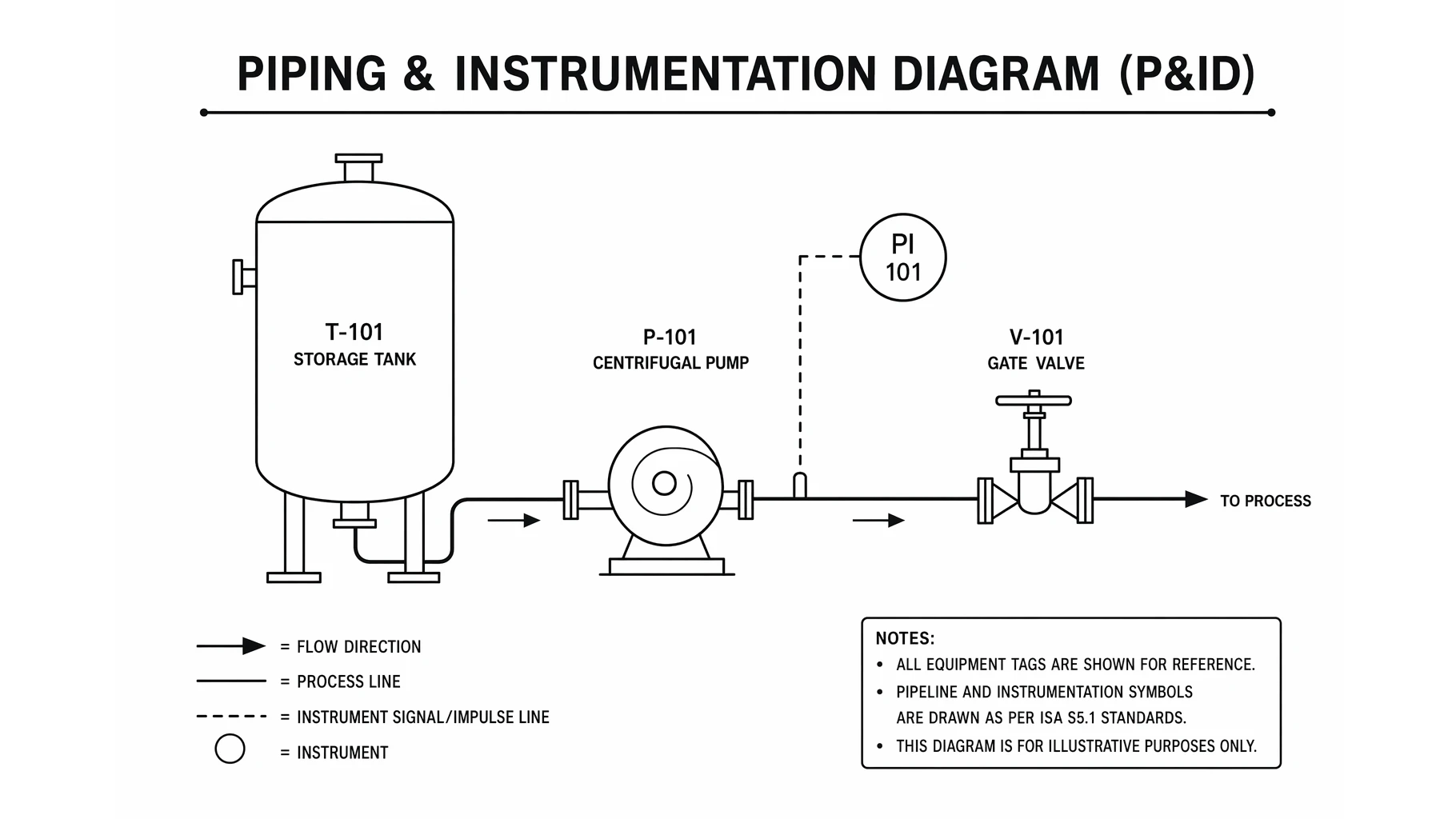
What Is a P&ID? Piping & Instrumentation Diagrams Explained
A P&ID shows every pipe, valve, and instrument in a process. Learn how to read piping and instrumentation diagrams, the standard ISA symbols, and how a P&ID differs from a PFD.
10 Best Free Miro Alternatives 2026: No Paywall, Unlimited Boards
The best free Miro alternatives with unlimited boards and real-time collaboration — Excalidraw, FigJam, Canva Whiteboard & more. No credit card required.
AI Worksheet Generator Guide: Create Printable Worksheets and Answer Keys
Learn how to use an AI worksheet generator for printable classroom worksheets, answer keys, differentiation, diagrams, and teacher review workflows.