Meiosis Diagram Generator for Labeled Cell Division Phases
Generate a clearly labeled meiosis diagram showing every stage of cell division — Meiosis I (Prophase I with crossing over, Metaphase I, Anaphase I, Telophase I) and Meiosis II — ending in four haploid daughter cells. Make labeled or blank worksheet versions, then download, free.
Meiosis Diagram Generator
Free to try ·
Your meiosis diagram will appear here
Describe what you need and click Generate
Meiosis Diagram Examples
Labeled and blank diagrams covering both divisions, key events, and worksheets
Complete Meiosis Diagram (Labeled)
Both divisions in one diagram — every phase labeled, ending in four haploid cells.
Crossing Over in Prophase I
Synapsis, the chiasma, and the swap of segments between non-sister chromatids — labeled.
Independent Assortment
Why orientation at Metaphase I matters — n pairs give 2^n possible gametes.
Meiosis vs Mitosis
One division and two identical cells, versus two divisions and four unique cells.
Blank Meiosis Worksheet
A blank, numbered version for quizzes and labeling practice — print and hand out.
Meiosis Classroom Poster
A bright, full-process poster for the wall — every stage tracked in colour.
What is meiosis?
Meiosis is a reduction division: it halves the chromosome number, turning one diploid (2n) parent cell into four haploid (n) daughter cells. Those cells become the gametes — sperm and egg — that fuse at fertilisation to restore the full chromosome number in the next generation. Two features set meiosis apart from ordinary cell division. First, it runs through two consecutive divisions rather than one. Second, it deliberately shuffles genetic information through crossing over and independent assortment, so the four cells are genetically unique rather than identical copies. This generator draws that whole process with each stage labeled, so the chromosome behaviour is easy to follow.
The two divisions and their phases
- Meiosis I (the reductional division) separates homologous chromosomes. Prophase I — the longest, most complex phase, where homologous chromosomes pair up (synapsis) into tetrads and crossing over occurs at the chiasmata. Metaphase I — the homologous pairs line up at the equator, with random orientation. Anaphase I — whole homologous chromosomes are pulled to opposite poles while sister chromatids stay joined. Telophase I — two haploid cells form.
- Meiosis II (the equational division) separates sister chromatids and looks much like mitosis. Prophase II, Metaphase II — chromosomes align at the equator. Anaphase II — sister chromatids finally separate. Telophase II — the result is four genetically unique haploid daughter cells. A handy way to remember each division is the sequence PMAT (Prophase, Metaphase, Anaphase, Telophase), run through twice.
The key events that create genetic diversity
- Synapsis: homologous chromosomes pair up precisely in Prophase I, forming a tetrad (bivalent) of four chromatids.
- Crossing over (recombination): non-sister chromatids exchange matching segments at the chiasmata, creating new combinations of alleles.
- Independent assortment: at Metaphase I each homologous pair lines up independently, so maternal and paternal chromosomes are dealt out at random — n pairs produce 2^n possible gametes.
- Two separations: homologous chromosomes split at Anaphase I, then sister chromatids split at Anaphase II. Getting the order of these two separations right is the part students most often confuse.
Meiosis vs mitosis
Mitosis is one division that produces two genetically identical diploid cells for growth, repair, and asexual reproduction. Meiosis is two divisions that produce four genetically unique haploid cells for sexual reproduction. Only meiosis pairs homologous chromosomes (in Prophase I), only meiosis includes crossing over and independent assortment, and only meiosis halves the chromosome number. If you need the mitosis side of that comparison, the companion mitosis diagram generator draws prophase, metaphase, anaphase, and telophase as a separate labeled diagram — generate both and place them side by side for a clean compare-and-contrast.
Labeled vs blank diagrams for worksheets
A labeled diagram is the reference: it names every stage and structure — bivalents, chiasmata, the metaphase plate, spindle fibres, and the ploidy (2n or n) at each step — and is ideal for notes, revision, and slides. A blank diagram strips the labels and adds numbered lines so students can fill them in, which is exactly what you want for a quiz or homework sheet. With this tool you can ask for either: describe the same diagram and just add "labeled" or "unlabeled worksheet with blank lines" to the prompt, then download both versions of the matching diagram.
How to generate a labeled meiosis diagram
- Describe what you need in plain English — for example, "all eight phases of meiosis in two rows, labeled, with crossing over shown in Prophase I and four haploid daughter cells at the end."
- Add the specifics that matter to you: labeled or blank, colour-coded maternal and paternal chromosomes, ploidy labels, a single focused phase, or a full classroom poster.
- Generate the diagram, then refine the wording if a stage or label is not how you want it and generate again.
- Download the image to drop into a worksheet, slide deck, study guide, or printed handout.
- These diagrams are AI-generated illustrations, so always check the stages, labels, and chromosome behaviour against your textbook before using them in graded or published work.
Frequently Asked Questions
Related Biology Tools
 Biology
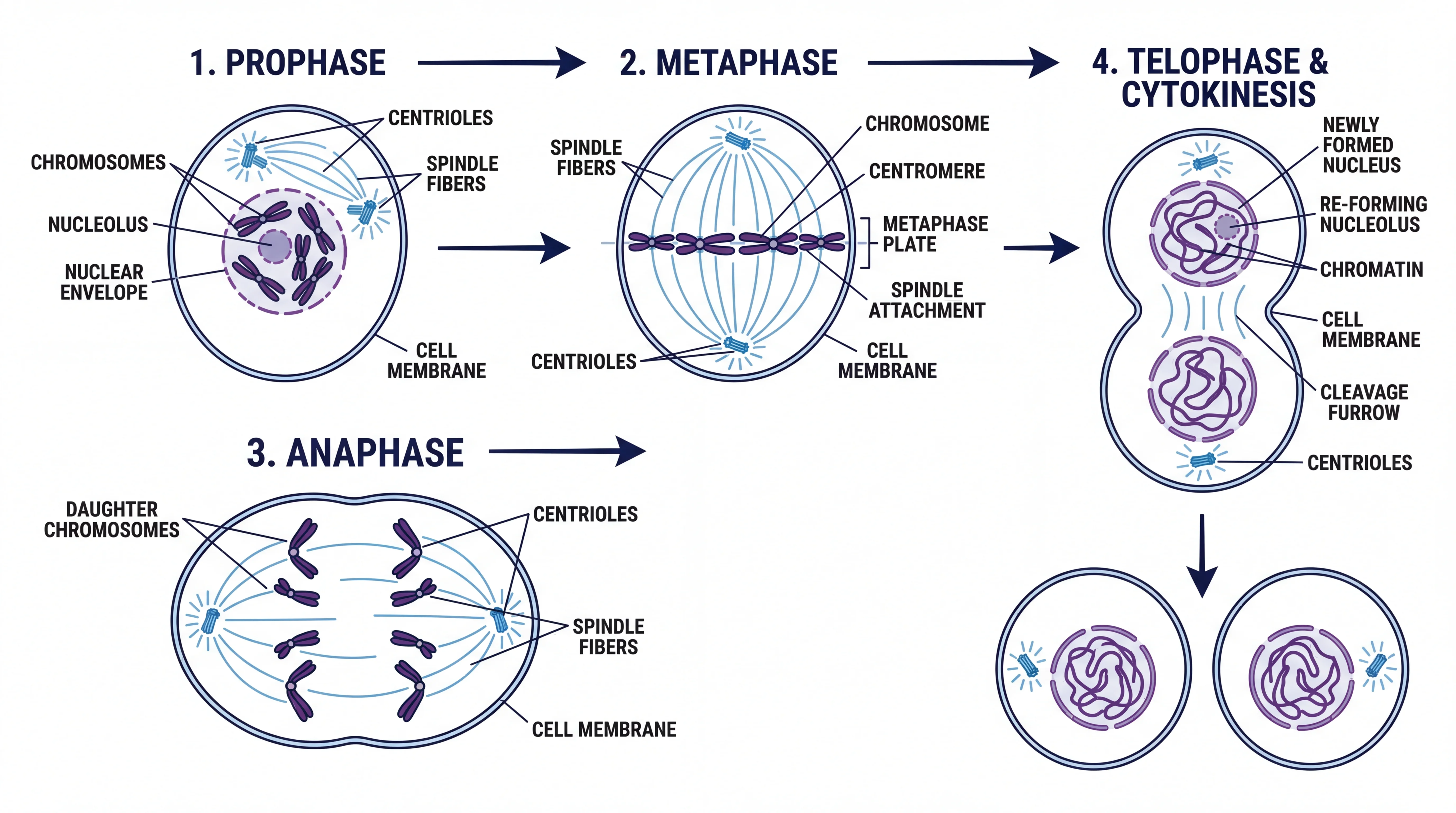
Mitosis Diagram Generator
Draw the phases of mitosis — prophase, metaphase, anaphase, and telophase — with labeled chromosomes.
 Biology
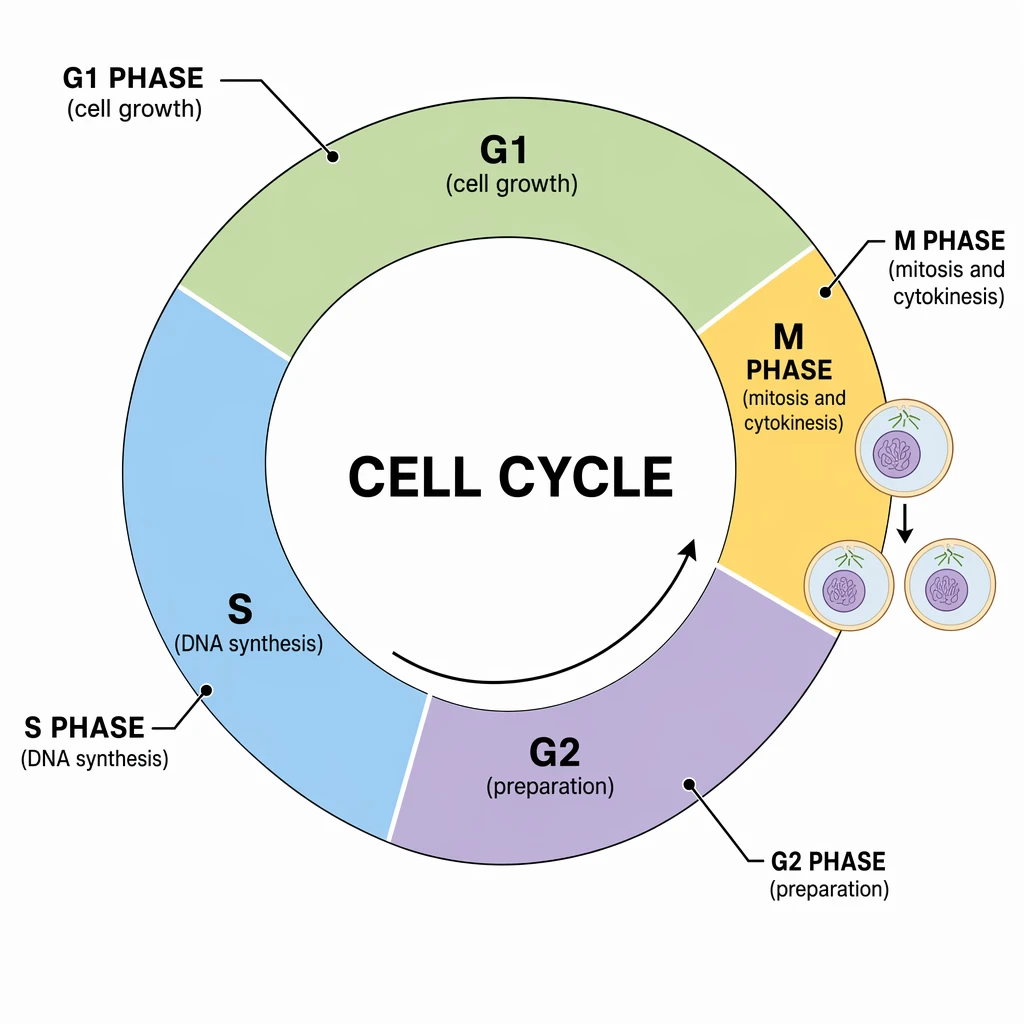
Cell Cycle Diagram Generator
Compare meiosis with the broader cell cycle using labeled G1, S, G2, and M phase diagrams.
 Biology
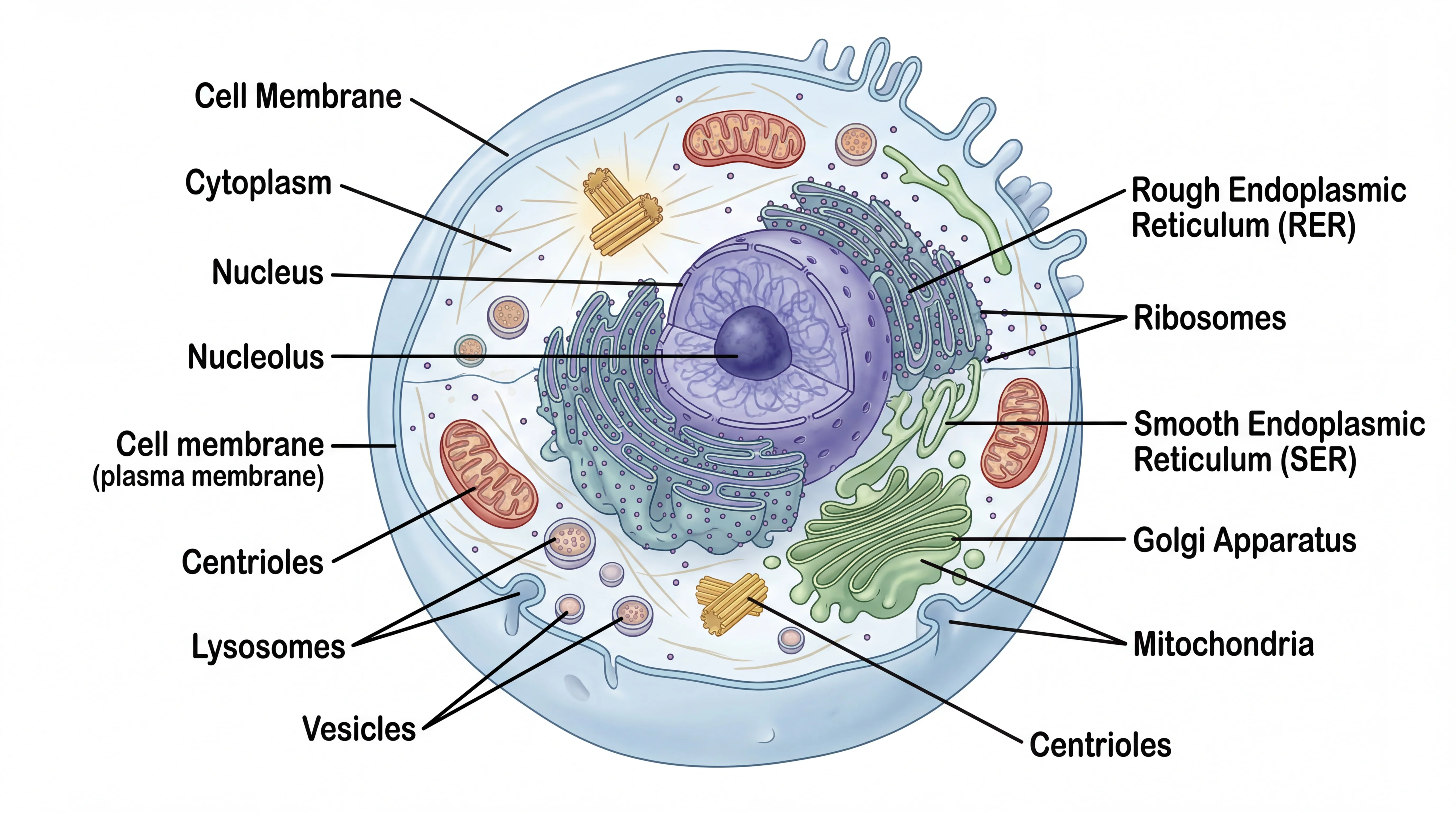
Animal Cell Diagram Generator
Create labeled and unlabeled animal cell diagrams for biology worksheets and exams.