Carbon Cycle Diagram Generator Carbon Cycle
Describe the carbon cycle diagram you need and our AI will generate it instantly. Create professional diagrams showing how carbon moves through the atmosphere, biosphere, hydrosphere, and geosphere. Perfect for earth science, biology, and environmental science classes.
Coloring Page Generator
Free to try ·
Your coloring page will appear here
Select a theme and click Generate
Carbon Cycle Diagram Examples
Browse carbon cycle examples or generate your own above
Complete Carbon Cycle - All Reservoirs
Comprehensive carbon cycle diagram with all four major reservoirs and carbon flux pathways labeled, ideal for earth science courses.
Simplified Carbon Cycle for Students
A beginner-friendly overview of the carbon cycle with color-coded pathways and simple labels, perfect for introductory science classes.
Carbon Cycle - Geological Processes
Detailed geological carbon cycle showing the slow carbon cycle processes including volcanism, weathering, sedimentation, and plate tectonics.
Ocean Carbon Cycle
Ocean-focused carbon cycle diagram showing the biological pump, dissolved carbon chemistry, and deep sea carbon sequestration processes.
Carbon Cycle with Human Impact
Carbon cycle diagram highlighting human activities that add excess CO₂ to the atmosphere, including fossil fuels, deforestation, and cement production.
Blank Carbon Cycle Worksheet
Printable blank carbon cycle diagram with numbered blanks for students to label reservoirs, processes, and carbon compounds.
What is a Carbon Cycle Diagram?
A carbon cycle diagram is a visual representation of how carbon atoms move through Earth's major systems: the atmosphere, biosphere, hydrosphere, and geosphere. Carbon is the backbone of all organic molecules and a key element in Earth's climate system. The carbon cycle describes both fast processes (like photosynthesis and respiration, which occur in seconds to years) and slow geological processes (like fossil fuel formation and volcanic emissions, which take millions of years). Understanding the carbon cycle is fundamental to earth science, biology, and environmental science, and is especially relevant to studying climate change and greenhouse gas emissions.
Key Components of the Carbon Cycle
- Atmosphere — Contains carbon dioxide (CO₂) and methane (CH₄); the main reservoir that connects all other carbon pools
- Photosynthesis — Plants, algae, and cyanobacteria absorb CO₂ from the atmosphere and convert it into organic carbon compounds using sunlight
- Respiration — Living organisms release CO₂ back into the atmosphere by breaking down organic molecules for energy
- Decomposition — Bacteria and fungi break down dead organic matter, releasing carbon as CO₂ or storing it in soil as humus
- Combustion — Burning fossil fuels and biomass rapidly releases stored carbon into the atmosphere as CO₂
- Ocean Exchange — The ocean absorbs and releases CO₂ at the surface; dissolved carbon is transported to deep water via the biological pump and thermohaline circulation
- Sedimentation and Fossil Formation — Over millions of years, carbon from dead organisms is buried and compressed into fossil fuels (coal, oil, natural gas) and sedimentary rocks (limestone)
- Volcanic Emissions — Volcanic eruptions and geothermal vents release CO₂ from deep within the Earth back into the atmosphere
When to Use Carbon Cycle Diagrams
Carbon cycle diagrams are essential teaching tools across multiple science disciplines. In earth science classes, they help students understand how carbon moves between the atmosphere, ocean, land, and underground reservoirs over geological timescales. In biology, they illustrate the connection between photosynthesis and cellular respiration. In environmental science, they are critical for explaining climate change, greenhouse gas emissions, and carbon sequestration strategies. Teachers can use labeled versions for instruction, simplified versions for elementary students, and blank worksheets for assessments and quizzes.
Best Practices for Creating Carbon Cycle Diagrams
- Show all four reservoirs clearly — atmosphere, biosphere (land), hydrosphere (ocean), and geosphere (underground) — to give students the complete picture
- Use directional arrows with labels to indicate both the process name (e.g., photosynthesis) and the carbon compound involved (e.g., CO₂, glucose)
- Distinguish between the fast carbon cycle (biological processes in days to years) and the slow carbon cycle (geological processes over millions of years)
- Include approximate carbon flux values (gigatons of carbon per year) for advanced students to understand the relative scale of each process
- Highlight human impacts — fossil fuel burning, deforestation, and cement production — to connect the diagram to climate change topics
- Use color-coding to differentiate natural processes from human-caused carbon emissions for visual clarity
Frequently Asked Questions
More Science Diagram Tools
Earth ScienceWater Cycle Diagram Generator
Create labeled and unlabeled water cycle diagrams showing evaporation, condensation, precipitation, and collection.
BiologyNitrogen Cycle Diagram Generator
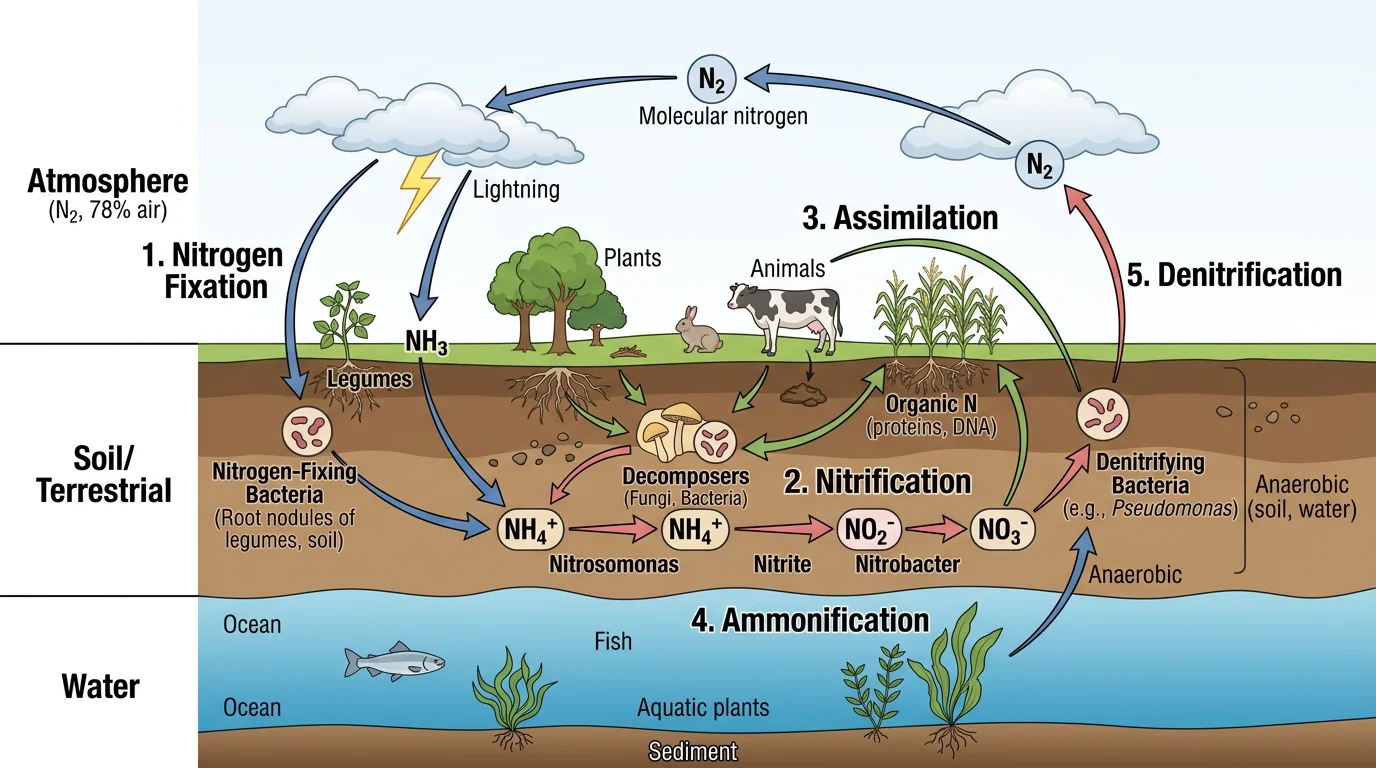
Generate nitrogen cycle diagrams showing fixation, nitrification, assimilation, ammonification, and denitrification.
BiologyPhotosynthesis Diagram Generator
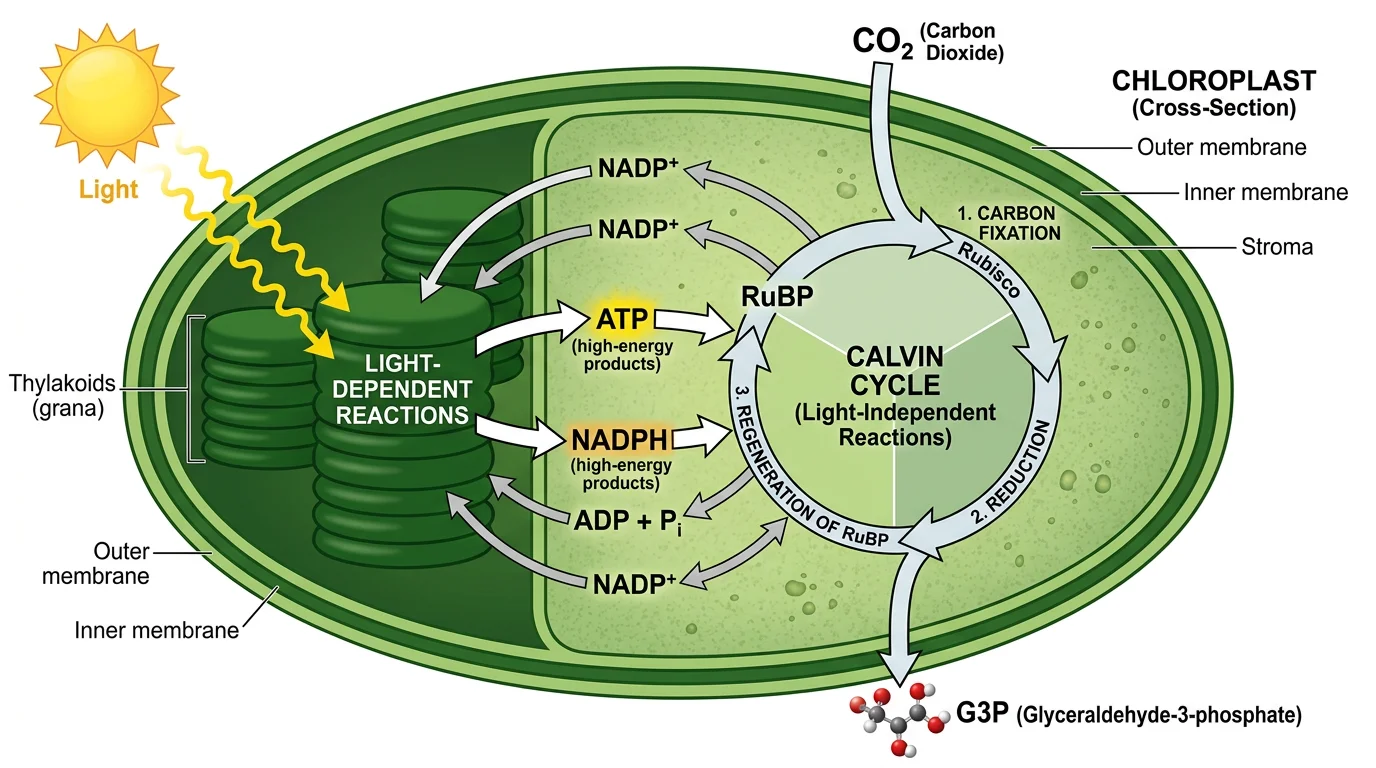
Create photosynthesis diagrams showing light reactions, Calvin cycle, and chloroplast structure for biology class.