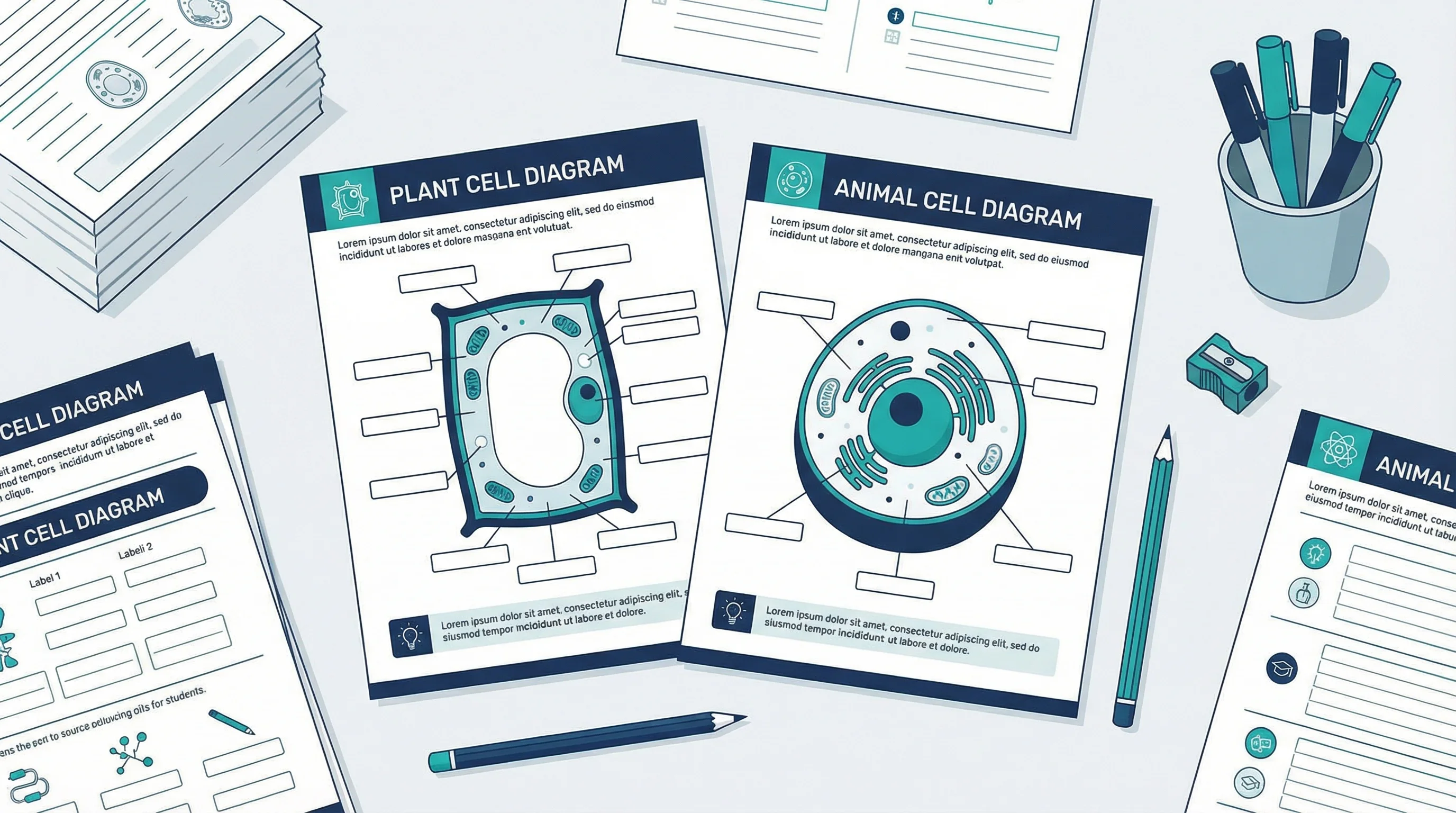
Free Printable Cell Diagram Worksheets: Unlabeled & Labeled (2026)
Download free printable cell diagram worksheets. Includes unlabeled plant cell, animal cell, and comparison diagrams for classroom quizzes and study guides.
Cell diagrams are one of the most effective ways to teach and assess biology knowledge. Whether you need an unlabeled plant cell for a quiz, a labeled animal cell for a study guide, or a side-by-side comparison worksheet, having print-ready resources saves valuable class preparation time.
This guide provides free printable cell diagram worksheets at multiple difficulty levels — from simple coloring pages for elementary students to detailed exam review sheets for high school biology. Every image below is printer-friendly and ready to use in your classroom.
Cell Diagram Generator
Create custom labeled and unlabeled cell diagrams instantly with AI. Perfect for worksheets, quizzes, and classroom materials.
Try it free →Why Use Printable Cell Diagram Worksheets?
Research consistently shows that active recall and visual learning improve retention in science education. Cell diagram worksheets tap into both strategies:
- Unlabeled diagrams force students to retrieve organelle names from memory (active recall)
- Labeled diagrams serve as reference sheets during study sessions (visual encoding)
- Coloring pages engage younger students with hands-on interaction
- Comparison worksheets develop critical thinking by asking students to analyze differences
According to Edutopia, drawing and labeling scientific diagrams improves long-term retention by up to 29% compared to reading alone. That makes these worksheets one of the highest-impact resources you can bring into your classroom.
Worksheet Types and How to Use Them
Type 1: Unlabeled Diagrams (Quiz-Ready)
Unlabeled cell diagrams are ideal for formative assessments, quizzes, and tests. Print them out, and ask students to:
- Write the name of each organelle next to its arrow or number
- Describe the function of each labeled structure
- Color-code organelles by function (energy, structure, transport)
These worksheets work best when students have already studied the material using labeled diagrams and are ready to demonstrate understanding.
Type 2: Labeled Diagrams (Study Reference)
Labeled diagrams serve as study guides and reference materials. Students can use them to:
- Review organelle names and locations before a test
- Compare their completed unlabeled worksheets against the answer key
- Create flashcards from the diagram labels
- Annotate with additional notes about each organelle's function
Type 3: Coloring Pages (Elementary and Middle School)
Coloring worksheets add a kinesthetic element to learning. Students color each organelle a specific color based on a key, which reinforces:
- Organelle identification
- Spatial relationships within the cell
- The difference between cell types (plant vs animal)
Type 4: Comparison Worksheets
Comparison worksheets place two cell types side by side and ask students to identify similarities and differences. These are excellent for:
- Venn diagram activities
- Essay prompts
- Group discussion starters
- End-of-unit review
Free Printable Animal Cell Worksheets
Unlabeled Animal Cell — Quiz Worksheet
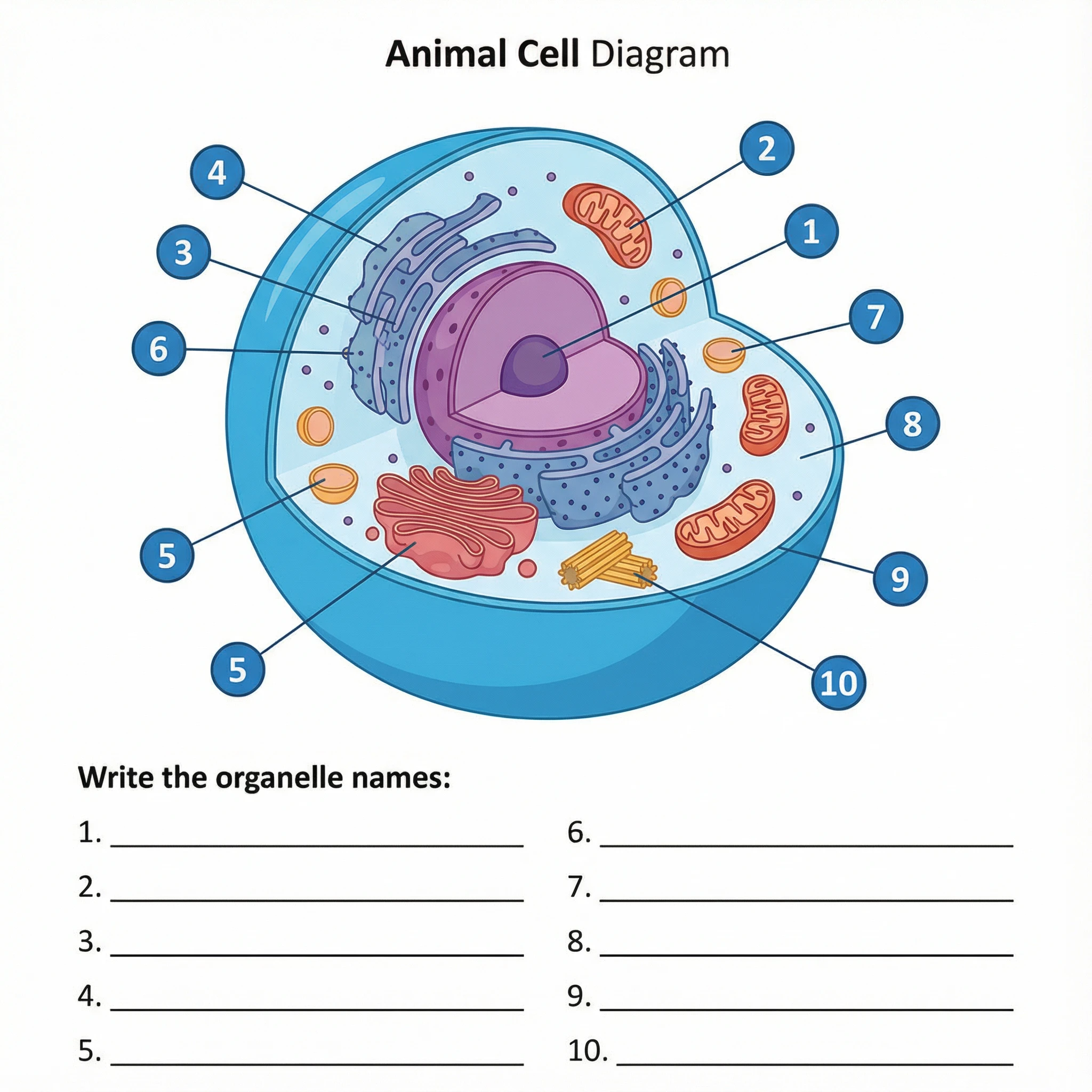 An unlabeled animal cell diagram — print this out for quizzes and labeling activities. Students identify organelles including nucleus, mitochondria, ER, Golgi apparatus, lysosomes, and centrioles.
How to use: Print one copy per student. Ask students to label all visible organelles. For differentiation, provide a word bank for struggling students or require function descriptions for advanced learners.
Grade level: Grades 6-12
Labeled Animal Cell — Study Guide
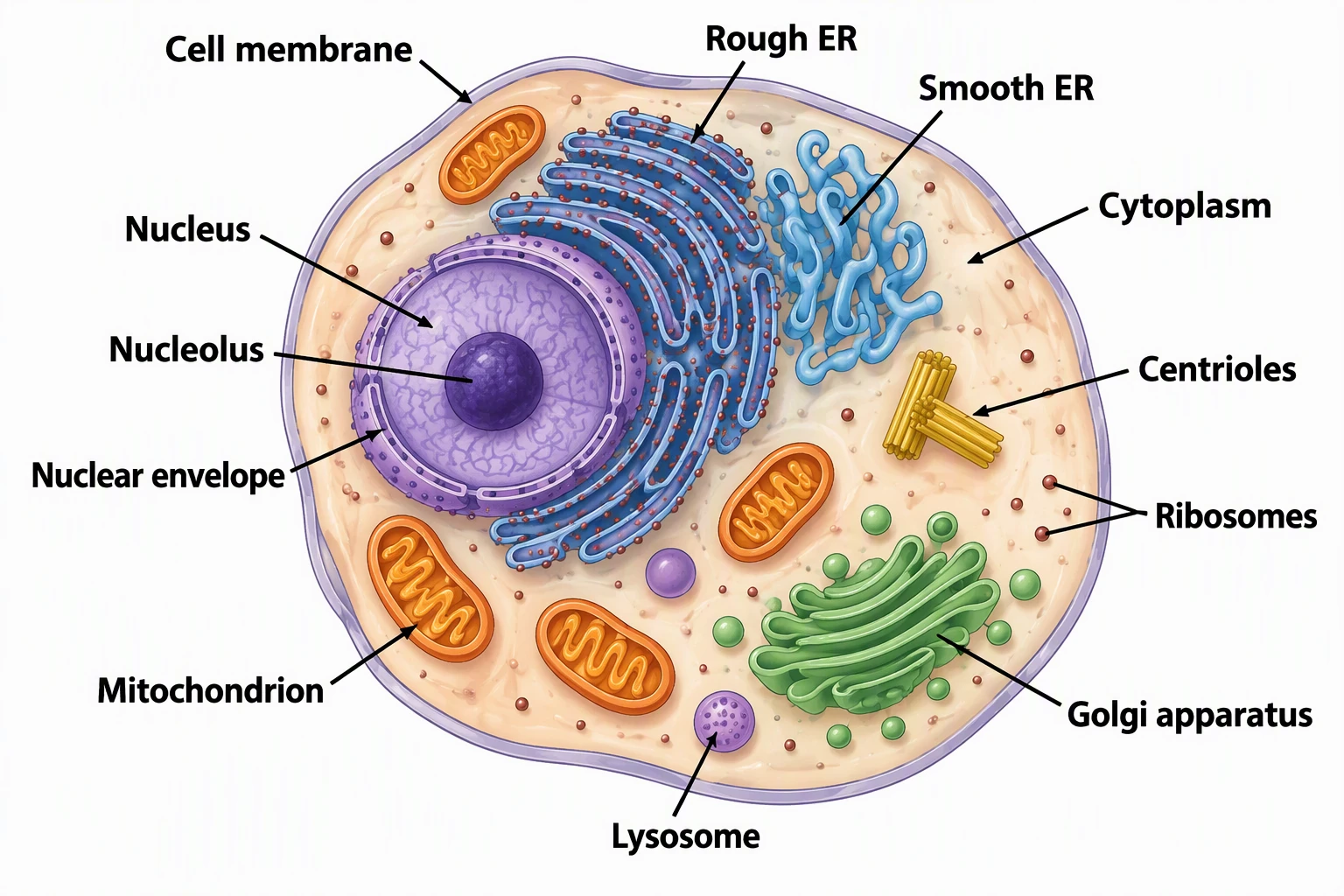
A fully labeled animal cell diagram showing all major organelles. Use as a study guide or answer key for the unlabeled version above.
How to use: Distribute as a study reference before exams, or use as the answer key after students complete the unlabeled version. Pairs well with note-taking activities.
Grade level: Grades 7-12
Simple Labeled Animal Cell
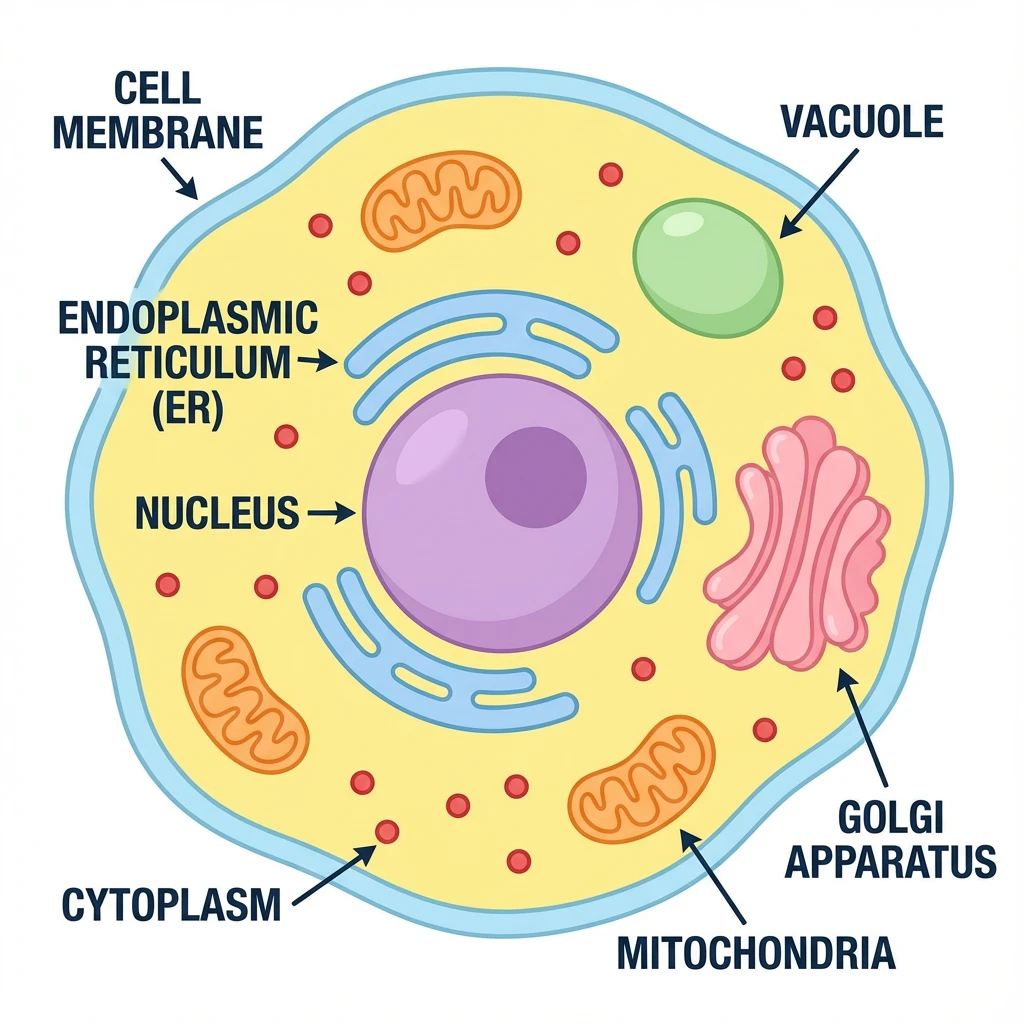 A simplified labeled animal cell diagram — ideal for younger students or introductory biology lessons.
How to use: Perfect for introducing cell structure to younger students who are seeing cell diagrams for the first time. Focus on the 5-6 main organelles.
Grade level: Grades 4-7
Animal Cell Coloring Page
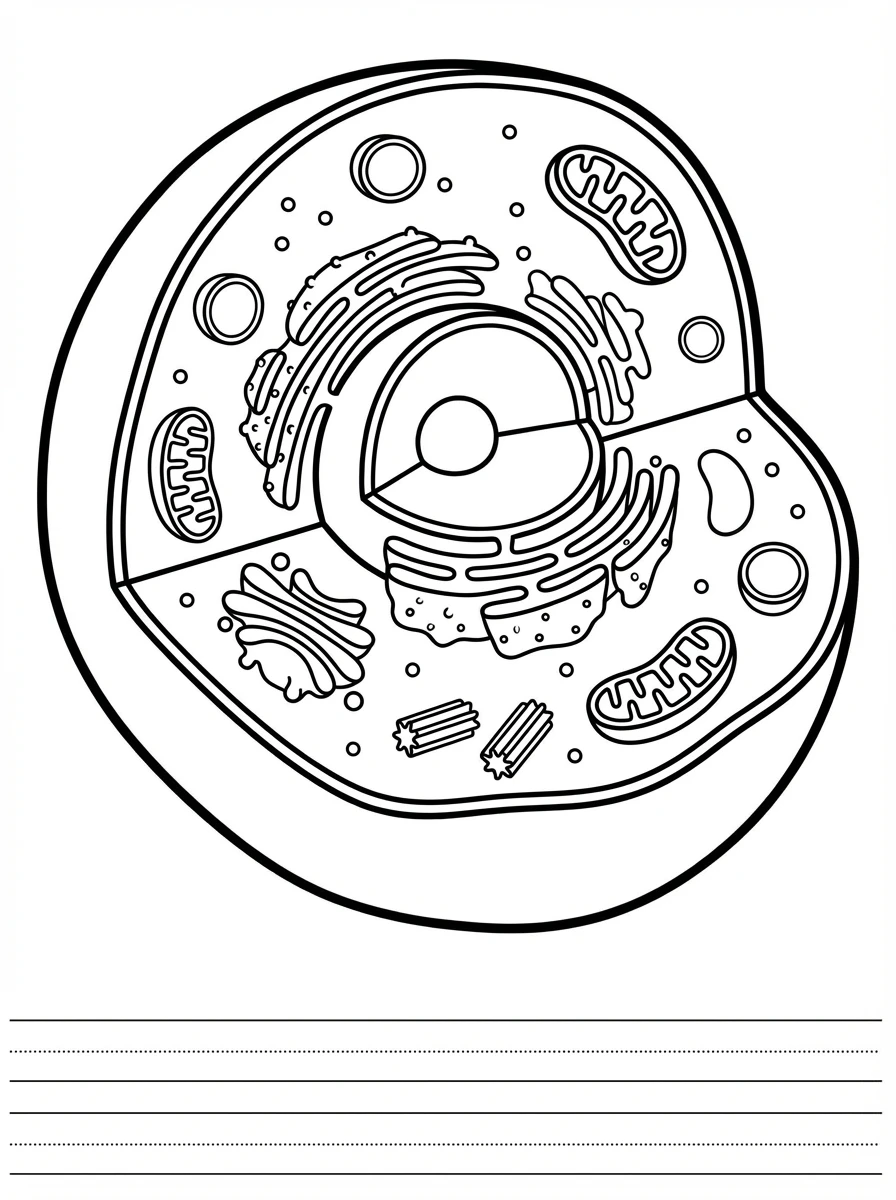 A printable animal cell coloring worksheet. Students color each organelle according to a color key to reinforce organelle identification.
How to use: Provide color assignments (e.g., "Color the mitochondria red, the nucleus blue, the ER green"). Students color and label as they go. Great for stations or homework.
Grade level: Grades 3-6
Animal Cell Exam Review Sheet
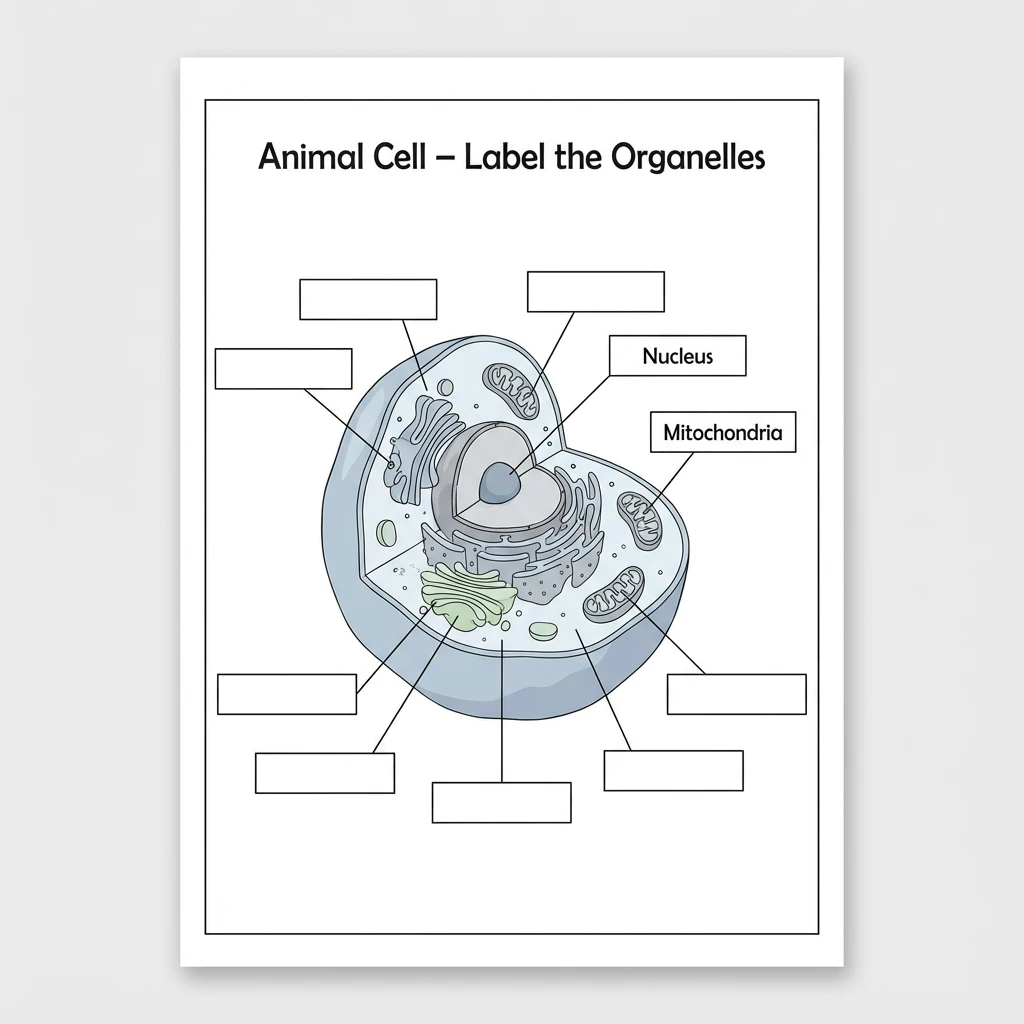 A comprehensive animal cell exam review worksheet. Combines diagram labeling with function descriptions for thorough test preparation.
How to use: Use as an end-of-unit review or test prep activity. Students complete the labeling and answer short-response questions about each organelle's function.
Grade level: Grades 8-12
Free Printable Plant Cell Worksheets
Unlabeled Plant Cell — Quiz Worksheet
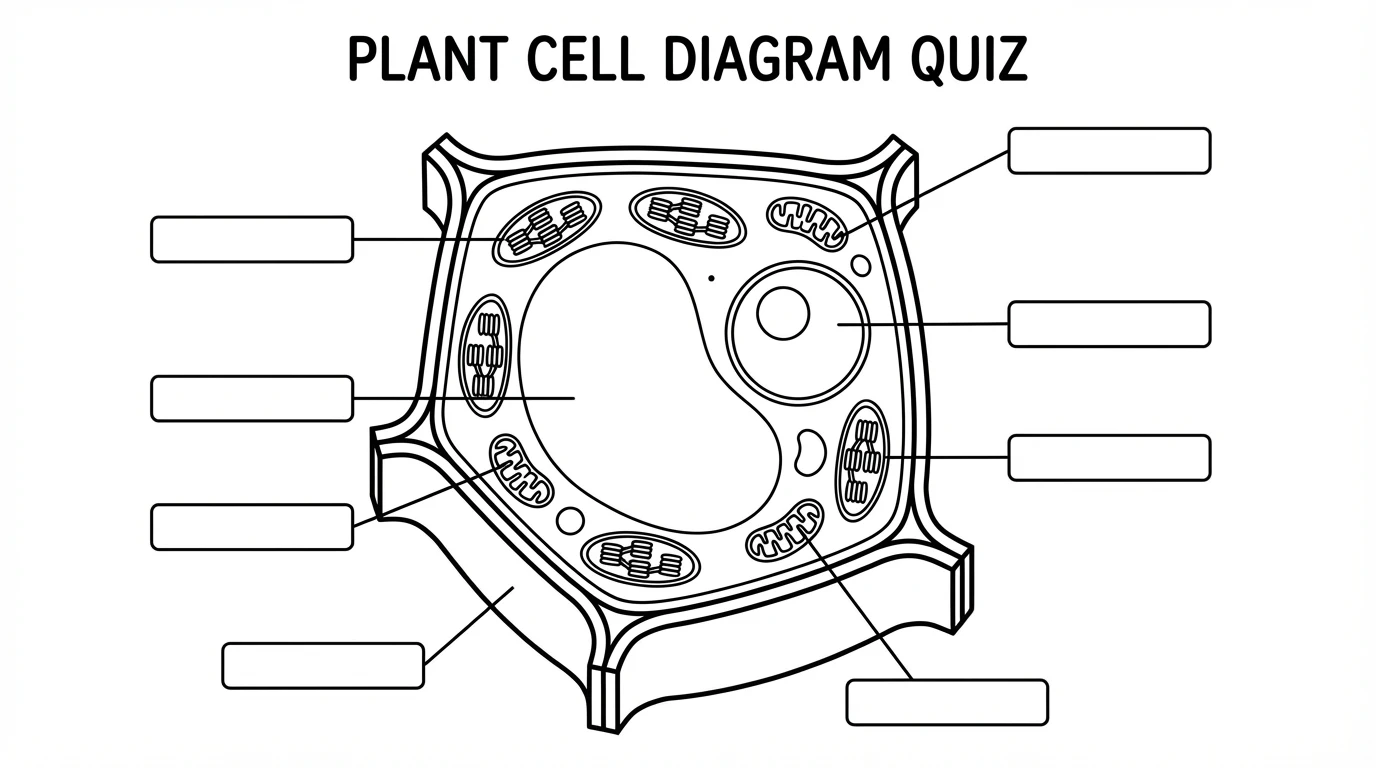 An unlabeled plant cell diagram — print this for quizzes and classroom labeling activities. Features cell wall, chloroplasts, central vacuole, and all standard organelles.
How to use: Same approach as the animal cell quiz above. Emphasize plant-specific structures: cell wall, chloroplasts, and the large central vacuole. Ask students to explain why these structures are absent in animal cells.
Grade level: Grades 6-12
Labeled Plant Cell — Study Guide
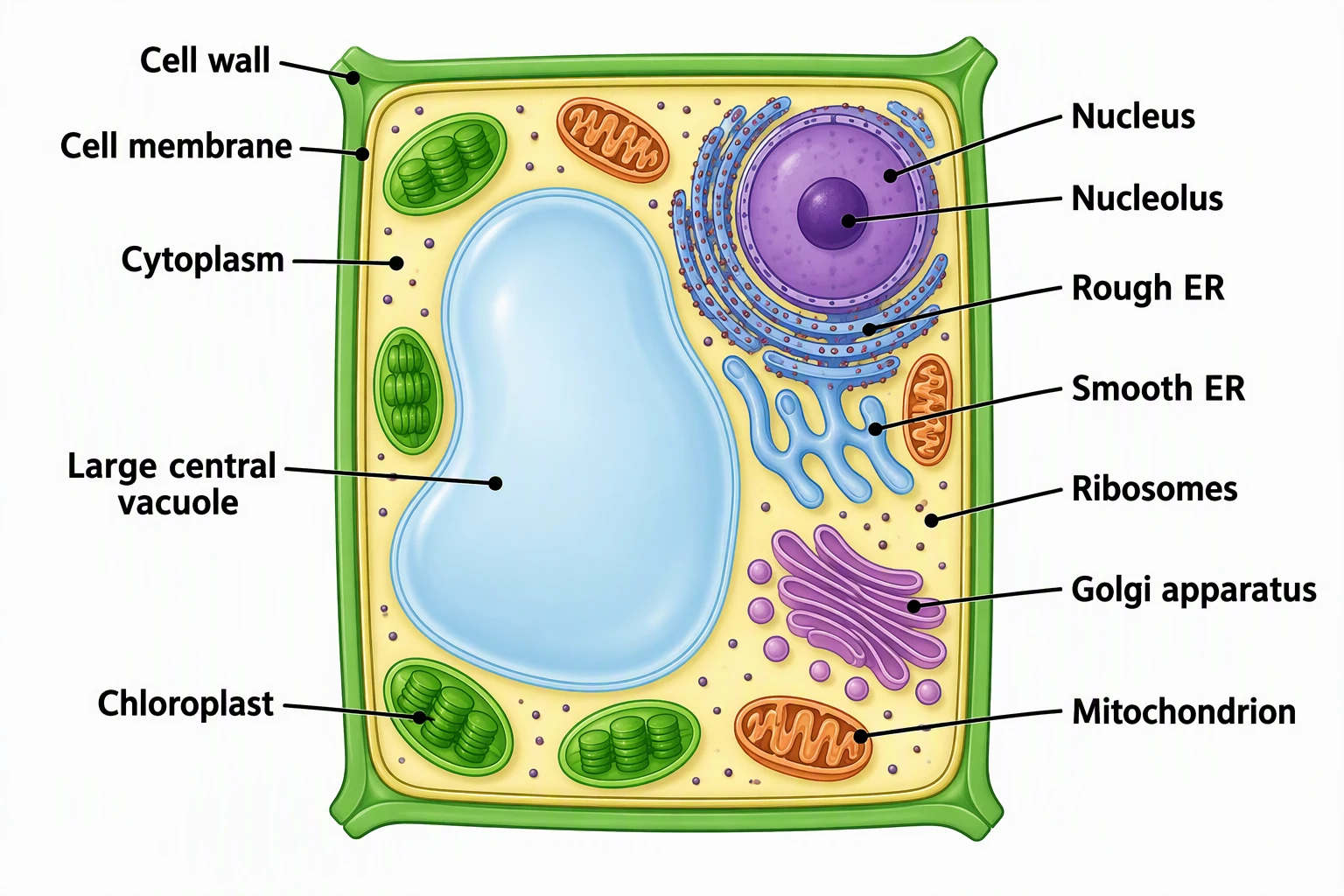 A fully labeled plant cell diagram showing all major organelles including cell wall, chloroplasts, and central vacuole. Use as a study guide or answer key.
How to use: Distribute as a reference sheet before assessments. Have students compare this diagram with the labeled animal cell to identify differences.
Grade level: Grades 7-12
Simple Labeled Plant Cell
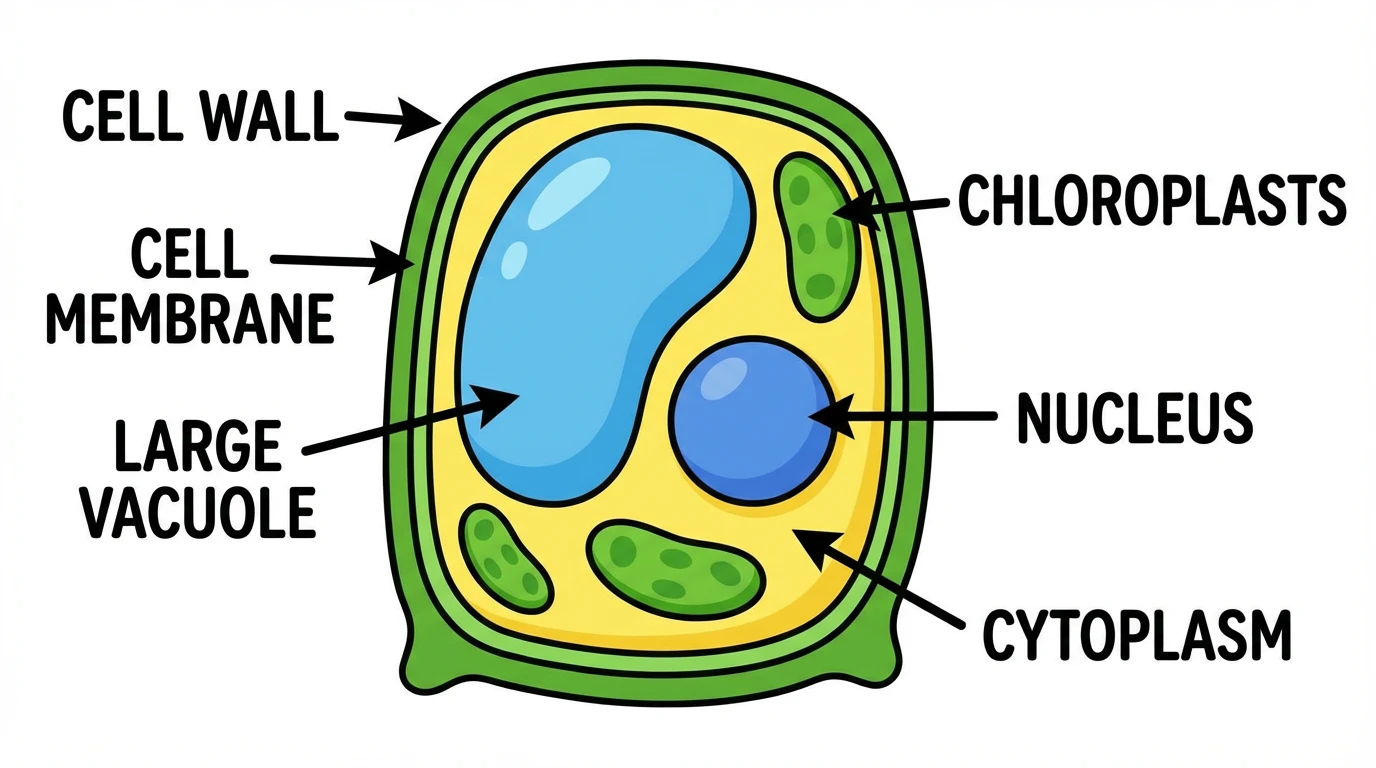 A simplified labeled plant cell diagram — ideal for introductory lessons and younger students.
How to use: Focus on the unique features of plant cells: the rigid rectangular shape, the cell wall outside the membrane, the green chloroplasts, and the large central vacuole.
Grade level: Grades 4-7
Plant Cell Coloring Page
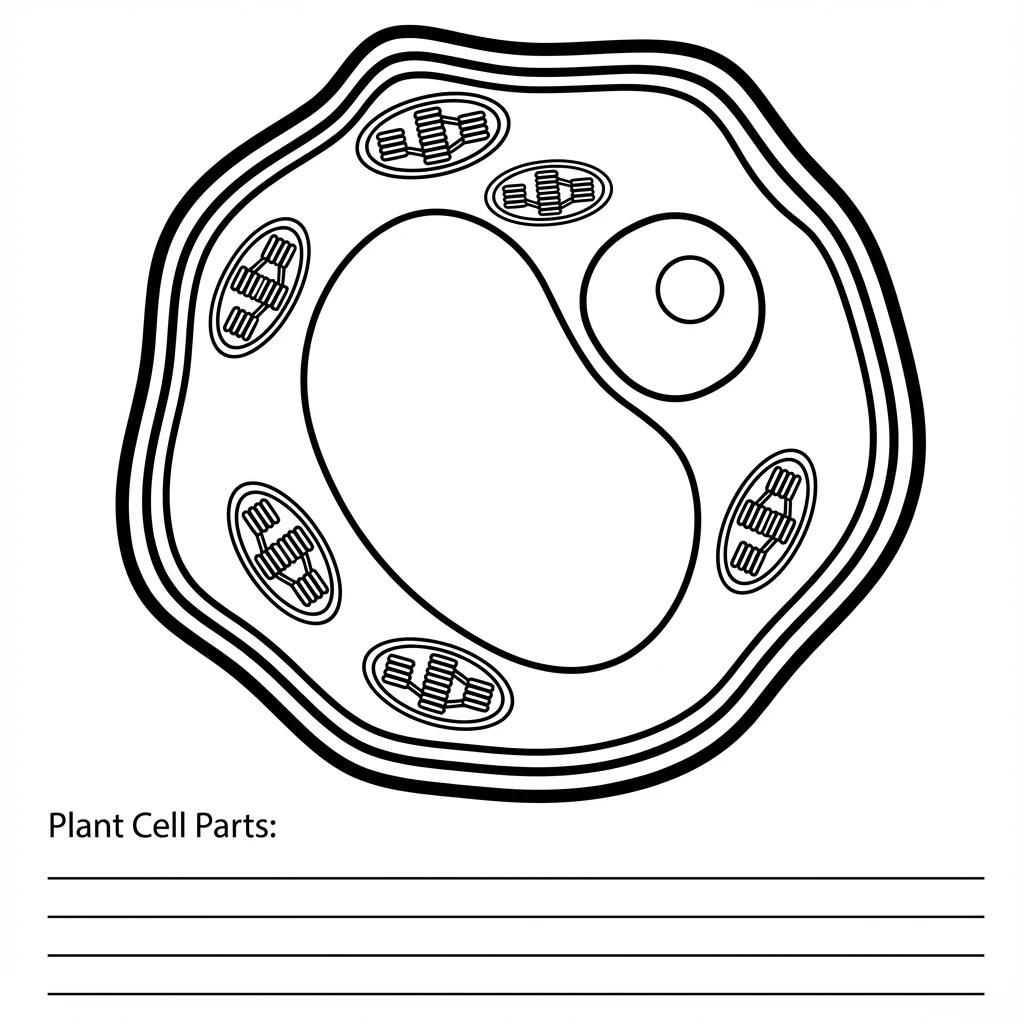 A printable plant cell coloring worksheet. Color each organelle to reinforce plant cell structure and identification.
How to use: Provide specific color assignments. Use green for chloroplasts to reinforce the photosynthesis connection. Compare with the animal cell coloring page to highlight differences.
Grade level: Grades 3-6
Plant Cell Exam Review
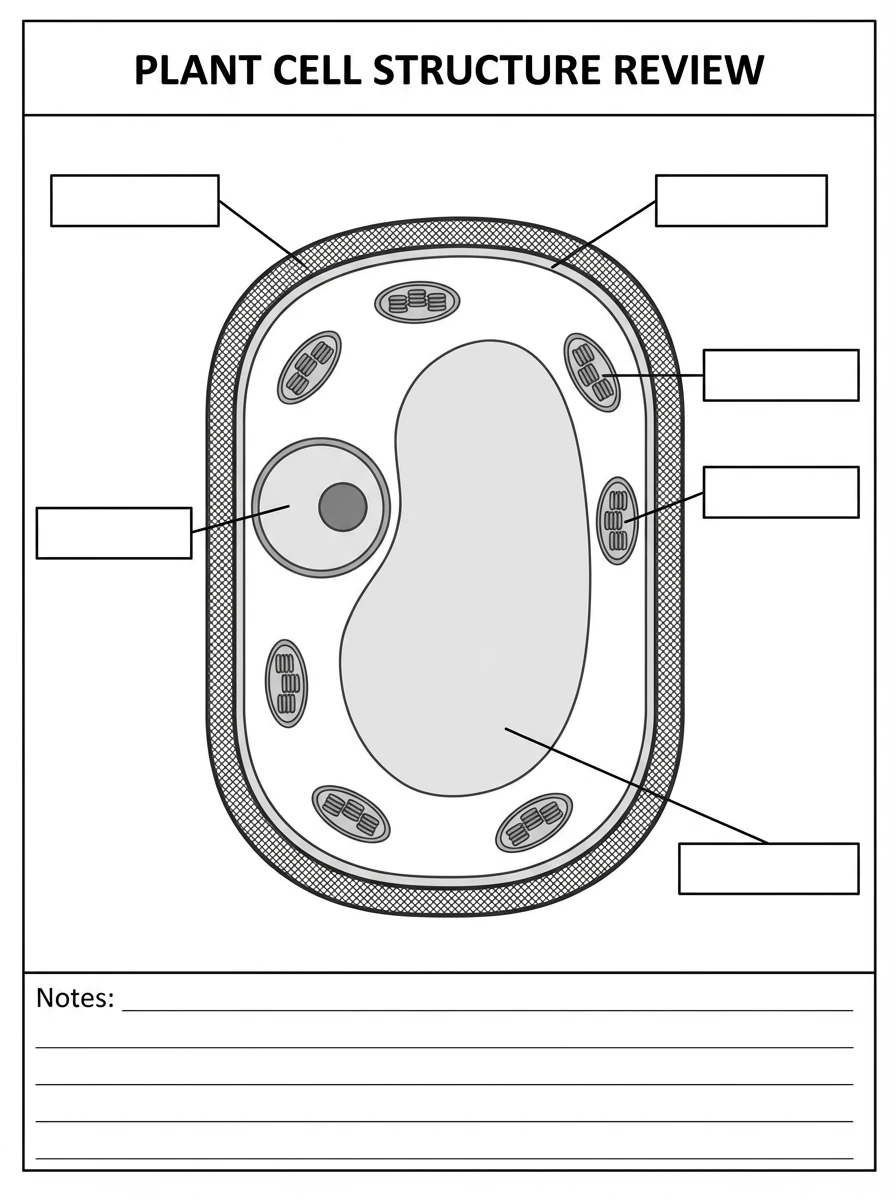 A comprehensive plant cell exam review worksheet combining diagram labeling with function descriptions.
How to use: Use alongside the animal cell exam review for a comprehensive cell biology unit review. Students complete both and then compare their answers.
Grade level: Grades 8-12
Free Printable Comparison Worksheets
Plant Cell vs Animal Cell — Comparison Quiz
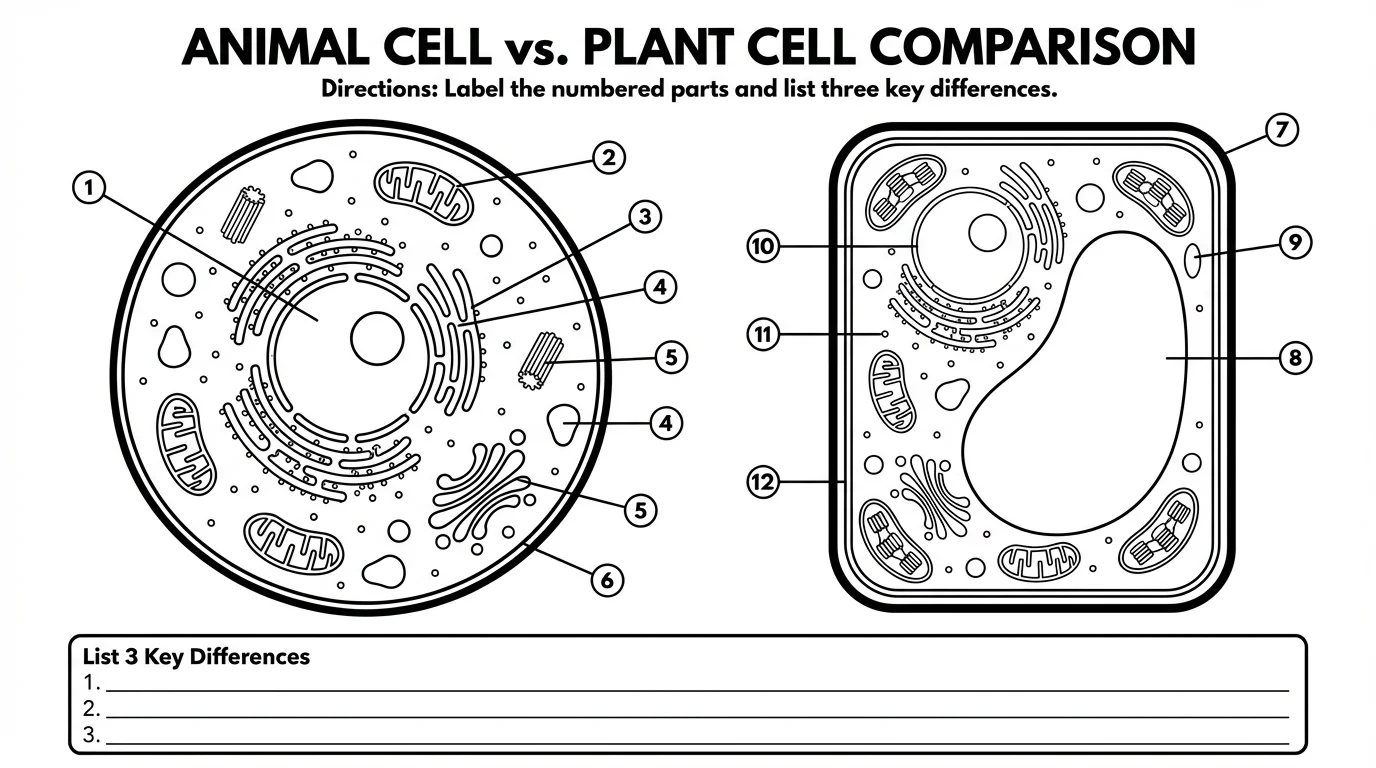 A side-by-side comparison quiz worksheet showing both plant and animal cells. Students identify organelles in both cell types and note the differences.
How to use: This is the ultimate assessment worksheet. Students must label both cells and then answer comparison questions (e.g., "Which organelle is found only in plant cells? Explain its function.").
Grade level: Grades 6-12
Plant Cell vs Animal Cell — Labeled Comparison
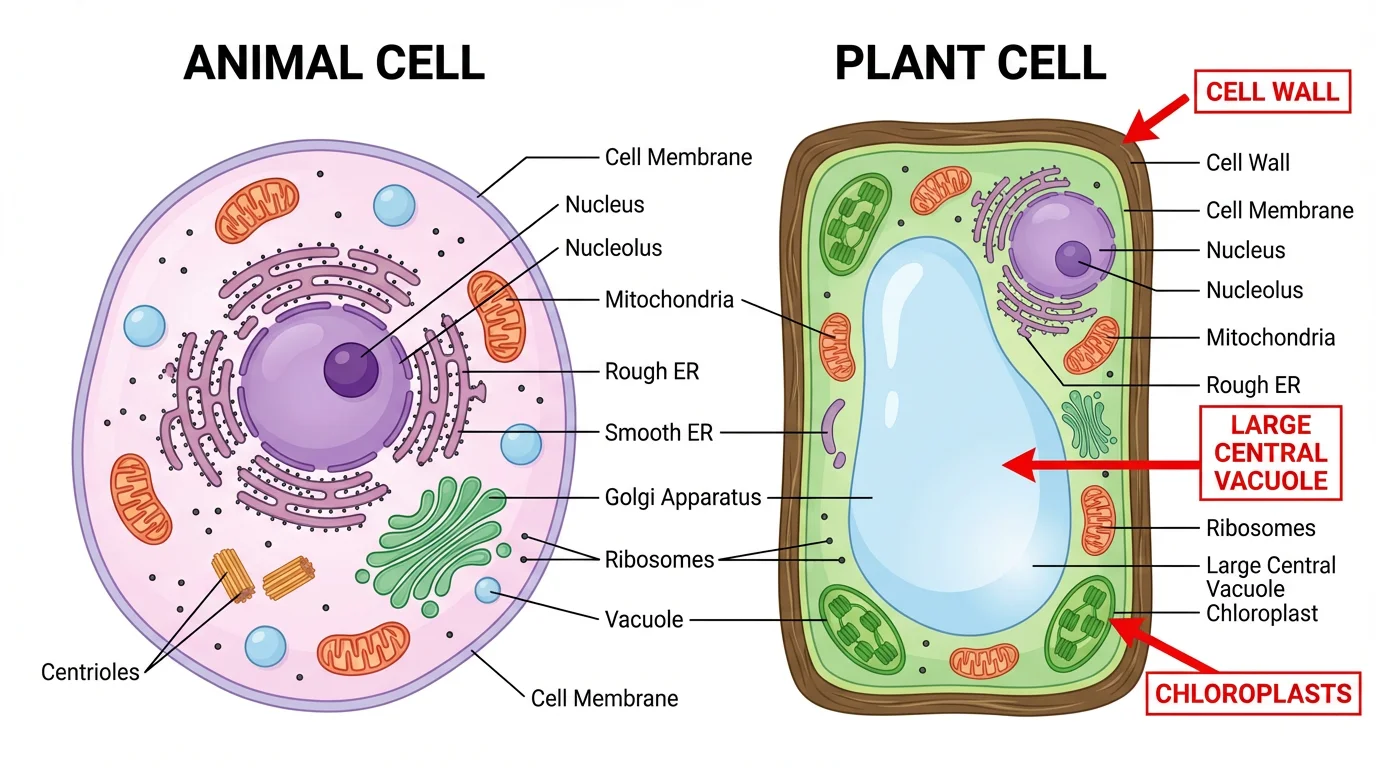 A fully labeled side-by-side comparison of plant and animal cells. Use as a study guide or answer key for the comparison quiz above.
How to use: Distribute as a study reference or answer key. Excellent for classroom posters — print at large size and laminate for permanent display.
Grade level: Grades 5-12
Venn Diagram — Plant vs Animal Cells
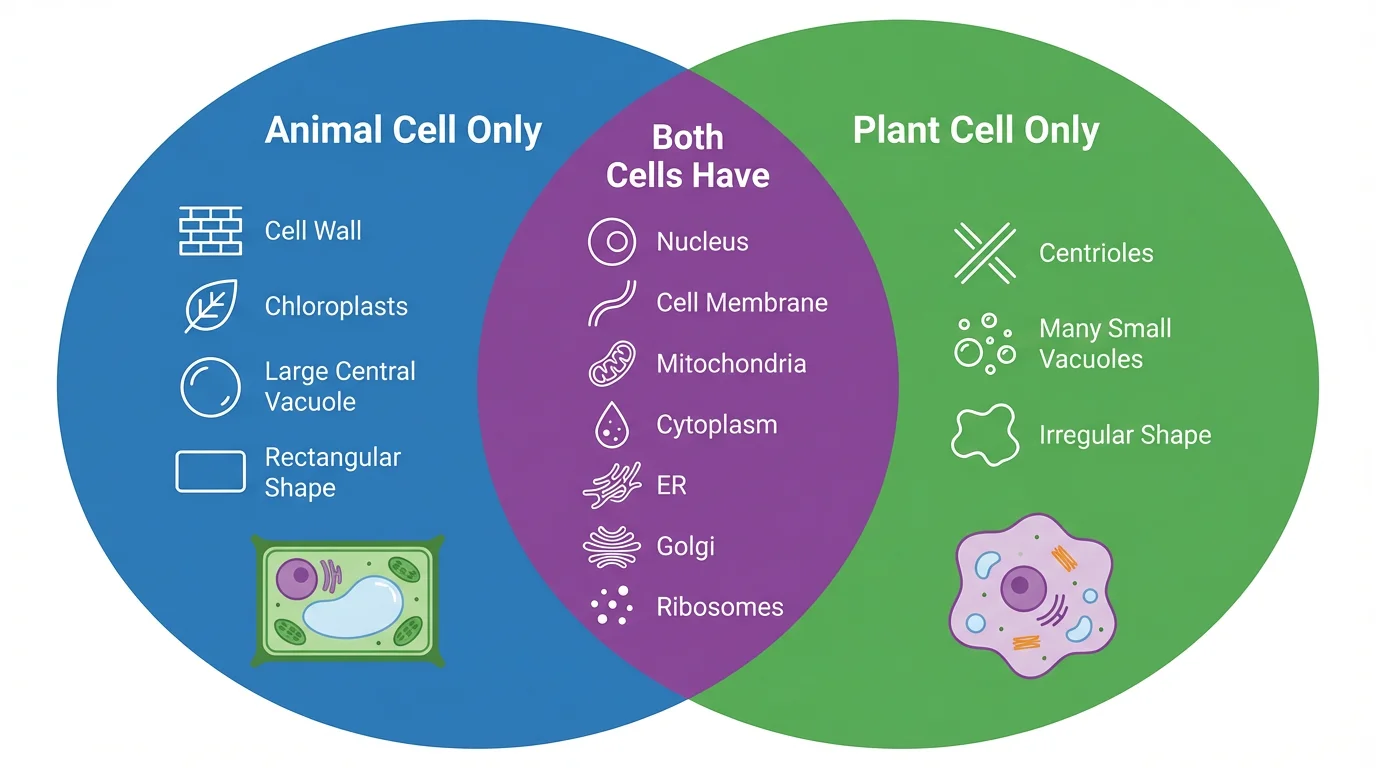 A Venn diagram comparing plant and animal cells — showing unique features of each and shared organelles in the overlapping section.
How to use: Print a blank Venn diagram template and have students fill it in from memory. Alternatively, provide this completed version as a study reference. Works well as a group activity.
Grade level: Grades 5-12
Tips for Teachers: Getting the Most from Cell Diagram Worksheets
1. Scaffold the Difficulty
Start with labeled diagrams, move to partially labeled, and finish with fully unlabeled:
| Week | Activity | Difficulty |
|---|---|---|
| Week 1 | Coloring pages with labels | Low |
| Week 2 | Labeled diagrams with function matching | Medium |
| Week 3 | Partially unlabeled (word bank provided) | Medium-High |
| Week 4 | Fully unlabeled quiz | High |
2. Use "Think-Pair-Share" with Diagrams
- Think — Students complete the unlabeled diagram individually (5 minutes)
- Pair — Partners compare answers and discuss disagreements (3 minutes)
- Share — Class reviews the labeled answer key together (5 minutes)
3. Create Interactive Stations
Set up 4-5 stations around the classroom, each with a different worksheet type:
- Station 1: Animal cell coloring page
- Station 2: Plant cell unlabeled quiz
- Station 3: Comparison worksheet
- Station 4: Venn diagram fill-in
- Station 5: Computer station using the Cell Diagram Generator
4. Combine with Digital Tools
After students complete paper worksheets, have them create their own custom diagrams using AI-powered tools:
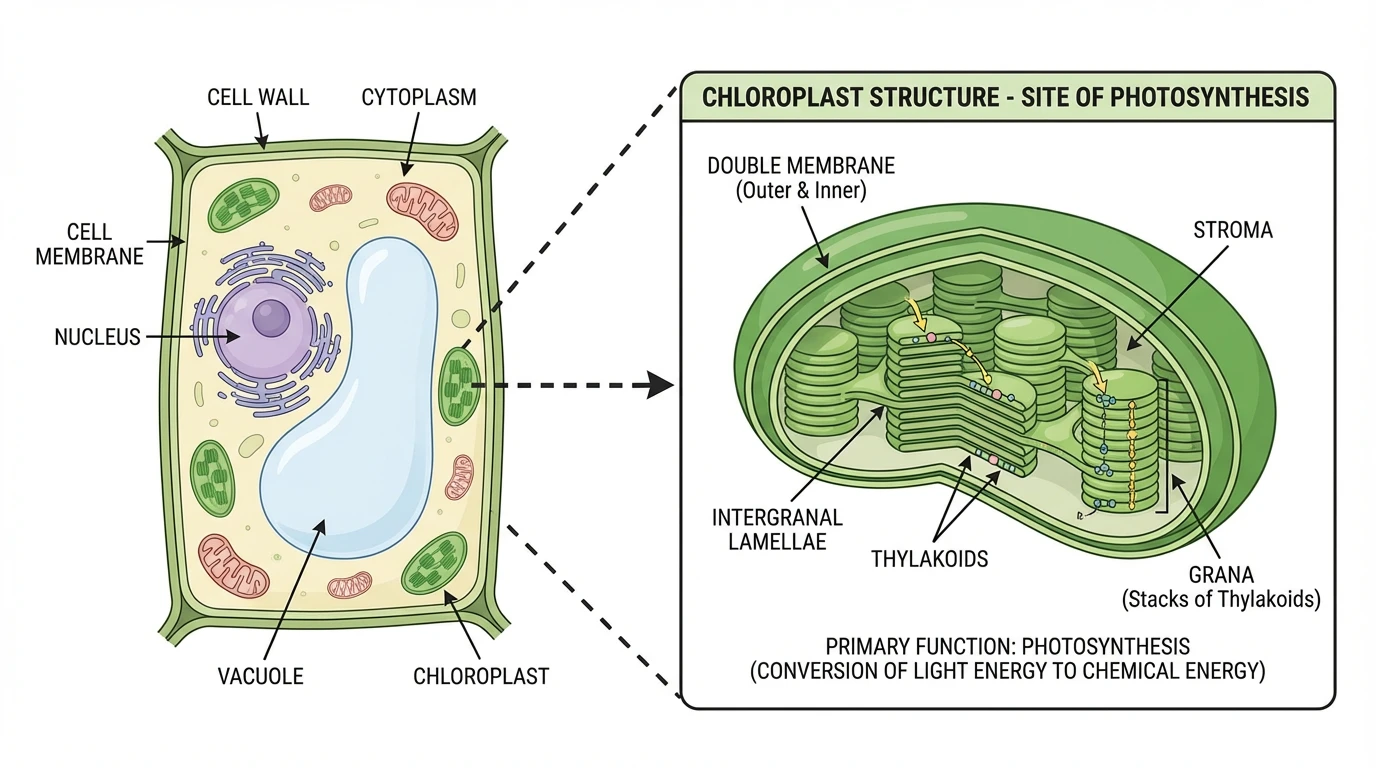
Plant Cell Diagram Generator
Generate labeled or unlabeled plant cell diagrams for worksheets and study guides.
Animal Cell Diagram Generator
Create custom animal cell diagrams with adjustable detail levels.
These AI-powered tools let students experiment with different styles and detail levels, reinforcing what they learned on paper.
5. Grade-Level Recommendations
| Grade Level | Recommended Worksheets |
|---|---|
| Grades 3-4 | Coloring pages, simple labeled diagrams |
| Grades 5-6 | Simple labeled + unlabeled with word bank |
| Grades 7-8 | Detailed labeled, unlabeled quizzes, comparison worksheets |
| Grades 9-10 | Exam review sheets, detailed comparison, Venn diagrams |
| Grades 11-12 / AP | All of the above + function descriptions, essay prompts |
How to Print These Worksheets
All images on this page are high-resolution and printer-friendly. To print:
- Right-click on any image above and select "Open Image in New Tab"
- Use your browser's Print function (Ctrl+P / Cmd+P)
- Set margins to Narrow or None for maximum image size
- Select Landscape orientation for comparison diagrams, Portrait for single cell diagrams
- Print on standard letter paper (8.5" x 11") or A4
Pro tip: For classroom posters, print at 150-200% scale on 11x17 paper and laminate for durability.
Frequently Asked Questions
Are these cell diagram worksheets really free?
Yes. All printable worksheets on this page are completely free to download and use for educational purposes. You can print them for your classroom, share with students, and use them in assignments without any cost or registration required.
What grade levels are these worksheets suitable for?
We provide worksheets for all grade levels. Coloring pages work for grades 3-5, simple labeled diagrams for grades 4-7, unlabeled quiz diagrams for grades 6-12, and exam review sheets for grades 8-12. Each worksheet section includes a specific grade-level recommendation.
How do I use unlabeled cell diagrams in class?
Print the unlabeled diagram and give one to each student. Ask them to identify and label all visible organelles. For differentiation, provide a word bank for students who need support, or require function descriptions alongside labels for advanced students. After completion, display the labeled version as the answer key.
What is the difference between a plant cell and animal cell diagram?
A plant cell diagram shows a rectangular cell with a cell wall, chloroplasts, and a large central vacuole — organelles not found in animal cells. An animal cell diagram shows a round or irregular cell with centrioles and prominent lysosomes. Both share organelles like the nucleus, mitochondria, ER, and Golgi apparatus. See our detailed guide on plant cell vs animal cell differences.
Can I modify these worksheets for my classroom?
Yes. You are free to use these worksheets as-is or as a starting point. For fully customizable diagrams, use our free Plant Cell Diagram Generator or Animal Cell Diagram Generator to create diagrams tailored to your exact lesson plan.
Do you have worksheets with answer keys?
Yes. For each unlabeled worksheet, we provide a corresponding labeled version that serves as the answer key. Simply print the labeled version separately and use it for grading or distribute it to students after they complete the quiz.
How do I print these worksheets at the right size?
Right-click any image and open it in a new tab to see the full-resolution version. Then use your browser's print function (Ctrl+P / Cmd+P). For best results, set margins to "Narrow" and select landscape orientation for comparison diagrams. All images are high-resolution and print clearly on standard letter or A4 paper.
Can students create their own cell diagrams?
Absolutely. Our AI-powered Cell Diagram Generator tools allow students to create custom diagrams by describing what they want. This is a great extension activity after completing the printable worksheets — students can design their own quiz sheets for classmates.
Related Resources
Категории
Ещё публикации

Scientific Poster Examples: 50+ Award-Winning Designs & Best Practices
Explore award-winning scientific poster examples from biology, chemistry, physics, and medicine. Learn what makes a poster stand out, with design tips.
How to Present References in a Scientific Poster: Complete Citation Guide
Learn best practices for formatting and presenting references on scientific posters, with citation styles, font sizes, placement tips, and real examples.
How to Make a Histogram in Google Sheets: Bins, Frequency Tables, and Chart Editor Tips
Learn how to make a histogram in Google Sheets, change bucket size, use frequency tables, fix common chart issues, and format a readable distribution chart.