Transcription vs Translation: Key Differences Explained
Transcription vs translation made simple: compare location, enzymes, templates, and products side by side, with clear diagrams of how DNA becomes RNA and then protein.
Transcription and translation are the two steps that turn a gene into a working protein. They sound similar and happen one after the other, so they are easy to mix up — but they use different machinery, happen in different places, and produce completely different products.
This guide compares transcription vs translation side by side: what each step does, where it happens, which enzymes are involved, what goes in and what comes out, and how the two fit together in the central dogma of molecular biology.
Quick Answer: What Is the Difference?
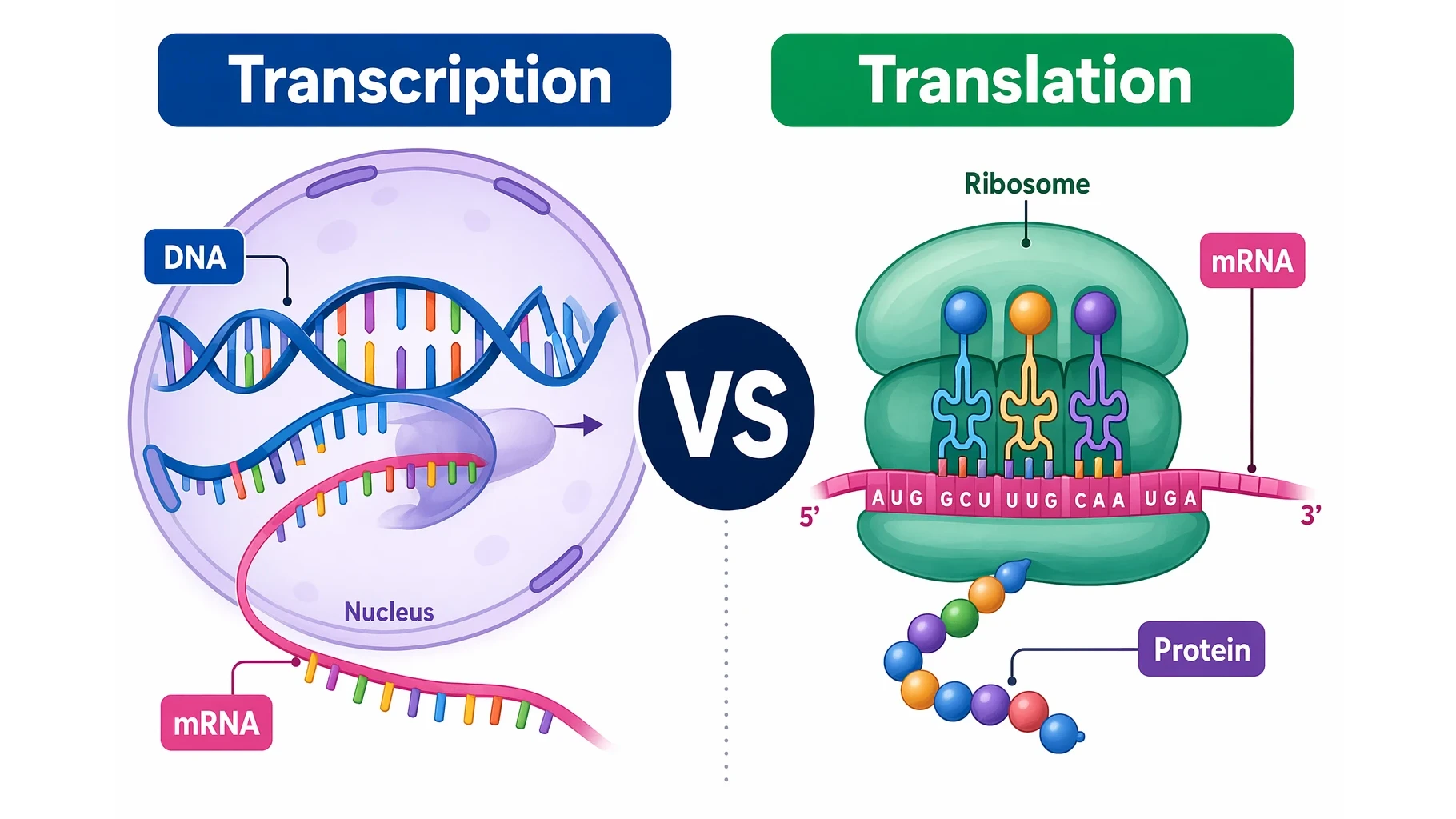
Transcription copies a gene from DNA into a messenger RNA (mRNA) molecule. Translation reads that mRNA at a ribosome and joins amino acids in the right order to build a protein.
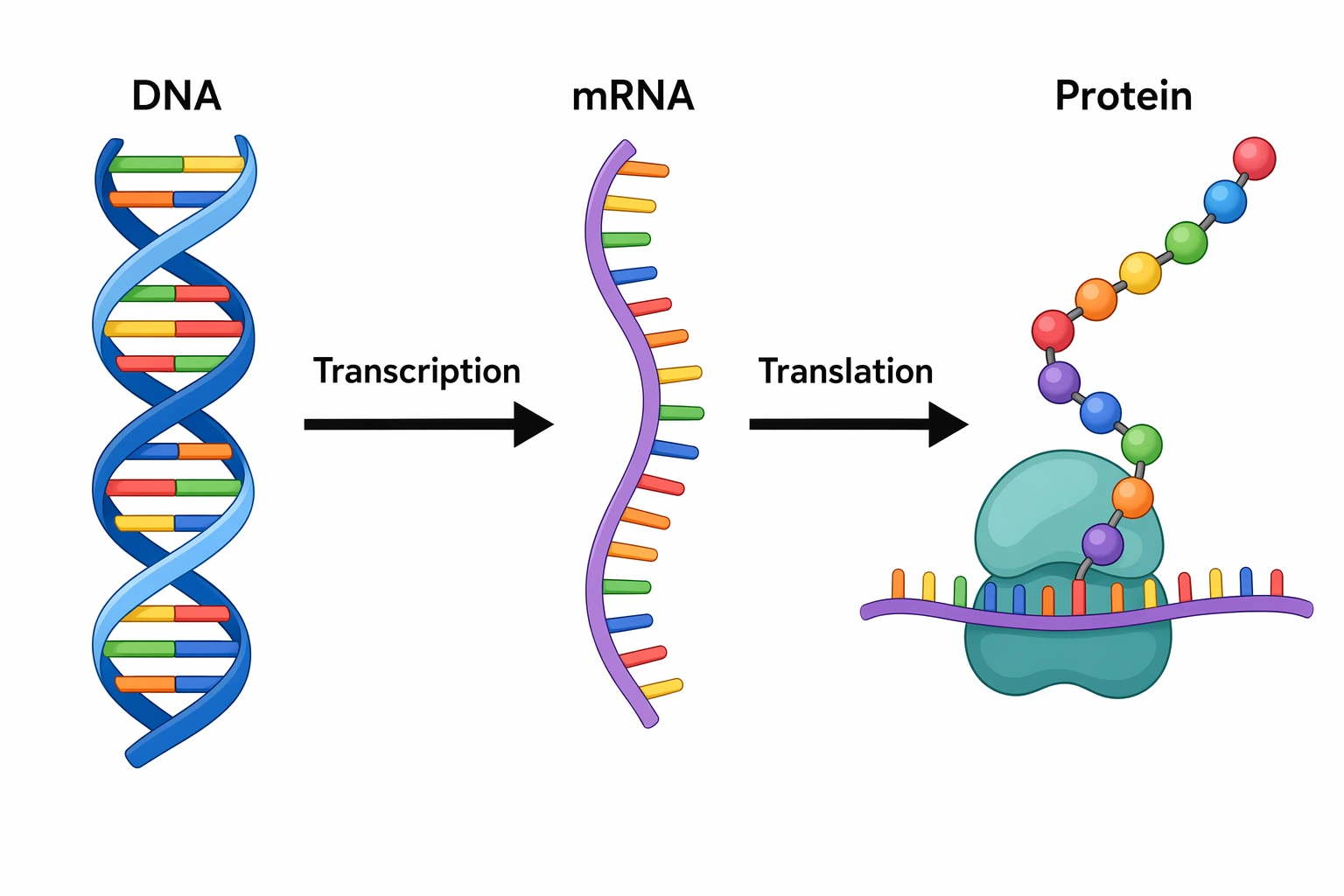
In one line: transcription is DNA → RNA, and translation is RNA → protein. Transcription writes the message; translation reads it.
Transcription vs Translation: Comparison Table
| Feature | Transcription | Translation |
|---|---|---|
| What it does | Copies DNA into RNA | Reads mRNA to build a protein |
| Input (template) | A gene on the DNA template strand | The mRNA strand |
| Output (product) | Messenger RNA (mRNA) | A polypeptide / protein |
| Main machinery | RNA polymerase | Ribosome (+ tRNA) |
| Building blocks | RNA nucleotides (A, U, G, C) | Amino acids |
| Location (eukaryotes) | Nucleus | Cytoplasm (ribosomes) |
| Location (prokaryotes) | Cytoplasm | Cytoplasm |
| "Alphabet" change | DNA bases → RNA bases (T → U) | Codons → amino acids |
| Reading unit | Single bases | Codons (triplets of 3 bases) |
| Order in gene expression | First | Second |
Transcription and Translation Diagram Generator
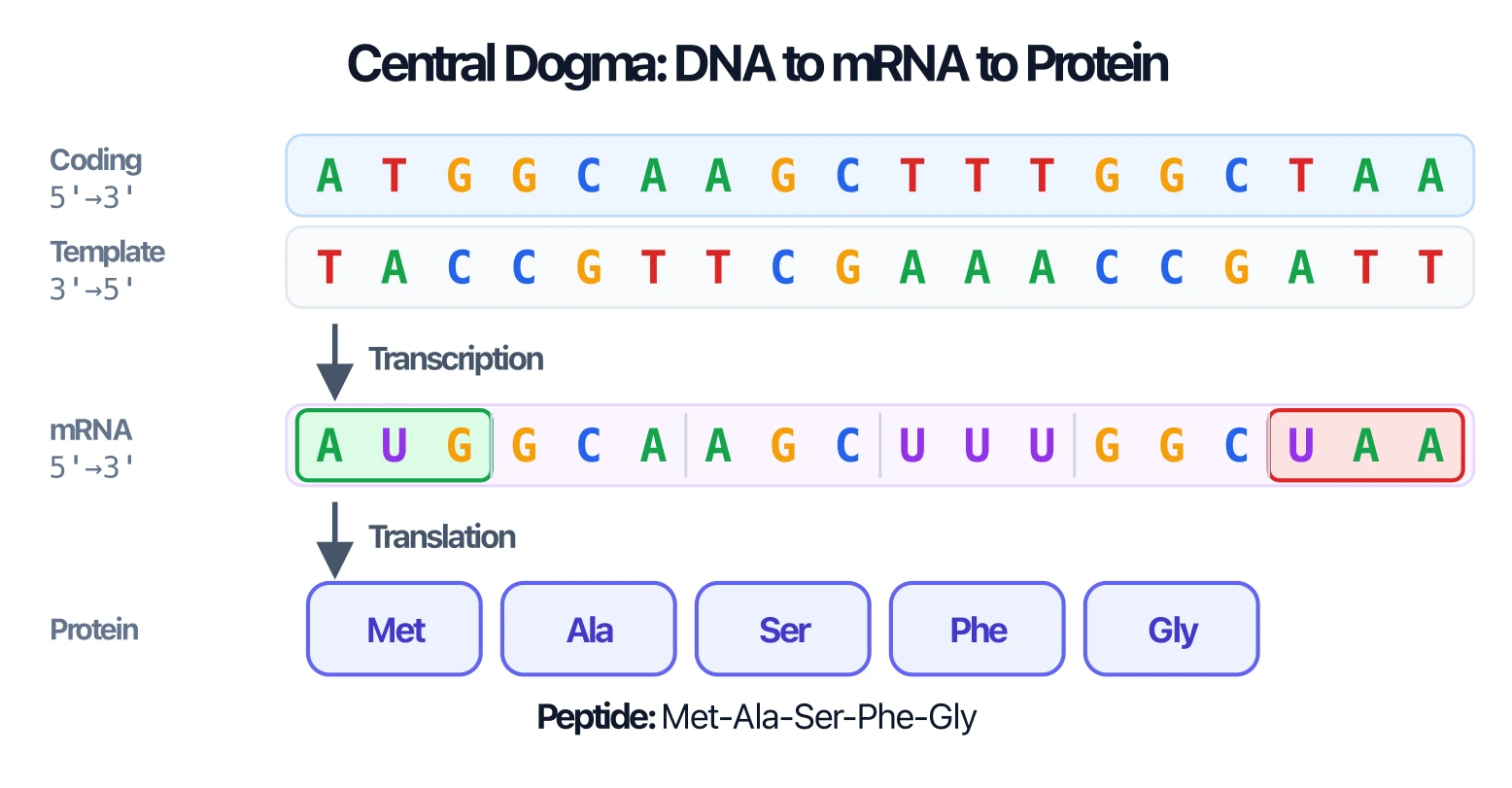
Type a DNA sequence and get the mRNA, codons, and amino acids it codes for as a labeled, accurate central-dogma diagram.
Make a transcription & translation diagram ->What Is Transcription?
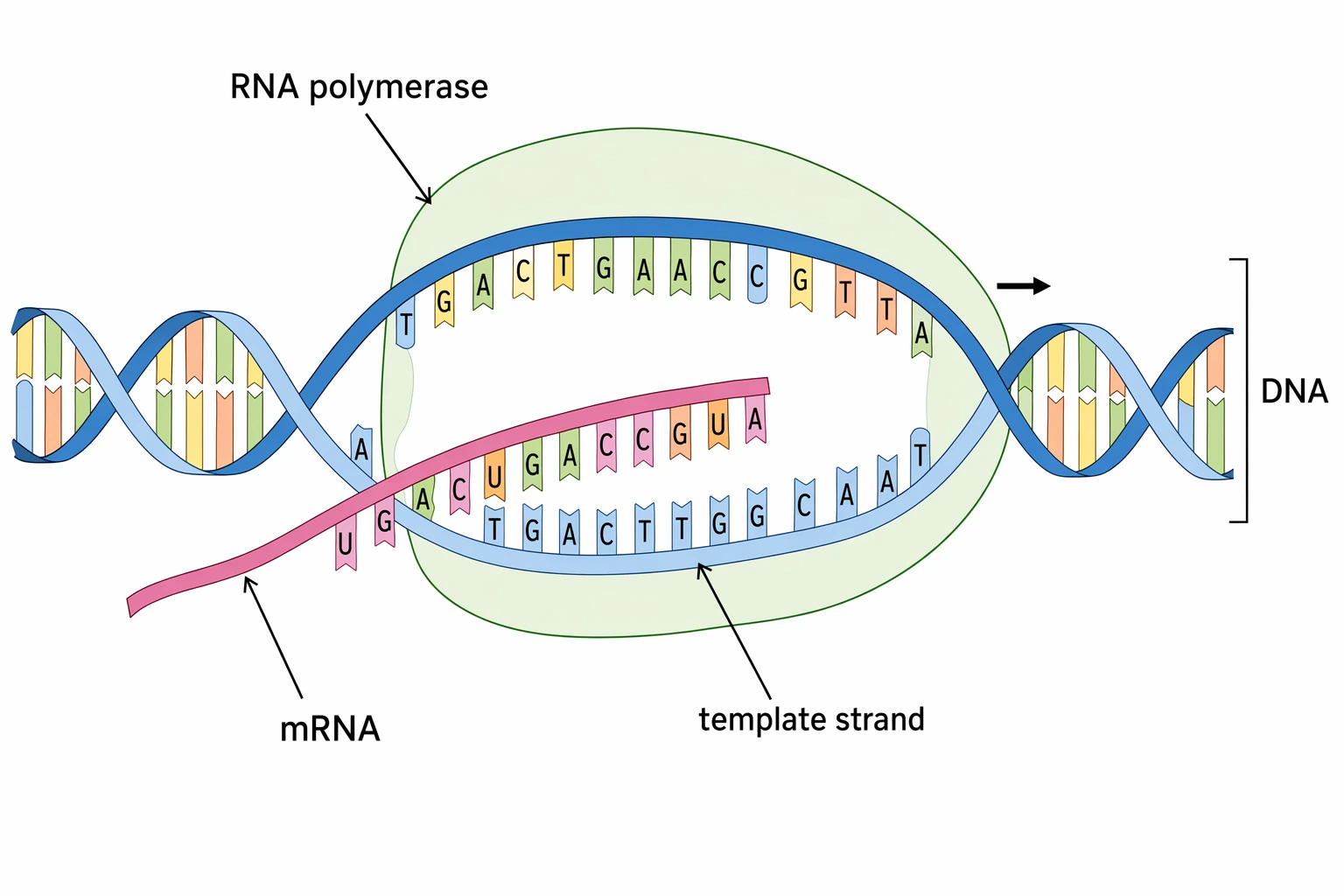
Transcription is the first step of gene expression. An enzyme called RNA polymerase binds to a gene, unwinds the DNA double helix, and reads the template strand to build a complementary strand of messenger RNA. The mRNA reads the same as the DNA coding strand, except that uracil (U) replaces thymine (T). (For a deeper treatment, see the NCBI Bookshelf chapter From DNA to RNA and the NHGRI definition of transcription.)
Key points about transcription:
- It happens in the nucleus in eukaryotes (where the DNA lives) and in the cytoplasm in prokaryotes.
- The product is a single-stranded mRNA copy of the gene.
- Only one strand of DNA — the template strand — is read, so the message matches the coding strand.
- The genetic "alphabet" stays nucleotides; the only change is T → U.
What Is Translation?
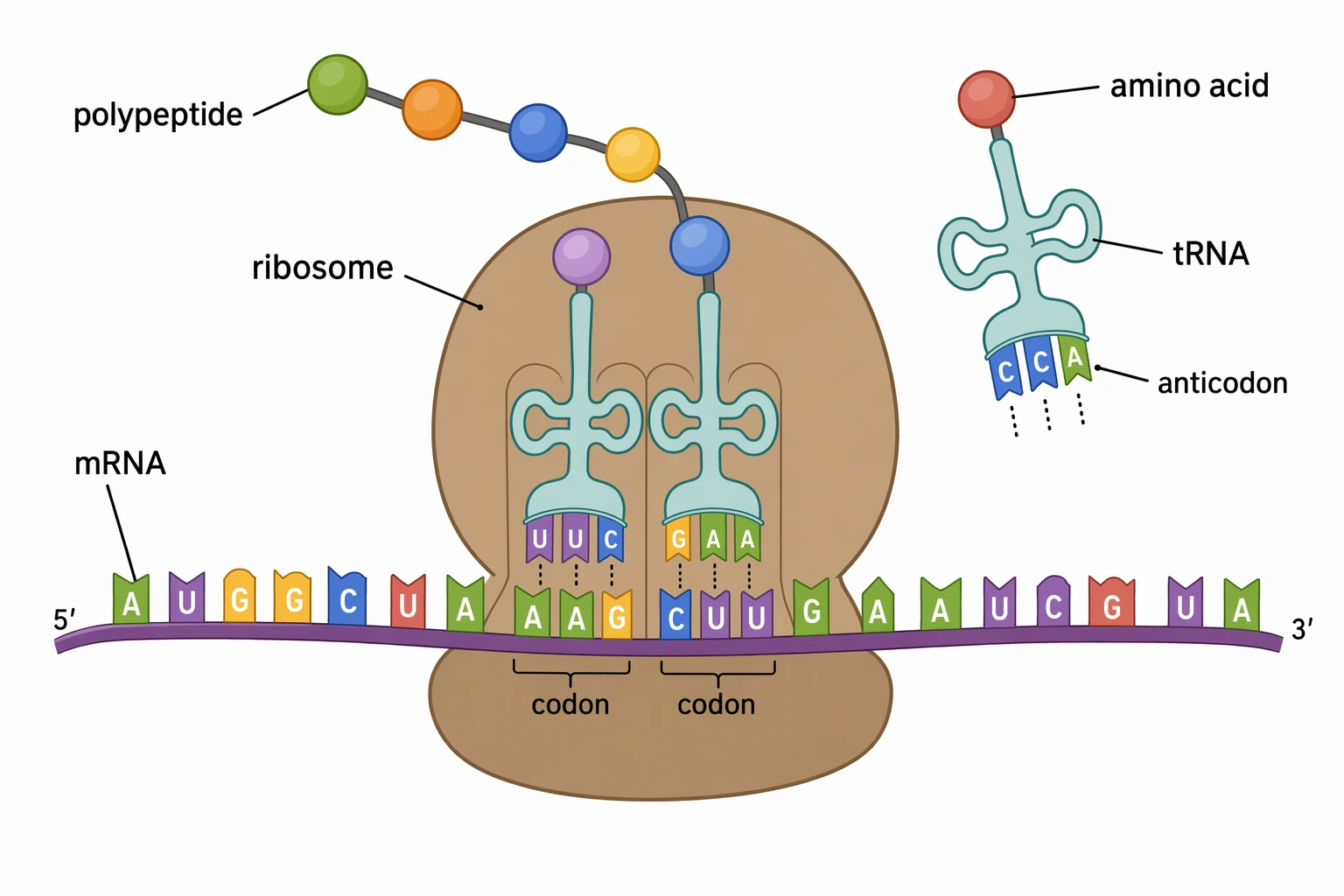
Translation is the second step, where the mRNA message is decoded into a protein. The ribosome moves along the mRNA reading it in codons — groups of three bases. Each codon is matched by a transfer RNA (tRNA) carrying a specific amino acid, and the amino acids are linked into a growing polypeptide chain. (See the NCBI Bookshelf chapter From RNA to Protein and the NHGRI definition of translation for more detail.)
Key points about translation:
- It happens at ribosomes in the cytoplasm (or on the rough endoplasmic reticulum).
- Translation begins at the start codon AUG (methionine) and ends at a stop codon (UAA, UAG, or UGA).
- The reading unit is the codon, not a single base.
- The product is a polypeptide that folds into a functional protein.
The Key Differences, Explained
1. Location
In eukaryotes the two steps are physically separated: transcription happens inside the nucleus, and the finished mRNA travels out to the cytoplasm, where translation occurs at ribosomes. In prokaryotes there is no nucleus, so both happen in the cytoplasm — and translation can even begin before transcription finishes.
2. Template and product
Transcription uses the DNA template strand as its input and produces mRNA. Translation uses that mRNA as its input and produces a protein. The product of the first step is the input of the second — which is exactly why they always happen in that order.
3. Machinery and enzymes
Transcription is driven by RNA polymerase. Translation is carried out by the ribosome, a complex of ribosomal RNA (rRNA) and proteins, working together with tRNA molecules that bring in the amino acids.
4. Building blocks
Transcription strings together RNA nucleotides (A, U, G, C). Translation strings together amino acids. So transcription stays in the "nucleic acid" language, while translation switches to the "protein" language.
5. The code: bases vs codons
In transcription the code is copied base-by-base (with T becoming U). In translation the code is read three bases at a time: each codon specifies one amino acid according to the genetic code (for example, AUG = methionine, GCC = alanine).
How Transcription and Translation Work Together
Together, transcription and translation make up the central dogma of molecular biology: DNA → RNA → protein. The cell keeps its master copy of the instructions (DNA) safe in the nucleus, sends out a working copy (mRNA) through transcription, and uses that copy to manufacture proteins through translation.
This two-step relay solves a real problem: DNA is too valuable to leave the nucleus, so the cell transcribes a disposable RNA message and translates that instead.
Similarities Between Transcription and Translation
They are different processes, but they do share some features:
- Both are core steps of gene expression.
- Both read a template in a fixed 5′ → 3′ direction.
- Both build a new polymer one unit at a time (nucleotides or amino acids).
- Both have distinct initiation, elongation, and termination stages.
- Both are tightly regulated by the cell.
Transcription & Translation Diagram Generator
Turn any DNA sequence into a labeled mRNA-and-protein diagram with the correct codons and amino acids.
Common Mistakes and Confusions
- Mixing up the products. Transcription makes RNA; translation makes protein. If your diagram shows DNA turning straight into protein, a step is missing.
- Forgetting T → U. DNA uses thymine (T); RNA uses uracil (U). The mRNA should never contain T.
- Reading mRNA base-by-base in translation. The ribosome reads codons (three bases), not single bases.
- Putting translation in the nucleus (eukaryotes). Translation happens at ribosomes in the cytoplasm; only transcription is in the nucleus.
- Confusing translation with DNA replication. Replication copies all of the DNA before cell division; it is not part of making a protein.
FAQ
Is transcription or translation first?
Transcription is first. A gene is transcribed into mRNA, and only then is that mRNA translated into a protein. The product of transcription (mRNA) is the input for translation.
What is the main difference between transcription and translation?
Transcription copies DNA into RNA using RNA polymerase, while translation reads mRNA to build a protein using a ribosome. Transcription is DNA → RNA; translation is RNA → protein.
Where do transcription and translation occur?
In eukaryotes, transcription occurs in the nucleus and translation occurs at ribosomes in the cytoplasm. In prokaryotes, both occur in the cytoplasm because there is no nucleus.
What are the products of transcription and translation?
Transcription produces RNA (including messenger RNA, mRNA). Translation produces a polypeptide chain that folds into a functional protein.
Do transcription and translation happen at the same time?
In prokaryotes they can overlap — translation can start on an mRNA while it is still being transcribed. In eukaryotes they are separated in space and time by the nuclear membrane.
What enzymes are involved in transcription and translation?
Transcription is carried out by RNA polymerase. Translation is carried out by the ribosome (made of rRNA and proteins) together with tRNA, which delivers the amino acids.
Related Guides
- Protein Structure: The 4 Levels Explained — what the polypeptide built during translation folds into, and why its shape decides its function.
Further Reading
Catégories
Plus d'articles
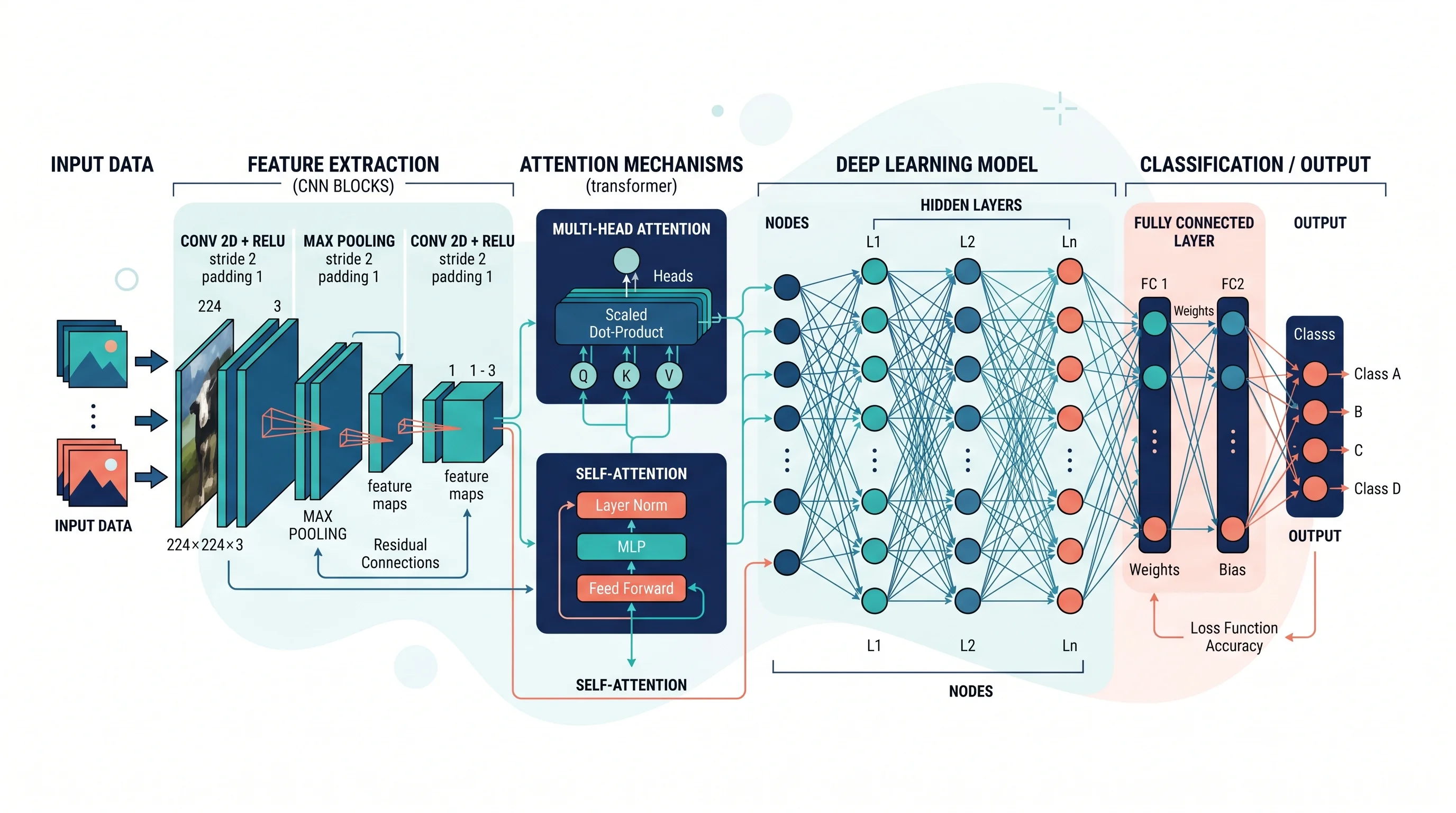
How to Draw a Neural Network Architecture Diagram: A Complete Guide
Learn how to draw neural network architecture diagrams for CNNs, RNNs, Transformers, and more. Step-by-step guide with tools, examples, and best practices for researchers and engineers.
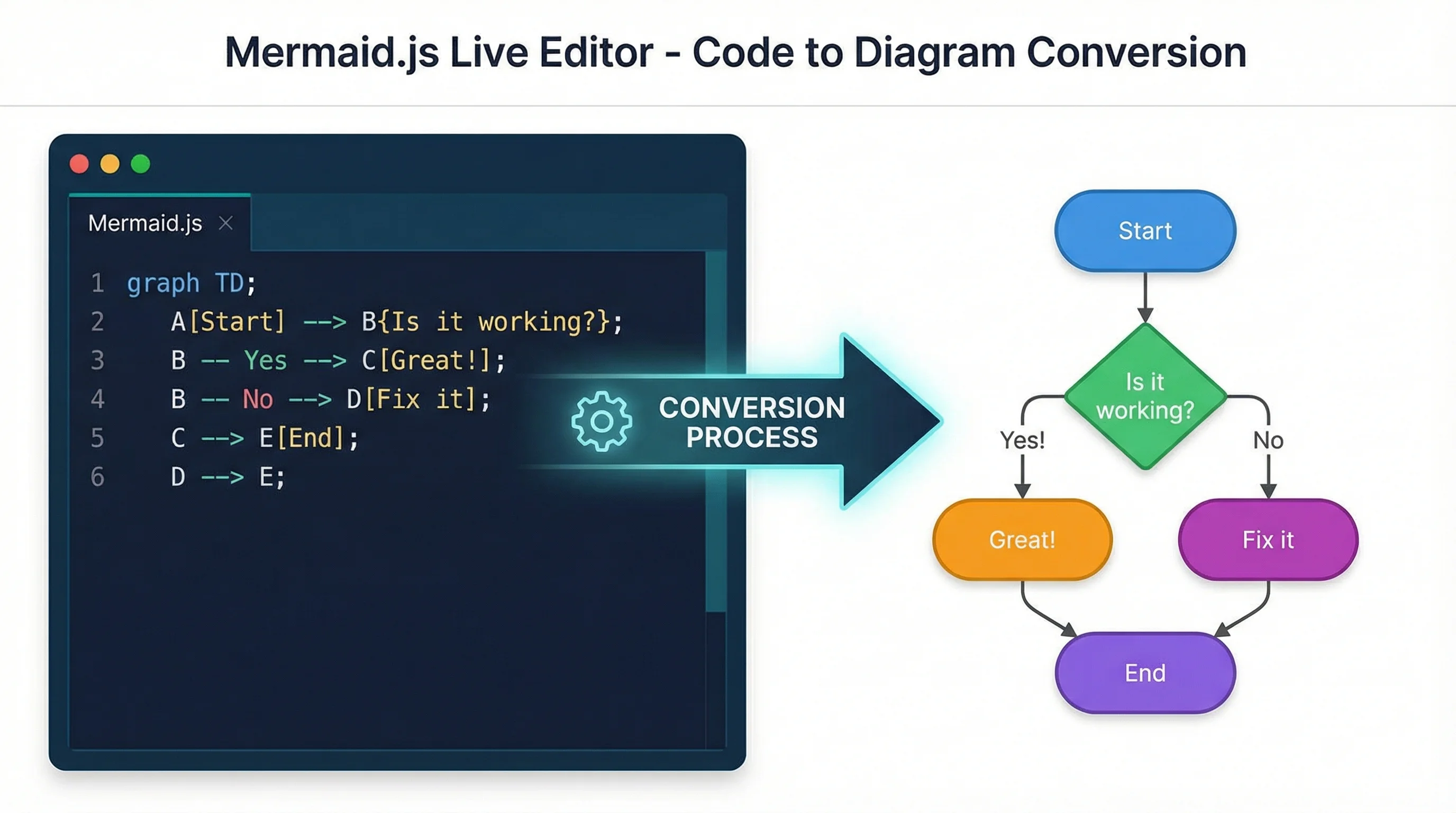
Mermaid to PNG: Export Mermaid Diagrams as PNG, SVG & PDF
Convert Mermaid diagrams to PNG, SVG or PDF with Mermaid Live Editor, mmdc CLI, VS Code and free online tools. Includes quick export steps and best formats.
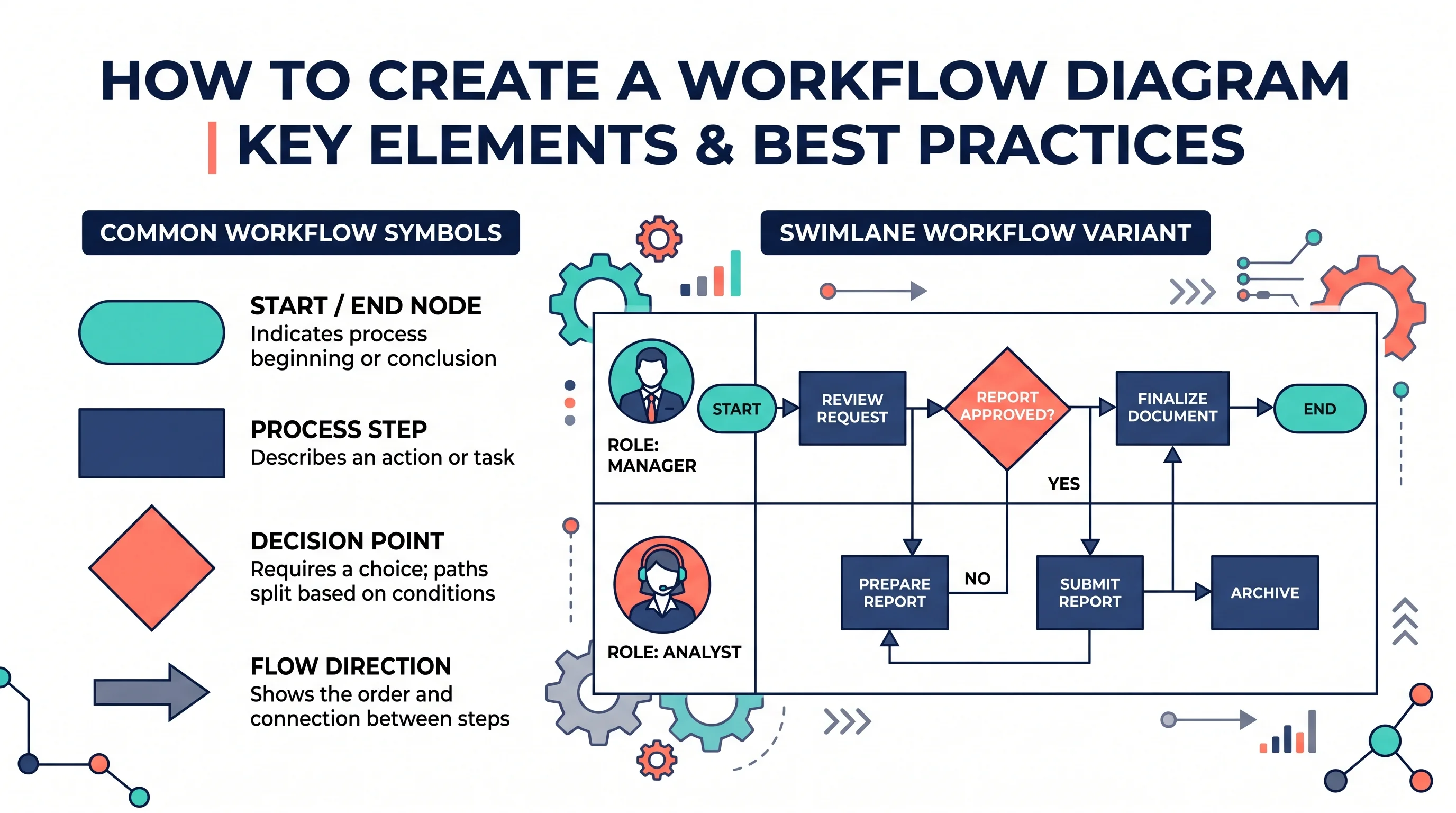
How to Create a Workflow Diagram: Step-by-Step Guide with Examples
Learn how to create a workflow diagram for research, business processes, and team projects. Step-by-step guide with symbols, types, best practices, and free tools.