Plant Cell vs Animal Cell: Key Differences with Labeled Diagrams (2026)
Compare plant cells and animal cells side by side. Learn the key differences in organelles, structure, and function, with labeled diagrams and a Venn diagram.
Generate side-by-side plant cell and animal cell comparison diagrams instantly with AI. Perfect for biology education and research.
Start with this diagram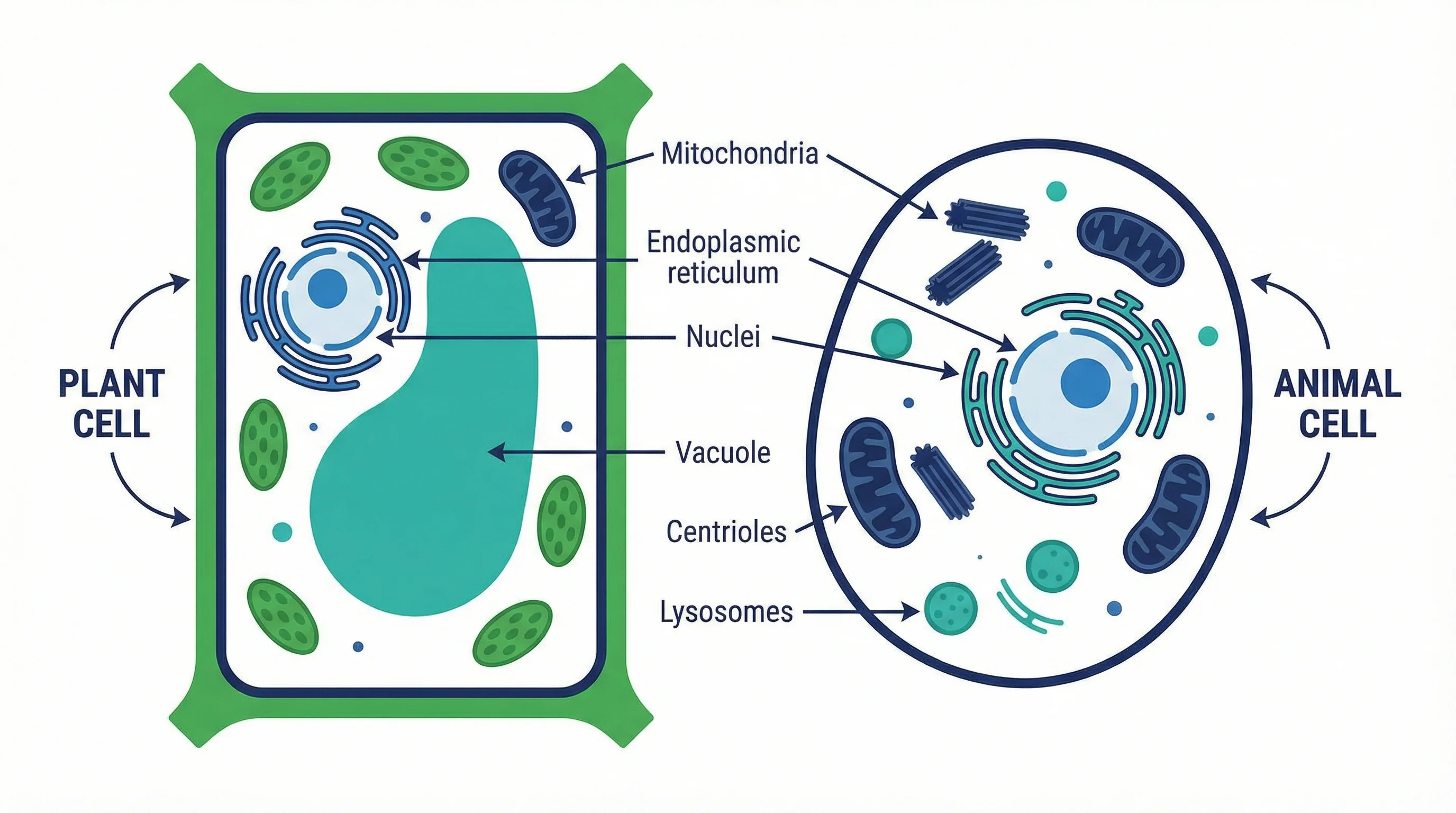
Understanding the differences between plant cells and animal cells is a cornerstone of biology education. Whether you are a student preparing for an exam or a teacher designing a lesson plan, a clear side-by-side comparison helps make abstract cell biology concepts concrete and memorable.
In this comprehensive guide, we break down every major difference — from cell walls and chloroplasts to vacuoles and centrioles — with labeled diagrams, a Venn diagram comparison, and a printable quiz section you can use in the classroom right away.
What Are Eukaryotic Cells?
Before diving into the differences, it helps to understand what plant and animal cells have in common. Both are eukaryotic cells, meaning they contain a true, membrane-bound nucleus and specialized organelles. This distinguishes them from prokaryotic cells (like bacteria), which lack a nucleus.
According to the National Human Genome Research Institute, eukaryotic cells are found in all plants, animals, fungi, and protists. The key shared organelles include:
- Nucleus — houses DNA and controls cell activities
- Mitochondria — produce ATP through cellular respiration
- Endoplasmic reticulum (ER) — smooth ER synthesizes lipids; rough ER has ribosomes for protein synthesis
- Golgi apparatus — packages and ships proteins
- Ribosomes — assemble proteins from amino acid chains
- Cell membrane — a phospholipid bilayer that controls what enters and exits the cell
- Cytoplasm — gel-like fluid that fills the cell
With these similarities established, let's examine what makes plant and animal cells different.
Plant Cell vs Animal Cell: Side-by-Side Comparison Table
The table below summarizes every major structural difference at a glance. We will explore each one in detail in the sections that follow.
| Feature | Plant Cell | Animal Cell |
|---|---|---|
| Cell Wall | Present (cellulose) | Absent |
| Cell Shape | Fixed, rectangular | Round or irregular |
| Chloroplasts | Present | Absent |
| Central Vacuole | One large central vacuole (up to 90% of volume) | Small, multiple vacuoles |
| Centrioles | Absent (in most) | Present |
| Lysosomes | Rare / absent | Present and prominent |
| Plasmodesmata | Present | Absent |
| Tight/Gap Junctions | Absent | Present |
| Energy Source | Photosynthesis + respiration | Cellular respiration only |
| Storage | Starch | Glycogen |
| Cytoplasmic Division | Cell plate forms | Cleavage furrow forms |
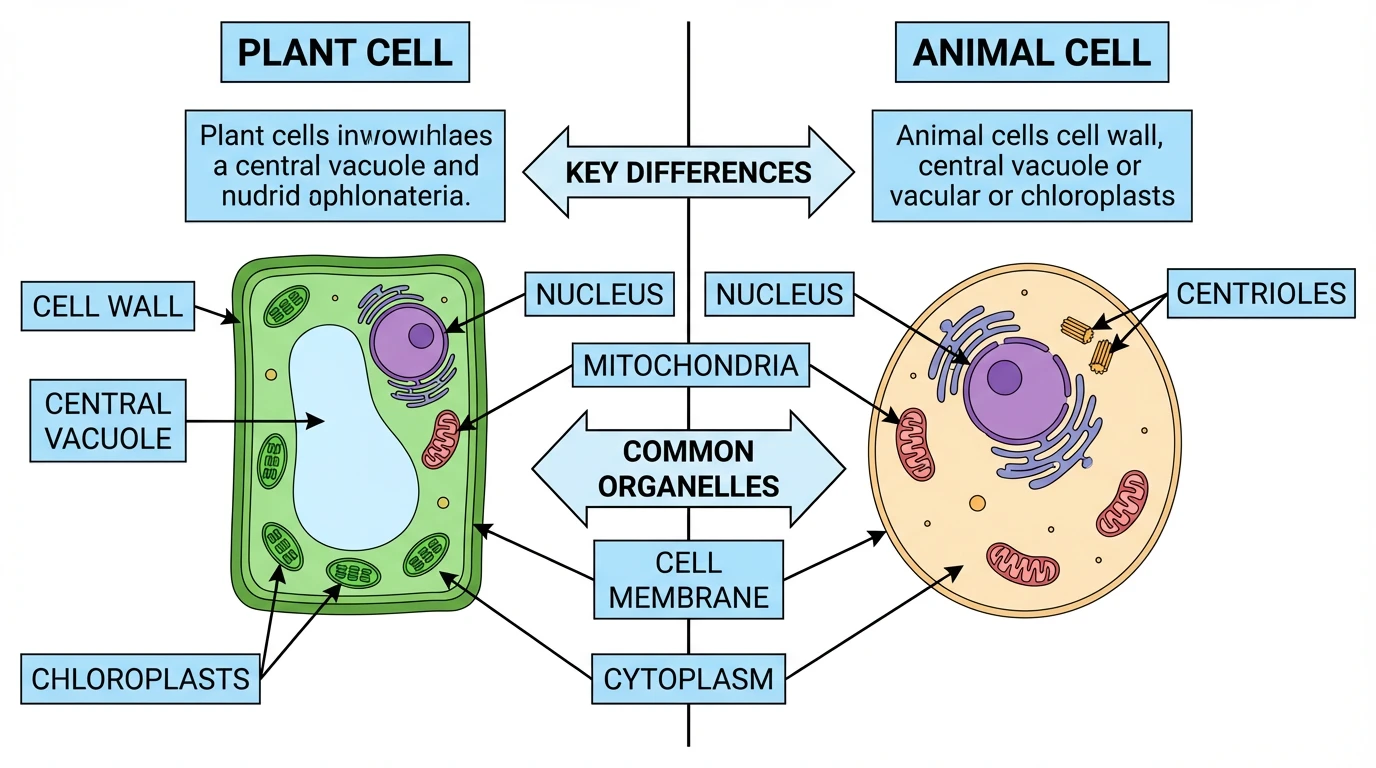 A labeled side-by-side comparison of a plant cell and an animal cell, highlighting the key structural differences.
Key Differences Explained
1. Cell Wall
The most visible difference under a microscope is the cell wall. Plant cells have a rigid outer layer made of cellulose that provides structural support and protection. This is why plants can grow tall without a skeleton — the cell wall acts as an internal framework.
Animal cells lack a cell wall entirely. They are surrounded only by a flexible cell membrane (also called the plasma membrane), which allows them to change shape — critical for processes like phagocytosis in white blood cells.
Why it matters for students: The cell wall is often the first feature students learn to distinguish. On an unlabeled diagram, look for the thick outer rectangle around the cell — that's the cell wall.
2. Chloroplasts and Photosynthesis
Chloroplasts are double-membrane organelles that contain chlorophyll, the green pigment responsible for capturing light energy. They are the site of photosynthesis, the process that converts CO₂ and water into glucose and oxygen.
Plant cells contain chloroplasts. Animal cells do not. This is the fundamental reason plants are autotrophs (they make their own food) while animals are heterotrophs (they consume food from external sources).
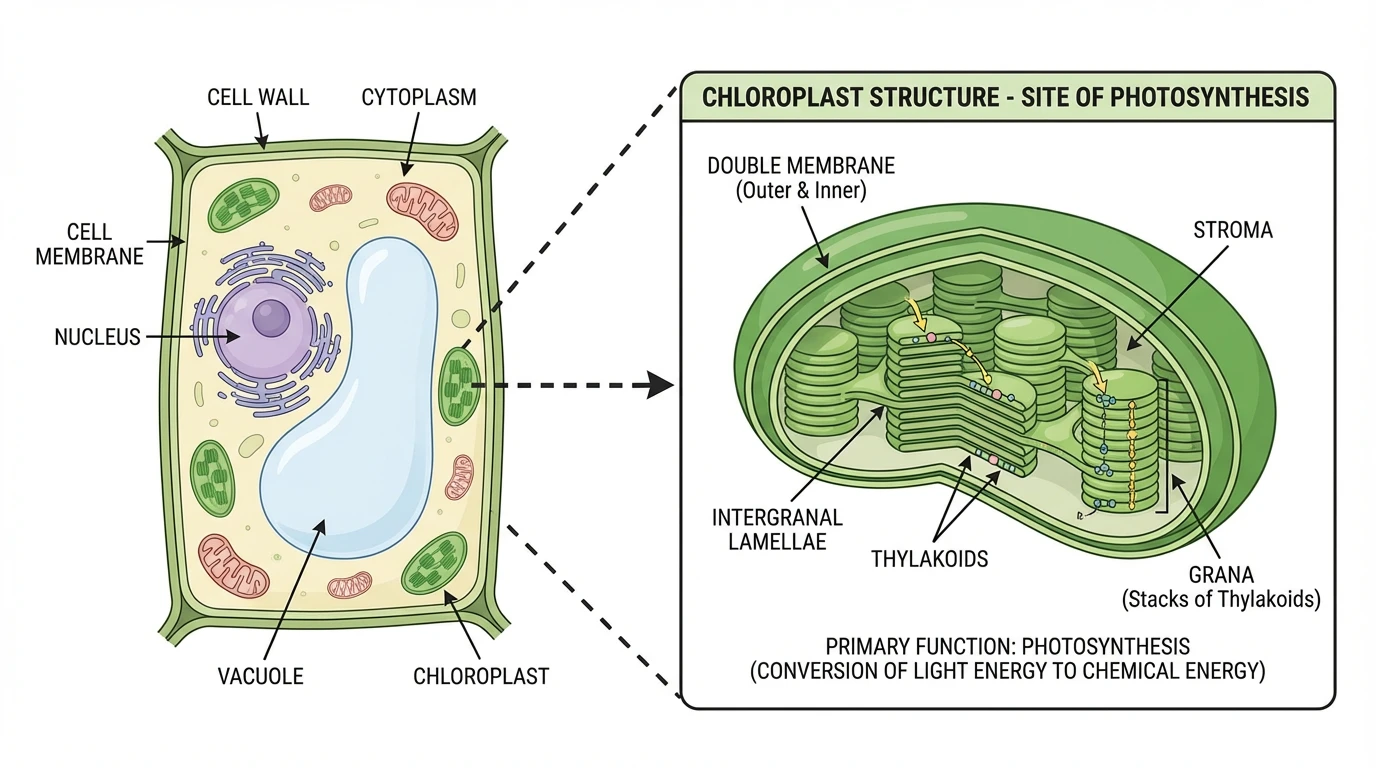 A plant cell diagram highlighting the chloroplasts — the organelle responsible for photosynthesis.
The photosynthesis equation is:
6CO₂ + 6H₂O + Light Energy → C₆H₁₂O₆ + 6O₂
If you want to explore photosynthesis in more detail, check out our free photosynthesis diagram worksheets.
3. Central Vacuole
Plant cells contain a single, large central vacuole that can occupy up to 90% of the cell's volume. It serves multiple functions:
- Stores water, nutrients, and waste products
- Maintains turgor pressure (keeps the cell rigid)
- Helps the plant stay upright
Animal cells have multiple, smaller vacuoles that primarily handle waste transport and storage, but they never dominate the cell the way a plant's central vacuole does.
Teaching tip: When a plant wilts, it is because the central vacuoles have lost water and can no longer maintain turgor pressure. This is a great real-world connection for students.
4. Centrioles
Centrioles are cylindrical organelles found near the nucleus in animal cells. They play a critical role in cell division (mitosis and meiosis) by organizing the spindle fibers that pull chromosomes apart.
Most plant cells lack centrioles. Instead, they use other microtubule-organizing structures to manage cell division. This is one of the clearest animal-specific features on a cell diagram.
5. Lysosomes
Lysosomes are membrane-bound organelles containing digestive enzymes. They break down waste, old organelles, and foreign material (like bacteria). They are sometimes called the "recycling center" of the cell.
Lysosomes are prominent in animal cells and play essential roles in immune response and cellular housekeeping. While plant cells have similar structures (called lytic vacuoles), true lysosomes as defined in animal cells are generally absent in plants.
6. Cell Shape
Because of the rigid cell wall, plant cells tend to have a fixed, rectangular (or polygonal) shape. Animal cells, with only a flexible membrane, take on round, oval, or irregular shapes depending on their function.
For example, red blood cells are disc-shaped for efficient gas exchange, while neurons are long and branched for signal transmission. Plant cells, regardless of their function, maintain a more uniform rectangular geometry.
7. Cell-to-Cell Communication
Plant and animal cells use different structures to communicate with neighboring cells:
- Plant cells use plasmodesmata — channels that pass through the cell wall, connecting the cytoplasm of adjacent cells
- Animal cells use tight junctions (form seals), gap junctions (allow small molecules to pass), and desmosomes (provide structural anchoring)
Labeled Diagrams: Plant Cell and Animal Cell
Visual learners benefit enormously from labeled diagrams. Below are detailed, labeled diagrams of each cell type.
Labeled Plant Cell Diagram
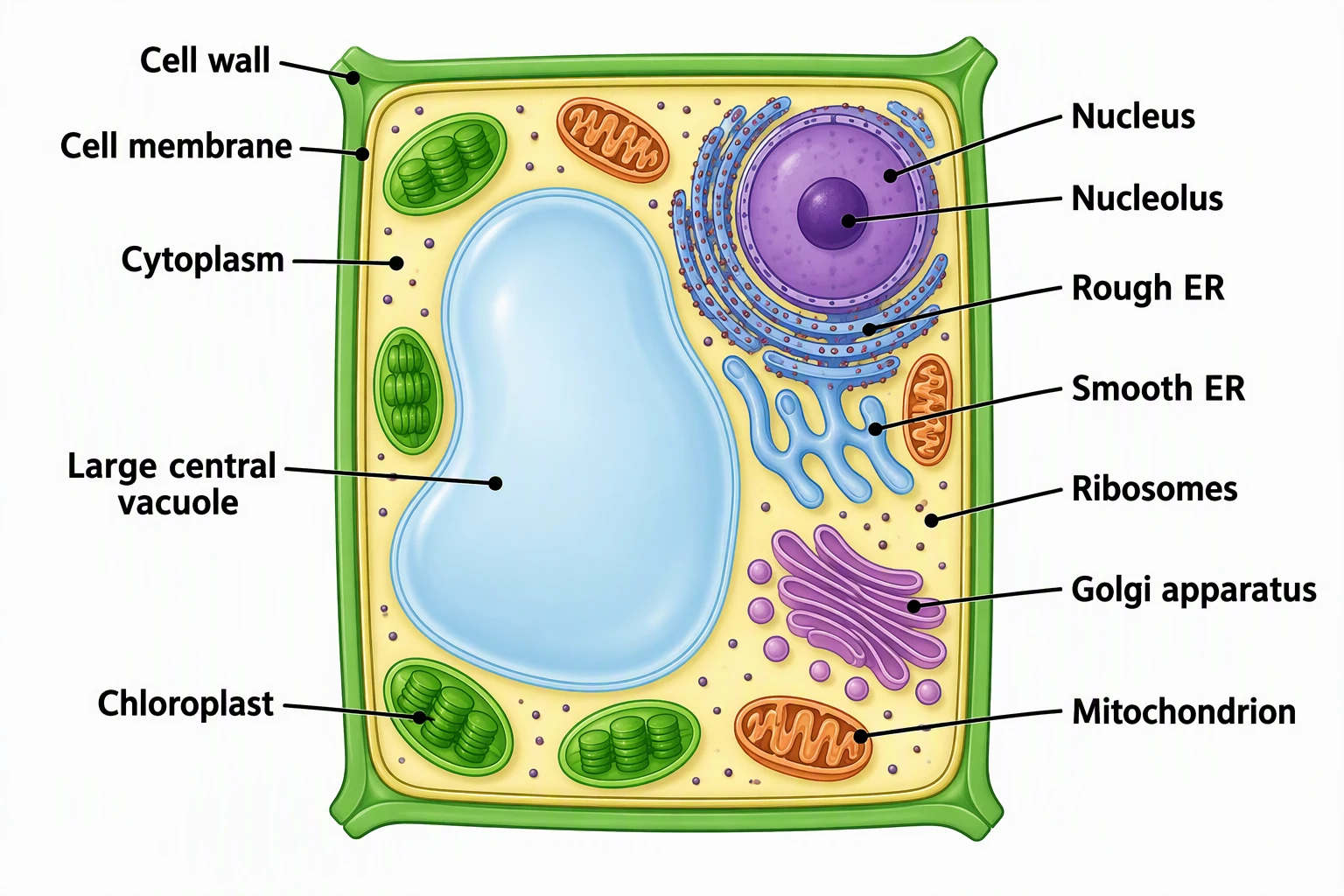 A detailed labeled plant cell diagram showing all major organelles including cell wall, chloroplasts, central vacuole, nucleus, mitochondria, ER, and Golgi apparatus.
Key organelles to identify in a plant cell:
- Cell wall — outermost rigid layer
- Cell membrane — just inside the cell wall
- Chloroplasts — green, double-membrane organelles
- Central vacuole — large, fluid-filled sac in the center
- Nucleus — contains DNA
- Mitochondria — energy production
- Endoplasmic reticulum — rough (with ribosomes) and smooth
- Golgi apparatus — protein packaging
Use our Plant Cell Diagram Generator to create custom labeled or unlabeled plant cell diagrams for your classroom.
Labeled Animal Cell Diagram
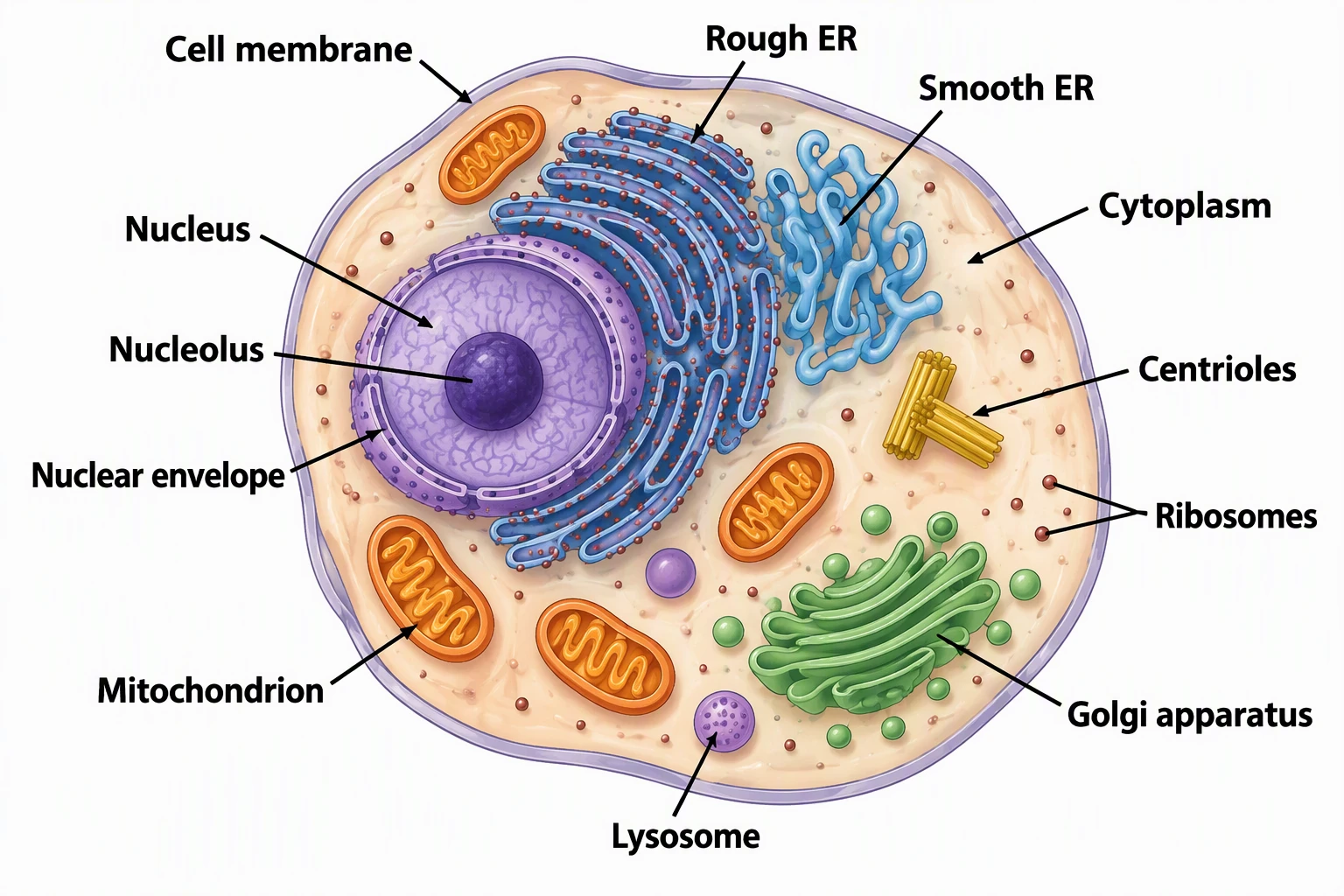 A detailed labeled animal cell diagram showing organelles including centrioles, lysosomes, nucleus, mitochondria, ER, and Golgi apparatus.
Key organelles to identify in an animal cell:
- Cell membrane — the outer boundary
- Nucleus — control center of the cell
- Centrioles — involved in cell division
- Lysosomes — digestive enzymes for waste breakdown
- Mitochondria — powerhouse of the cell
- Endoplasmic reticulum — smooth and rough varieties
- Golgi apparatus — processes and packages proteins
- Ribosomes — protein synthesis
Use our Animal Cell Diagram Generator to create custom labeled or unlabeled animal cell diagrams instantly.
Venn Diagram: Plant Cell vs Animal Cell
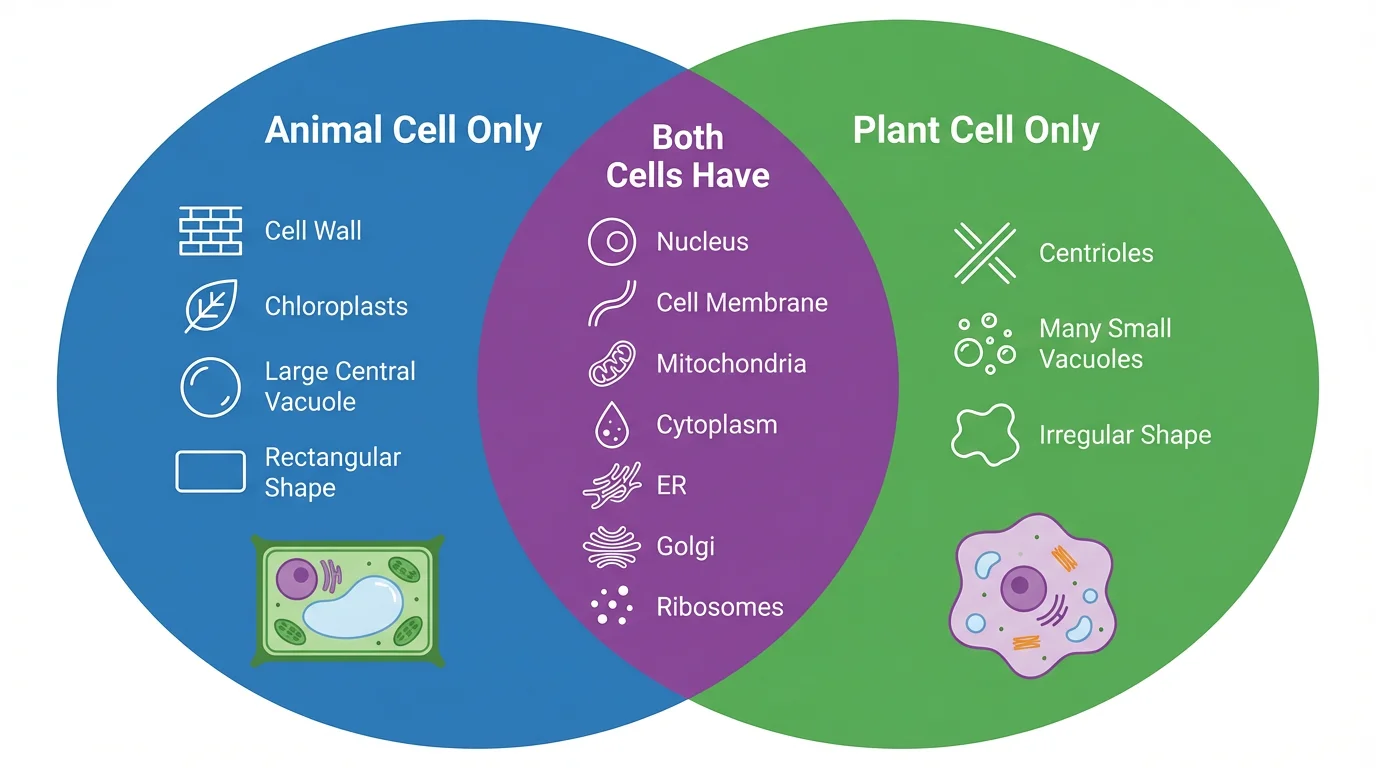
A Venn diagram is one of the most effective ways to organize the similarities and differences between plant and animal cells. Here is a visual comparison:
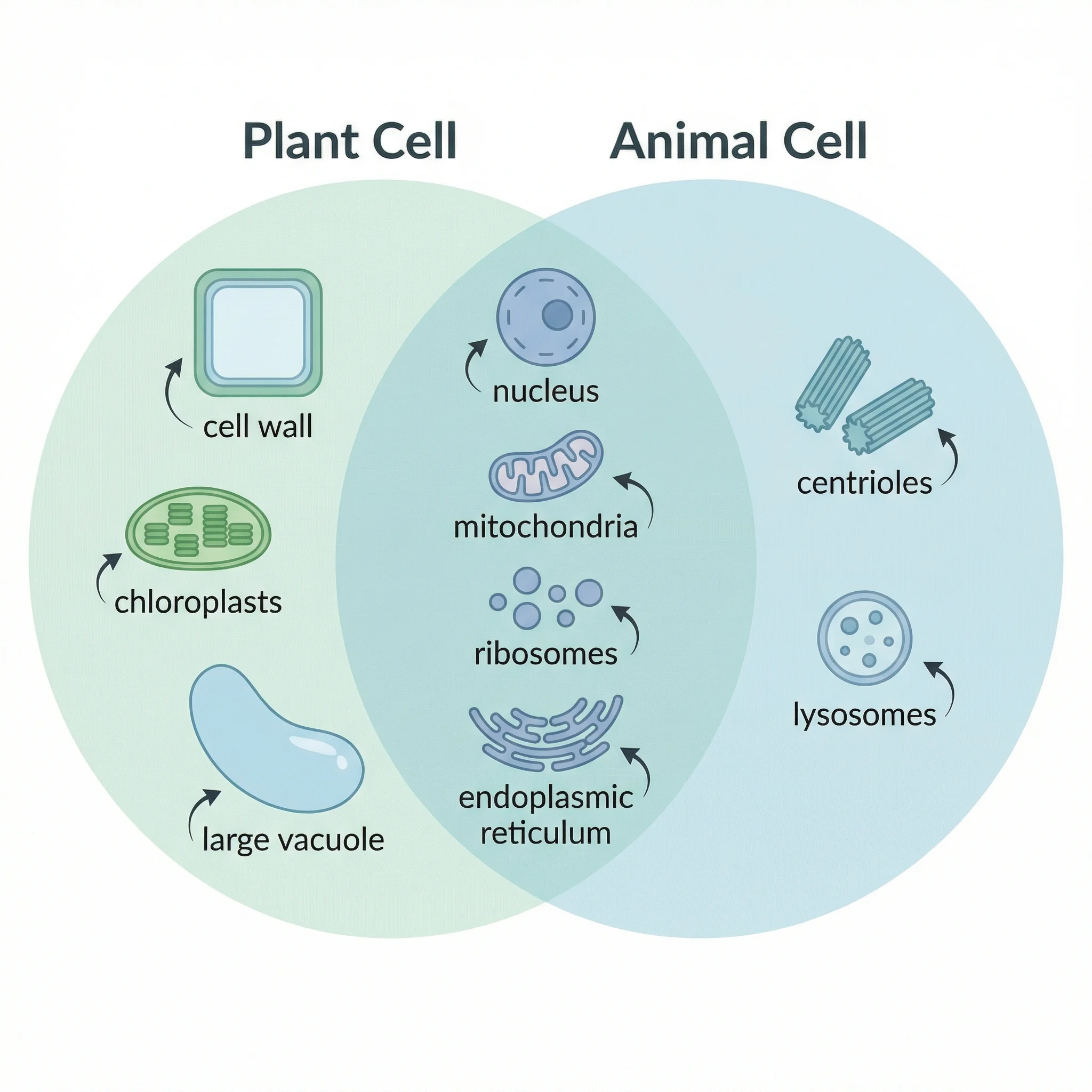 A Venn diagram comparing plant cells and animal cells — showing unique features and shared organelles.
Plant Cell Only
- Cell wall (cellulose)
- Chloroplasts
- Large central vacuole
- Plasmodesmata
- Stores energy as starch
- Cell plate during cytokinesis
Both (Shared)
- Cell membrane
- Nucleus
- Mitochondria
- Endoplasmic reticulum (rough and smooth)
- Golgi apparatus
- Ribosomes
- Cytoplasm
- DNA
Animal Cell Only
- Centrioles
- Lysosomes
- Multiple small vacuoles
- Tight junctions, gap junctions, desmosomes
- Stores energy as glycogen
- Cleavage furrow during cytokinesis
You can create your own custom Venn diagrams with our Venn Diagram Generator — perfect for student assignments and classroom posters.
How to Teach Plant Cell vs Animal Cell Effectively
For Elementary School (Grades 3-5)
Focus on three big differences: cell wall, chloroplasts, and the large vacuole. Use simple language:
- "Plant cells have a stiff wall; animal cells are squishy."
- "Plant cells have green parts (chloroplasts) that use sunlight to make food."
- "Plant cells have a big water balloon inside (vacuole) that keeps them standing up."
Use our elementary-level comparison diagram for age-appropriate visuals.
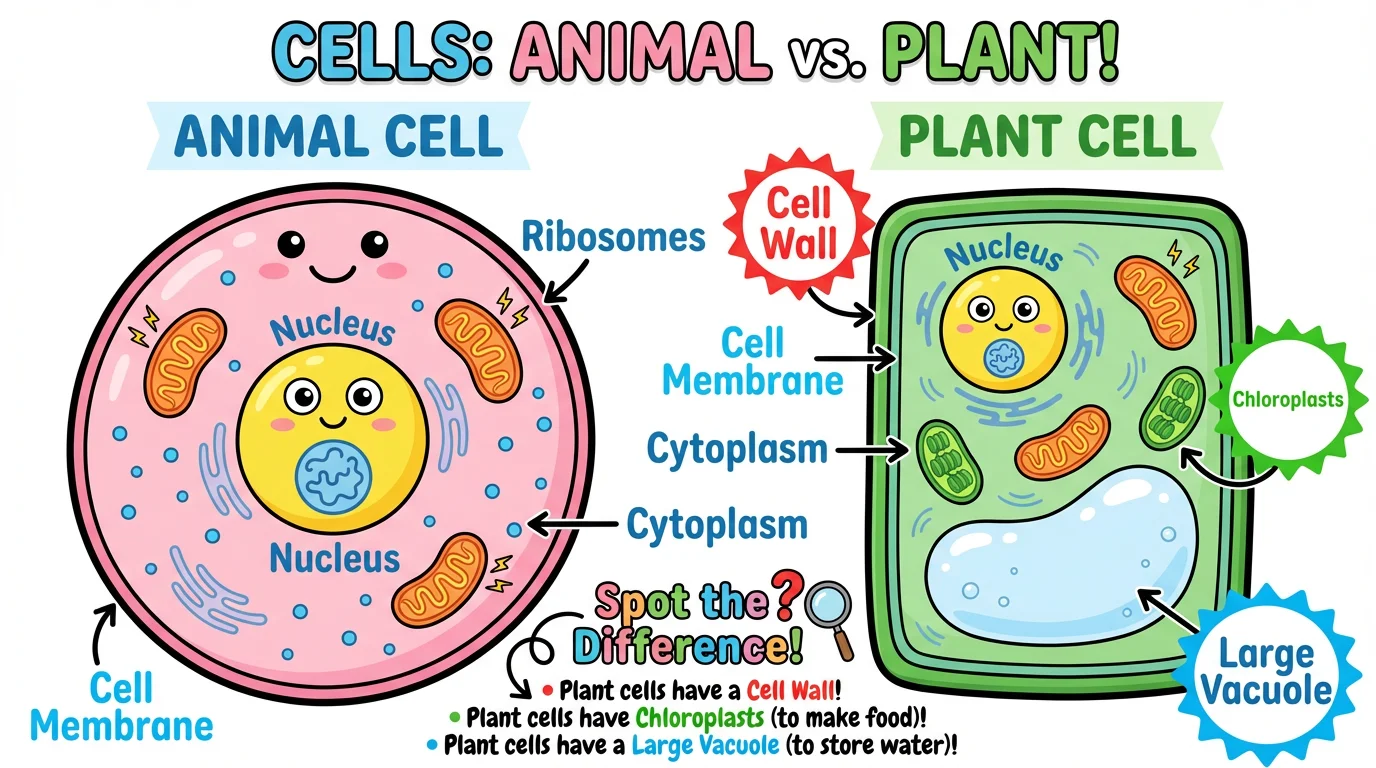 A simplified plant cell vs animal cell comparison designed for elementary students.
For Middle School (Grades 6-8)
Introduce all major organelles and have students create their own comparison tables. Activities that work well:
- Labeling worksheets — give students unlabeled diagrams and have them identify organelles
- Venn diagram activity — students fill in a blank Venn diagram
- 3D cell models — use clay, gelatin, or craft materials to build both cell types
For High School (Grades 9-12)
Go deeper into the molecular mechanisms:
- Why plant cells don't need centrioles (alternative microtubule organizing centers)
- The evolutionary origin of chloroplasts and mitochondria (endosymbiotic theory)
- Detailed comparison of cytokinesis — cell plate vs cleavage furrow
- The role of turgor pressure in plant physiology
Quiz: Test Your Knowledge
Use these questions to quiz yourself or your students:
1. Which organelle is found in plant cells but not animal cells? a) Mitochondria b) Chloroplasts c) Ribosomes d) Golgi apparatus Answer: b) Chloroplasts
2. What is the main function of the central vacuole in plant cells? a) Protein synthesis b) Energy production c) Water storage and maintaining turgor pressure d) Cell division Answer: c) Water storage and maintaining turgor pressure
3. Which structure gives plant cells their rigid, rectangular shape? a) Cell membrane b) Cytoplasm c) Cell wall d) Nucleus Answer: c) Cell wall
4. What organelle do animal cells use during cell division that most plant cells lack? a) Ribosomes b) Centrioles c) Mitochondria d) Vacuoles Answer: b) Centrioles
5. What type of junctions do plant cells use to communicate with neighboring cells? a) Tight junctions b) Gap junctions c) Plasmodesmata d) Desmosomes Answer: c) Plasmodesmata
For printable quiz worksheets with unlabeled diagrams, visit our guide on free printable cell diagram worksheets.
Create Custom Cell Diagrams with AI
Need a diagram tailored to your exact lesson plan? ConceptViz offers free AI-powered tools that generate publication-quality cell diagrams in seconds.
Plant Cell Diagram Generator
Create labeled or unlabeled plant cell diagrams instantly with AI. Perfect for worksheets, presentations, and classroom posters.
Try it free →Animal Cell Diagram Generator
Generate detailed, publication-quality animal cell diagrams for biology education.
Try it free →Animal vs Plant Cell Comparison
Produce side-by-side comparison diagrams showing key differences between plant and animal cells.
Try it free →Frequently Asked Questions
What are three differences between plant and animal cells?
The three most significant differences are: (1) Plant cells have a cell wall made of cellulose while animal cells do not, (2) Plant cells contain chloroplasts for photosynthesis while animal cells lack them, and (3) Plant cells have a large central vacuole while animal cells have only small, scattered vacuoles.
Do plant cells have mitochondria?
Yes. Plant cells have both chloroplasts and mitochondria. Chloroplasts capture light energy during photosynthesis, while mitochondria break down glucose through cellular respiration to produce ATP. Both organelles are essential for a plant cell's energy needs.
Why don't animal cells have a cell wall?
Animal cells do not need a cell wall because animals have other support structures like bones, cartilage, and muscles. The absence of a rigid cell wall also allows animal cells to change shape, which is necessary for functions like movement, phagocytosis, and forming specialized tissues.
What is the largest organelle in a plant cell?
The central vacuole is the largest organelle in a mature plant cell, often occupying 50-90% of the total cell volume. It stores water, maintains turgor pressure, and contains dissolved nutrients and waste products.
Can you see the difference between plant and animal cells under a microscope?
Yes. Under a light microscope, the most obvious difference is the cell wall — plant cells appear as rigid rectangles arranged in a grid-like pattern, while animal cells look round or irregular with no visible outer wall. In plant cells, you can also often see the large central vacuole and green chloroplasts.
What do plant cells and animal cells have in common?
Both are eukaryotic cells containing a nucleus, mitochondria, endoplasmic reticulum, Golgi apparatus, ribosomes, cell membrane, and cytoplasm. They both use DNA as their genetic material and carry out cellular respiration in their mitochondria.
What is the endosymbiotic theory?
The endosymbiotic theory proposes that mitochondria and chloroplasts were once free-living prokaryotic organisms that were engulfed by ancestral eukaryotic cells. Over time, they developed a symbiotic relationship. This explains why both organelles have their own DNA and double membranes.
How are plant and animal cells similar in terms of energy?
Both types of cells use mitochondria to produce ATP through cellular respiration. The difference is that plant cells can also capture light energy via chloroplasts. So plant cells have two energy pathways (photosynthesis + respiration), while animal cells rely solely on cellular respiration.
Related Resources
Categorías
Más Publicaciones
How to Cite BioRender: Figures and Publication Licenses
Copy a BioRender credit template, find your figure's publication license, and check free-plan, trial, and open-access rules. Sources checked October 2026.
8 Best Free ChemDraw Alternatives in 2026 (For Drawing Chemical Structures)
Compare the best free ChemDraw alternatives: ChemSketch, MarvinSketch, MolView, ChemDoodle & more. Draw chemical structures without expensive subscriptions.
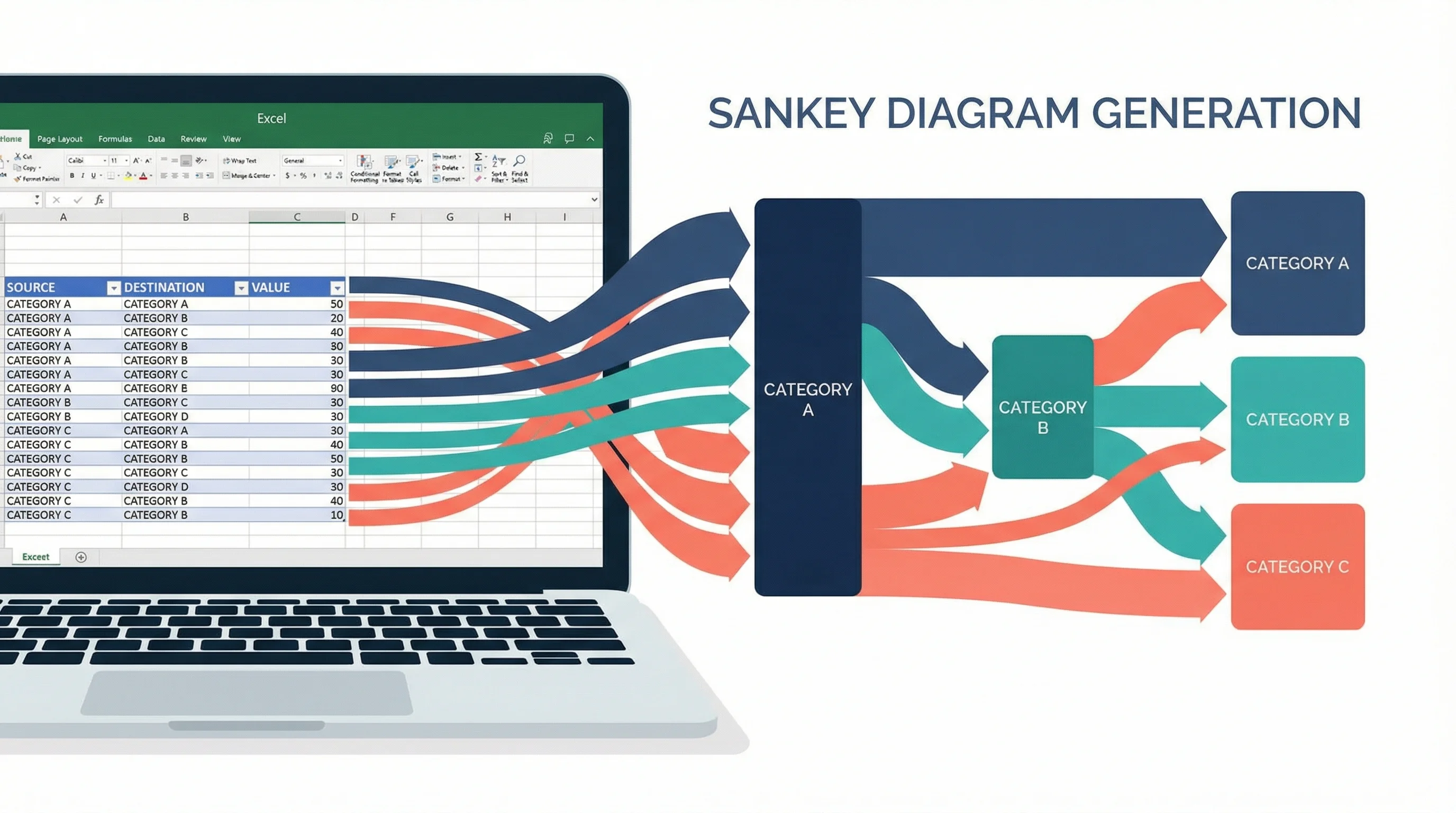
How to Create a Sankey Diagram in Excel: Step-by-Step Guide (2026)
Learn how to make Sankey diagrams in Excel using add-ins, manual workarounds, and dedicated tools. A step-by-step guide with templates and alternatives.