How to Present References in a Scientific Poster: Complete Citation Guide
Learn best practices for formatting and presenting references on scientific posters, with citation styles, font sizes, placement tips, and real examples.

Draft a conference poster layout and visuals from your abstract.
Start with this diagram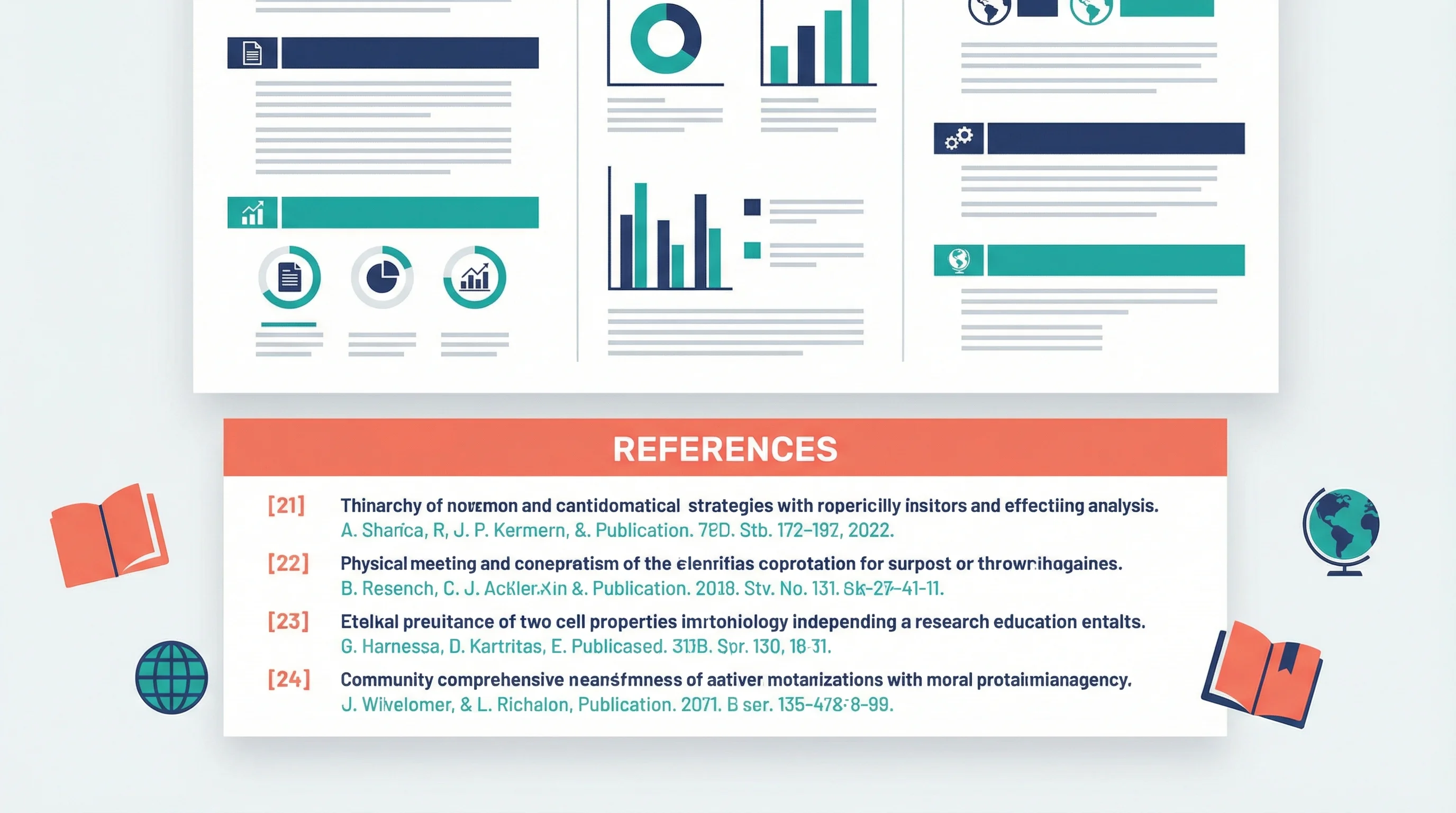
Creating a scientific poster involves balancing visual appeal with academic rigor. One element that often puzzles researchers is how to handle references and citations. Should you include them? Where should they go? What format works best?
This comprehensive guide answers all your questions about presenting references on scientific posters, from citation styles to font sizes and placement strategies.
Do You Need References on a Scientific Poster?
The short answer: it depends. Unlike journal articles where references are mandatory, poster references are often considered optional. However, there are situations where including them is important:
| Include References When | Skip References When |
|---|---|
| Your work builds directly on specific prior studies | Your poster is self-contained original research |
| Conference guidelines require citations | Space is extremely limited |
| You're presenting a literature review | The audience can easily find sources elsewhere |
| Key claims need supporting evidence | You'll provide a handout with full references |
According to Animate Your Science, references on scientific posters are optional, not mandatory. But if you choose to include them, doing it well matters for your credibility.
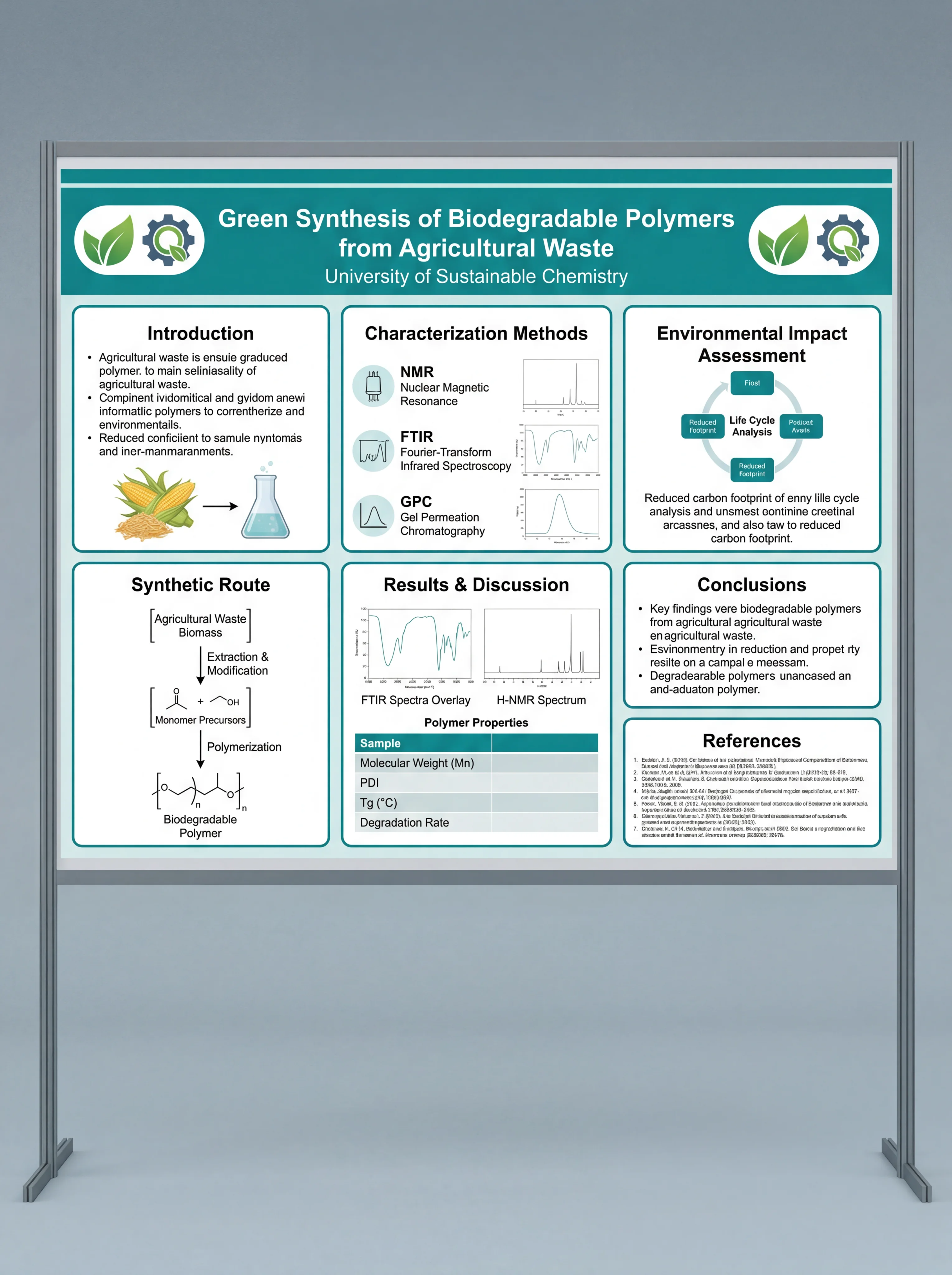
A well-designed chemistry poster with references positioned at the bottom
Where to Place References on Your Poster
The placement of references affects both readability and visual flow. Here are the most common and effective positions:
Bottom of the Poster (Most Common)
The traditional approach places references at the very bottom of your poster, spanning the full width or positioned in a corner. This keeps them accessible without competing with your main content.
Advantages:
- Follows reader expectations
- Doesn't interrupt the visual flow
- Easy to find for interested viewers
Bottom Right Corner
Many researchers prefer the bottom right corner specifically, as this is where the eye naturally ends after scanning the poster content.
Within a Dedicated Section
Some poster layouts include a small "References" or "Citations" section alongside Acknowledgments and Contact Information.
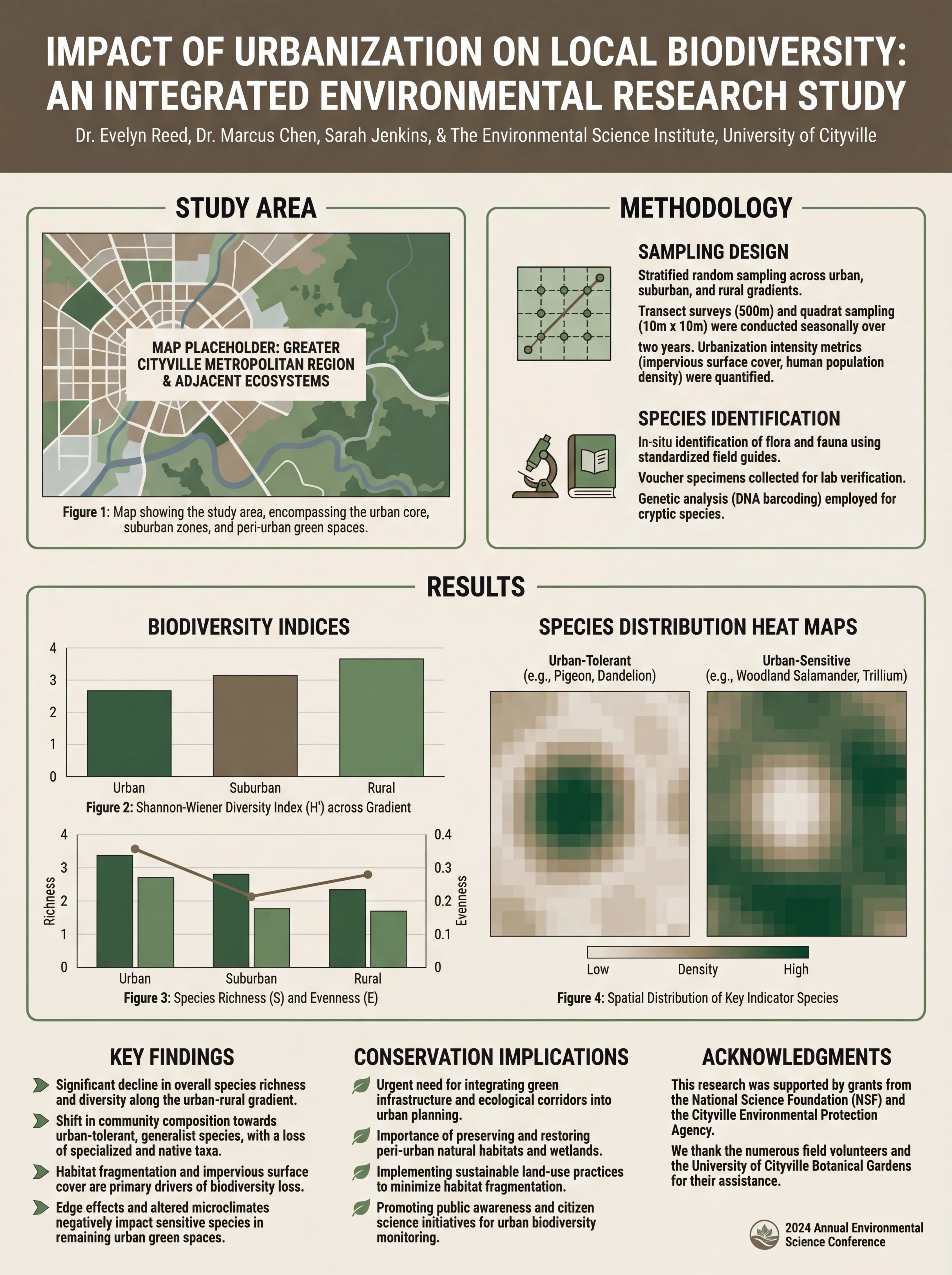
Environmental science poster demonstrating clear section organization
Citation Styles for Scientific Posters
You can use any standard citation style on your poster, but some work better than others given space constraints.
Numbered Citations (Recommended for Posters)
Numbered citations save the most space and work well for posters:
In-text: "Previous studies have shown significant results [1,2]."
Reference list:
[1] Smith et al., Nature, 2024
[2] Johnson & Lee, Science, 2023
Abbreviated Author-Year
A condensed version of APA or Harvard style:
In-text: "(Smith et al., 2024)"
Reference list:
Smith J et al. (2024) Nature 589:234-238
Johnson K, Lee M (2023) Science 380:112-115
Superscript Numbers
Common in medical and life sciences:
In-text: "The mechanism was previously described¹²"
Reference list:
¹ Smith J, et al. Nature. 2024;589:234-238.
² Johnson K, Lee M. Science. 2023;380:112-115.
Formatting Guidelines for Poster References
Font Size Recommendations
Reference text should be smaller than your body text but still readable from a reasonable distance:
| Poster Size | Body Text | References |
|---|---|---|
| A0 (841 × 1189 mm) | 24-28 pt | 16-20 pt |
| A1 (594 × 841 mm) | 20-24 pt | 14-18 pt |
| 48" × 36" | 24-32 pt | 16-20 pt |
As noted by UCLA Library's poster guide, maintaining readability is crucial even for smaller text elements.
Font Style
- Use the same font family as your body text for consistency
- Consider using a slightly lighter weight to visually de-emphasize references
- Avoid italics for the entire reference section (hard to read at small sizes)
Color and Contrast
- Use a muted color (dark gray instead of black) to reduce visual weight
- Ensure sufficient contrast with the background for readability
- Match the overall color scheme of your poster
Biomedical research poster showing consistent typography throughout
How Many References Should You Include?
Less is more when it comes to poster references. Here are general guidelines:
- Minimum: 0 (if your work is entirely original)
- Typical: 3-8 references
- Maximum: 10-15 references (only if absolutely necessary)
Focus on citing:
- Foundational work that your research builds upon
- Methods you've adapted from other studies
- Key findings that support your conclusions
- Controversial claims that need backing
In-Text Citation Best Practices
Keep Citations Minimal
Don't cite every sentence. Focus on:
- Direct quotes (rare on posters)
- Specific data or statistics from other studies
- Methods borrowed from published work
- Claims that might be questioned
Use Consistent Formatting
Whatever style you choose, apply it consistently throughout your poster. Mixing "[1]" with "(Smith, 2024)" looks unprofessional.
Position Citations Thoughtfully
Place citations at the end of sentences or paragraphs, not in the middle where they interrupt reading flow.
Good: "The enzyme shows increased activity at higher temperatures [3]."
Avoid: "The enzyme [3] shows increased activity at higher temperatures."
Reference Section Layout Options
Single Column List
Best for 5 or fewer references:
References
[1] Smith J, et al. (2024) Nature 589:234-238
[2] Johnson K, Lee M (2023) Science 380:112-115
[3] Williams R (2022) Cell 185:1456-1470
Two-Column Layout
Efficient for 6-12 references:
References
[1] Smith J, et al. (2024)     [4] Brown A (2023) PNAS
    Nature 589:234-238             120:e2301234
[2] Johnson K (2023)           [5] Davis M, et al. (2022)
    Science 380:112-115            Nat Med 28:890-895
[3] Williams R (2022)          [6] Miller S (2021)
    Cell 185:1456-1470             JACS 143:5678-5689
Abbreviated Format
When space is extremely tight:
References: [1] Smith, Nature 2024 [2] Johnson, Science 2023
[3] Williams, Cell 2022 [4] Brown, PNAS 2023
Common Mistakes to Avoid
1. Making References Too Prominent
References should support your work, not dominate it. If your reference section is the first thing people notice, it's too large or poorly positioned.
2. Using Full Journal Names
Save space by using standard abbreviations:
- ❌ "Journal of the American Chemical Society"
- ✅ "J. Am. Chem. Soc." or "JACS"
3. Including URLs or DOIs
Unless specifically required, skip URLs and DOIs on posters. They take up space and can't be clicked anyway.
4. Inconsistent Formatting
Mixing citation styles or formats looks unprofessional and confuses readers.
5. Forgetting Self-Citations
If your poster builds on your own previous work, cite it! This helps establish your expertise and provides context.
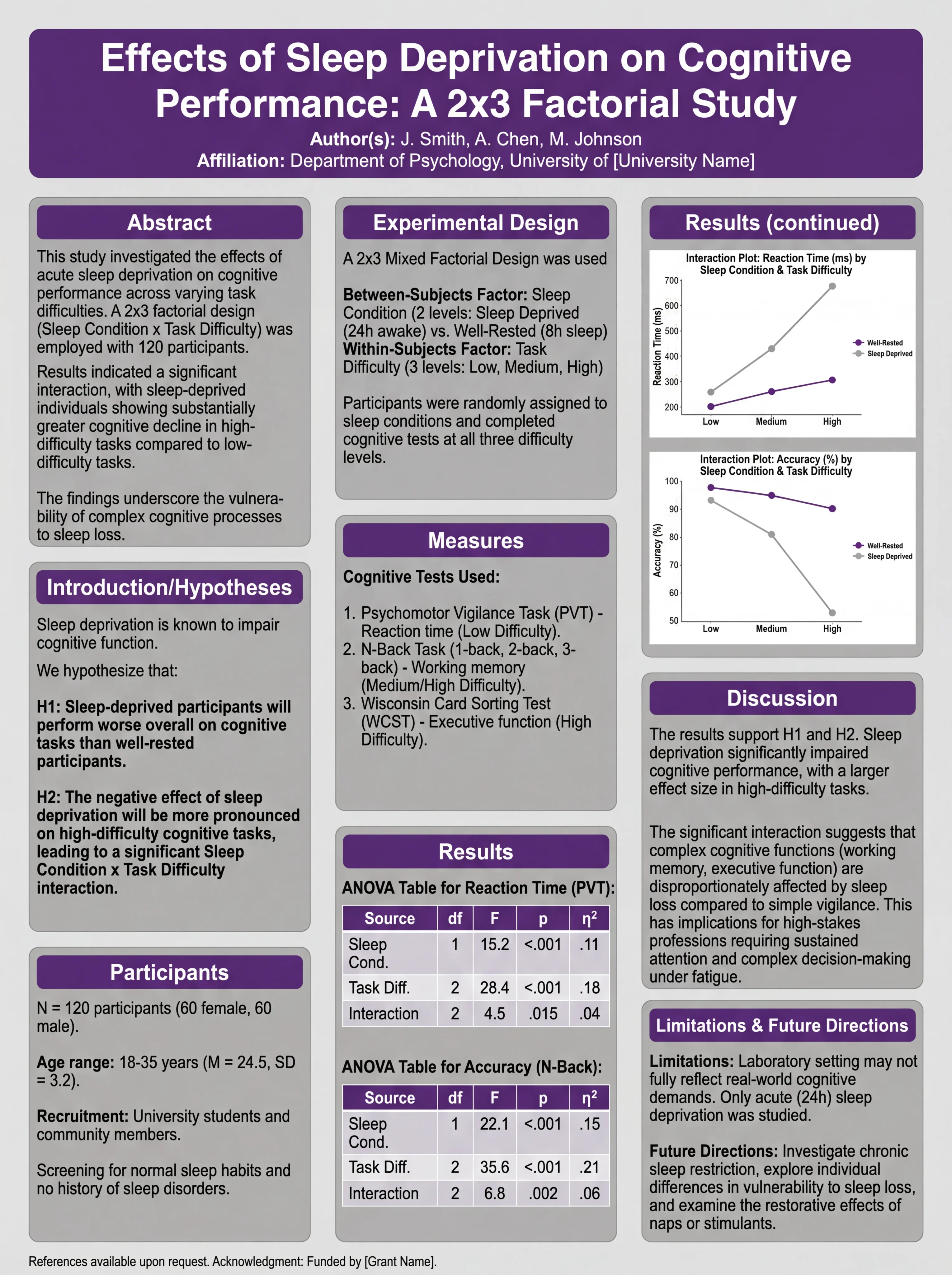
Psychology poster demonstrating clean, uncluttered design
Discipline-Specific Considerations
Different fields have different conventions for poster references:
Life Sciences and Medicine
- Superscript numbers are common
- Vancouver style often preferred
- Include PubMed IDs if space allows
Physical Sciences and Engineering
- Numbered brackets [1] are standard
- Abbreviated journal names expected
- Focus on methodology citations
Social Sciences
- Author-year (APA style) is common
- May include more references for literature-based work
- Page numbers often included
Humanities
- Footnote-style citations sometimes used
- Chicago or MLA formats common
- Full titles may be expected
Tools for Managing Poster References
Several tools can help you format references efficiently:
Reference Managers
- Zotero (free): Export abbreviated citations
- Mendeley (free): Create custom citation styles
- EndNote: Professional reference management
Design Tools
For creating visually appealing posters with properly formatted references, consider using ConceptViz. Our AI-powered platform helps researchers create professional scientific posters with proper typography and layout, ensuring your references are well-integrated into the overall design.
Quick Reference Checklist
Before finalizing your poster, verify:
- References are positioned at the bottom or in a dedicated section
- Font size is 16-20pt (readable but not dominant)
- Citation style is consistent throughout
- Only essential references are included (3-10 typically)
- Journal names are abbreviated appropriately
- In-text citations don't interrupt reading flow
- Reference section doesn't compete with main content
- All cited works appear in the reference list
- All references in the list are cited in the poster
Conclusion
Presenting references on a scientific poster requires balancing academic integrity with design constraints. The key principles are:
- Be selective – only include essential citations
- Be consistent – use one citation style throughout
- Be subtle – references should support, not dominate
- Be readable – maintain adequate font size and contrast
Remember that your poster's primary goal is to communicate your research effectively. References are important for credibility, but they shouldn't overshadow your findings.
For more guidance on creating effective scientific posters, check out our guides on scientific poster examples and award-winning designs, choosing the best fonts for scientific posters, and scientific color palettes.
Frequently Asked Questions
Are references required on a scientific poster?
References are generally optional on scientific posters, unlike journal articles. However, they're recommended when your work directly builds on specific prior studies, when conference guidelines require them, or when key claims need supporting evidence.
What font size should I use for poster references?
For standard A0 or 48×36 inch posters, use 16-20pt font for references. This is smaller than body text (24-28pt) but still readable from a reasonable viewing distance of 3-4 feet.
Where should references be placed on a poster?
The most common and effective placement is at the bottom of the poster, either spanning the full width or positioned in the bottom right corner. This keeps references accessible without competing with your main content.
How many references should I include on my poster?
Most posters include 3-8 references. Focus on foundational work, methods you've adapted, key supporting findings, and any controversial claims. Avoid exceeding 10-15 references unless absolutely necessary.
What citation style works best for posters?
Numbered citations [1,2,3] are most space-efficient for posters. Abbreviated author-year format (Smith et al., 2024) also works well. Choose based on your field's conventions and stick to one style consistently.
Should I include DOIs or URLs in poster references?
Generally, no. DOIs and URLs take up valuable space and can't be clicked on a printed poster. Save them for handouts or supplementary materials you provide to interested viewers.
Can I use a different font for references than the body text?
It's best to use the same font family for consistency. You can use a slightly smaller size or lighter weight to visually de-emphasize the references while maintaining a cohesive design.
How do I cite my own previous work on a poster?
Cite your own work the same way you'd cite others. Self-citations are appropriate and help establish your expertise. You might note 'Author et al.' or use your name directly, depending on the citation style.
Categorías
Más Publicaciones

Science Journal Cover Design: Complete Guide to Getting Your Research Featured
Learn to design journal cover art that gets your research noticed. Includes technical specs for Nature, Cell, and ACS journals, design principles, and steps.
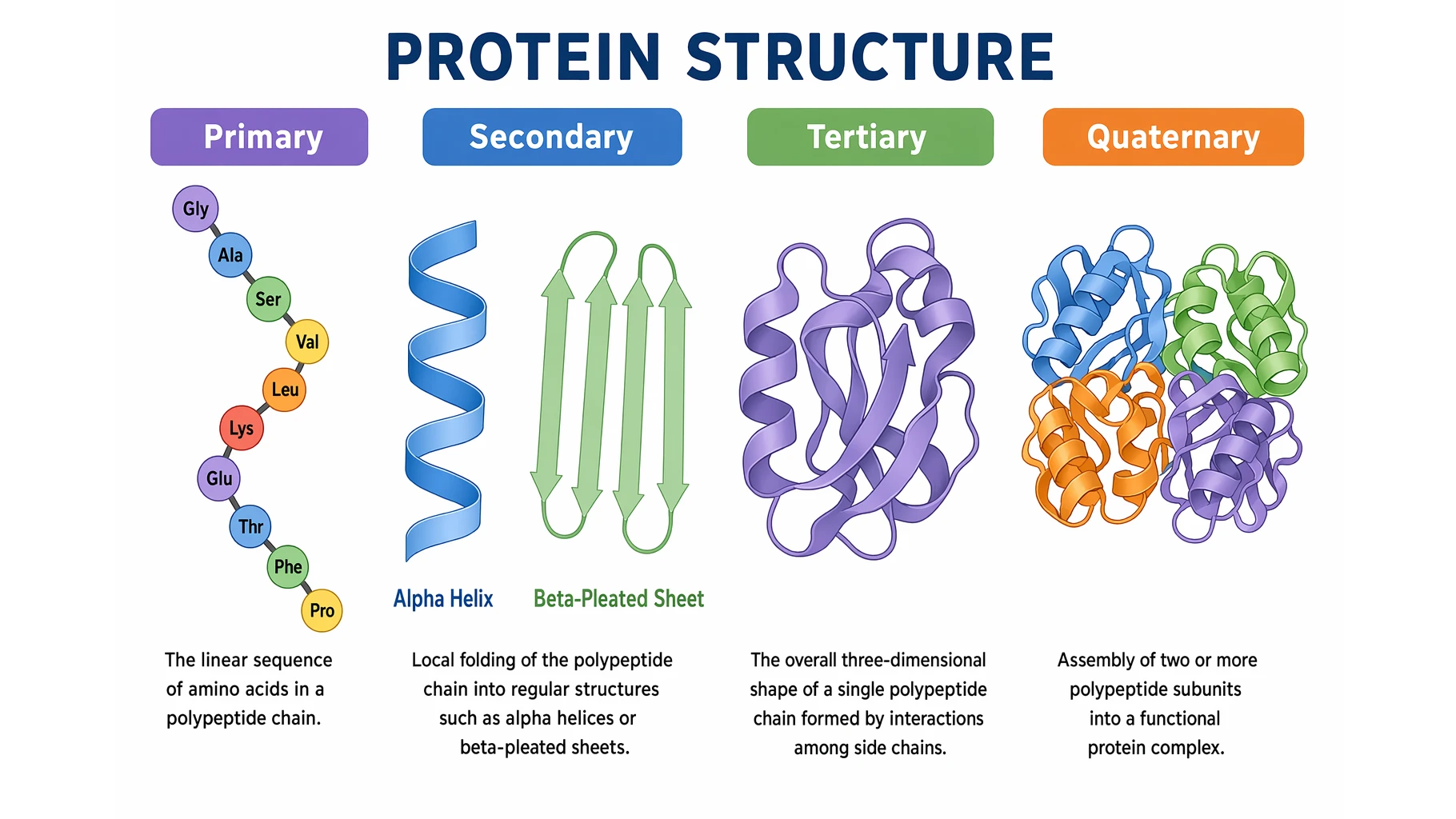
Protein Structure: The 4 Levels Explained Simply
Protein structure made simple: the four levels (primary, secondary, tertiary, quaternary), the bonds that stabilize each, and why structure decides function.
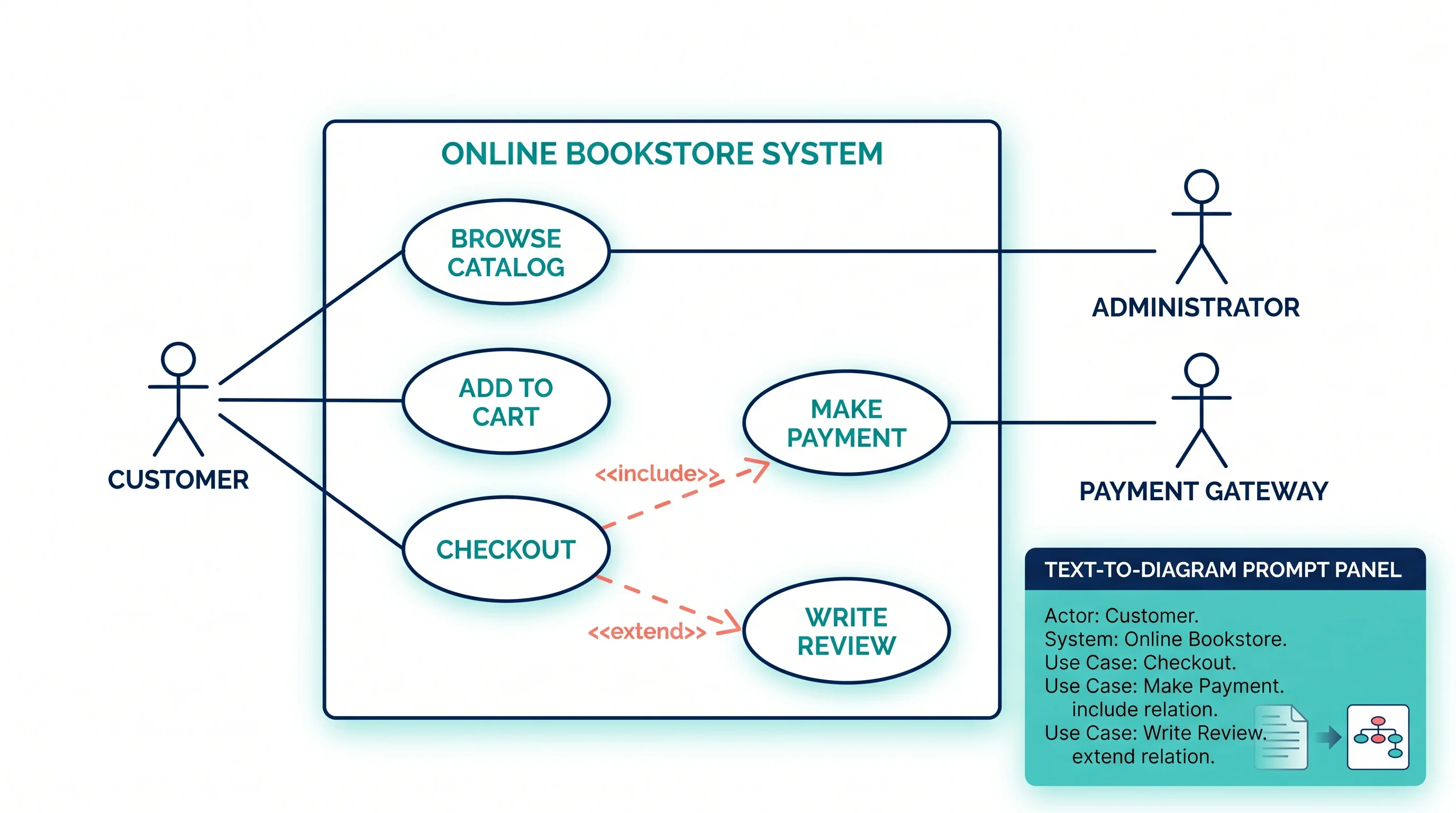
Use Case Diagram Generator Guide: Create UML Use Cases from Text
Learn how to use a use case diagram generator, define actors and system boundaries, write better prompts, and avoid common UML notation mistakes.